Indiana Last Will and Testament Package
Overview of this form package
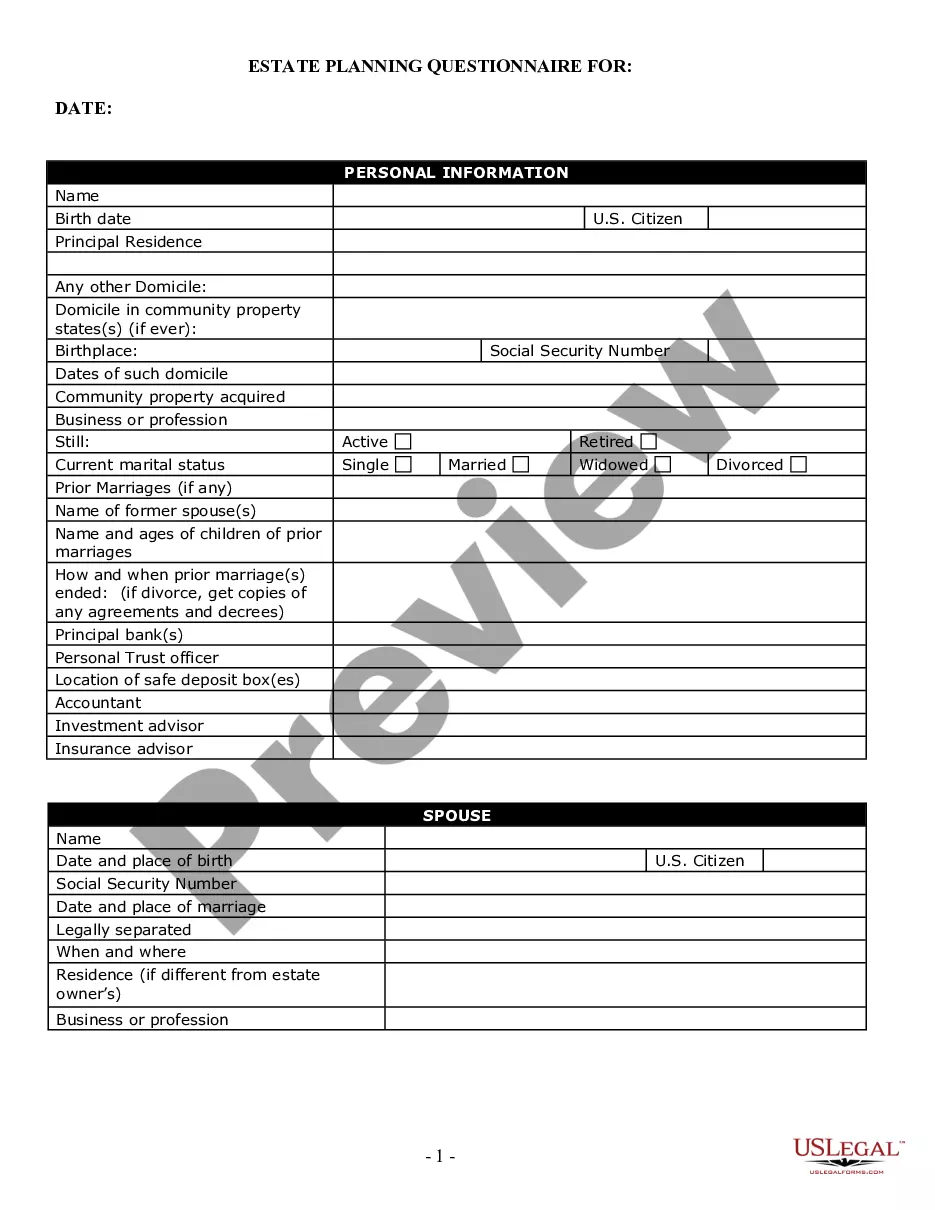
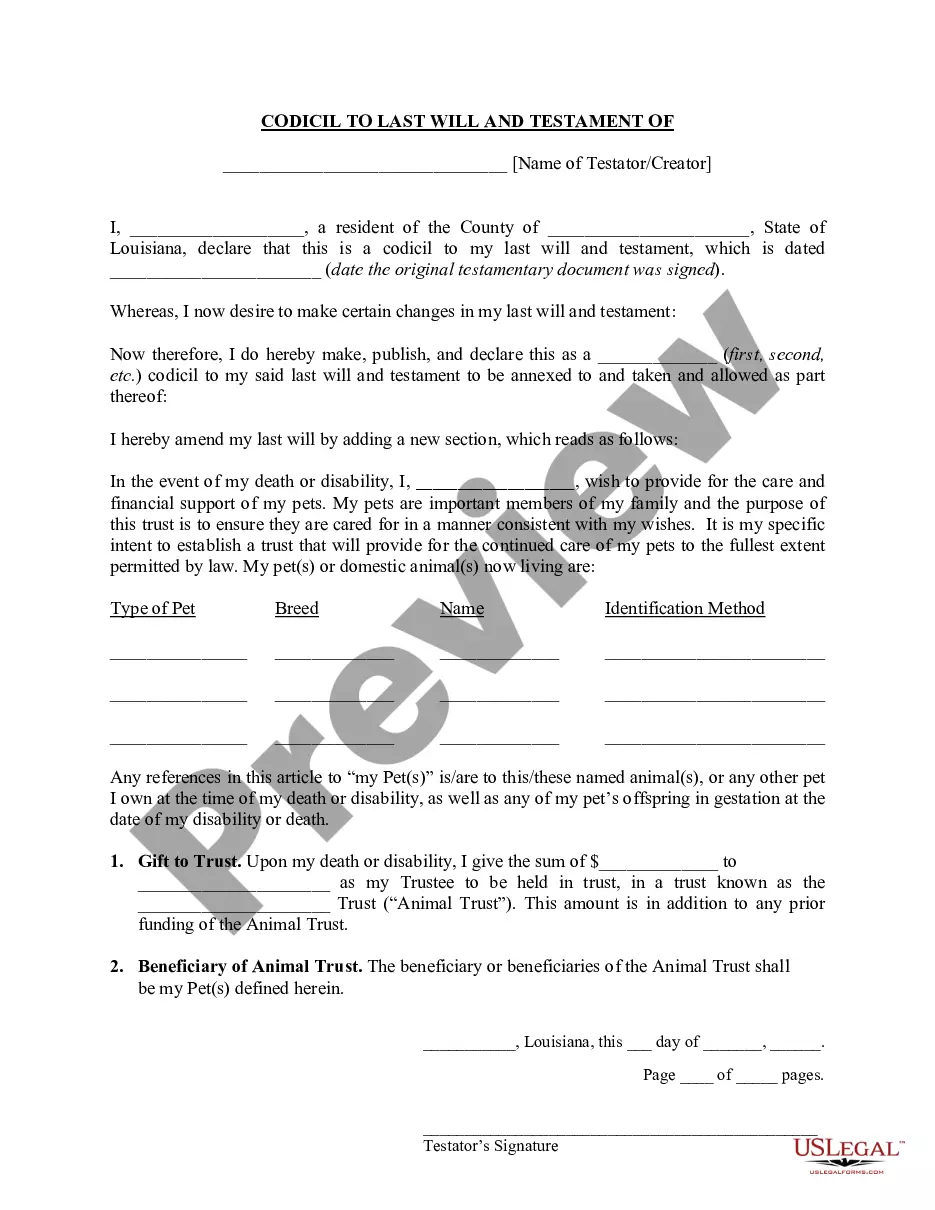
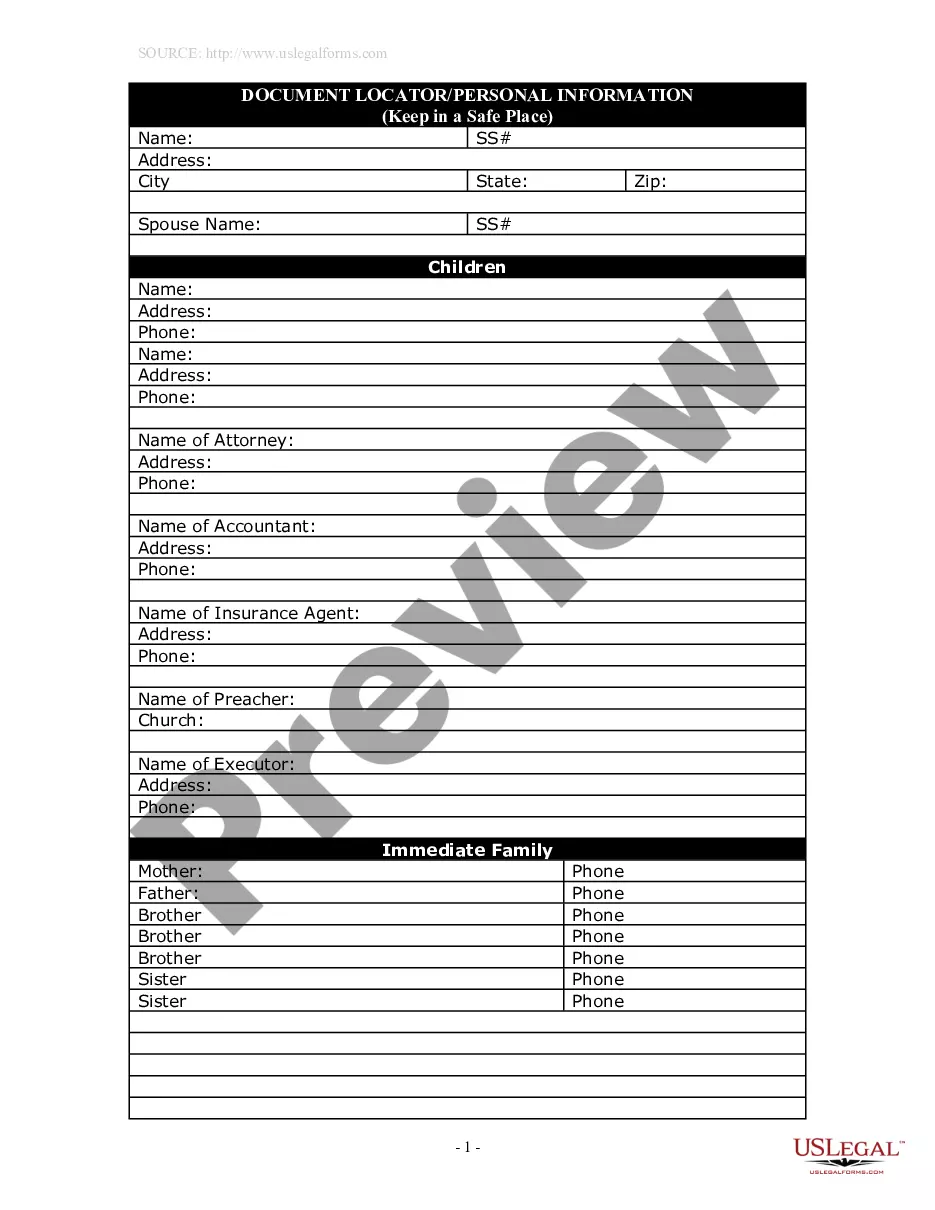
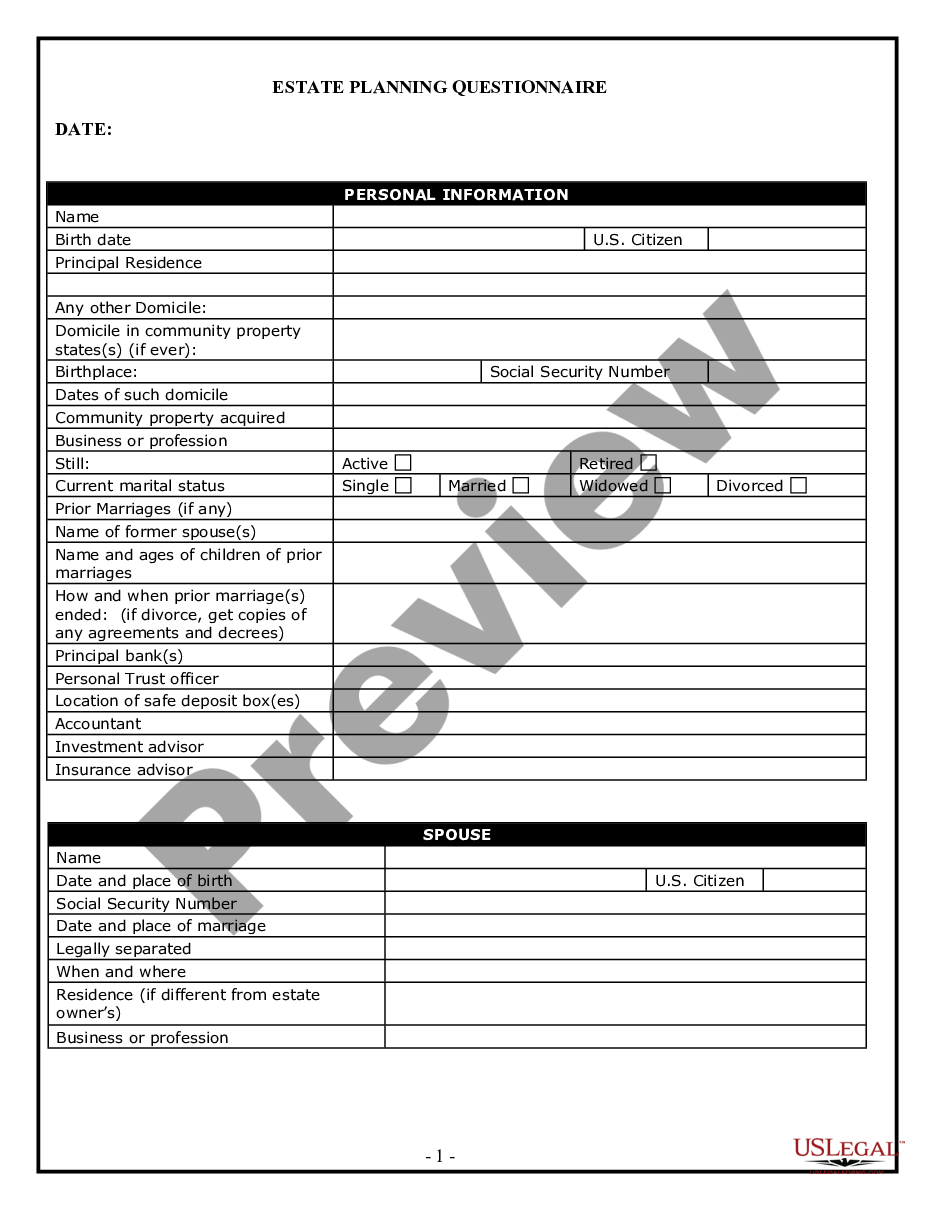
The Indiana Last Will and Testament Package is a comprehensive set of legal forms designed to help you prepare a valid Last Will and Testament tailored to your specific circumstances. This package stands out by providing a variety of essential documents, including an Estate Planning Questionnaire and Personal Planning Information Worksheets, to ensure that your wishes are accurately represented and legally enforceable. It offers not only the draft of a Will but also a completed sample for your convenience, making it easier for you to understand how to structure your own documents.
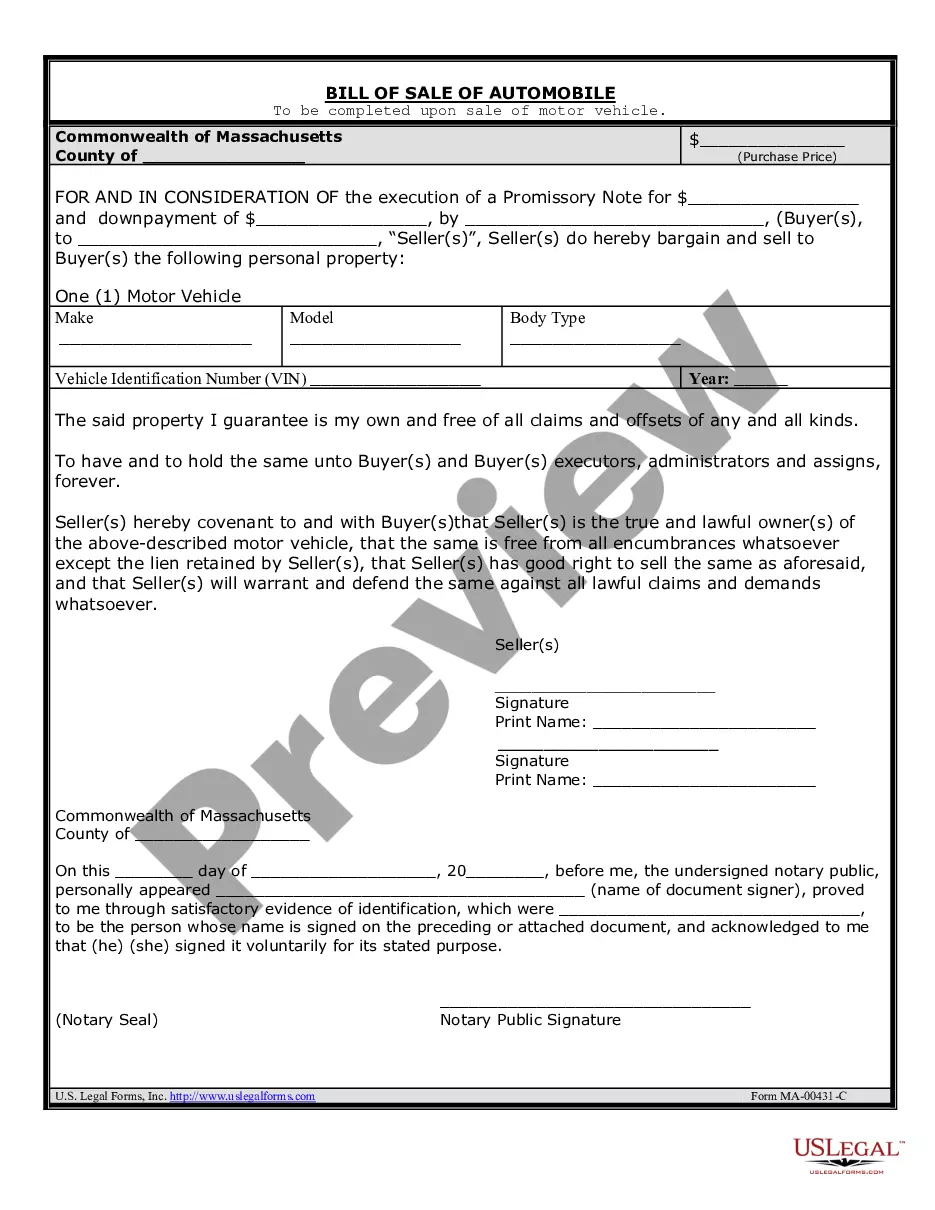
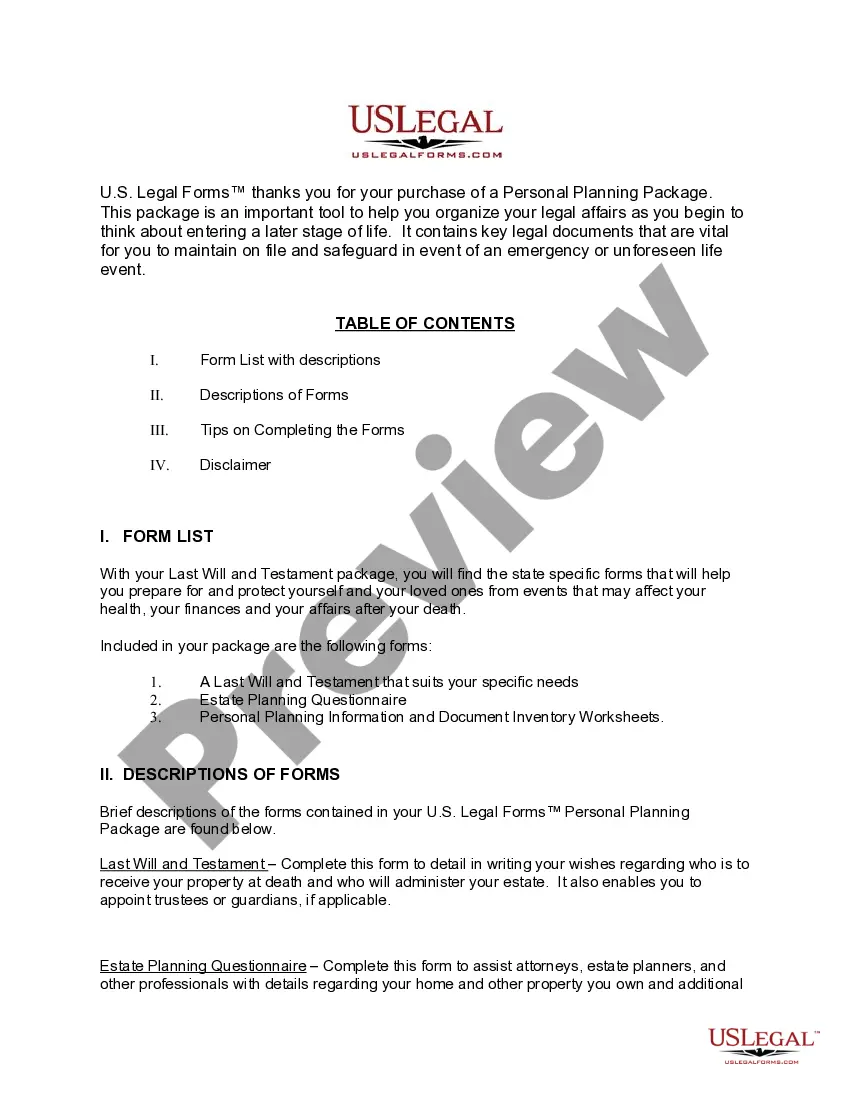
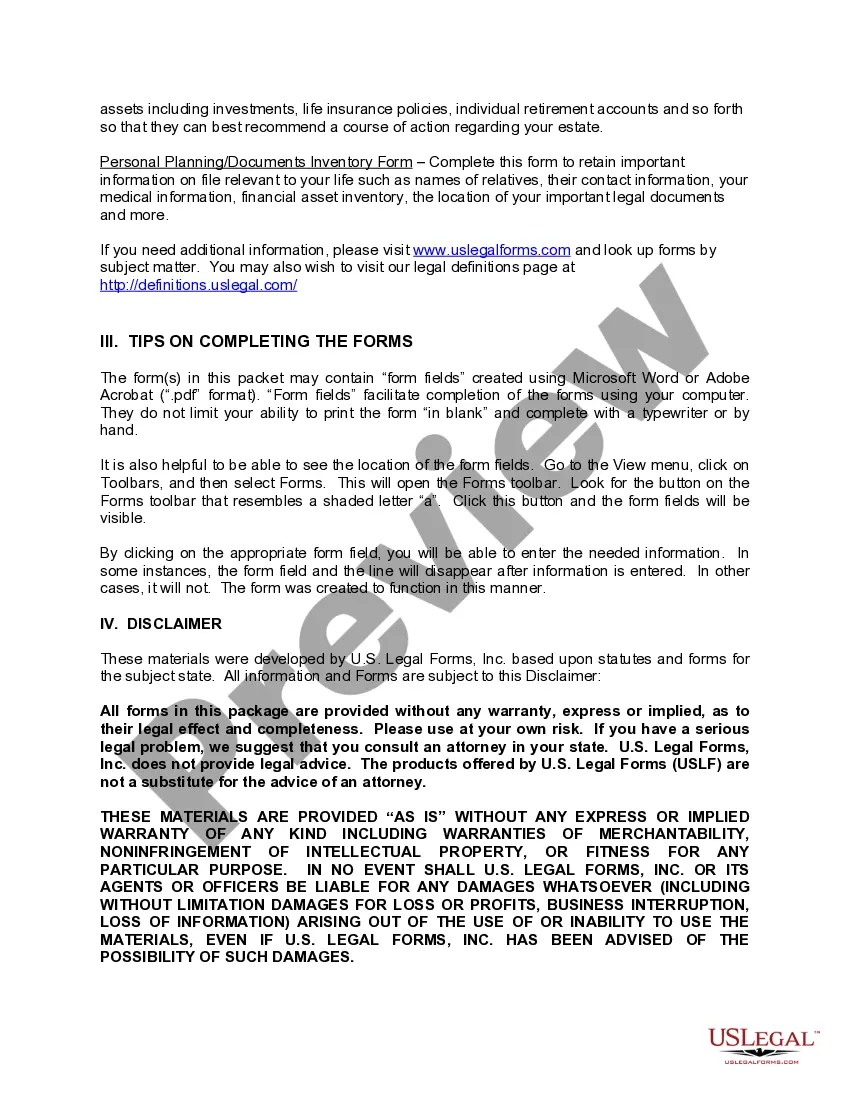
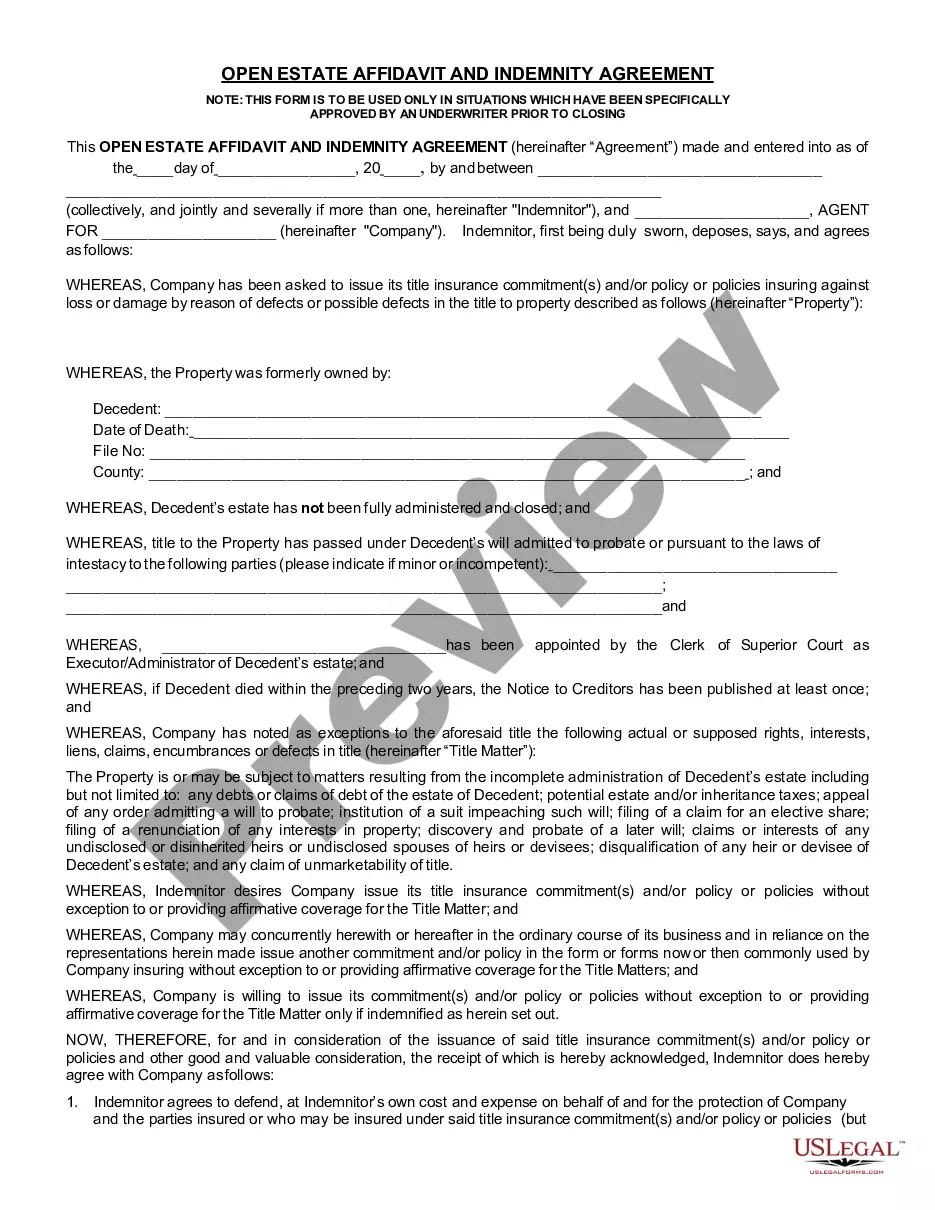
Forms provided in this package




When to use this document
This form package is useful in various situations, including:
- When you want to establish how your assets will be distributed after your death.
- If you have minor children and wish to appoint guardians for them.
- When you want to specify your wishes regarding funeral arrangements.
- If you want to simplify the probate process for your beneficiaries.
- When you're ready to make important decisions about your estate and healthcare in the event of incapacitation.
Who this form package is for
- Individuals who are residents of Indiana wanting to create a Last Will and Testament.
- Those with assets, dependents, or specific final wishes to address.
- People looking to ensure their estate is managed according to their wishes after they pass.
- Anyone who may need to reference personal planning information or document inventories.
Steps to complete these forms
- Review the included forms to understand what is required for your specific situation.
- Complete the Estate Planning Questionnaire to gather important information about your assets and wishes.
- Fill out the Personal Planning Information Worksheet to document essential personal details.
- Draft your Last Will and Testament based on the sample provided and your specific needs.
- Ensure all forms are signed and, if applicable, witnessed in accordance with Indiana law.
Do documents in this package require notarization?
Some forms in this package need notarization to be legally binding. Our online notarization service, powered by Notarize, lets you verify and sign documents remotely through an encrypted video session, available 24/7.
Get your form ready online
Our built-in tools help you complete, sign, share, and store your documents in one place.
Make edits, fill in missing information, and update formatting in US Legal Forms—just like you would in MS Word.
Download a copy, print it, send it by email, or mail it via USPS—whatever works best for your next step.
Sign and collect signatures with our SignNow integration. Send to multiple recipients, set reminders, and more. Go Premium to unlock E-Sign.
If this form requires notarization, complete it online through a secure video call—no need to meet a notary in person or wait for an appointment.
We protect your documents and personal data by following strict security and privacy standards.

Make edits, fill in missing information, and update formatting in US Legal Forms—just like you would in MS Word.

Download a copy, print it, send it by email, or mail it via USPS—whatever works best for your next step.

Sign and collect signatures with our SignNow integration. Send to multiple recipients, set reminders, and more. Go Premium to unlock E-Sign.

If this form requires notarization, complete it online through a secure video call—no need to meet a notary in person or wait for an appointment.

We protect your documents and personal data by following strict security and privacy standards.
Common mistakes to avoid
- Neglecting to have the Will properly witnessed or notarized as required by state law.
- Failing to update your Will after significant life events, such as marriage, divorce, or the birth of children.
- Not communicating your wishes to your family or appointed executor.
- Leaving out important details in the Estate Planning Questionnaire, which can lead to omissions in your Will.
Advantages of online completion
- Convenient access to essential legal forms from the comfort of your home.
- Edit and customize the forms according to your specific needs without the constraints of traditional legal services.
- Receive guidance through included sample documents to ensure proper completion.
- Download and save your documents immediately after purchase for quick implementation.
Main things to remember
- The Indiana Last Will and Testament package helps ensure your last wishes are honored.
- It's a comprehensive solution for Indiana residents planning their estates.
- Use this package to avoid common pitfalls in estate planning.
Looking for another form?
Form popularity
FAQ
There are certain types of property that legally cannot be included in a person's will. Depending on state laws, these may include: Any Property that is Co-Owned with Someone Else Through Joint-Tenancy: Married couples typically own the marital home in joint tenancy.Property being held in a living trust.
Decide what property to include in your will. Decide who will inherit your property. Choose an executor to handle your estate. Choose a guardian for your children. Choose someone to manage children's property. Make your will. Sign your will in front of witnesses. Store your will safely.
Physical assets such as a house, cars or jewellery. Financial assets such as shares or bank savings, and. Heirlooms or possessions with sentimental value.
It's very common for a lawyer to charge a flat fee to write a will and other basic estate planning documents. The low end for a simple lawyer-drafted will is around $300. A price of closer to $1,000 is more common, and it's not unusual to find a $1,200 price tag. Lawyers like flat fees for several reasons.
Your will should state who gets what from your savings and property, including your home, investments and cash. It should cover all the things you own, such as cars, furniture, pictures and jewelry.
A person's last will and testament outlines what to do with possessions, whether the deceased will leave them to another person, a group or donate them to charity, and what happens to other things that they are responsible for, such as custody of dependents and management of accounts and financial interests.
Form a Last Will in Indiana Capacity: The testator must be of sound mind. Signature: The will must be signed by the testator or by someone else at the testator's direction and in the testator's presence. Witnesses: At least two witnesses must sign an Indiana last will and testament in order for it to be valid.
Bank accounts. Brokerage or investment accounts. Retirement accounts and pension plans. A life insurance policy.
Drafting the will yourself is less costly and may put you out about $150 or less. Depending on your situation, expect to pay anywhere between $300 and $1,000 to hire a lawyer for your will. While do-it-yourself will kits may save you time and money, writing your will with a lawyer ensures it will be error-free.