Indiana Notice of Default in Payment of Rent as Warning Prior to Demand to Pay or Terminate for Residential Property
What is this form?
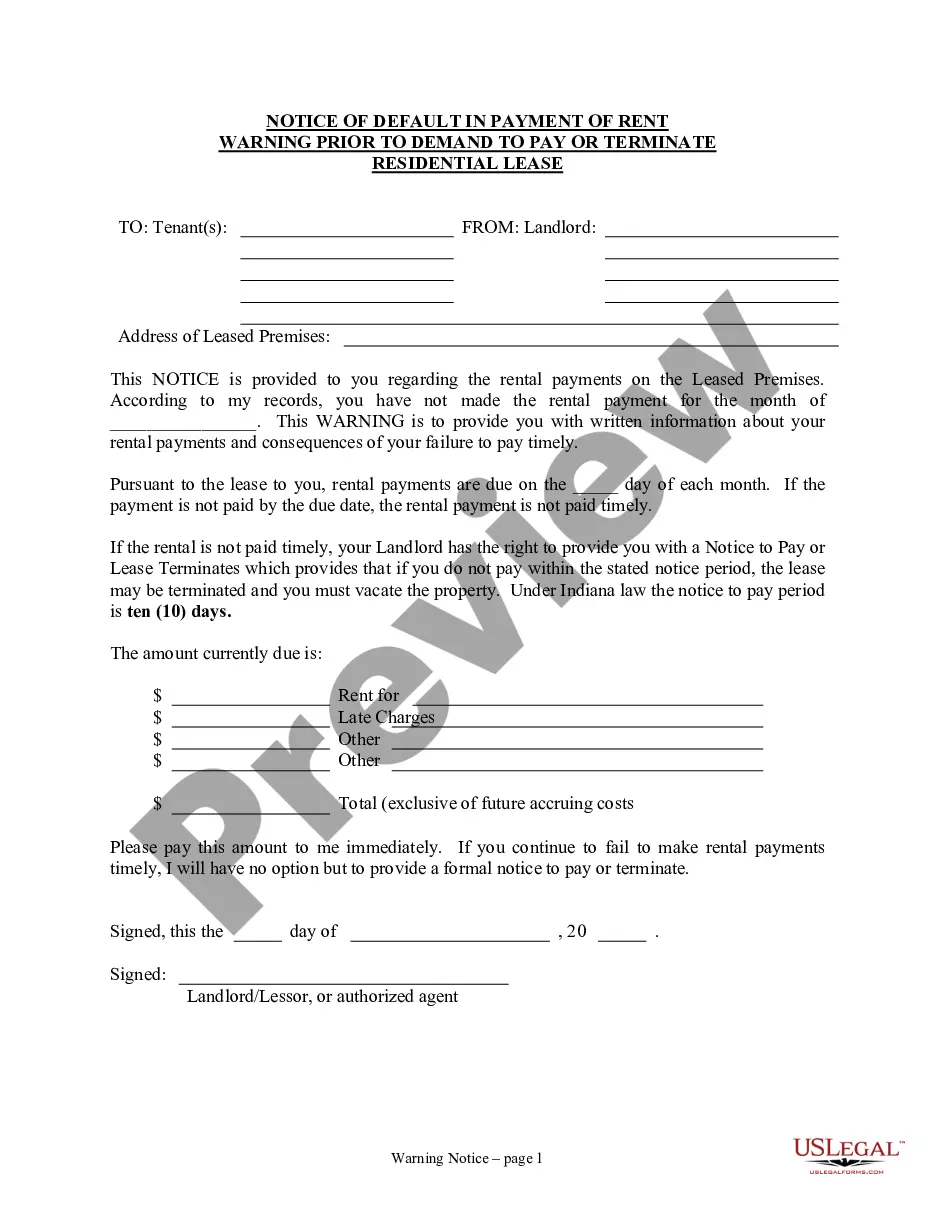
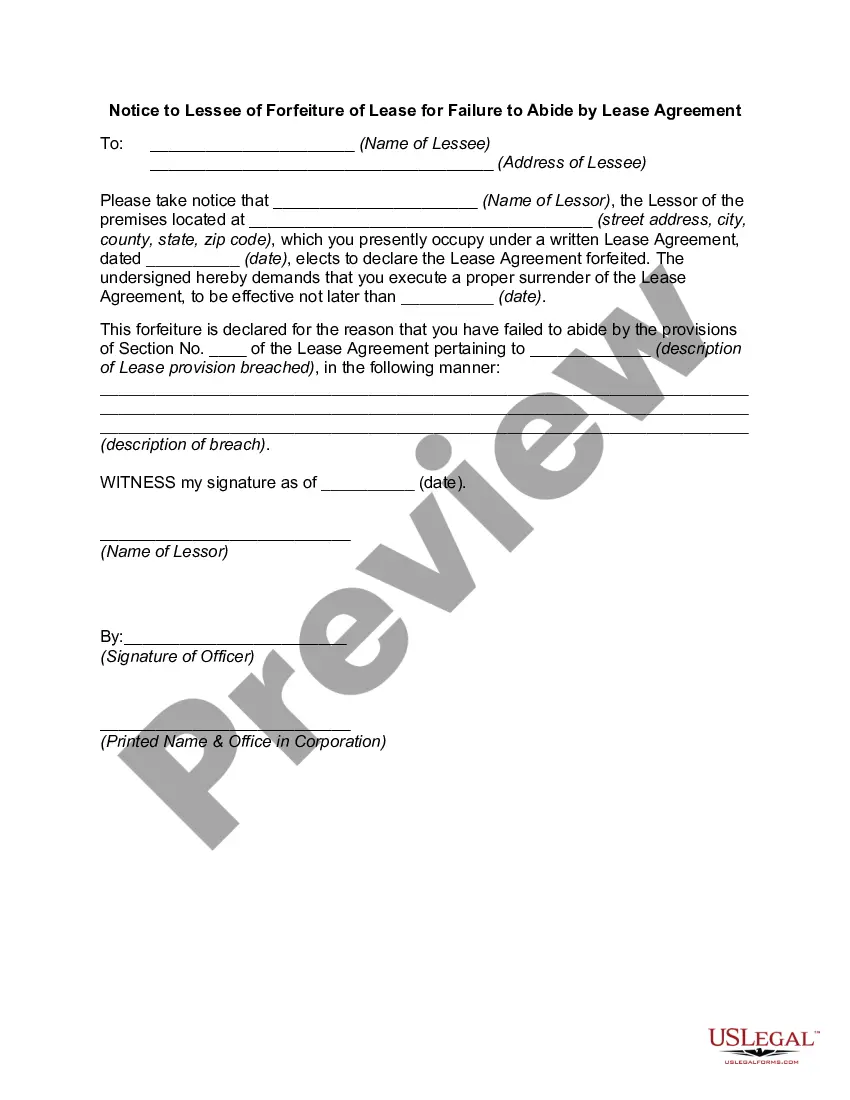
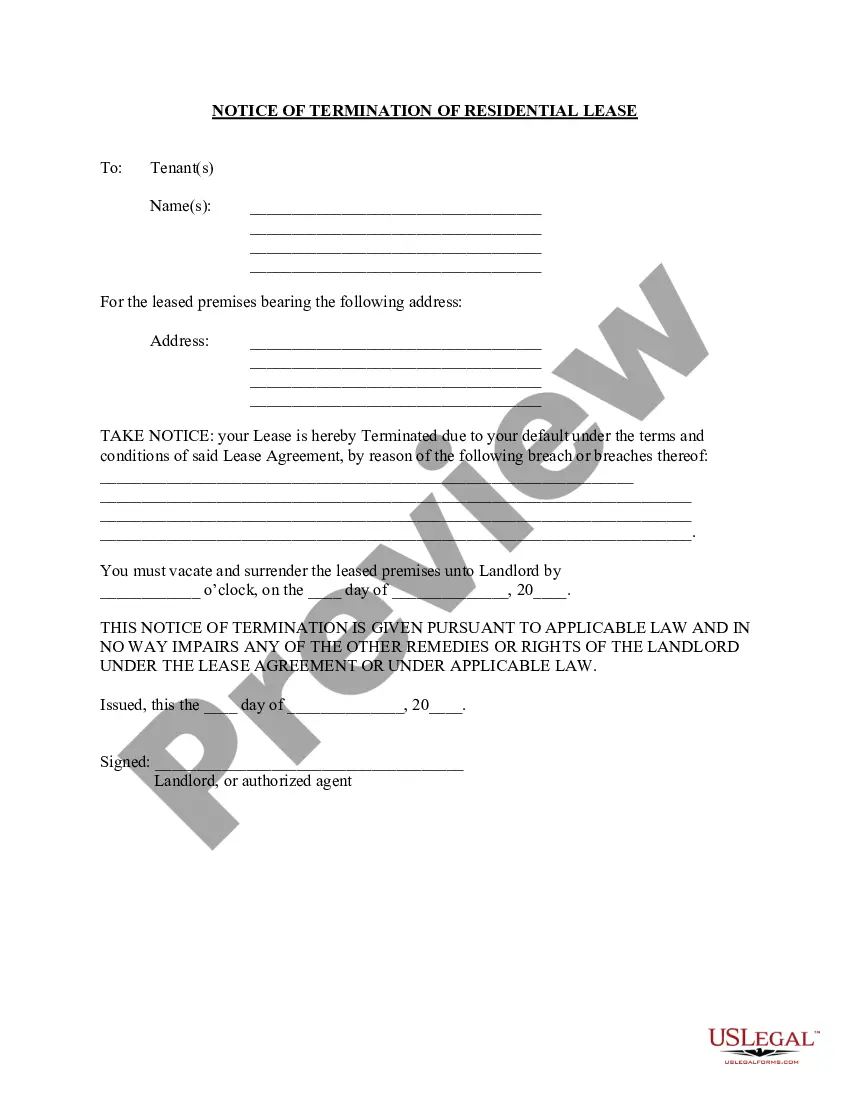
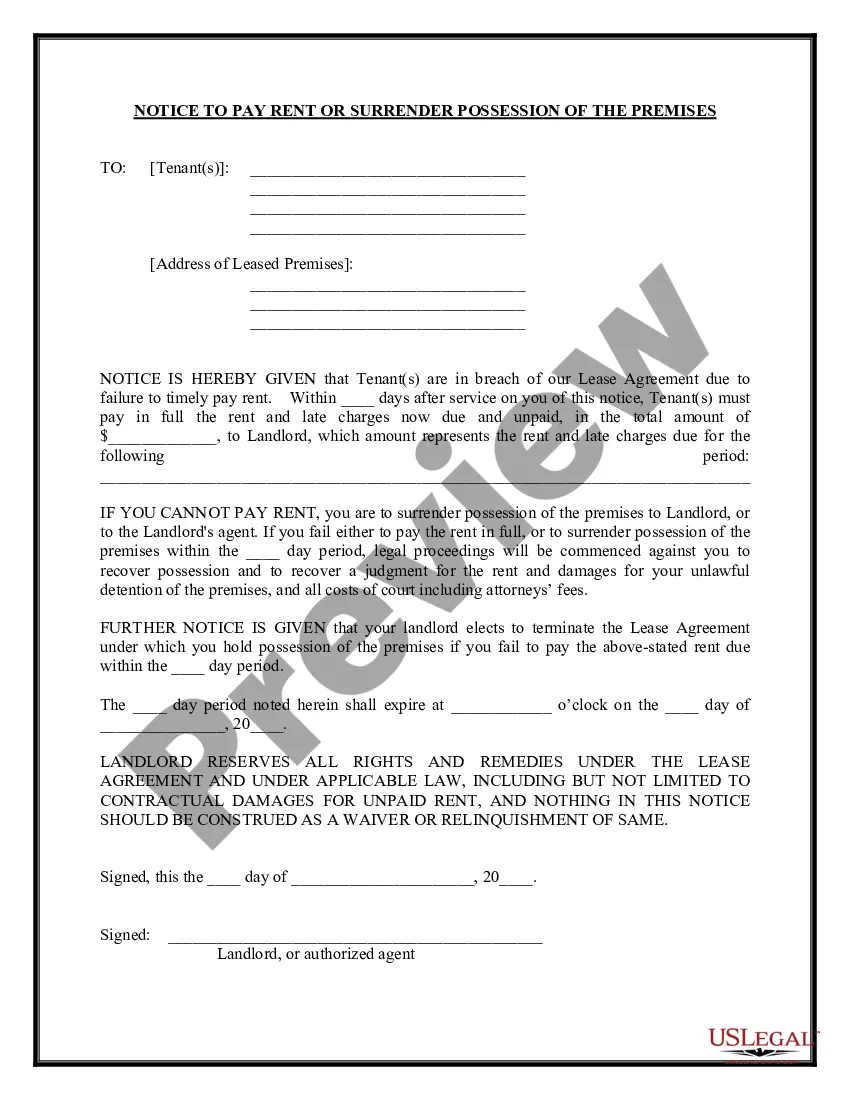
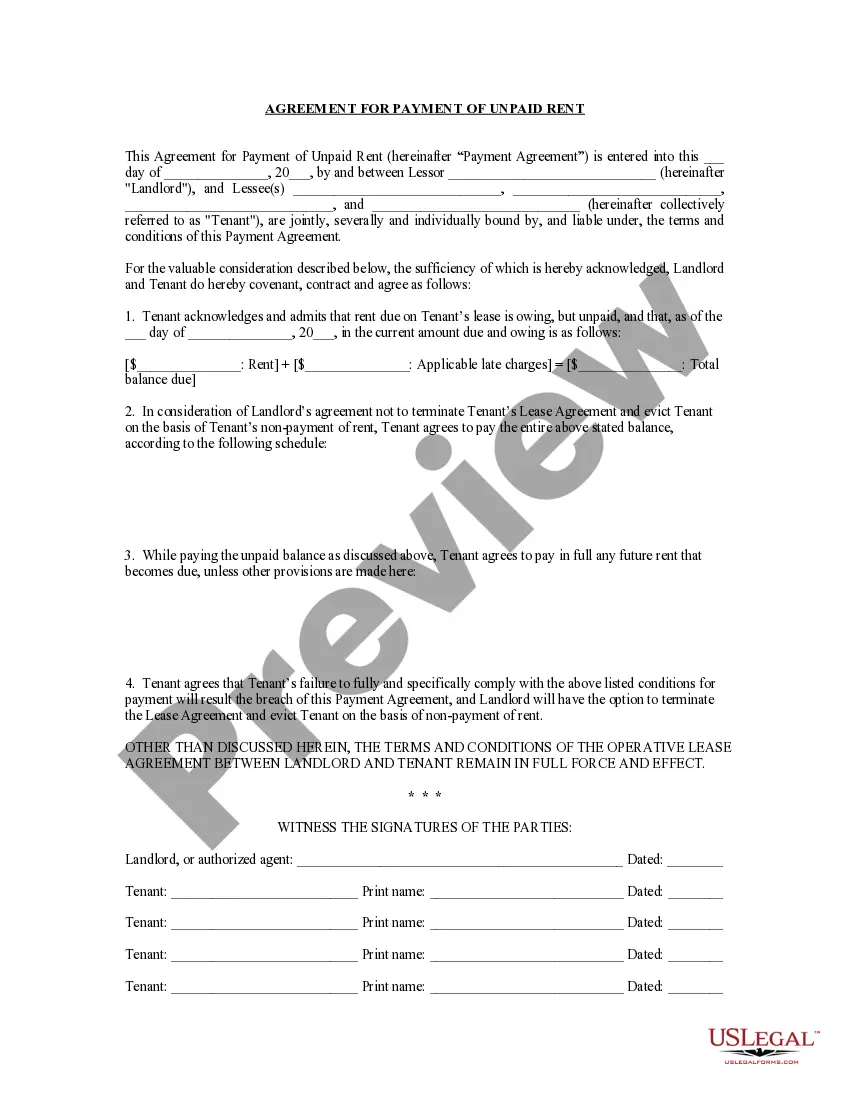
The Notice of Default in Payment of Rent as Warning Prior to Demand to Pay or Terminate for Residential Property is a formal notification from a landlord to a tenant indicating that rent has not been paid. This document serves as a warning to the tenant about their overdue rent obligations, providing them the opportunity to rectify the situation before any demands for payment or lease termination actions are initiated. It is crucial in maintaining a clear communication line, ensuring that tenants are aware of their payment status and potential consequences of continued non-payment.
Key components of this form
- Identification of the tenant and landlord, including addresses.
- Specific month for which rent is overdue.
- Details regarding the lease agreement and due dates for payments.
- Notification of late charges, if applicable.
- Consequences of continued non-payment, including the possibility of lease termination.
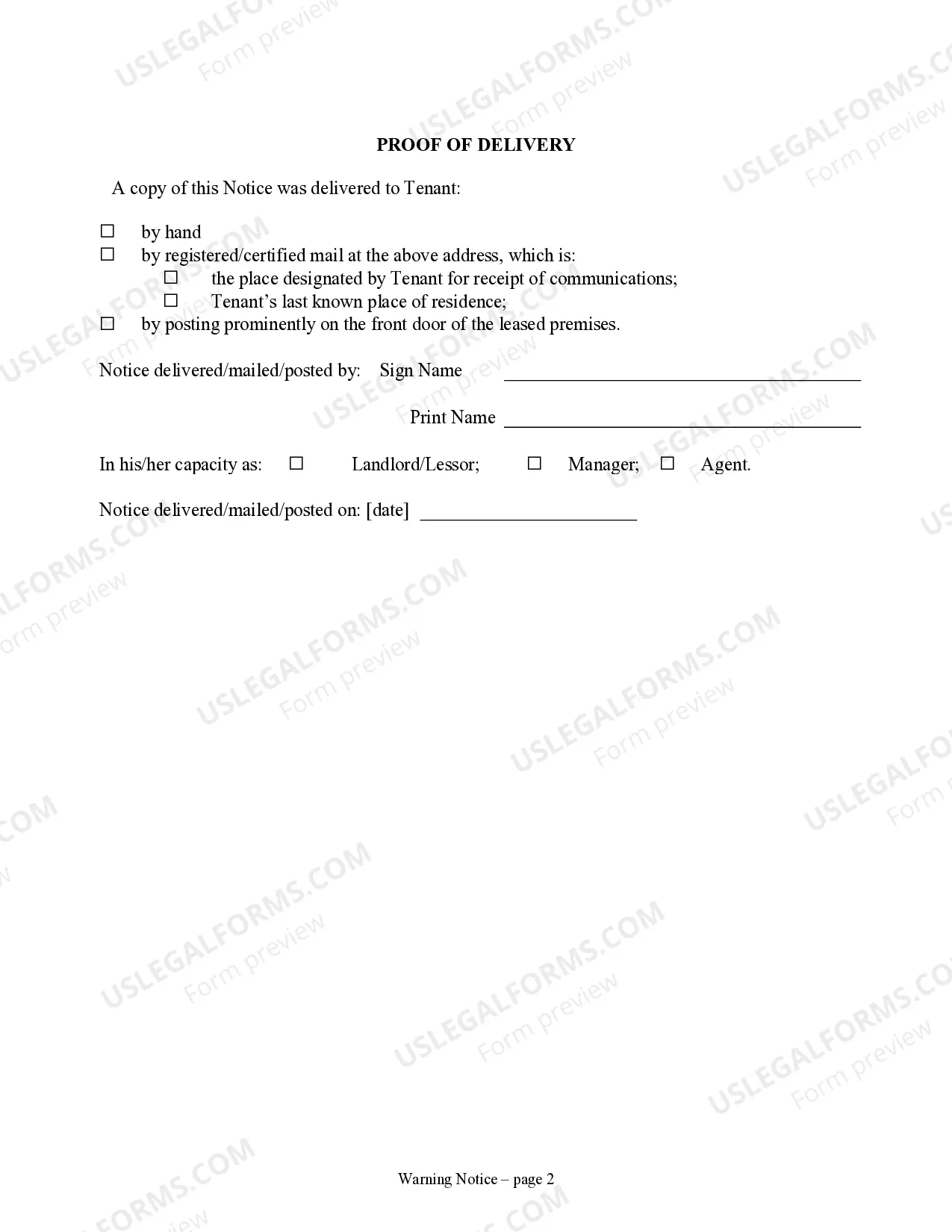
- Proof of delivery section to confirm the notice was delivered to the tenant.
Situations where this form applies
This form should be used when a tenant has failed to make a rent payment by the due date, and the landlord wishes to formally advise the tenant of the default. It serves as a warning before legal actions, such as evictions, are taken. This step is a necessary part of the process in many states to provide tenants an opportunity to correct their payment issues and avoid further escalation.
Who can use this document
- Residential landlords seeking to notify tenants of overdue rent.
- Property managers acting on behalf of landlords.
- Tenants who need a formal communication from their landlord about payments.
- Any individual involved in a rental agreement where timely rent payments are required.
Completing this form step by step
- Identify and enter the parties involved: landlord and tenant names and addresses.
- Specify the month for which the rent has not been paid.
- Include the due date for rent as outlined in the lease agreement.
- List the amount of rent due, including any late charges, if applicable.
- Sign and date the notice to authenticate it before delivery.
- Choose a delivery method and complete the proof of delivery section.
Notarization requirements for this form
Notarization is generally not required for this form. However, certain states or situations might demand it. You can complete notarization online through US Legal Forms, powered by Notarize, using a verified video call available anytime.
Get your form ready online
Our built-in tools help you complete, sign, share, and store your documents in one place.
Make edits, fill in missing information, and update formatting in US Legal Forms—just like you would in MS Word.
Download a copy, print it, send it by email, or mail it via USPS—whatever works best for your next step.
Sign and collect signatures with our SignNow integration. Send to multiple recipients, set reminders, and more. Go Premium to unlock E-Sign.
If this form requires notarization, complete it online through a secure video call—no need to meet a notary in person or wait for an appointment.
We protect your documents and personal data by following strict security and privacy standards.

Make edits, fill in missing information, and update formatting in US Legal Forms—just like you would in MS Word.

Download a copy, print it, send it by email, or mail it via USPS—whatever works best for your next step.

Sign and collect signatures with our SignNow integration. Send to multiple recipients, set reminders, and more. Go Premium to unlock E-Sign.

If this form requires notarization, complete it online through a secure video call—no need to meet a notary in person or wait for an appointment.

We protect your documents and personal data by following strict security and privacy standards.
Avoid these common issues
- Failing to provide the specific month of non-payment.
- Not including the correct late charges or total amount due.
- Neglecting to sign and date the form before delivery.
- Using an incorrect method for proof of delivery.
Benefits of completing this form online
- Convenience of immediate access to downloadable templates.
- Editability to customize the form according to specific tenant and property details.
- Reliability as forms are drafted by licensed attorneys to ensure compliance with legal standards.
Legal use & context
- This form serves as a formal legal notice of default in rent payments, which may be necessary for any future eviction proceedings.
- Adhering to proper notification procedures can help maintain the landlord's legal rights in the enforcement of the lease agreement.
- Failure to use this notice properly could limit a landlord's ability to terminate a lease or pursue legal action.
Key takeaways
- The Notice of Default is vital for landlords to formally inform tenants of overdue rent.
- Using this form helps in legally protecting the landlord's rights while also giving the tenant a chance to rectify their situation.
- Understanding local requirements, such as the notice period, is crucial for proper usage.
Looking for another form?
Form popularity
FAQ
In Indiana, tenants have the right to put rent money towards repairs in the event a landlord hasn't made repairs within a reasonable time. Tenants also have the right to terminate a lease agreement when premises become uninhabitable.Some rental units may use federal or state subsidies to reduce the cost of housing.
Indiana has one of the most lenient statutes in the country for eviction for nonpayment of rent: A landlord must typically provide 10 days' notice to pay rent or move before they can file to evict. Most other states have a waiting period of 3 to 7 days before filing.
In Colorado, evictions are sometimes referred to as forcible entry & detainer (FED). Before you can file for eviction, you must generally provide 10 days' notice (increased from 3 days prior) for tenants to correct a deficiency or leave the property, except in certain circumstances.
Indiana law requires landlords to give a 30-day notice before filing an eviction action unless the lease states a different notice period or other circumstances apply as defined by Indiana law. For example, a tenant's use of the unit for criminal activity can reduce the landlord's required notice time.
Unlike some states, Indiana does not have a law that lets tenants withhold rent or make repairs and deduct it from the rent. Generally, if you do not pay rent, you could be evicted. There may be very limited cases where you can repair and deduct, but you should talk to a lawyer first.
If the landlord wishes to end a month-to-month tenancy, the landlord is required to give the tenant a written 30-day notice to quit. This notice will inform the tenant of the landlord's intentions to end the tenancy and that the tenant must move out of the rental unit by the end of 30 days.
Indiana has one of the most lenient statutes in the country for eviction for nonpayment of rent: A landlord must typically provide 10 days' notice to pay rent or move before they can file to evict. Most other states have a waiting period of 3 to 7 days before filing.
In Indiana, tenants have the right to put rent money towards repairs in the event a landlord hasn't made repairs within a reasonable time. Tenants also have the right to terminate a lease agreement when premises become uninhabitable.
0 A landlord has the right to enter the rental unit, although he cannot enter any time he wishes. The landlord first gives reasonable notice to visit at reasonable hours. Neither instance of reasonable is defined in the Indiana code, but most landlords give 24-hour notice and enter during normal business hours.