Indiana Letter from Landlord to Tenant about time of intent to enter premises
About this form
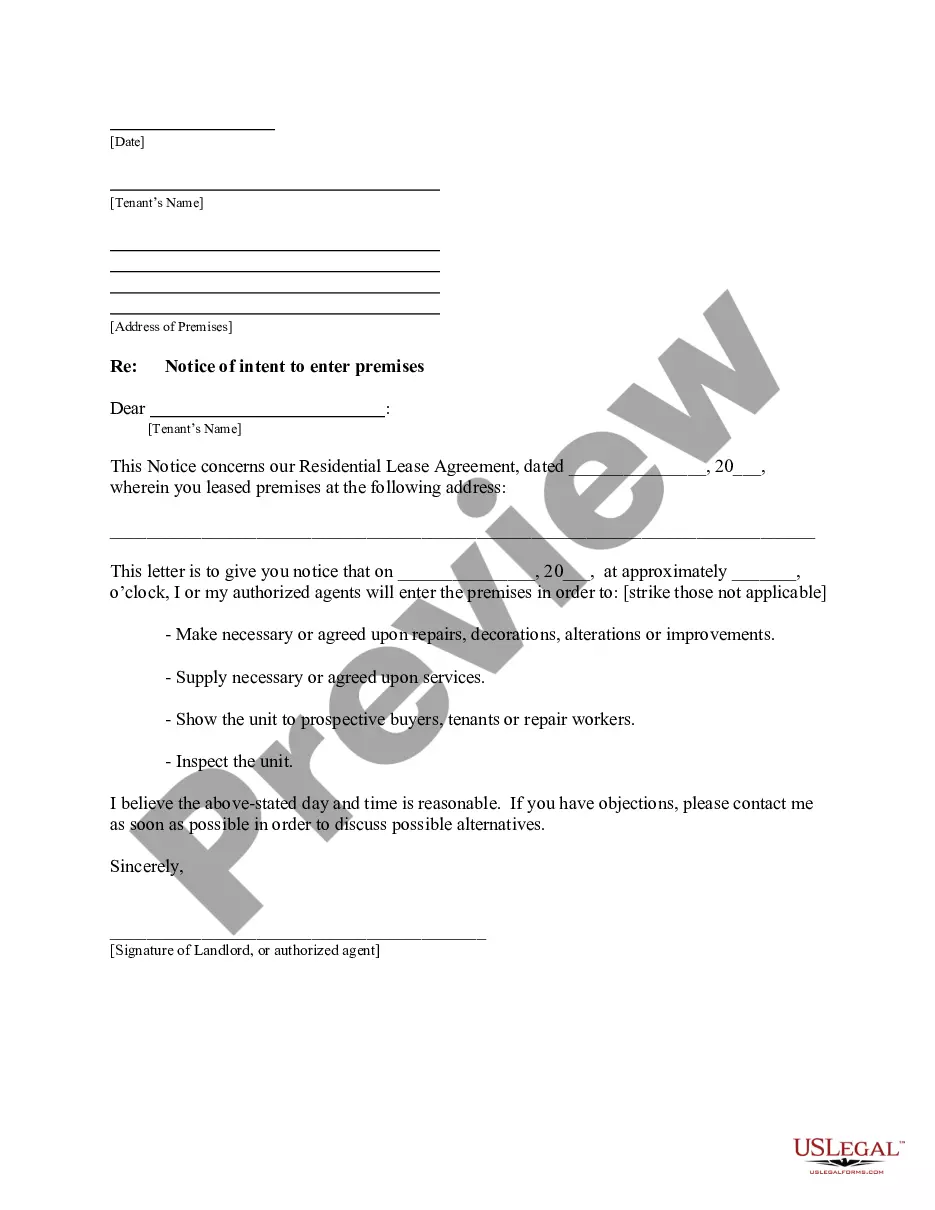
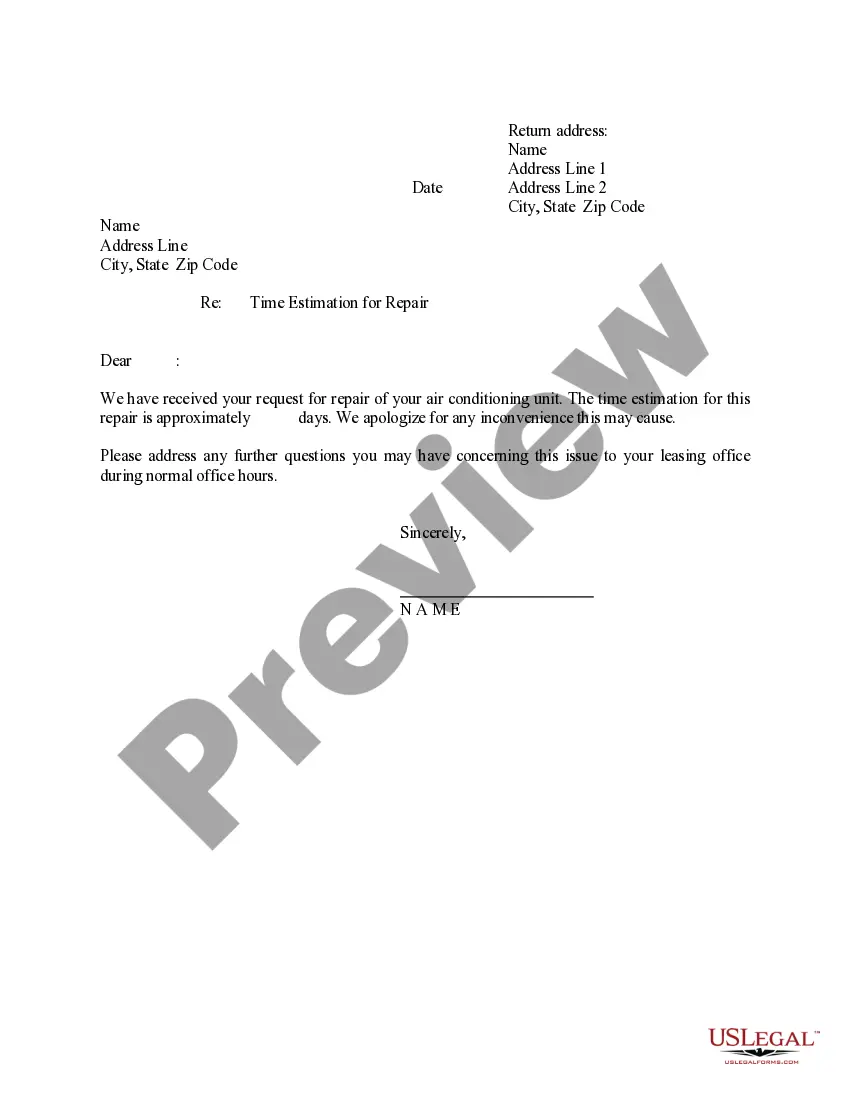
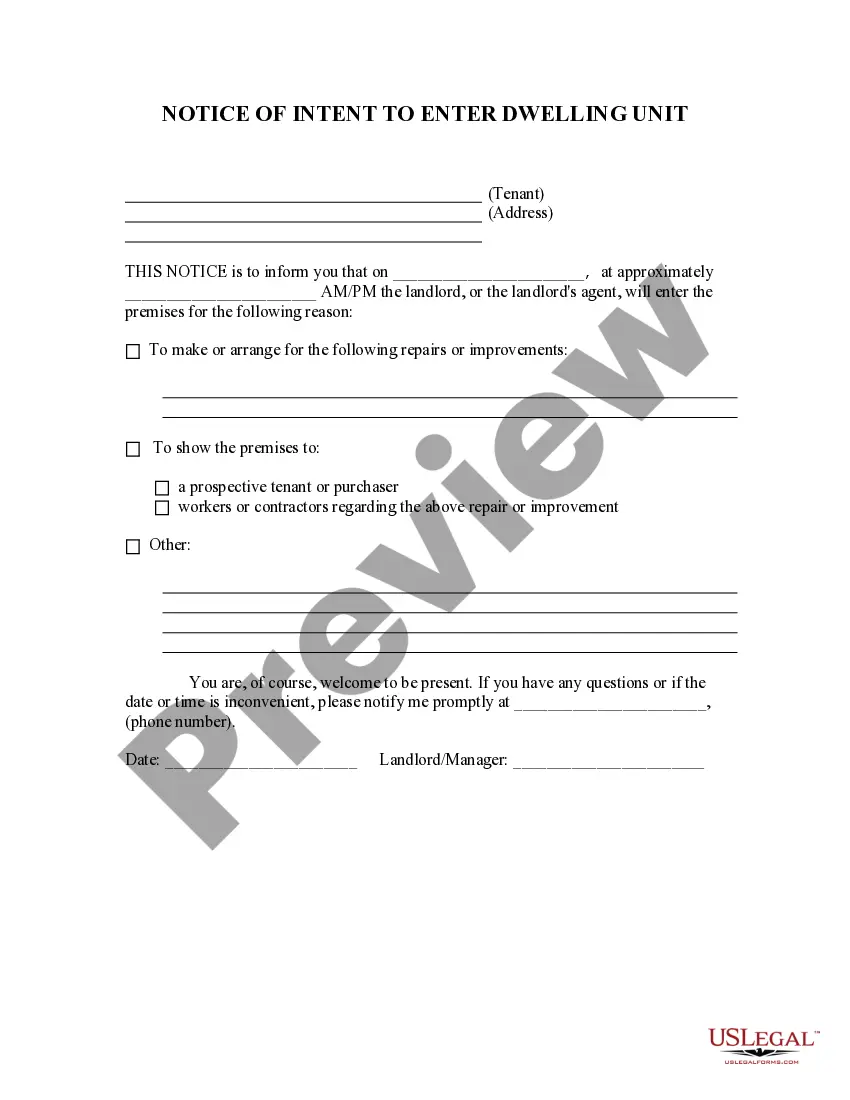
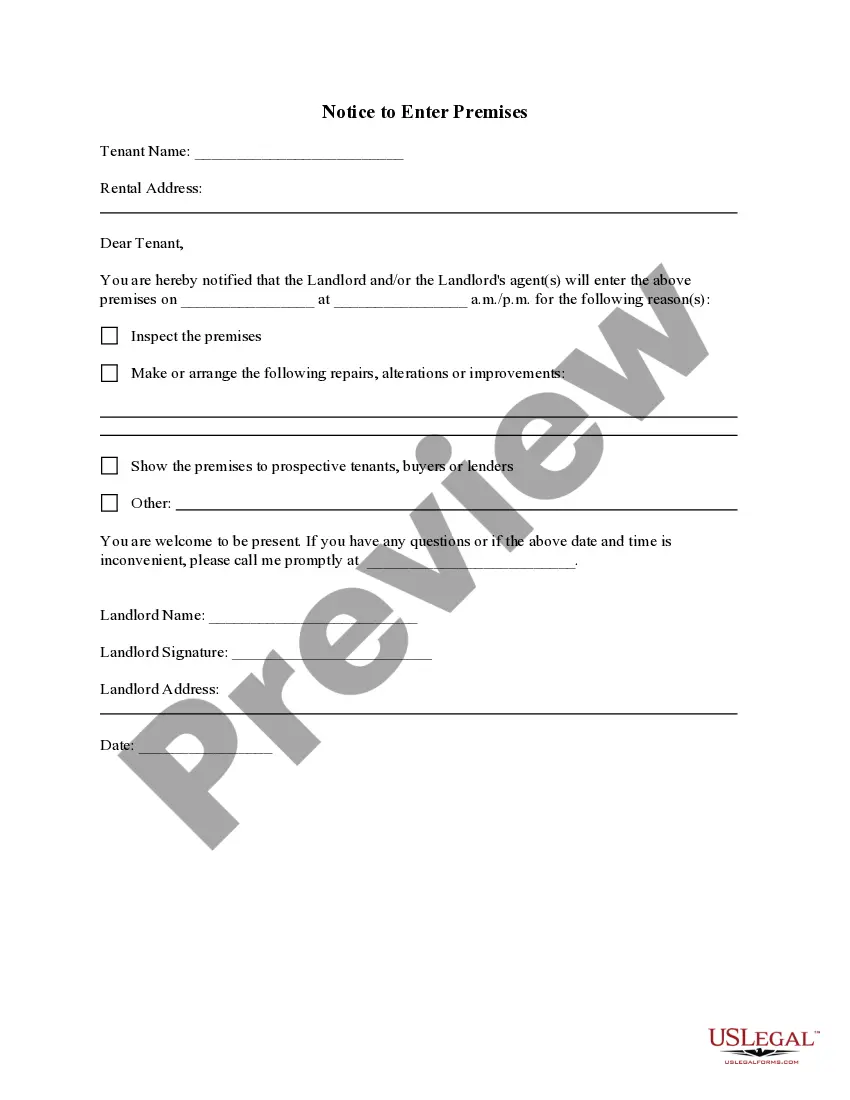
This is a Letter from Landlord to Tenant about time of intent to enter premises. This form serves as a formal notice to the tenant that the landlord plans to enter the rental property at a specified date and time. It is essential for landlords to provide such notice to ensure compliance with tenant rights and lease agreements, distinguishing it from other forms of communication regarding property access.
What’s included in this form
- Date of the original residential lease agreement.
- Address of the leased premises.
- Date and time of the intended entry.
- Purpose of entry (e.g., repairs, inspections).
- Instructions for the tenant to voice any objections.
- Signature of the landlord or authorized agent.
Common use cases
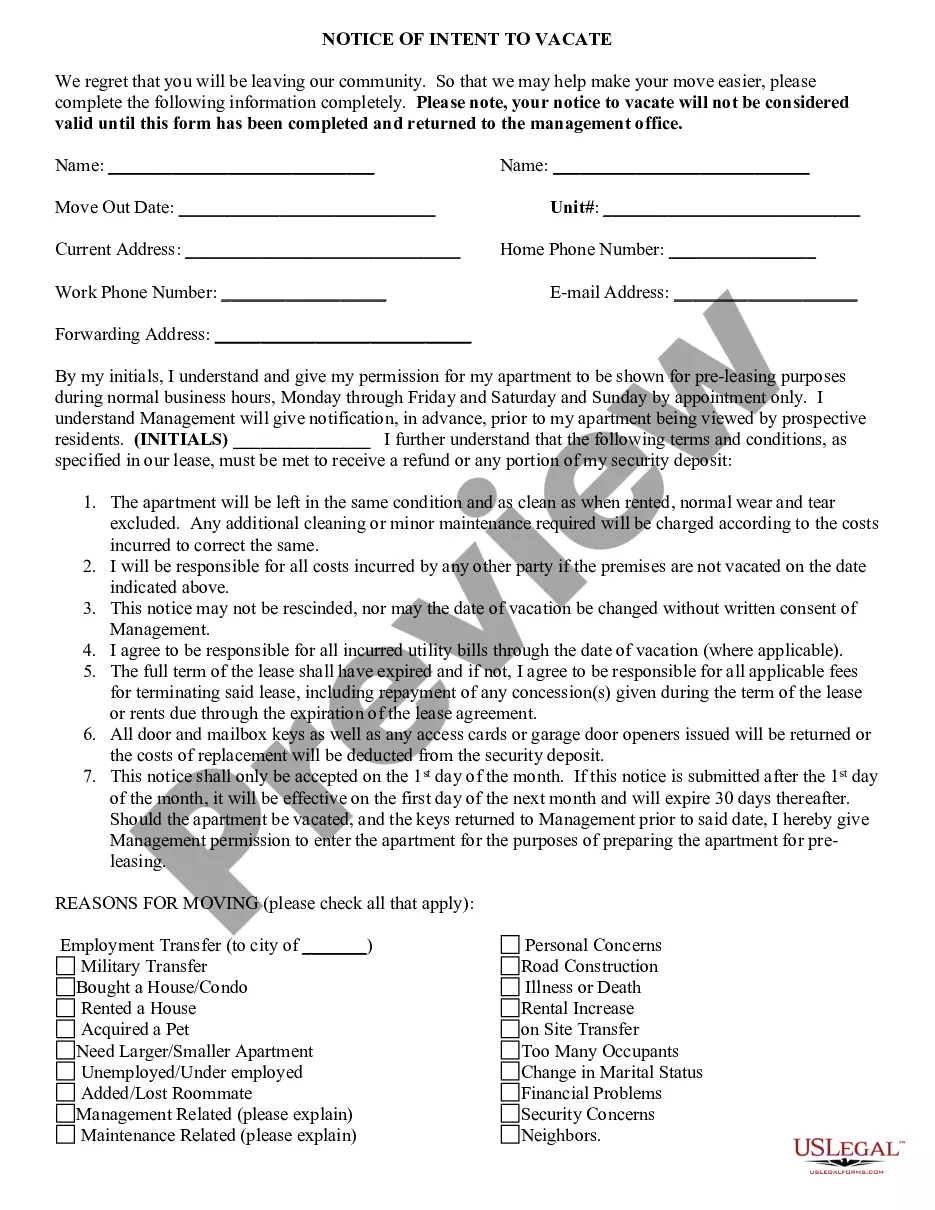
This form is needed when a landlord intends to access the rental unit for specific reasons such as conducting repairs, providing services, showing the property to prospective buyers or tenants, or performing inspections. Providing this notice helps maintain clear communication and respect between landlord and tenant.
Who should use this form
- Landlords managing residential properties.
- Property managers acting on behalf of landlords.
- Real estate agents showing properties to potential buyers or tenants.
- Any authorized individuals needing to access the premises for specified reasons.
How to prepare this document
- Identify yourself as the landlord and provide your contact information.
- Insert the date of the original lease agreement.
- Specify the address of the rental property.
- Fill in the date and time you plan to enter the property.
- Clarify the purpose of your visit by checking the relevant options.
- Sign the letter and provide the date of signing.
Notarization guidance
Notarization is not commonly needed for this form. However, certain documents or local rules may make it necessary. Our notarization service, powered by Notarize, allows you to finalize it securely online anytime, day or night.
Get your form ready online
Our built-in tools help you complete, sign, share, and store your documents in one place.
Make edits, fill in missing information, and update formatting in US Legal Forms—just like you would in MS Word.
Download a copy, print it, send it by email, or mail it via USPS—whatever works best for your next step.
Sign and collect signatures with our SignNow integration. Send to multiple recipients, set reminders, and more. Go Premium to unlock E-Sign.
If this form requires notarization, complete it online through a secure video call—no need to meet a notary in person or wait for an appointment.
We protect your documents and personal data by following strict security and privacy standards.

Make edits, fill in missing information, and update formatting in US Legal Forms—just like you would in MS Word.

Download a copy, print it, send it by email, or mail it via USPS—whatever works best for your next step.

Sign and collect signatures with our SignNow integration. Send to multiple recipients, set reminders, and more. Go Premium to unlock E-Sign.

If this form requires notarization, complete it online through a secure video call—no need to meet a notary in person or wait for an appointment.

We protect your documents and personal data by following strict security and privacy standards.
Common mistakes to avoid
- Failing to provide adequate notice per local laws.
- Not including the purpose of entry in the notice.
- Missing the tenant's name or address on the form.
- Not signing the letter, making it invalid.
Advantages of online completion
- Convenient access to legal documents from anywhere.
- Easily customizable to fit specific situations.
- Reliable format compliant with legal standards.
- Immediate downloads can save time in urgent situations.
Legal use & context
- This form serves as a legal notice to tenants about the landlord's intent to enter the premises.
- Failure to provide proper notice may affect the landlord's rights under the lease agreement.
- This notice can serve as evidence of compliance with landlord-tenant laws if disputes arise.
Key takeaways
- Always provide clear and timely notice to tenants regarding entry into their premises.
- Ensure that you understand state-specific laws regarding notice requirements.
- Using a formal letter helps maintain good communication and legal compliance.
Looking for another form?
Form popularity
FAQ
Complaints may also be submitted online at marionhealth.org. For concerns about vacant properties, contact the Mayor's Action Center at 317-327-4622. Complaints also may be submitted using RequestIndy's website, maps.indy.gov/RequestIndy/, or its mobile app.
There are no stipulations on how much you can or can't raise the rent by - it's solely up to your discretion. As mentioned earlier, the only thing really required is that you give Tenants notice 30 days prior to the end of their lease agreement to let them know that rent will be increasing for the next lease term.
In Indiana, tenants have the right to put rent money towards repairs in the event a landlord hasn't made repairs within a reasonable time. Tenants also have the right to terminate a lease agreement when premises become uninhabitable.
At a Glance: Late Fees: There are no state statutes that limit late fees. Security Deposit: No limitations on the amount of security deposits, pet deposits or non-refundable deposit or fees. Returned Payment Fee Limit: $20 which must be written into the lease.
0 A landlord has the right to enter the rental unit, although he cannot enter any time he wishes. The landlord first gives reasonable notice to visit at reasonable hours. Neither instance of reasonable is defined in the Indiana code, but most landlords give 24-hour notice and enter during normal business hours.
When does the landlord have to return my deposit? The landlord must send you a letter within 45 days of when your lease ends and you move out (unless your lease says the landlord must send it in less than 45 days). The letter must either return your deposit or give you a list of any deductions the landlord claims.
The most your landlord can charge as a late fee is 5% of your monthly rent. For example, if your monthly rent is $1,000, the landlord can charge you up to $50 as a late fee. If you receive a rent subsidy, you may not pay all of your rent yourself.
ENTRY WITHOUT NOTICE The landlord may enter the residential premises without permission and without giving the tenant any notice for two reasons: If the landlord believes there is an emergency; 2022 If the landlord believes the tenant has abandoned the residential premises.
The answer is quite simple in Australia: you can charge late fees for outstanding rent if you wish to. But to be fair and legal, you must have already included a clause in your original signed tenancy agreement stipulating that you will charge a late fee (set amount) for rent arrears.