Indiana Letter from Landlord to Tenant as Notice to remove unauthorized pets from premises
What is this form?
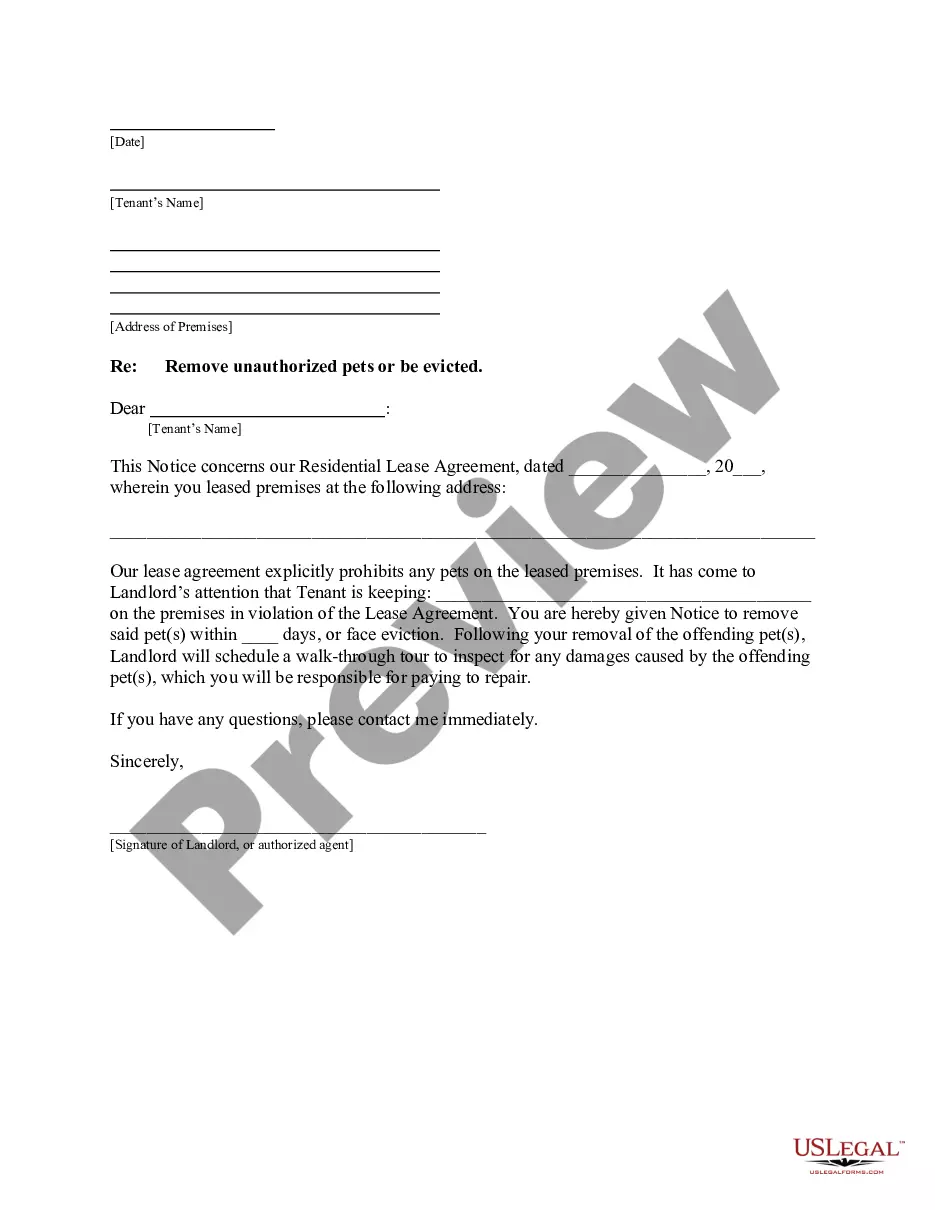
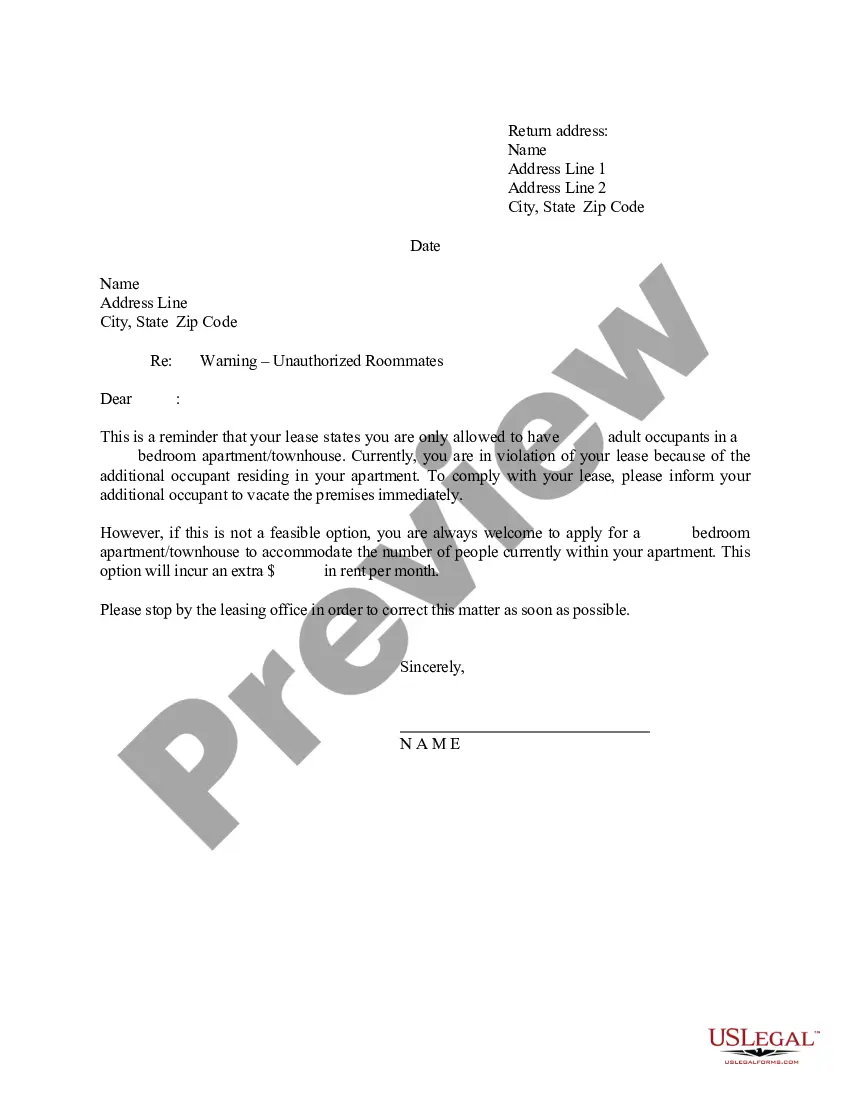
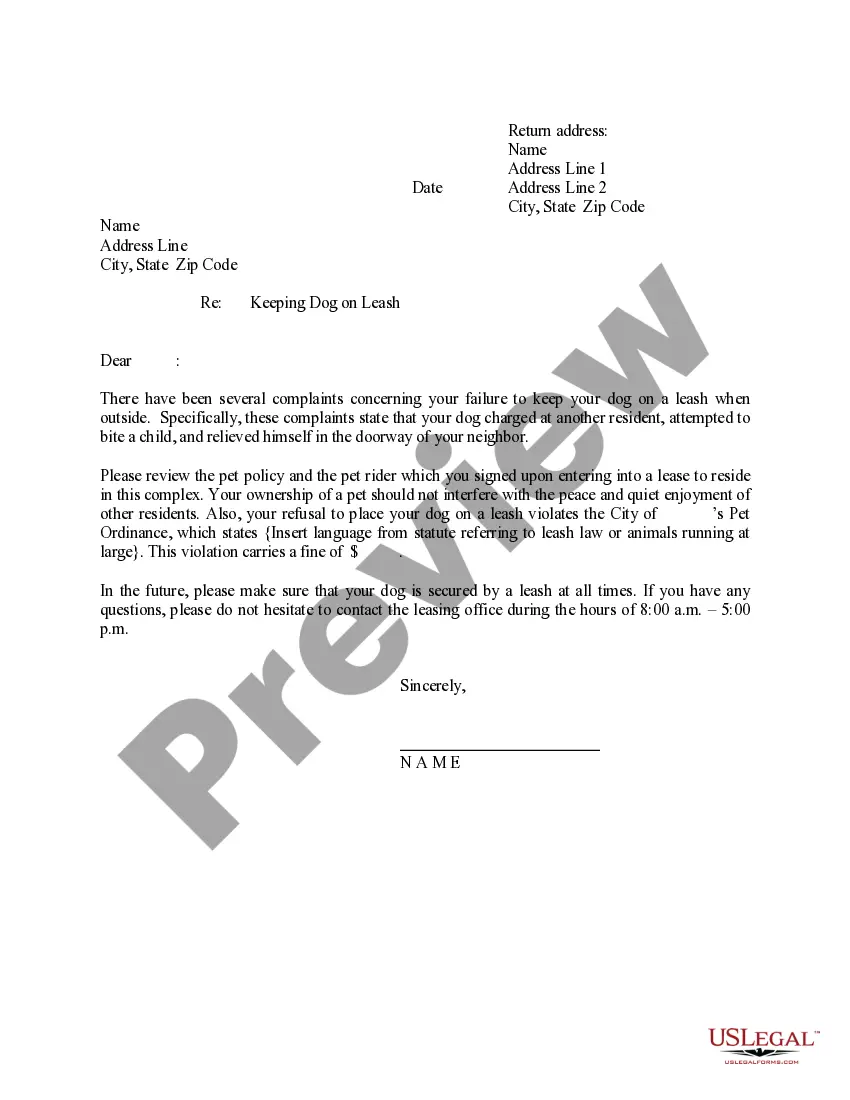
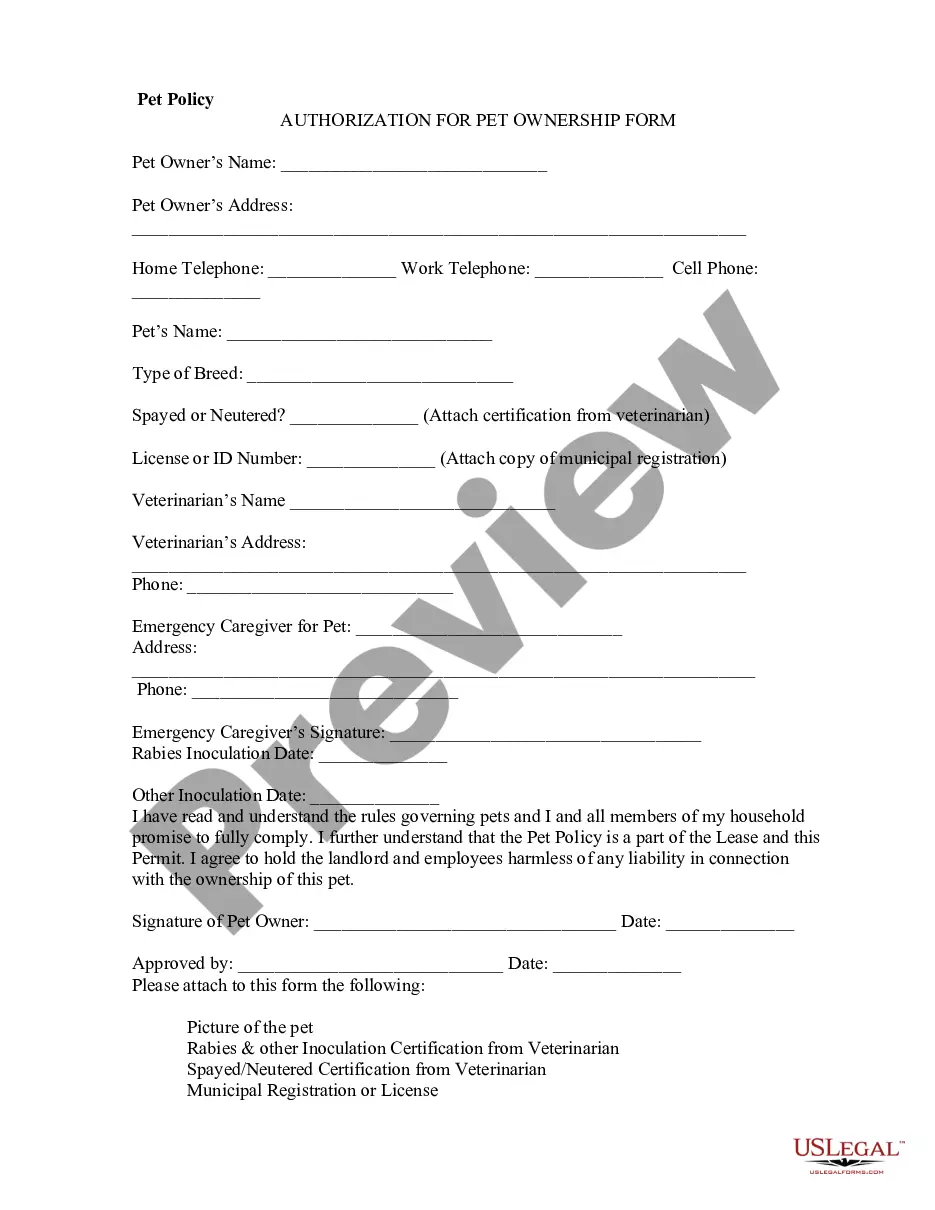
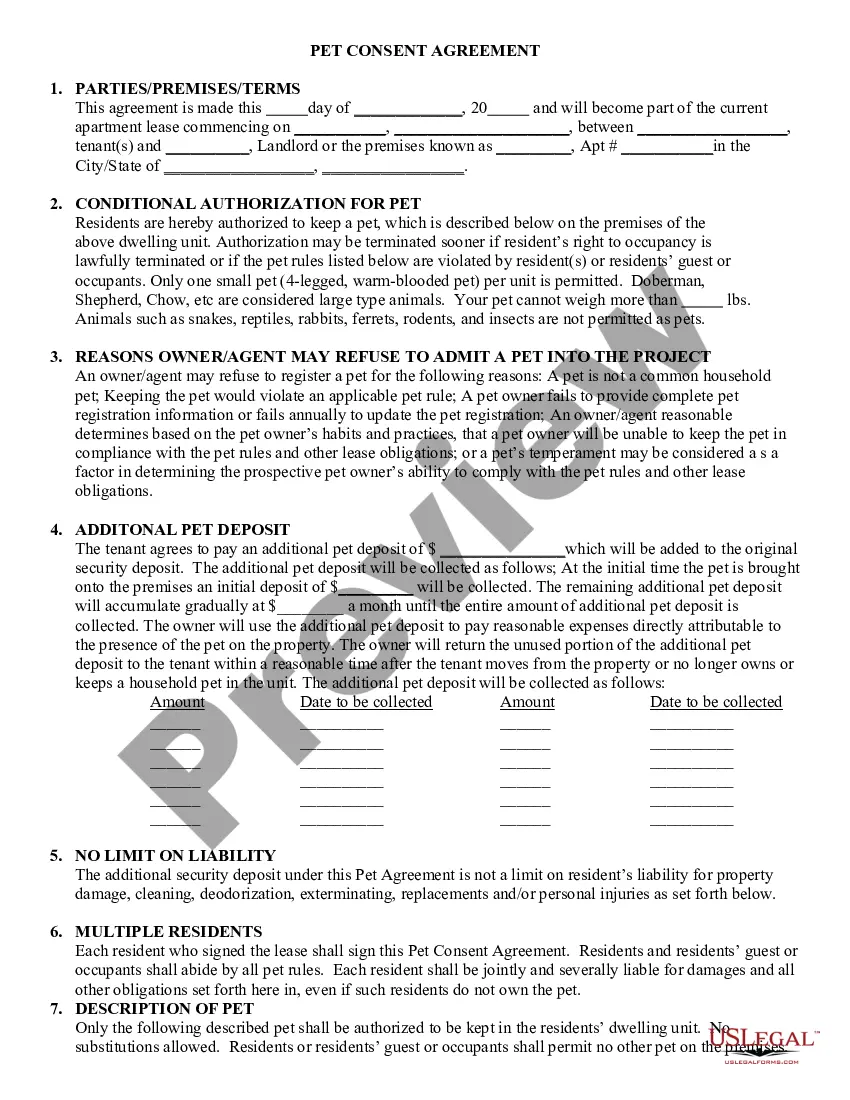
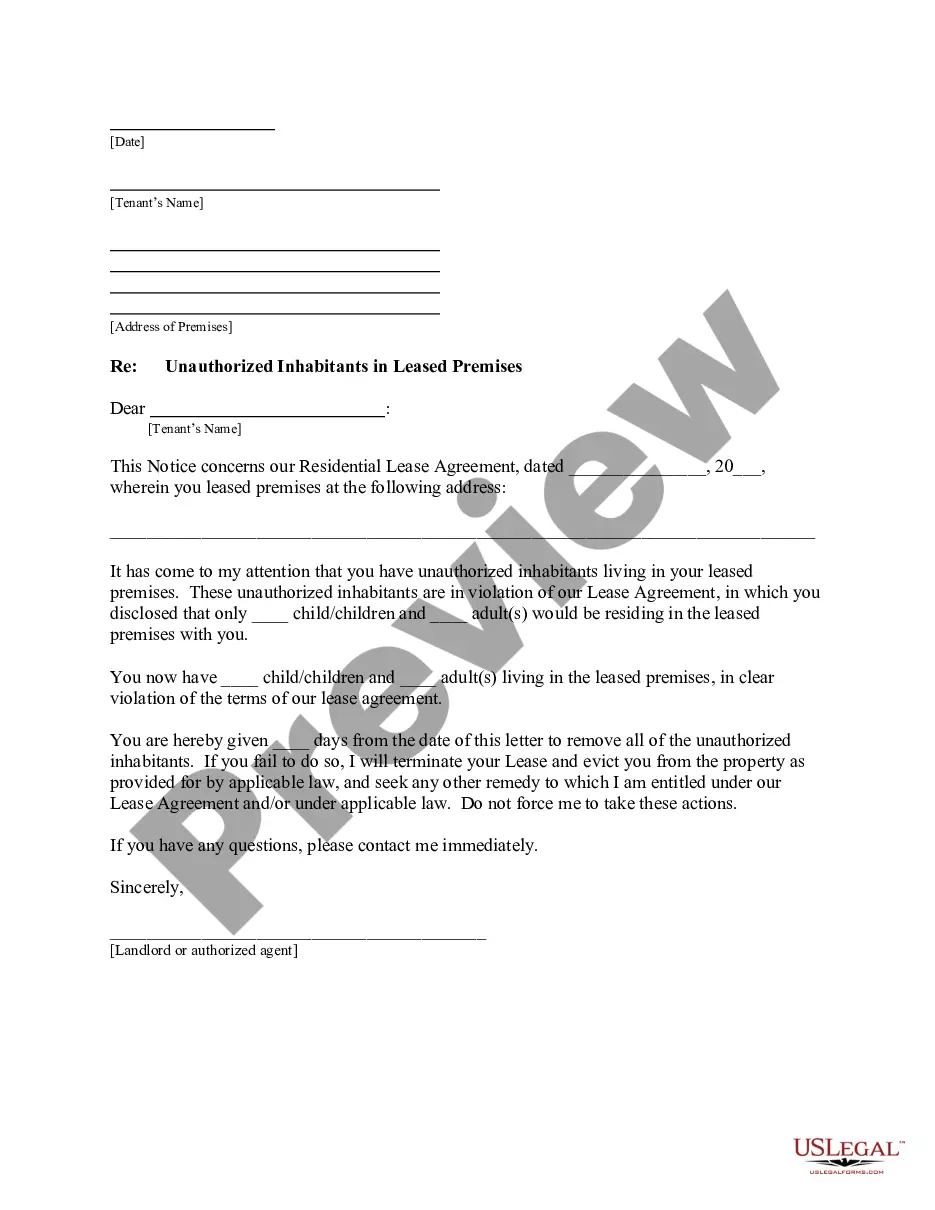
This Letter from Landlord to Tenant as Notice to remove unauthorized pets from premises is a legal document that formally notifies a tenant of the need to remove any pets that are not permitted under their lease agreement. This form is essential for landlords to communicate lease violations in writing, ensuring that tenants are aware of their obligations and the potential consequences for noncompliance.
What’s included in this form
- Date of the lease agreement.
- Address of the leased premises.
- Description of the unauthorized pets.
- Timeline for removal of pets.
- Schedule for a walk-through inspection.
- Signature of the landlord or authorized agent.
Common use cases
Use this letter when you, as a landlord, discover that your tenant has unauthorized pets on the premises, violating the lease agreement. It serves as an official notice requiring the tenant to remove the pets within a specified timeframe to avoid potential eviction and additional charges for damages caused by the pets.
Who should use this form
- Landlords who have tenants with unauthorized pets.
- Property managers acting on behalf of landlords.
- Individuals leasing residential properties who need to enforce lease terms.
How to prepare this document
- Identify the date of the lease agreement.
- Fill in the complete address of the leased property.
- Clearly describe the unauthorized pets being kept.
- Specify the number of days the tenant has to remove the pets.
- Sign the letter as the landlord or authorized agent.
Notarization guidance
This form does not typically require notarization to be legally valid. However, some jurisdictions or document types may still require it. US Legal Forms provides secure online notarization powered by Notarize, available 24/7 for added convenience.
Get your form ready online
Our built-in tools help you complete, sign, share, and store your documents in one place.
Make edits, fill in missing information, and update formatting in US Legal Forms—just like you would in MS Word.
Download a copy, print it, send it by email, or mail it via USPS—whatever works best for your next step.
Sign and collect signatures with our SignNow integration. Send to multiple recipients, set reminders, and more. Go Premium to unlock E-Sign.
If this form requires notarization, complete it online through a secure video call—no need to meet a notary in person or wait for an appointment.
We protect your documents and personal data by following strict security and privacy standards.

Make edits, fill in missing information, and update formatting in US Legal Forms—just like you would in MS Word.

Download a copy, print it, send it by email, or mail it via USPS—whatever works best for your next step.

Sign and collect signatures with our SignNow integration. Send to multiple recipients, set reminders, and more. Go Premium to unlock E-Sign.

If this form requires notarization, complete it online through a secure video call—no need to meet a notary in person or wait for an appointment.

We protect your documents and personal data by following strict security and privacy standards.
Common mistakes to avoid
- Failing to provide the correct date of the lease agreement.
- Omitting the specific address of the property.
- Not clearly identifying the unauthorized pets.
- Setting an unreasonable timeline for pet removal.
Advantages of online completion
- Easily customizable and editable to fit your specific situation.
- Reliable templates drafted by licensed attorneys.
- Immediate access to downloadable forms without the need for in-person visits.
Legal use & context
- This form is legally enforceable as long as it complies with local laws.
- Failure to adhere to notice requirements can impact eviction proceedings.
Looking for another form?
Form popularity
FAQ
A tenant is a person who rents a unit from a property owner or landlord for a pre-determined lease period. Every person occupying the unit is usually considered a tenant, so there are often multiple tenants in a single unit.
The tenancy agreement is a contract between you and your landlord. It may be written or verbal. The tenancy agreement gives certain rights to both you and your landlord. For example, your right to occupy the accommodation and your landlord's right to receive rent for letting the accommodation.
The term landlord refers to a person who owns property and allows another person to use it for a fee.The person using the property is called a tenant. The agreement between a landlord and a tenant is called a lease or rental agreement.
You are a lodger if you live with your landlord and share a kitchen, bathroom or other living accommodation with them. Lodgers are 'excluded occupiers'. This means that your landlord can evict you without going to court.
A renter is a person who pays rent in other to use something that to belongs to someone else be it a house, room or even a car. But a tenant can be a renter, free occupier or a caretaker of someone's property eg.
Review Your Lease Before You Sign. Research Local Laws. Keep Records. Pay Your Rent. Maintain Respectful Communication. Seek an Agreeable Solution. Request Repairs in Writing. What Do You Think?
If you think your landlord is violating the Fair Housing Act, you can get that landlord in trouble by filing a complaint at HUD.gov. Your remedy for breach of quiet enjoyment is to terminate the lease and move or sue in small claims court.
A tenant is someone who is permitted to occupy the property of another person, by signing a lease or rental agreement. The rental agreement empowers the tenant in some ways but also restricts them from taking overall legal ownership of the property.
1 : a holding of an estate or a mode of holding an estate specifically : the temporary possession or occupancy of something (such as a house) that belongs to another. 2 : the period of a tenant's occupancy or possession.