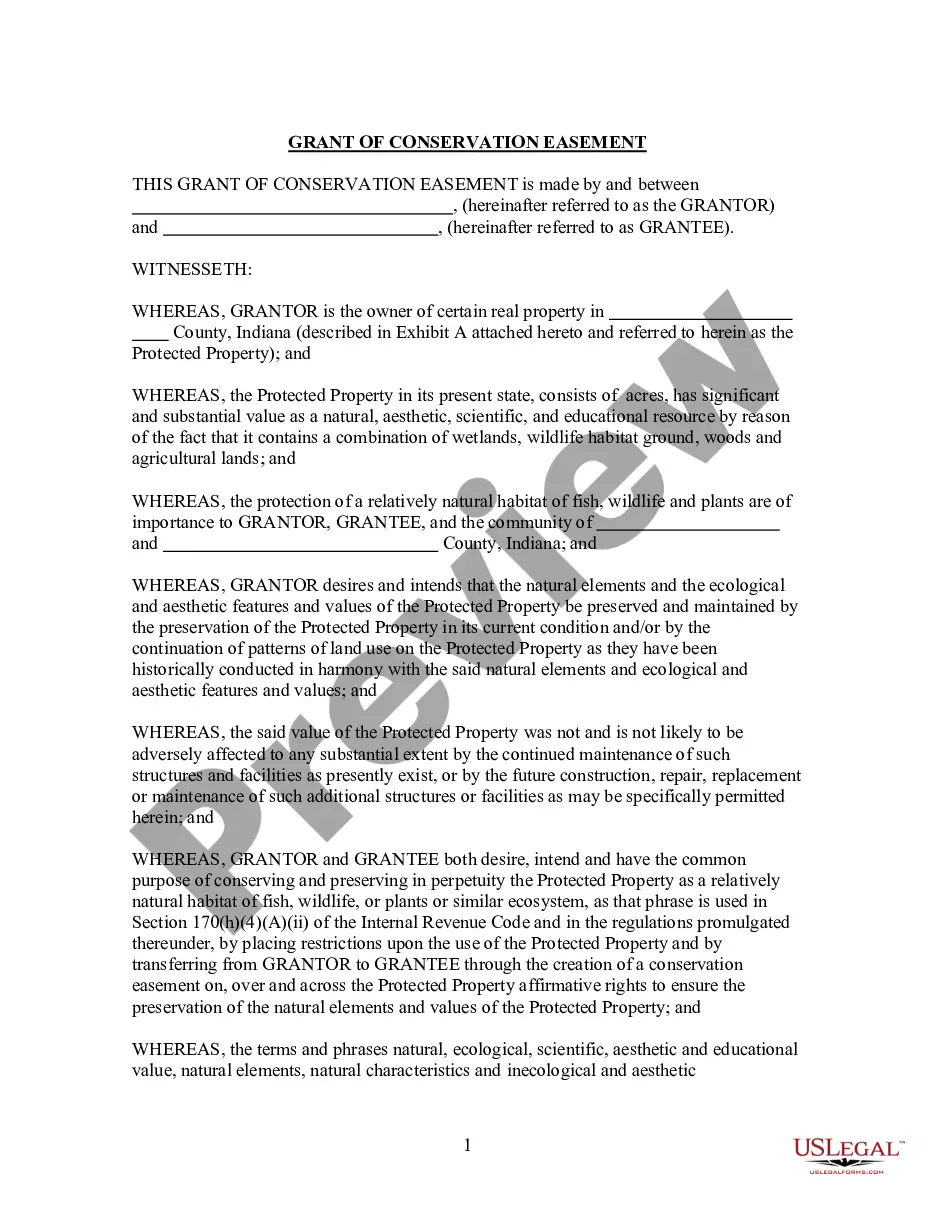
Indiana Warranty Deed from Husband and Wife to LLC
About this form
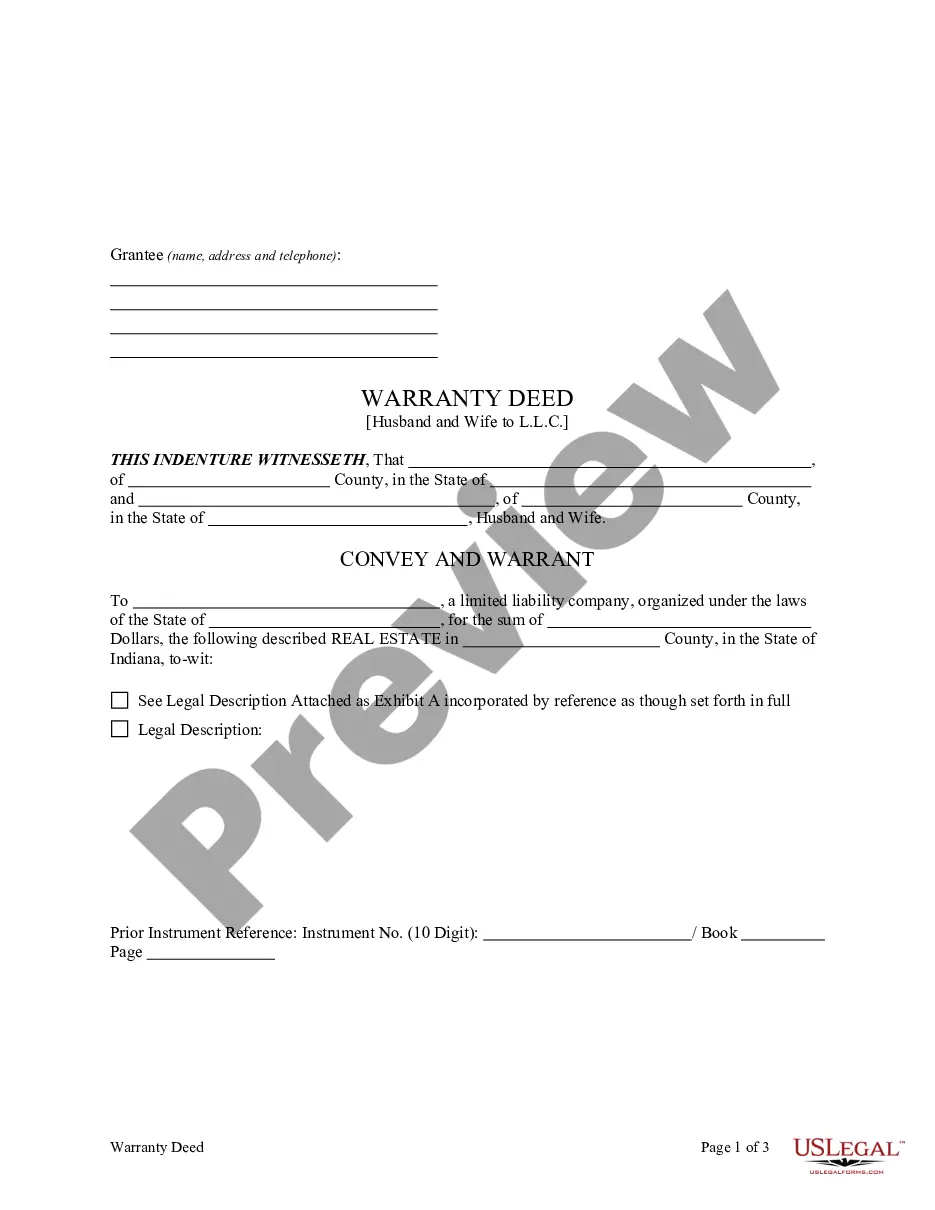
A Warranty Deed from Husband and Wife to LLC is a legal document that facilitates the transfer of property ownership from a married couple to a limited liability company (LLC). This form establishes that the couple (grantors) is conveying their interest in the property to the LLC (grantee) while assuring the LLC that there are no outstanding claims against the property. Unlike a simple quitclaim deed, a warranty deed provides a higher level of protection for the grantee, ensuring that the title is clear and free from any encumbrances.
Form components explained
- Identifying information of the grantors (husband and wife) and the grantee (LLC).
- Description of the property being transferred, including its legal description.
- Statement of warranty assuring that the property is free of defects in title.
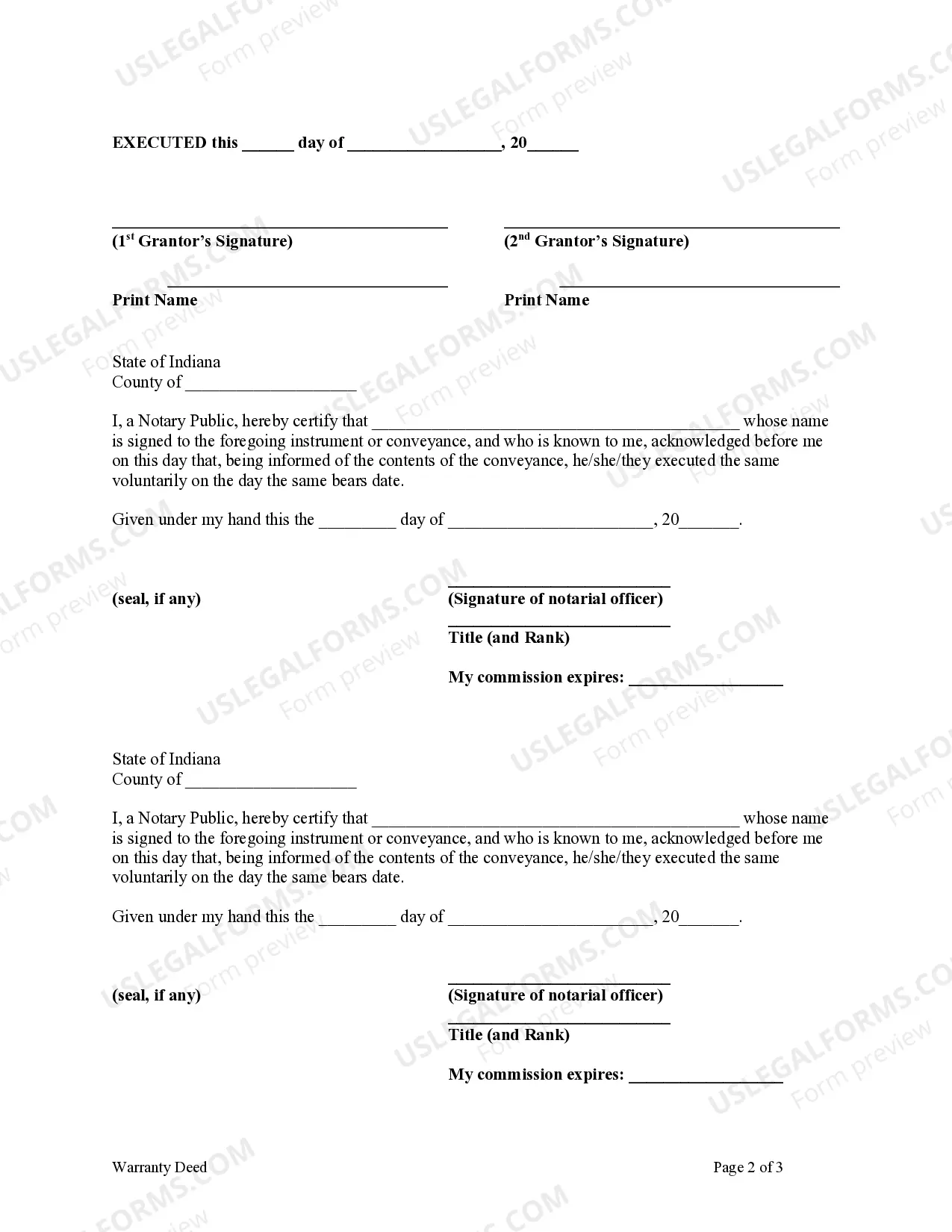
- Signature lines for both the grantors and any witnesses, as required by state law.
- Date of execution, which is when the deed is signed.






Situations where this form applies
This form is used when a married couple wishes to transfer their real property to a limited liability company for reasons such as asset protection, business purposes, or estate planning. It is particularly useful when the property is being used as part of a business operation or when transferring ownership into a family-owned LLC to facilitate easier management and succession.
Who should use this form
This form is intended for:
- Married couples who own real property and want to transfer it to an LLC.
- Business owners looking to consolidate personal and business assets.
- Individuals engaged in real estate planning or succession planning.
Completing this form step by step
- Identify the parties involved by entering the names of the husband and wife as grantors and the LLC as the grantee.
- Provide a detailed legal description of the property being conveyed.
- Include any specific warranties regarding the title, confirming there are no encumbrances.
- Have both grantors sign the deed in the presence of witnesses if required.
- Enter the date of execution at the appropriate section of the form.
Does this document require notarization?
This form does not typically require notarization unless specified by local law. However, having it notarized can add a layer of validity and protect against future disputes about its authenticity.
Get your form ready online
Our built-in tools help you complete, sign, share, and store your documents in one place.
Make edits, fill in missing information, and update formatting in US Legal Forms—just like you would in MS Word.
Download a copy, print it, send it by email, or mail it via USPS—whatever works best for your next step.
Sign and collect signatures with our SignNow integration. Send to multiple recipients, set reminders, and more. Go Premium to unlock E-Sign.
If this form requires notarization, complete it online through a secure video call—no need to meet a notary in person or wait for an appointment.
We protect your documents and personal data by following strict security and privacy standards.

Make edits, fill in missing information, and update formatting in US Legal Forms—just like you would in MS Word.

Download a copy, print it, send it by email, or mail it via USPS—whatever works best for your next step.

Sign and collect signatures with our SignNow integration. Send to multiple recipients, set reminders, and more. Go Premium to unlock E-Sign.

If this form requires notarization, complete it online through a secure video call—no need to meet a notary in person or wait for an appointment.

We protect your documents and personal data by following strict security and privacy standards.
Typical mistakes to avoid
- Failing to provide a complete legal description of the property.
- Not signing the deed in front of required witnesses or a notary.
- Leaving out crucial information about any debts or liens on the property.
- Not checking state-specific regulations before execution.
Why complete this form online
- Convenient access to a professionally drafted form tailored to your needs.
- Edit the document easily before downloading to ensure accuracy.
- Reliable provision of a legally binding document that complies with state laws.
Legal use & context
- Warranty deeds are recognized as valid and enforceable in most jurisdictions.
- They may have implications for tax purposes, including gift tax considerations when transferring property to an LLC.
- Proper execution is essential for the deed to effectively transfer ownership.
Summary of main points
- A Warranty Deed from Husband and Wife to LLC is crucial for clear property transfer.
- Understanding the responsibilities as grantors ensures a smooth transaction.
- Always verify state-specific requirements before completing the form.
Looking for another form?
Form popularity
FAQ
Transferring a property title to a family member in Indiana involves executing a deed, such as a warranty deed or quitclaim deed. For a husband and wife transferring property to an LLC or directly to a family member, it’s crucial to ensure all legal requirements are met. Using US Legal Forms can make this process easier by providing you with the required documentation and guidance. This ensures a streamlined transfer, while maintaining all necessary protections.
Discuss the terms of the deed with the new owners. Hire a real estate attorney to prepare the deed. Review the deed. Sign the deed in front of a notary public, with witnesses present. File the deed on public record.
The deed did not meet the written requirements (such as if it failed to accurately describe the property); The deed was forged; The deed was induced by fraud, misrepresentation, coercion, duress, or undue influence; The deed was not delivered, or not delivered properly, and there was no acceptance by the grantee.
A warranty deed guarantees that: The grantor is the rightful owner of the property and has the legal right to transfer the title.The title would withstand third-party claims to ownership of the property. The grantor will do anything to ensure the grantee's title to the property.
The Indiana warranty deed is a form of deed that provides an unlimited warranty of title. It makes an absolute guarantee that the current owner has good title to the property.
An Indiana quitclaim deed is a legally binding document that allows a property's owner to sell or transfer the real estate to another party, a buyer, without any promise about the title.
Locate the prior deed to the property. Create the new deed. Sign the new deed. Record the original deed.
Signing (§ 32-21-2-3) All deed must be executed by one of the following: judge, clerk of a court of record, county auditor, county recorder, notary public, mayor of a city in Indiana or any other state, commissioner appointed in a state other than Indiana by the governor of Indiana, clerk of the city county council
Retrieve your original deed. Get the appropriate deed form. Draft the deed. Sign the deed before a notary. Record the deed with the county recorder. Obtain the new original deed.
Contrary to normal expectations, the Deed DOES NOT have to be recorded to be effective or to show delivery, and because of that, the Deed DOES NOT have to be signed in front of a Notary Public. However, if you plan to record it, then it does have to be notarized as that is a County Recorder requirement.