Indiana Warranty Deed - Trust to a Trust
What this document covers
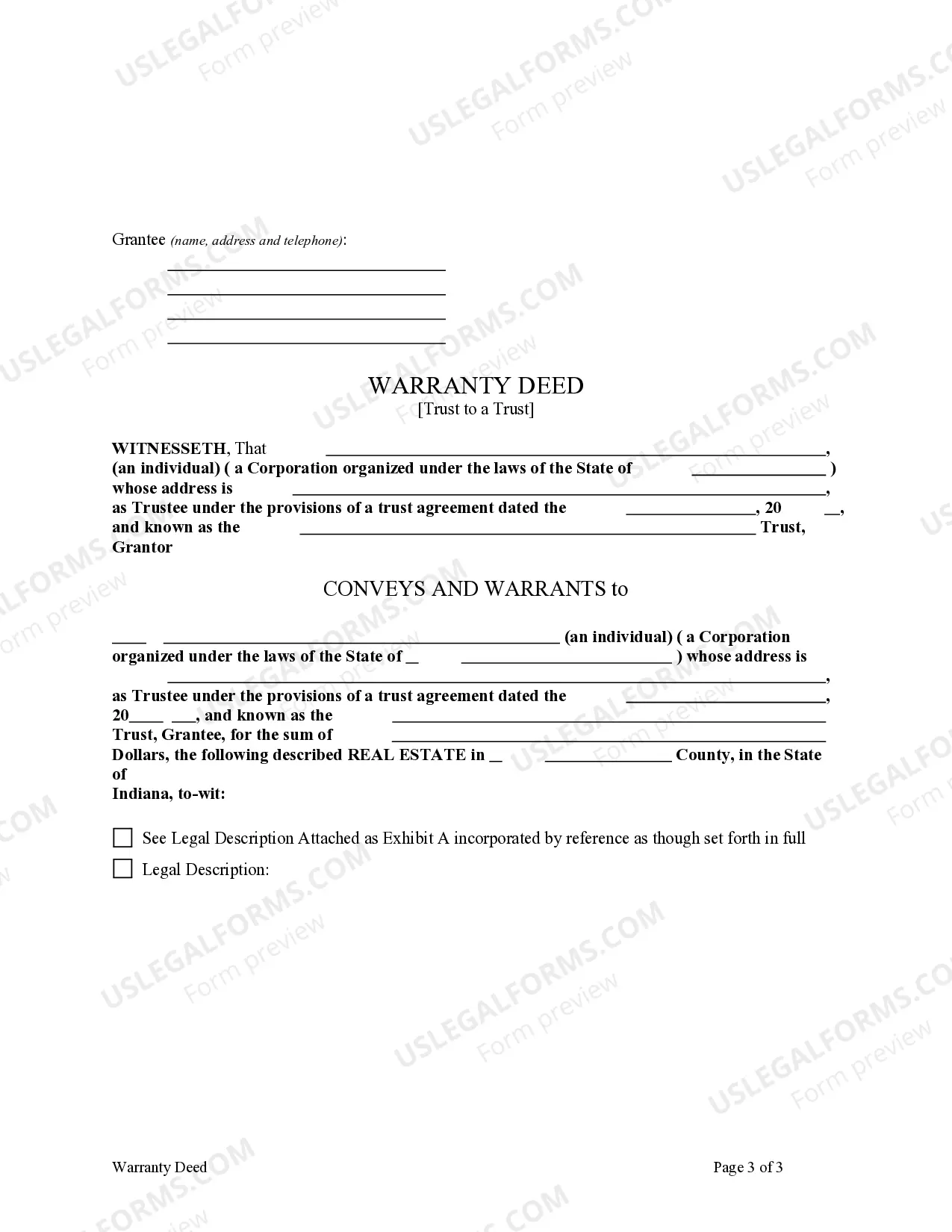
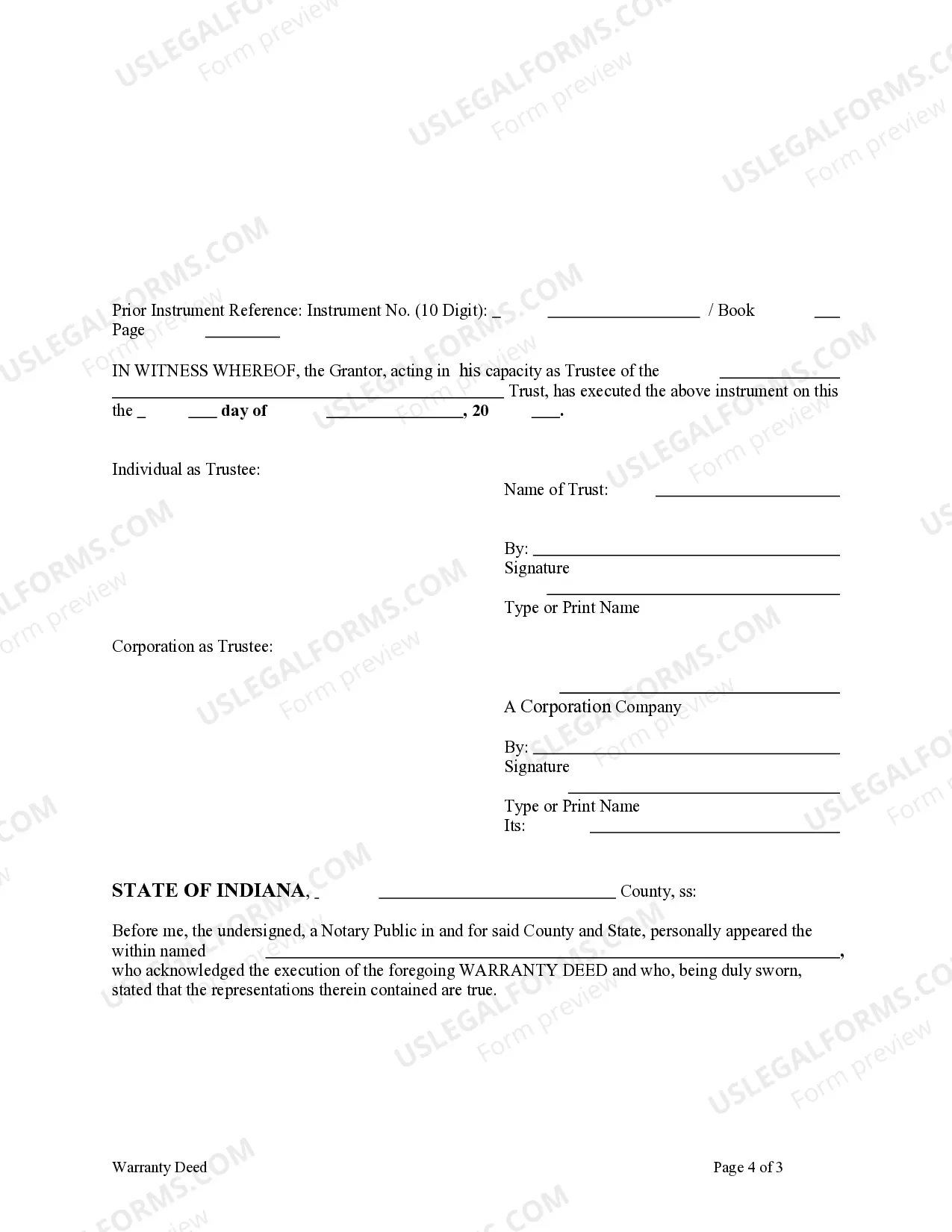
The Warranty Deed - Trust to a Trust is a legal document used to transfer property ownership from one trust (the Grantor) to another trust (the Grantee). This form provides a guarantee that the property is being conveyed without any liens or encumbrances, ensuring clear title upon transfer. It is specifically designed for transactions involving trusts, distinguishing it from other types of warranty deeds that may not involve trusts.
What’s included in this form
- Identification of the Grantor and Grantee, both represented as trusts.
- Description of the property being transferred, including its legal description.
- Warranty clause ensuring clean title, free of debts or claims.
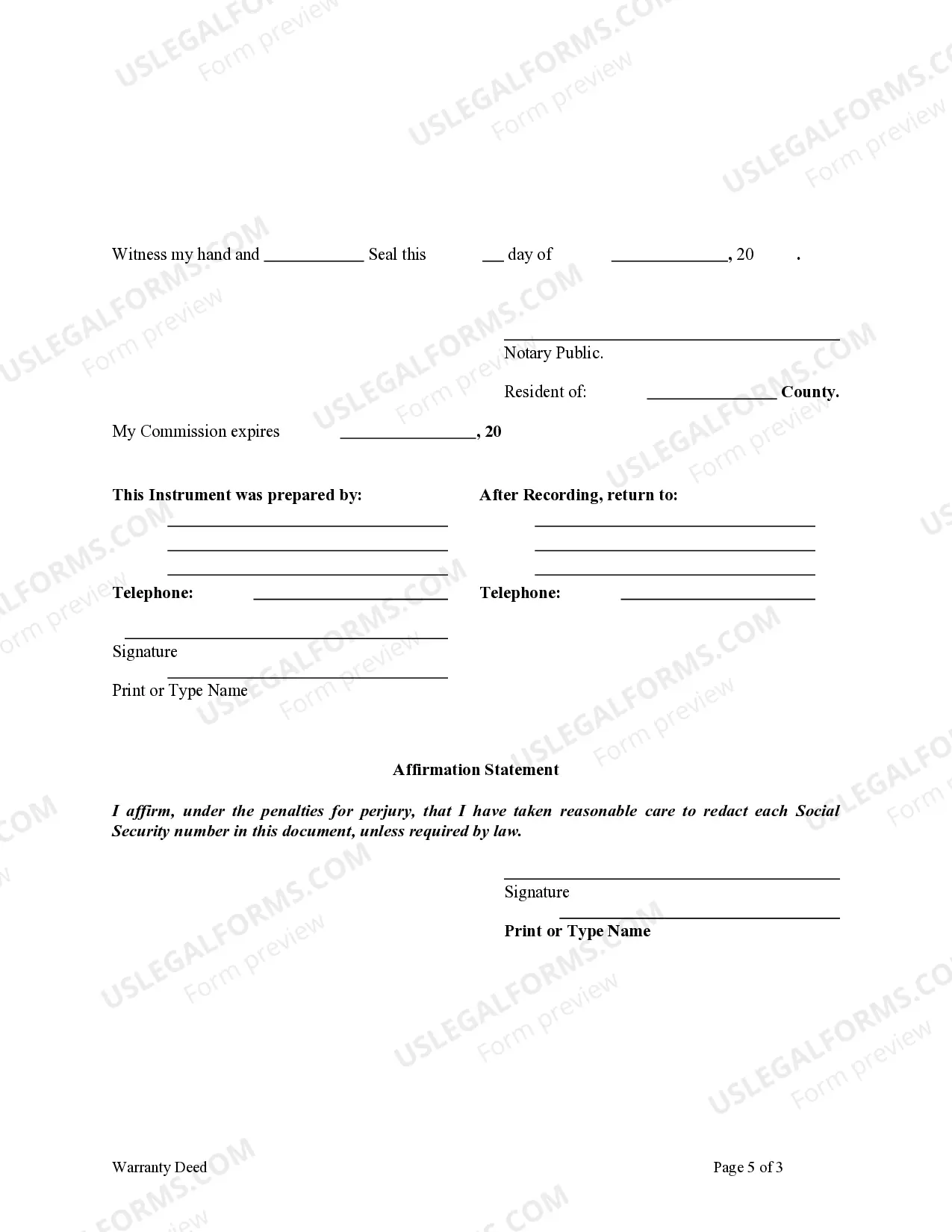
- Signatures of the Trustee(s) representing each trust.
- Date of execution, marking when the deed becomes effective.






Common use cases
This form is necessary when a trustee wishes to transfer property held in a trust to another trust. It is commonly used in estate planning, asset protection strategies, or when reorganizing trust structures. This deed can also facilitate straightforward property transfers in cases where property is newly acquired or when changing the trustee of a trust.
Who should use this form
- Trustees managing property on behalf of a trust.
- Individuals involved in estate planning who need to transfer property between trusts.
- Lawyers or legal professionals assisting clients with trust-related transactions.
- Beneficiaries or heirs looking to simplify property ownership among trusts.
How to complete this form
- Identify and enter the names of the Grantor and Grantee trusts.
- Describe the property, including its legal description.
- Include the warranty clause to assure clear title.
- Obtain the signatures of the relevant trustee(s).
- Indicate the date of execution for validity.
Notarization requirements for this form
This form needs to be notarized to ensure legal validity. US Legal Forms provides secure online notarization powered by Notarize, allowing you to complete the process through a verified video call, available anytime.
Get your form ready online
Our built-in tools help you complete, sign, share, and store your documents in one place.
Make edits, fill in missing information, and update formatting in US Legal Forms—just like you would in MS Word.
Download a copy, print it, send it by email, or mail it via USPS—whatever works best for your next step.
Sign and collect signatures with our SignNow integration. Send to multiple recipients, set reminders, and more. Go Premium to unlock E-Sign.
If this form requires notarization, complete it online through a secure video call—no need to meet a notary in person or wait for an appointment.
We protect your documents and personal data by following strict security and privacy standards.
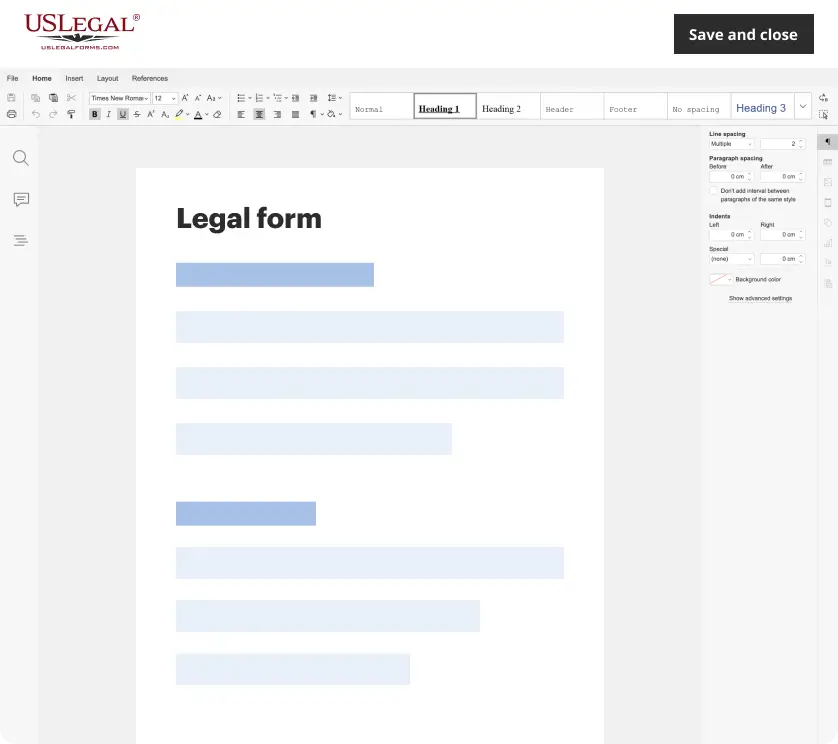
Make edits, fill in missing information, and update formatting in US Legal Forms—just like you would in MS Word.
Download a copy, print it, send it by email, or mail it via USPS—whatever works best for your next step.
Sign and collect signatures with our SignNow integration. Send to multiple recipients, set reminders, and more. Go Premium to unlock E-Sign.

If this form requires notarization, complete it online through a secure video call—no need to meet a notary in person or wait for an appointment.
We protect your documents and personal data by following strict security and privacy standards.
Common mistakes
- Failing to provide a complete legal description of the property.
- Not obtaining necessary signatures from all trustees.
- Leaving out the date of execution, which can invalidate the deed.
- Assuming the deed is compliant with only the local laws without confirming state-specific requirements.
Benefits of completing this form online
- Convenience of filling out the form digitally, saving time.
- Editability allows for easy corrections prior to submission.
- Access to reliable legal templates created by licensed attorneys.
- Ability to download and store forms securely for future use.
Looking for another form?

Form popularity
FAQ
Typically, the lender will provide you with a copy of the deed of trust after the closing. The original warranty deeds are often mailed to the grantee after they are recorded. These are your original copies and should be kept in a safe place, such as a fireproof lockbox or a safe deposit box at a financial institution.
A deed conveys ownership; a deed of trust secures a loan.
A warranty deed protects property owners from future claims that someone else actually owns a portion (or all) of their property, while trustee deeds protect lenders when borrowers default on their mortgage loans.
The mortgage company usually prepares this deed as part of the loan package and delivers it to the title company for you to sign at closing. The title company is commonly the trustee to the deed and holds legal title to the property until the loan gets fully repaid.
A deed of trust is a written instrument with three parties: The trustor, who is the borrower and homeowner. The beneficiary, who is the lender. The trustee, who is a third party such as an insurance company or escrow management agency that holds actual title to the property in trust for the beneficiary.
Determine the Current Title and Vesting to Your Property. Prepare a Deed. Be Aware of Your Lender and Title Insurance. Prepare a Preliminary Change of Ownership Report. Execute Your Deed. Record Your Deed. Wait for the Deed to be Returned. Keep the Property in the Trust.
A trustee deed offers no such warranties about the title.
The Indiana warranty deed is a form of deed that provides an unlimited warranty of title. It makes an absolute guarantee that the current owner has good title to the property.
In the context of a California mortgage transaction, a trust deed also transfer ownership. Only this time, the title is being placed in the hands of a third-party trustee, who holds the property on behalf of the lender and the homeowner-borrower until the mortgage is paid.