Indiana Revocation of Premarital or Prenuptial Agreement
About this form
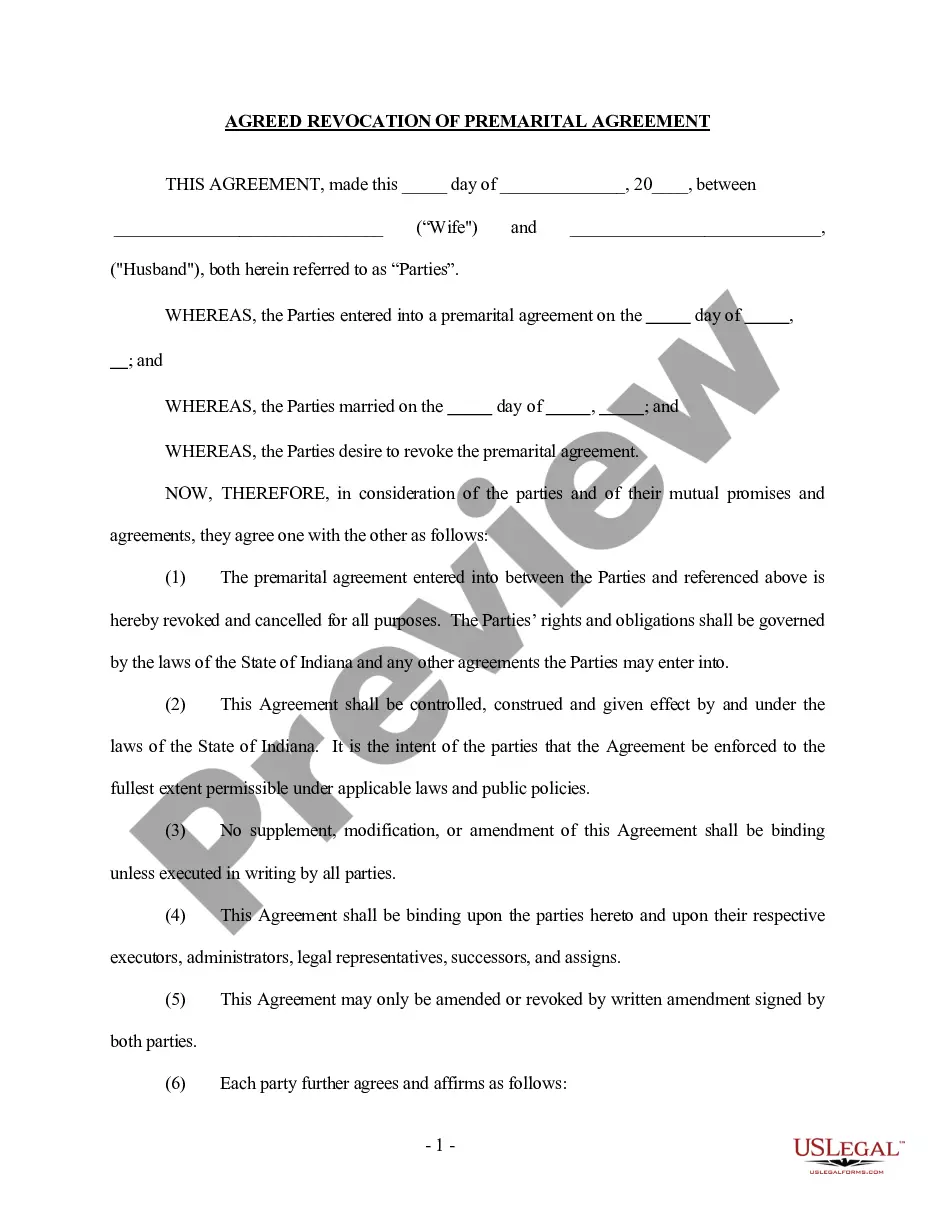
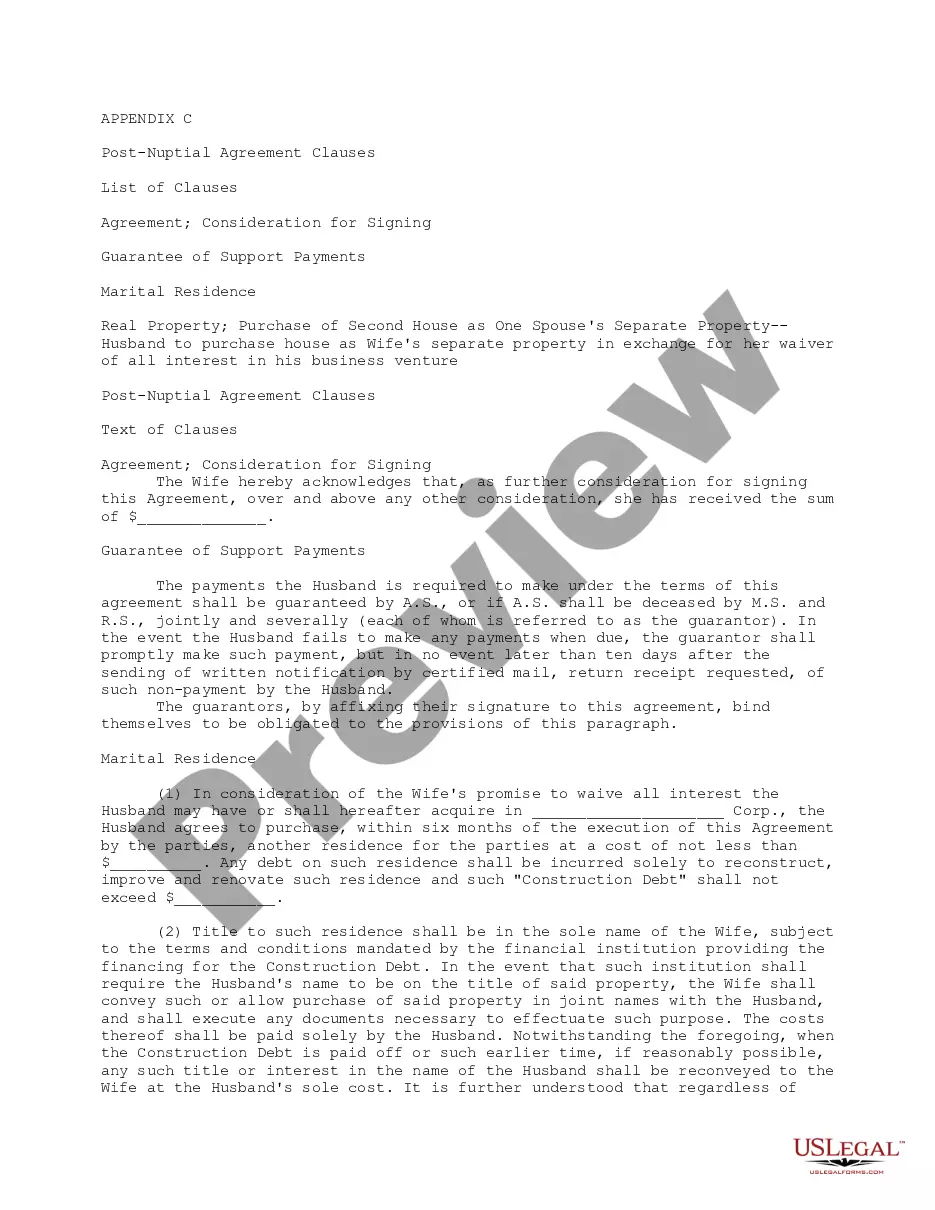
The Revocation of Premarital or Prenuptial Agreement is a legal document used by spouses to formally cancel an existing premarital agreement. This form is essential for ensuring that any previous agreements are revoked, allowing couples to proceed with new arrangements under the laws of their jurisdiction.
Main sections of this form
- Date of agreement execution
- Identification of the husband and wife
- Statement that the previous premarital agreement is revoked
- Governing laws for the agreement
- Termination conditions of the original agreement
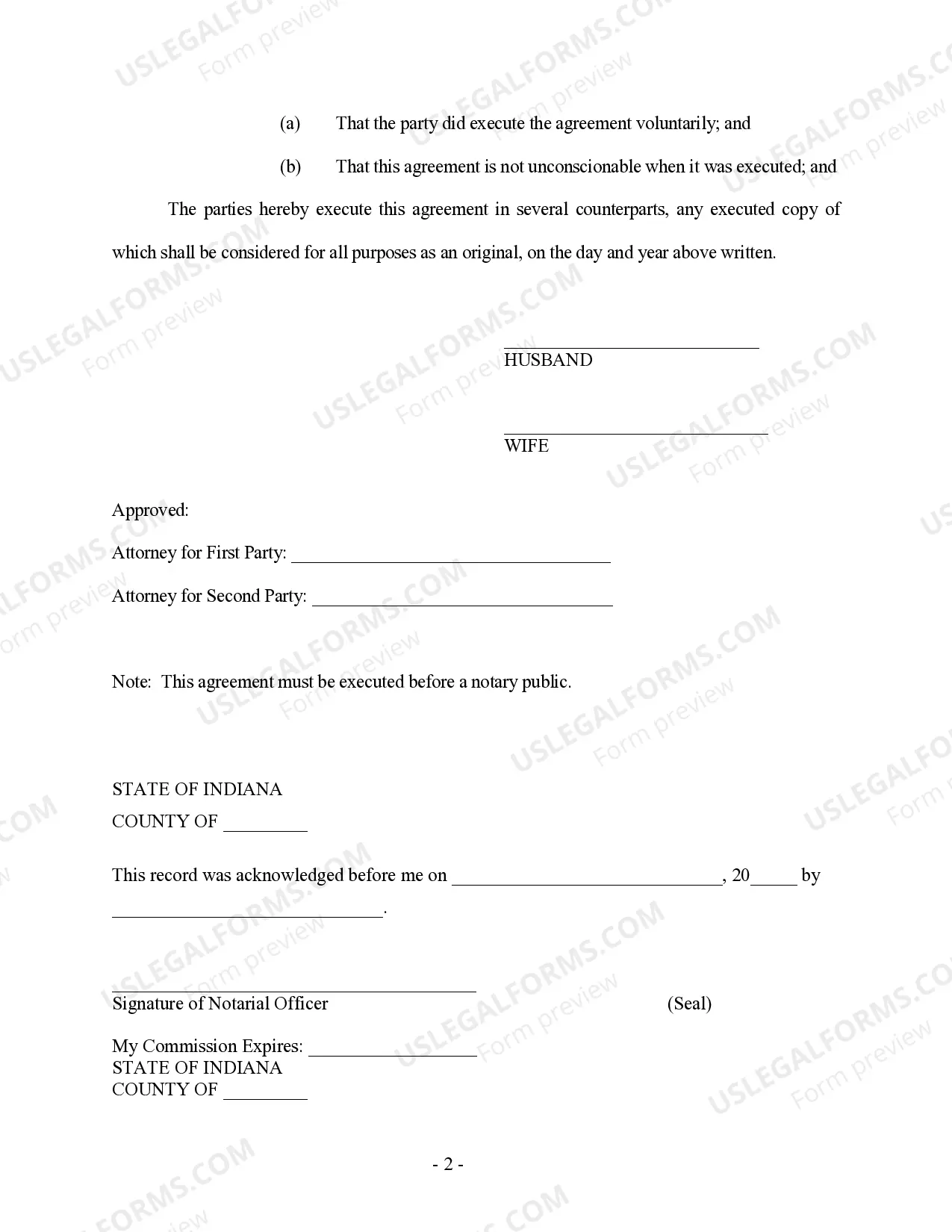
- Signatures of both parties
When to use this form
This form should be used when a couple decides to revoke an existing premarital or prenuptial agreement. Circumstances may include changes in relationship dynamics, a desire to renegotiate terms, or simply the decision to start anew without the constraints of a previous agreement.
Who needs this form
- Married couples looking to revoke their premarital agreements
- Couples considering new agreements that may supersede prior terms
- Individuals seeking to clarify their current rights and obligations
How to prepare this document
- Identify the date of the agreement and enter it at the top of the document.
- Clearly print the full names of both husband and wife in the designated fields.
- Review the statement of revocation to ensure it accurately reflects the intent to cancel the existing agreement.
- Enter the state laws that govern this agreement, if applicable.
- Both parties should read the entire document and sign it to validate the revocation.
Does this document require notarization?
This form does not typically require notarization to be legally valid. However, some jurisdictions or document types may still require it. US Legal Forms provides secure online notarization powered by Notarize, available 24/7 for added convenience.
Get your form ready online
Our built-in tools help you complete, sign, share, and store your documents in one place.
Make edits, fill in missing information, and update formatting in US Legal Forms—just like you would in MS Word.
Download a copy, print it, send it by email, or mail it via USPS—whatever works best for your next step.
Sign and collect signatures with our SignNow integration. Send to multiple recipients, set reminders, and more. Go Premium to unlock E-Sign.
If this form requires notarization, complete it online through a secure video call—no need to meet a notary in person or wait for an appointment.
We protect your documents and personal data by following strict security and privacy standards.

Make edits, fill in missing information, and update formatting in US Legal Forms—just like you would in MS Word.

Download a copy, print it, send it by email, or mail it via USPS—whatever works best for your next step.

Sign and collect signatures with our SignNow integration. Send to multiple recipients, set reminders, and more. Go Premium to unlock E-Sign.

If this form requires notarization, complete it online through a secure video call—no need to meet a notary in person or wait for an appointment.

We protect your documents and personal data by following strict security and privacy standards.
Mistakes to watch out for
- Failing to include the correct date of execution.
- Not having both parties sign the form.
- Overlooking state-specific legal requirements.
- Not keeping a copy of the revoked agreement for personal records.
Why use this form online
- Immediate access to a professionally drafted legal form.
- Ability to customize the document for specific needs.
- Secure and easy download process.
- Reduction of legal fees associated with traditional legal consultation.
Looking for another form?



Form popularity
FAQ
A prenuptial agreement can be changed or canceled, provided this what both parties want.Remember, a single partner in the marriage can't change or cancel the prenuptial agreement by themselvesthey must have the agreement and signature of the other party.
No, you cannot get a prenup if you are already married.You can still sign a postnuptial agreement (or postnup), which achieves the same goals as a prenup in most cases. Prenups are a common step before marriage. Texas community property rules are the reason why prenups are common in Texas.
Reasons a Judge Can Overturn a Prenuptial Agreement There are no specific rules that state what will overturn a prenup.A written agreement should be reviewed by an experienced family law attorney prior to completion of the agreement. Premarital agreements must be signed in front of witnesses and must be notarized.
Any indication of coercion or lack of willingness can give way for a divorce judge to overturn the agreement. A written agreement should be reviewed by an experienced family law attorney prior to completion of the agreement. Premarital agreements must be signed in front of witnesses and must be notarized.
The amendment is typically written by a lawyer because of its legal nature. You'll have to have the entire agreement signed and notarized to make the changes valid. If, for whatever reason, you and your spouse decide to cancel your prenuptial agreement, you can use a document called a Release of Marital Agreement.
Prenuptial agreements do not expire, unless they have a specific clause in them stating the agreement expires after a certain length of marriage (very uncommon).
If a spouse is able to prove non-disclosure of all previous assets or property, then the prenuptial agreement can be considered void. Second, if a spouse is able to prove that he or she was compelled to sign the prenuptial agreement under stressful circumstances, then the prenup can be invalidated.
The three most common grounds for nullifying a prenup are unconscionability, failure to disclose, or duress and coercion.Duress and coercion can also invalidate a prenup. If the prenup was signed the day before your wedding, it may appear that the parties didn't have much time to fully review the agreement.
A prenuptial agreement can be changed or canceled, provided this what both parties want.Remember, a single partner in the marriage can't change or cancel the prenuptial agreement by themselvesthey must have the agreement and signature of the other party.