Illinois Request by Owner to Subcontractor for List of Suppliers, Labor - Mechanic Liens - Corporation or LLC
Understanding this form
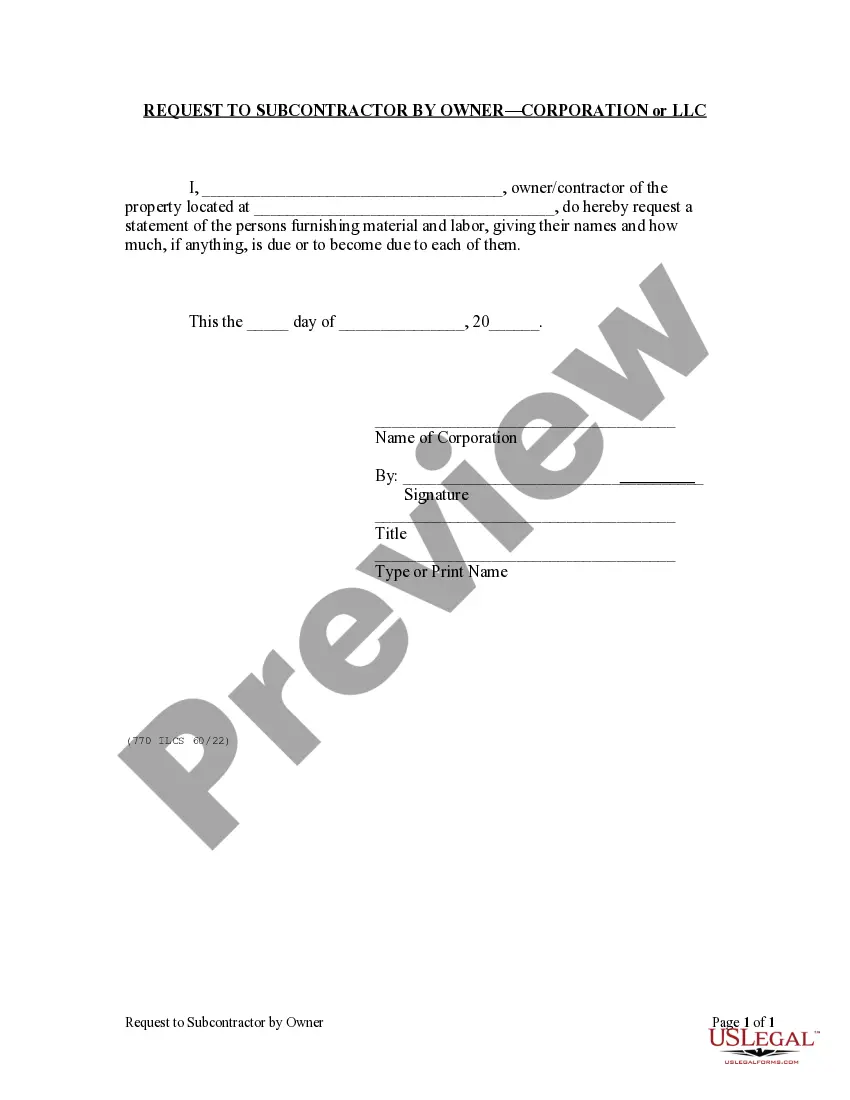
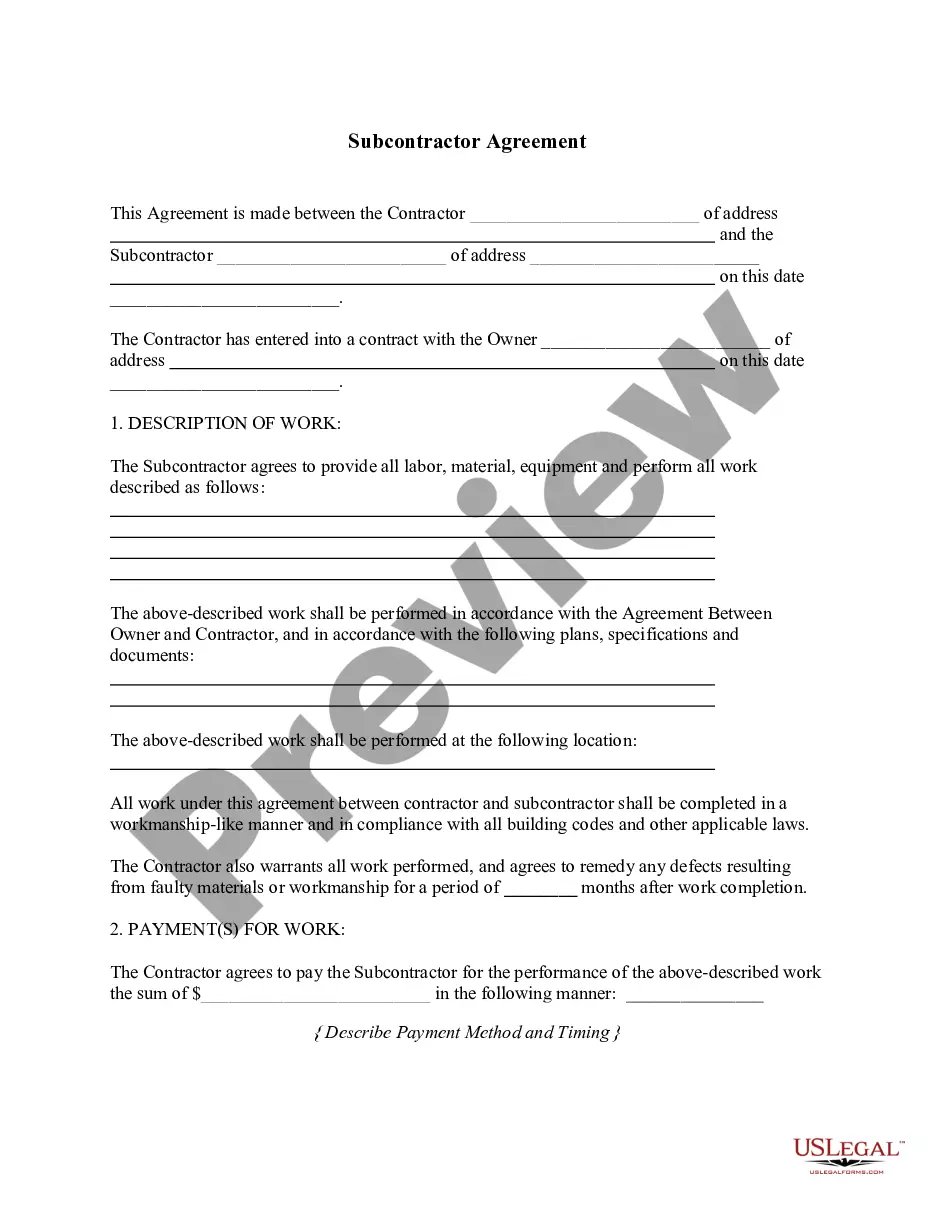
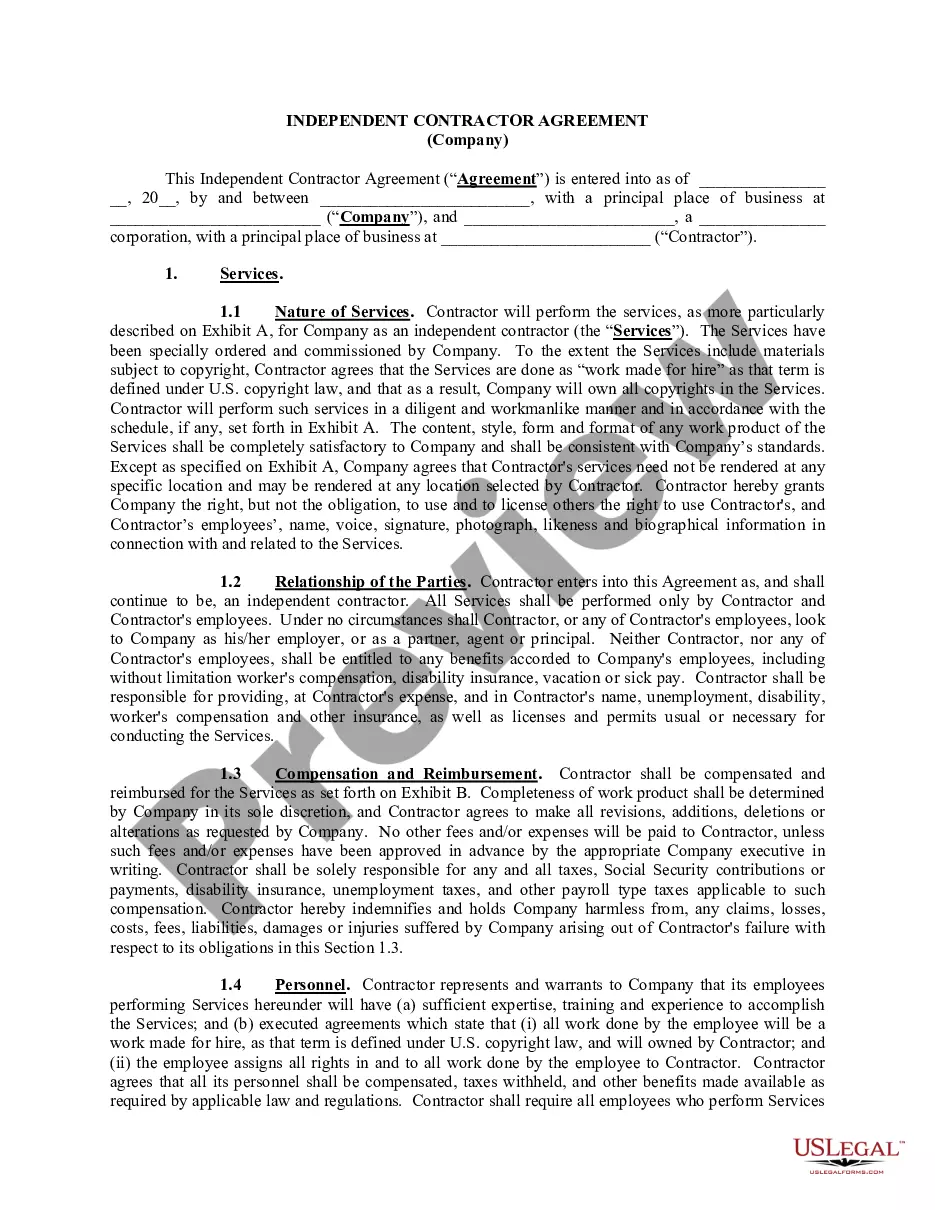
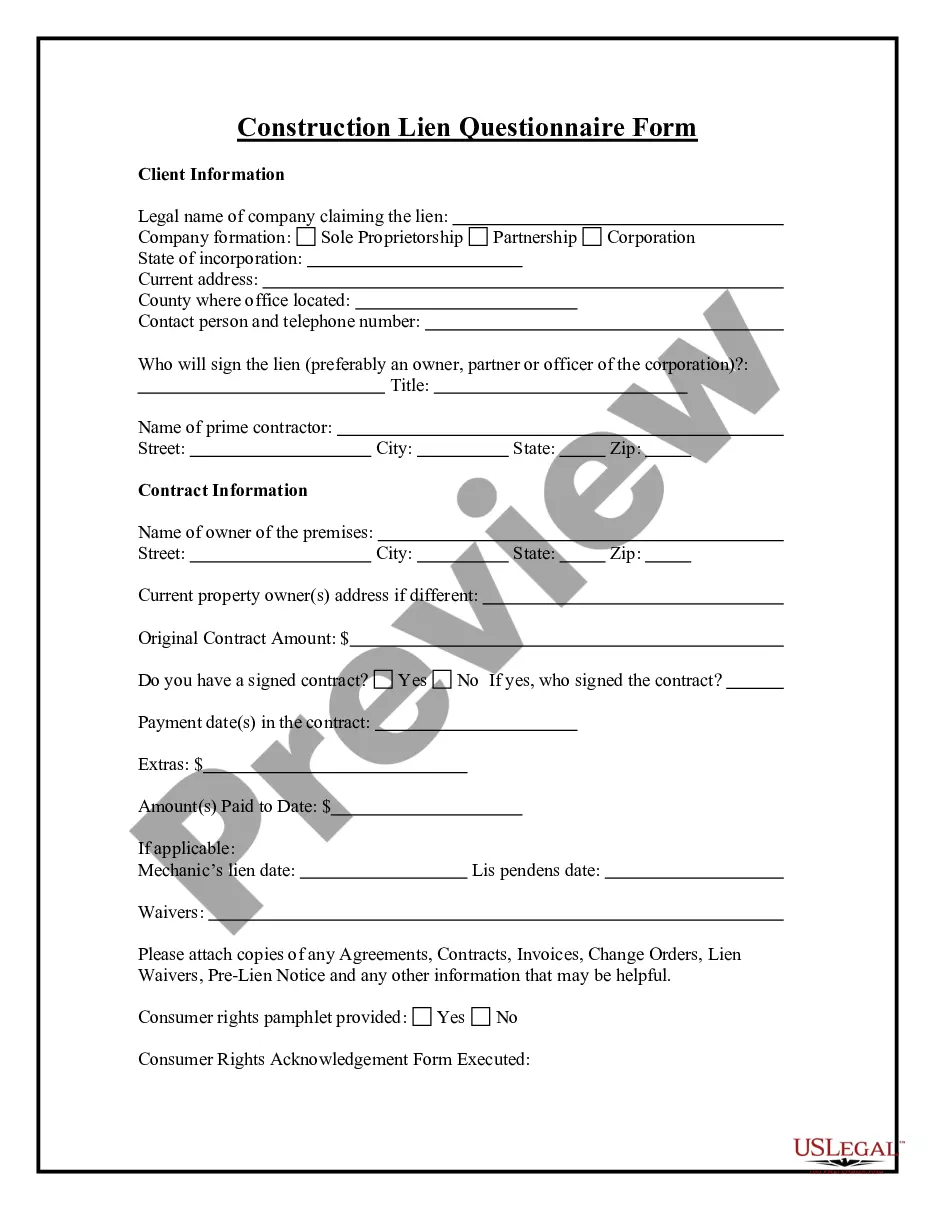
The "Request by Owner to Subcontractor for List of Suppliers, Labor" form is a legal document used by corporate or LLC owners to formally request information from subcontractors regarding the names of suppliers or laborers who have provided materials or services on a project. This form helps ensure that the owner is aware of any financial obligations toward these parties, especially in relation to mechanic liens. It differs from other forms by specifically focusing on the required disclosure of payment information to prevent potential disputes or claims against the property.
Form components explained
- Request from the owner/contractor with property details
- List of subcontractors, suppliers, and laborers involved in the project
- Amount due or to become due to each party
- Signature and title of the submitting corporation's representative
- Date of the request
When to use this document
This form is necessary when a corporate or LLC owner needs to verify the names and payment status of individuals or entities providing materials or labor for construction or renovation work. It is particularly important when the owner wants to protect their interests against potential mechanic liens, ensuring all parties are compensated appropriately before the completion of a project.
Who this form is for
- Owners of corporations or LLCs involved in construction projects
- General contractors subcontracting work to others
- Individuals responsible for managing construction finances and ensuring compliance with mechanic lien laws
Instructions for completing this form
- Identify yourself as the owner or contractor and fill in your name.
- Specify the property location where the work has been performed.
- Clearly state your request for a list of suppliers and laborers.
- Please include expected payment amounts due to each party.
- Sign the document and include your title along with the date of the request.
Does this document require notarization?
In most cases, this form does not require notarization. However, some jurisdictions or signing circumstances might. US Legal Forms offers online notarization powered by Notarize, accessible 24/7 for a quick, remote process.
Get your form ready online
Our built-in tools help you complete, sign, share, and store your documents in one place.
Make edits, fill in missing information, and update formatting in US Legal Forms—just like you would in MS Word.
Download a copy, print it, send it by email, or mail it via USPS—whatever works best for your next step.
Sign and collect signatures with our SignNow integration. Send to multiple recipients, set reminders, and more. Go Premium to unlock E-Sign.
If this form requires notarization, complete it online through a secure video call—no need to meet a notary in person or wait for an appointment.
We protect your documents and personal data by following strict security and privacy standards.

Make edits, fill in missing information, and update formatting in US Legal Forms—just like you would in MS Word.

Download a copy, print it, send it by email, or mail it via USPS—whatever works best for your next step.

Sign and collect signatures with our SignNow integration. Send to multiple recipients, set reminders, and more. Go Premium to unlock E-Sign.

If this form requires notarization, complete it online through a secure video call—no need to meet a notary in person or wait for an appointment.

We protect your documents and personal data by following strict security and privacy standards.
Common mistakes
- Not including the property address.
- Forgetting to sign the form or provide your title.
- Omitting crucial details about the subcontractors or suppliers.
- Failing to specify the amounts due to each party clearly.
Advantages of online completion
- Easy access for download and completion at your convenience.
- Edit the form as needed to reflect your specific project details.
- Secure storage and sharing options ensure your information is safeguarded.
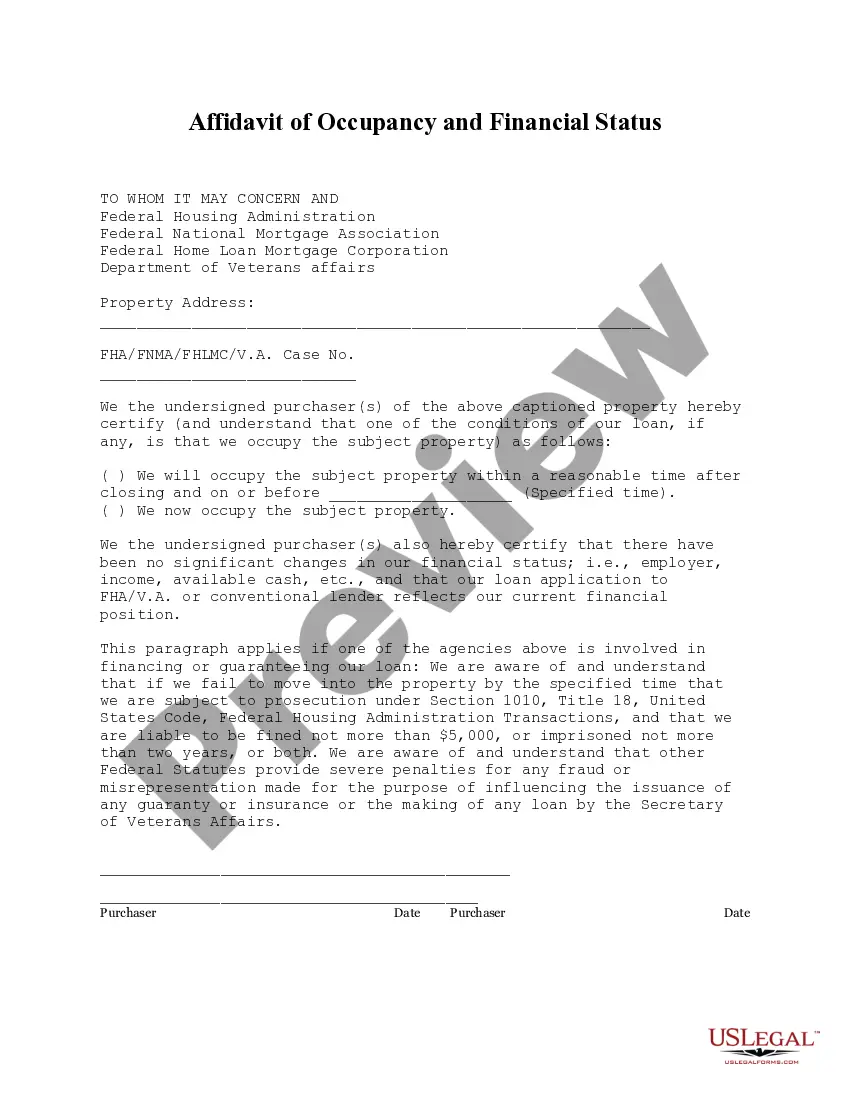
Looking for another form?
Form popularity
FAQ
A mechanics lien is a legal claim on the property for unpaid construction work or supplies. Once claimants file a mechanics lien in California, the owner's property turns into collateral, allowing claimants to secure the service they rendered or the supplies they provided.
In order to enforce a lien, the contractor, subcontractor or supplier must file a lawsuit. The deadline to file a lawsuit is two years from the last date work was performed or materials were supplied. A recorded lien is valid for these two years, but a failure to sue within that time frame voids the lien.
The simplest way to prevent liens and ensure that subcontractors and suppliers are paid is to pay with joint checks. This is when both parties endorse the check. Compare the contractor's materials or labor bill to the schedule of payments in your contract and the Preliminary Notices.
When a contractor files a mechanics' (construction) lien on your home, the lien makes your home into what's called security for an outstanding debt, which the contractor claims is due and unpaid for services or materials.
The deadline for contractors and subcontractors to file their statement of mechanic's lien is four months (not 120 days) from the last date of work (exclusive of warranty work or other work performed free of charge), or from the last date that materials were supplied to the project.
Does a Lien Show Up on Your Experian Credit Report? Since 2018, tax, judgment and mechanic liens haven't been included on the credit reports maintained at the three consumer credit bureaus (Experian, TransUnion and Equifax).
Posting a Bond Asselta says to expect to pay 110 percent of the lien amount. Submit the bond to the court. The lien will then transfer to the bond and clear the property's title. Wait for the contractor claimant to foreclose on the lien in the allotted period to dispute the lien in court.
Under Illinois law, any mechanics lien should be filed in the County Recorder of Deeds where the property being liened is located. This is crucial as the lien must be filed not only in the correct county but the correct office as well. The fees and specific document formatting vary depending on your county.