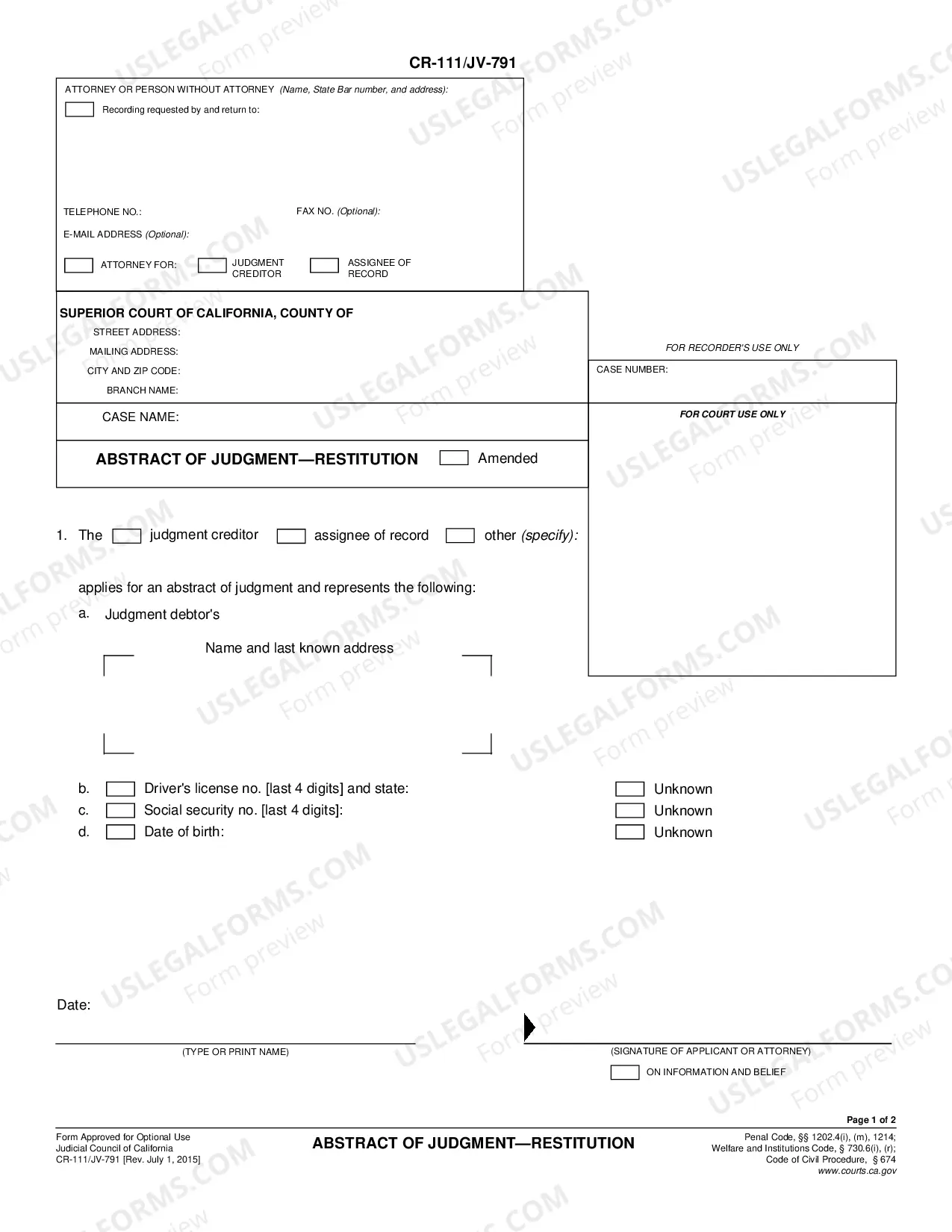
Illinois General Contractor's Lien - Notice of Lien - Mechanic Liens - Individual
What is this form?
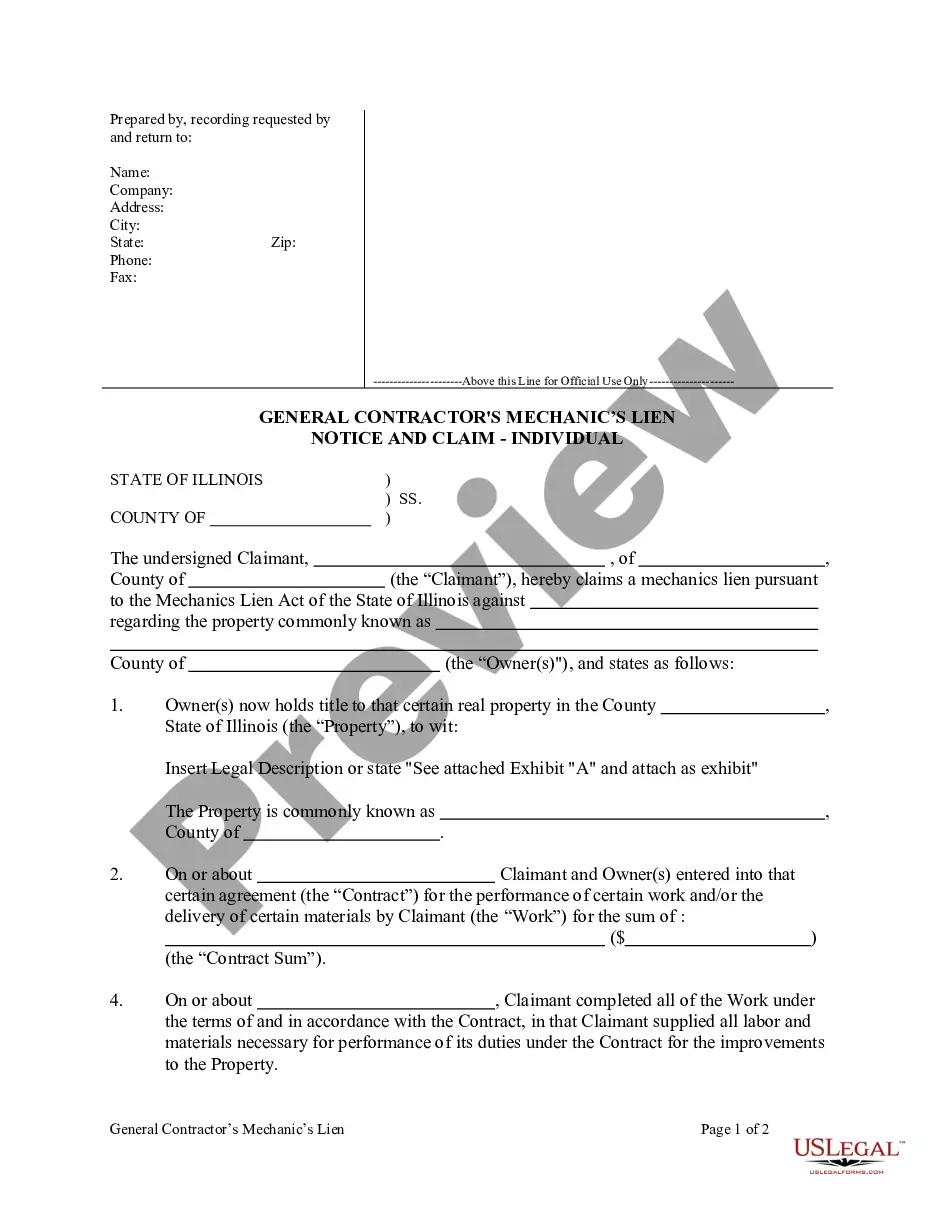
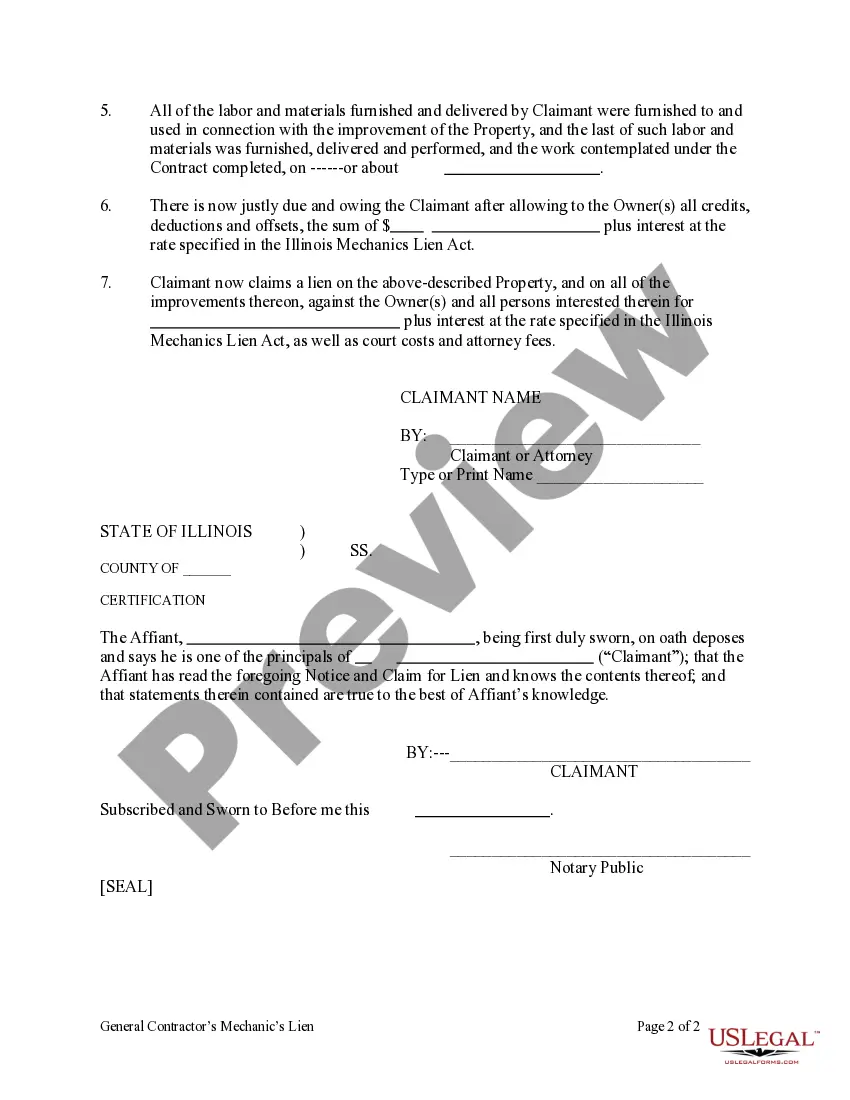
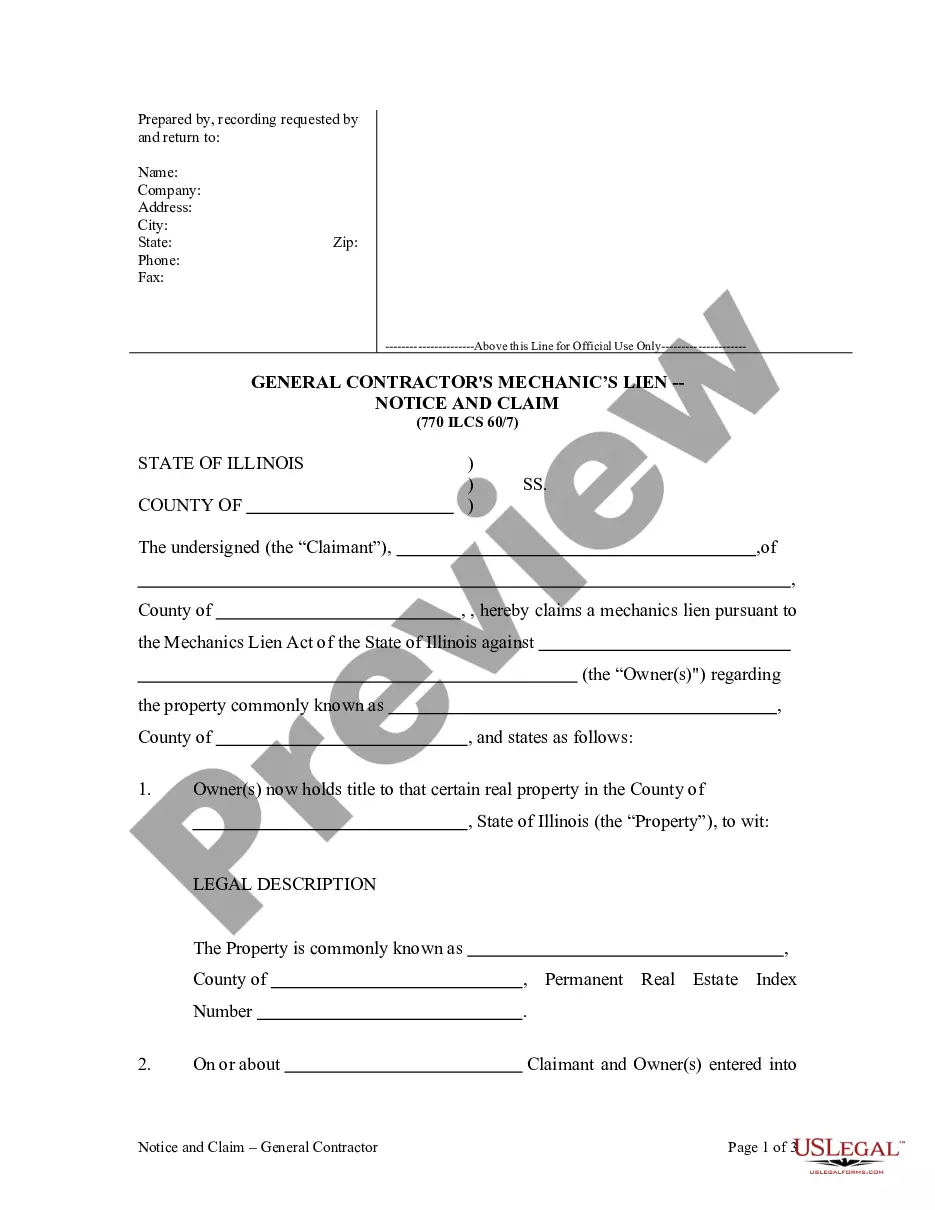
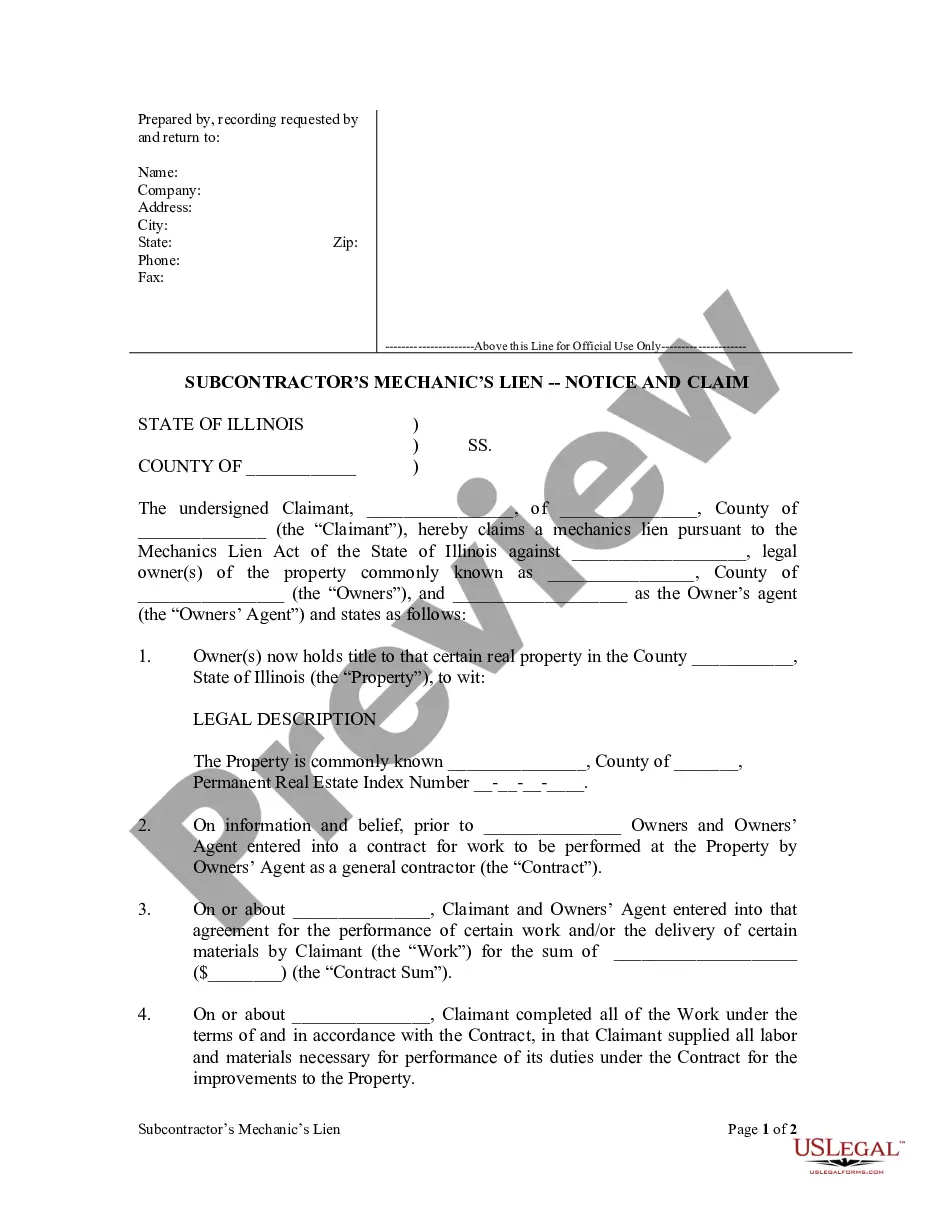
The General Contractor's Lien - Notice of Lien is a legal document used by individual contractors to assert a claim of lien against a property for unpaid work or materials. This form allows contractors to formally notify property owners and interested parties of their lien rights, differentiating it from other forms that may encompass broader categories of claims or involve multiple parties.
Key parts of this document
- Identification of the claimant (contractor) including name and contact information.
- Description of the property subject to the lien.
- Details about the nature of the work performed and materials supplied.
- Statement of the amount owed for the work or materials.
- Signature of the contractor affirming the validity of the claim.
Situations where this form applies
This form should be used when an individual contractor has completed work on a property but has not received payment. It is necessary to file this notice to protect the contractor's rights to claim a lien on the property, which serves as a legal claim on the owner's assets until the debt is settled. Situations that may prompt the use of this form include disputes over payment, delays in compensation, or non-payment for services rendered.
Who should use this form
- Individual contractors who have provided labor or materials for a construction project.
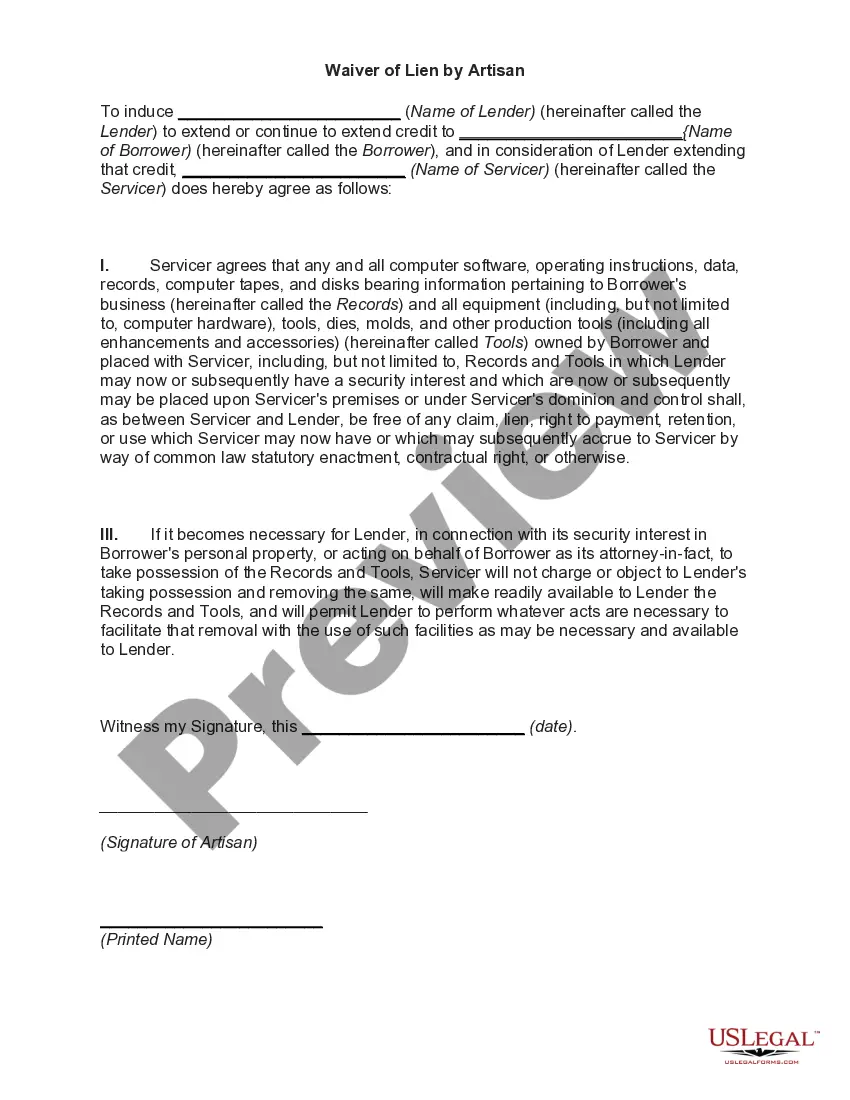
- Subcontractors seeking to protect their financial interests in the event of non-payment.
- Suppliers who furnish materials to contractors and are not paid.
Steps to complete this form
- Identify the parties involved by entering the full name and address of the contractor.
- Specify the property by providing its address and legal description.
- Detail the nature of the work done or materials supplied, including dates of service.
- Enter the total amount owed along with any relevant supporting documentation.
- Sign and date the document to affirm accuracy and validity.
Does this form need to be notarized?
This form does not typically require notarization unless specified by local law. However, it is recommended to consult local regulations to verify the requirements applicable in your situation.
Get your form ready online
Our built-in tools help you complete, sign, share, and store your documents in one place.
Make edits, fill in missing information, and update formatting in US Legal Forms—just like you would in MS Word.
Download a copy, print it, send it by email, or mail it via USPS—whatever works best for your next step.
Sign and collect signatures with our SignNow integration. Send to multiple recipients, set reminders, and more. Go Premium to unlock E-Sign.
If this form requires notarization, complete it online through a secure video call—no need to meet a notary in person or wait for an appointment.
We protect your documents and personal data by following strict security and privacy standards.

Make edits, fill in missing information, and update formatting in US Legal Forms—just like you would in MS Word.

Download a copy, print it, send it by email, or mail it via USPS—whatever works best for your next step.

Sign and collect signatures with our SignNow integration. Send to multiple recipients, set reminders, and more. Go Premium to unlock E-Sign.

If this form requires notarization, complete it online through a secure video call—no need to meet a notary in person or wait for an appointment.

We protect your documents and personal data by following strict security and privacy standards.
Avoid these common issues
- Failing to include all necessary details about the property location.
- Neglecting to sign or date the form, rendering it invalid.
- Omitting a clear description of the work performed or materials supplied.
- Not filing the notice within the legally required timeframe.
Benefits of using this form online
- Convenient access for individuals to complete and download the form from any location.
- Editability allows users to tailor the document to their specific needs.
- Reliability, with forms drafted by licensed attorneys to ensure legal compliance.
Legal use & context
- Establishes a legal claim for payment to prevent property transfer without settling debts.
- Can enhance the contractor's leverage in payment negotiations.
- Legally binding under Illinois statutes to protect contractor rights.
Key takeaways
- The General Contractor's Lien - Notice of Lien is essential for contractors seeking payment.
- Ensure accuracy and timely submission to uphold legal rights.
- Utilize the form to protect financial interests in property work.
Looking for another form?
Form popularity
FAQ
Mechanic's liens create a cloud on title, meaning that they appear in public property records. Liens are sometimes said to travel with the land, meaning that anyone who buys your house would take the property subject to the contractor's lien (or, more likely, demand that you pay it off first).
Get free mechanics lien form A construction mechanics lien is claimed against real estate property, and the lien must be filed in the appropriate office in order to be valid.Additionally, construction liens have strict timing and notice requirements. Machinery mechanics liens are possessory liens.
Under Illinois law, any mechanics lien should be filed in the County Recorder of Deeds where the property being liened is located. This is crucial as the lien must be filed not only in the correct county but the correct office as well. The fees and specific document formatting vary depending on your county.
Under Illinois law, any mechanics lien should be filed in the County Recorder of Deeds where the property being liened is located. This is crucial as the lien must be filed not only in the correct county but the correct office as well. The fees and specific document formatting vary depending on your county.
If you're claiming a lien on real property, it must be filed in the recorder's office of the county where the property is located. Expect to pay a filing fee between $25 and $50 depending on the location where you file.
Who you are. The services or materials you provided. The last date you provided the services or materials. How much payment should be. The date on which you will file a lien if you do not receive payment. How the debtor should pay.
The deadline for contractors and subcontractors to file their statement of mechanic's lien is four months (not 120 days) from the last date of work (exclusive of warranty work or other work performed free of charge), or from the last date that materials were supplied to the project.
Even though these states may permit project participants to secure lien rights and claim a mechanics lien even without a written contract, it is generally best practice to have a signed written contract for work provided.
WHAT MUST I DO BEFORE I FILE MY LIEN? Usually there is at least one notice that you must mail before you can file your lien. These notices are sometimes called notices of intent to file lien. Illinois Document Preparation fee of $165 includes all required notices of intent.