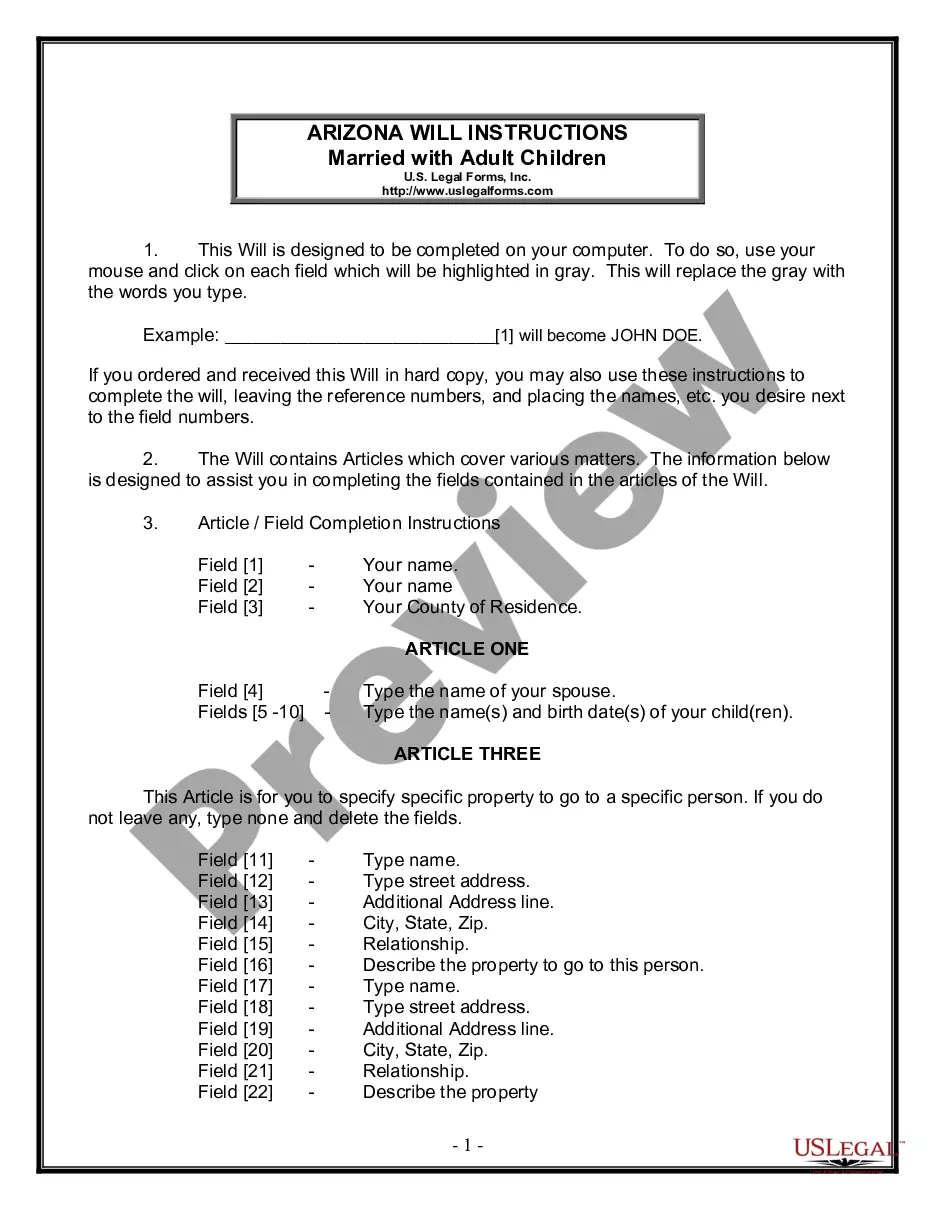
Idaho Last Will and Testament for other Persons
Understanding this form
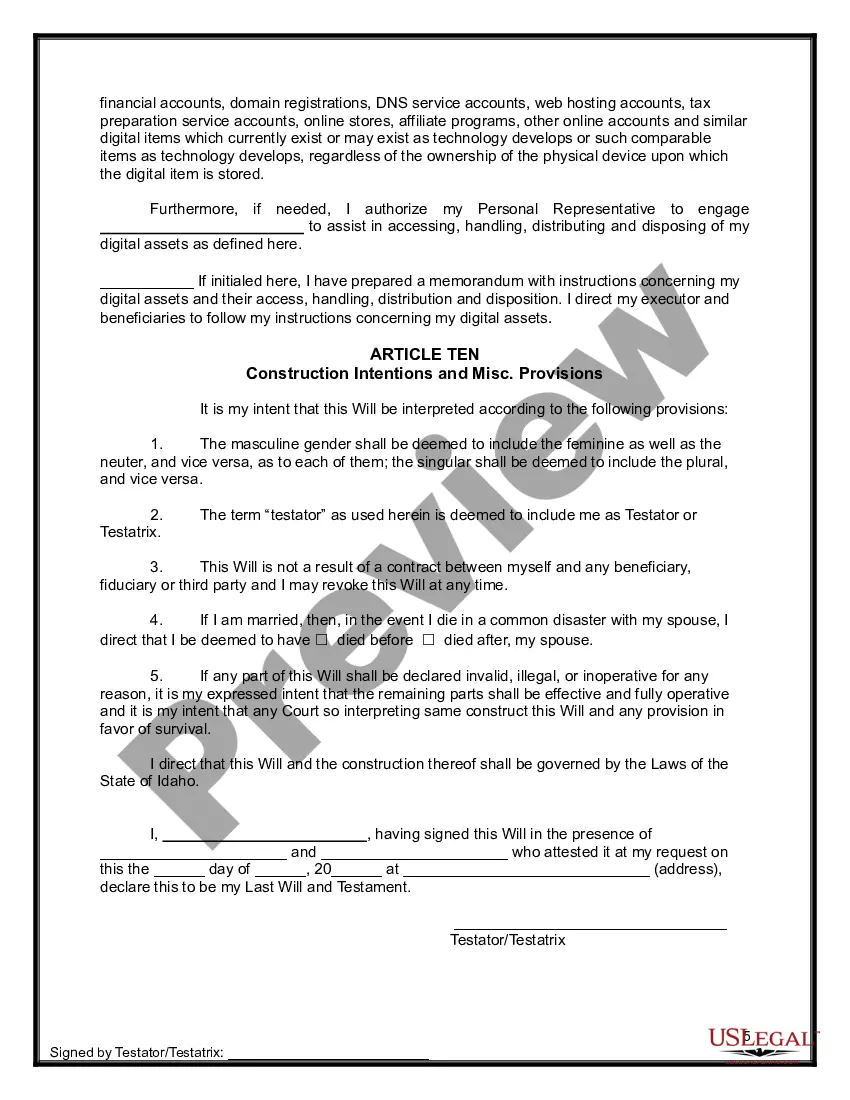
The Last Will and Testament for Other Persons is a legal document that outlines how your property will be distributed after your death. It designates who will receive your assets, appoints an executor to manage your estate, and can specify guardians for minor children. This form is specifically crafted for individuals in Idaho who do not have another suitable will template to use. Its primary purpose is to ensure that your wishes are honored and your estate is handled according to your desires.
Key components of this form
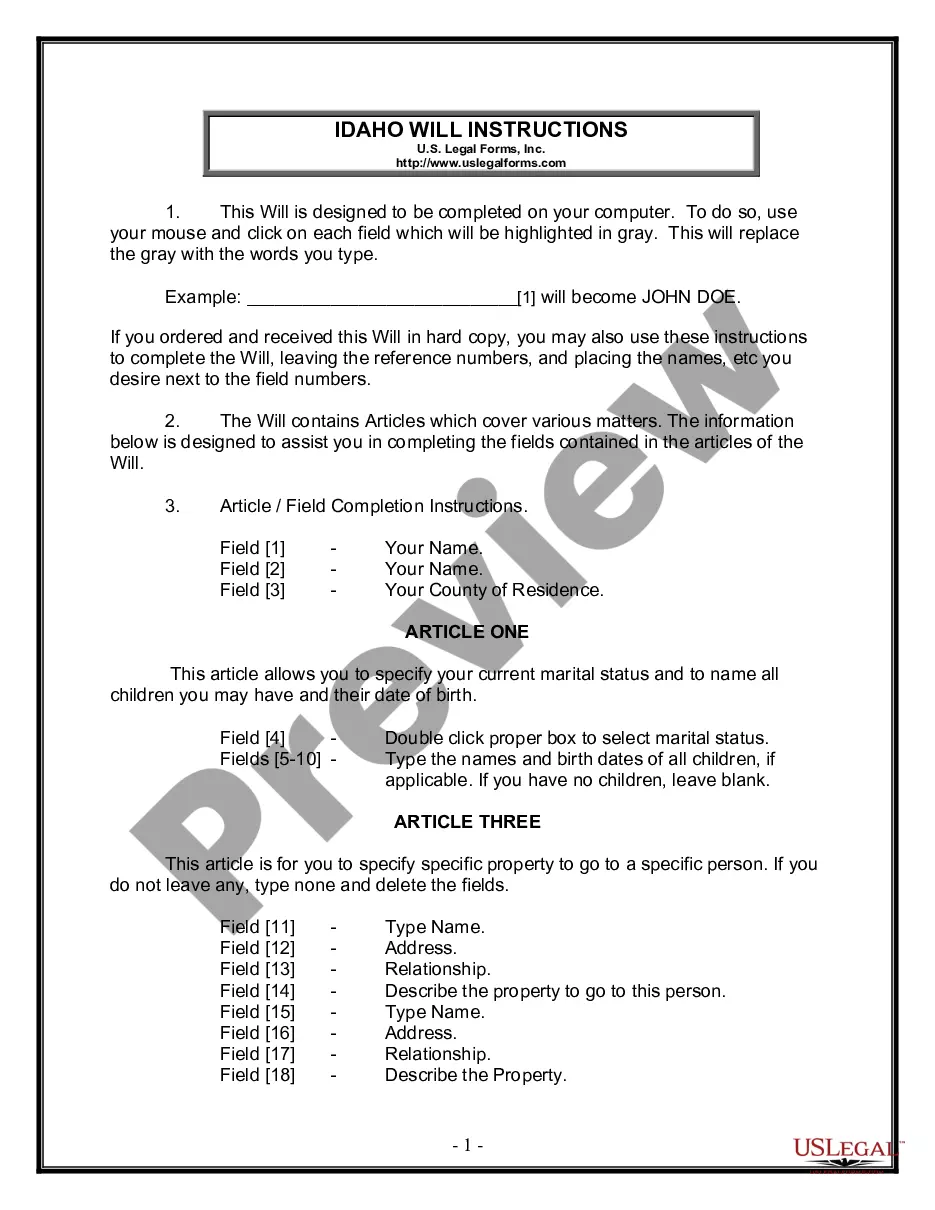
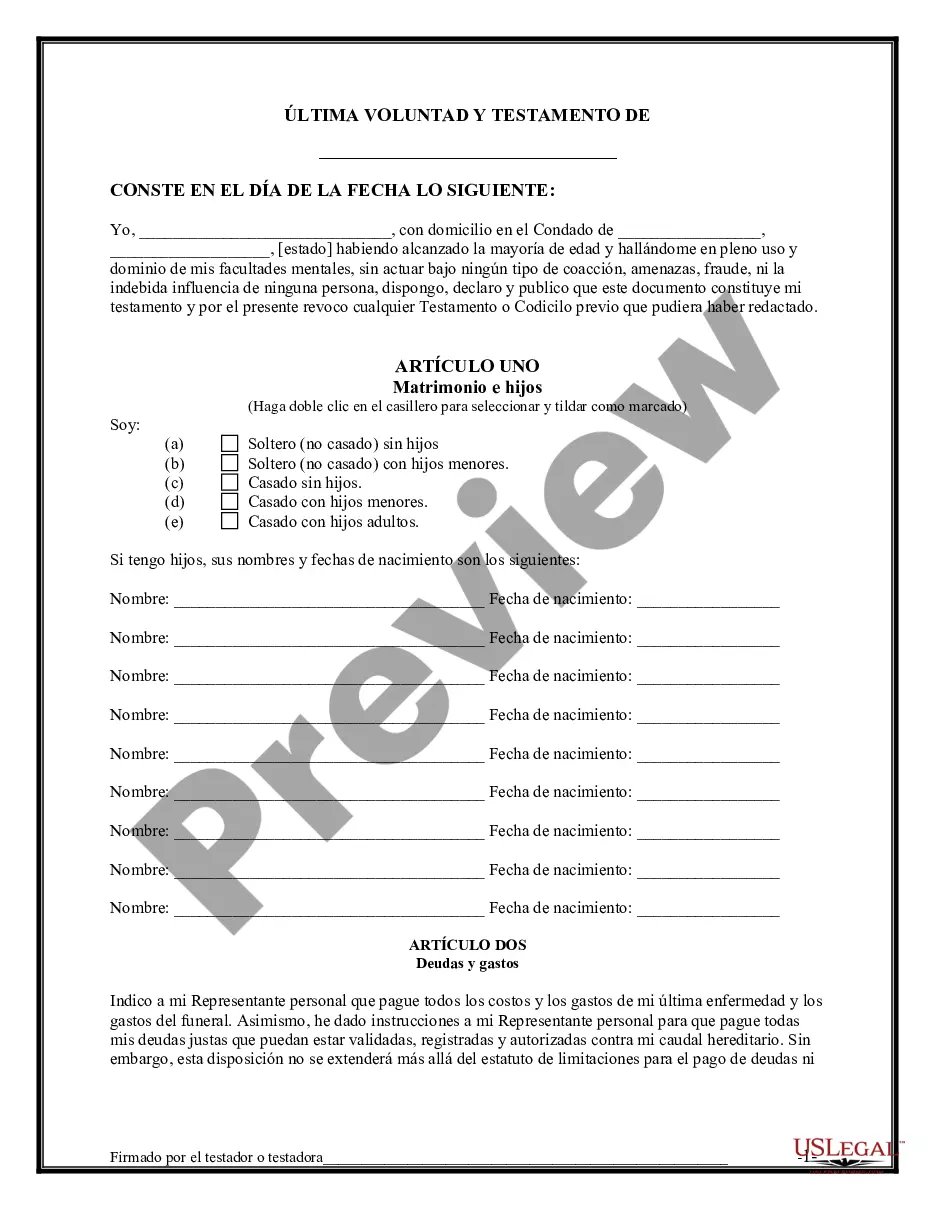
- Article One: Specifies your marital status and lists your children, if any.
- Article Three: Allows specific property bequests to named individuals.
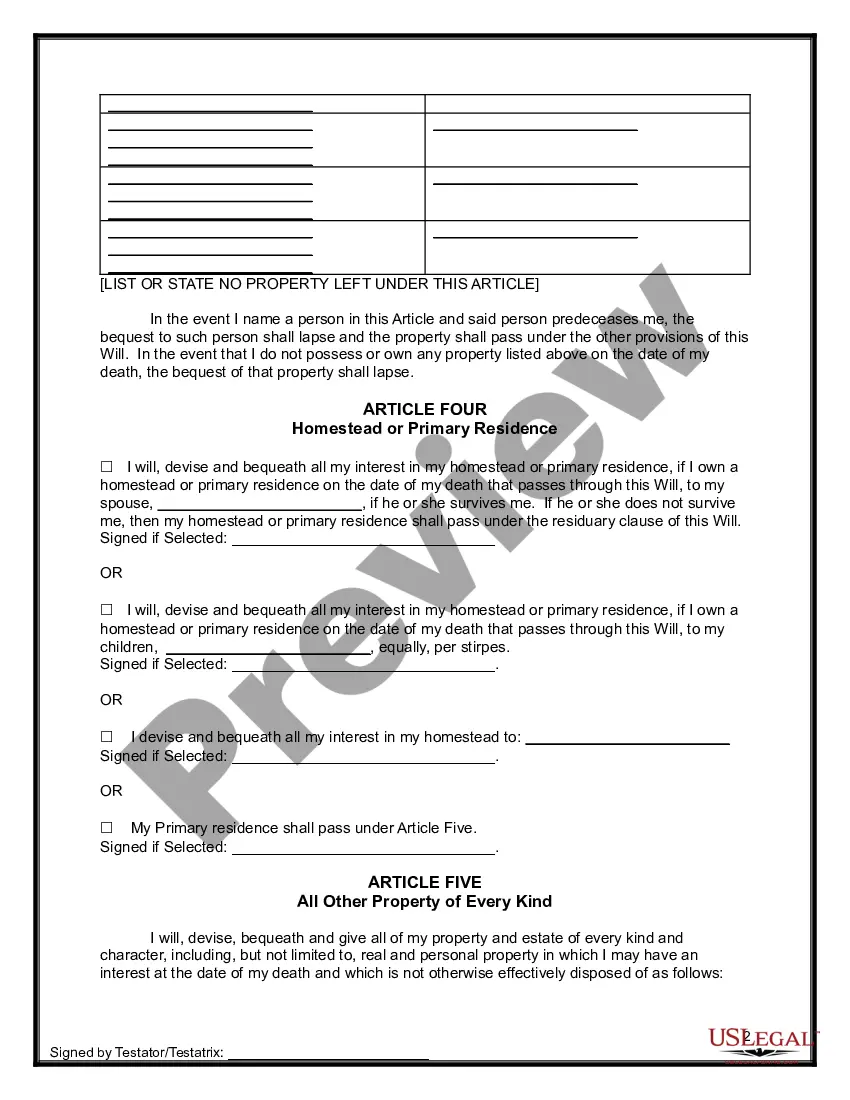
- Article Four: Covers the disposition of your homestead or primary residence.
- Article Five: Distributes the remainder of your property among loved ones or organizations.
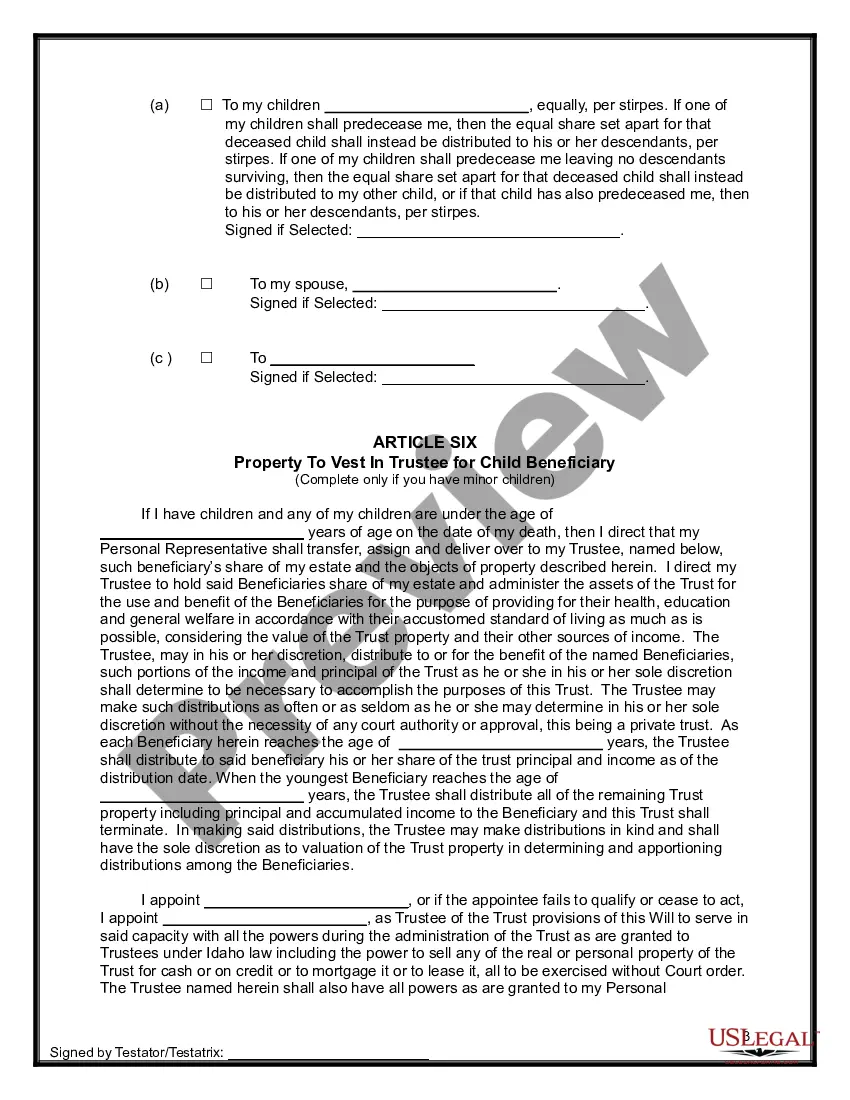
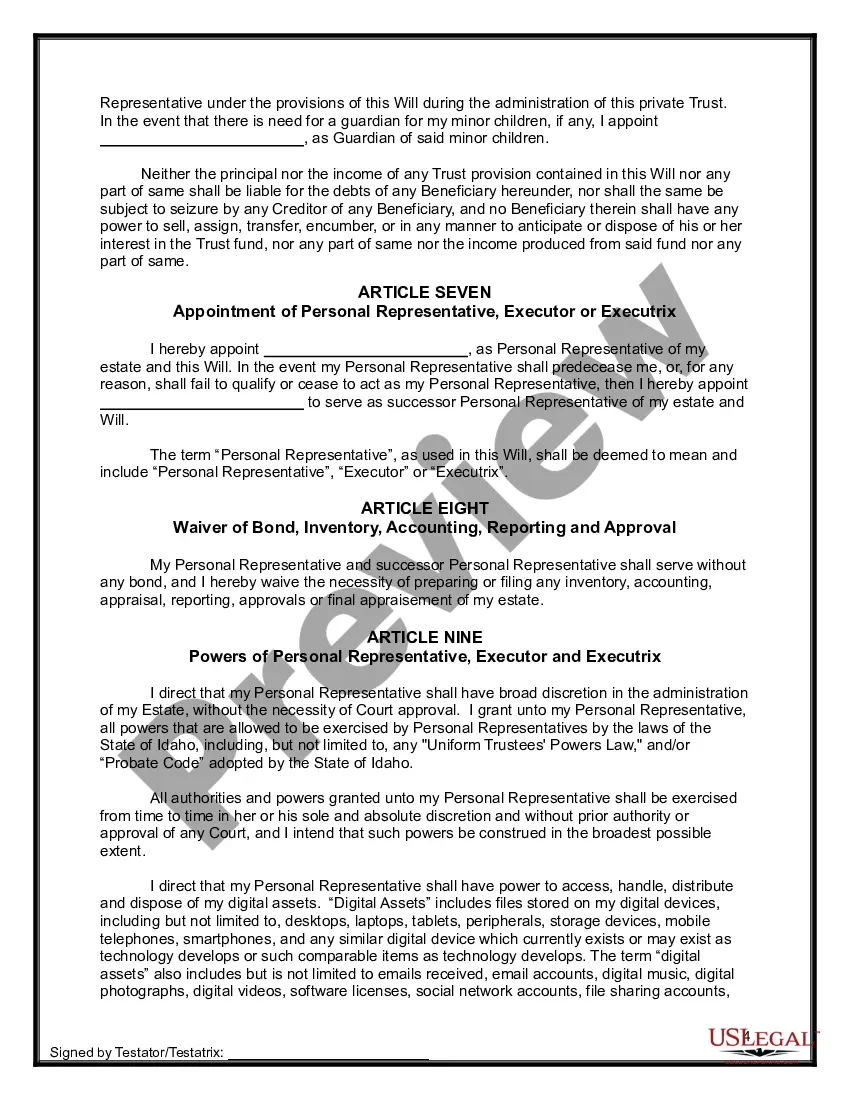
- Article Six: Names a trustee for minor beneficiaries.
- Article Seven: Appoints a personal representative to manage your estate.


When to use this document
This form is useful in various scenarios, such as when you want to ensure that your assets are distributed according to your wishes after your death. It is critical to have a will if you have dependents, specifically minor children, or if you own property. Additionally, if you wish to avoid the state's intestate succession laws, which could distribute your property contrary to your wishes, this will is essential.
Who needs this form
- Individuals aged 18 and older who are residents of Idaho.
- Anyone seeking to establish a clear plan for the distribution of their assets after death.
- Parents of minor children wishing to appoint guardians and trustees.
- People wanting to avoid the confusion and potential legal challenges that can arise from dying without a will.
Steps to complete this form
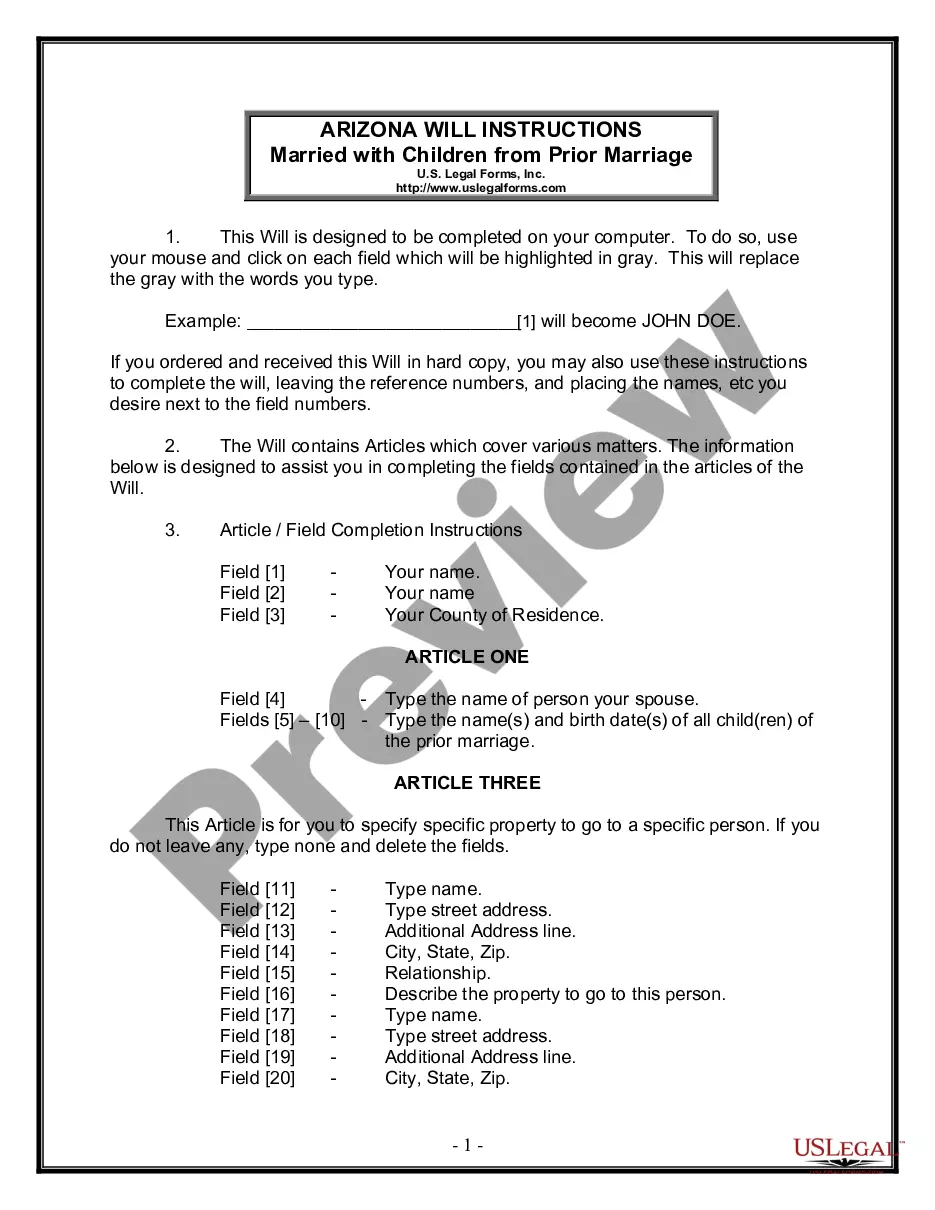
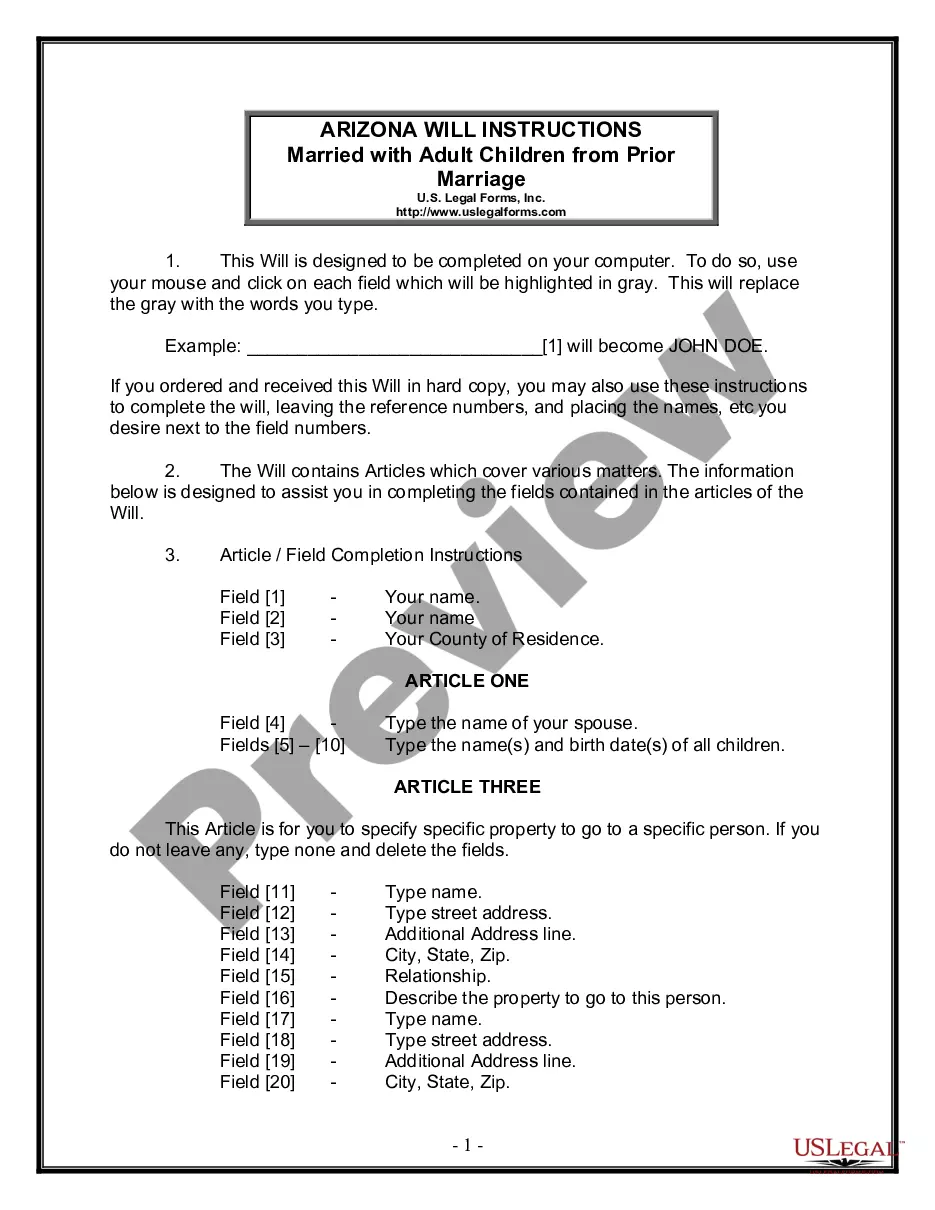
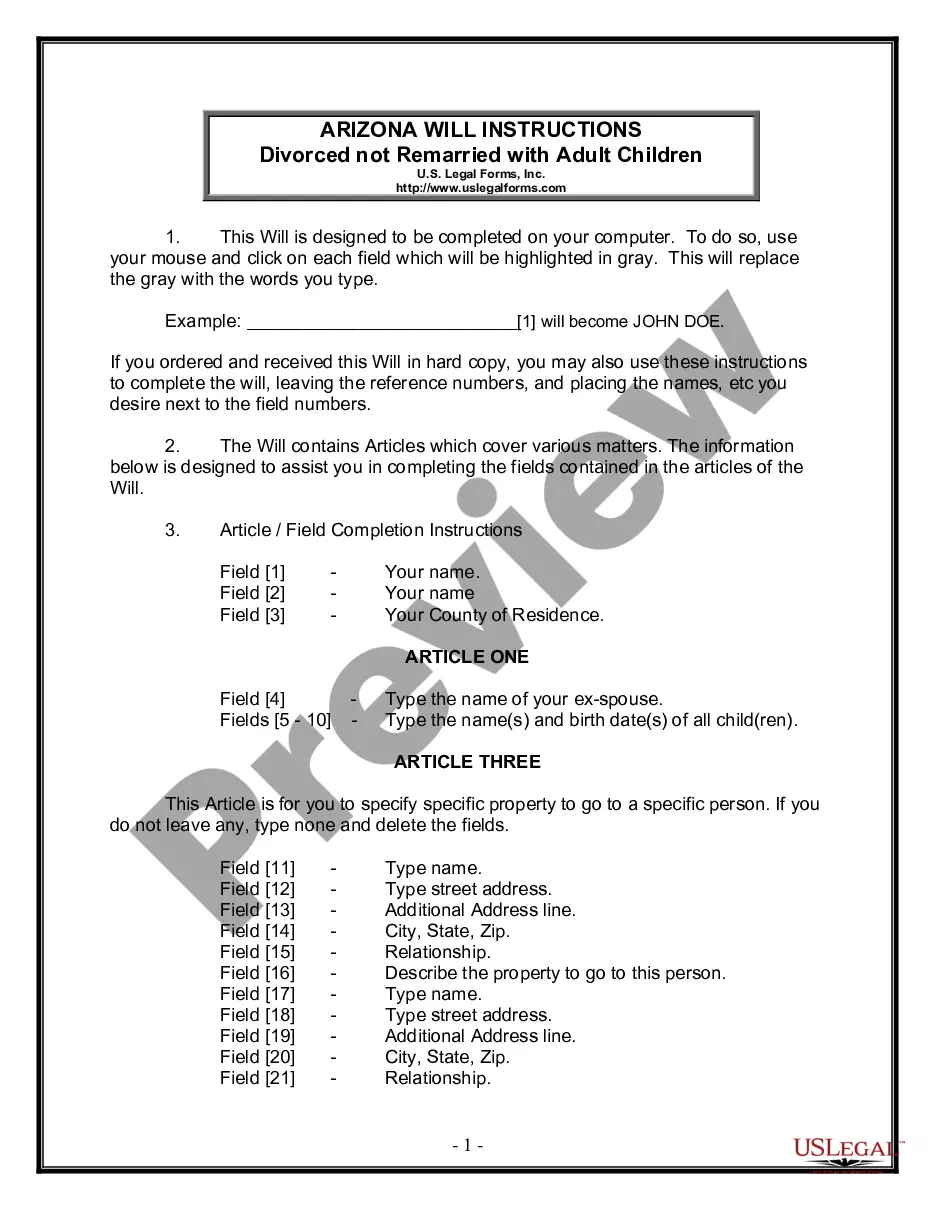
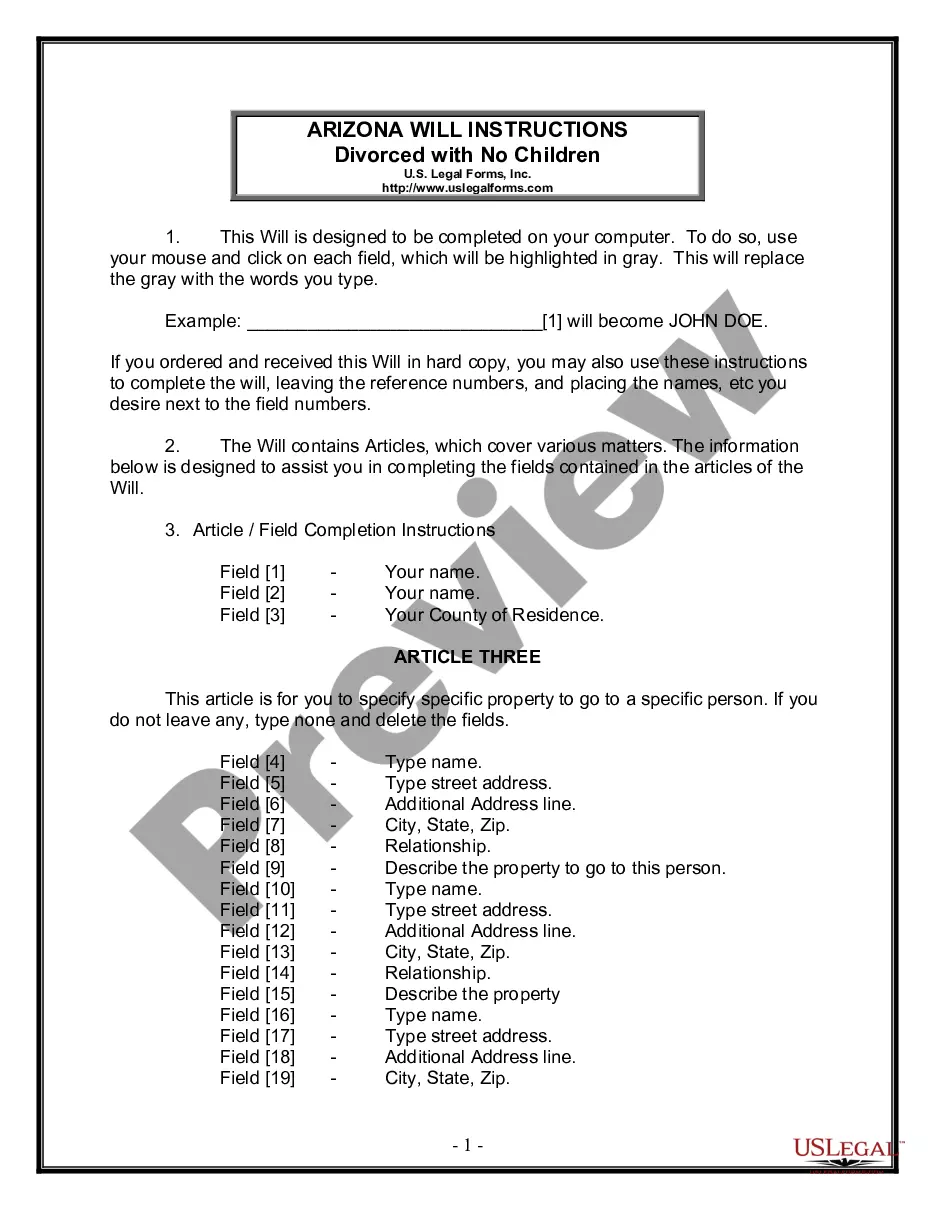
- Begin by entering your name and your county of residence.
- Specify your marital status and, if applicable, list the names and birthdates of your children.
- Detail the specific property you wish to bequeath in Article Three.
- Designate the recipient of your homestead or primary residence in Article Four.
- Appoint a personal representative to manage your estate in Article Seven.
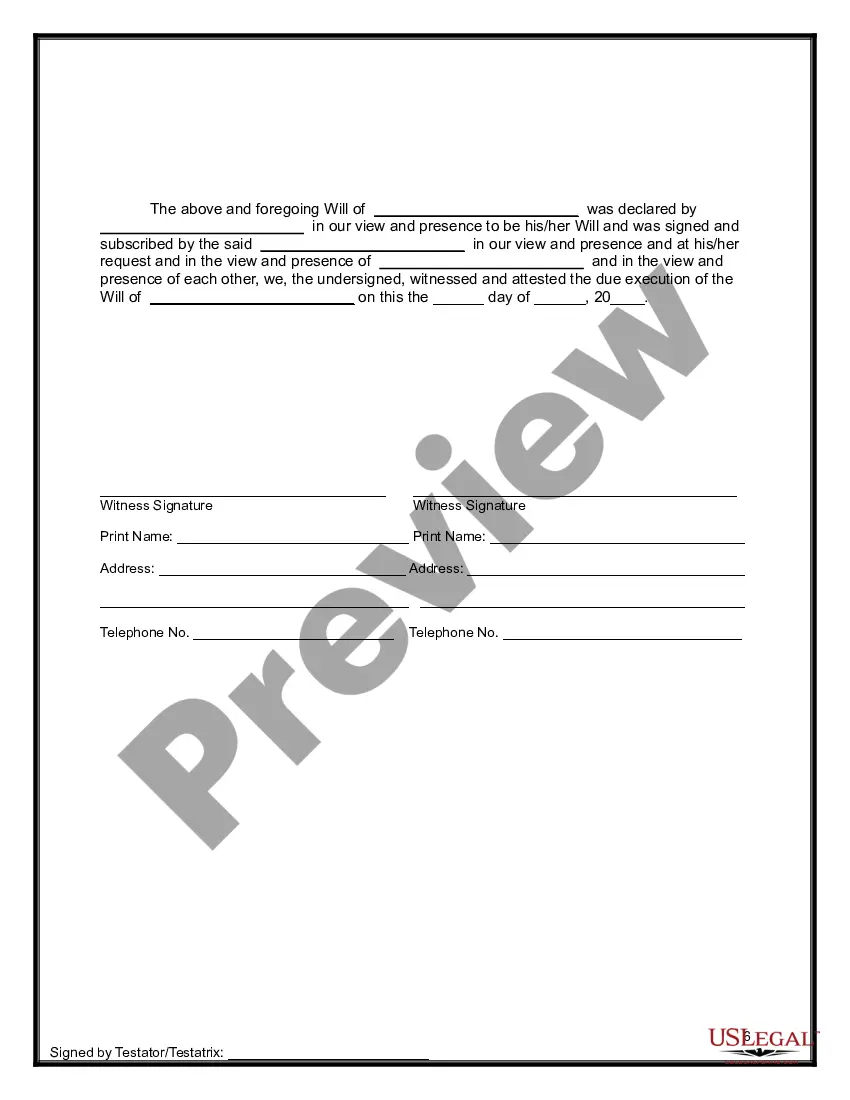
- Complete additional articles as necessary, then sign the document in front of witnesses.
Is notarization required?
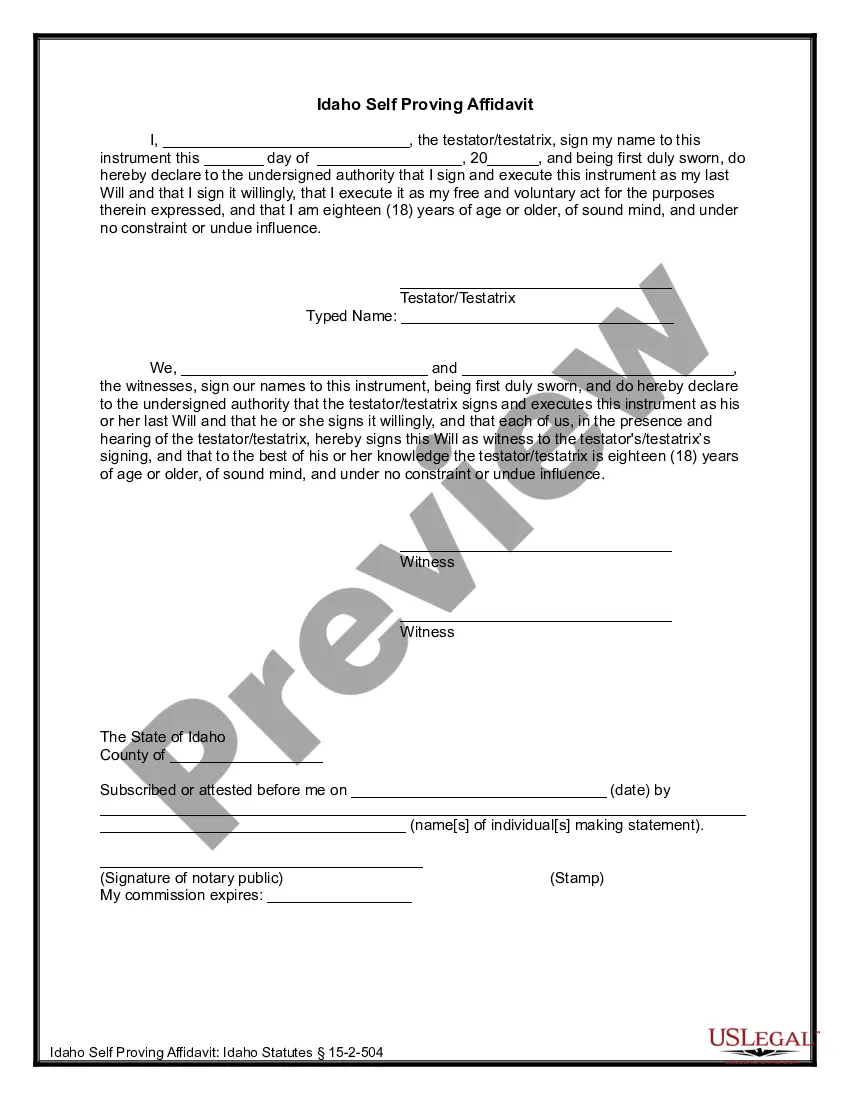
This document requires notarization to meet legal standards. US Legal Forms provides secure online notarization powered by Notarize, allowing you to complete the process through a verified video call, available 24/7.
Get your form ready online
Our built-in tools help you complete, sign, share, and store your documents in one place.
Make edits, fill in missing information, and update formatting in US Legal Forms—just like you would in MS Word.
Download a copy, print it, send it by email, or mail it via USPS—whatever works best for your next step.
Sign and collect signatures with our SignNow integration. Send to multiple recipients, set reminders, and more. Go Premium to unlock E-Sign.
If this form requires notarization, complete it online through a secure video call—no need to meet a notary in person or wait for an appointment.
We protect your documents and personal data by following strict security and privacy standards.

Make edits, fill in missing information, and update formatting in US Legal Forms—just like you would in MS Word.

Download a copy, print it, send it by email, or mail it via USPS—whatever works best for your next step.

Sign and collect signatures with our SignNow integration. Send to multiple recipients, set reminders, and more. Go Premium to unlock E-Sign.

If this form requires notarization, complete it online through a secure video call—no need to meet a notary in person or wait for an appointment.

We protect your documents and personal data by following strict security and privacy standards.
Avoid these common issues
- Failing to have the will signed by two witnesses, which can render it invalid.
- Not specifying alternate beneficiaries in case primary beneficiaries predecease you.
- Leaving property to individuals without clear identification or description.
- Overlooking the need to revoke prior wills, which could lead to confusion.
Why complete this form online
- Convenient digital completion that eliminates the need for handwritten documents.
- Editable format allows you to make changes easily before finalizing.
- Guidance and instructions provided throughout the form facilitate an accurate and efficient process.
What to keep in mind
- A Last Will and Testament is crucial for determining how your assets will be distributed after death.
- This form is specifically designed for Idaho residents.
- Clear instructions are provided to help you complete the form accurately.
- Avoid common mistakes to ensure your will is valid and reflects your wishes.
Looking for another form?
Form popularity
FAQ
Similar to other states, a will in Minnesota does not require notarization to be valid. However, your Idaho Last Will and Testament for other Persons can benefit from notarization. If you include a self-proving clause and have it notarized, this can help streamline the probate process and reduce challenges to its validity later.
To ensure your Idaho Last Will and Testament for other Persons is valid in Tennessee, you must comply with state laws. The will must be in writing, signed by the testator, and witnessed by at least two individuals who are not beneficiaries. Additionally, it's essential that the testator is of sound mind and at least 18 years old when creating the will.
Self-written wills are typically valid, even when handwritten, as long as they're properly witnessed and notarized, or proven in court. A handwritten will that is not witnessed or notarized is considered a holographic will. Not all states accept holographic wills .
As long as it was properly signed and witnessed by two adult independent witnesses who are present at the time you sign your will, it should be legally binding.Using the wrong wording could mean that your instructions aren't followed, or even that your will isn't valid.
Idaho law recognizes handwritten wills, referred to as holographic wills. Material provisions of the will and the signature must be in the handwriting of the person making the will.
In simple terms, you can create a handwritten document solely in your own handwriting and signed by you which can serve as your last will and testament. It's important to emphasize that no portion of the document may be typewritten and no witnesses or notaries are required.
No, in Idaho, you do not need to notarize your will to make it legal. However, Idaho allows you to make your will "self-proving" and you'll need to go to a notary if you want to do that. A self-proving will speeds up probate because the court can accept the will without contacting the witnesses who signed it.
Wills Law in Idaho: Overview In the state of Idaho, testators must have their wills signed by at least two witnesses who either witnessed the actual signing, or the testator's own acknowledgment of the signing.Valid if signature and material provisions are in handwriting of testator; does not need witnesses.
Once a will is probated it is a matter of public record in the county where the decedent was living at the time of their death.
No, in Idaho, you do not need to notarize your will to make it legal. However, Idaho allows you to make your will "self-proving" and you'll need to go to a notary if you want to do that. A self-proving will speeds up probate because the court can accept the will without contacting the witnesses who signed it.