Idaho Fiduciary Deed for use by Executors, Trustees, Trustors, Administrators and other Fiduciaries
What this document covers
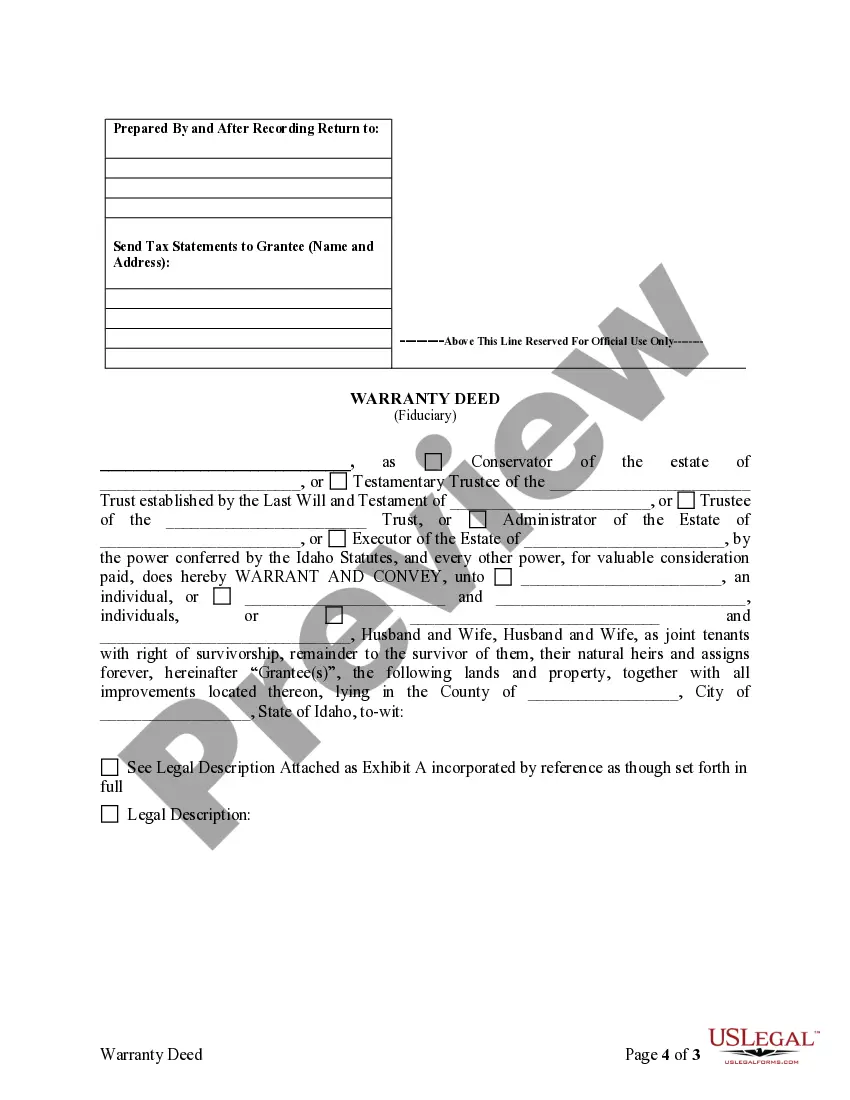
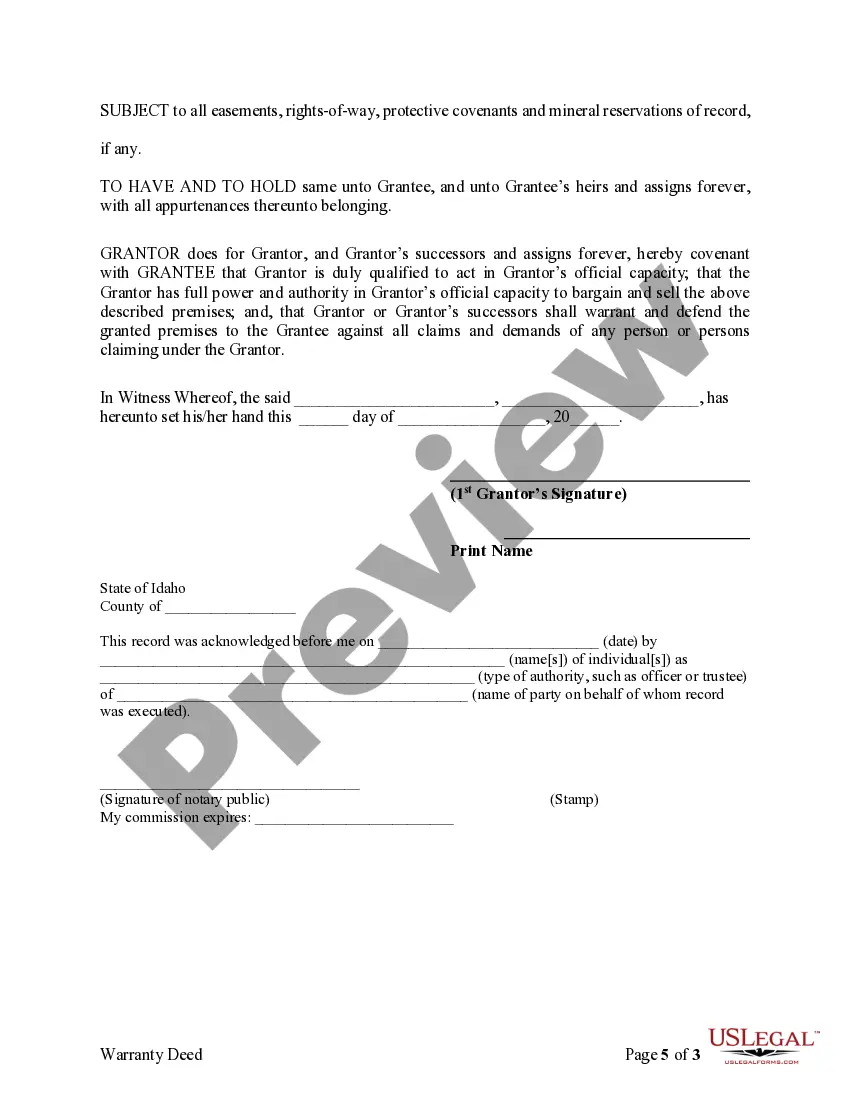
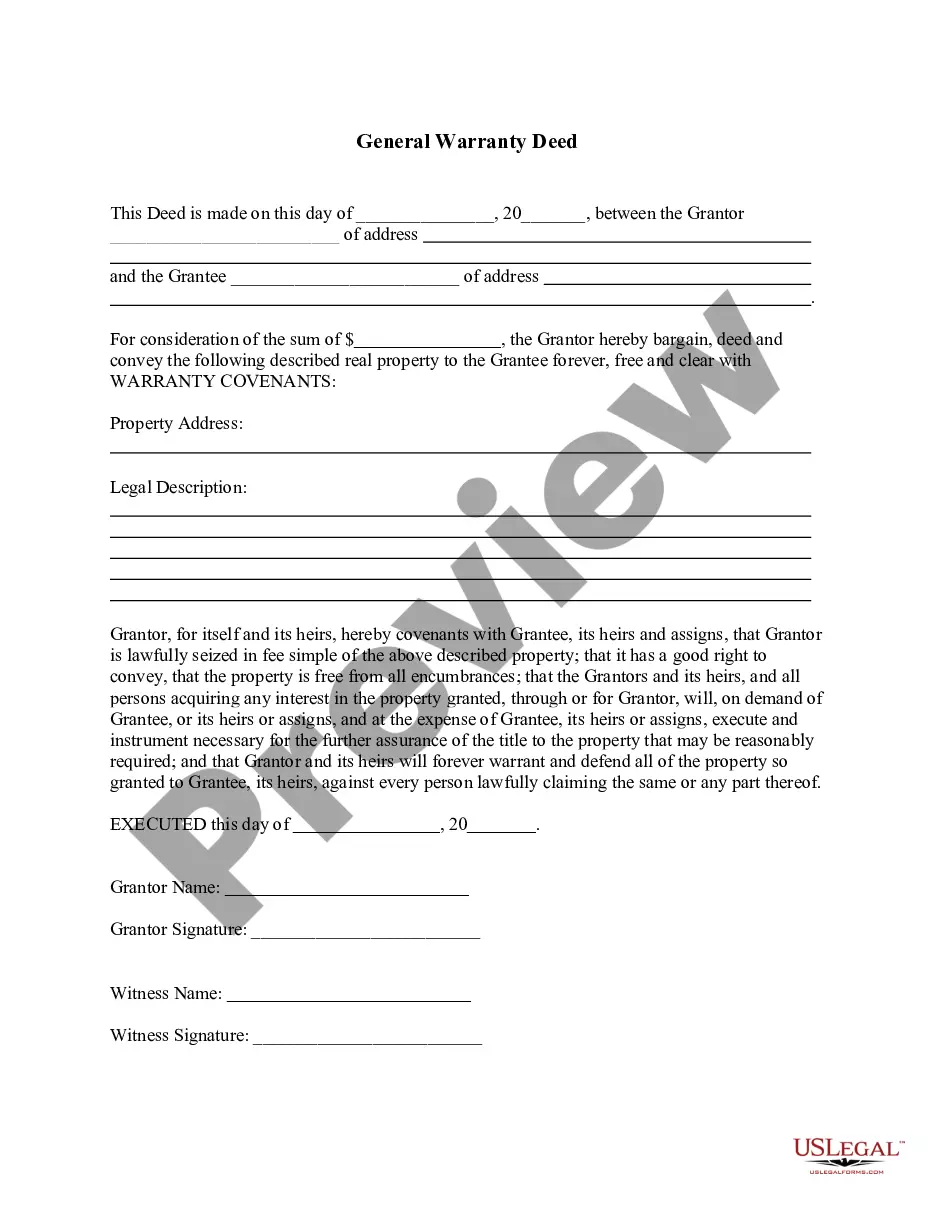
The Fiduciary Deed allows executors, trustees, trustors, administrators, and other fiduciaries to transfer property on behalf of another party. This form is distinct from a typical warranty deed as it specifically reflects actions taken by a fiduciary, ensuring legal rights are transferred appropriately while representing the interests of the individual they serve.
What’s included in this form
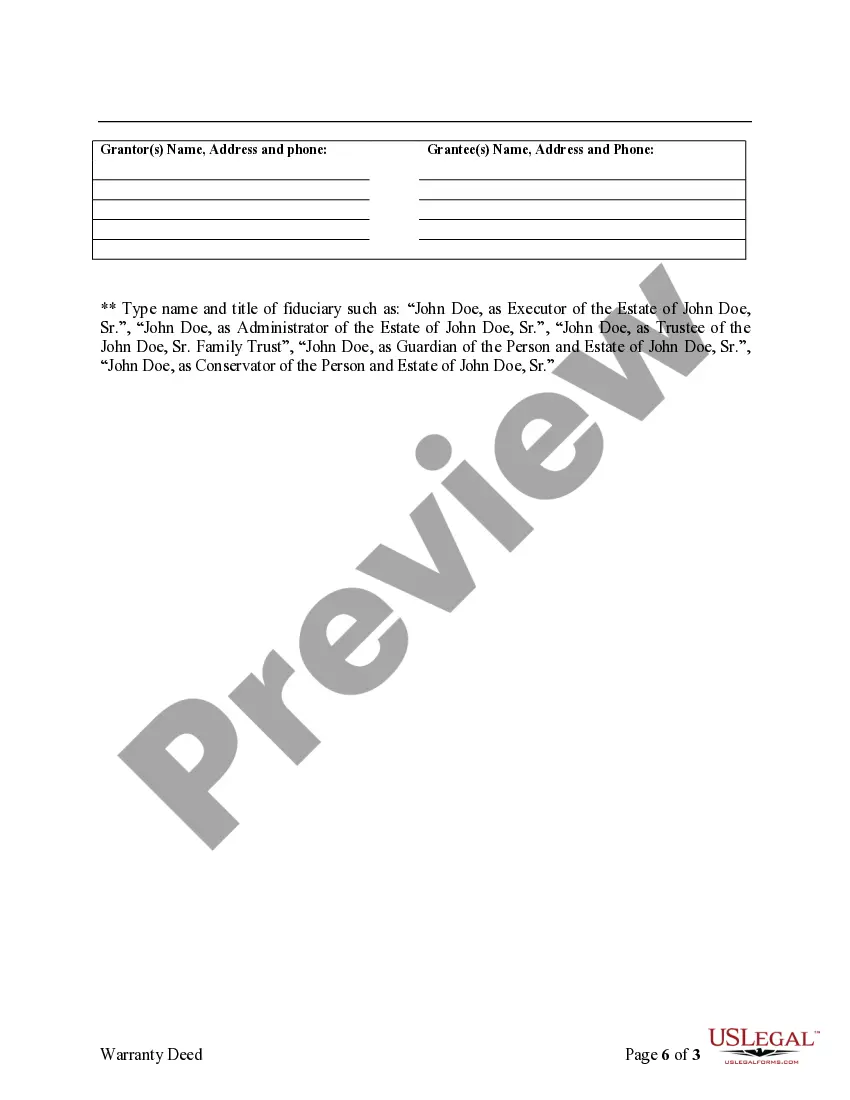
- Names and roles of the grantor and grantee.
- Description of the property being transferred.
- Notarization section, if applicable.
- Signatures of involved parties.
- Legal description of the property, typically attached as an exhibit.




When to use this document
This form is used when a fiduciary needs to legally transfer ownership of property as part of their duties. Scenarios include transferring real estate held in a trust, real estate distributed through a will, or properties managed by a guardian for a minor or incapacitated person.
Who should use this form
- Executors of a will.
- Trustees managing a trust.
- Trustors who are transferring property into a trust.
- Administrators appointed for estate management.
- Guardians or conservators overseeing property for another individual.
How to complete this form
- Identify the grantor (the fiduciary) and grantee (the party receiving the property).
- Provide a detailed legal description of the property being transferred.
- Complete the fields for necessary information, including dates and signatures.
- If required, have the document notarized to validate the transfer.
- Attach any additional necessary documents, such as an exhibit for the legal description.
Notarization requirements for this form
This document requires notarization to meet legal standards. US Legal Forms provides secure online notarization powered by Notarize, allowing you to complete the process through a verified video call, available 24/7.
Get your form ready online
Our built-in tools help you complete, sign, share, and store your documents in one place.
Make edits, fill in missing information, and update formatting in US Legal Forms—just like you would in MS Word.
Download a copy, print it, send it by email, or mail it via USPS—whatever works best for your next step.
Sign and collect signatures with our SignNow integration. Send to multiple recipients, set reminders, and more. Go Premium to unlock E-Sign.
If this form requires notarization, complete it online through a secure video call—no need to meet a notary in person or wait for an appointment.
We protect your documents and personal data by following strict security and privacy standards.

Make edits, fill in missing information, and update formatting in US Legal Forms—just like you would in MS Word.

Download a copy, print it, send it by email, or mail it via USPS—whatever works best for your next step.

Sign and collect signatures with our SignNow integration. Send to multiple recipients, set reminders, and more. Go Premium to unlock E-Sign.

If this form requires notarization, complete it online through a secure video call—no need to meet a notary in person or wait for an appointment.

We protect your documents and personal data by following strict security and privacy standards.
Avoid these common issues
- Failing to include a complete legal description of the property.
- Not signing the deed in front of a notary if notarization is required.
- Omitting names or roles of all parties involved.
- Not attaching necessary exhibits or additional documentation.
Benefits of using this form online
- Convenience of completing the form anytime, anywhere.
- Editability allows users to customize their information easily.
- Reliable templates prepared by licensed attorneys ensure legal compliance.
Key takeaways
- The Fiduciary Deed is crucial for fiduciaries to transfer property legally.
- Key components include grantor and grantee details, property descriptions, and signatures.
- It's specifically tailored to meet legal requirements in Idaho.
Looking for another form?




Form popularity
FAQ
Idaho Code 68 105 defines the transfer procedures and powers granted to fiduciaries. It guides how fiduciaries may manage and convey property, ensuring compliance with state laws. This information is vital for Executors, Trustees, Trustors, Administrators, and other Fiduciaries managing estates.
Three basic types of deeds commonly used are the grant deed, the quitclaim deed, and the warranty deed. A sample grant deed. the property he or she is transferring is implied from such language.
The words with fiduciary covenants means the seller promises to the buyer that he or she is duly appointed, qualified and acting in his or her fiduciary capacity, is duly authorized to make the sale and convey the property to buyer.
A fiduciary deed is for use by a fiduciary such as an executor or administrator of an estate or a trustee of a trust. In this type of deed there is a warranty, but only as a fiduciary. A fiduciary does not own the property, rather they essentially manage it for another.
The General Warranty Deed. A general warranty deed provides the highest level of protection for the buyer because it includes significant covenants or warranties conveyed by the grantor to the grantee. The Special Warranty Deed. The Bargain and Sale Deed. The Quitclaim Deed.