Idaho Letter from Tenant to Landlord containing Notice to landlord to cease retaliatory decrease in services
Understanding this form
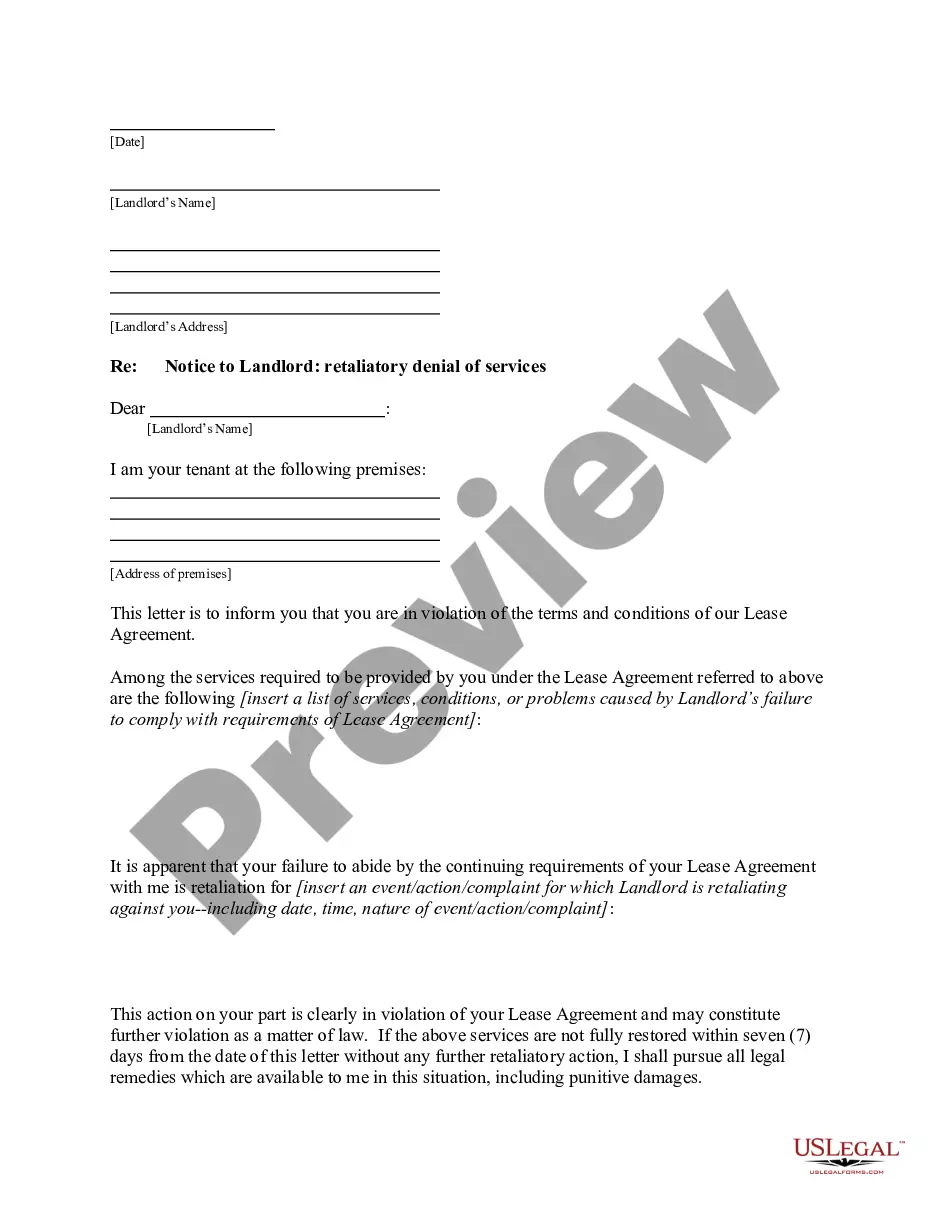
This form is a letter from a tenant to a landlord notifying them to cease retaliatory actions that result in a decrease in services outlined in the lease agreement. The letter asserts that the landlord's failure to provide required services constitutes retaliation for actions taken by the tenant. This form serves as an official notice and indicates that the landlord's actions may be in breach of the lease agreement and could violate state laws regarding tenant rights and landlord responsibilities.
Form components explained
- Identification of the tenant and landlord involved.
- List of specific services that the landlord is required to provide.
- Explanation of the retaliatory actions taken by the landlord.
- Notice that the landlord's actions may breach the lease agreement.
- A request to cease the retaliatory actions and restore services.
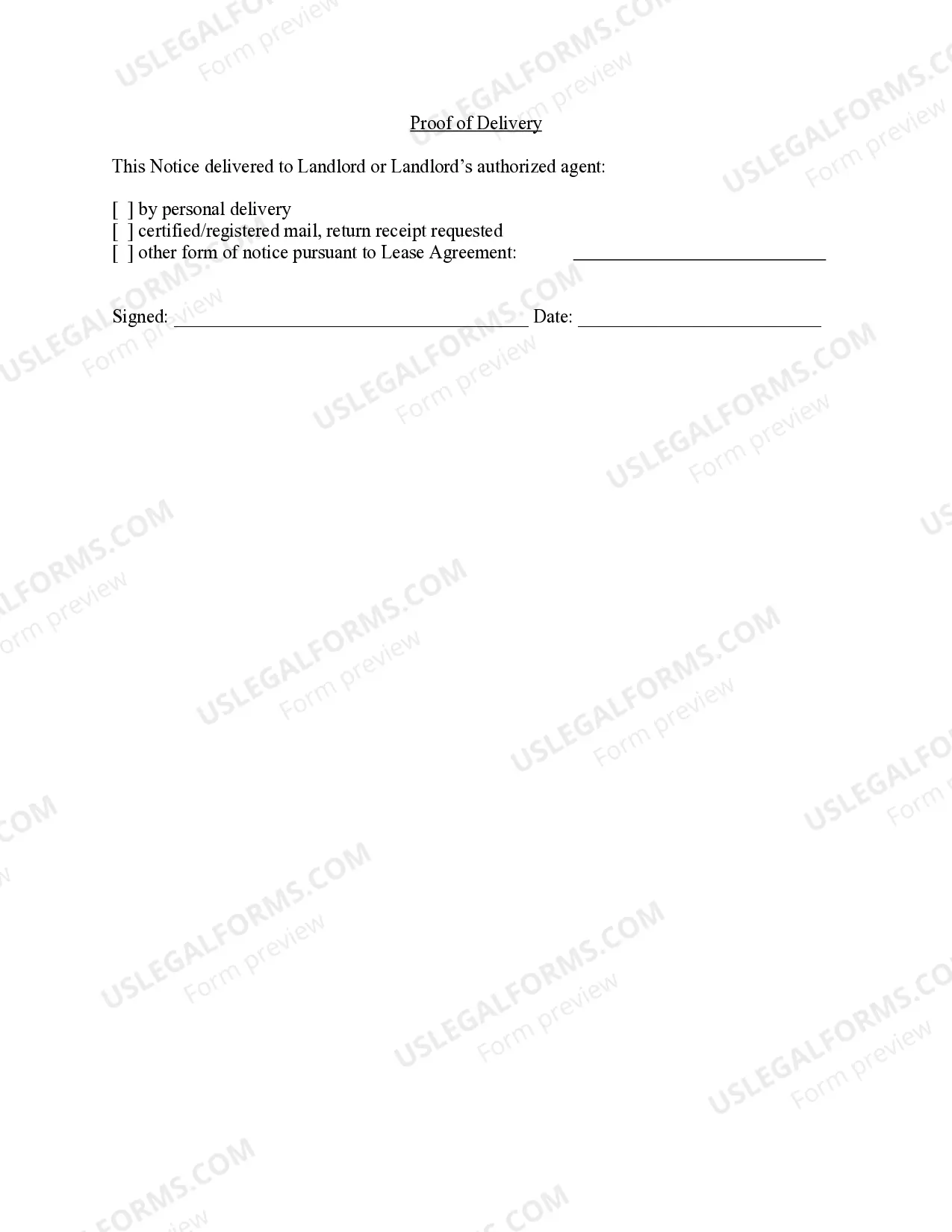
- Proof of delivery options for notifying the landlord.


When to use this form
This letter should be used when a tenant believes that their landlord is retaliating against them by reducing or withholding essential services as a response to the tenant exercising their rights, such as reporting health violations or participating in tenant advocacy. It is crucial to document the issue formally to protect the tenant's rights and to seek resolution before considering further legal action.
Who should use this form
- Tenants who believe they are facing retaliation from their landlord.
- Individuals who have experienced a decrease in essential services defined in their lease agreement.
- Renters looking to formally address grievances related to retaliatory landlord actions.
Completing this form step by step
- Identify the tenant and landlord's information, including names and addresses.
- Insert the list of required services that the landlord has failed to provide.
- Clearly state the actions taken by the landlord that are perceived as retaliation.
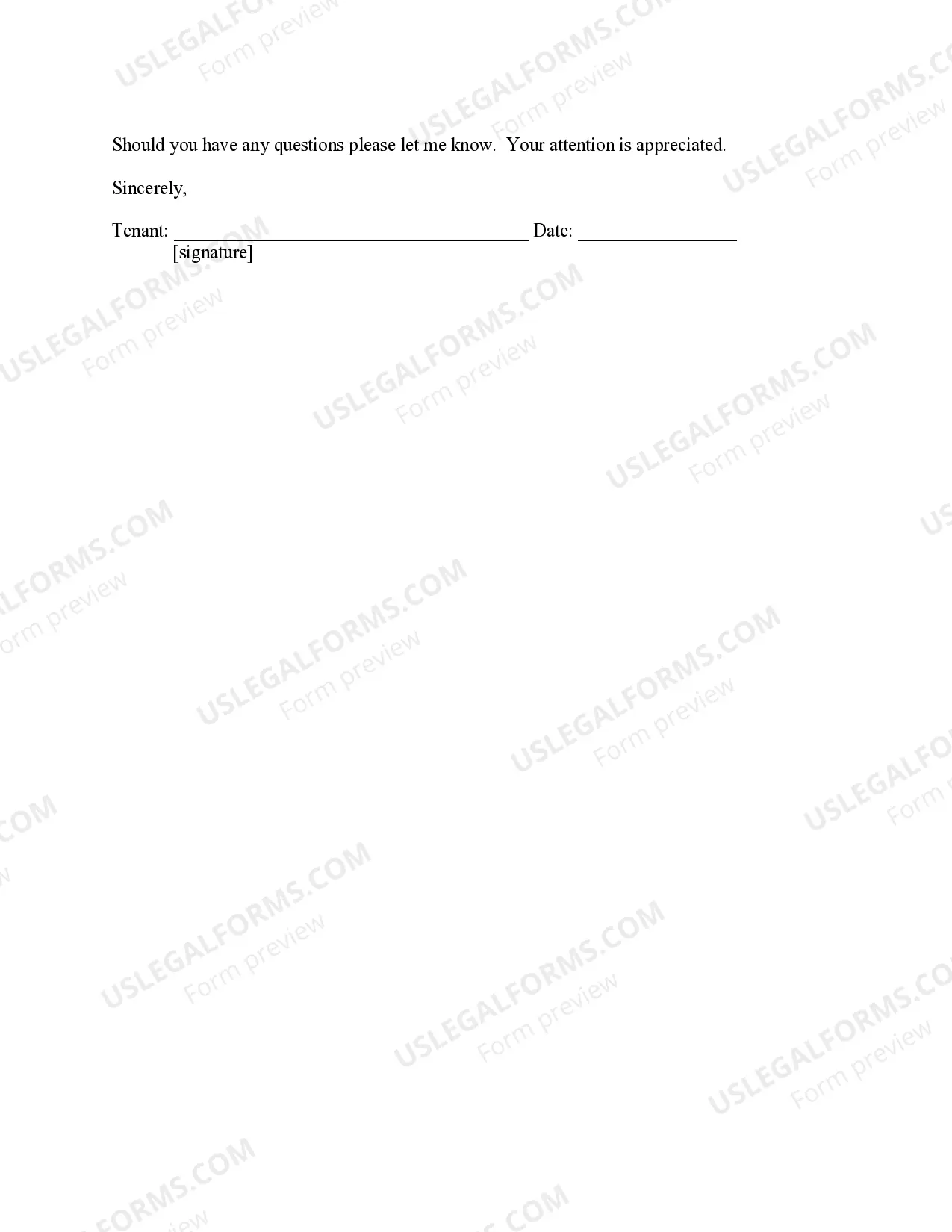
- Provide the date of the letter and sign in the space provided.
- Select the method of delivery to ensure the landlord receives the notice.
Does this document require notarization?
This form does not typically require notarization unless specified by local law. However, it is advisable to check local regulations to ensure compliance.
Get your form ready online
Our built-in tools help you complete, sign, share, and store your documents in one place.
Make edits, fill in missing information, and update formatting in US Legal Forms—just like you would in MS Word.
Download a copy, print it, send it by email, or mail it via USPS—whatever works best for your next step.
Sign and collect signatures with our SignNow integration. Send to multiple recipients, set reminders, and more. Go Premium to unlock E-Sign.
If this form requires notarization, complete it online through a secure video call—no need to meet a notary in person or wait for an appointment.
We protect your documents and personal data by following strict security and privacy standards.

Make edits, fill in missing information, and update formatting in US Legal Forms—just like you would in MS Word.

Download a copy, print it, send it by email, or mail it via USPS—whatever works best for your next step.

Sign and collect signatures with our SignNow integration. Send to multiple recipients, set reminders, and more. Go Premium to unlock E-Sign.

If this form requires notarization, complete it online through a secure video call—no need to meet a notary in person or wait for an appointment.

We protect your documents and personal data by following strict security and privacy standards.
Avoid these common issues
- Failing to clearly outline the services that are not being provided.
- Not keeping a copy of the letter for personal records.
- Neglecting to notify the landlord through an appropriate delivery method.
Why use this form online
- Convenience of accessing and downloading the letter from anywhere.
- Editability allows customization to match specific circumstances.
- Confidence in using a legally vetted template drafted by licensed attorneys.
Legal use & context
- This form can help strengthen your position if legal action is necessary.
- It serves as formal documentation of your concerns regarding retaliatory actions.
Key takeaways
- This letter is essential for tenants facing unjust service reductions.
- Timely use can help resolve disputes effectively.
- Proper completion and delivery can protect your rights under the lease agreement.
Looking for another form?
Form popularity
FAQ
If a tenant fails to provide proper notice, they risk losing their legal protections and may face difficulties in asserting their rights. In the context of an Idaho Letter from Tenant to Landlord containing Notice to landlord to cease retaliatory decrease in services, proper notice is crucial for ensuring that claims of retaliation are valid. Tenants should familiarize themselves with local laws to avoid complications.
Today's Date. Landlord's Name. Property Address and Unit Number. State Your Desire to Move Out of the Apartment. Include Desired Move-Out Date. That You Expect the Return of Your Security Deposit Under State Law. A Forwarding Address Where Your Security Deposit Can Be Sent.
Dear (property manager's name), I wanted to contact you today to ask if we could discuss lowering my rent. I love living here but lately, finances have been difficult and a slight reduction in rent would go a long way in helping. It's important to me to be a good and responsible tenant.
The landlord had a duty to reasonably maintain the property; The landlord knew or should have known of the dangerous condition; The landlord breached their duty by failing to repair/fix the dangerous condition;
Dear (Name of landlord or manager), This letter constitutes my written (number of days' notice that you need to give based on your lease agreement)-day notice that I will be moving out of my apartment on (date), the end of my current lease. I am leaving because (new job, rent increase, etc.)
When writing to your landlord, be specific in describing the problems you are having. Do not exaggerate or under-emphasize the extent of the problem. The landlord may show this letter to a judge if your problem is ever litigated.
Write a letter to your landlord stating that you are aware of your rights as a tenant, that s/he is in clear violation of the law, and that you want the situation remedied with no further harassment. Keep a copy of the letter; it will be good evidence if you have to take the landlord to court later.
If you're seeking damages for emotional distress caused by a landlord's discrimination, or punitive damages for especially blatant and intentional discrimination, a lawsuit may well be your best bet. Understand what's involved in suing your landlord. You may file a lawsuit in either federal or state court.
State who you are and why you need a rental. Mention where you found their ad and how you can afford the rental. Offer to provide references (work/volunteer/housing office) Include some highlighting feature from the original ad so that when you receive a response you can remember which rental you are talking about (ex.
You can send your letter by email if your tenancy agreement says you can. You should say something like: I am giving 1 month's notice to end my tenancy, as required by law. I will be leaving the property on (date xxxxx).