Idaho Letter from Landlord to Tenant about Tenant engaging in illegal activity in premises as documented by law enforcement and if repeated, lease terminates
Understanding this form
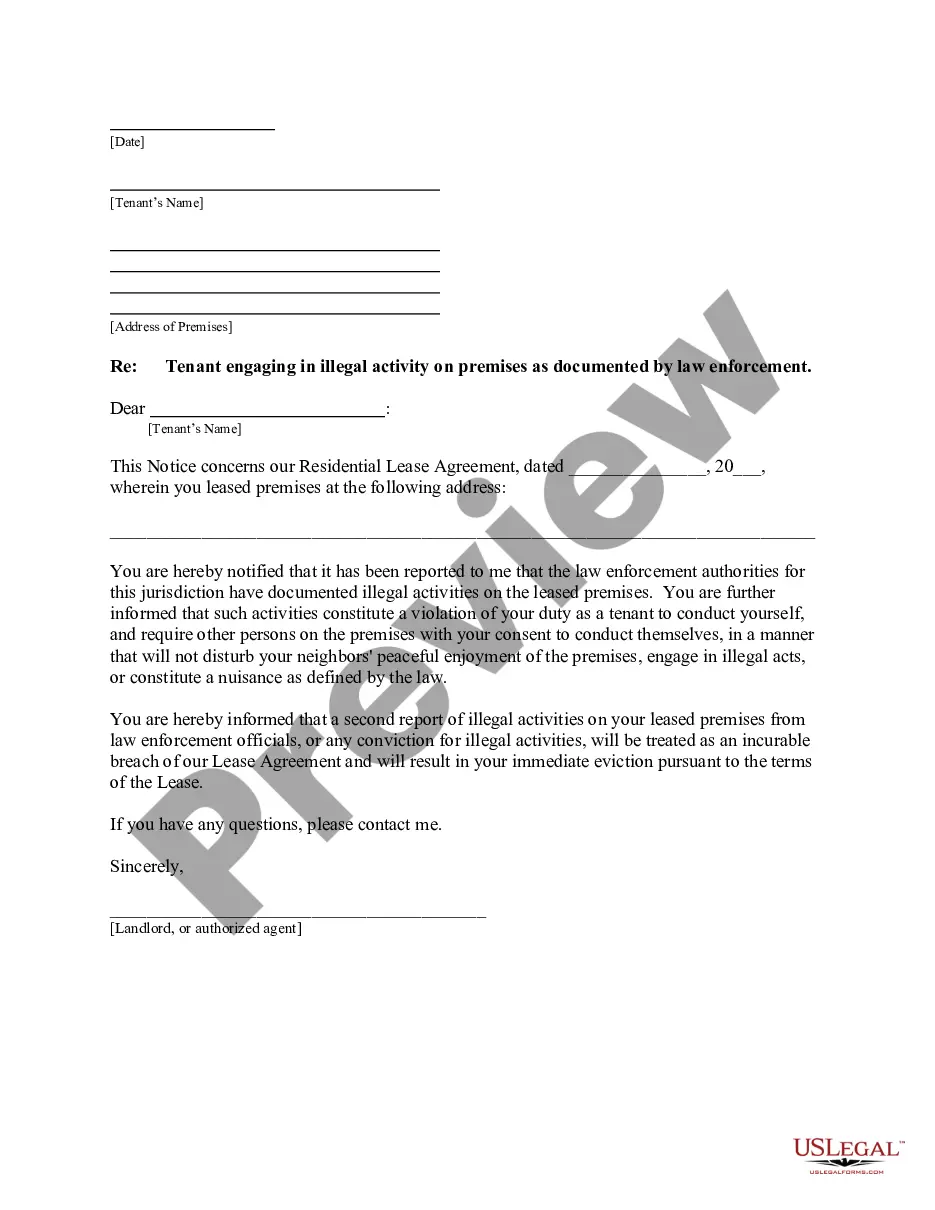
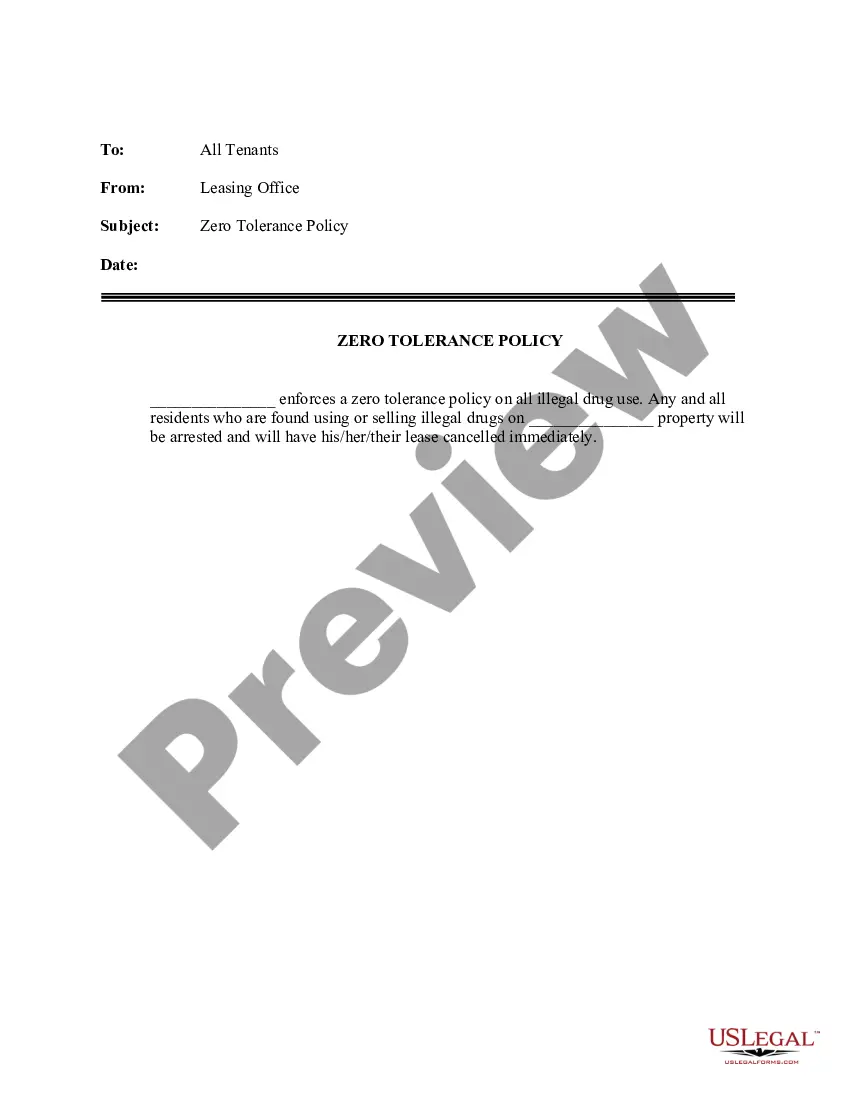
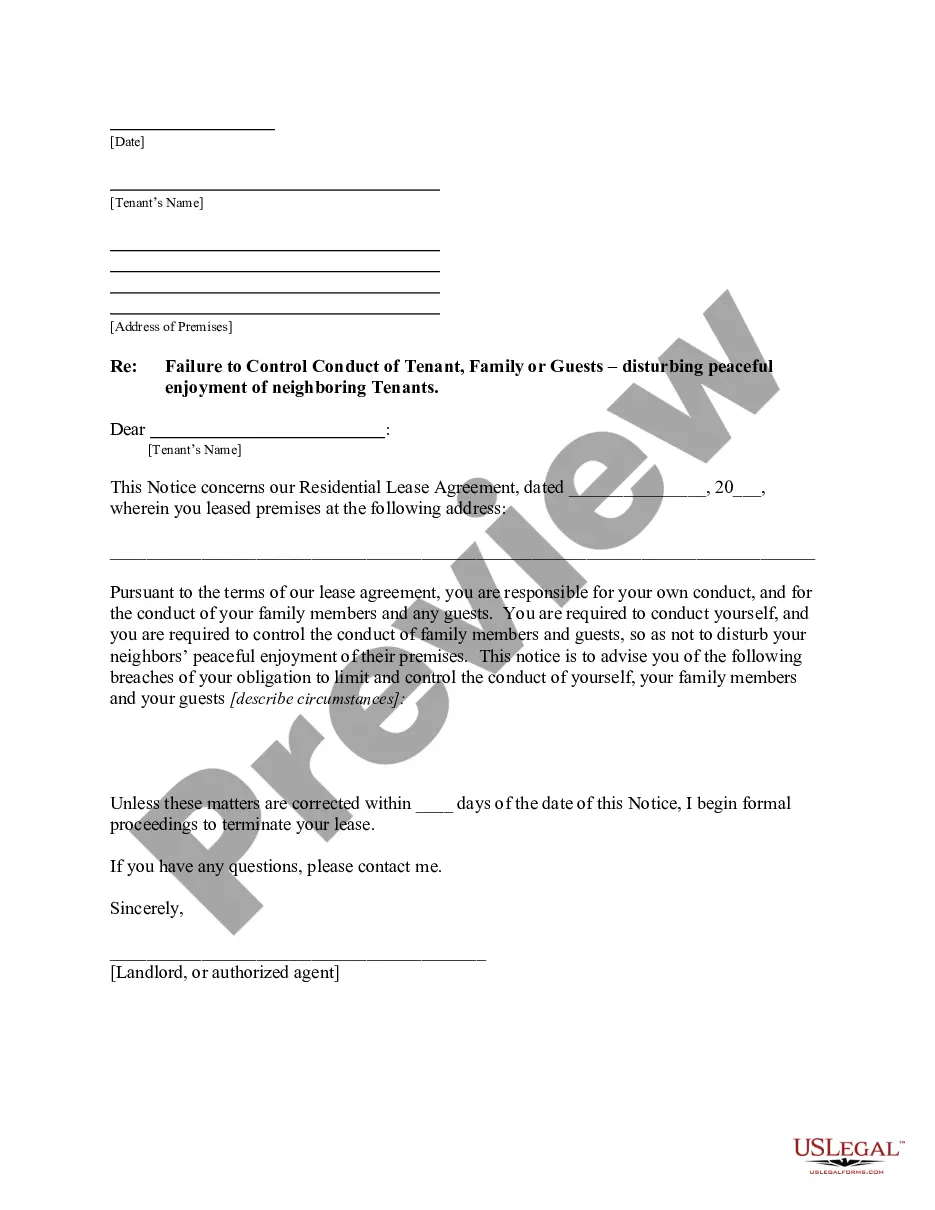
This form is a letter from the landlord to the tenant, addressing illegal activities taking place on the leased property as reported by law enforcement. Its primary purpose is to notify the tenant of these activities and warn that recurrence could lead to termination of the lease. This form serves as a formal communication to ensure the tenant understands the consequences of their actions, distinguishing it from more general eviction notices or breach of lease templates.
Main sections of this form
- Notification of illegal activities reported by law enforcement.
- Explanation of the tenant's obligations to avoid conducting illegal acts.
- Warning regarding the consequences of repeated illegal activities.
- Contact information for further questions.
- Signature line for the landlord.



When to use this document
This form should be used when a landlord receives reports or documentation from law enforcement about illegal activities occurring on the rental property. It is essential for maintaining records of tenants' lease violations and serves as a formal warning that continued illegal behavior could lead to lease termination and eviction.
Who should use this form
- Landlords who have identified illegal activities conducted by their tenants.
- Property management companies responsible for overseeing tenant behavior.
- Individuals renting out residential properties seeking to address tenant misconduct.
How to prepare this document
- Identify the tenant's name and address the letter to them.
- Clearly state the illegal activities reported by law enforcement.
- Include information regarding the violations of the lease agreement.
- Specify the consequences of further illegal behavior, including eviction terms.
- Sign the letter with your name and date to formalize the communication.
Does this form need to be notarized?
Notarization is generally not required for this form. However, certain states or situations might demand it. You can complete notarization online through US Legal Forms, powered by Notarize, using a verified video call available anytime.
Get your form ready online
Our built-in tools help you complete, sign, share, and store your documents in one place.
Make edits, fill in missing information, and update formatting in US Legal Forms—just like you would in MS Word.
Download a copy, print it, send it by email, or mail it via USPS—whatever works best for your next step.
Sign and collect signatures with our SignNow integration. Send to multiple recipients, set reminders, and more. Go Premium to unlock E-Sign.
If this form requires notarization, complete it online through a secure video call—no need to meet a notary in person or wait for an appointment.
We protect your documents and personal data by following strict security and privacy standards.
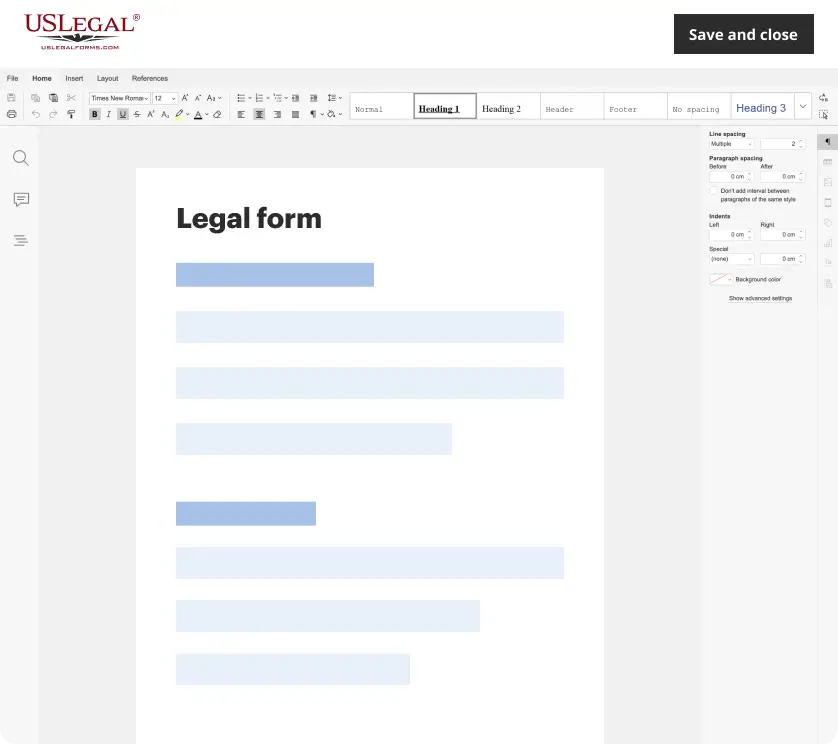
Make edits, fill in missing information, and update formatting in US Legal Forms—just like you would in MS Word.
Download a copy, print it, send it by email, or mail it via USPS—whatever works best for your next step.
Sign and collect signatures with our SignNow integration. Send to multiple recipients, set reminders, and more. Go Premium to unlock E-Sign.
If this form requires notarization, complete it online through a secure video call—no need to meet a notary in person or wait for an appointment.
We protect your documents and personal data by following strict security and privacy standards.
Typical mistakes to avoid
- Failing to keep a copy of the letter for records.
- Not providing clear details about the reported illegal activities.
- Overlooking state-specific legal requirements.
- Using ambiguous language that could be misinterpreted by the tenant.
Benefits of using this form online
- Immediate access to a professionally drafted legal document.
- Easy customization to meet specific requirements.
- Time-saving as forms are ready to download and use instantly.
- Print-friendly format for documentation and record-keeping.
Legal use & context
- The letter serves as a formal notification to tenants of their lease violations.
- Ensures landlords have a record of tenant communication regarding illegal activities.
- Properly documenting illegal behavior can help protect landlords during the eviction process.
What to keep in mind
- Use this form to formally address illegal tenant activities.
- Document illegal behaviors to enforce lease agreements effectively.
- Be aware of and comply with local laws when issuing this notification.
Looking for another form?
Form popularity
FAQ
When a tenant fails to provide proper notice for moving out, it can result in financial consequences, such as losing their security deposit or facing additional fees. This situation may also lead to further action by the landlord, especially if it relates to an Idaho Letter from Landlord to Tenant about Tenant engaging in illegal activity in premises as documented by law enforcement and if repeated, lease terminates. Thus, tenants should familiarize themselves with local laws and seek advice to mitigate risks. Using US Legal Forms can simplify the process of drafting necessary notices.
Instead, it is harm that's committed on purpose, by accident or through neglect that affects the normal function or usefulness of the property. Examples of tenant damage can include anything from a broken toilet seat to a smashed mirror, missing door handles, holes or dents in walls, or carpets soaked with pet urine.
Be in writing. be signed and dated by you as the property manager, or by your client. be properly addressed to the tenant. give the day on which the residential tenancy agreement is terminated and by which the tenant is required to vacate. where appropriate, give the grounds or reason for the notice.
Any malicious or accidental damage to the property caused by a tenant or their guests is the tenant's responsibility. However, it should still be reported to the property manager or landlord. Malicious damage could be a hole punched in a wall or even nails hammered into the wall without a landlord's permission.
Send a 3-day notice to fix or quit. If the tenant doesn't follow through with a fix, visit your local courthouse and begin a filing for eviction. In some states, you can file to only evict the unauthorized tenant. In others, you'll have the option to evict your tenant as well as the unauthorized occupant.
A landlord cannot legally evict you without a court order, whether or not you have a lease.) How long does it take for a landlord to evict a tenant? A landlord can evict a tenant only by going through a formal eviction proceeding, which can take a few weeks from start to finish.
Tell Them The Problem & Consequences. Explain the reason that you want the tenant to go. Offer Them a Way Out. Let the tenant know that you are willing to give them a lump sum of cash in agreement for leaving the property. The Release.
When a crime occurs at a rental property, the tenant is responsible for insuring his or her possessions, while the landlord is responsible for the premises and any damage incurred. The only exception would be in the highly unlikely event that the landlord could prove that you were somehow responsible for the damage.
If you're seeking damages for emotional distress caused by a landlord's discrimination, or punitive damages for especially blatant and intentional discrimination, a lawsuit may well be your best bet. Understand what's involved in suing your landlord. You may file a lawsuit in either federal or state court.
Damage to the Property: A landlord can sue a tenant if the tenant has caused damage to the property.To Recover Lost Rent From an Illegal Move Out: If the tenant moved out before their lease was actually up, you can take them to court to recover the rent they owed for the remaining time on their lease.