Idaho Drainage Contract for Contractor
Understanding this form
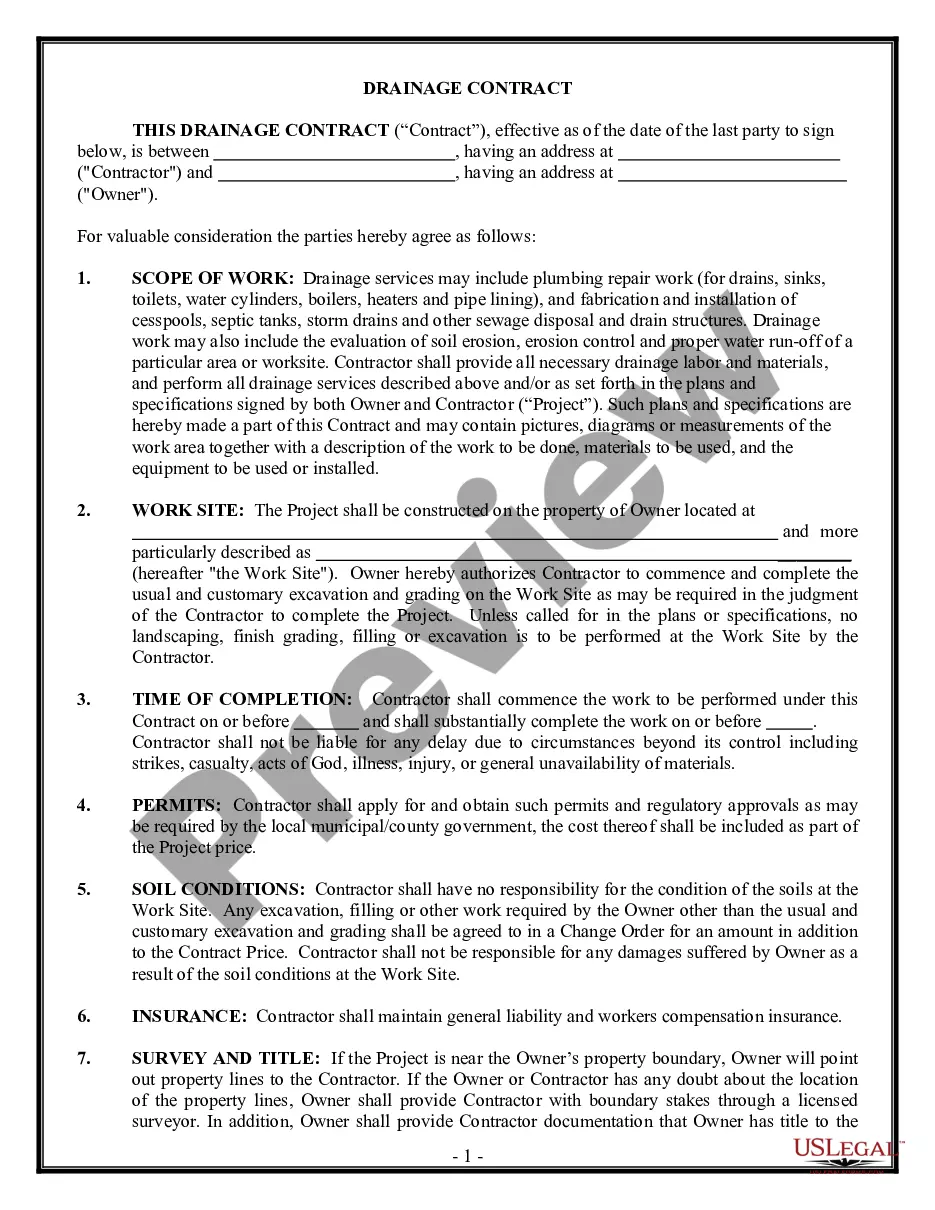
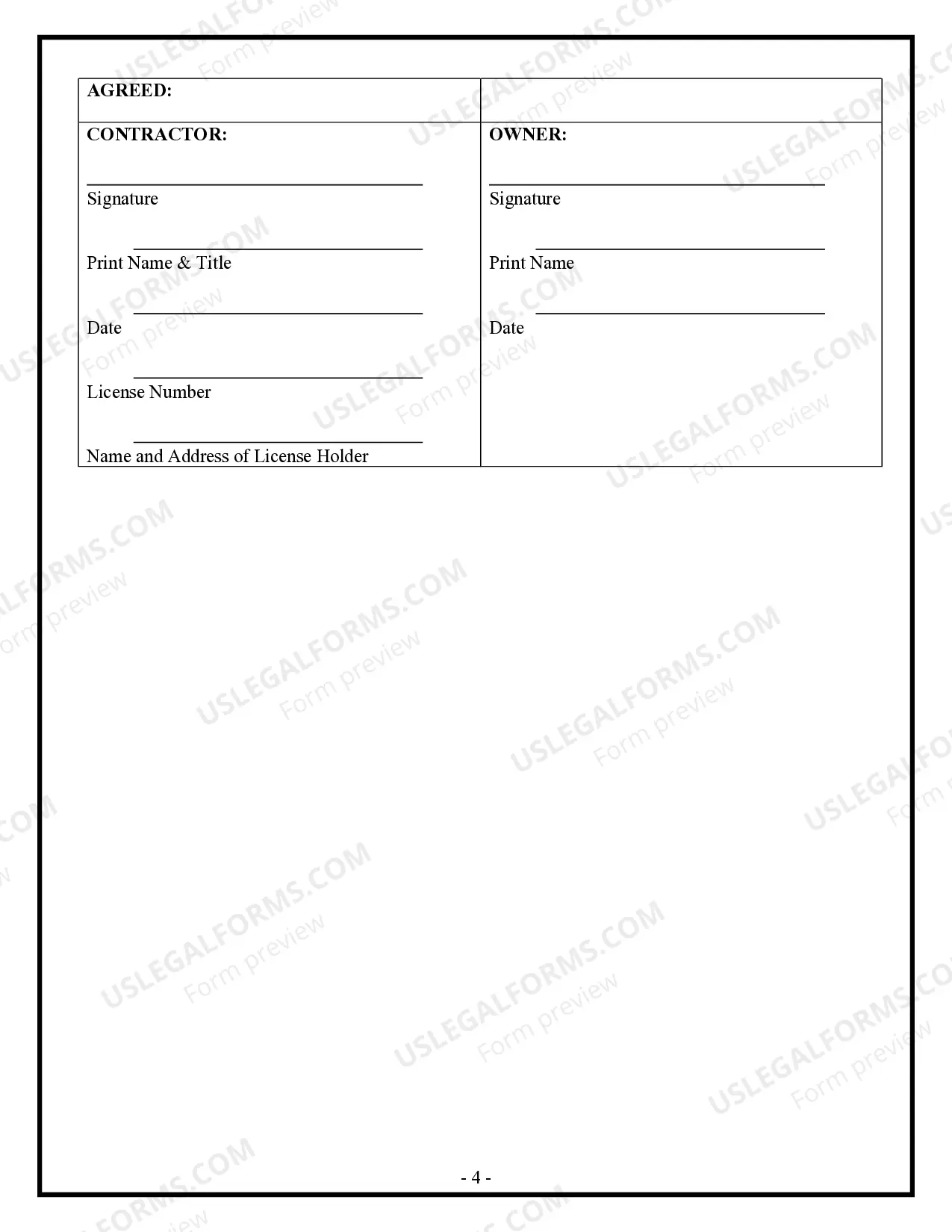
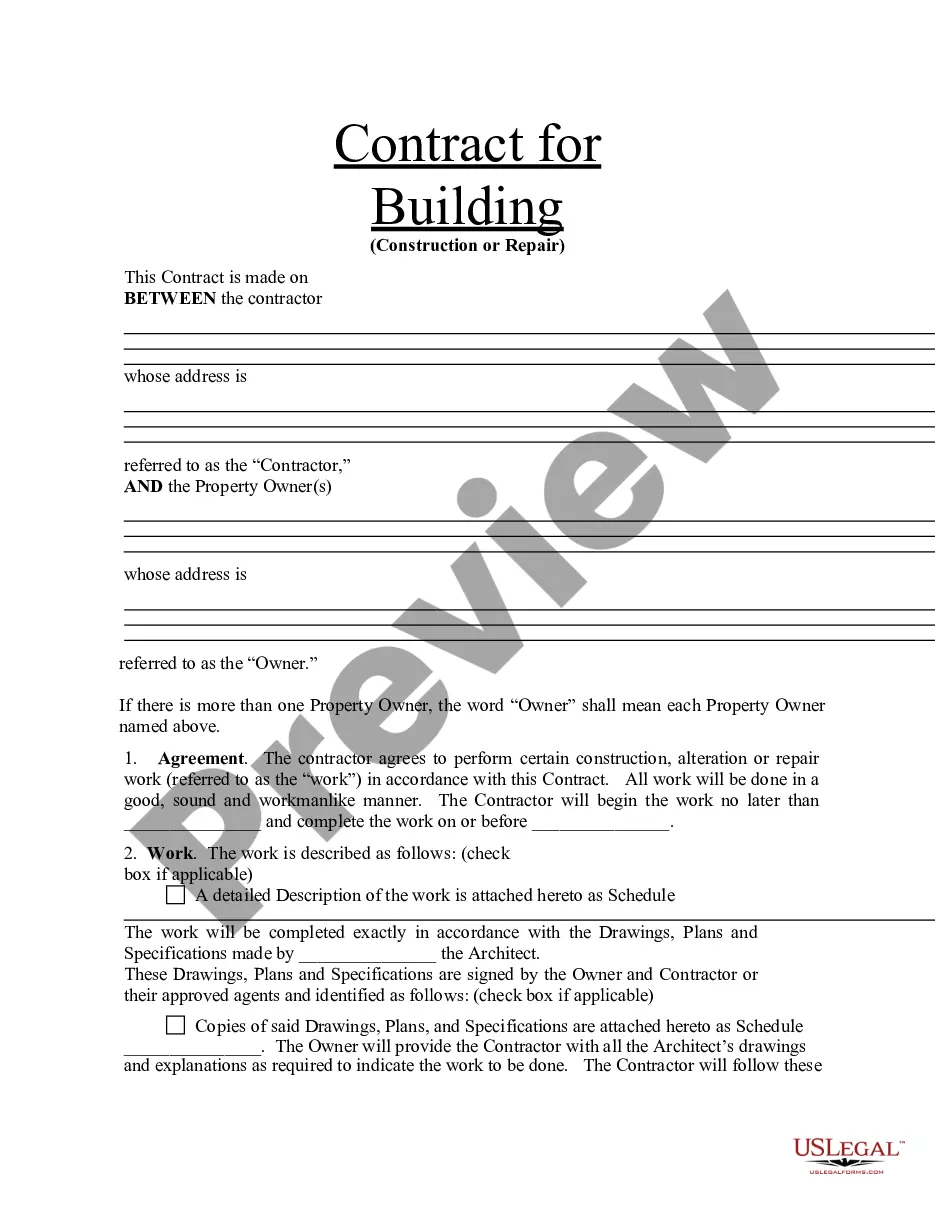
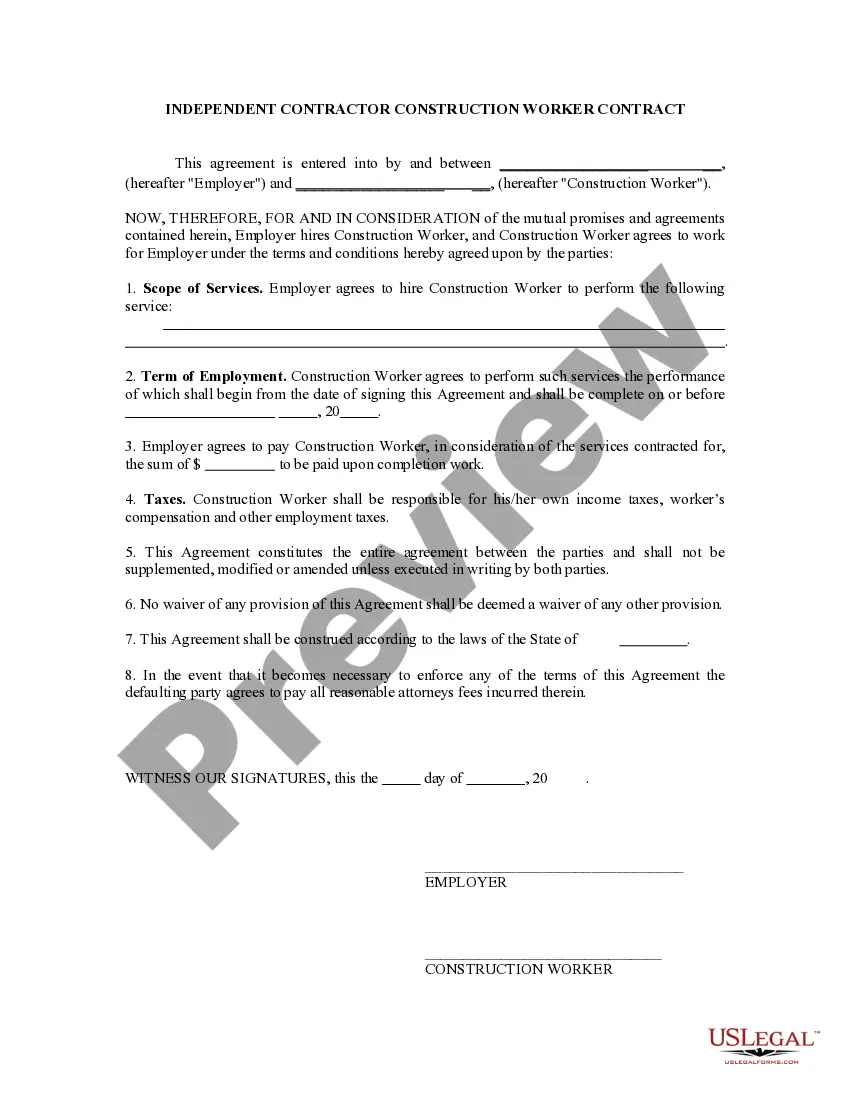
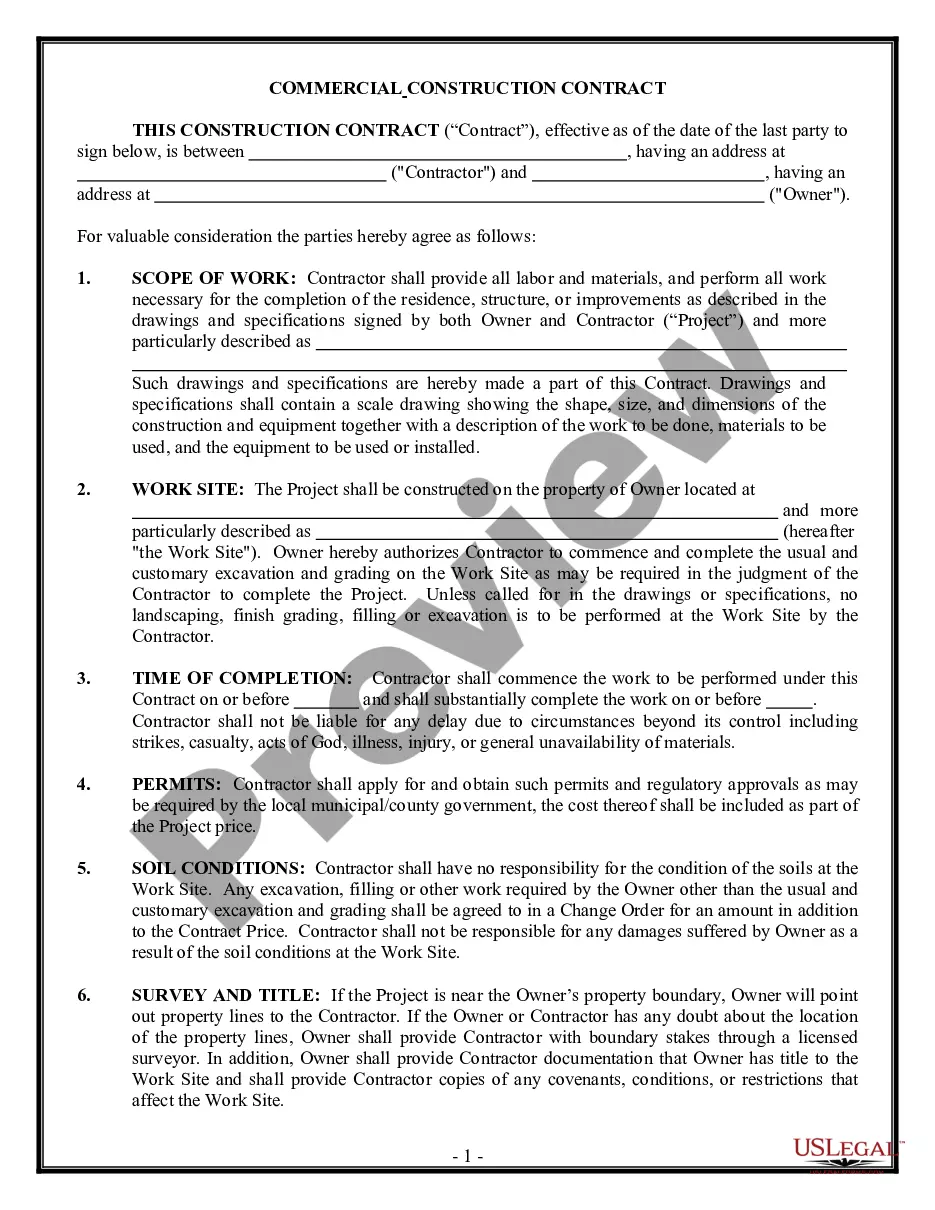
The Drainage Contract for Contractor is a legal document designed for use between drainage contractors and property owners. It establishes the terms for drainage projects, including payment arrangements, responsibilities, and necessary permits. This contract is tailored specifically to comply with the laws of Idaho, differentiating it from similar contracts used in other states.
Main sections of this form
- Overview of work site details and responsibilities.
- Specifications regarding permits and regulatory approvals.
- Conditions related to soil conditions affecting the project.
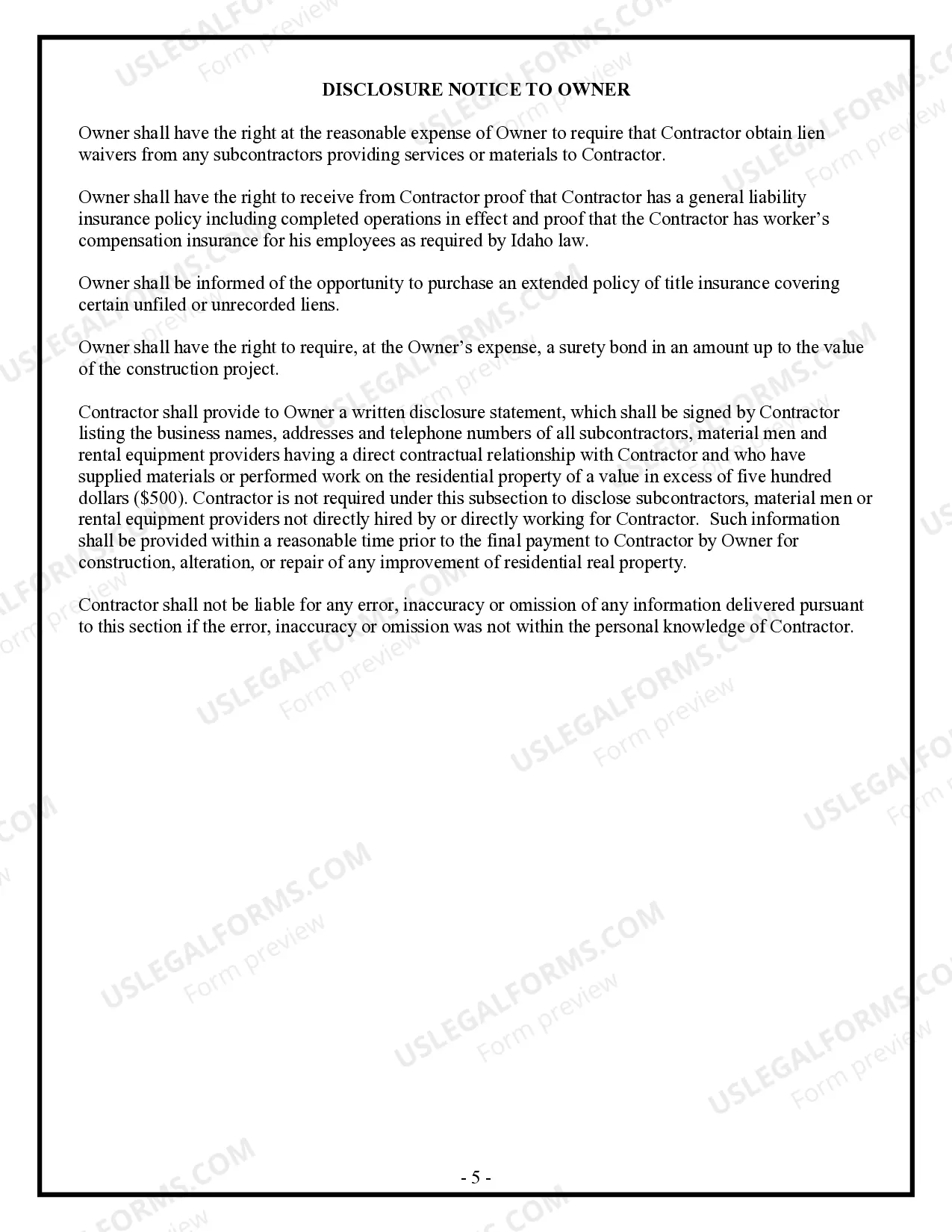
- Insurance requirements for the contractor.
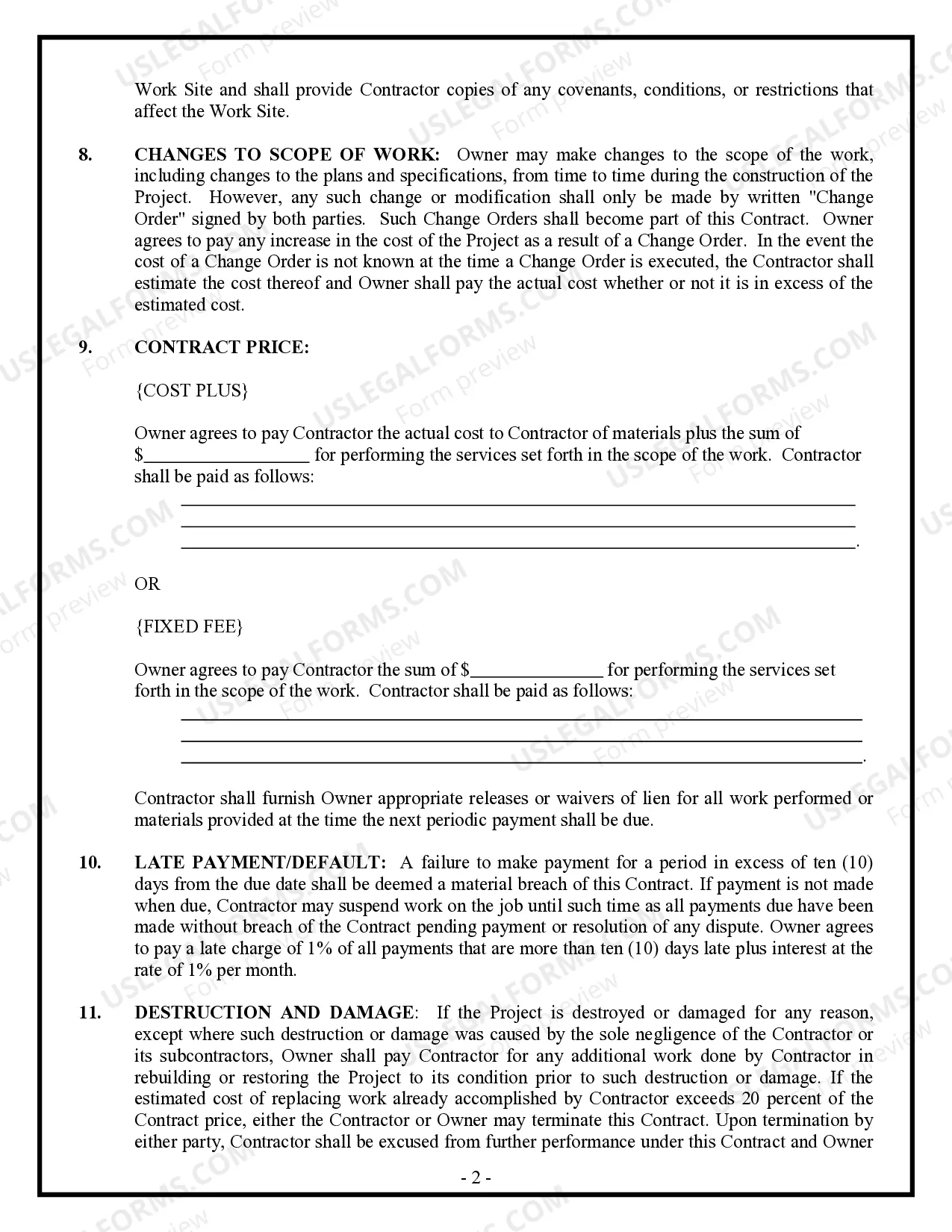
- Processes for making changes to the scope of work through written change orders.
- Payment terms, including late payment penalties and potential breaches.
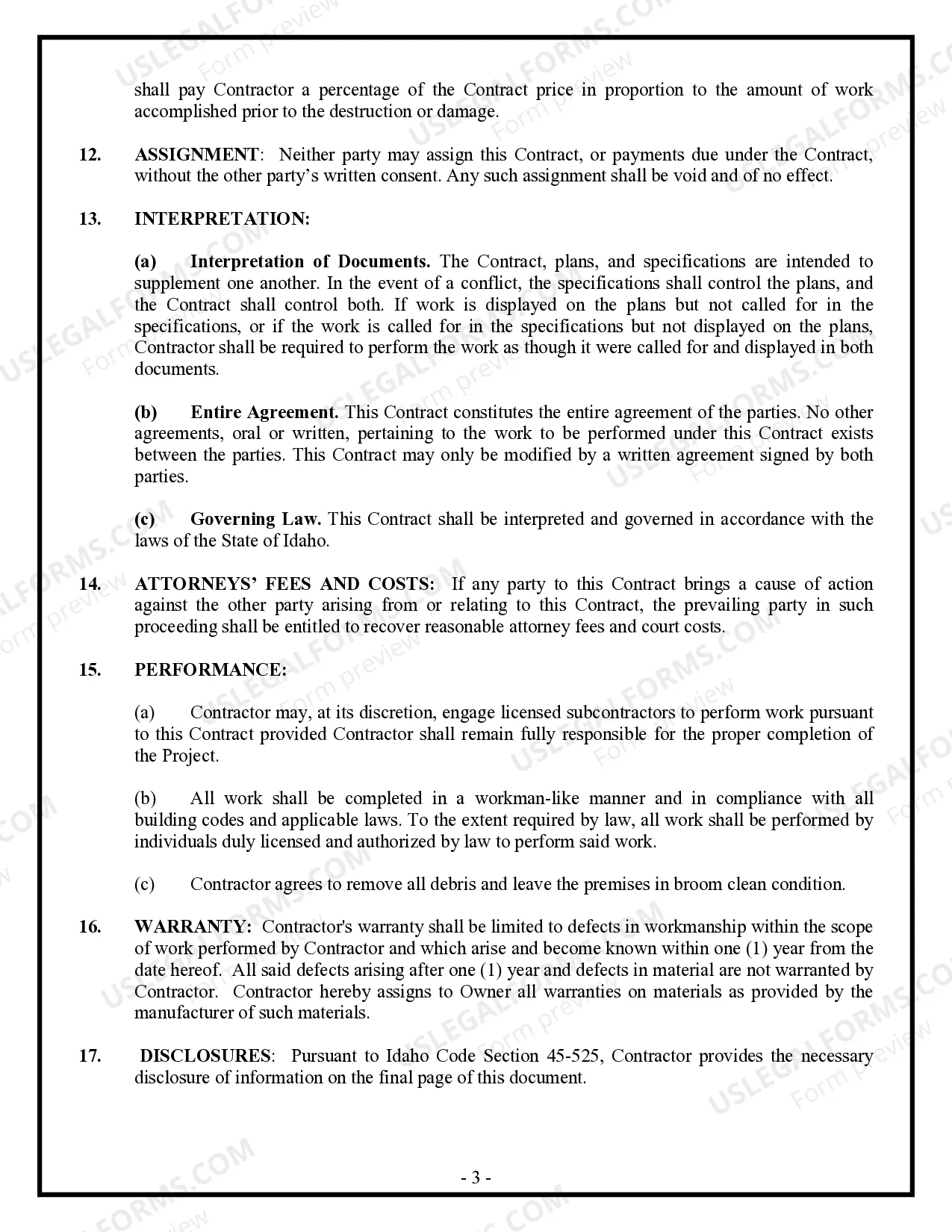
- Warranties related to work performed and materials used.


When this form is needed
This form should be used when a property owner hires a drainage contractor for a project, ensuring clarity and protection for both parties. It is particularly useful when specific terms such as payment arrangements and responsibilities need to be formalized. Scenarios may include installing drainage systems, managing water runoff, or landscaping that impacts property drainage.
Who should use this form
- Property owners seeking reliable drainage solutions.
- Drainage contractors offering their services for residential or commercial projects.
- Individuals or businesses looking to formalize agreements regarding drainage work on their property.
Completing this form step by step
- Identify the parties involved: enter the names and addresses of the contractor and property owner.
- Specify the project location: clearly list the address of the work site.
- Outline the payment terms: choose between cost-plus or fixed fee arrangements.
- Detail any permits required: outline the responsibility for obtaining necessary permits.
- Include change order provisions: ensure both parties agree on how changes to the project will be managed.
Notarization requirements for this form
Notarization is not commonly needed for this form. However, certain documents or local rules may make it necessary. Our notarization service, powered by Notarize, allows you to finalize it securely online anytime, day or night.
Get your form ready online
Our built-in tools help you complete, sign, share, and store your documents in one place.
Make edits, fill in missing information, and update formatting in US Legal Forms—just like you would in MS Word.
Download a copy, print it, send it by email, or mail it via USPS—whatever works best for your next step.
Sign and collect signatures with our SignNow integration. Send to multiple recipients, set reminders, and more. Go Premium to unlock E-Sign.
If this form requires notarization, complete it online through a secure video call—no need to meet a notary in person or wait for an appointment.
We protect your documents and personal data by following strict security and privacy standards.

Make edits, fill in missing information, and update formatting in US Legal Forms—just like you would in MS Word.

Download a copy, print it, send it by email, or mail it via USPS—whatever works best for your next step.

Sign and collect signatures with our SignNow integration. Send to multiple recipients, set reminders, and more. Go Premium to unlock E-Sign.

If this form requires notarization, complete it online through a secure video call—no need to meet a notary in person or wait for an appointment.

We protect your documents and personal data by following strict security and privacy standards.
Typical mistakes to avoid
- Failing to specify the exact work site address.
- Neglecting to account for additional costs arising from change orders.
- Not clearly defining payment terms and consequences for late payments.
- Overlooking the need for permits and regulatory approvals.
Advantages of online completion
- Convenient access to a legally vetted contract drafted by licensed attorneys.
- Editable format allows customization to fit specific project needs.
- Immediate download and availability for timely project execution.
Key takeaways
- The Drainage Contract for Contractor formalizes agreements between property owners and drainage contractors.
- It covers payment terms, responsibilities, and essential provisions like insurance and change orders.
- This legal document is tailored to meet Idaho's specific legal requirements, ensuring compliance.
Looking for another form?
Form popularity
FAQ
Those eligible for PUA also will receive an additional $300/week through the end of the extension period unlike CARES Act I, which added $600/week in federal stimulus payments. Finally, the new stimulus bill provides independent contractors with paid sick and paid family leave benefits through March 14, 2021.
The general rule is that an individual is an independent contractor if the payer has the right to control or direct only the result of the work and not what will be done and how it will be done. The earnings of a person who is working as an independent contractor are subject to Self-Employment Tax.
For most types of projects you hire an independent contractor (IC) to do, the law does not require you to put anything in writing. You can meet with the IC, agree on the terms of your arrangement, and have an oral contract or agreement that is legally binding. Just because you can doesn't mean you should, however.
Freelancers Need an EIN to Minimize Business Risk Because federal tax law requires businesses and individuals who hire freelancers to file tax form 1099 on annual earnings over $600.
You are required to file a Form 1099-MISC for the services performed by the independent contractor. You pay the independent contractor $600 or more or enter into a contract for $600 or more. The independent contractor is an individual or sole proprietorship.
If you perform personal services as an independent contractor, you must provide an EIN or Social Security number to your clients, or the client will be required to withhold 28% of your payments.
If you do not have an EIN for your vendor, you can still process your own tax forms and even issue a 1099.If you continue to contract with a vendor that does not provide an EIN, you may be required to perform backup withholding for potential federal taxes as a result.
If you cannot locate the EIN in your records, call the IRS to obtain your EIN over the phone. Call the Business and Specialty Tax Line at (800) 829-4933 between 7 a.m. and 10 p.m. local time on business days.
If you cannot locate the EIN in your records, call the IRS to obtain your EIN over the phone. Call the Business and Specialty Tax Line at (800) 829-4933 between 7 a.m. and 10 p.m. local time on business days.