Iowa Last Will and Testament for Divorced person not Remarried with Minor Children
Overview of this form
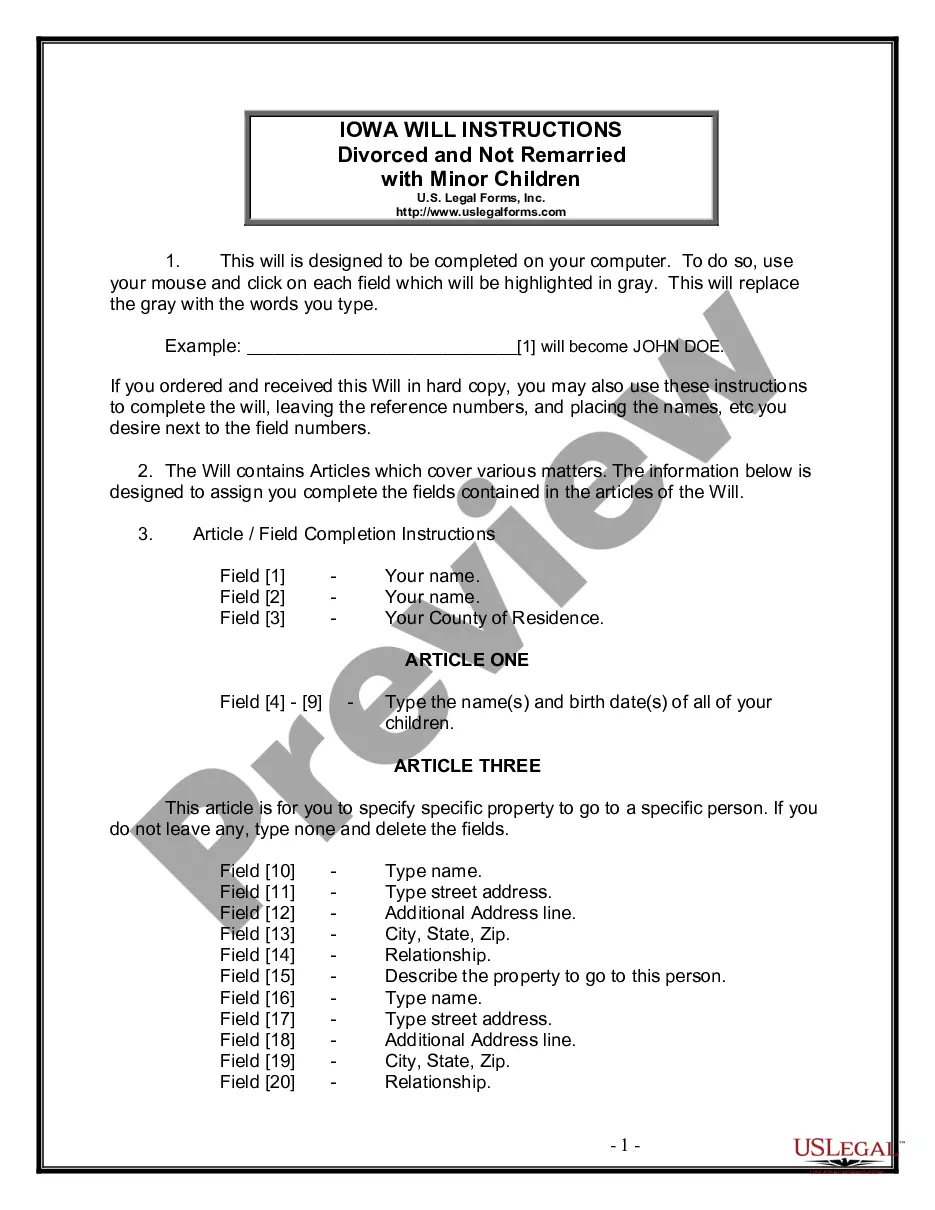
The Last Will and Testament for Divorced Person Not Remarried with Minor Children is a legal document designed to specify how a person's assets and responsibilities will be handled after their death. This form is particularly tailored for individuals who are divorced and have minor children, ensuring that their specific wishes regarding the care of the children and distribution of assets are legally documented. Unlike generic wills, this form includes provisions relevant to divorced individuals, addressing guardianship, trusts for minors, and property distribution tailored to the complexities of divorce and child custody issues.
Form components explained
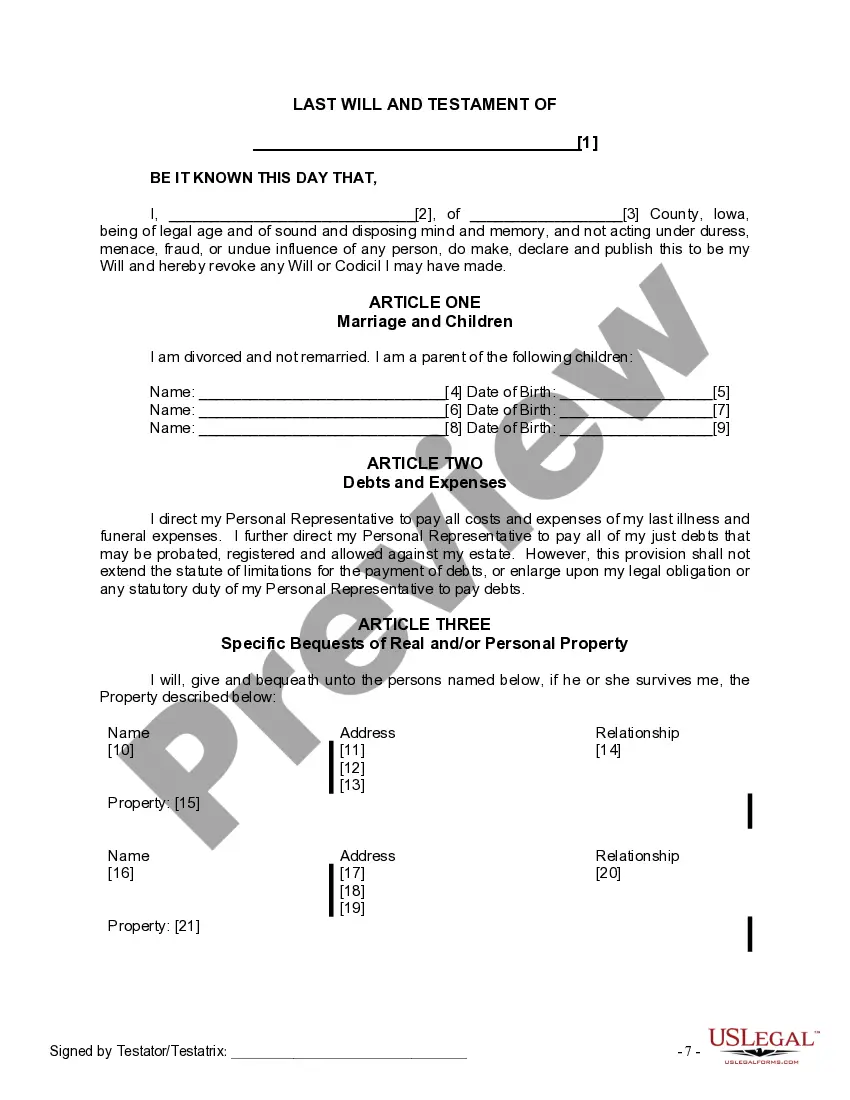
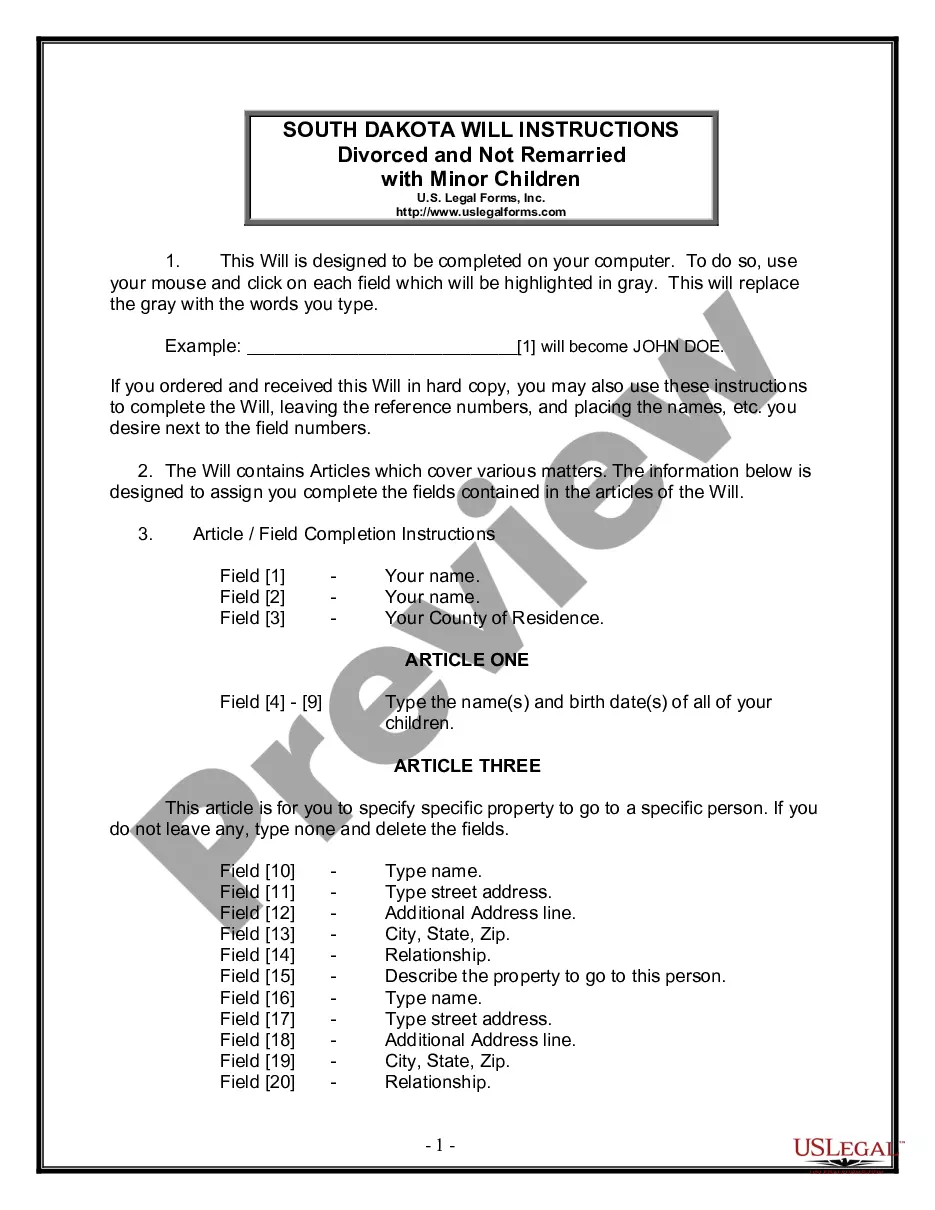
- Article One: Identifies the testator, marital status, and children.
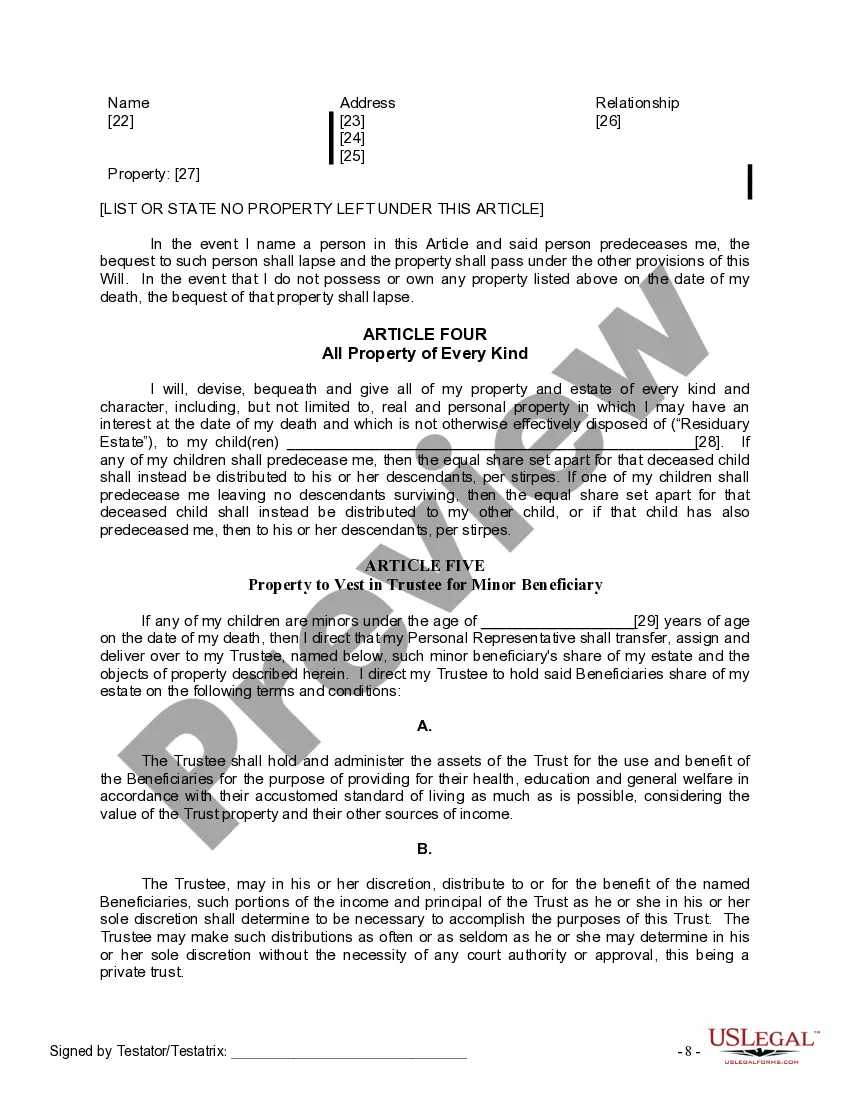
- Article Three: Allows for specific bequests of property to designated individuals.
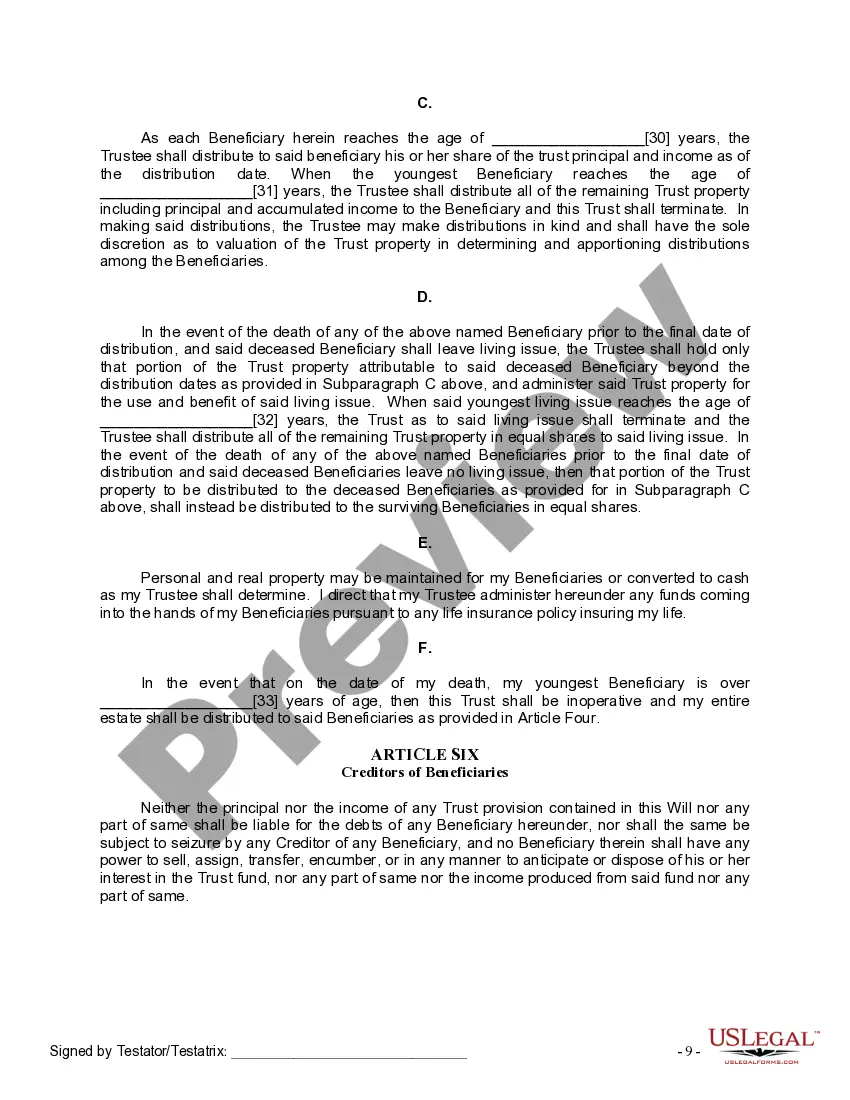
- Article Four: Distributes the residuary estate among the testator's children.
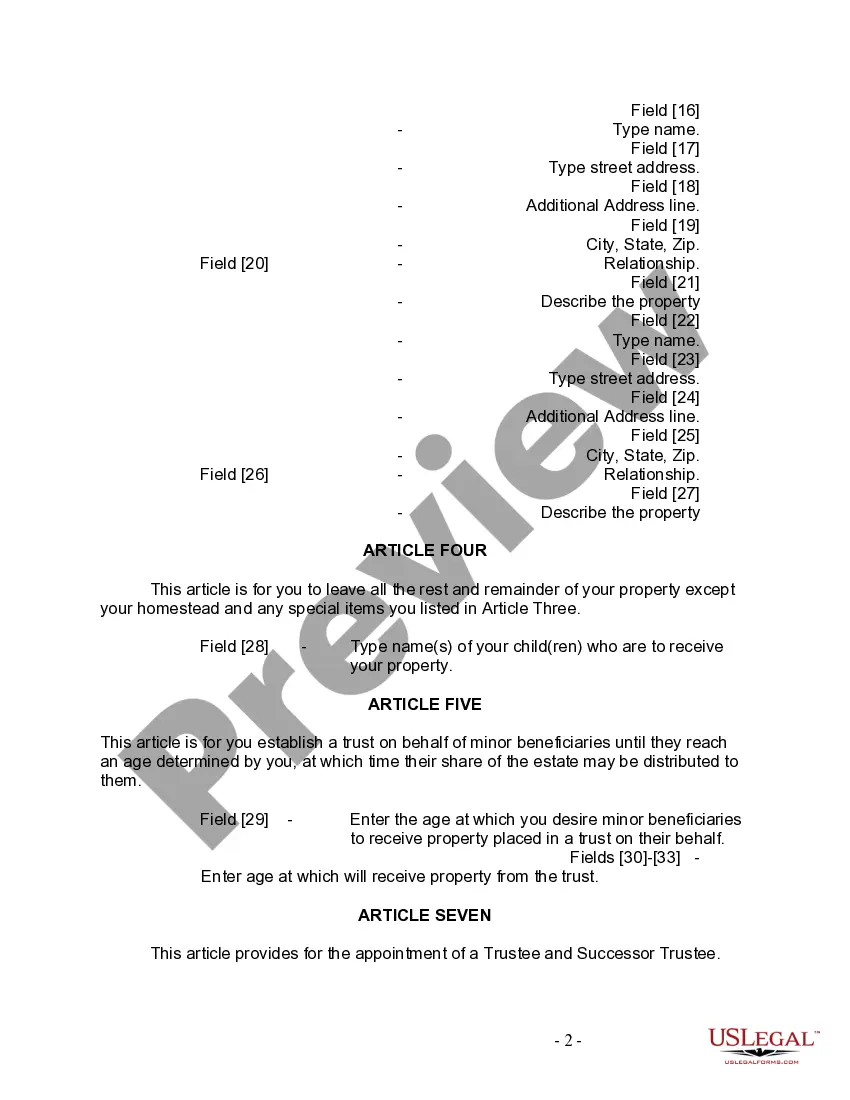
- Article Five: Establishes a trust for minor beneficiaries until they reach a specified age.
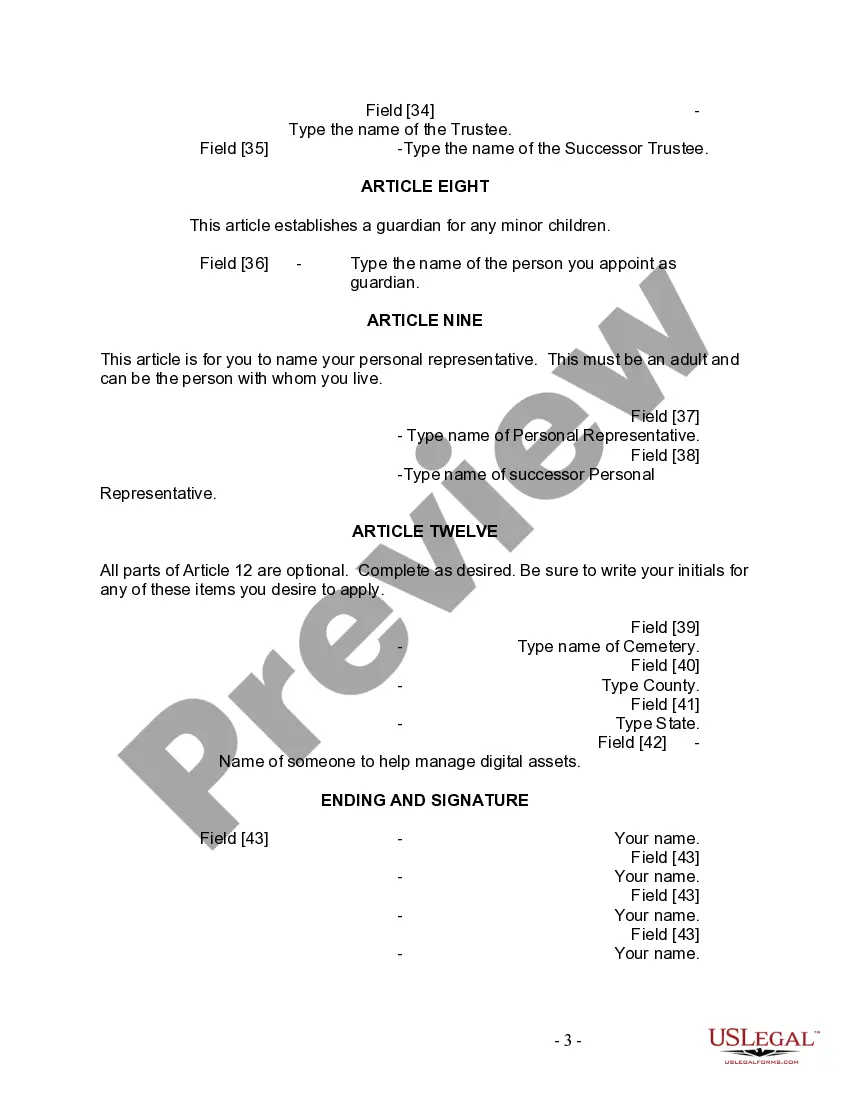
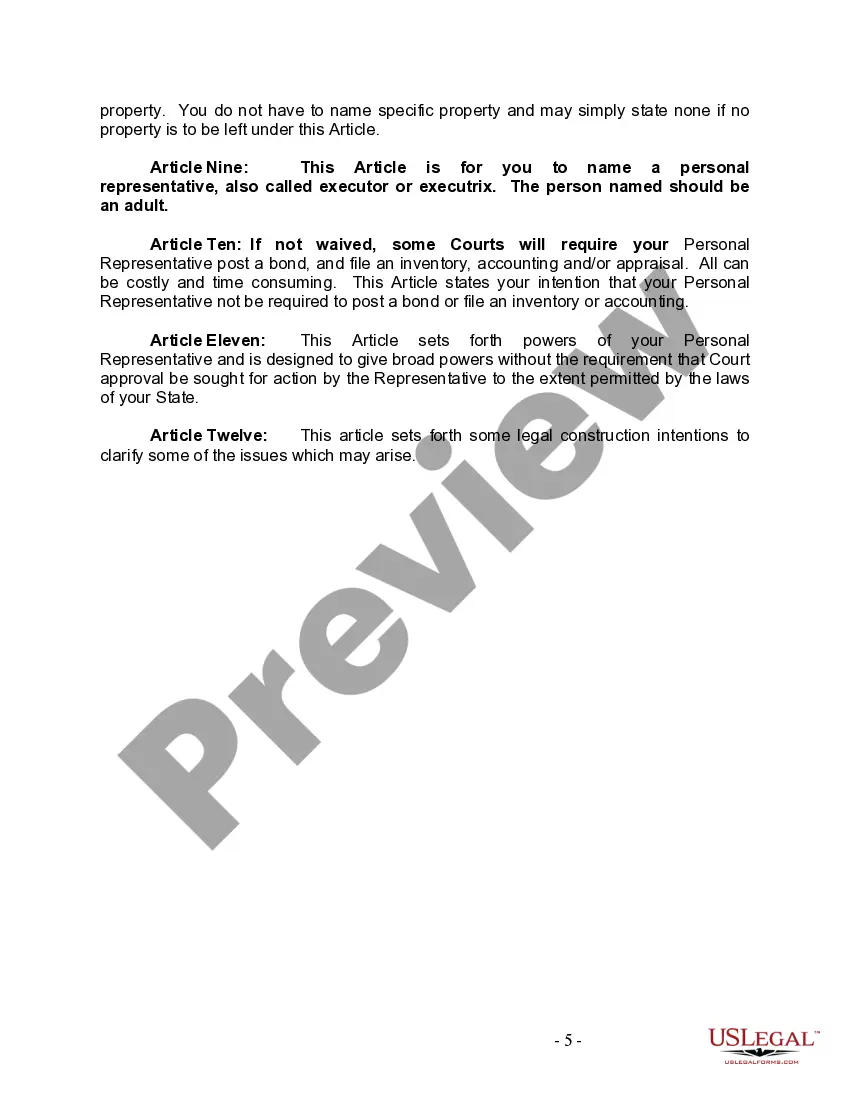
- Article Eight: Appoints a guardian for any minor children.
- Article Nine: Designates a personal representative to administer the estate.





Situations where this form applies
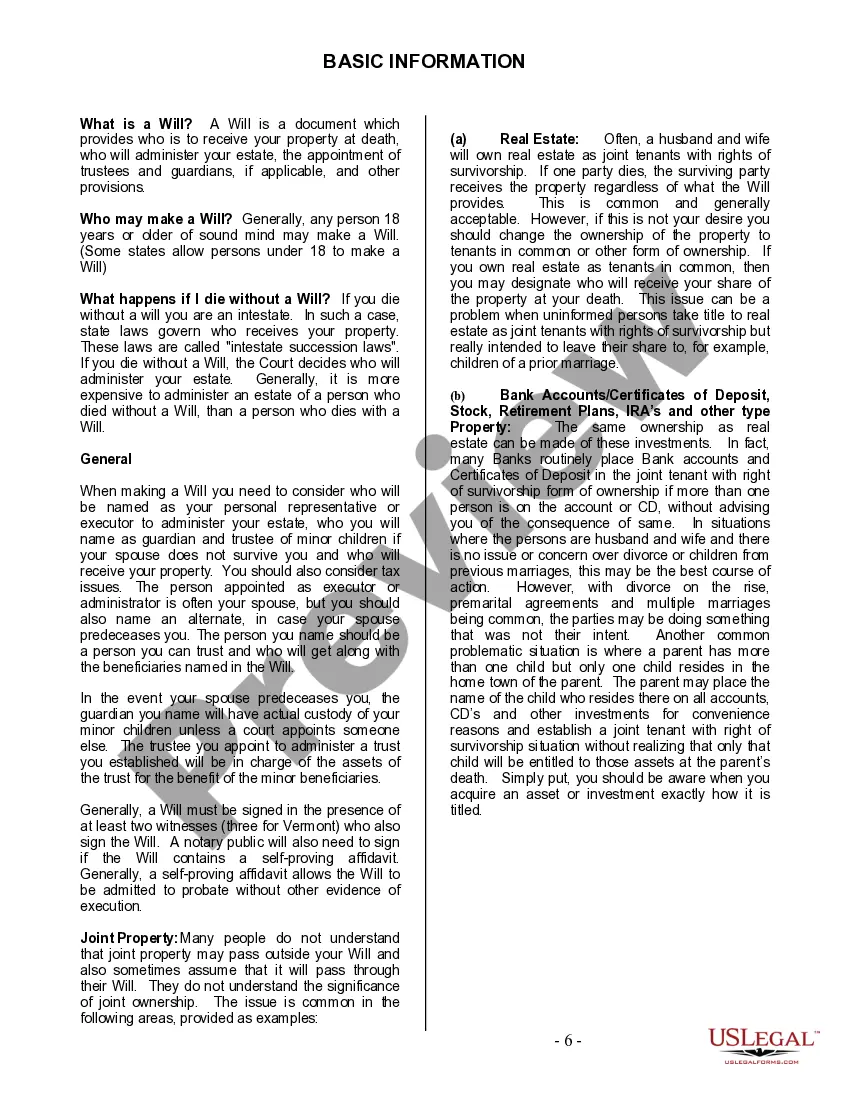
This form is ideal for individuals who are divorced, not remarried, and have minor children. Use this will to ensure that your assets are distributed according to your wishes and that your children are cared for by a trusted guardian in the event of your passing. It is particularly important to have this form if you want to address specific property distributions or set up a trust to manage your children's inheritance until they reach adulthood.
Intended users of this form
- Individuals who are divorced and have minor children.
- Those who wish to specify a guardian for their children.
- People looking to create a trust for their children's financial support.
- Anyone wanting to clearly outline how their assets should be handled after they pass away.
Steps to complete this form
- Enter your name and county of residence at the beginning of the document.
- List the names and birth dates of all your minor children in Article One.
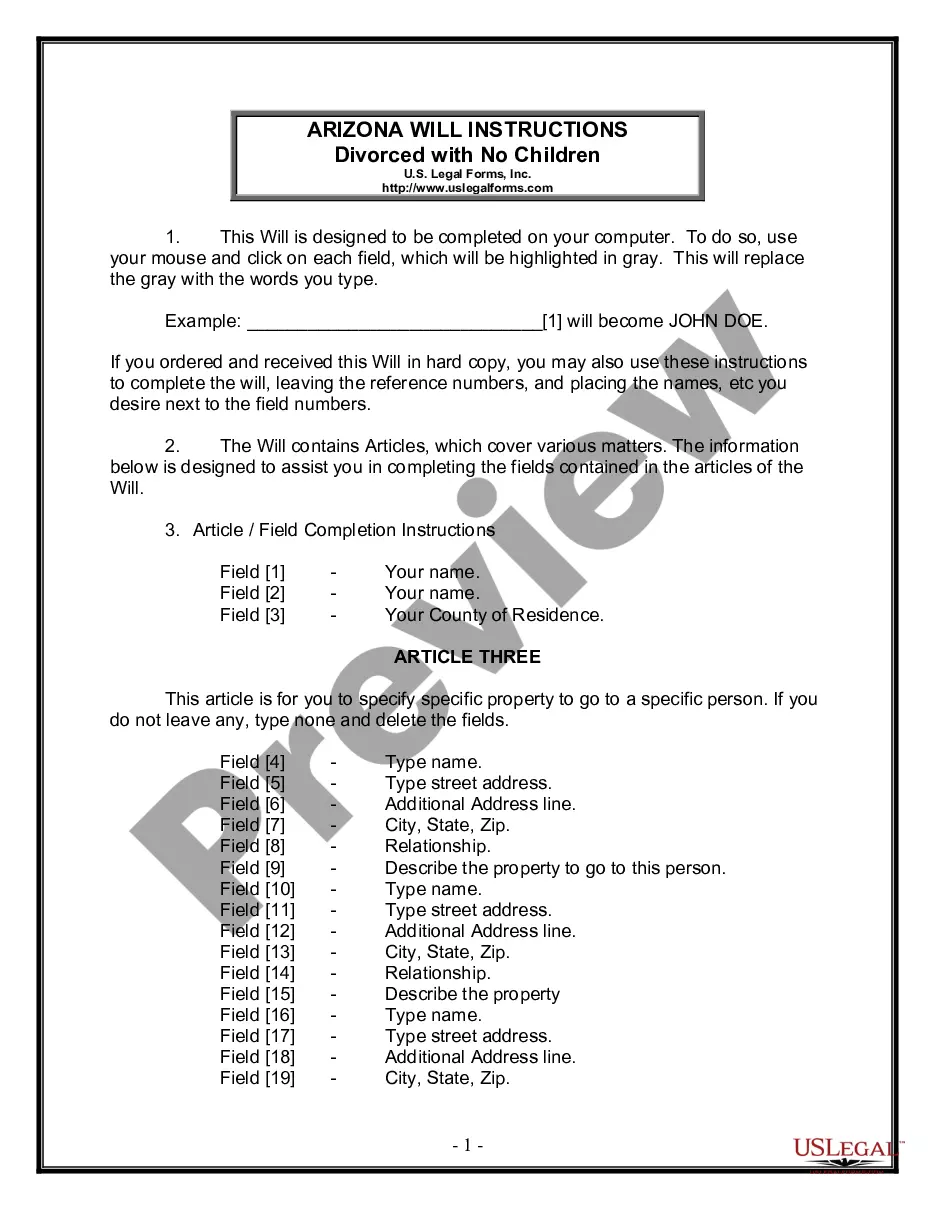
- Specify any specific property you wish to bequeath in Article Three.
- Designate a guardian for your children in Article Eight.
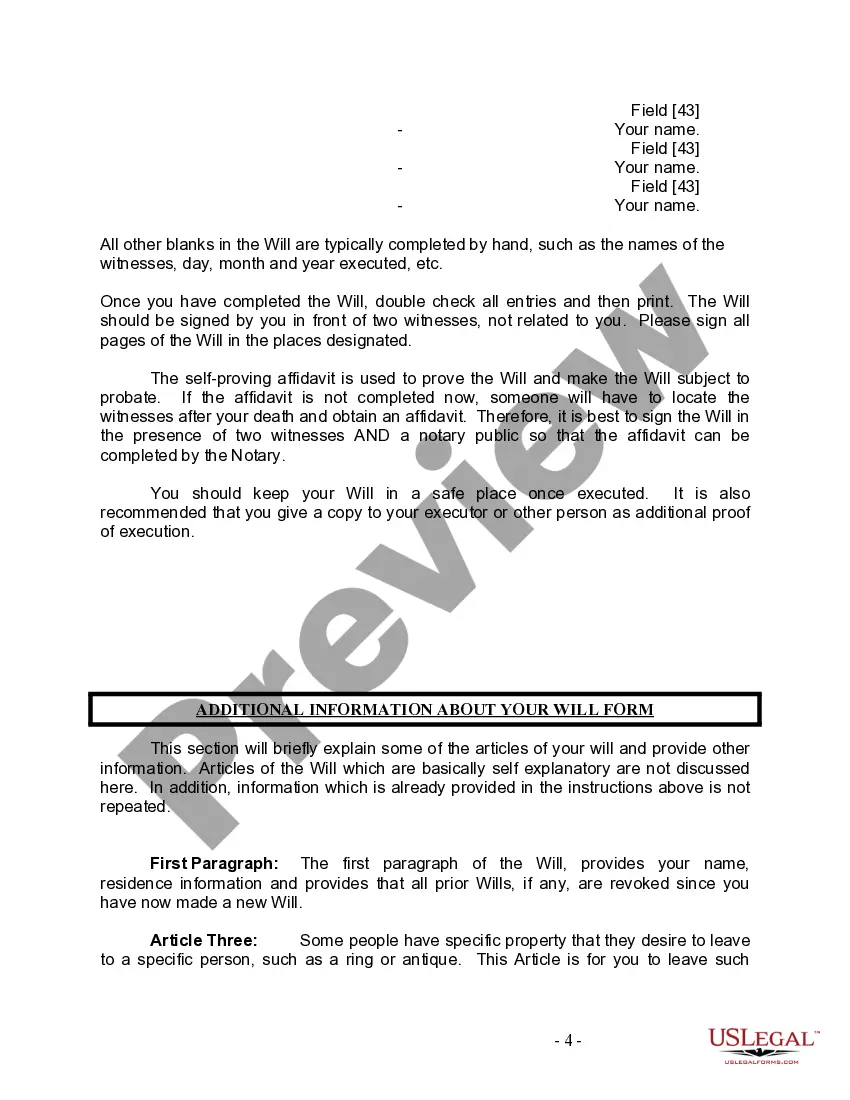
- Complete all signature fields in the Ending and Signature section, ensuring it's signed in front of two witnesses.
Does this document require notarization?
This document requires notarization to meet legal standards. US Legal Forms provides secure online notarization powered by Notarize, allowing you to complete the process through a verified video call, available 24/7.
Get your form ready online
Our built-in tools help you complete, sign, share, and store your documents in one place.
Make edits, fill in missing information, and update formatting in US Legal Forms—just like you would in MS Word.
Download a copy, print it, send it by email, or mail it via USPS—whatever works best for your next step.
Sign and collect signatures with our SignNow integration. Send to multiple recipients, set reminders, and more. Go Premium to unlock E-Sign.
If this form requires notarization, complete it online through a secure video call—no need to meet a notary in person or wait for an appointment.
We protect your documents and personal data by following strict security and privacy standards.

Make edits, fill in missing information, and update formatting in US Legal Forms—just like you would in MS Word.

Download a copy, print it, send it by email, or mail it via USPS—whatever works best for your next step.

Sign and collect signatures with our SignNow integration. Send to multiple recipients, set reminders, and more. Go Premium to unlock E-Sign.

If this form requires notarization, complete it online through a secure video call—no need to meet a notary in person or wait for an appointment.

We protect your documents and personal data by following strict security and privacy standards.
Avoid these common issues
- Failing to sign the will in front of required witnesses.
- Not updating the will after a change in circumstances, such as remarriage or your children reaching adulthood.
- Leaving important fields blank, such as the names of guardians or specific bequests.
Benefits of completing this form online
- Convenience of completing the form at your own pace.
- Editability allows you to modify information easily as your situation changes.
- Access to legally drafted templates ensures that your will meets legal standards.
- Quick and easy download for immediate use.
Looking for another form?

Form popularity
FAQ
In order to qualify for the simplified probate process, the gross value of the estate must be $100,000 or less. In order to use the procedure, the executor files a written request with the local probate court asking to use the simplified process.
In general, in order for a will to be legally valid in Iowa, a will must be (1) in writing, (2) signed by the person making the will, (3) declared by the person making the will to be his or her will, and (4) witnessed by two competent witnesses who must sign in the presence of the person making the will.
As long as it was properly signed and witnessed by two adult independent witnesses who are present at the time you sign your will, it should be legally binding.Using the wrong wording could mean that your instructions aren't followed, or even that your will isn't valid.
In general, in order for a will to be legally valid in Iowa, a will must be (1) in writing, (2) signed by the person making the will, (3) declared by the person making the will to be his or her will, and (4) witnessed by two competent witnesses who must sign in the presence of the person making the will.
Is Probate Required in Iowa? In most cases, probate is required in Iowa. There are a few exceptions to this rule, such as having a small estate, which is valued at less than $25,000 and only includes personal property. If the assets have a named beneficiary, you can also avoid probate.
You can make your own will in Iowa, using Nolo's Quicken WillMaker & Trust. However, you may want to consult a lawyer in some situations. For example, if you think that your will might be contested or if you want to disinherit your spouse, you should talk with an attorney.
There is no requirement to file your will with a court during your lifetime. In fact, many people simply keep the document in a safe place and do not file it while they are still alive.The executor can then simply notify the court of the testator's death to begin the probate process.
You don't need a lawyer to create a will if you have a straightforward financial situation.You can use online templates or software to write a will yourself. In order to legalize the will, it needs to be signed and dated by you and at least two other witnesses.