Alaska Codicil to Will Form for Amending Your Will - Will Changes or Amendments
What this document covers
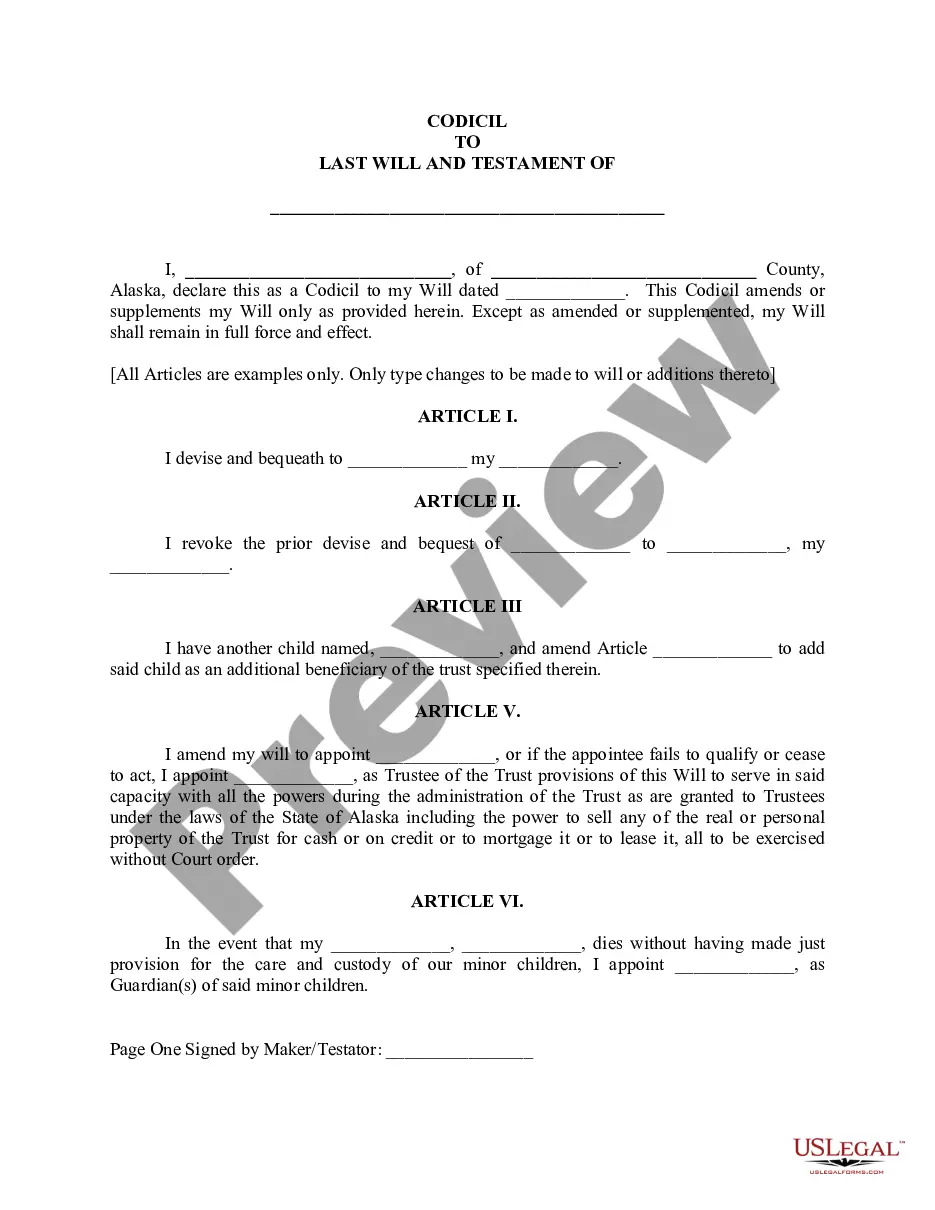
The Codicil to Will Form allows you to amend your existing Will without creating a new one. This form contains provisions stating that your previous Will will remain valid except for the changes specified in the codicil. It provides a structured way to make changes or add new provisions, ensuring that your intentions are clear and legally binding.
Key parts of this document
- Declaration of the codicil and reference to the original Will.
- Sections for specifying amendments or additions to articles of the Will.
- Provisions for designating beneficiaries, trustees, and guardians.
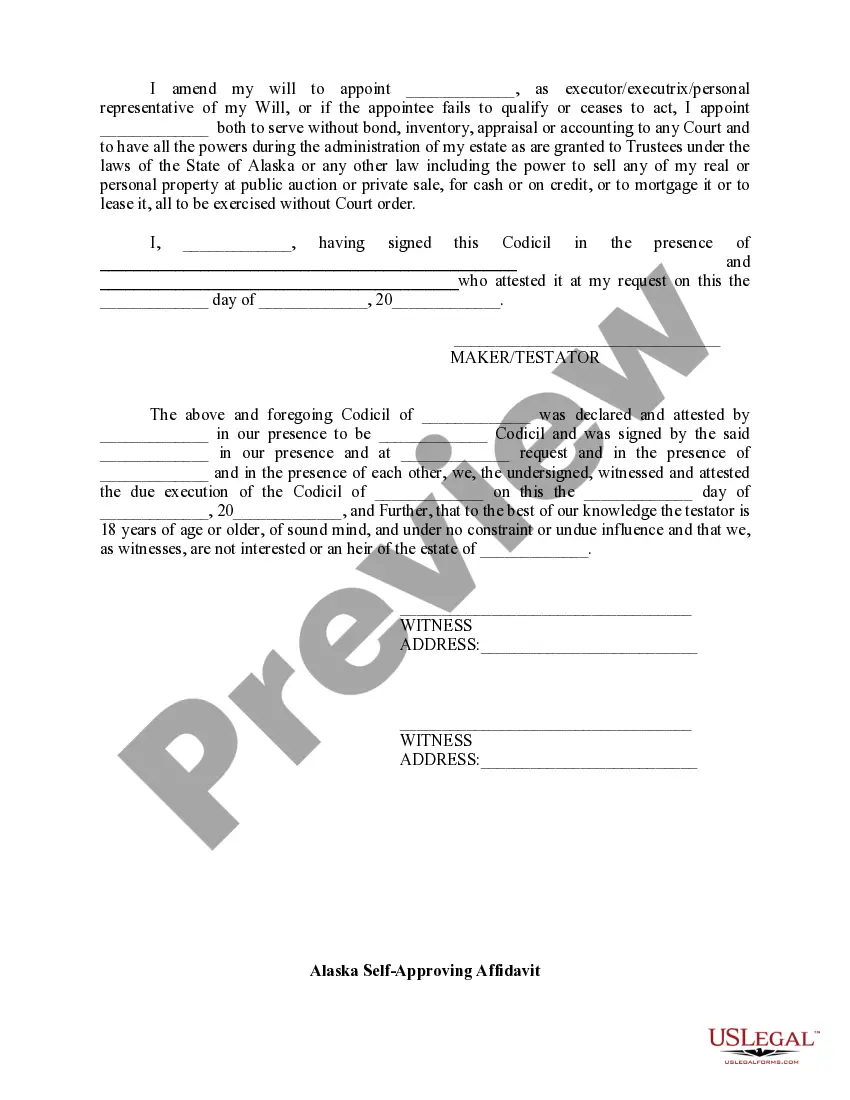
- Signature lines for the testator and witnesses.
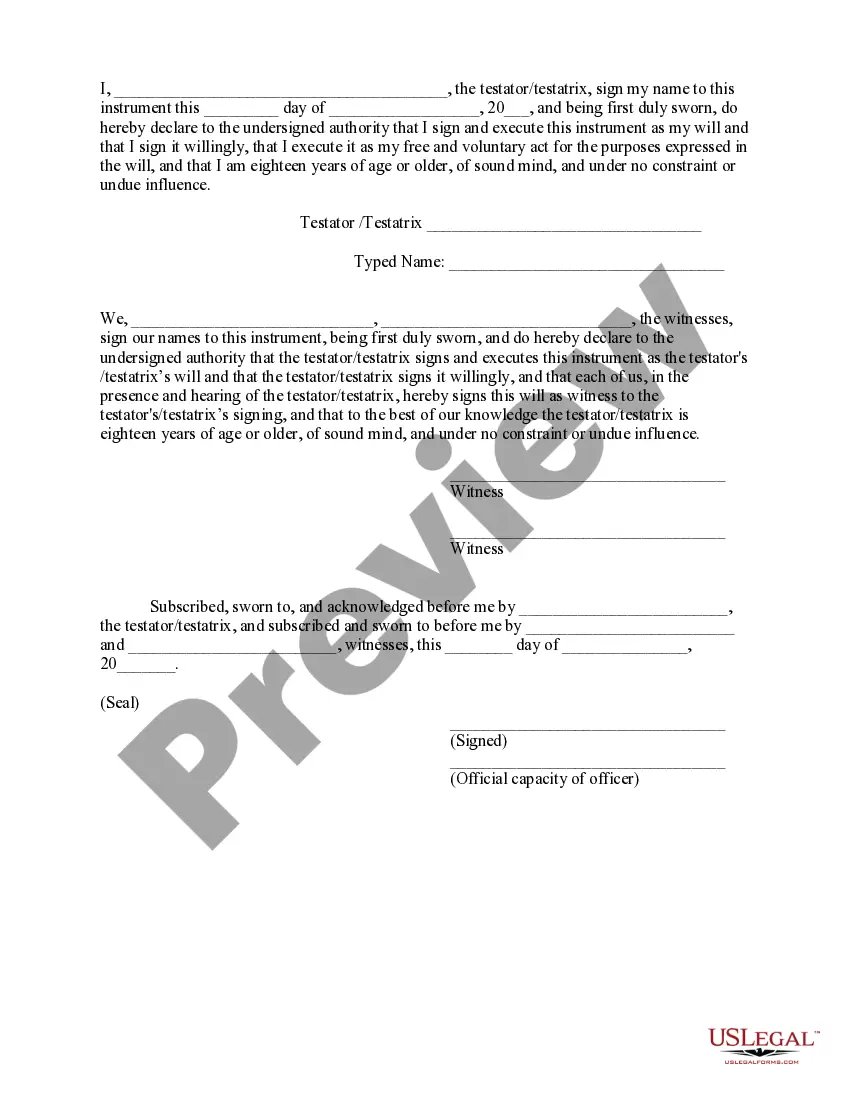
- A self-approving affidavit for notarization.

When this form is needed
You should use the Codicil to Will Form when you need to make specific changes to your Will, such as adding new beneficiaries, changing the executor, or revising property bequests. This form is particularly useful if your circumstances have changed since your Will was last updated, such as acquiring new assets, having another child, or changing your mind about who should inherit specific items.
Intended users of this form
- Individuals who already have a Will and want to make amendments.
- People who have experienced significant life changes affecting their estate plans.
- Those who seek to clarify specific intentions related to their estate distribution.
Steps to complete this form
- State your full name and the date of your original Will.
- Specify the articles you wish to amend or add to your Will.
- Designate any new beneficiaries, trustees, or guardians.
- Sign the document in the presence of at least two witnesses.
- Complete the self-approving affidavit and have it notarized if necessary.
Does this document require notarization?
This form does not typically require notarization unless specified by local law. However, notarization can provide an added layer of legal validation and is recommended to avoid potential disputes in the future.
Get your form ready online
Our built-in tools help you complete, sign, share, and store your documents in one place.
Make edits, fill in missing information, and update formatting in US Legal Forms—just like you would in MS Word.
Download a copy, print it, send it by email, or mail it via USPS—whatever works best for your next step.
Sign and collect signatures with our SignNow integration. Send to multiple recipients, set reminders, and more. Go Premium to unlock E-Sign.
If this form requires notarization, complete it online through a secure video call—no need to meet a notary in person or wait for an appointment.
We protect your documents and personal data by following strict security and privacy standards.

Make edits, fill in missing information, and update formatting in US Legal Forms—just like you would in MS Word.

Download a copy, print it, send it by email, or mail it via USPS—whatever works best for your next step.

Sign and collect signatures with our SignNow integration. Send to multiple recipients, set reminders, and more. Go Premium to unlock E-Sign.

If this form requires notarization, complete it online through a secure video call—no need to meet a notary in person or wait for an appointment.

We protect your documents and personal data by following strict security and privacy standards.
Common mistakes
- Not signing the codicil in front of witnesses, which can invalidate it.
- Failing to specify clearly which parts of the Will are being amended.
- Not following the state-specific requirements for execution and notarization.
Why use this form online
- Convenience of completing the form at your own pace.
- Editable format allows you to customize the text easily.
- Access to legal advice on completion ensures your amendments are valid.
Looking for another form?



Form popularity
FAQ
Making changes to your will You cannot amend your will after it's been signed and witnessed. The only way you can change a will is by making an official alteration called a codicil. You must sign a codicil and get it witnessed in the same way as witnessing a will.
The codicil, if valid, does not revoke the Will (if it revokes the prior Will , then it is a Will not a codicil), but it does alter the terms of the Will.
A codicil is a formal written amendment and in order for a codicil to be deemed valid, it must be dated, signed, and witnessed in the same way a will would be. In addition, it must make some specific reference to the will it amends.
A codicil has the same requirements as does a will.A codicil is a formal written amendment and in order for a codicil to be deemed valid, it must be dated, signed, and witnessed in the same way a will would be. In addition, it must make some specific reference to the will it amends.
A codicil may be a legally binding amendment to a will. It can add, further explain, modify, or revoke portions of a given will.
You can either make a codicil to your existing will or make a new will. Both require your signature and the signatures of two witnesses.You can have a lawyer write your codicil for you, or you can make one yourself. However, in most cases it makes more sense just to make a new will.
You cannot amend your will after it's been signed and witnessed. The only way you can change a will is by making an official alteration called a codicil. You must sign a codicil and get it witnessed in the same way as witnessing a will. There's no limit on how many codicils you can add to a will.
If executed correctly, a codicil is simply an amendment to the original will and therefor in essence becomes part of the original will. So, there is really no "will overriding a codicil" as they are in essence one and the same.