Iowa Newly Divorced Individuals Package
Overview of this form package
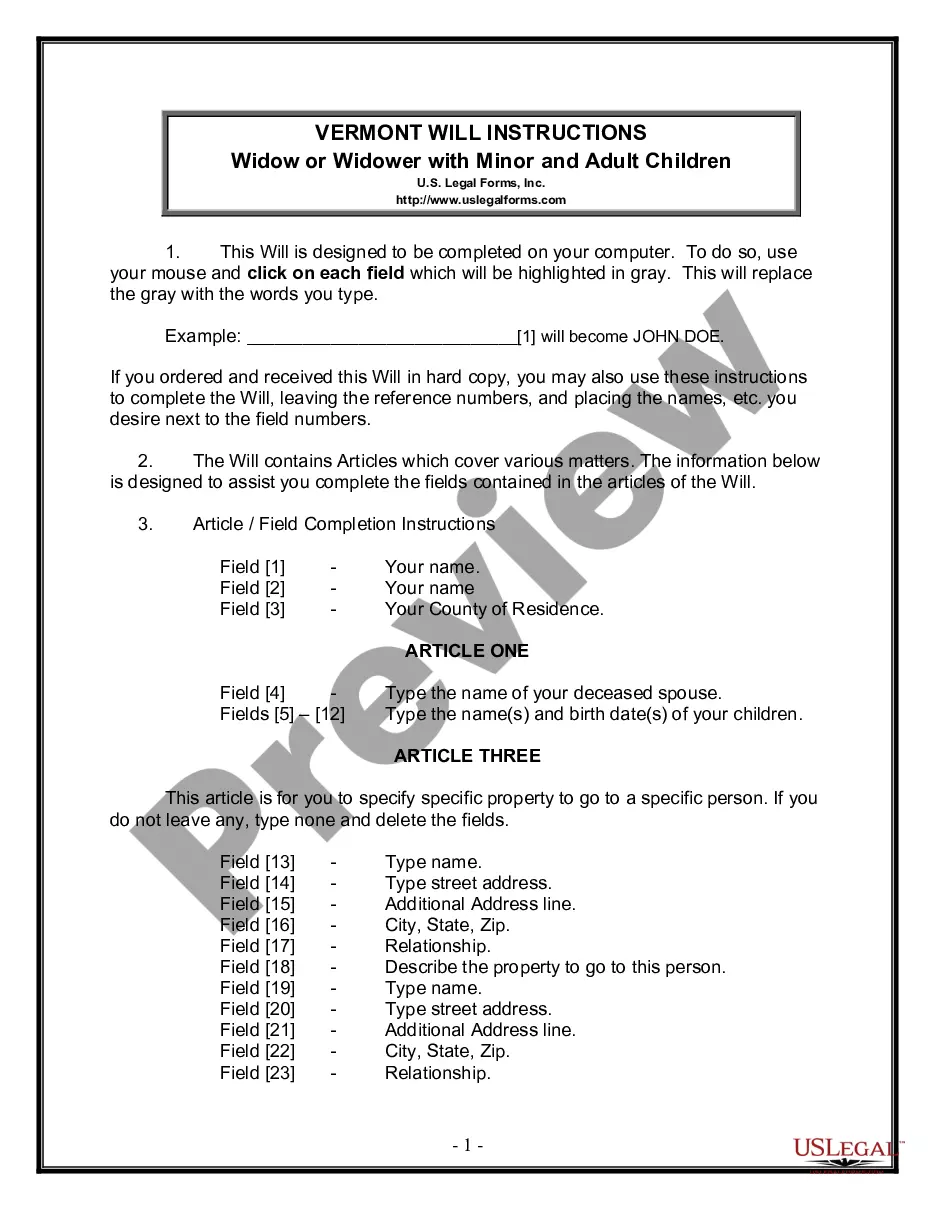
The Iowa Newly Divorced Individuals Package is designed to assist those who have recently finalized a divorce in organizing their legal affairs. This package contains essential legal documents tailored to meet the specific needs of newly divorced individuals. It stands out by providing specialized forms such as a Will, Living Will, and other pertinent documents that address the unique circumstances faced after a divorce. By utilizing this package, users can ensure they are prepared for the future and have their legal life in order.
Forms included in this package
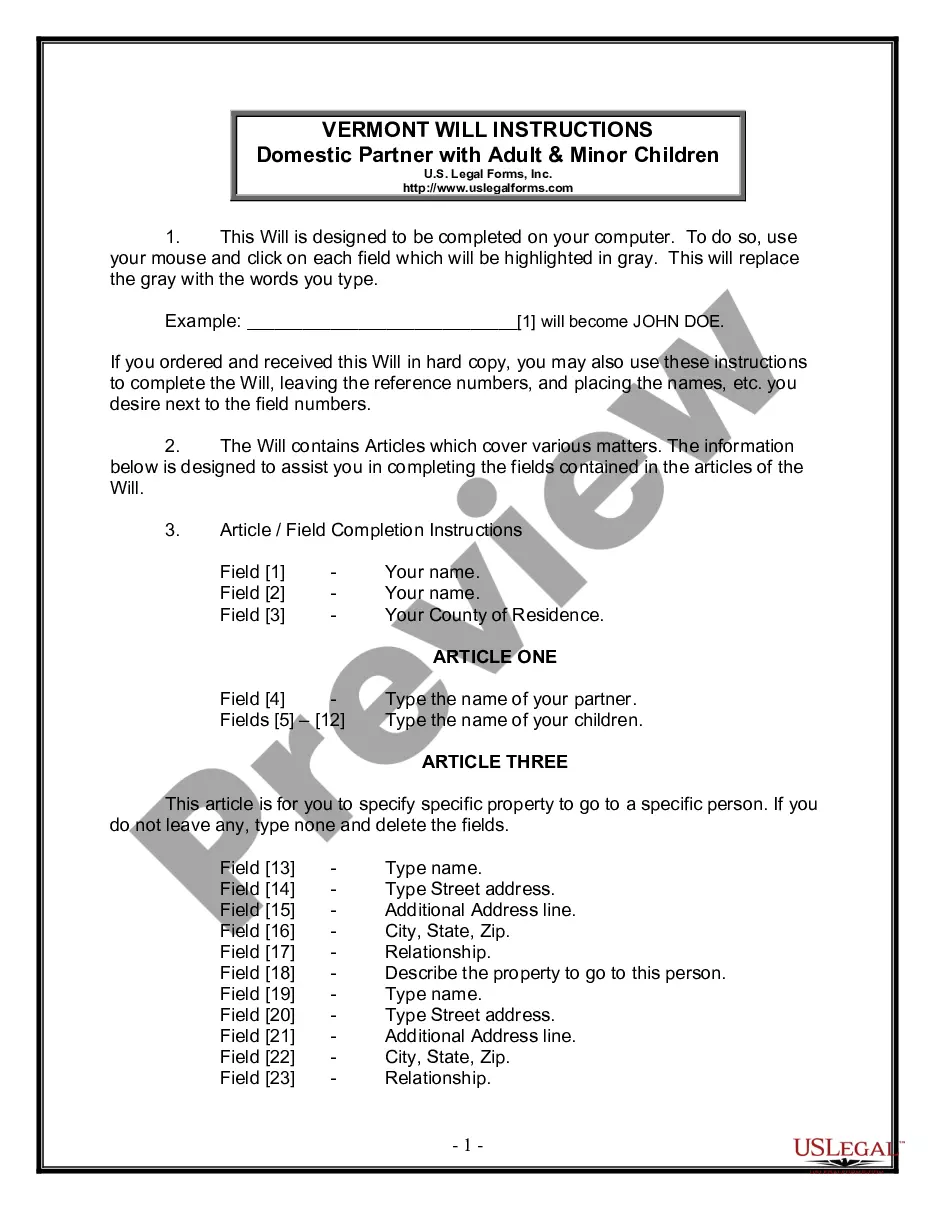
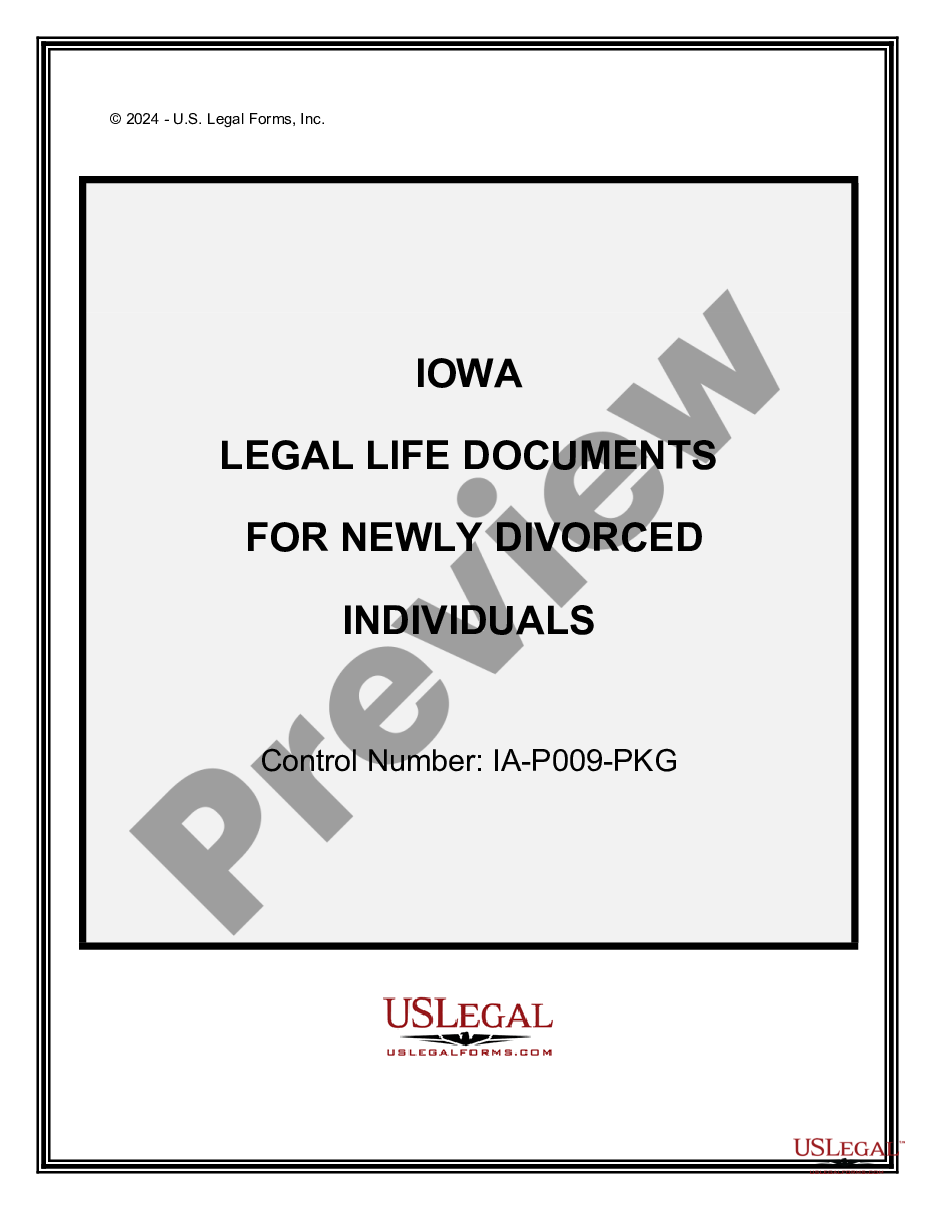
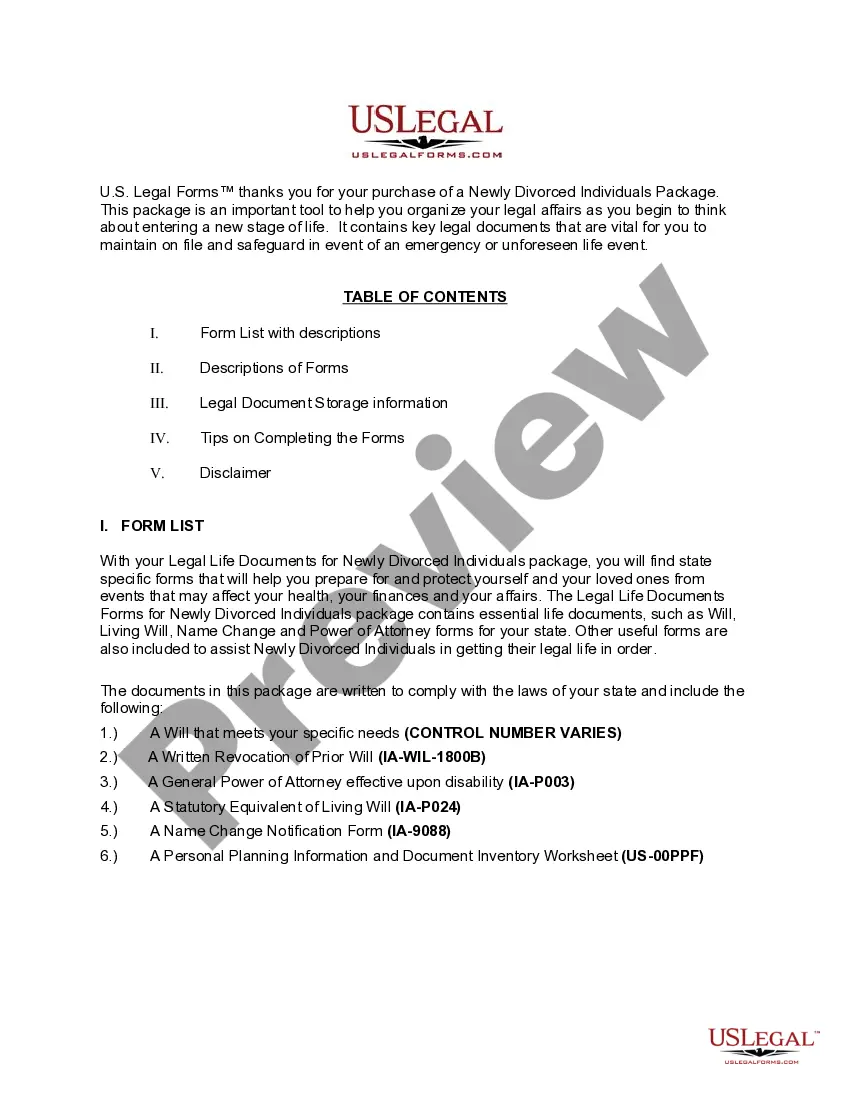
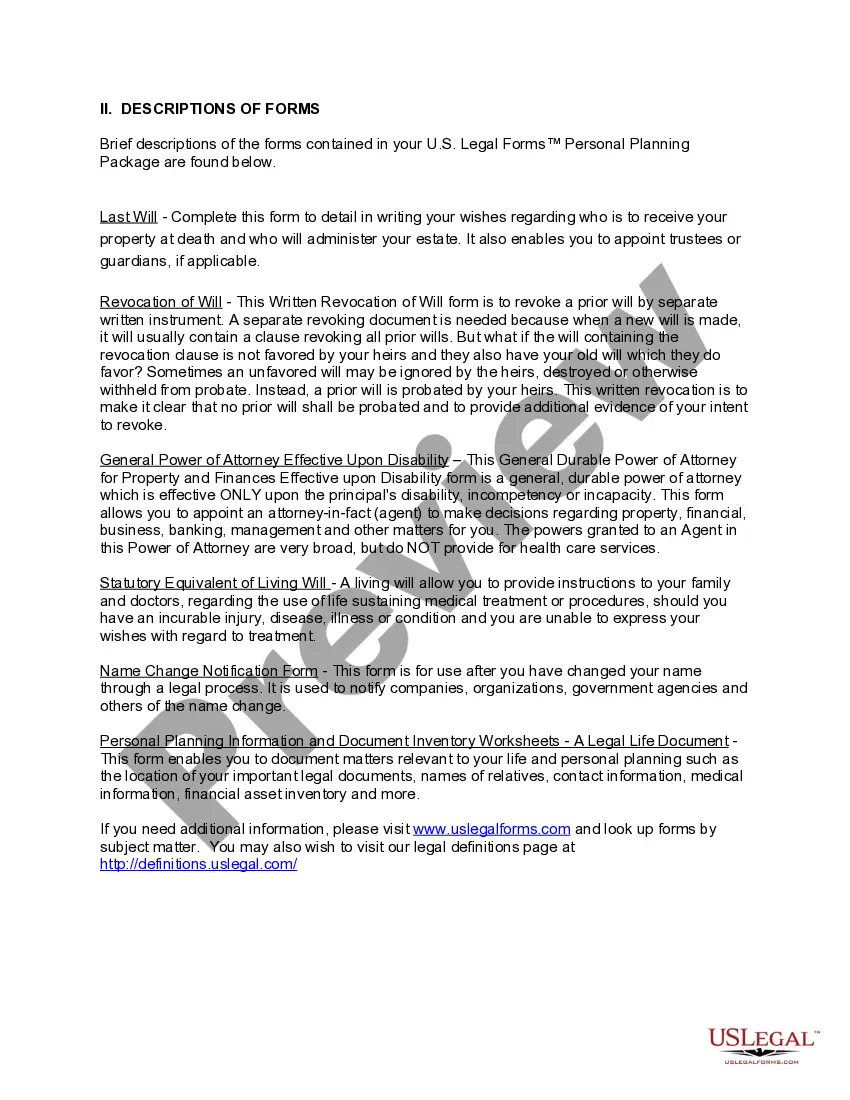
- Last Will and Testament
- Name Change Notification Form
- General Durable Power of Attorney for Property and Finances or Financial Effective upon Disability
- Statutory Equivalent of Living Will or Declaration - Statutory Declaration relating to use of life sustaining procedures
- Written Revocation of Will
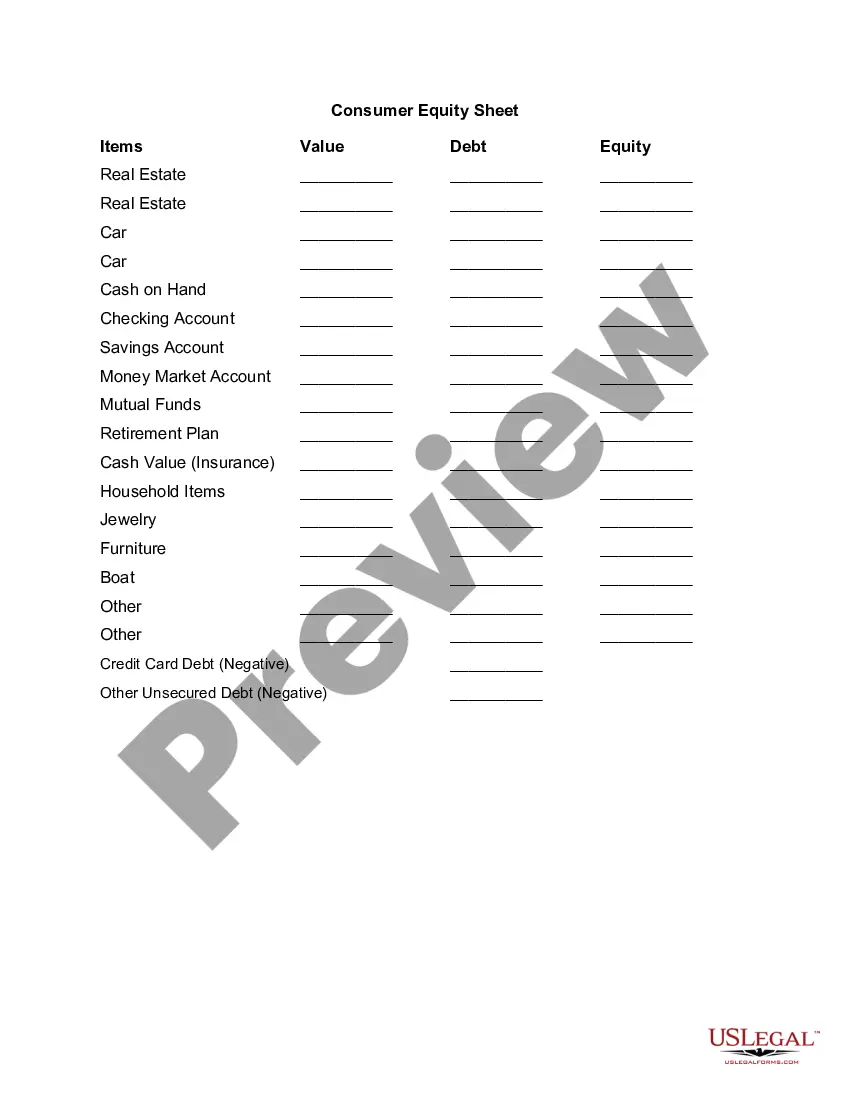
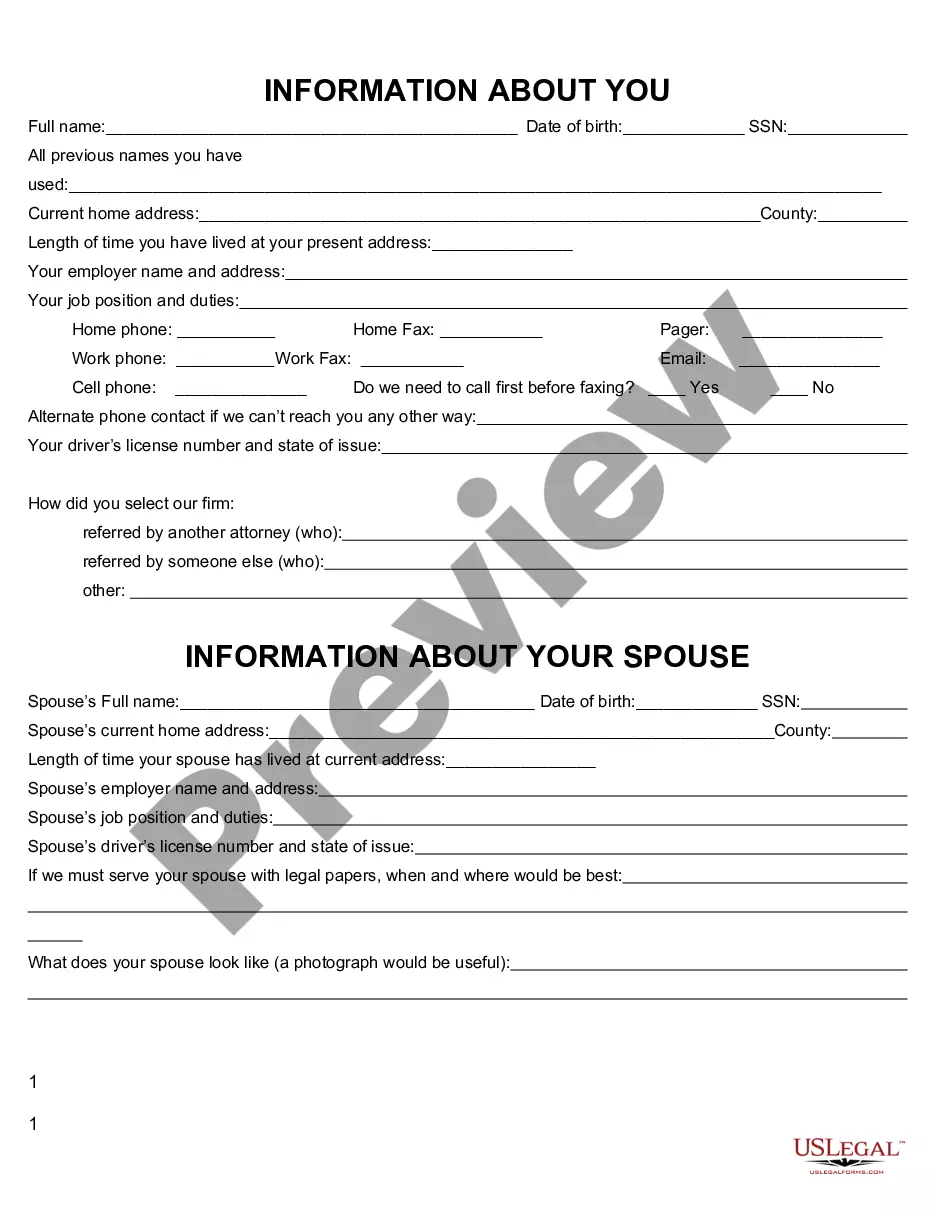
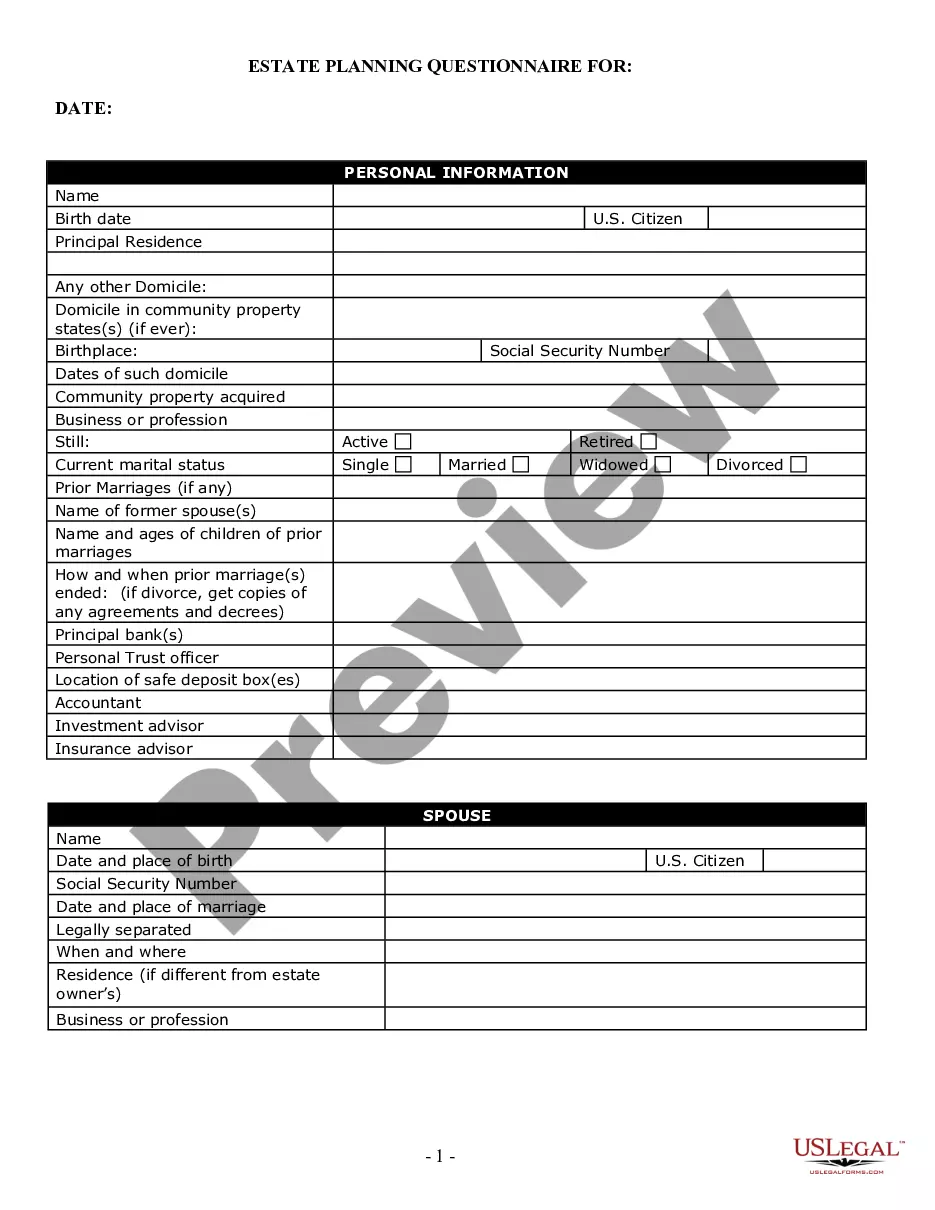
- Personal Planning Information and Document Inventory Worksheets - A Legal Life Document

Situations where these forms applies
This form package is useful in various situations, including:
- When you want to create a new Will after a divorce.
- When you need to revoke a prior Will that may no longer reflect your wishes.
- If you require a General Power of Attorney to handle financial decisions in case of disability.
- When you wish to establish a Living Will to communicate your medical treatment preferences.
- When you've changed your name and need to notify relevant parties.
Intended users of this form package
- Individuals in Iowa who have recently gone through a divorce.
- Anyone looking to update their legal documents to reflect their current marital status.
- People who want to ensure their estate planning is current and effective.
- Those who require legal documents that adhere to Iowa laws regarding divorce and estate planning.
How to prepare this document
- Review the included forms carefully to understand their purpose.
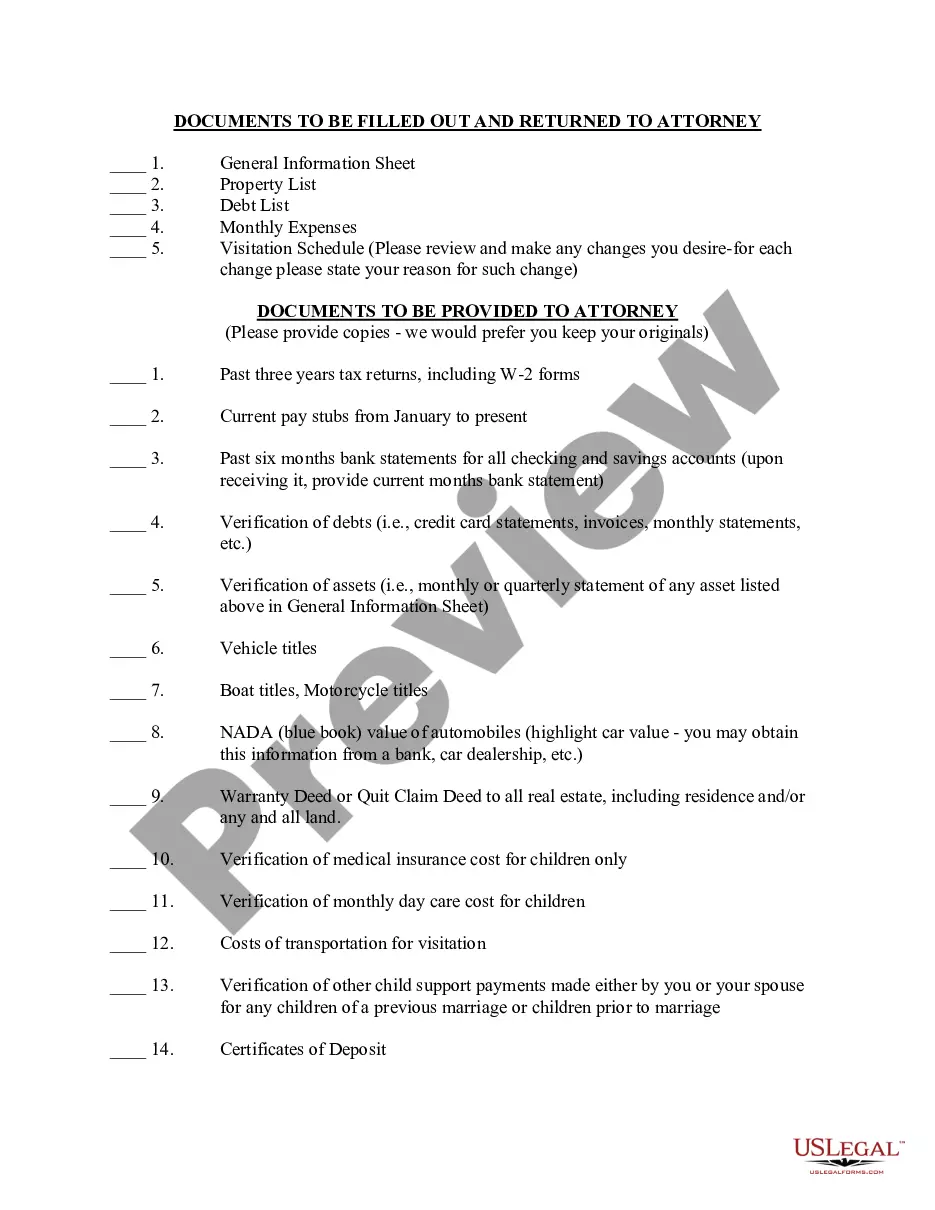
- Gather necessary information, such as personal details and asset information.
- Complete each form by entering the required information in the specified fields.
- Sign and date the forms as required; ensure you check if any need witnesses or notarization.
- Store the completed documents in a secure place, such as a safe deposit box.
Notarization guidance for this package
Forms in this package typically do not require notarization unless required by local law. It is always advisable to review each formâs instructions carefully to determine if notarization is necessary for your specific situation.
Get your form ready online
Our built-in tools help you complete, sign, share, and store your documents in one place.
Make edits, fill in missing information, and update formatting in US Legal Forms—just like you would in MS Word.
Download a copy, print it, send it by email, or mail it via USPS—whatever works best for your next step.
Sign and collect signatures with our SignNow integration. Send to multiple recipients, set reminders, and more. Go Premium to unlock E-Sign.
If this form requires notarization, complete it online through a secure video call—no need to meet a notary in person or wait for an appointment.
We protect your documents and personal data by following strict security and privacy standards.

Make edits, fill in missing information, and update formatting in US Legal Forms—just like you would in MS Word.

Download a copy, print it, send it by email, or mail it via USPS—whatever works best for your next step.

Sign and collect signatures with our SignNow integration. Send to multiple recipients, set reminders, and more. Go Premium to unlock E-Sign.

If this form requires notarization, complete it online through a secure video call—no need to meet a notary in person or wait for an appointment.

We protect your documents and personal data by following strict security and privacy standards.
Common mistakes
- Failing to revoke the prior Will properly, which may lead to complications with estate distribution.
- Not signing the forms correctly or not having the required witnesses present.
- Overlooking the need for a General Power of Attorney to cover financial matters.
- Not storing the legal documents securely, risking loss or unauthorized access.
Why use this package online
- Convenience of downloading forms at your own pace without the need for in-person meetings.
- Editability allows for easy customization to fit your unique legal needs.
- Reliable documentation prepared by licensed attorneys, ensuring compliance with state laws.
- Cost-effective solution, saving you up to 40 percent compared to purchasing forms separately.
Looking for another form?


Form popularity
FAQ
In Iowa, the 90-day waiting period is generally mandatory before a divorce can be finalized. However, certain circumstances may allow you to request a waiver of this waiting period. This typically requires demonstrating an immediate need, like evidence of domestic abuse or other urgent situations. The Iowa Newly Divorced Individuals Package can assist you in understanding your options and navigating this waiting period.
You answer the divorce petition to let the court know your position in the divorce case.If you don't answer the divorce petition and you don't go to a hearing, it's still possible that the judge can grant the divorce. If that happens, the judge also can make other decisions in the divorce.
If you post the divorce documents, your spouse must sign and return to you the Acknowledgement of Service (Divorce) as proof of service. You will need to file this document at the court. If you post the documents but do not get the Acknowledgement of Service (Divorce), you must try to serve your spouse in another way.
Iowa doesn't have a special, expedited process for uncontested divorces. However, if you and your spouse are able to agree on all the issues, your case will move through the court system much more quickly than if you had to go to trial.
The name given to the spouse that files first for divorce is the Petitioner and the spouse that files second is called the Respondent. The clearest advantage to filing for divorce first is that at trial the Petitioner gets to present his/her evidence first.
The entire process, from filing the petition through to the divorce decree, can take as little as 90 days, or as long as one year depending on the issues and whether the parties are able to reach agreement or have to go to trial.
Does it matter who files for divorce first in Iowa? The spouse that files for divorce, called the Petitioner, could take advantage of controlling when the divorce case starts, the timeline of serving divorce or custody papers, and the scheduling of initial court dates.
Iowa is an "equitable distribution state. The court will divide all of the spouse's property whether it was acquired before or after the marriage, except any gifts and inheritances received prior to or during the marriage.
One of the main legal advantages that a person gains by filing the divorce petition before his or her spouse does is that the filer can request a Standing Order from the court when filing the petition.If the matter should go to a hearing, the person who files the petition usually presents his or her case first.
A final decree of divorce is the court's formal order granting a termination of a marriage. If the case goes to trial and the judge issues a judgment, the judgment is confirmed when the decree is signed and dated by the judge and court clerk.