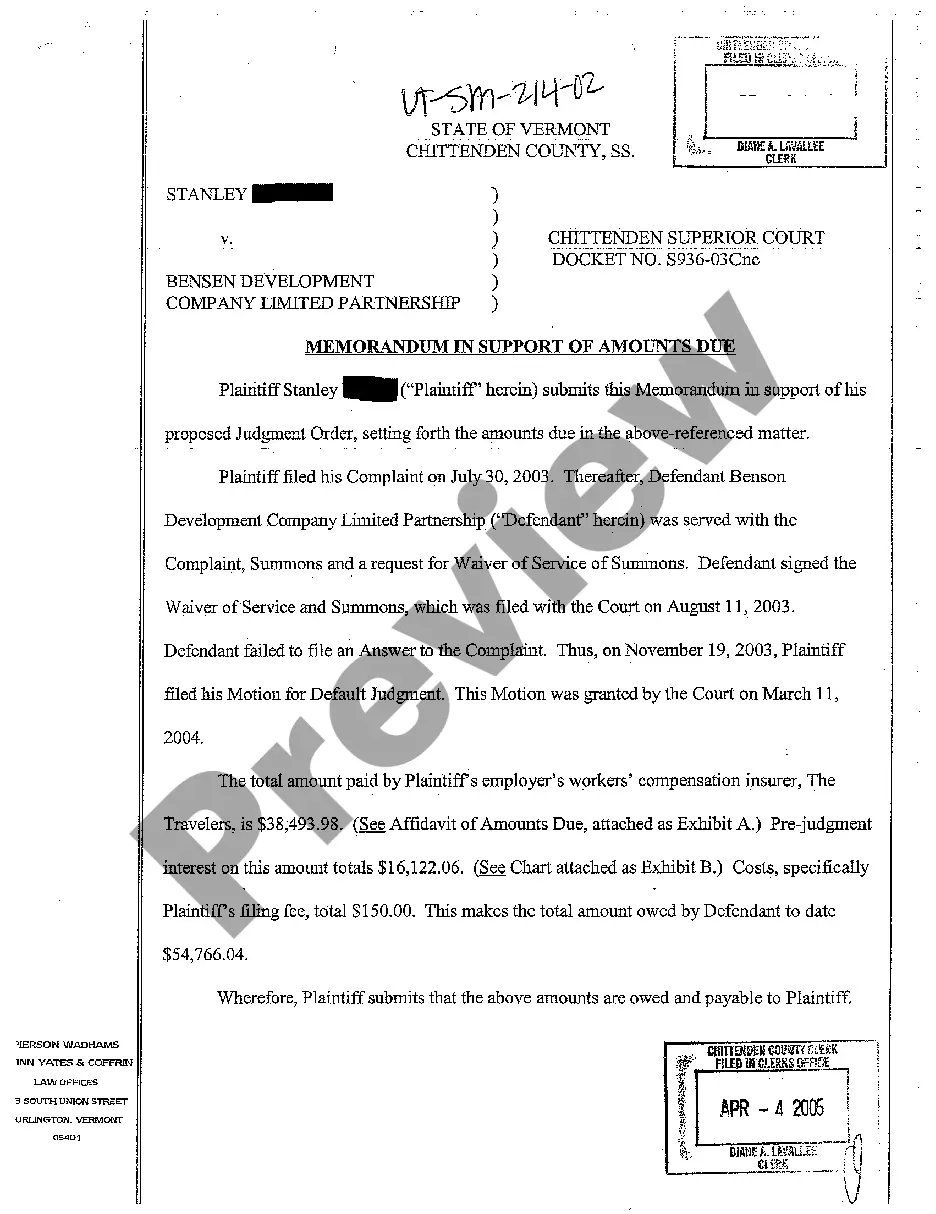
Iowa Installments Fixed Rate Promissory Note Secured by Residential Real Estate
Overview of this form
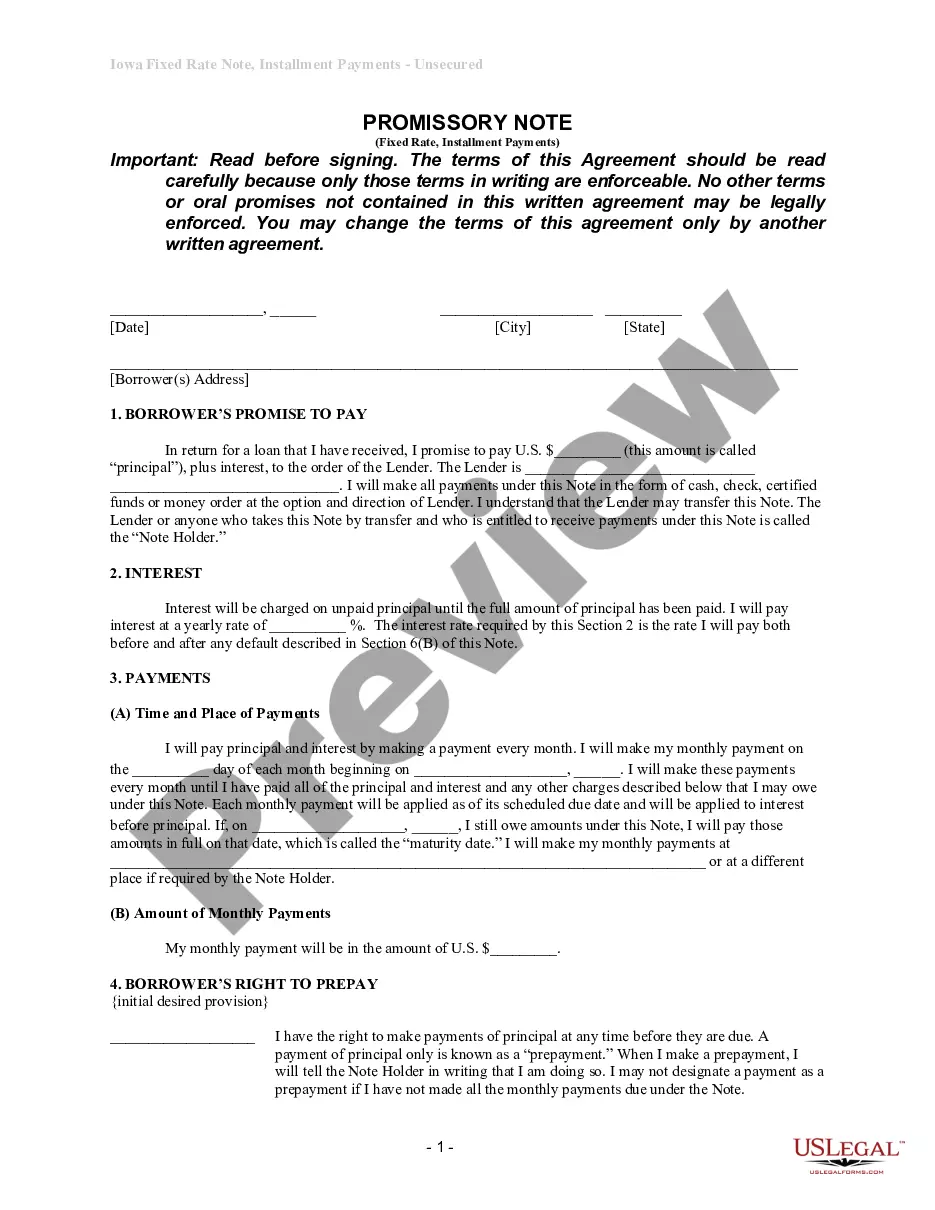
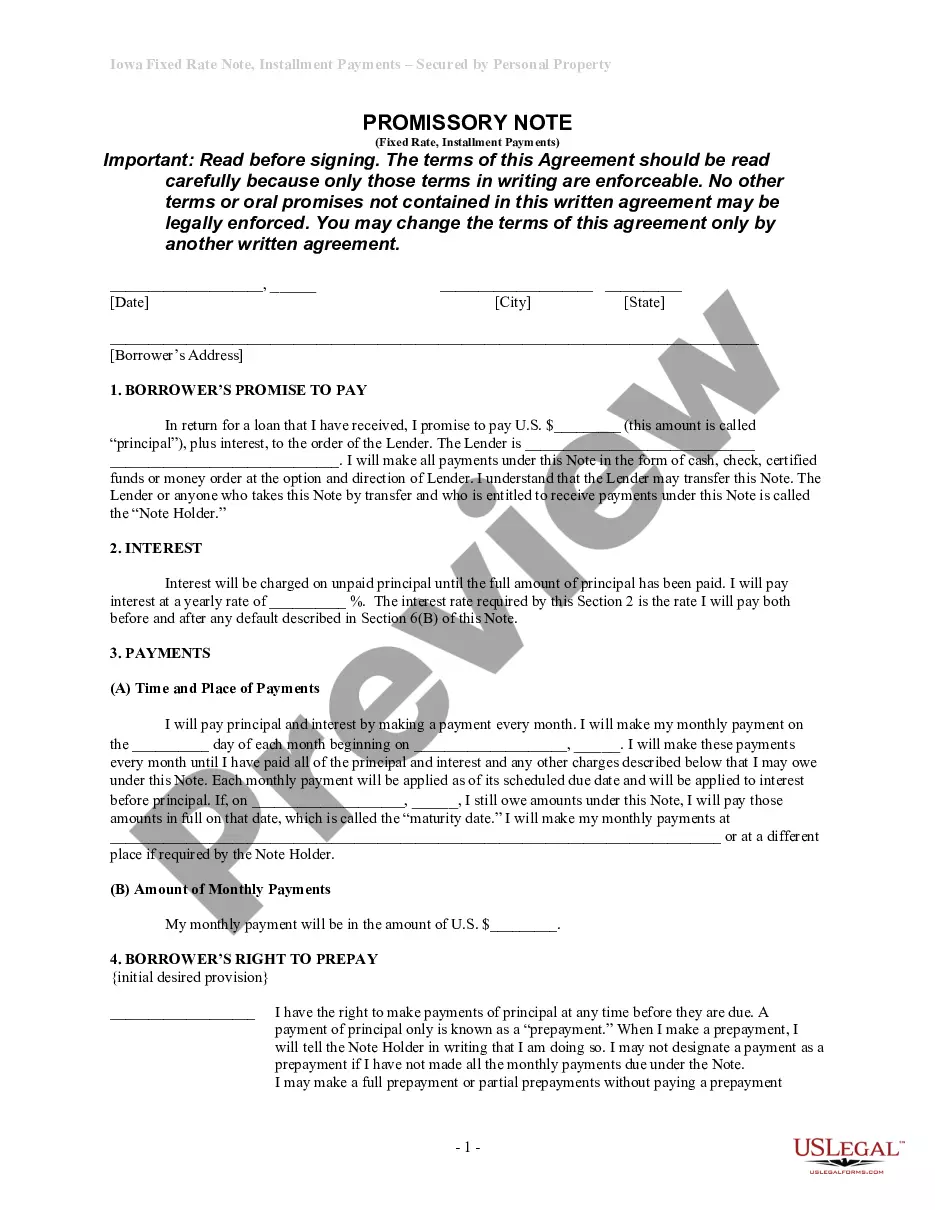
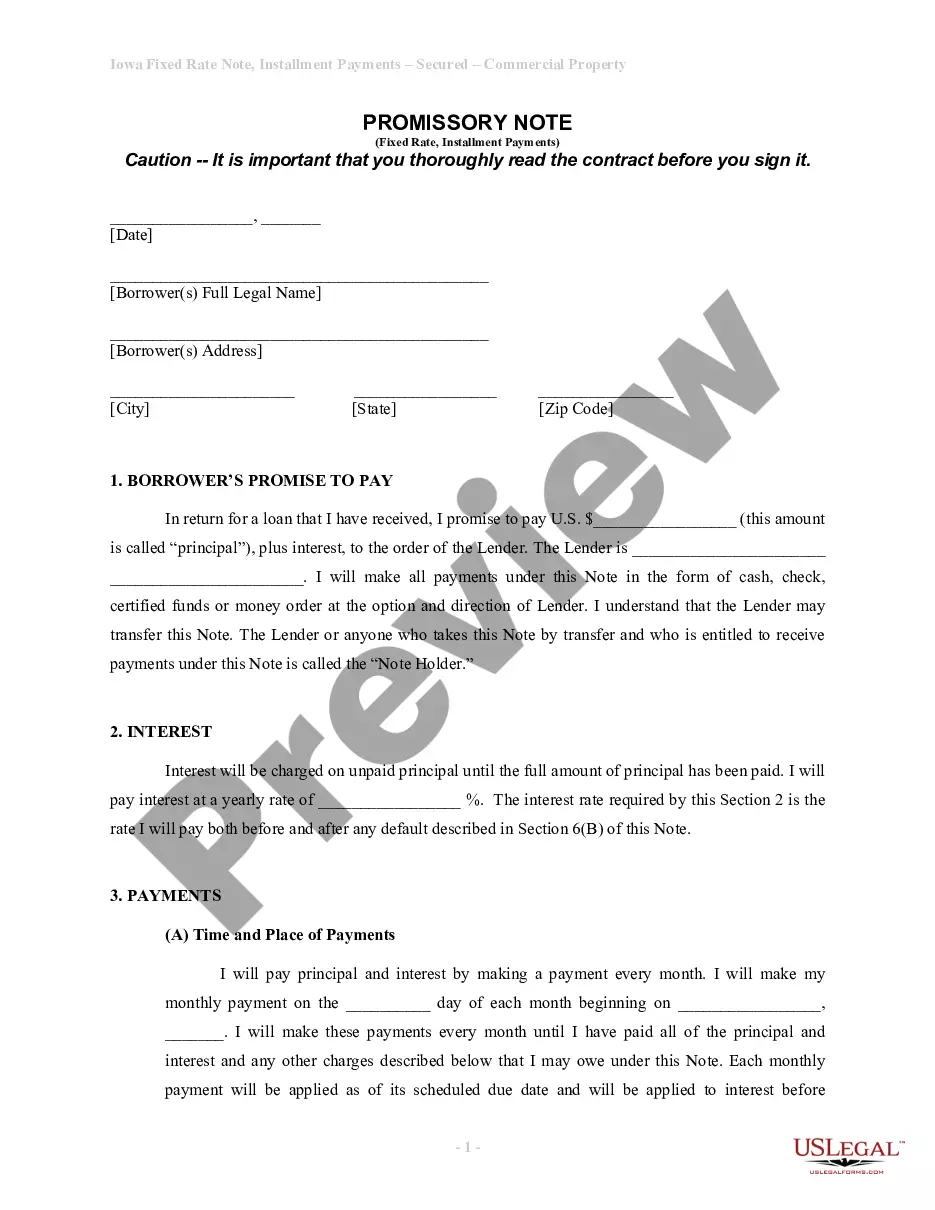
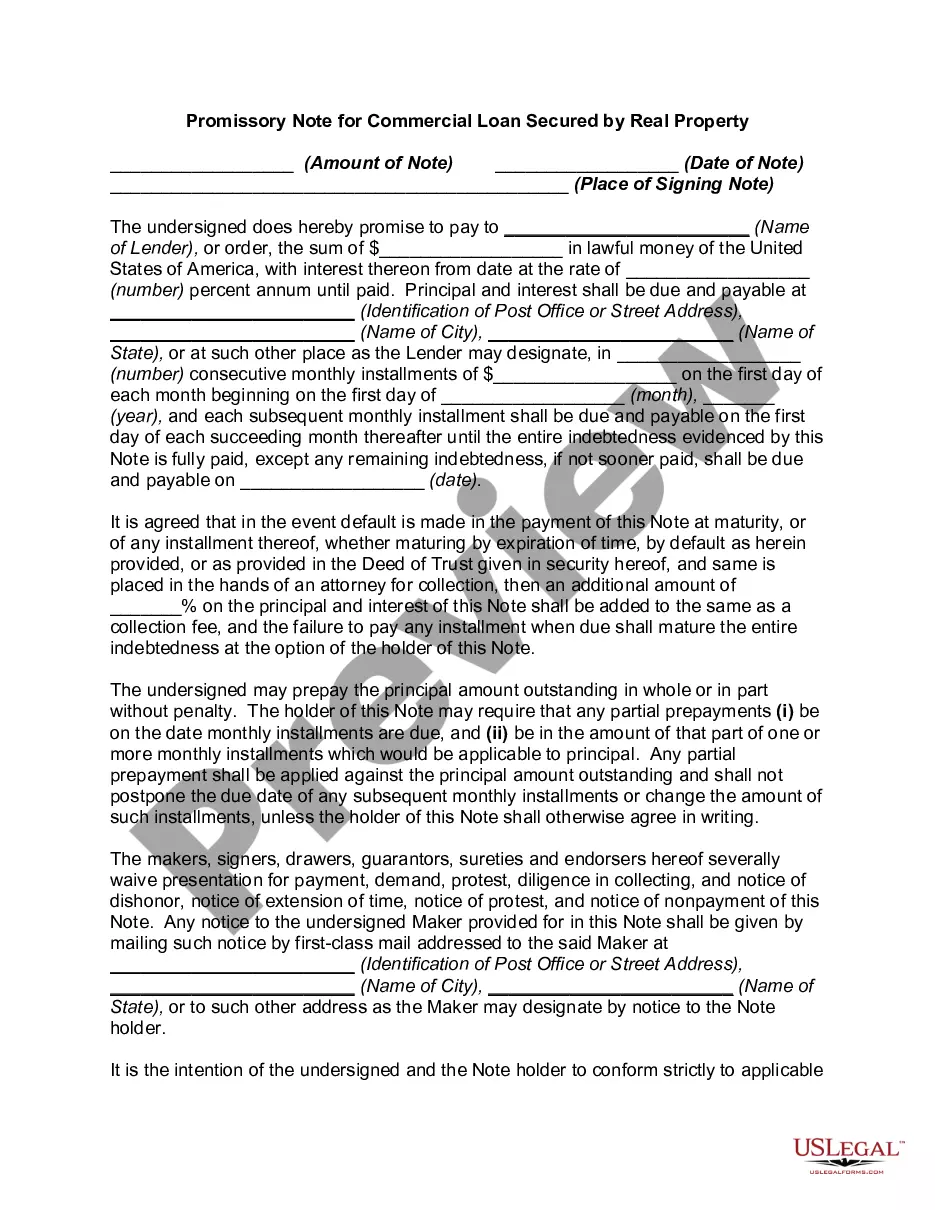
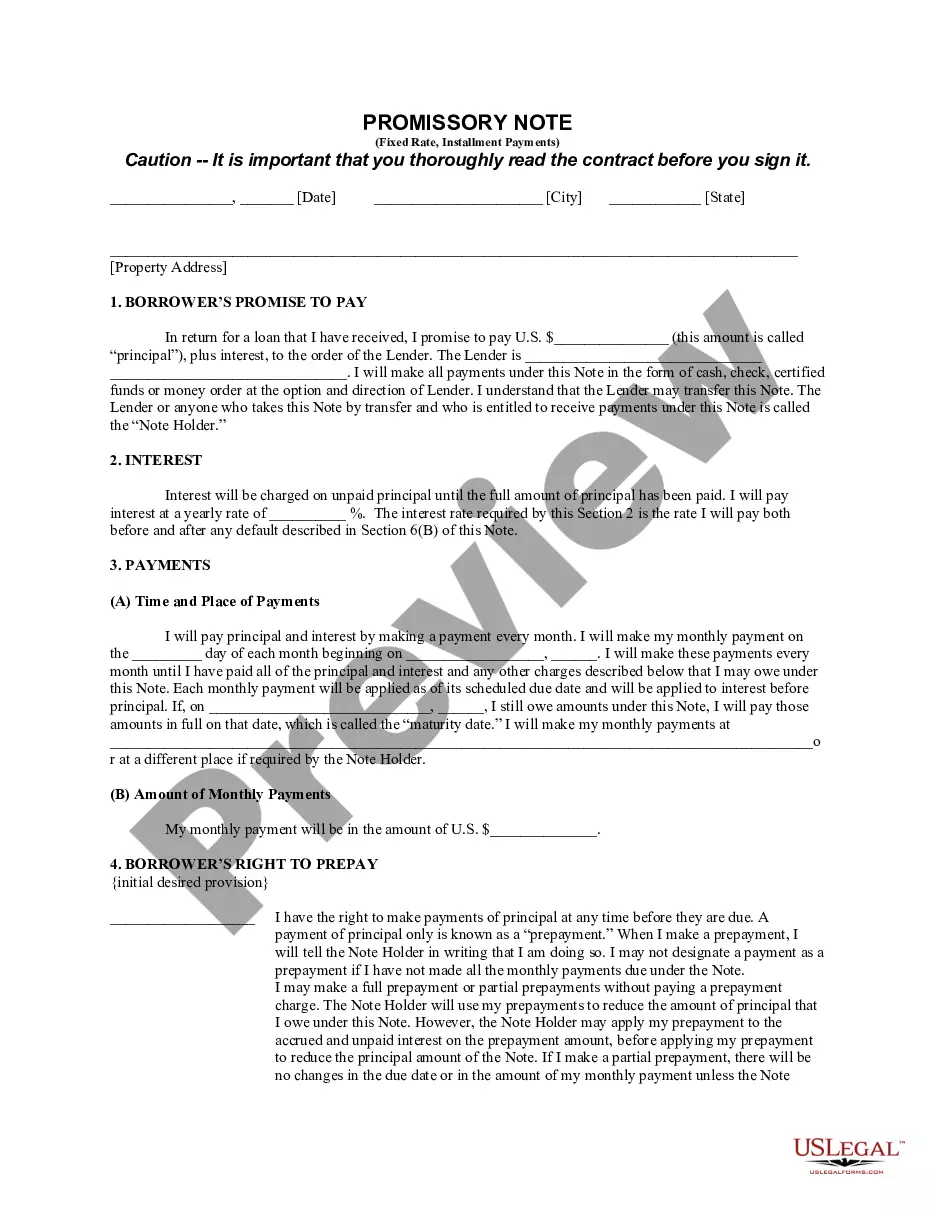
The Iowa Installments Fixed Rate Promissory Note Secured by Residential Real Estate is a legal document that outlines a borrower's promise to repay a loan secured by residential property. Unlike unsecured promissory notes, this form ties repayment to a specific property, providing additional security for the lender. This form specifies the loan's terms, including interest rates, payment schedules, and potential consequences of default, making it essential for any real estate financing agreements in Iowa.
Main sections of this form
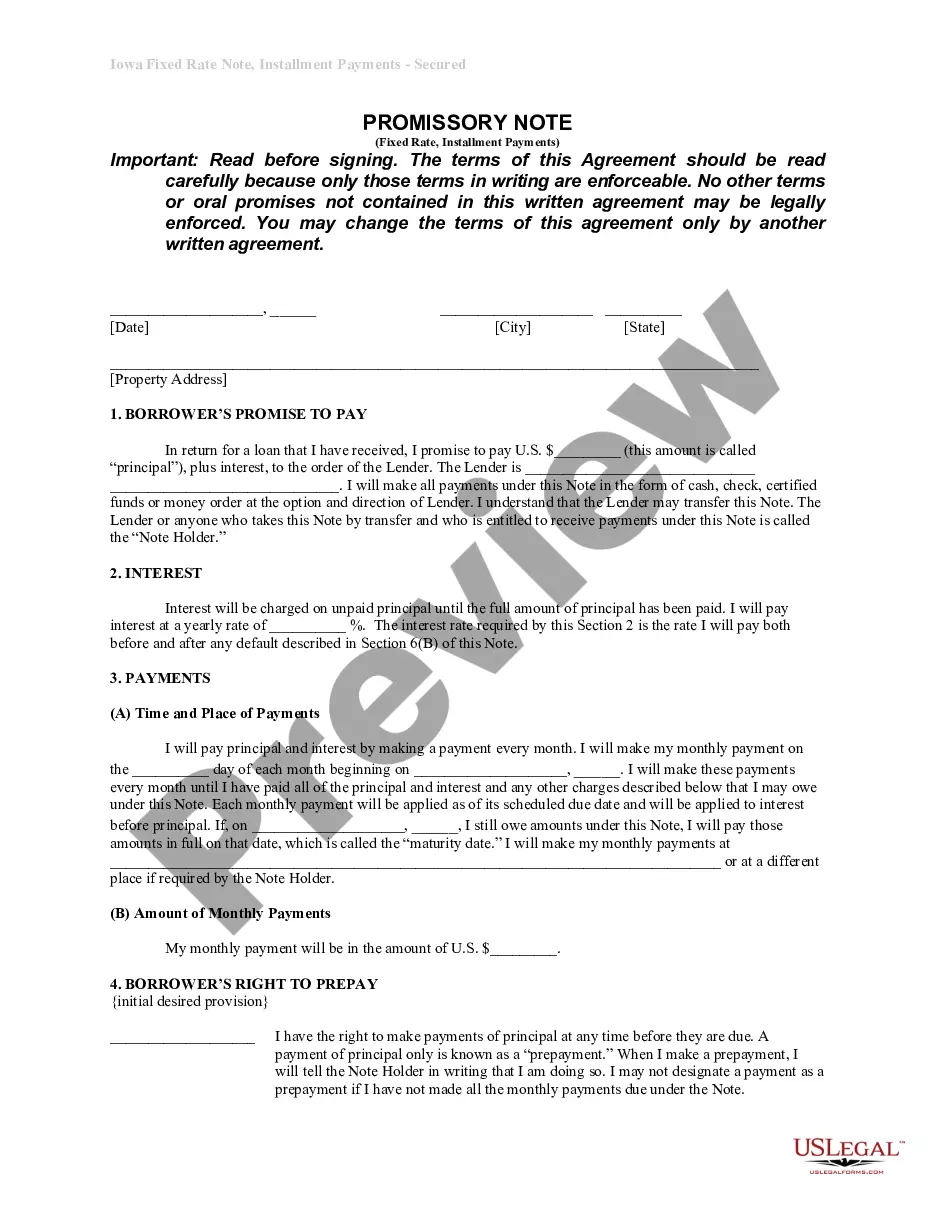
- Borrower's promise to pay: Details the obligation to pay the principal and interest.
- Interest rate: Specifies the annual interest charged on unpaid principal.
- Payment schedule: Outlines how and when payments should be made.
- Prepayment rights: Describes the borrower's ability to pay off the loan early and any applicable penalties.
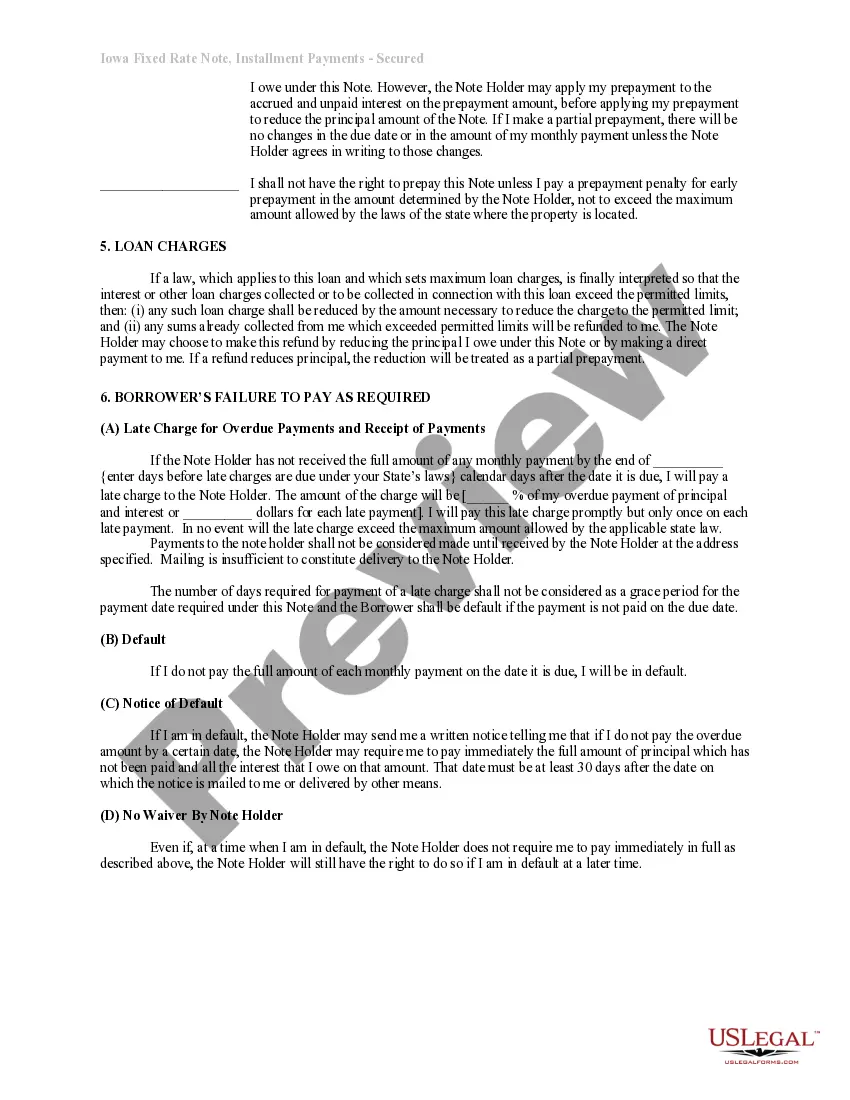
- Late payment charges: Details what happens if payments are not made on time.
- Default provisions: Explains the consequences of failing to meet payment obligations.
Common use cases
This form is useful in situations where a borrower is obtaining a loan that is secured by a residential property. It should be used when a lender needs assurance that the loan is backed by an asset, providing them with a legal claim to the property if the borrower defaults on repayment. It is commonly used in real estate transactions, refinancing agreements, and when personal loans are secured by real estate collateral.
Who this form is for
- Borrowers looking to secure a loan against their residential property.
- Lenders who want to formalize their loan agreements with borrowers.
- Real estate investors seeking financing options on their properties.
- Mortgage brokers assisting clients in drafting loan agreements.
Completing this form step by step
- Identify the parties involved: Enter the names of the borrower and lender.
- Specify the loan amount: Fill in the principal amount to be borrowed.
- Set interest terms: Enter the annual interest rate applicable to the loan.
- Outline the payment schedule: Indicate the monthly payment amount and the due date for repayments.
- Include property details: Provide the address of the residential property securing the note.
Is notarization required?
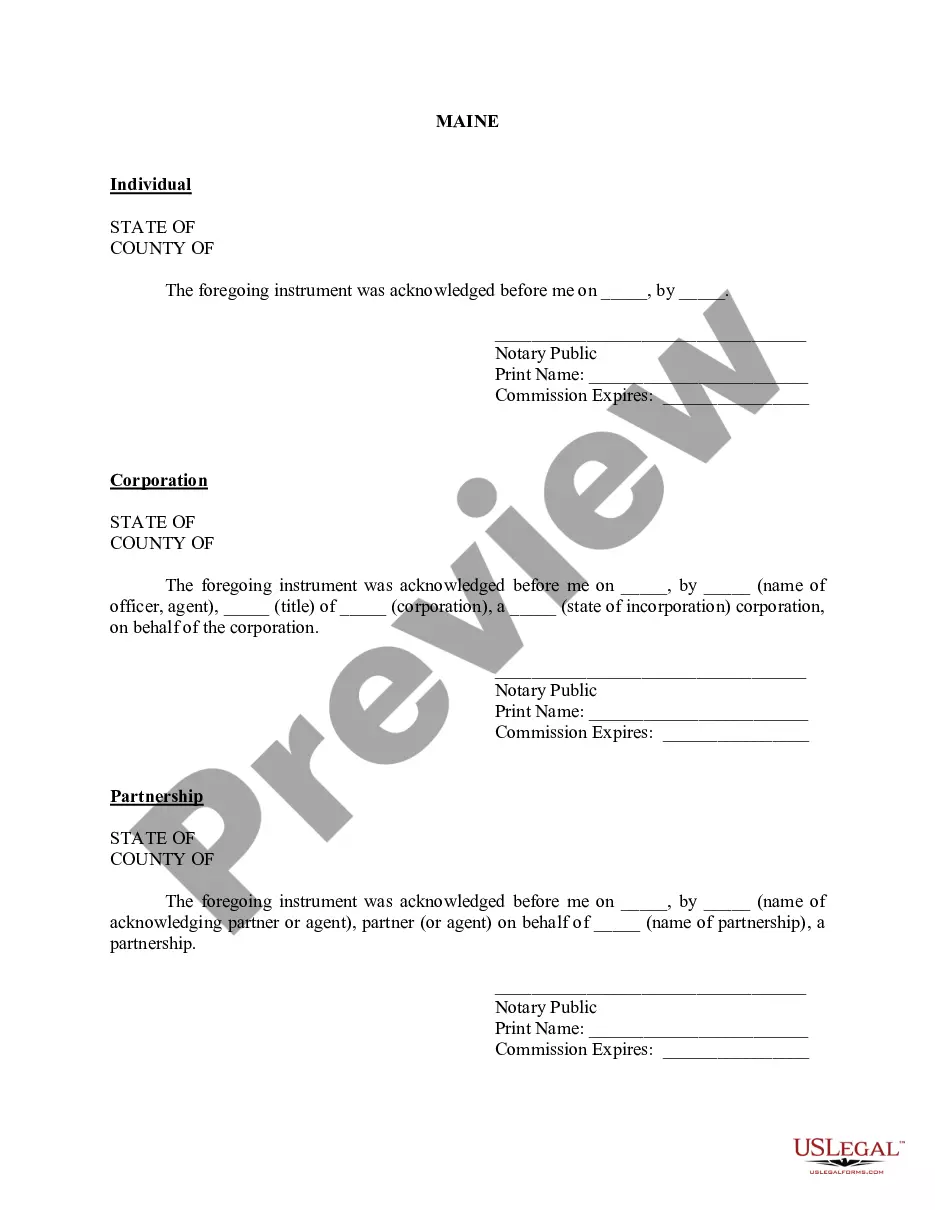
This form does not typically require notarization unless specified by local law. It is always advisable to check state-specific regulations to confirm any notarization requirements.
Get your form ready online
Our built-in tools help you complete, sign, share, and store your documents in one place.
Make edits, fill in missing information, and update formatting in US Legal Forms—just like you would in MS Word.
Download a copy, print it, send it by email, or mail it via USPS—whatever works best for your next step.
Sign and collect signatures with our SignNow integration. Send to multiple recipients, set reminders, and more. Go Premium to unlock E-Sign.
If this form requires notarization, complete it online through a secure video call—no need to meet a notary in person or wait for an appointment.
We protect your documents and personal data by following strict security and privacy standards.

Make edits, fill in missing information, and update formatting in US Legal Forms—just like you would in MS Word.

Download a copy, print it, send it by email, or mail it via USPS—whatever works best for your next step.

Sign and collect signatures with our SignNow integration. Send to multiple recipients, set reminders, and more. Go Premium to unlock E-Sign.

If this form requires notarization, complete it online through a secure video call—no need to meet a notary in person or wait for an appointment.

We protect your documents and personal data by following strict security and privacy standards.
Avoid these common issues
- Failing to accurately complete the interest rate section.
- Not including all necessary borrower and lender details.
- Ignoring the need to consult local laws affecting loan agreements.
- Overlooking the importance of signing and dating the document.
Advantages of online completion
- Convenience: Download the form instantly to complete at your own pace.
- Editability: Easily fill in specific details tailored to your agreement.
- Reliability: Forms are prepared by licensed attorneys to meet legal standards.
Legal use & context
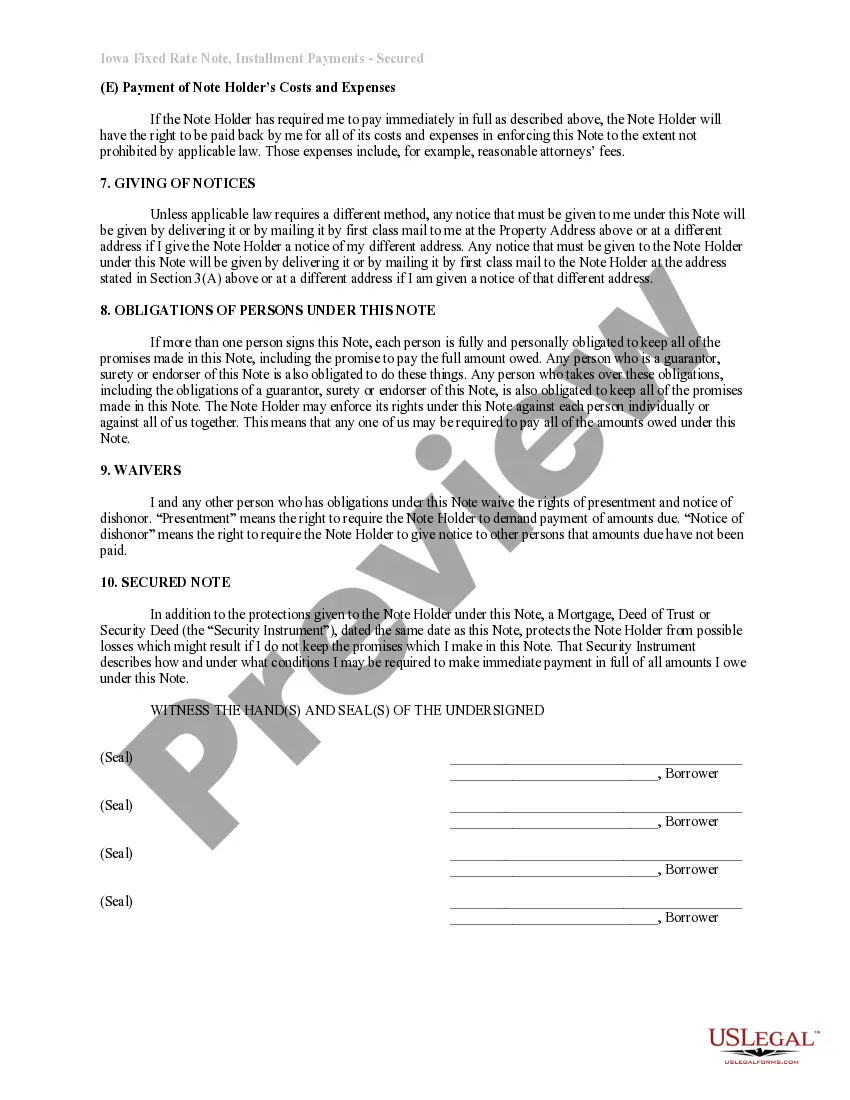
- This note is legally binding once signed by all parties involved.
- The lender holds a secured interest in the property until the loan is repaid.
- Failure to comply with repayment terms can result in foreclosure proceedings.
Key takeaways
- The Iowa Installments Fixed Rate Promissory Note is essential for securing loans against residential property.
- Completing the form accurately ensures enforceability and clarity in your loan terms.
- Understanding the rights and obligations outlined in the note is crucial for both borrowers and lenders.
Looking for another form?
Form popularity
FAQ
A simple promissory note might be for a lump sum repayment on a certain date. For example, you lend your friend $1,000 and he agrees to repay you by December 1. The full amount is due on that date, and there is no payment schedule involved.
Writing the Promissory Note Terms You don't have to write a promissory note from scratch. You can use a template or create a promissory note online.
A simple promissory note might be for a lump sum repayment on a certain date. For example, you lend your friend $1,000 and he agrees to repay you by December 1. The full amount is due on that date, and there is no payment schedule involved.
Date. The promissory note should include the date it was created at the top of the page. Amount. Loan terms. Interest rate. Collateral. Lender and borrower information. Signatures.
Navigate to the website: www.studentloans.gov. Click "Log In." Enter your FSA ID and Password. Click "Complete Master Promissory Note." Select the appropriate loan type. Enter Your Personal Information.
Signatures. Generally, promissory notes do not need to be notarized. Typically, legally enforceable promissory notes must be signed by individuals and contain unconditional promises to pay specific amounts of money. Generally, they also state due dates for payment and an agreed-upon interest rate.
The lender holds the promissory note while the loan is being repaid, then the note is marked as paid and returned to the borrower when the loan is satisfied. Promissory notes aren't the same as mortgages, but the two often go hand in hand when someone is buying a home.
In order for a promissory note to be valid, both the lender and the borrower must sign the documentation. If you are a co-signer for the loan, you are required to sign the promissory note. Being a co-signer requires you to repay the loan amount in the instance that the borrower defaults on payment.
Full names of parties (borrower and lender) Repayment amount (principal and interest) Payment plan. Consequences of non-payment (default and collection) Notarization (if necessary) Other common details.