Iowa Easement for Public Access and Trail
Overview of this form
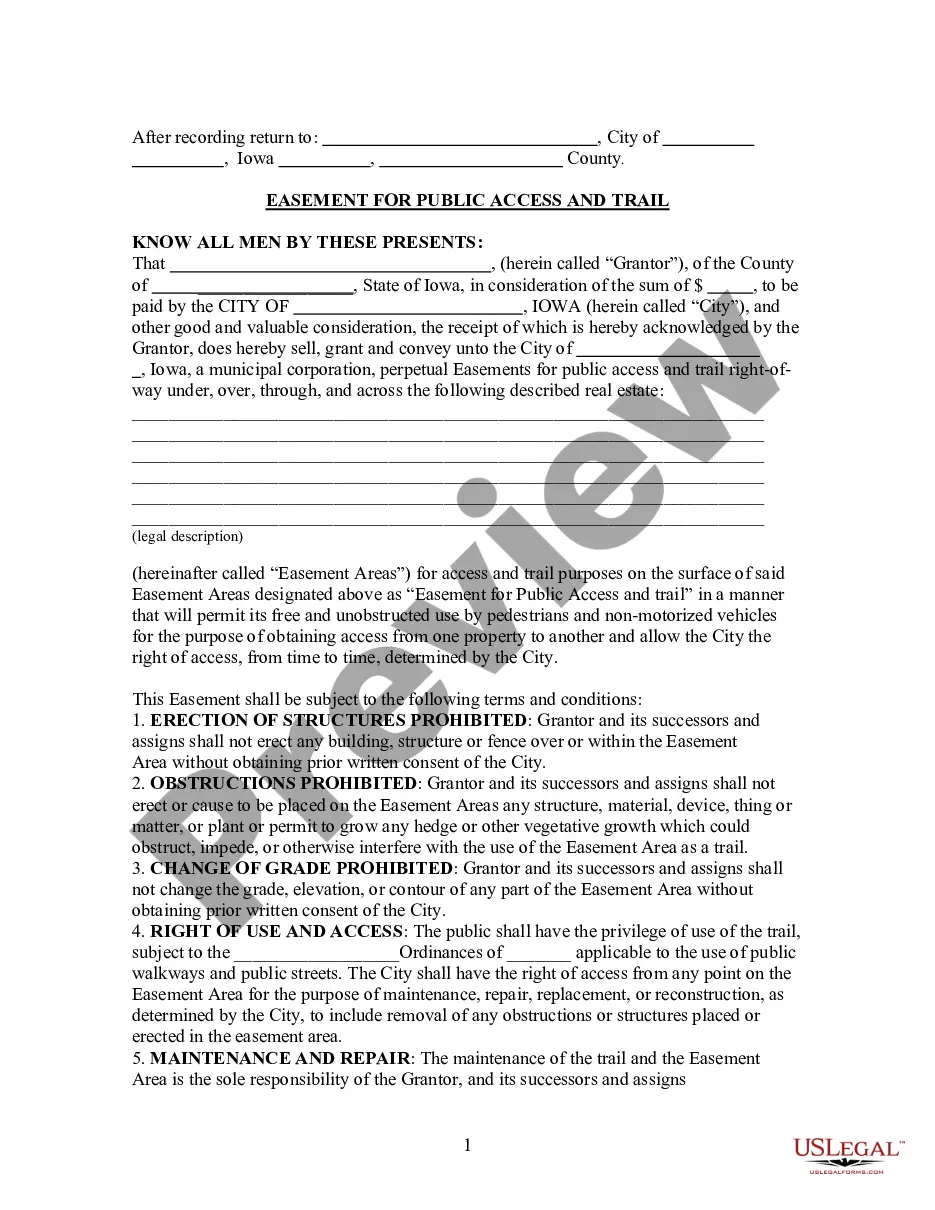
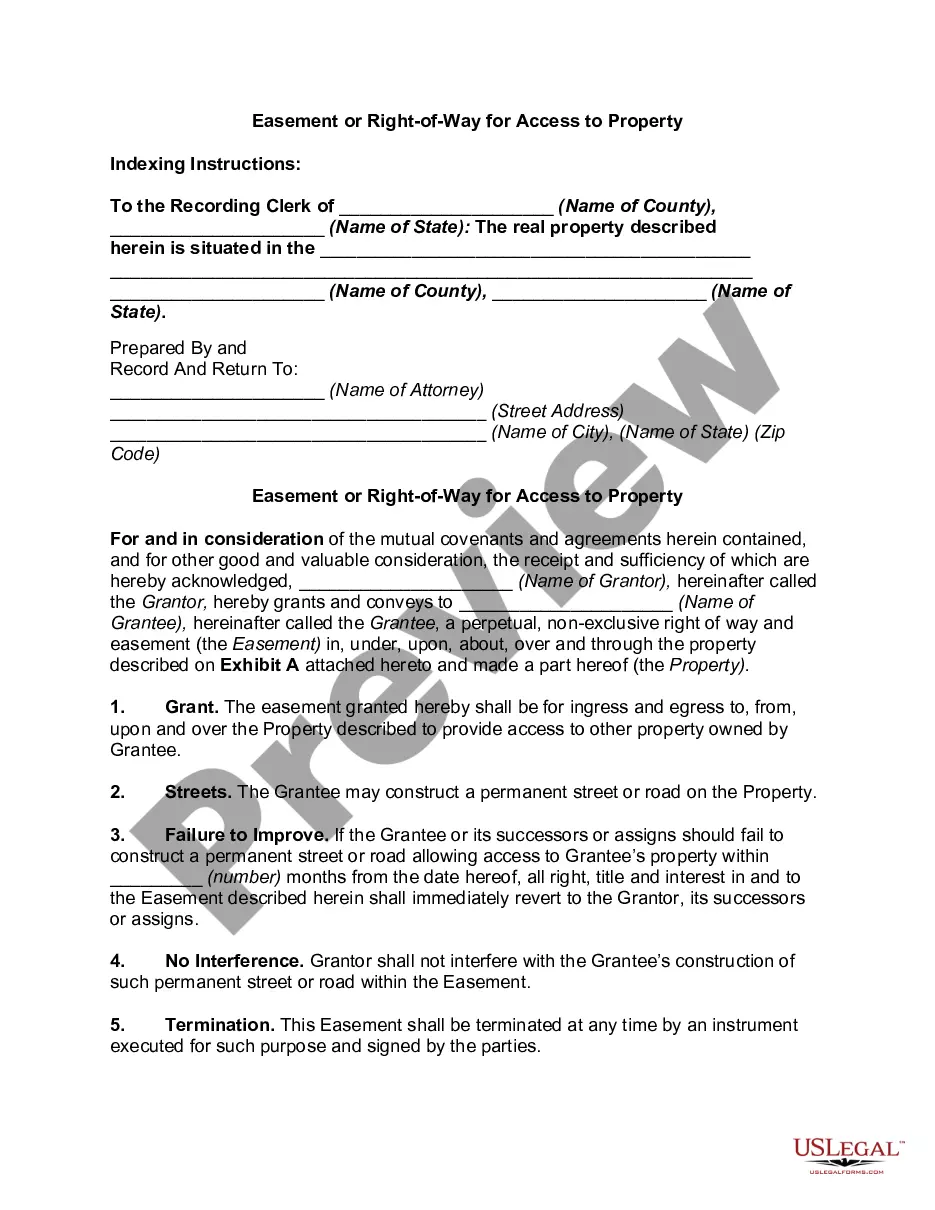
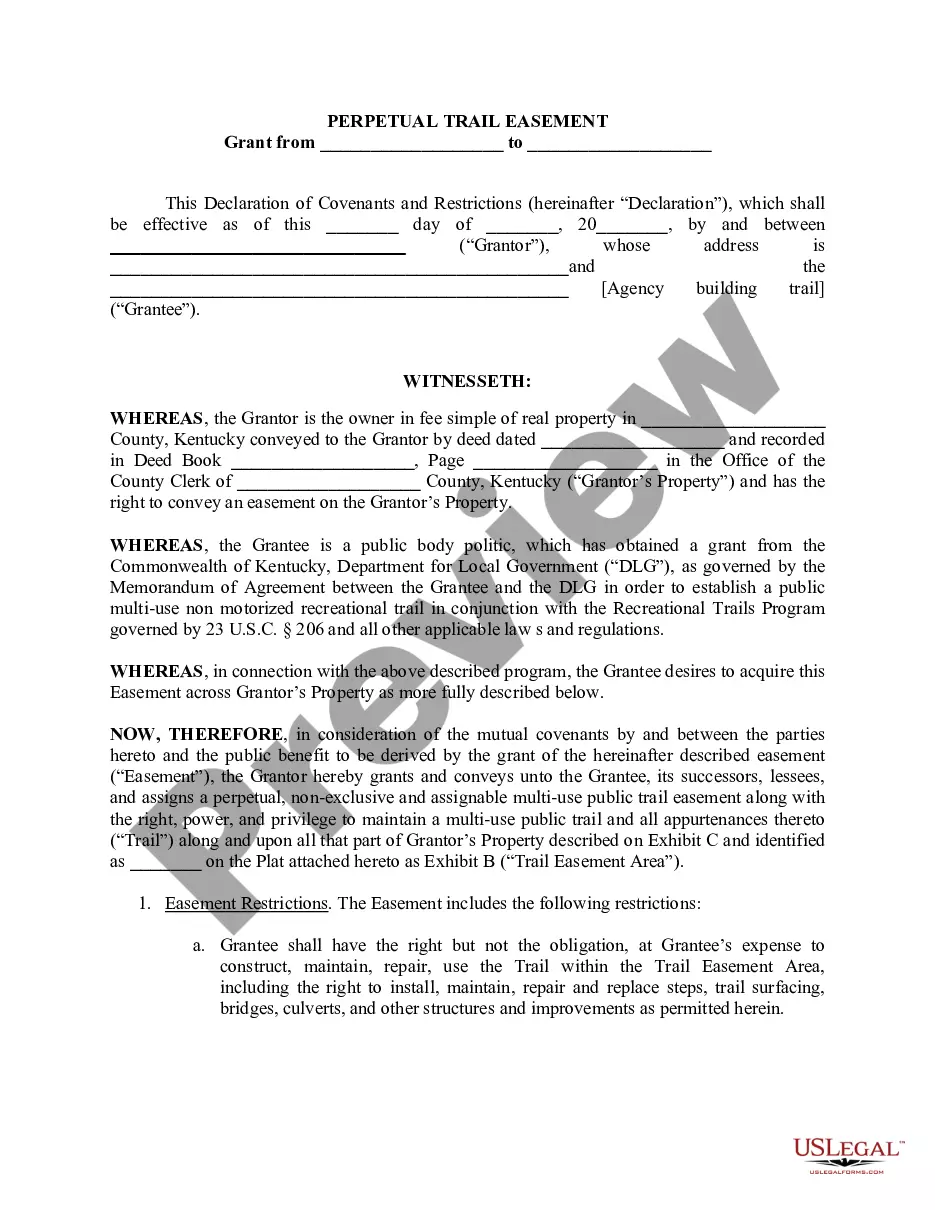
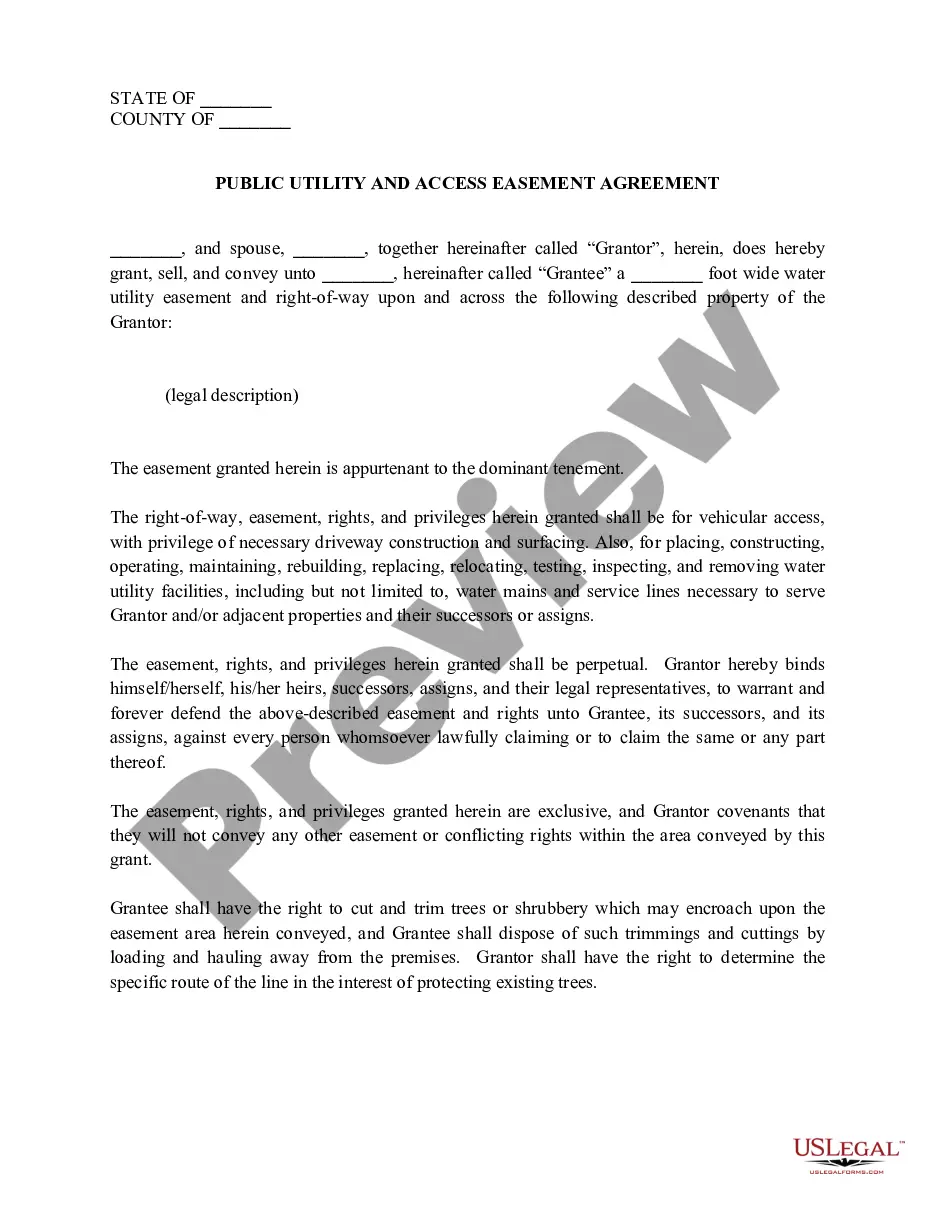
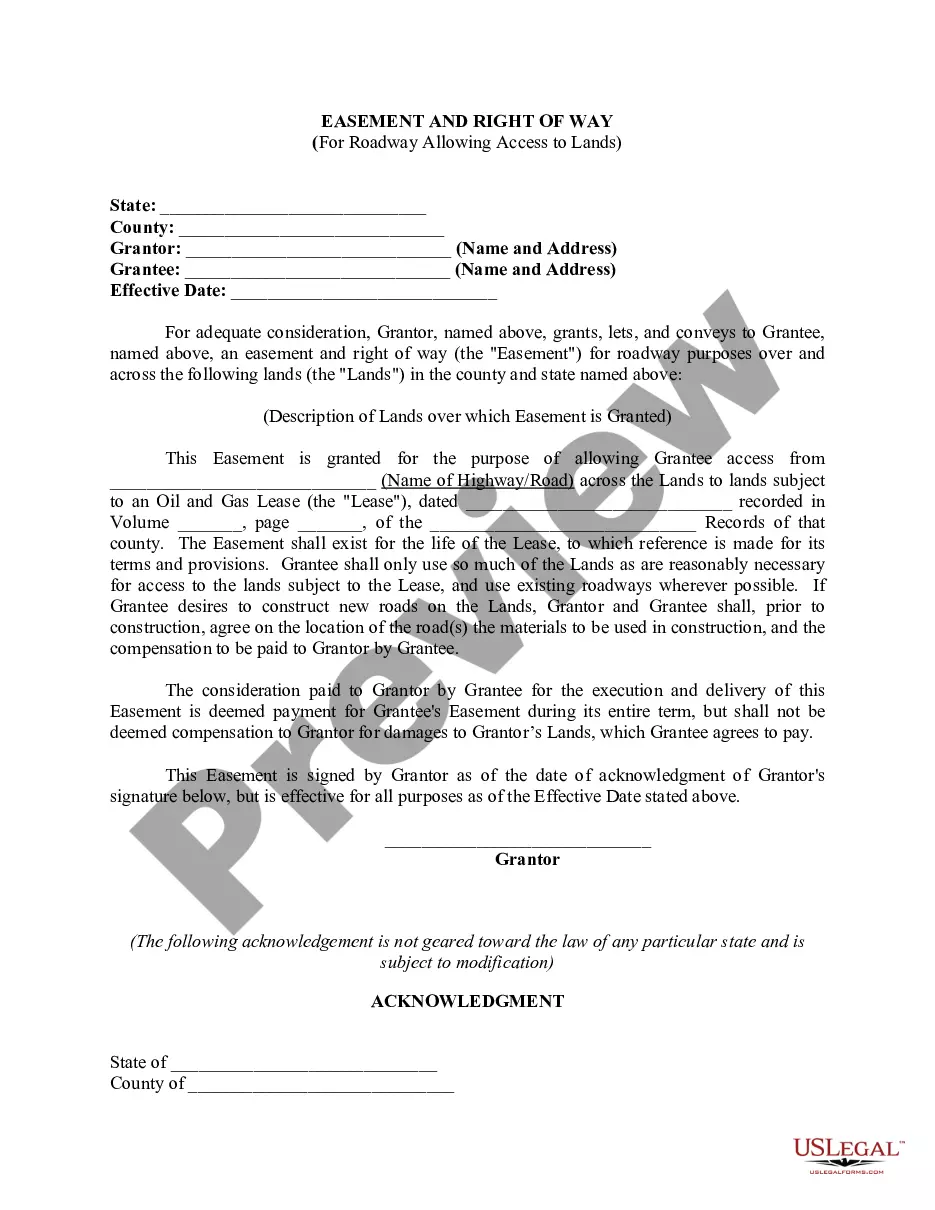
The Easement for Public Access and Trail form grants the right for public use of a specified area of property for pedestrian and non-motorized vehicles. This easement allows access from one property to another and is distinct from purchasing or owning the land, as it merely permits specific uses while maintaining the original land title with the grantor.
Key components of this form
- Identification of the easement areas for public access and trails.
- Prohibition of erecting structures within the easement without consent from the city.
- Restrictions on obstructions that may impede trail use.
- Rights of the public and the city regarding access and maintenance.
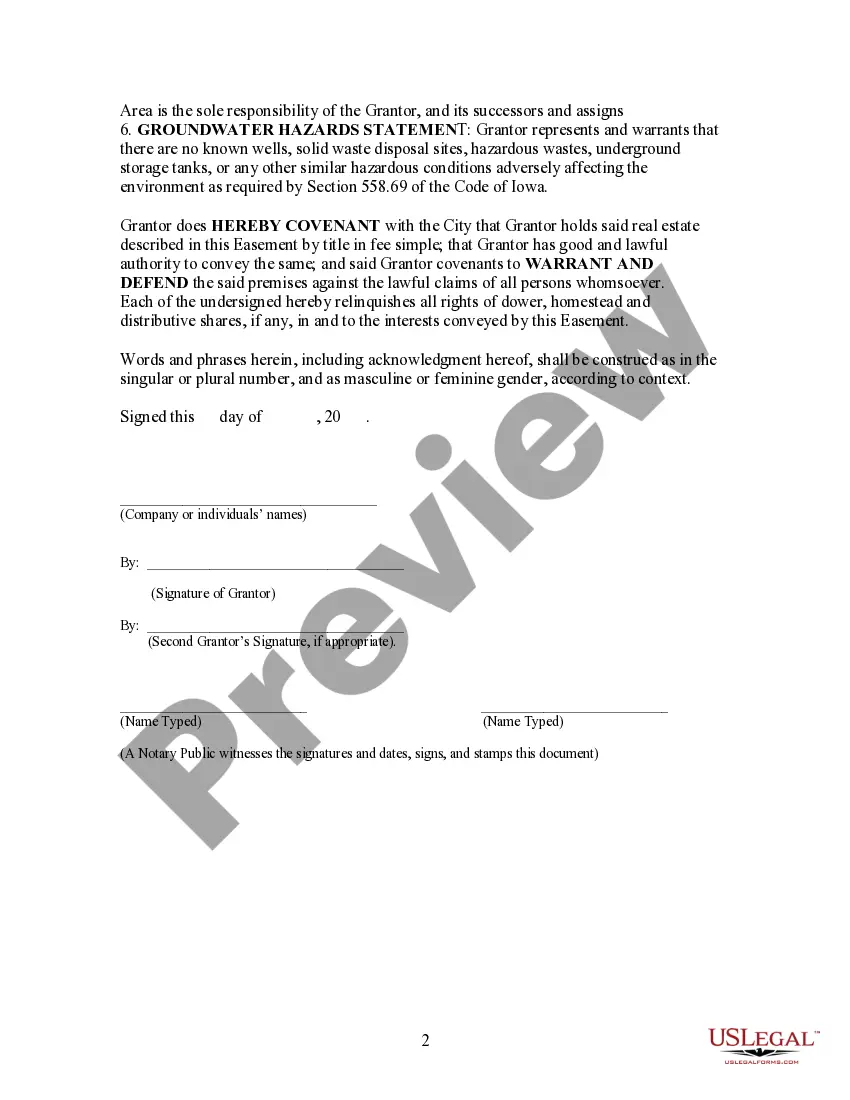
- Maintenance responsibilities of the grantor and successors.
- Groundwater hazards statement affirming the easement areas are free from hazardous conditions.
Situations where this form applies
This form is necessary when a property owner wants to legally designate a trail for public use, ensuring that the community can enjoy safe access across their property. This is particularly relevant for local governments wanting to establish or maintain public trails for walking or biking, facilitating connections between neighborhoods and parks.
Intended users of this form
This form is suitable for:
- Property owners wanting to grant public access to their land.
- Cities or municipalities planning to establish or maintain public trails.
- Organizations seeking to enhance accessibility for non-motorized traffic across private property.
How to prepare this document
- Identify the easement areas by providing a detailed legal description of the property.
- Clearly define the terms of use for the easement, ensuring to specify the prohibition of structures and obstructions.
- Indicate maintenance responsibilities and rights of access for the city.
- Have all grantors sign and provide their names as well as the date of signing.
- Consider notarization for added legal validity, especially if required by local law.
Notarization requirements for this form
This document requires notarization to meet legal standards. US Legal Forms provides secure online notarization powered by Notarize, allowing you to complete the process through a verified video call, available 24/7.
Get your form ready online
Our built-in tools help you complete, sign, share, and store your documents in one place.
Make edits, fill in missing information, and update formatting in US Legal Forms—just like you would in MS Word.
Download a copy, print it, send it by email, or mail it via USPS—whatever works best for your next step.
Sign and collect signatures with our SignNow integration. Send to multiple recipients, set reminders, and more. Go Premium to unlock E-Sign.
If this form requires notarization, complete it online through a secure video call—no need to meet a notary in person or wait for an appointment.
We protect your documents and personal data by following strict security and privacy standards.

Make edits, fill in missing information, and update formatting in US Legal Forms—just like you would in MS Word.

Download a copy, print it, send it by email, or mail it via USPS—whatever works best for your next step.

Sign and collect signatures with our SignNow integration. Send to multiple recipients, set reminders, and more. Go Premium to unlock E-Sign.

If this form requires notarization, complete it online through a secure video call—no need to meet a notary in person or wait for an appointment.

We protect your documents and personal data by following strict security and privacy standards.
Common mistakes
- Failing to provide a complete and accurate legal description of the easement area.
- Not obtaining necessary consents or approvals from the city before making changes to the easement or trail.
- Ignoring local ordinances regarding public access and maintenance of trails.
- Incomplete signatures or missing names of grantors, which could render the easement invalid.
Benefits of completing this form online
- Convenient access to professionally drafted legal templates.
- Easy to download and fill out at your own pace.
- Reliable legal documentation created by licensed attorneys.
- Ability to save and edit the form as needed before finalizing.
Looking for another form?
Form popularity
FAQ
The process of establishing an easement begins with negotiations between the landowner and the easement seeker. Both parties must agree on the terms, and then the easement must be documented, usually in writing. For an Iowa Easement for Public Access and Trail, following the legal process ensures clarity and prevents future conflicts.
While easements in Minnesota share similarities with those in Iowa, there are specific state laws that govern their use and enforcement. An easement for public access and trail in MN may have different regulations compared to Iowa. Understanding these laws is essential for property owners and users alike to ensure compliance.
Yes, recording an easement is critical for ensuring its validity and protection. In Iowa, an easement for public access and trail should be recorded with the local county recorder's office. This step helps prevent future disputes by officially documenting the easement's existence and terms.
To complete an easement, you need a written agreement outlining the rights and responsibilities of each party involved. This document must include details about the Iowa Easement for Public Access and Trail, such as usage rights and any restrictions. Legal advice is often valuable to ensure compliance with state laws and proper execution.
In Iowa, easements function as legal permissions granting specific rights to individuals or the public over another's property. For an Iowa Easement for Public Access and Trail, this means the public can access certain trails or areas. Such easements are bound by state law and can be essential for environmental protection and recreational access.
An easement is often owned by one party while allowing another party the right to use that property. In the case of an Iowa Easement for Public Access and Trail, the granting party usually retains ownership of the land, but permits the public to use it. The easement remains attached to the property and persists even if ownership changes.
The procedure for establishing an Iowa Easement for Public Access and Trail involves several key steps. First, you must identify the land that will be accessible and gather necessary documentation. Next, you must file an application with the appropriate authorities, and consider public input or hearings if required. For assistance, platforms like USLegalForms offer resources that can simplify your understanding and navigation of this legal process.
To file for an Iowa Easement for Public Access and Trail, you should first gather necessary documents that outline the easement's purpose and location. Then, you can submit the application to your local county recorder's office. Make sure to comply with all legal requirements and consider utilizing platforms, like USLegalForms, to help streamline the process and ensure your application meets all criteria.