Iowa Warranty Deed from Individual to Individual
Overview of this form
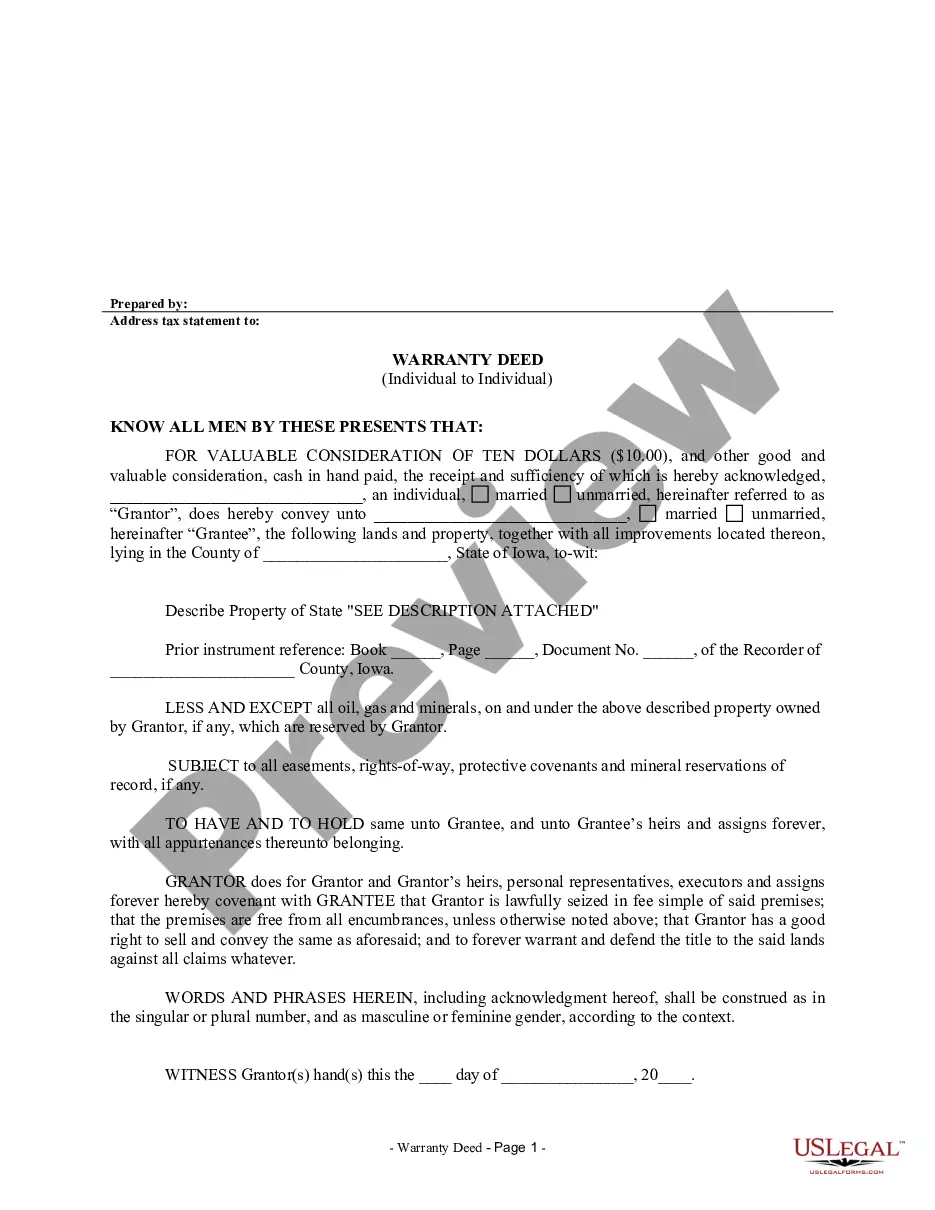
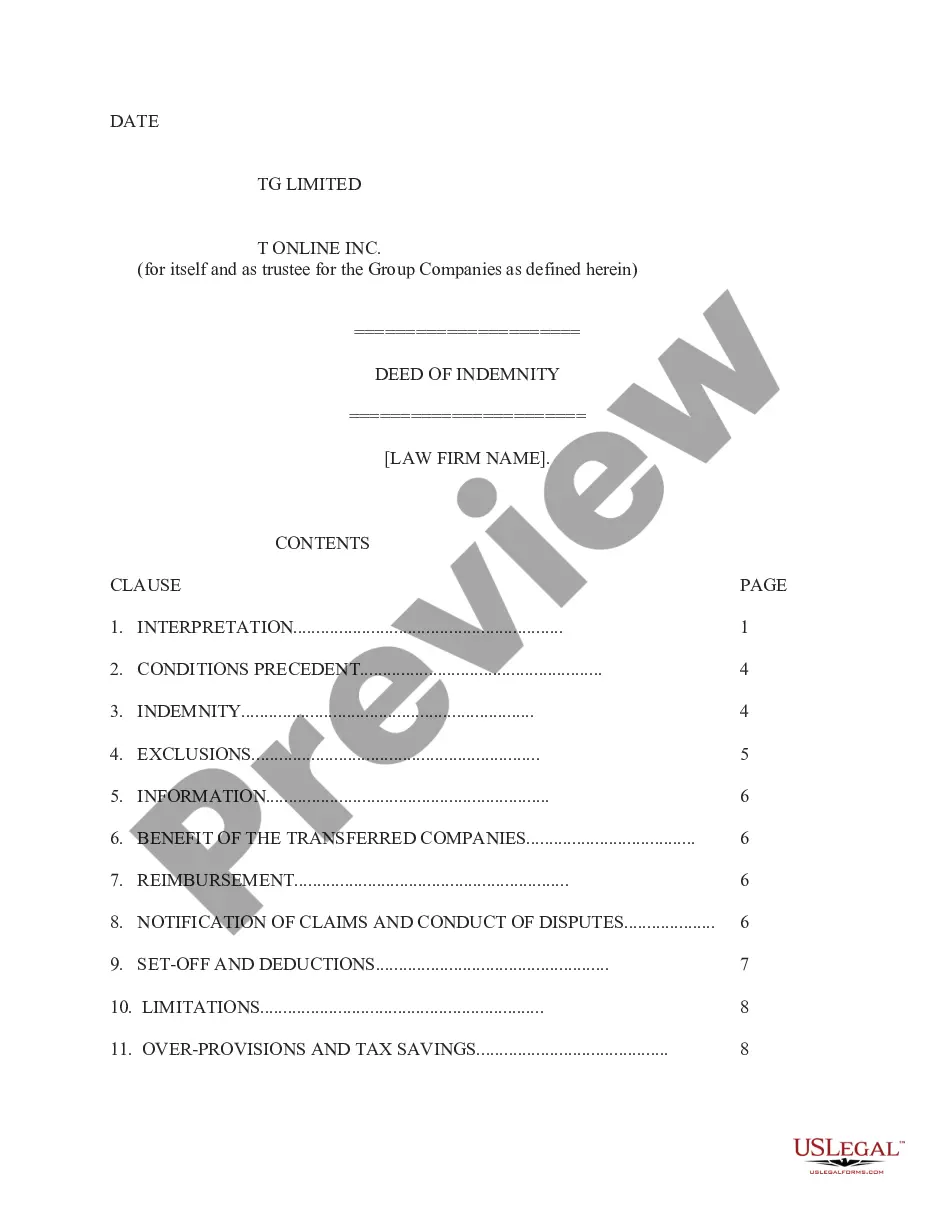
This Warranty Deed from Individual to Individual is a legal document wherein an individual (the Grantor) conveys property ownership to another individual (the Grantee). This deed ensures that the Grantor warrants the title to the property is clear and free from encumbrances, with specific exceptions stated. Unlike other deeds, this form specifically addresses the transfer between two individuals, making it essential for personal property transactions between private parties.
Key parts of this document
- Grantor and Grantee identification, including marital status.
- Description of the property being transferred.
- Acknowledgment of any reserved rights, such as oil, gas, and mineral rights.
- Covenant of warranty ensuring the Grantor has the right to convey the property.
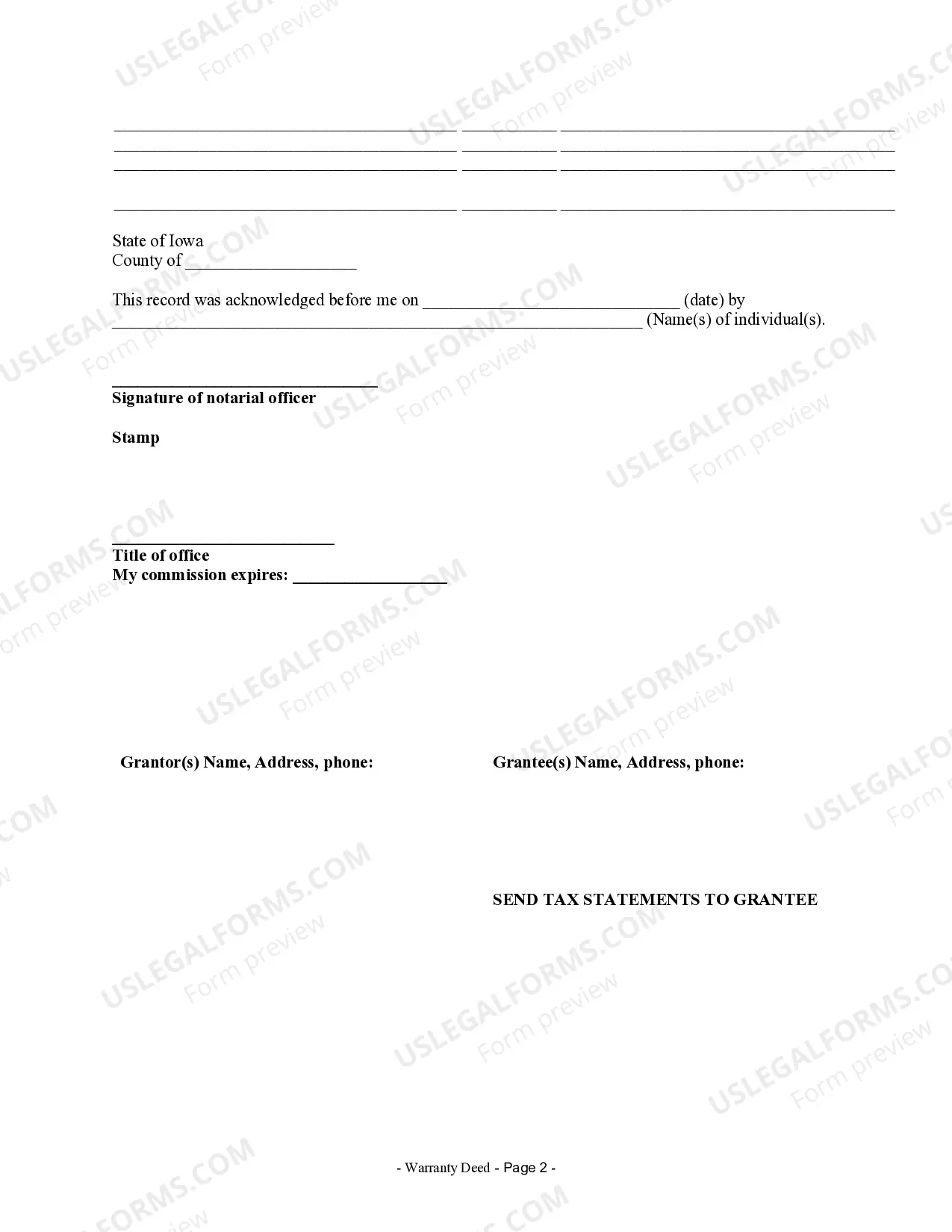
- Signature lines for both the Grantor and notary public.



When to use this document
This form should be used when an individual wishes to transfer real estate ownership to another individual. It is particularly applicable in situations such as property sales, gifts of real estate, or transfers among family members. Using this Warranty Deed ensures that the ownership transfer is legally binding and protects the Grantee's interest in the property.
Intended users of this form
- Individuals selling or gifting real estate to another individual.
- Family members transferring property ownership among themselves.
- Trustees or personal representatives handling real estate transactions on behalf of an individual.
Instructions for completing this form
- Identify the Grantor and Grantee, including their marital status.
- Provide a detailed description of the property being transferred.
- State any reservations of rights that the Grantor maintains.
- Sign and date the document in the presence of a notary public.
- Ensure the form is recorded within the appropriate county office.
Notarization requirements for this form
This document requires notarization to meet legal standards. US Legal Forms provides secure online notarization powered by Notarize, allowing you to complete the process through a verified video call, available 24/7.
Get your form ready online
Our built-in tools help you complete, sign, share, and store your documents in one place.
Make edits, fill in missing information, and update formatting in US Legal Forms—just like you would in MS Word.
Download a copy, print it, send it by email, or mail it via USPS—whatever works best for your next step.
Sign and collect signatures with our SignNow integration. Send to multiple recipients, set reminders, and more. Go Premium to unlock E-Sign.
If this form requires notarization, complete it online through a secure video call—no need to meet a notary in person or wait for an appointment.
We protect your documents and personal data by following strict security and privacy standards.
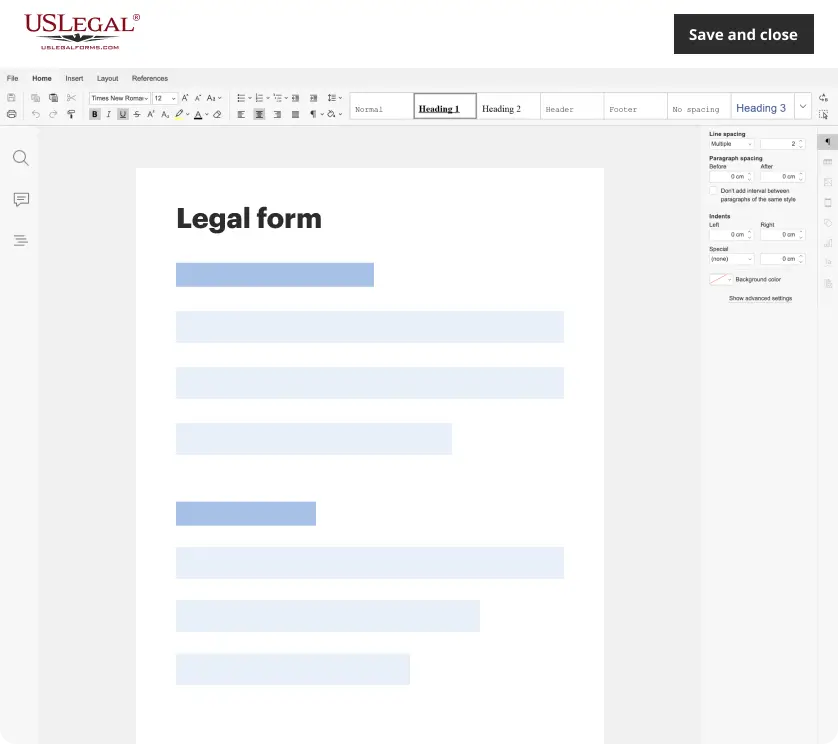
Make edits, fill in missing information, and update formatting in US Legal Forms—just like you would in MS Word.
Download a copy, print it, send it by email, or mail it via USPS—whatever works best for your next step.
Sign and collect signatures with our SignNow integration. Send to multiple recipients, set reminders, and more. Go Premium to unlock E-Sign.
If this form requires notarization, complete it online through a secure video call—no need to meet a notary in person or wait for an appointment.
We protect your documents and personal data by following strict security and privacy standards.
Common mistakes
- Not properly identifying the Grantor and Grantee.
- Failing to describe the property fully or accurately.
- Omitting necessary signatures or notarization.
- Not recording the deed with the local county office.
Why use this form online
- Convenient access to legally binding documents 24/7.
- Editable forms that allow you to customize according to your needs.
- Assurance of compliance with state laws and legal accuracy.
Looking for another form?

Form popularity
FAQ
In Iowa, a quit claim deed quickly transfers ownership without guarantees regarding the title's status. Unlike the Iowa Warranty Deed from Individual to Individual, it does not protect the grantee from any liens or claims. Understanding these differences is essential for anyone considering a quit claim deed. It's always wise to consult with legal professionals or platforms like uslegalforms for guidance on these document transfers.
While a warranty deed offers strong protection, there are some disadvantages to consider. The grantor assumes a responsible role, as any title issues that arise after the transfer may lead to legal complications. This situation can become costly and time-consuming. Be aware that an Iowa Warranty Deed from Individual to Individual binds the grantor to their promises regarding the title, which can lead to financial liability.
A warranty deed in Iowa must include specific information to be effective. It should detail the names and addresses of the grantor and grantee, describe the property precisely, and contain a statement of warranty guaranteeing title. Including this clear language in your Iowa Warranty Deed from Individual to Individual protects both parties involved and strengthens the sale's legitimacy.
To create a valid Iowa Warranty Deed from Individual to Individual, you will need several essential elements. These include the full names of both the grantor and grantee, a legal description of the property, and the signatures of the parties involved. Additionally, you should have the deed notarized to ensure its validity. Gathering these documents and details simplifies the process.
Yes, you can add a name to a warranty deed through a legal process. Utilizing an Iowa Warranty Deed from Individual to Individual, property owners can change the deed to include additional names. This requires proper documentation and often legal assistance to ensure all regulations are met. It’s wise to consult a professional, such as those offered by uslegalforms, to navigate the changes smoothly.
Yes, you can have two names on a deed. This is often done using an Iowa Warranty Deed from Individual to Individual, where both parties equally share property rights. Having two names on a deed can facilitate better decision-making and shared responsibilities between owners. However, it is crucial to ensure that both parties understand the implications of co-ownership.
Adding someone to a deed can lead to several disadvantages, including loss of control over the property. With an Iowa Warranty Deed from Individual to Individual, the added individual inherits ownership rights, which can complicate future decisions. Additionally, if the new co-owner encounters financial difficulties, creditors may have a claim over the property. It’s important to weigh these risks before making any changes.
When two people are listed on a deed, it is commonly referred to as co-ownership. In the context of an Iowa Warranty Deed from Individual to Individual, both parties share legal rights to the property. This arrangement can strengthen ownership, enabling both individuals to make decisions regarding the property together. A co-ownership agreement can clarify the responsibilities and rights of each owner.
Removing someone from your warranty deed involves creating a new deed that no longer includes their name. This process typically requires consent from the person being removed, as their signature may be needed. To ensure everything is handled properly, utilizing resources from uslegalforms can provide clarity and accuracy in managing your Iowa Warranty Deed from Individual to Individual and navigating the required procedures.
To remove someone's name from a deed, you'll need to draft a new warranty deed that reflects this change. The individual whose name is being removed must usually sign this new deed, giving consent to the change. If you're uncertain about this process, collaborating with uslegalforms can help you create an accurate Iowa Warranty Deed from Individual to Individual that meets legal standards.