Iowa Postnuptial Property Agreement
What this document covers
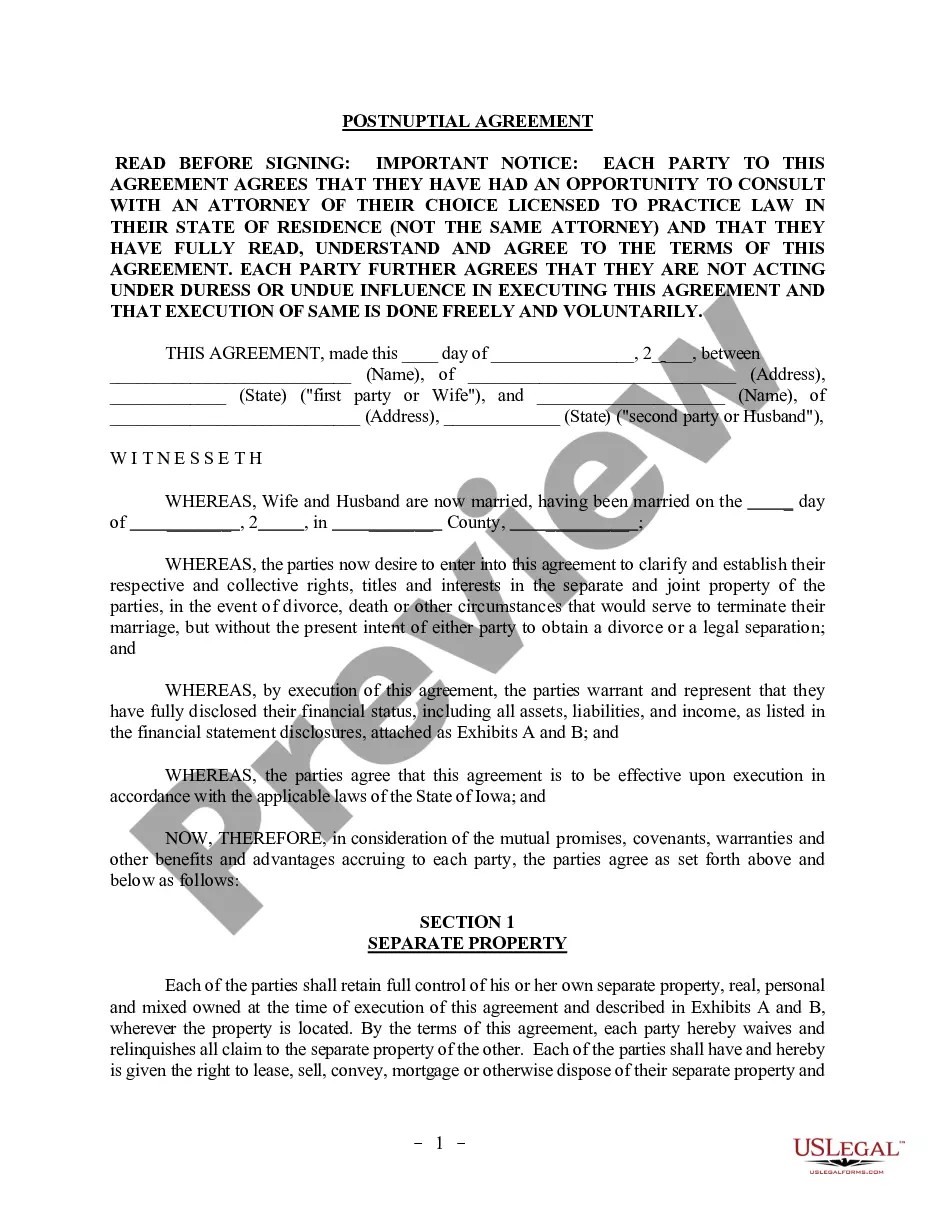
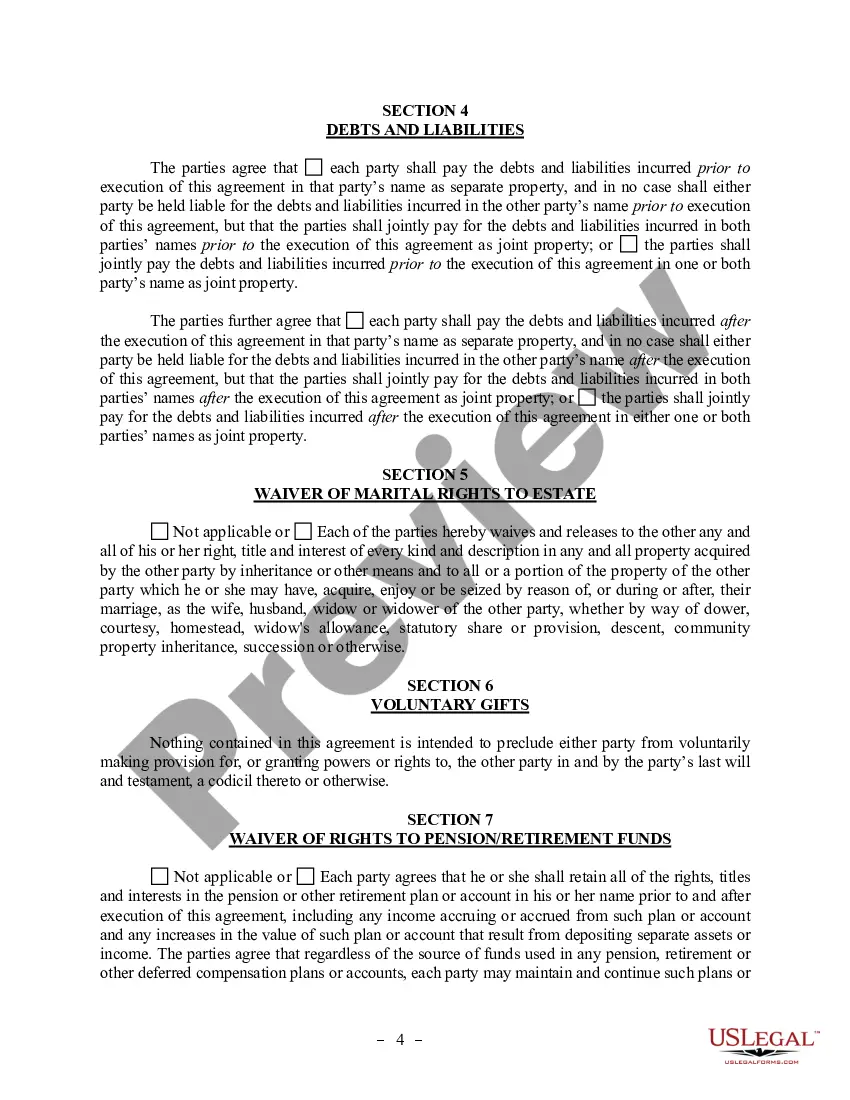
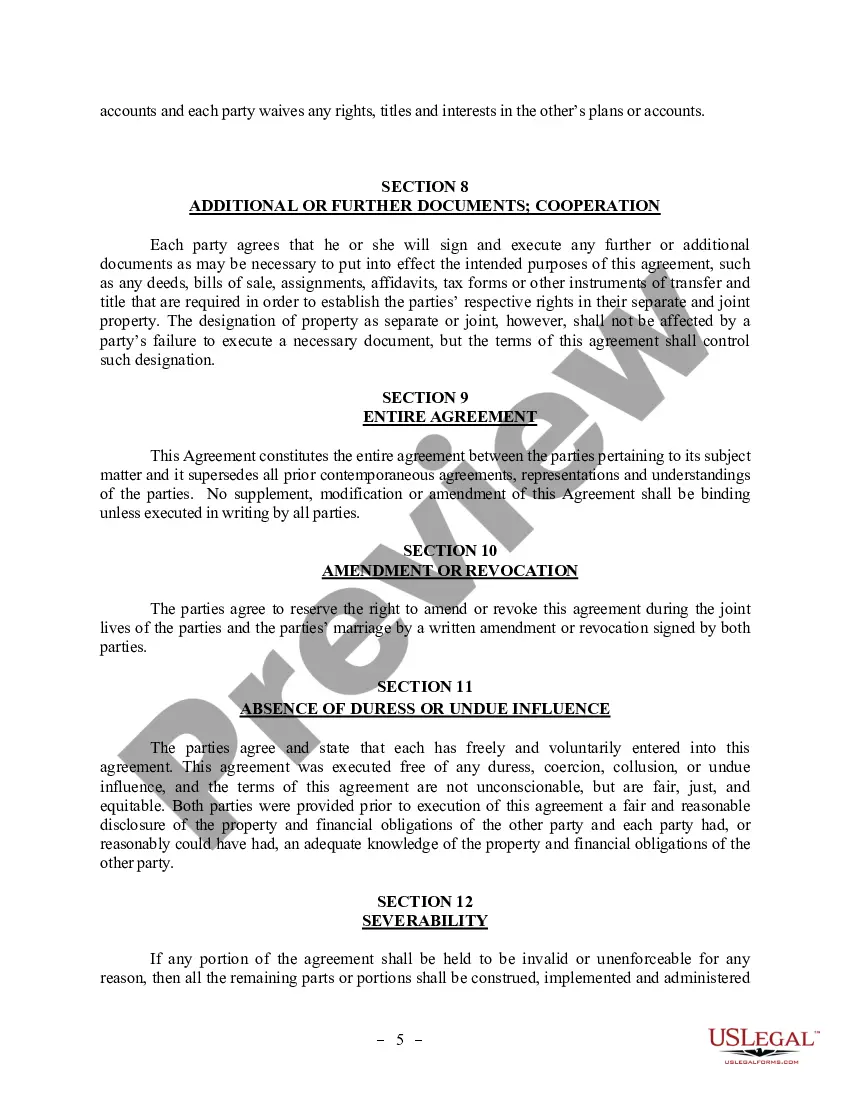
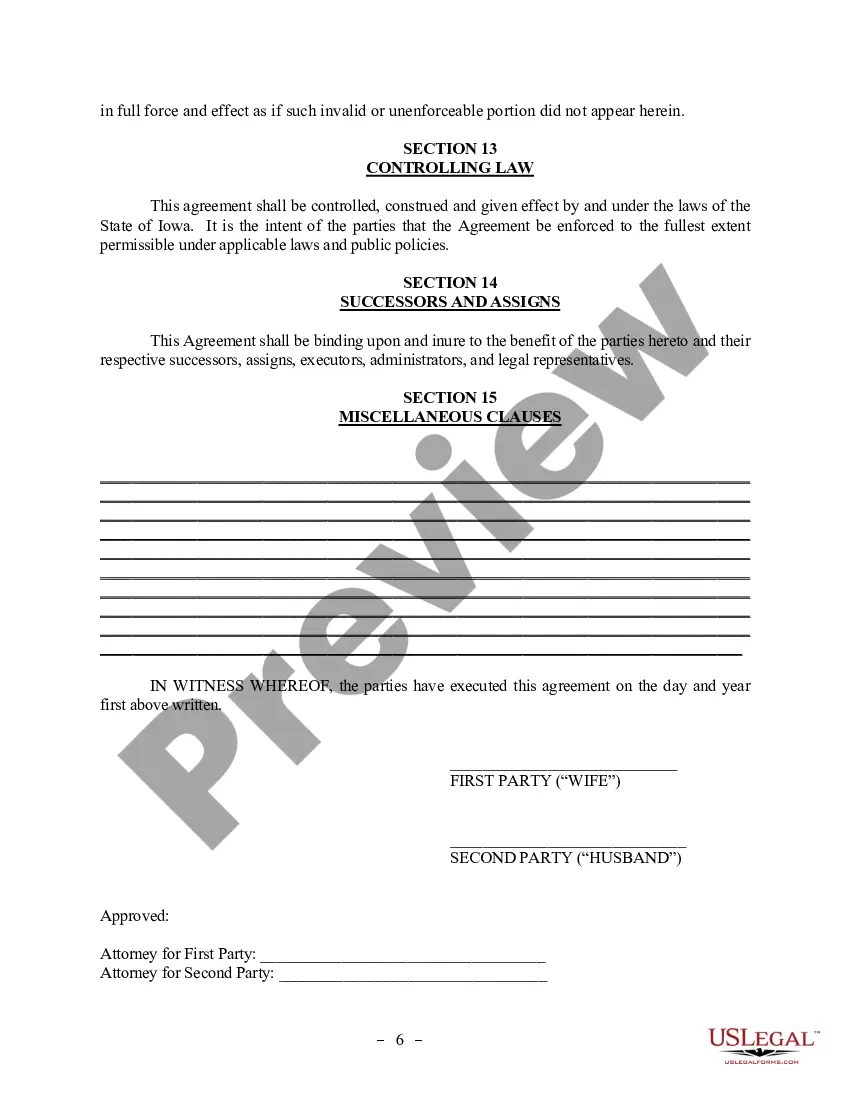
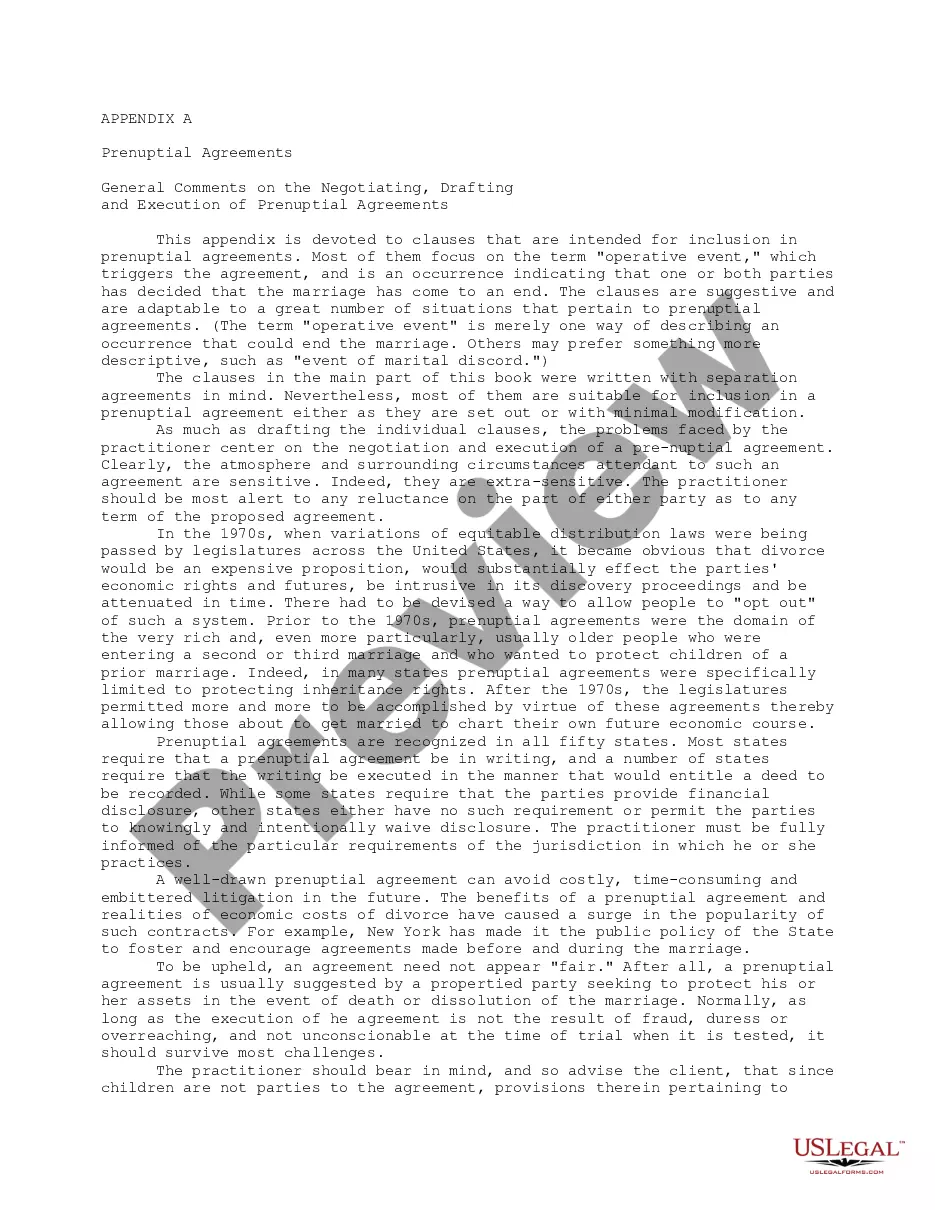
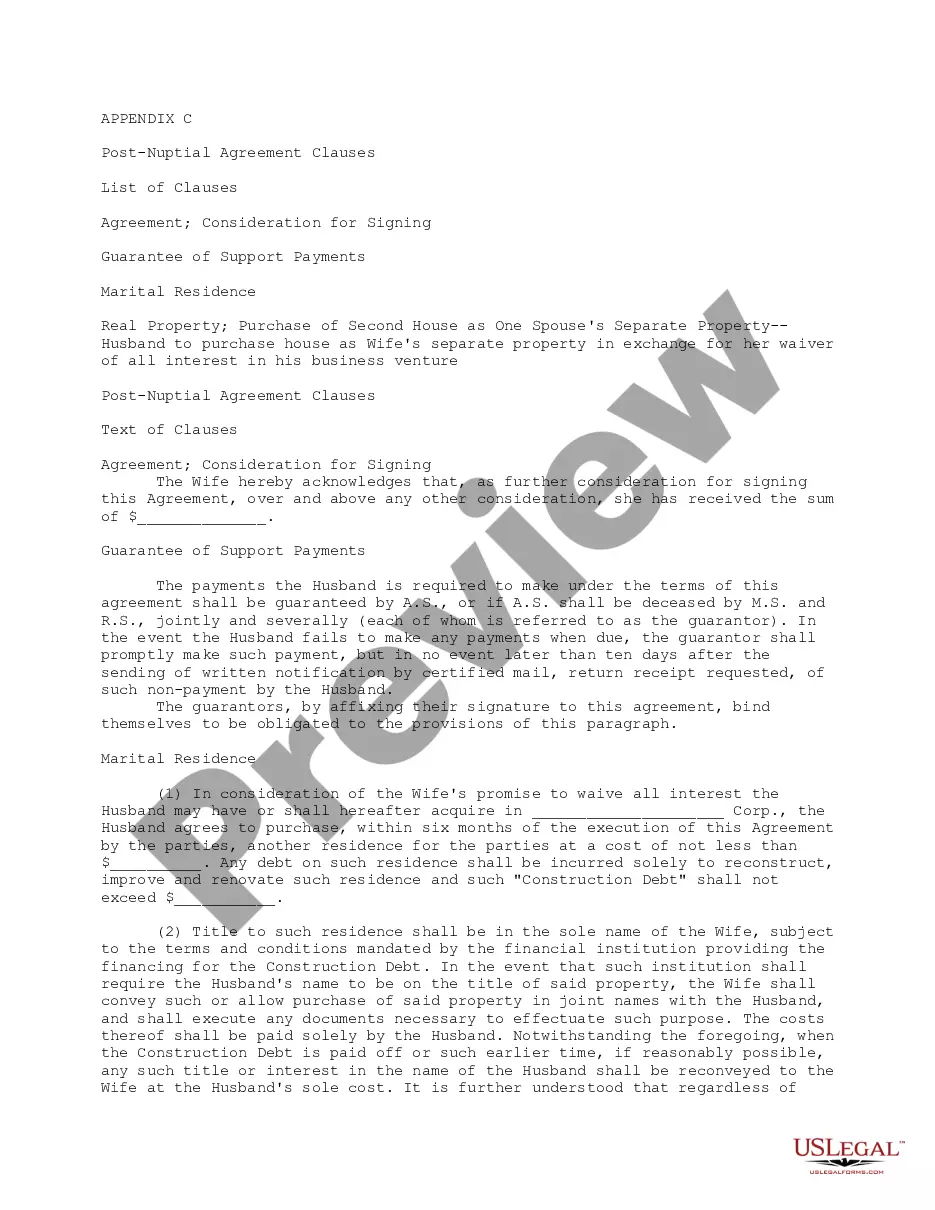
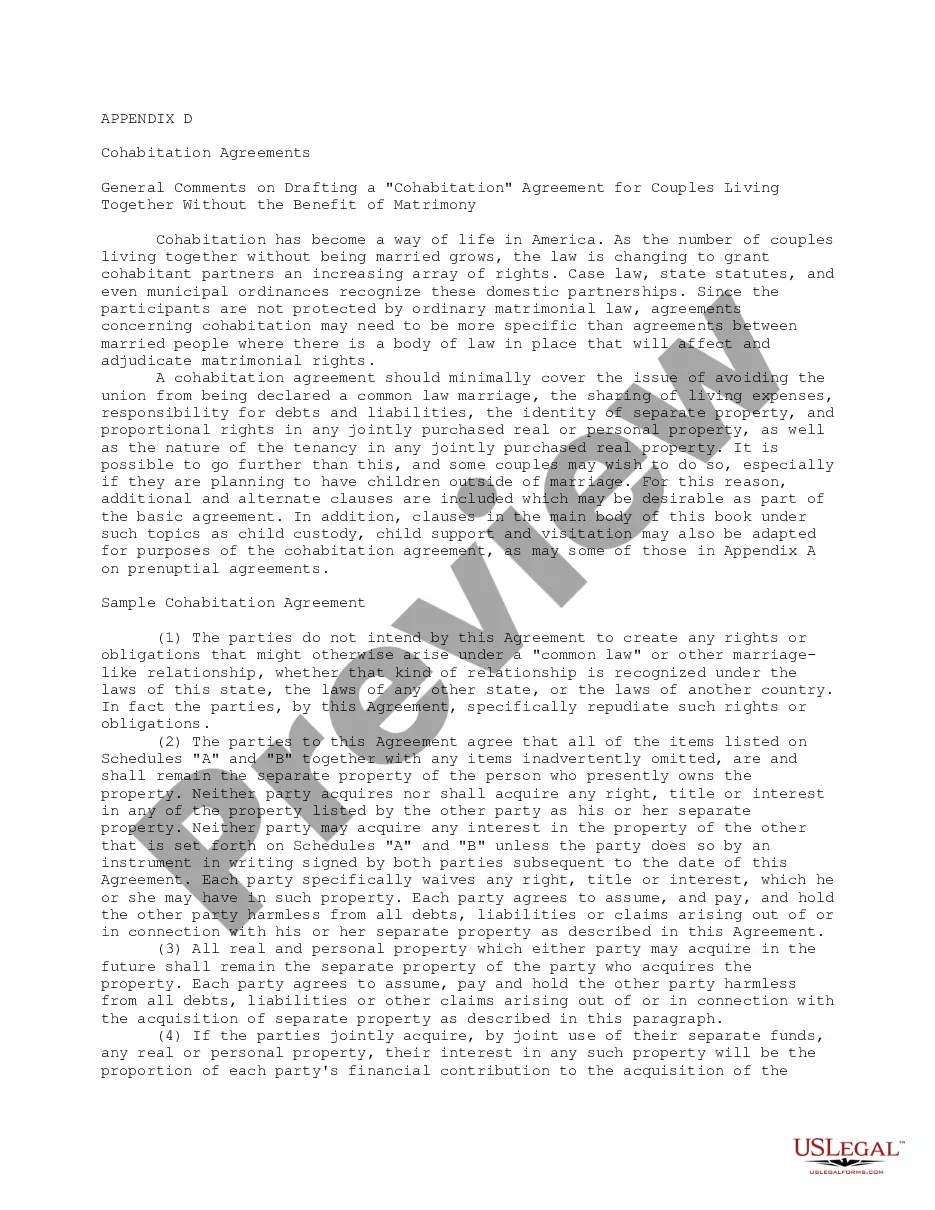
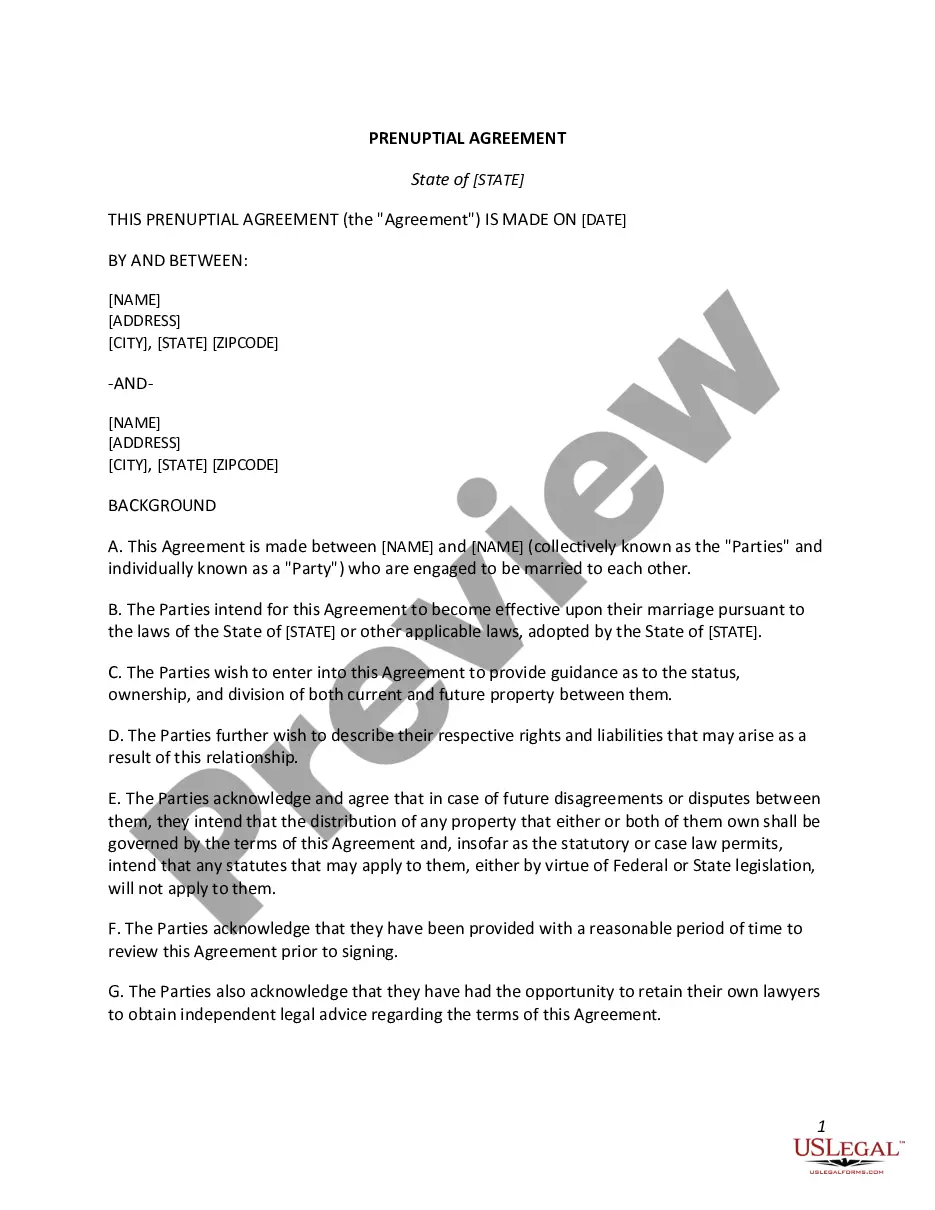
The Postnuptial Property Agreement is a legal document designed to clarify the ownership rights of spouses regarding their separate and joint property after marriage. This agreement defines and specifies how property is categorized, ensuring both parties understand their financial entitlements and responsibilities. Unlike a prenuptial agreement, which is signed before marriage, this agreement comes into effect after the wedding, making it a vital tool for married couples wishing to manage their assets and debts more clearly.
Form components explained
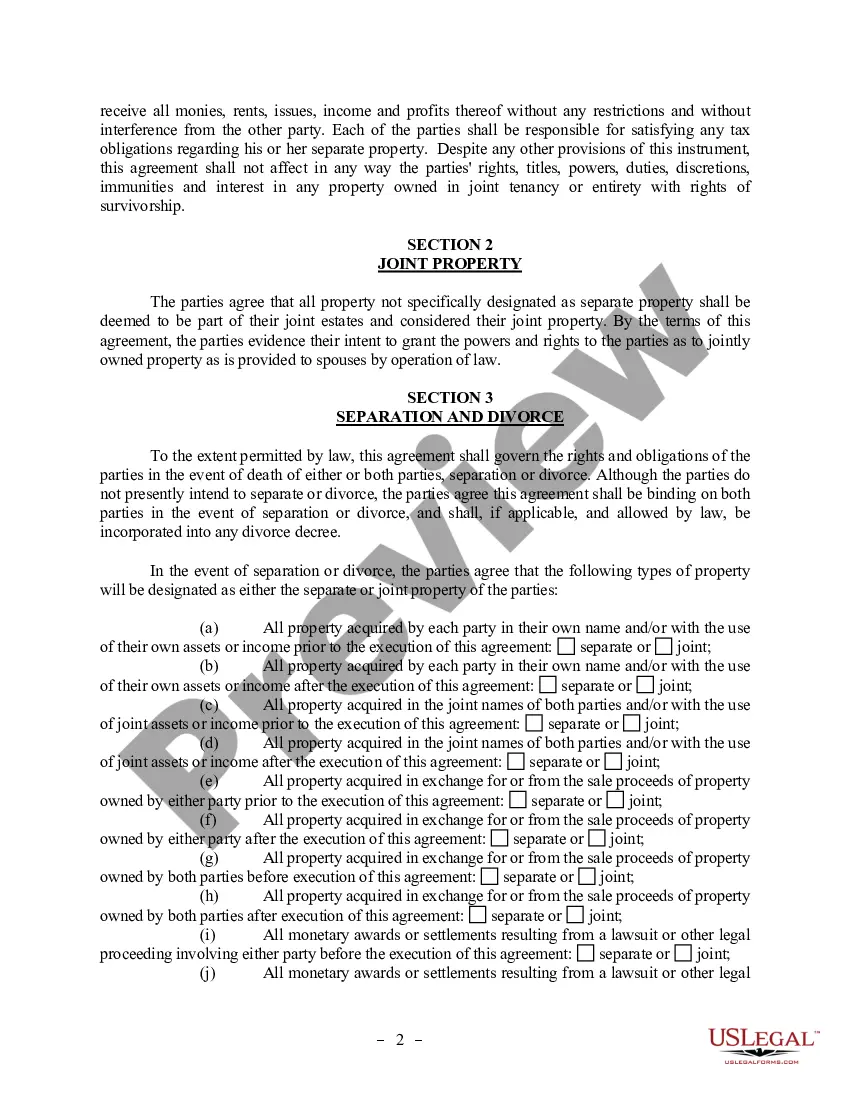
- Separate Property: Defines what each party retains as their own property, waiving claims on the other's assets.
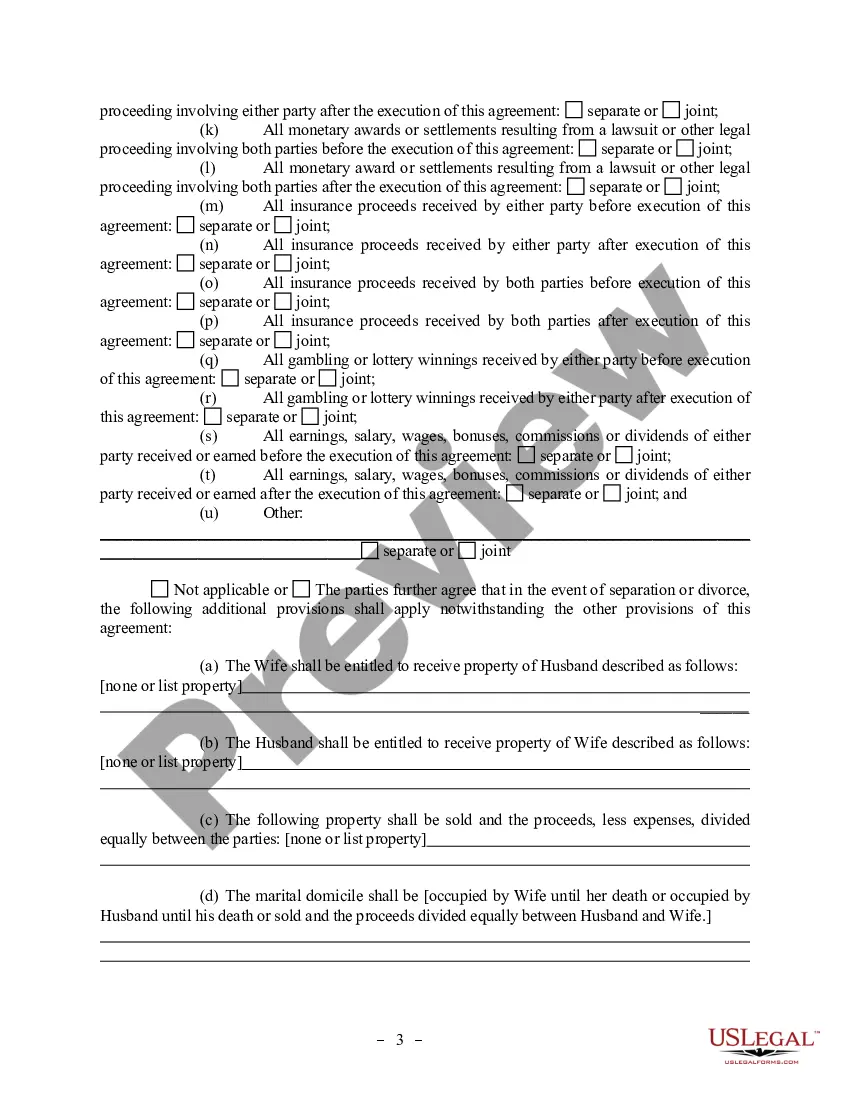
- Joint Property: Clarifies what is considered joint property and outlines rights and responsibilities.
- Separation and Divorce Provisions: Governs how property will be divided in case of separation or divorce.
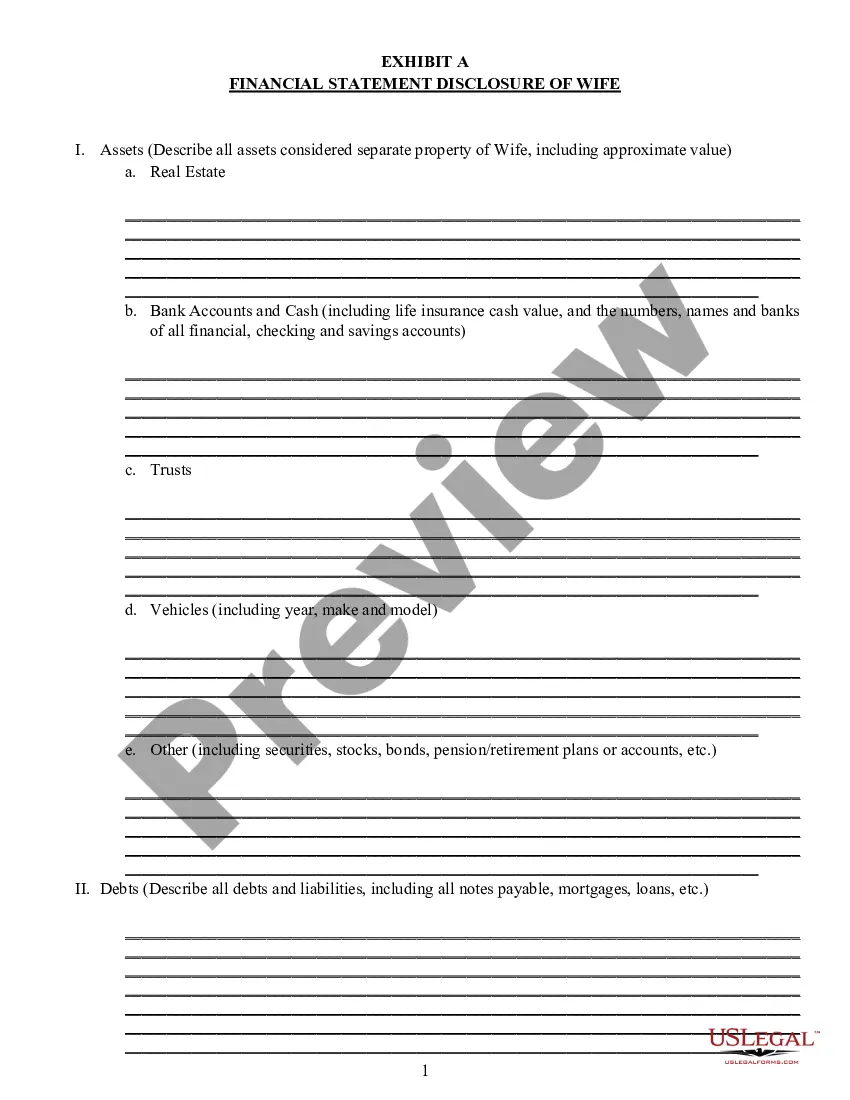
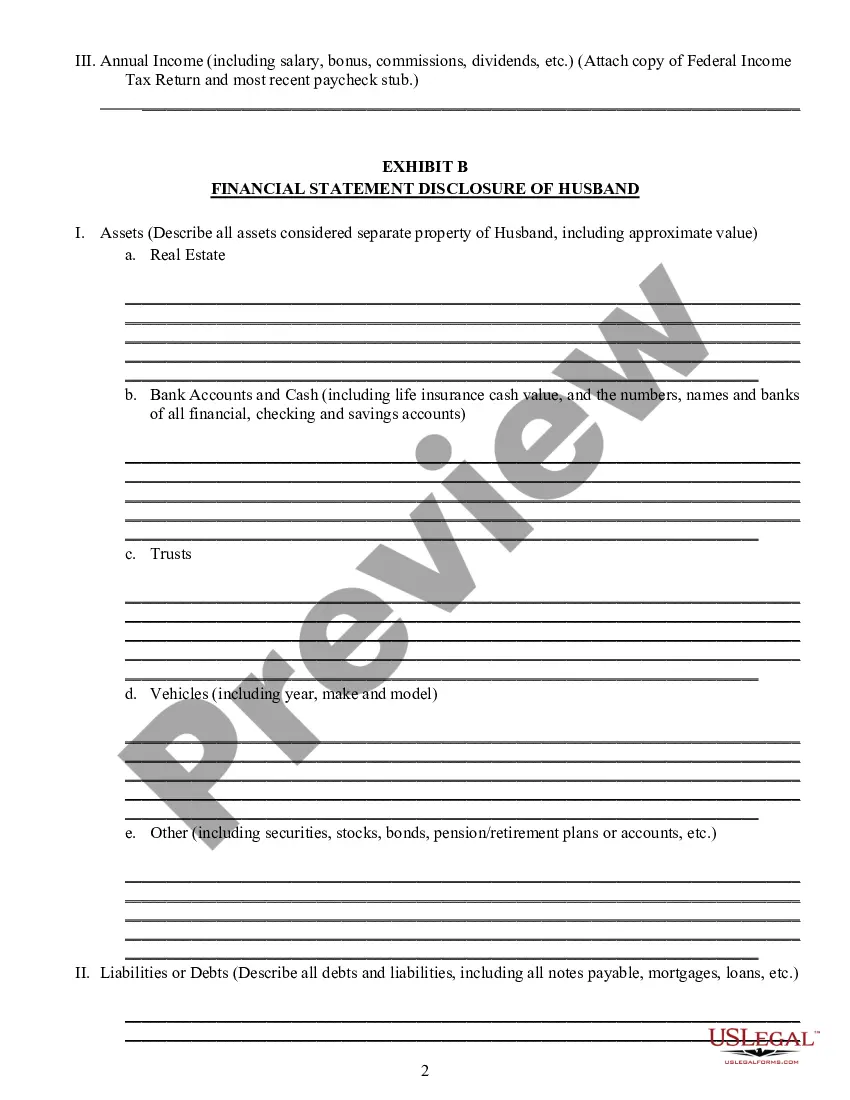
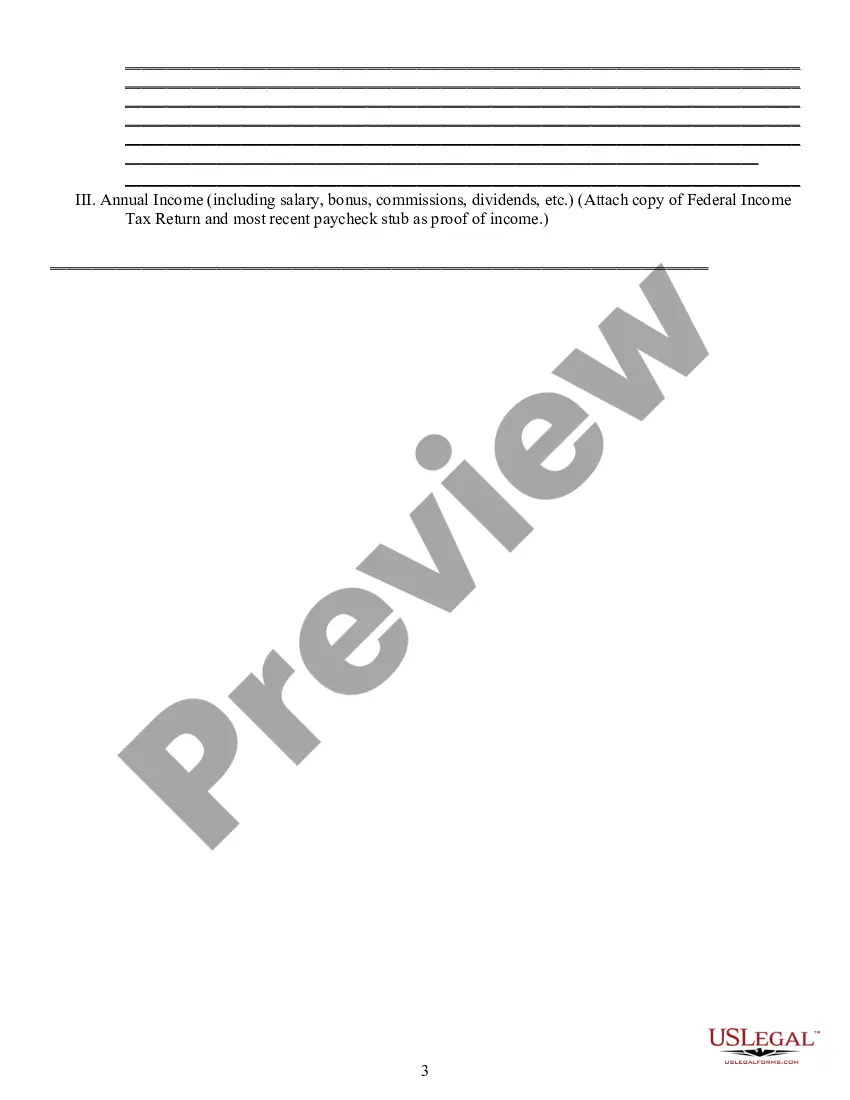
- Financial Disclosure: Requires both parties to fully disclose their financial status, including assets and liabilities.
- Amendment/Revocation Rights: Allows parties to modify or revoke the agreement as needed during their marriage.
Common use cases
This form is useful for couples who want to outline how their assets and debts will be managed during their marriage. It is commonly used when one or both parties have significant assets before marriage, wish to protect their financial interests, or want to prepare for potential future changes in their relationship, such as separation or divorce.
Who needs this form
- Married couples wanting to clarify property rights.
- Spouses with significant assets prior to marriage.
- Individuals entering a second marriage with children from a previous relationship.
- Couples looking to avoid future disputes regarding property ownership.
How to prepare this document
- Identify the parties involved by providing their names and addresses.
- Disclose each party's financial situation, including assets and liabilities, in the attached financial statements.
- Specify what is considered separate and joint property as outlined in the agreement.
- Both parties should review the agreement and consult with their respective attorneys.
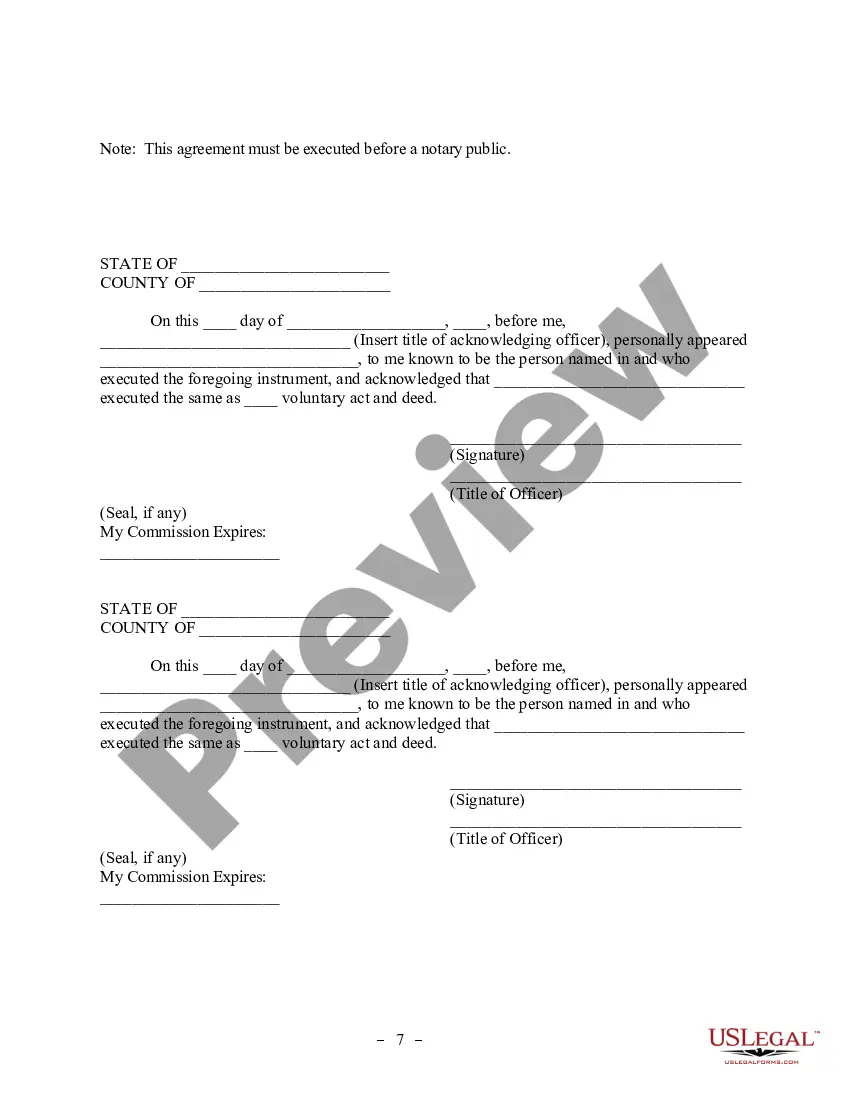
- Sign the agreement in the presence of a notary public to ensure its legality.
Is notarization required?
Yes, this form must be notarized to be legally valid. This ensures that both parties have entered into the agreement voluntarily and with a full understanding of its terms. US Legal Forms offers integrated online notarization, allowing you to complete this step securely and conveniently through a video call.
Get your form ready online
Our built-in tools help you complete, sign, share, and store your documents in one place.
Make edits, fill in missing information, and update formatting in US Legal Forms—just like you would in MS Word.
Download a copy, print it, send it by email, or mail it via USPS—whatever works best for your next step.
Sign and collect signatures with our SignNow integration. Send to multiple recipients, set reminders, and more. Go Premium to unlock E-Sign.
If this form requires notarization, complete it online through a secure video call—no need to meet a notary in person or wait for an appointment.
We protect your documents and personal data by following strict security and privacy standards.

Make edits, fill in missing information, and update formatting in US Legal Forms—just like you would in MS Word.

Download a copy, print it, send it by email, or mail it via USPS—whatever works best for your next step.

Sign and collect signatures with our SignNow integration. Send to multiple recipients, set reminders, and more. Go Premium to unlock E-Sign.

If this form requires notarization, complete it online through a secure video call—no need to meet a notary in person or wait for an appointment.

We protect your documents and personal data by following strict security and privacy standards.
Typical mistakes to avoid
- Failing to fully disclose all assets and liabilities.
- Not having independent legal representation for both parties.
- Neglecting to notarize the document, which may affect its enforceability.
- Making assumptions about property division without clear designations in the agreement.
Why complete this form online
- Convenient access to templates drafted by licensed attorneys.
- Editable forms that can be customized to meet individual needs.
- Easy to download and print for immediate use.
- No need to schedule attorney visits, saving time and costs.
Main things to remember
- A postnuptial property agreement protects individual property rights during marriage.
- It provides clear terms for property ownership, especially in case of disputes.
- This agreement is legally binding and should be executed with proper legal guidance and notarization.
Looking for another form?
Form popularity
FAQ
For an Iowa Postnuptial Property Agreement to be valid, it must be written, signed, and executed by both spouses voluntarily. Both parties should fully disclose their assets and liabilities to ensure transparency and fairness. Seeking legal advice can further solidify the agreement’s validity by addressing any potential complications or misunderstandings that may arise later.
Several factors can invalidate a postnuptial agreement, including fraud, duress, or coercion. If one spouse does not have legal representation or there is significant inequality in bargaining power, these conditions may render the contract unenforceable. For an Iowa Postnuptial Property Agreement to be valid, it is crucial that both parties are treated fairly and equitably during the negotiation process.
A postnuptial agreement, such as an Iowa Postnuptial Property Agreement, may become void if either spouse does not enter the agreement voluntarily. Additionally, if one spouse fails to disclose their financial information fully, this can undermine the validity of the agreement. It’s essential to ensure both parties have a clear understanding and consent to the terms for the agreement to hold up in court.
Yes, post-nuptial agreements can hold up in court if properly drafted and executed. It's important that both spouses have full disclosure of assets and are not coerced into signing. An Iowa Postnuptial Property Agreement that meets legal requirements can protect both parties in case of divorce. Consulting with legal professionals can further strengthen the agreement's enforceability.
To file a postnuptial agreement in Iowa, both spouses must draft the agreement that outlines asset distribution and obligations. After completing the document, both parties should sign it in front of a notary. Using UsLegalForms can simplify this process, providing templates and guidance tailored for Iowa Postnuptial Property Agreements. Legal advice may further enhance the agreement's enforceability.
In Iowa, property division during a divorce does not automatically mean that the wife will receive half of the assets. Courts consider various factors to achieve an equitable distribution based on the circumstances of each case. An Iowa Postnuptial Property Agreement can help clarify asset division and protect both parties' interests. It serves as a valuable tool to promote understanding and reduce potential conflicts.
Some states do not recognize postnuptial agreements, including Rhode Island and Louisiana. This can create challenges for couples seeking to establish clear terms regarding their assets. If you reside in Iowa, you can benefit from the legal protections offered by an Iowa Postnuptial Property Agreement. Ensure that your agreement aligns with local laws to maintain its validity.
To write an Iowa Postnuptial Property Agreement, begin by discussing your financial situation and desired outcomes with your spouse. Next, outline crucial topics like asset division and debt responsibilities. Consulting with an attorney can help you create a legally sound document that includes necessary clauses and meets all Iowa requirements. Finally, be sure to have both parties sign the agreement in front of a notary to ensure its validity.
While you can draft your own Iowa Postnuptial Property Agreement, it is advisable to involve a lawyer. Legal jargon and state-specific requirements can complicate the process, leading to potential issues down the line. A professional can ensure that the terms reflect your intentions and adhere to Iowa law. Doing so minimizes misunderstandings and strengthens the agreement's enforceability.
An Iowa Postnuptial Property Agreement cannot include provisions regarding child custody or child support. Courts often prioritize children's welfare, and these topics may not be addressed within the agreement. Additionally, any illegal or overly punitive terms could be deemed unenforceable. It's vital to be aware of these restrictions when creating your agreement.