Virginia Corporate Bylaws
About this form
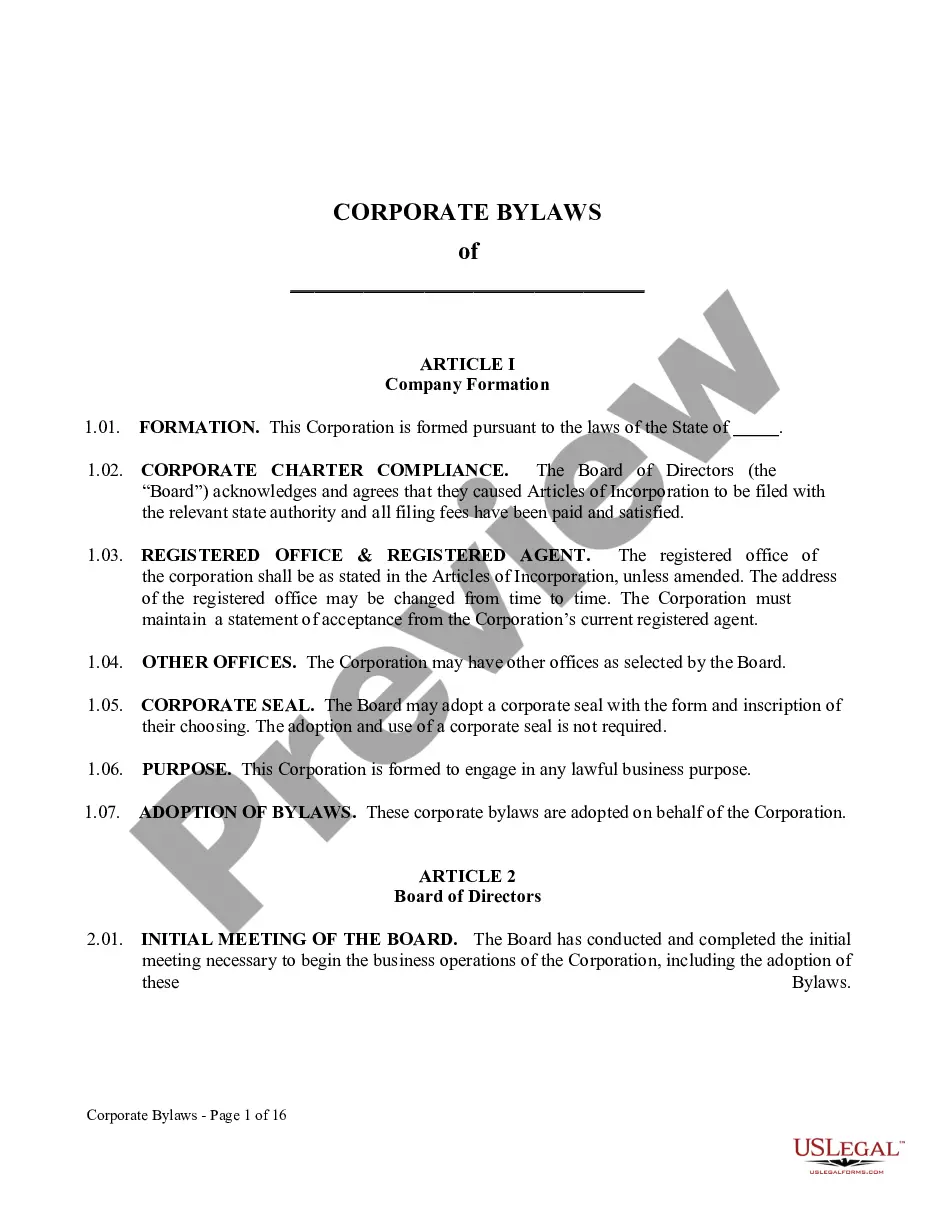
The Corporate Bylaws form is a vital legal document that outlines the internal rules and procedures for managing a corporation. It provides structure for shareholder meetings, the board of directors' duties, and the roles of corporate officers. Unlike other corporate forms, the bylaws specifically detail the governance framework and operational guidelines, ensuring compliance with applicable state laws and the effective management of corporate affairs.
Form components explained
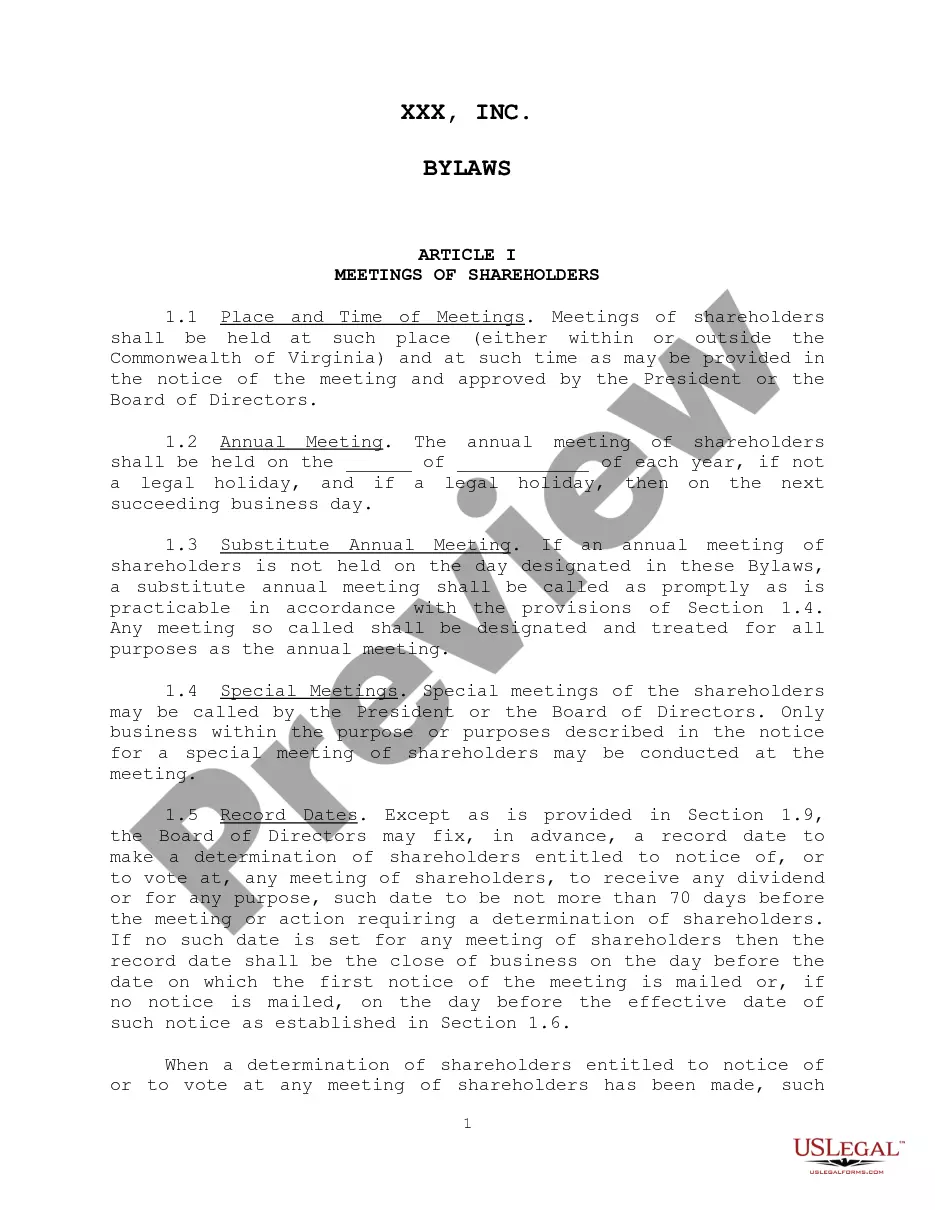
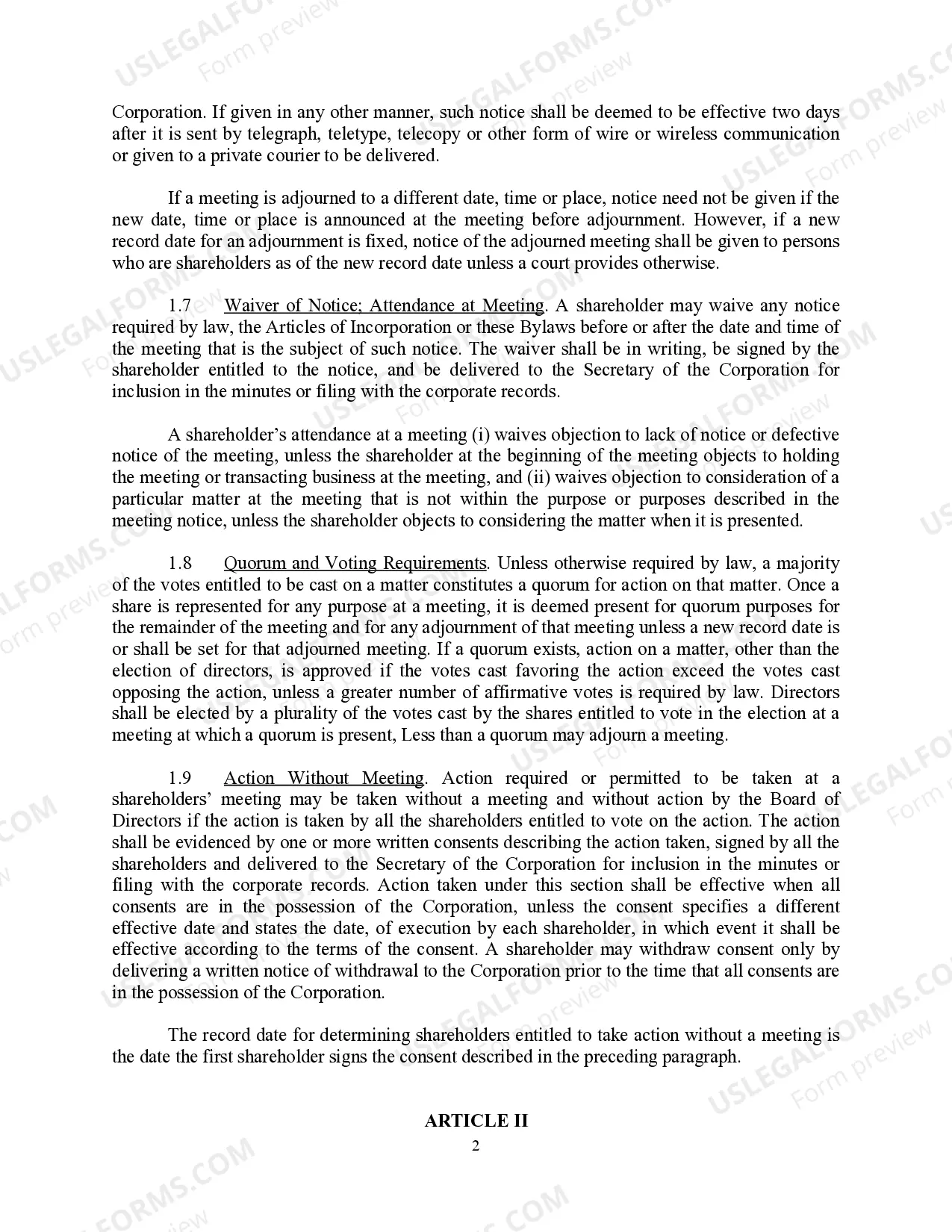
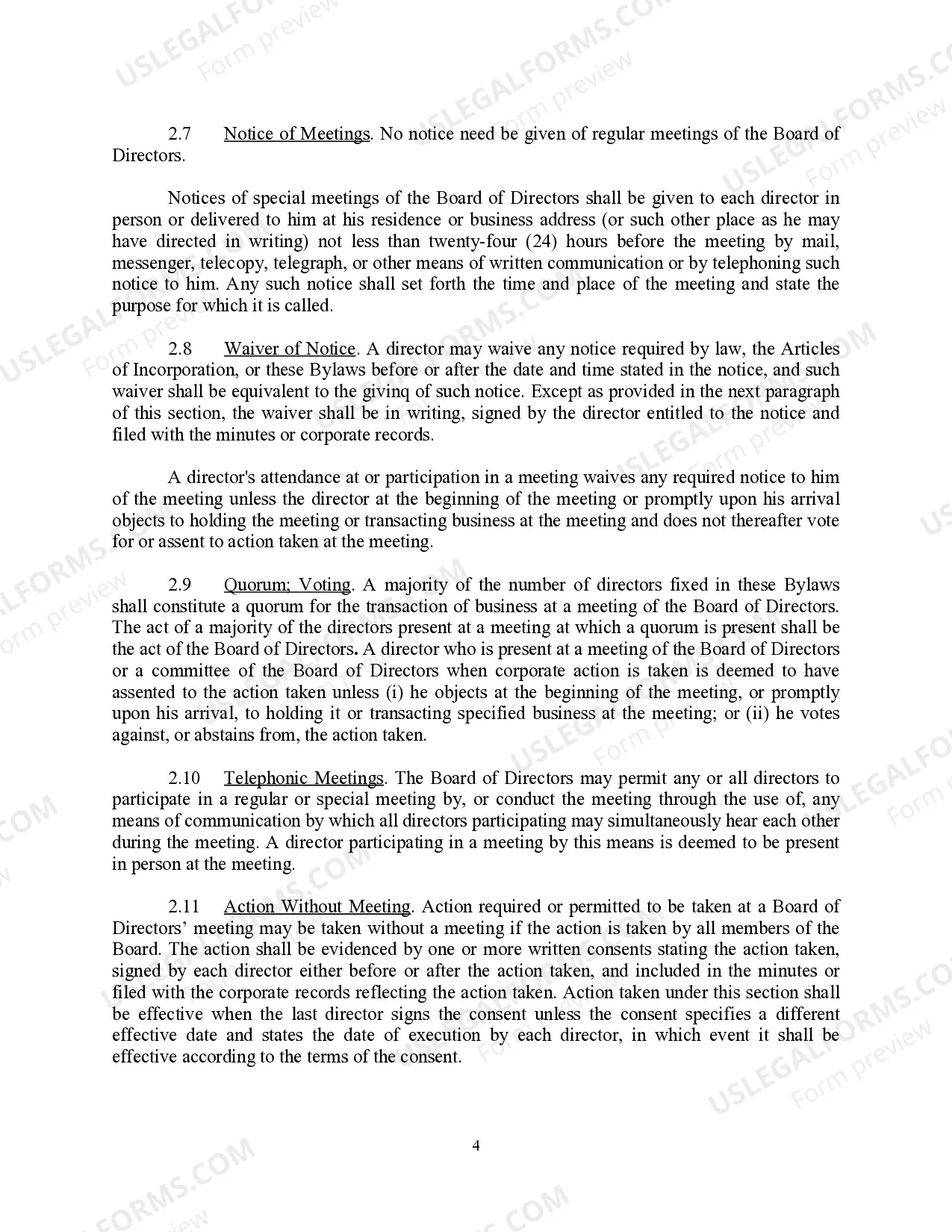
- Meetings of shareholders: Defines the timing and procedures for annual and special meetings.
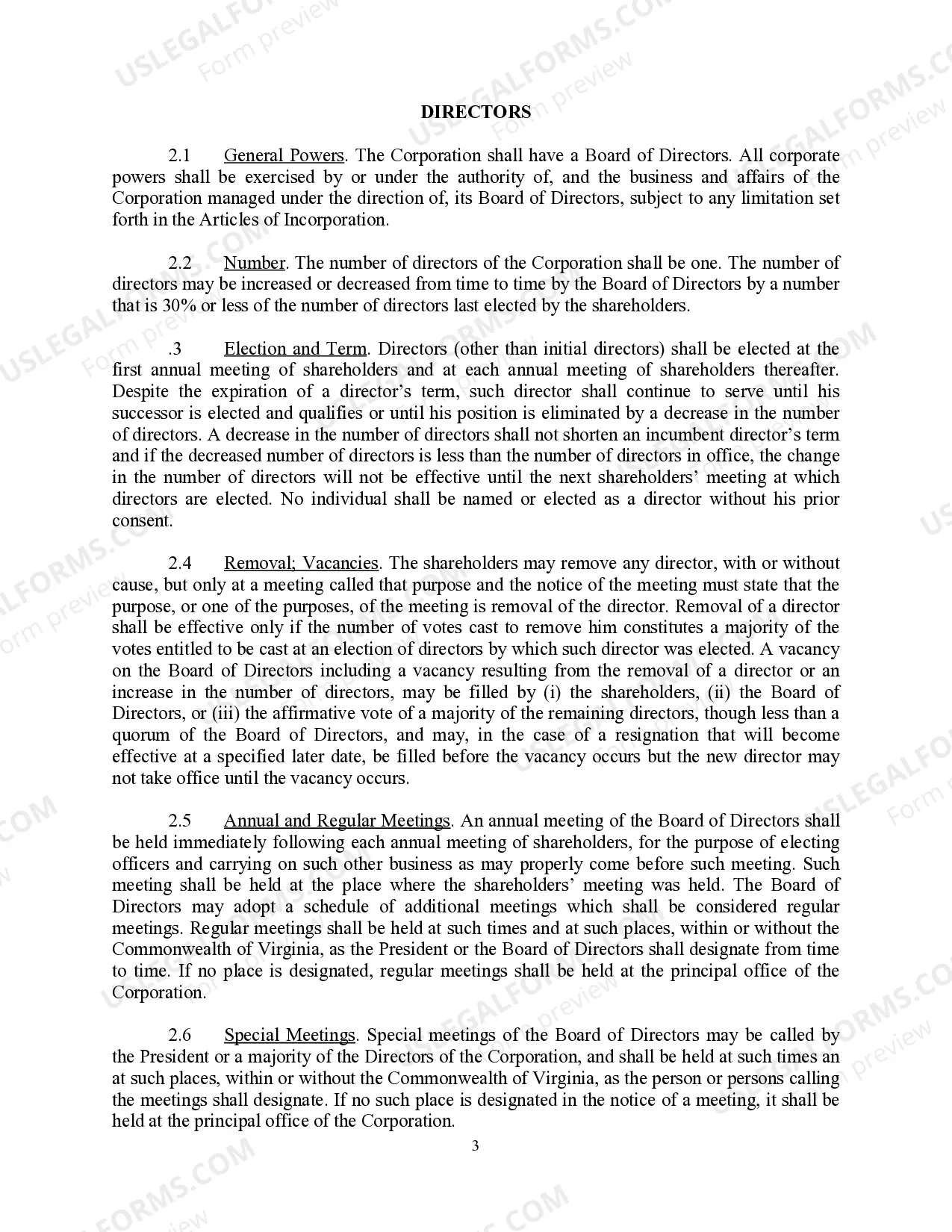
- Directors: Specifies the powers, elections, and terms of board members.
- Officers: Outlines the roles, election, and duties of corporate officers.
- Share certificates: Contains guidelines for the issuance and transfer of share certificates.
- Miscellaneous provisions: Covers various operational aspects, including corporate seal and fiscal year.




Situations where this form applies
This form should be used when establishing a new corporation or when existing corporations need to formalize their governance structure. It is essential for outlining the procedures for shareholder and board meetings, defining roles within the corporation, and ensuring compliance with state laws regarding corporate governance.
Who needs this form
- New business owners forming a corporation.
- Existing corporations seeking to update or amend their bylaws.
- Corporate officers and board members involved in governance.
- Shareholders wishing to understand their rights and responsibilities under the bylaws.
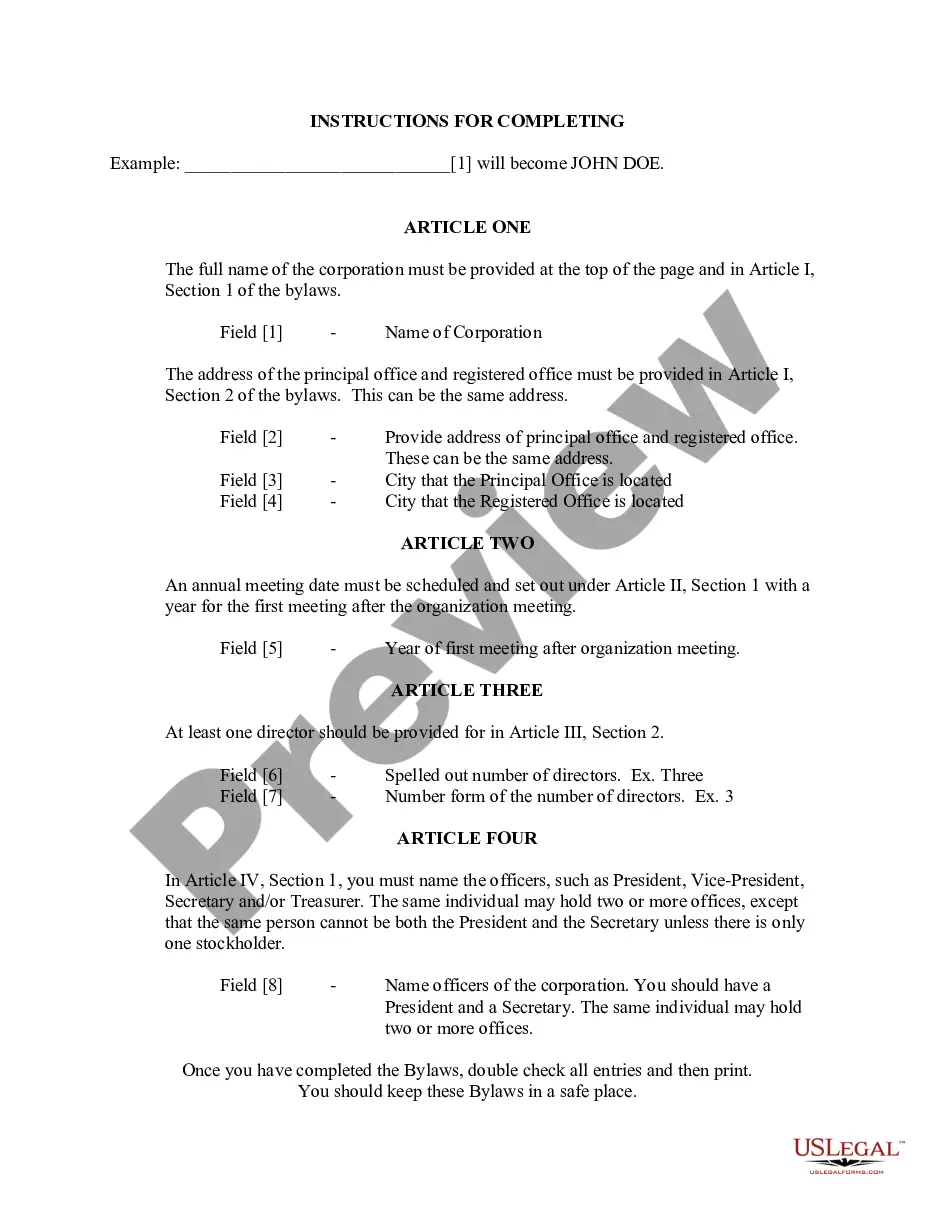
How to complete this form
- Identify the corporation's name and purpose.
- Outline the structure for meetings of shareholders, including timing and notice requirements.
- Detail the roles and responsibilities of the board of directors and corporate officers.
- Specify the procedures for issuing and transferring shares, including certificate requirements.
- Include any miscellaneous provisions such as the fiscal year and amendment procedures.
Notarization requirements for this form
This form does not typically require notarization unless specified by local law. However, ensuring all shareholders and board members acknowledge the bylaws can provide additional legal assurance.
Get your form ready online
Our built-in tools help you complete, sign, share, and store your documents in one place.
Make edits, fill in missing information, and update formatting in US Legal Forms—just like you would in MS Word.
Download a copy, print it, send it by email, or mail it via USPS—whatever works best for your next step.
Sign and collect signatures with our SignNow integration. Send to multiple recipients, set reminders, and more. Go Premium to unlock E-Sign.
If this form requires notarization, complete it online through a secure video call—no need to meet a notary in person or wait for an appointment.
We protect your documents and personal data by following strict security and privacy standards.

Make edits, fill in missing information, and update formatting in US Legal Forms—just like you would in MS Word.

Download a copy, print it, send it by email, or mail it via USPS—whatever works best for your next step.

Sign and collect signatures with our SignNow integration. Send to multiple recipients, set reminders, and more. Go Premium to unlock E-Sign.

If this form requires notarization, complete it online through a secure video call—no need to meet a notary in person or wait for an appointment.

We protect your documents and personal data by following strict security and privacy standards.
Typical mistakes to avoid
- Failing to include all required sections, which can lead to governance issues.
- Not specifying the timing for meetings, which can cause confusion among shareholders.
- Overlooking the need for amendments when corporate structure or laws change.
Advantages of online completion
- Convenience of accessing and editing the form from anywhere.
- Time-saving by avoiding lengthy consultations with attorneys.
- Reliability of a legally vetted document drafted by licensed attorneys.
Legal use & context
- Bylaws are legally binding and govern the operation of the corporation.
- Properly adopted bylaws are integral to protecting the rights of shareholders and directors.
- Noncompliance with the bylaws can result in governance disputes and liability issues.
Main things to remember
- The Corporate Bylaws form establishes the foundational governance structure for a corporation.
- It outlines critical processes for meetings, director duties, and share management.
- Utilizing this form ensures compliance with state regulations and clarity among stakeholders.
Glossary of terms used in this form
- Bylaws: Internal rules governing the management and operation of a corporation.
- Quorum: The minimum number of members required to conduct business at a meeting.
- Shareholders: Individuals or entities that own shares in a corporation.
- Board of Directors: A group of individuals elected to oversee the activities of the corporation.
Looking for another form?

Form popularity
FAQ
The bylaws are the corporation's operating manual; they describe how the corporation is organized and runs its affairs. You do not file the bylaws with the state, but you need to explain the roles of the corporation's participants, and technology can play a role in carrying out the bylaws.
Basic Corporate Information. The bylaws should include your corporation's formal name and the address of its main place of business. Board of Directors. Officers. Shareholders. Committees. Meetings. Conflicts of Interest. Amendment.
Basic Corporate Information. The bylaws should include your corporation's formal name and the address of its main place of business. Board of Directors. Officers. Shareholders. Committees. Meetings. Conflicts of Interest. Amendment.
You are not required to file bylaws with the state, but the corporation should keep a copy at its principal place a business.
Corporate bylaws commonly include information that specifies, for example, the number of directors the corporation has, how they will be elected, their qualification, and the length of their terms. It can also specify when, where, and how your board of directors can call and conduct meetings, and voting requirements.
Bylaws are required when the articles of incorporation do not specify the number of directors in a corporation. Any corporation whose articles of incorporation do not specify the number of directors must adopt bylaws before the first meeting of the board of directors specifying the number of directors.
Put simply, Corporate Bylaws are the internal rules of your organization. They create the structure of your company and help to make sure that it runs smoothly. These fundamental rules will guide how your business will operate so everyoneshareholders, executives, and employeesare on the same page.
ARTICLE I. NAME OF ORGANIZATION. The name of the corporation is YOUR NONPROFIT NAME HERE. ARTICLE II. CORPORATE PURPOSE. Section 1. ARTICLE III. MEMBERSHIP. ARTICLE IV. MEETINGS OF MEMBERS. ARTICLE V. BOARD OF DIRECTORS. ARTICLE VI. OFFICERS. ARTICLE VII. COMMITTEES. ARTICLE VIII. CORPORATE STAFF.