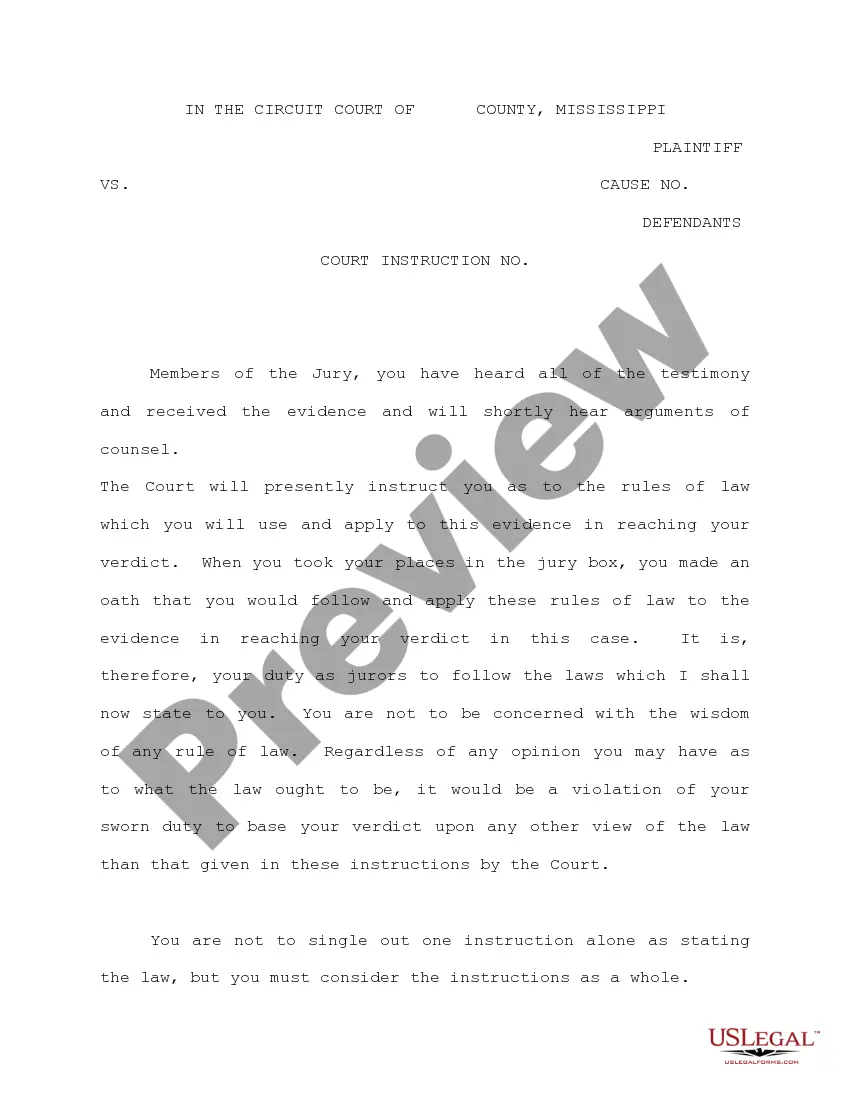
Louisiana Grant of Usufruct
Understanding this form
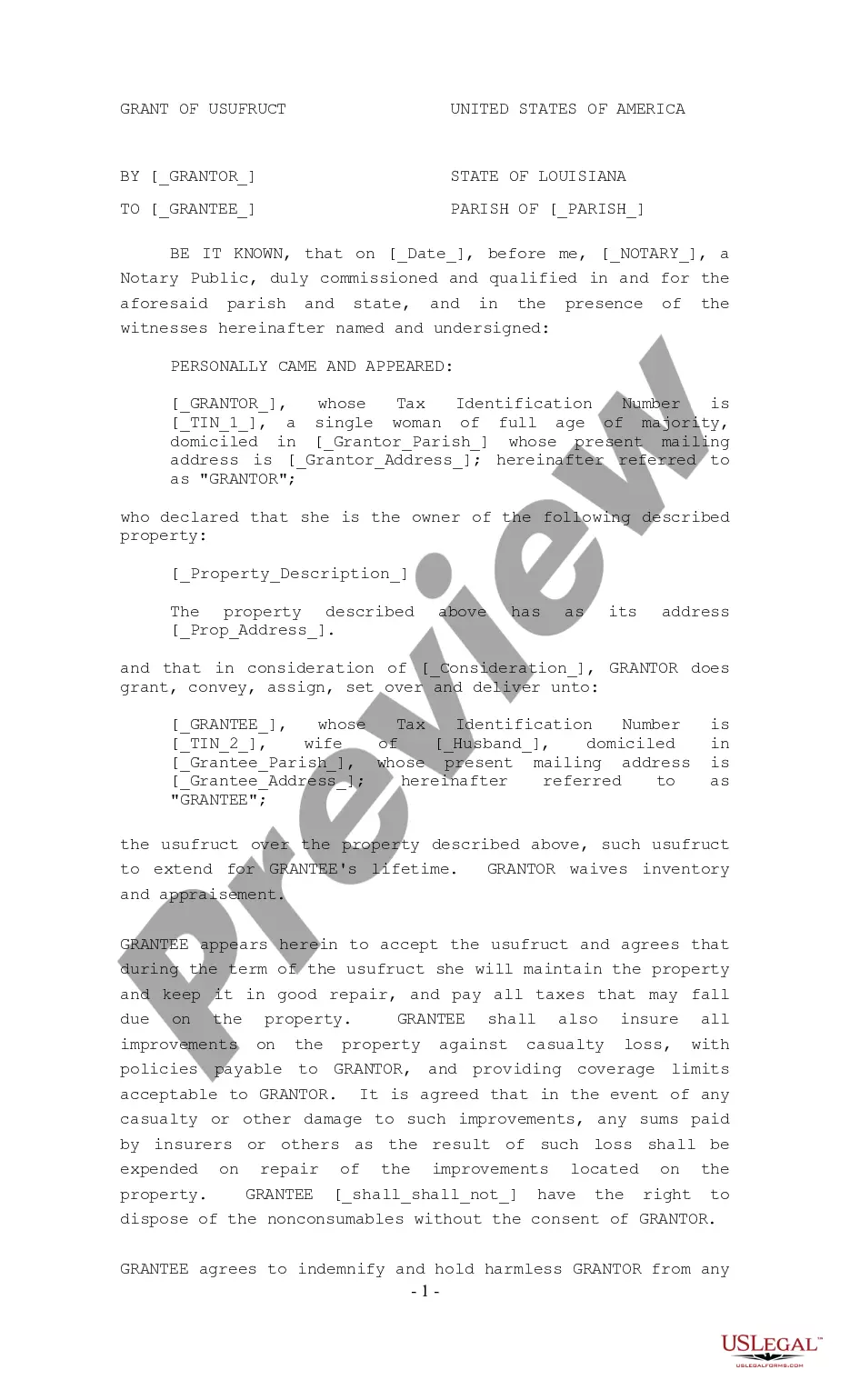
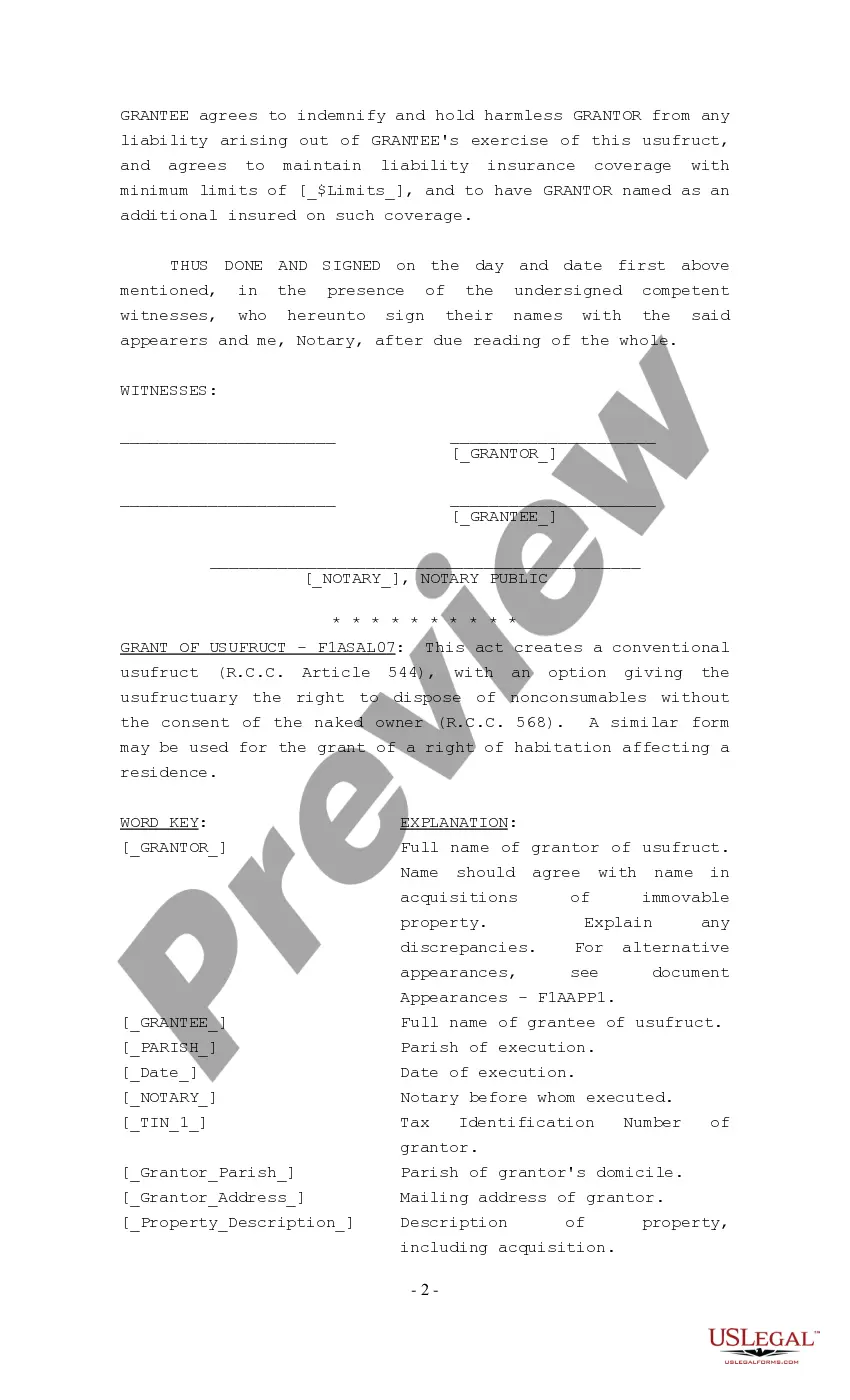
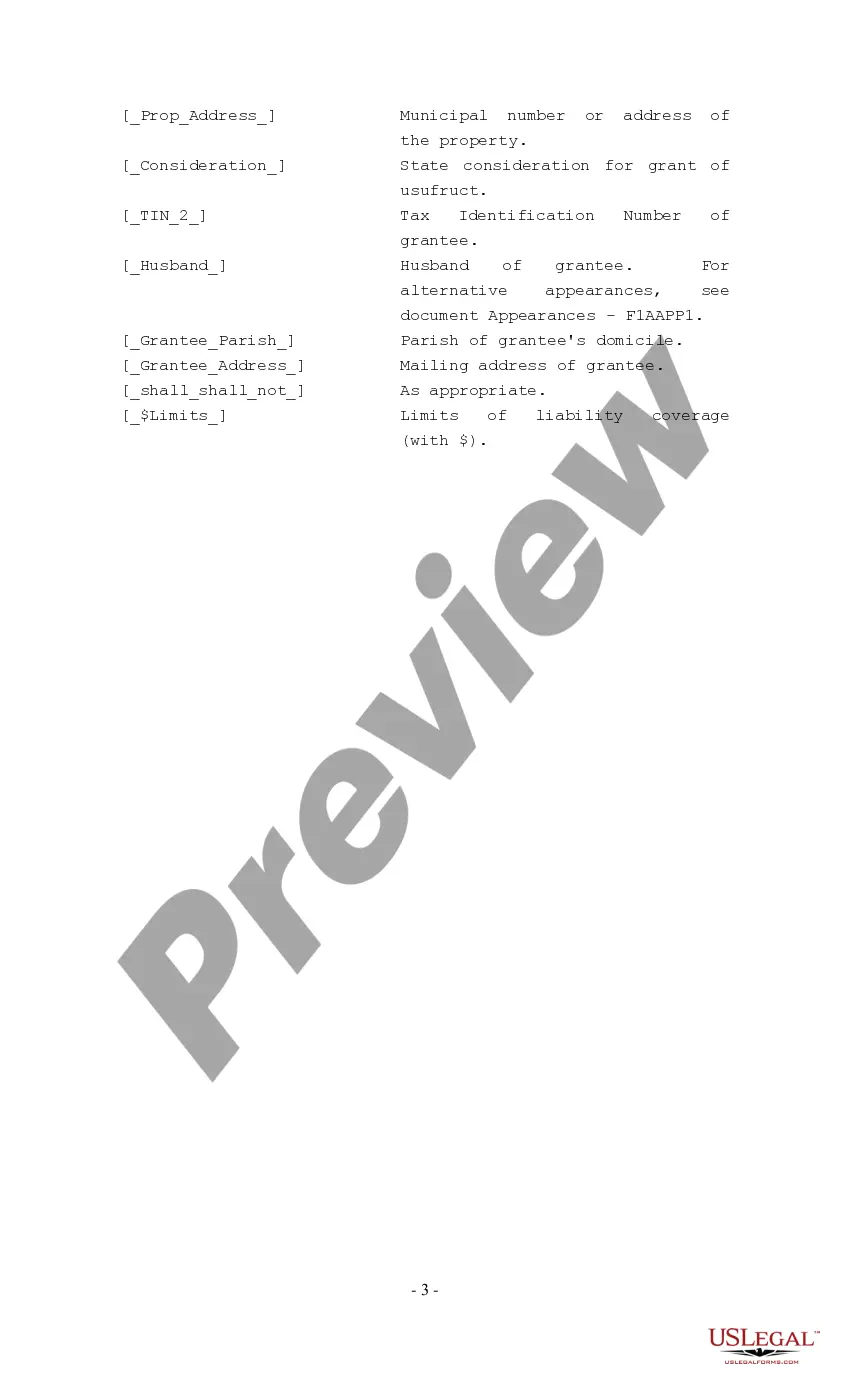
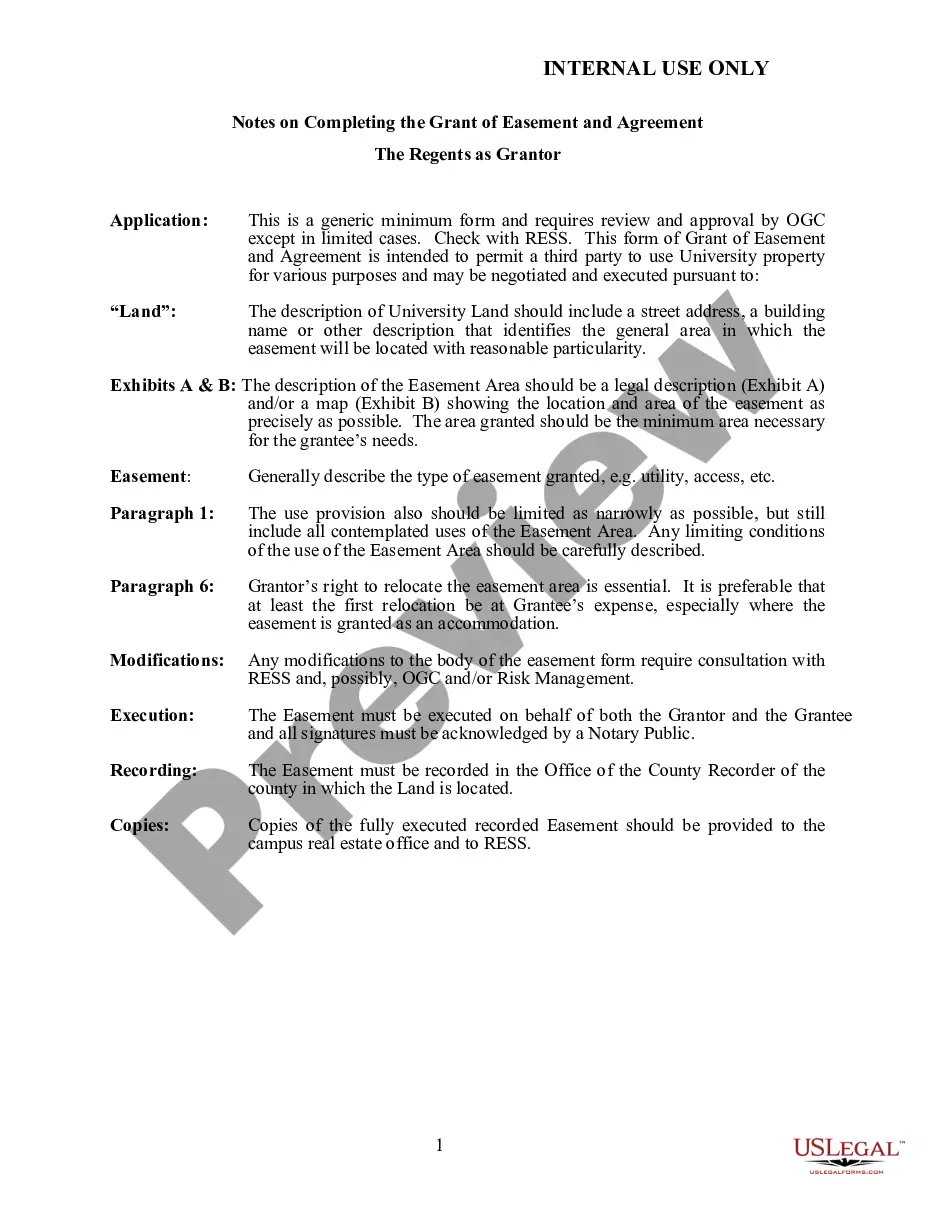
The Grant of Usufruct is a legal document that establishes a conventional usufruct, allowing a grantee to enjoy and use property that belongs to another party, referred to as the grantor. This form stands out by providing the usufructuary the option to dispose of nonconsumables without requiring consent from the naked owner. It differs from forms related to the grant of habitation rights, which specifically pertain to residential properties.
Main sections of this form
- Grantor and Grantee Details: Includes full names, addresses, and Tax Identification Numbers of both parties.
- Property Description: Specifies the legal description and address of the property involved.
- Usufruct Duration: Details the lifetime term of the usufruct granted to the grantee.
- Maintenance and Insurance Clauses: Outlines responsibilities for maintaining the property and insurance coverage requirements.
- Liability Provisions: Includes indemnity agreements to protect the grantor from liabilities arising from the grantee's use of the property.
- Notary Requirements: Specifies the need for the document to be executed in front of a notary public.
Common use cases
This form is essential when a property owner wishes to grant another person the right to use and benefit from their property while retaining ownership. Situations include the transfer of rights for family members, creating estate planning strategies, or allowing someone to reside in a property while maintaining its management and upkeep responsibilities.
Intended users of this form
- Property owners (grantors) who want to allow another person (grantee) to use their property.
- Individuals engaging in estate planning or property management arrangements.
- Families who wish to clarify and formalize property usage rights among members.
- Anyone wanting to protect their interests while granting use of their property.
Steps to complete this form
- Identify the parties: Enter the full names and Tax Identification Numbers of both the grantor and grantee.
- Specify the property: Provide a detailed description of the property being granted, including its legal description and address.
- Enter the consideration: Define the consideration (compensation) for the grant of usufruct.
- Include maintenance obligations: Outline responsibilities for property maintenance and insurance provisions.
- Finalize by obtaining signatures: Ensure that both parties sign in the presence of a notary public.
Does this form need to be notarized?
To make this form legally binding, it must be notarized. Our online notarization service, powered by Notarize, lets you verify and sign documents remotely through an encrypted video session.
Get your form ready online
Our built-in tools help you complete, sign, share, and store your documents in one place.
Make edits, fill in missing information, and update formatting in US Legal Forms—just like you would in MS Word.
Download a copy, print it, send it by email, or mail it via USPS—whatever works best for your next step.
Sign and collect signatures with our SignNow integration. Send to multiple recipients, set reminders, and more. Go Premium to unlock E-Sign.
If this form requires notarization, complete it online through a secure video call—no need to meet a notary in person or wait for an appointment.
We protect your documents and personal data by following strict security and privacy standards.

Make edits, fill in missing information, and update formatting in US Legal Forms—just like you would in MS Word.

Download a copy, print it, send it by email, or mail it via USPS—whatever works best for your next step.

Sign and collect signatures with our SignNow integration. Send to multiple recipients, set reminders, and more. Go Premium to unlock E-Sign.

If this form requires notarization, complete it online through a secure video call—no need to meet a notary in person or wait for an appointment.

We protect your documents and personal data by following strict security and privacy standards.
Avoid these common issues
- Failing to accurately describe the property, which could lead to disputes.
- Not including all necessary parties in the agreement.
- Omitting responsibilities related to property maintenance and insurance.
- Not having the document notarized, rendering it potentially unenforceable.
- Incorrectly filling out Tax Identification Numbers, leading to legal complications.
Advantages of online completion
- Convenience of downloading the form instantly at any time.
- Editability allows for customization to fit specific needs.
- Access to legally vetted templates drafted by licensed attorneys.
- Fast processing and completion without needing to visit a legal office.
Looking for another form?

Form popularity
FAQ
Louisiana Grant of Usufruct is a legal document that creates a conventional usufruct, giving the grantee the right to use and enjoy someone else’s property while the owner retains ownership. It also allows the usufructuary to dispose of nonconsumables without the naked owner's consent. The form sets out grantor and grantee details, property description, duration, maintenance, liability provisions, and notary requirements, and contrasts with habitation-right grants.
Louisiana’s Grant of Usufruct typically lasts for the grantee’s lifetime, unless the grant explicitly states another term. The form’s Usufruct Duration section specifies this lifetime term for the usufruct granted to the grantee, tying its length to the life of the person who holds the usufruct.
This form creates a conventional usufruct, giving the grantee the right to use and enjoy the property and to dispose of nonconsumables without the naked owner's consent. The grantor remains the owner, with responsibilities for maintenance and insurance, while liability provisions and a notary requirement help formalize and protect the arrangement.
The form states that the usufructuary may dispose of nonconsumables without the naked owner's consent, but it does not indicate a right to sell the property itself. Selling or transferring the property would typically require the grantor’s consent or termination of the usufruct under the grant’s terms.
The form does not provide specific examples. It defines the usufruct as allowing use and enjoyment of the property and disposal of nonconsumables without the naked owner's consent, with separate sections for maintenance, insurance, liability, and notary execution that govern how the rights are used and protected.
This form's conveyance creates a conventional usufruct with broad rights to use, enjoy, and dispose of nonconsumables without the naked owner's consent, plus a lifetime duration. A grant of habitation rights focuses on residential occupancy and typically does not authorize disposal of nonconsumables, making the usufruct form more expansive.