Hawaii Guaranty Attachment to Lease for Guarantor or Cosigner
Understanding this form
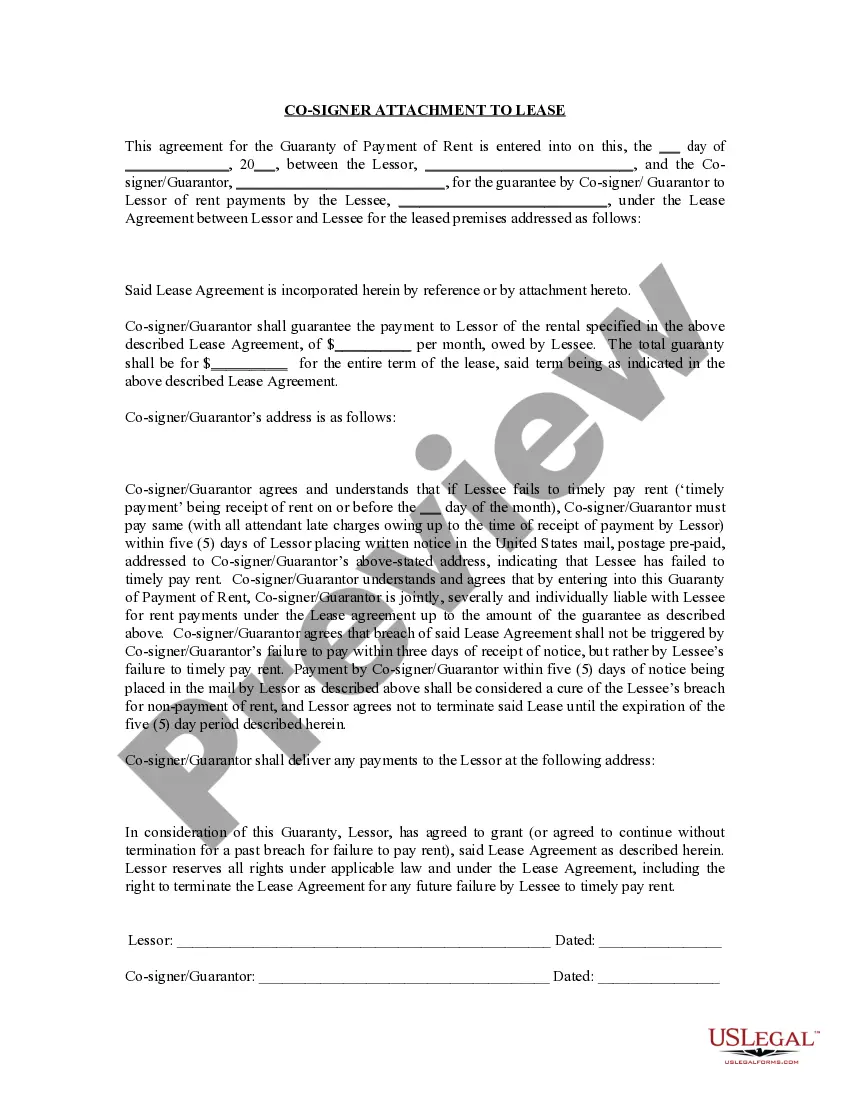
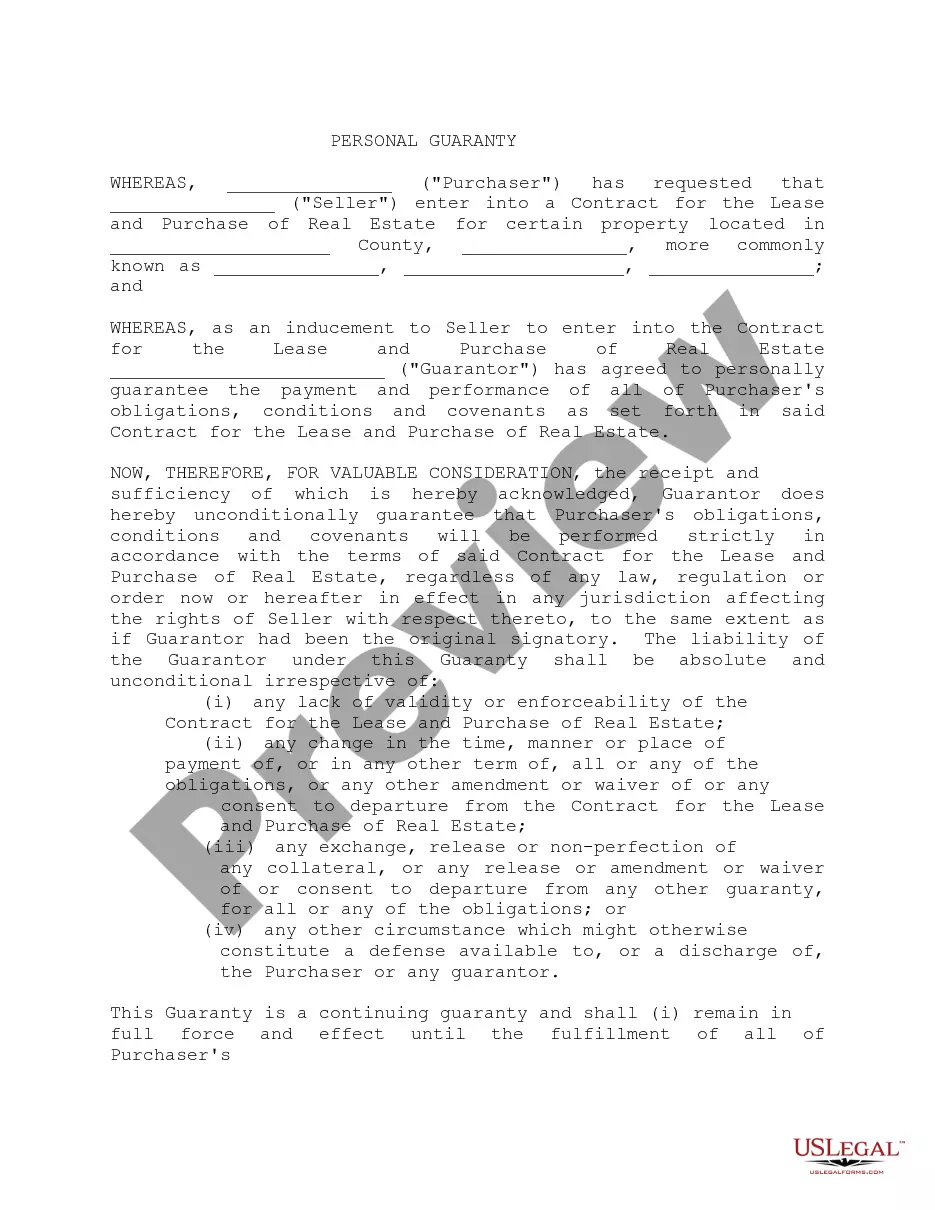
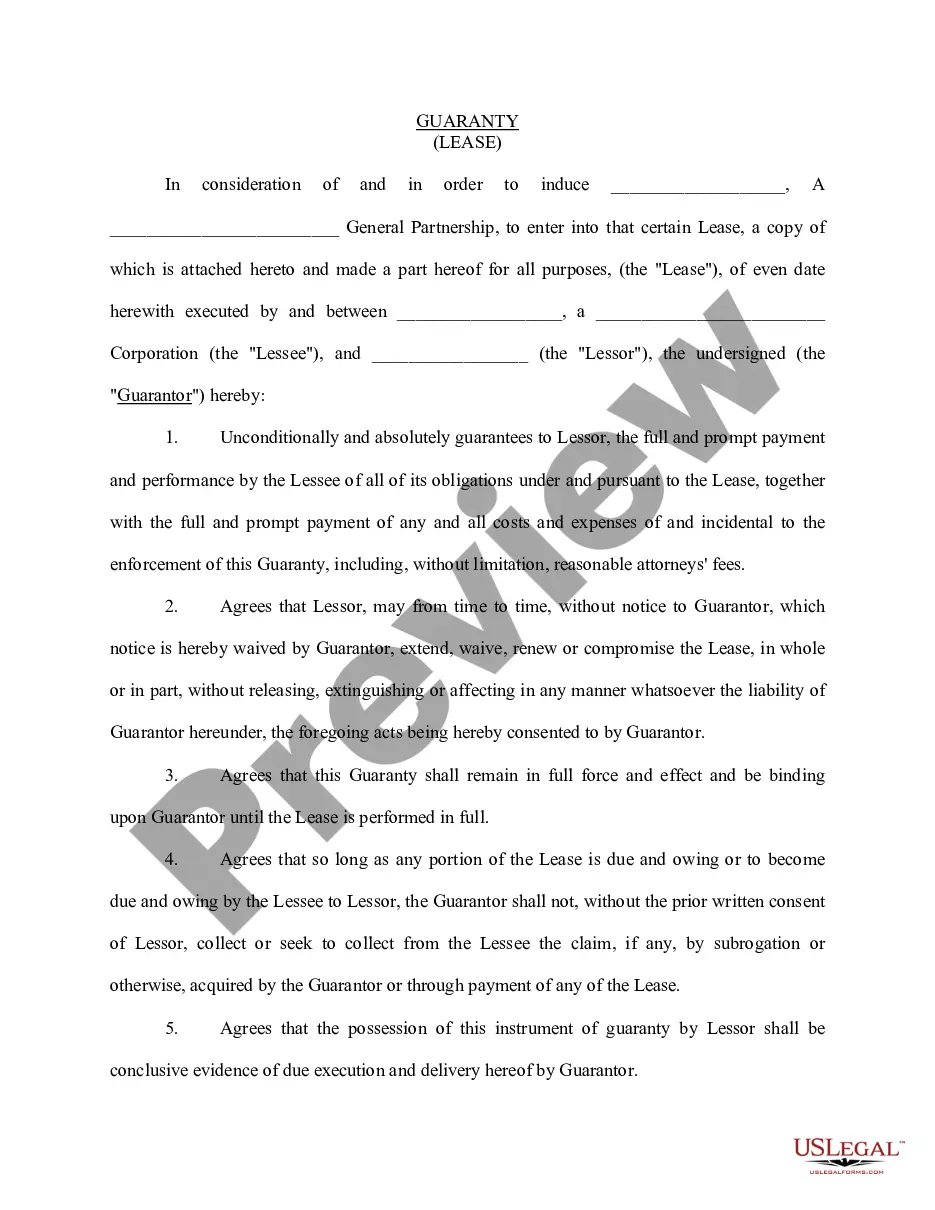
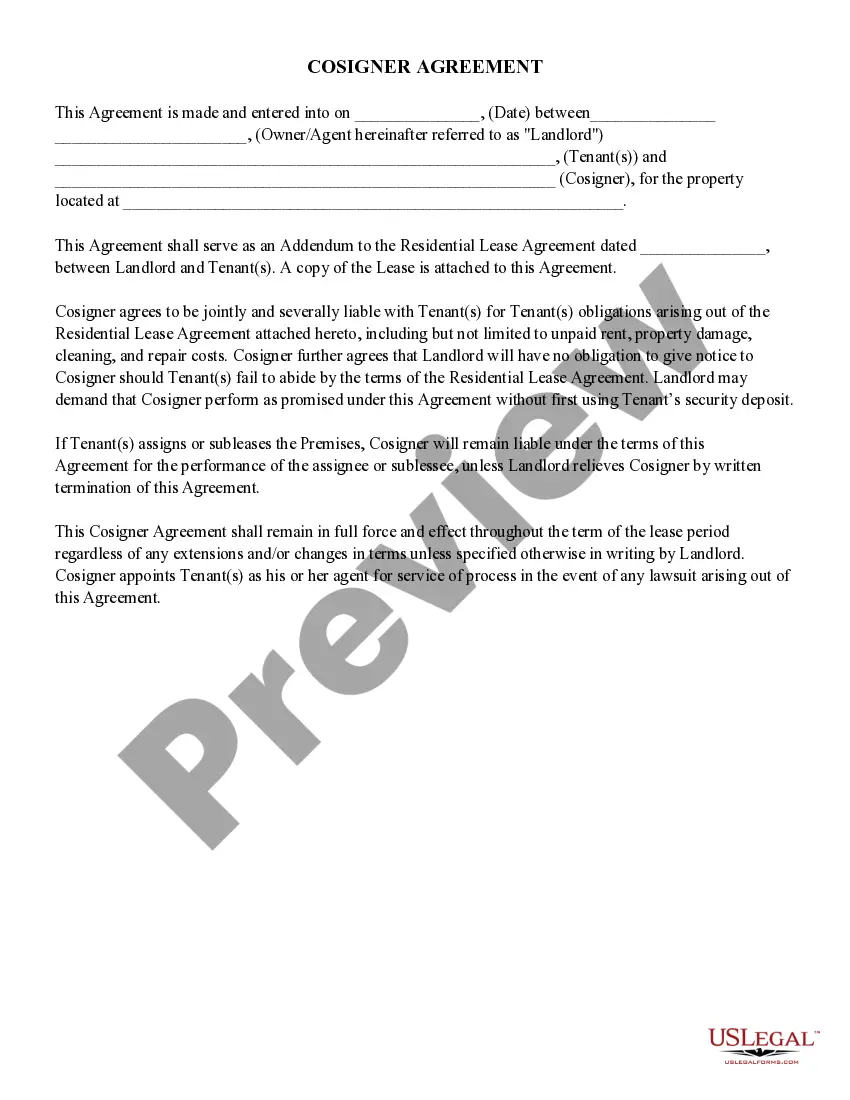
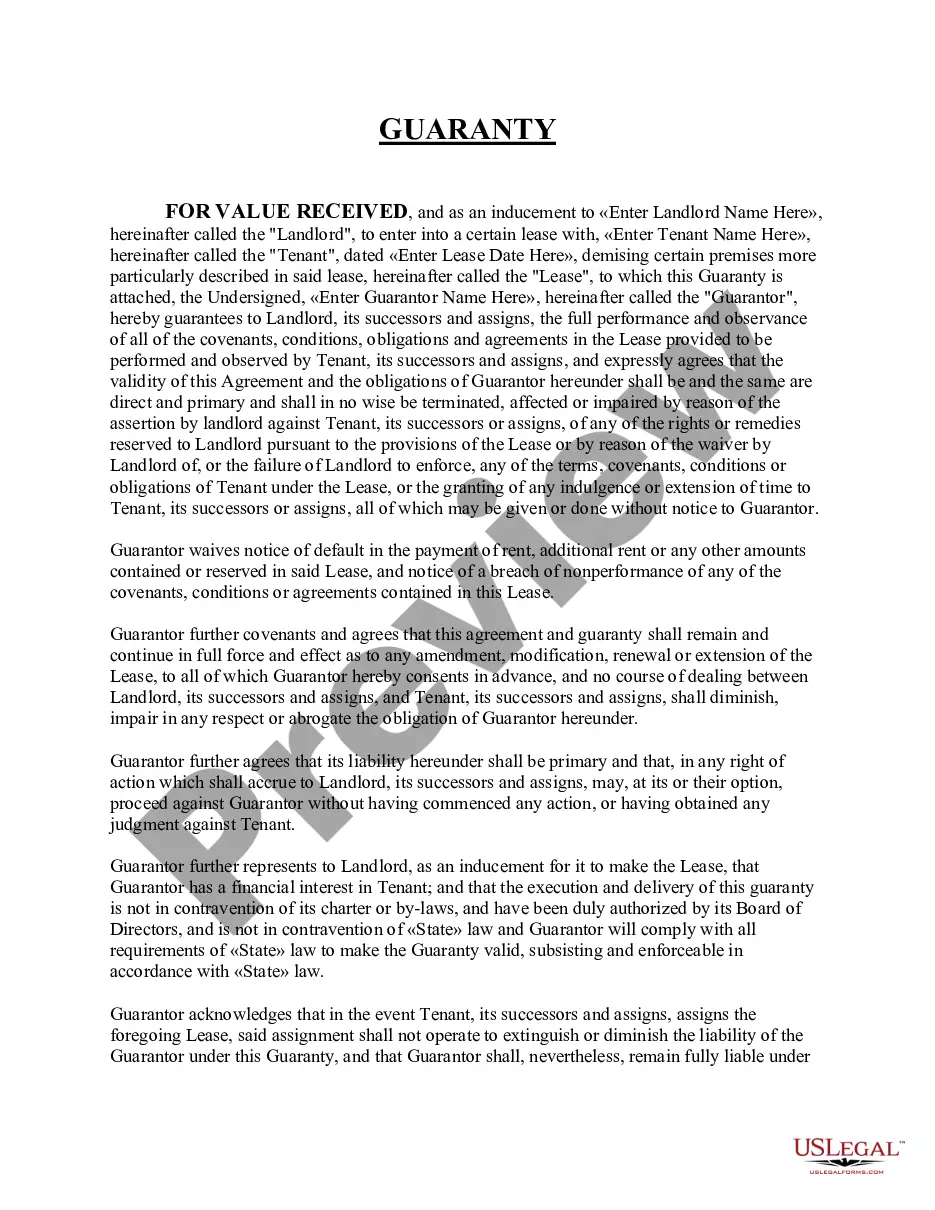
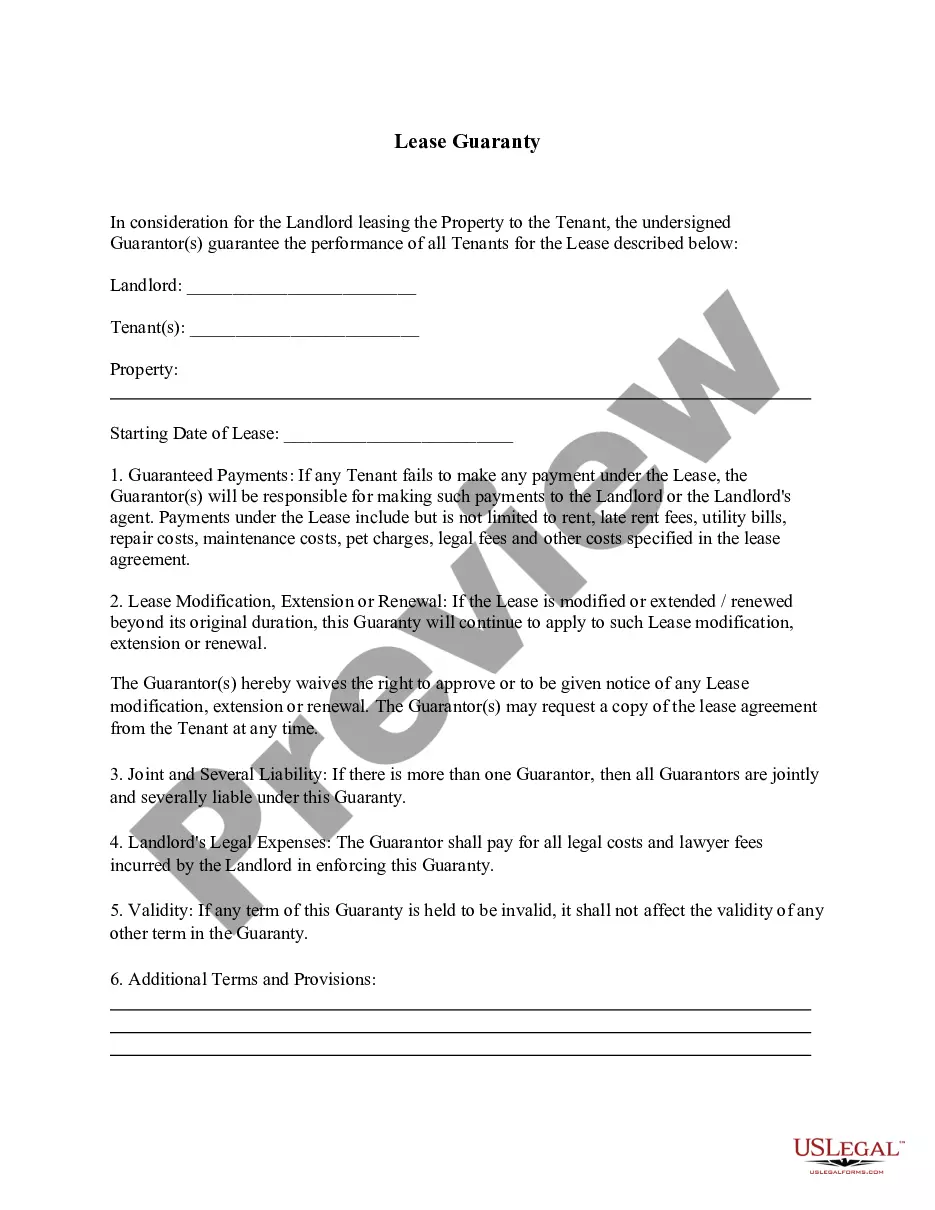
The Guaranty Attachment to Lease for Guarantor or Cosigner is a legal document that allows a third party to co-sign a lease, agreeing to take on the financial responsibilities of the tenant. This form ensures that if the tenant fails to pay rent, the guarantor will be responsible for covering those payments. Unlike standard lease agreements, this form specifically highlights the obligations of the guarantor, providing additional security to landlords and clearer terms for tenants and their co-signers.
Key parts of this document
- Identification of the lessor and co-signer/guarantor
- Dates of signature for both parties
- Legal obligations of the guarantor regarding unpaid rent
- Clear statement of the property being leased
Common use cases
This form should be used when a tenant lacks sufficient credit history or income to qualify for a lease independently, and a third party (co-signer or guarantor) is willing to assume responsibility for the lease payments. It is also useful in cases where landlords require additional assurance for long-term leases or in markets with stringent rental criteria.
Who should use this form
This form is intended for:
- Tenants who need a guarantor due to low income or poor credit
- Individuals acting as guarantors or co-signers for someone renting a property
- Landlords seeking a formal agreement to secure rental payments
Instructions for completing this form
- Identify the parties involved by clearly stating the names of the lessor and the co-signer/guarantor.
- Specify the property address being leased to ensure clarity in the agreement.
- Fill in the necessary dates for both the lessor and the guarantor's signatures.
- Review the obligations outlined in the form to ensure understanding of responsibilities.
- Both parties must sign and date the form to establish a legal agreement.
Does this form need to be notarized?
This form usually doesn’t need to be notarized. However, local laws or specific transactions may require it. Our online notarization service, powered by Notarize, lets you complete it remotely through a secure video session, available 24/7.
Get your form ready online
Our built-in tools help you complete, sign, share, and store your documents in one place.
Make edits, fill in missing information, and update formatting in US Legal Forms—just like you would in MS Word.
Download a copy, print it, send it by email, or mail it via USPS—whatever works best for your next step.
Sign and collect signatures with our SignNow integration. Send to multiple recipients, set reminders, and more. Go Premium to unlock E-Sign.
If this form requires notarization, complete it online through a secure video call—no need to meet a notary in person or wait for an appointment.
We protect your documents and personal data by following strict security and privacy standards.
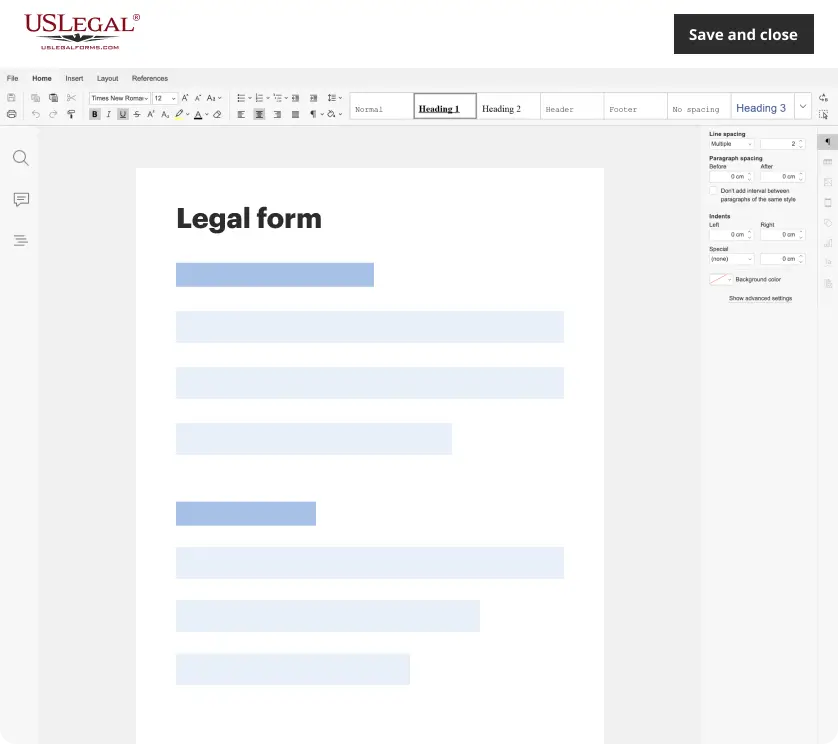
Make edits, fill in missing information, and update formatting in US Legal Forms—just like you would in MS Word.
Download a copy, print it, send it by email, or mail it via USPS—whatever works best for your next step.
Sign and collect signatures with our SignNow integration. Send to multiple recipients, set reminders, and more. Go Premium to unlock E-Sign.
If this form requires notarization, complete it online through a secure video call—no need to meet a notary in person or wait for an appointment.
We protect your documents and personal data by following strict security and privacy standards.
Common mistakes to avoid
- Failing to include the correct property address can lead to disputes.
- Not obtaining signatures from both the co-signer and the landlord can invalidate the agreement.
- Overlooking the importance of reviewing the obligations may result in misunderstandings.
Benefits of completing this form online
- Conveniently download and print the form from anywhere at any time.
- Edit the form easily to include specific terms relevant to your lease agreement.
- Access to professionally drafted templates by licensed attorneys ensures reliability and accuracy.
Looking for another form?
Form popularity
FAQ
A guarantor is not usually listed as a tenant but has distinct roles and responsibilities under the lease. While the tenant lives in the property, the guarantor serves as a backup financially. This arrangement protects landlords from potential rent defaults. The Hawaii Guaranty Attachment to Lease for Guarantor or Cosigner can clarify the role of the guarantor in relation to the lease agreement.
Filling out a guarantor form requires accurate information about the guarantor and understanding the terms of the lease. Common sections include personal details, financial information, and acknowledgment of responsibilities. Take time to review the form for completeness and clarity. Using a reliable template such as the Hawaii Guaranty Attachment to Lease for Guarantor or Cosigner can streamline this process.
You can list a guarantor on a lease by adding a specific clause mentioning their name and obligations. Usually, the lease should have a section where you can identify the guarantor clearly. This helps ensure transparency and protects both parties. The Hawaii Guaranty Attachment to Lease for Guarantor or Cosigner can guide you in including all necessary details.
Writing a guarantor involves drafting a clear agreement stating the terms and conditions of the guarantee. This document should outline the obligations of the guarantor, such as payment responsibilities, and should match those in the lease. Be sure to include personal information, like the guarantor’s full name and contact details. The Hawaii Guaranty Attachment to Lease for Guarantor or Cosigner provides a structured template to make this process easier.
To put a guarantor on a lease, you need to include their information in the lease agreement. Typically, this process involves filling out a section designated for the guarantor or cosigner. Ensure that both the tenant and the guarantor understand their responsibilities, as this helps prevent future disputes. Using the Hawaii Guaranty Attachment to Lease for Guarantor or Cosigner can simplify this process.
Not every lease mandates a guarantor. Leases designed for financially stable tenants may not require one. However, landlords usually prefer guarantors for tenants with limited credit history or financial support. Consider using the Hawaii Guaranty Attachment to Lease for Guarantor or Cosigner to ensure clarity and protection for all parties involved.
A guarantor or co-signer may be needed based on the tenant's financial background. Many landlords request additional security to mitigate risks. It’s essential to clarify requirements prior to signing any agreements. Resources like the Hawaii Guaranty Attachment to Lease for Guarantor or Cosigner can help you understand your obligations.
Not every tenant requires a cosigner. It often depends on individual circumstances, such as credit history or income level. If a tenant does not meet a landlord's criteria, a cosigner may be necessary to secure the lease. Leveraging the Hawaii Guaranty Attachment to Lease for Guarantor or Cosigner can simplify this process.
In many cases, landlords can request a rent guarantor, especially if they believe you may not meet their income guidelines or credit requirements. However, you can negotiate this requirement. It's important to communicate with your landlord and explore options. Familiarizing yourself with the Hawaii Guaranty Attachment to Lease for Guarantor or Cosigner can provide helpful insights.
Choosing between a cosigner and a guarantor depends on your situation. A cosigner shares the responsibility for the lease directly, while a guarantor typically guarantees the payment without being on the lease. This means a cosigner might be better if you need financial backing, whereas a guarantor might offer more flexibility. Understanding the Hawaii Guaranty Attachment to Lease for Guarantor or Cosigner can guide your decision.