Hawaii Quitclaim Deed - Trust to Individual
Understanding this form
This Quitclaim Deed allows a trust (the Grantor) to transfer property interests to an individual (the Grantee). Unlike a warranty deed, which guarantees clear title, a quitclaim deed only conveys whatever interest the Grantor may have, without any warranties. This form is essential for situations where trust property needs to be transferred to an individual, ensuring compliance with state laws.
What’s included in this form
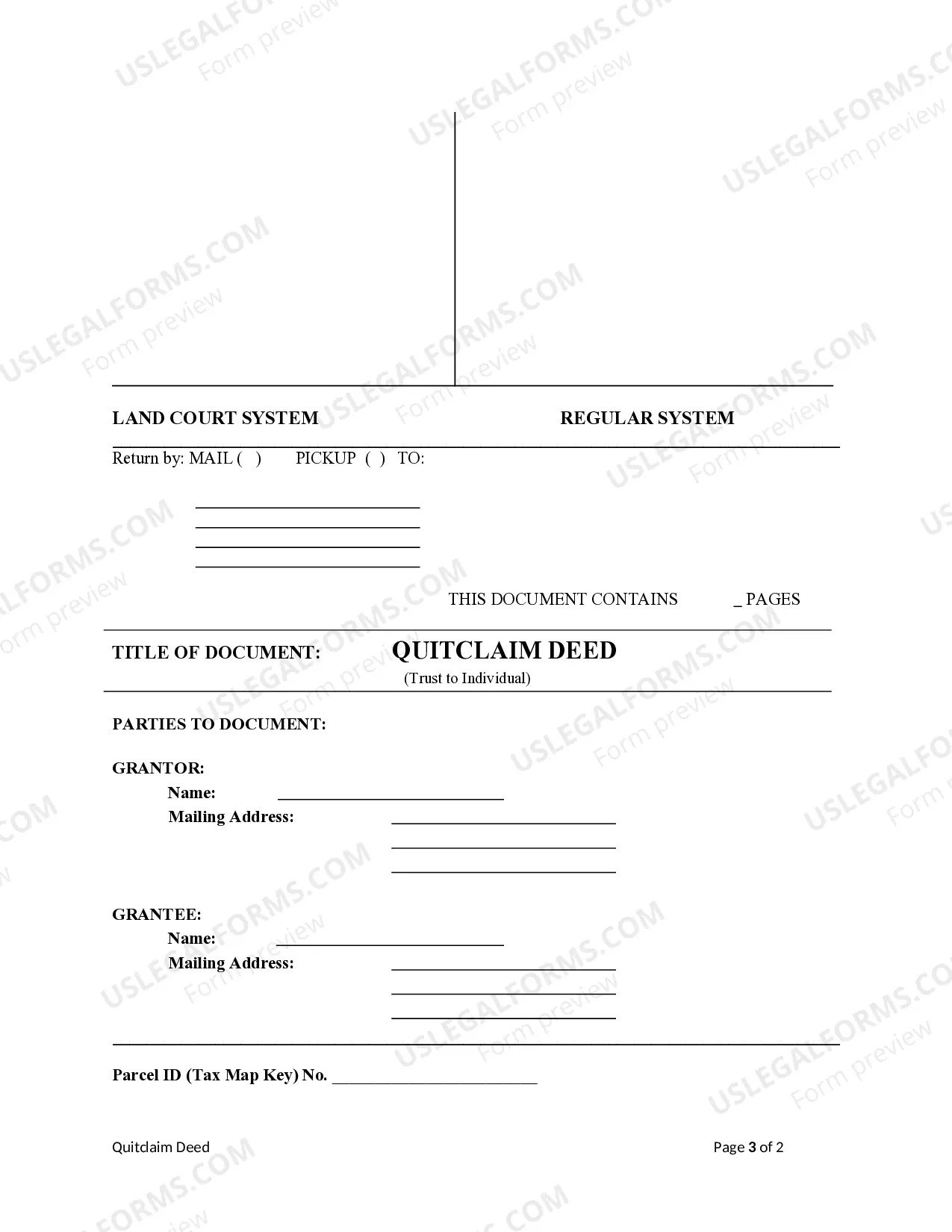
- Identification of the Grantor (the trust) and Grantee (the individual).
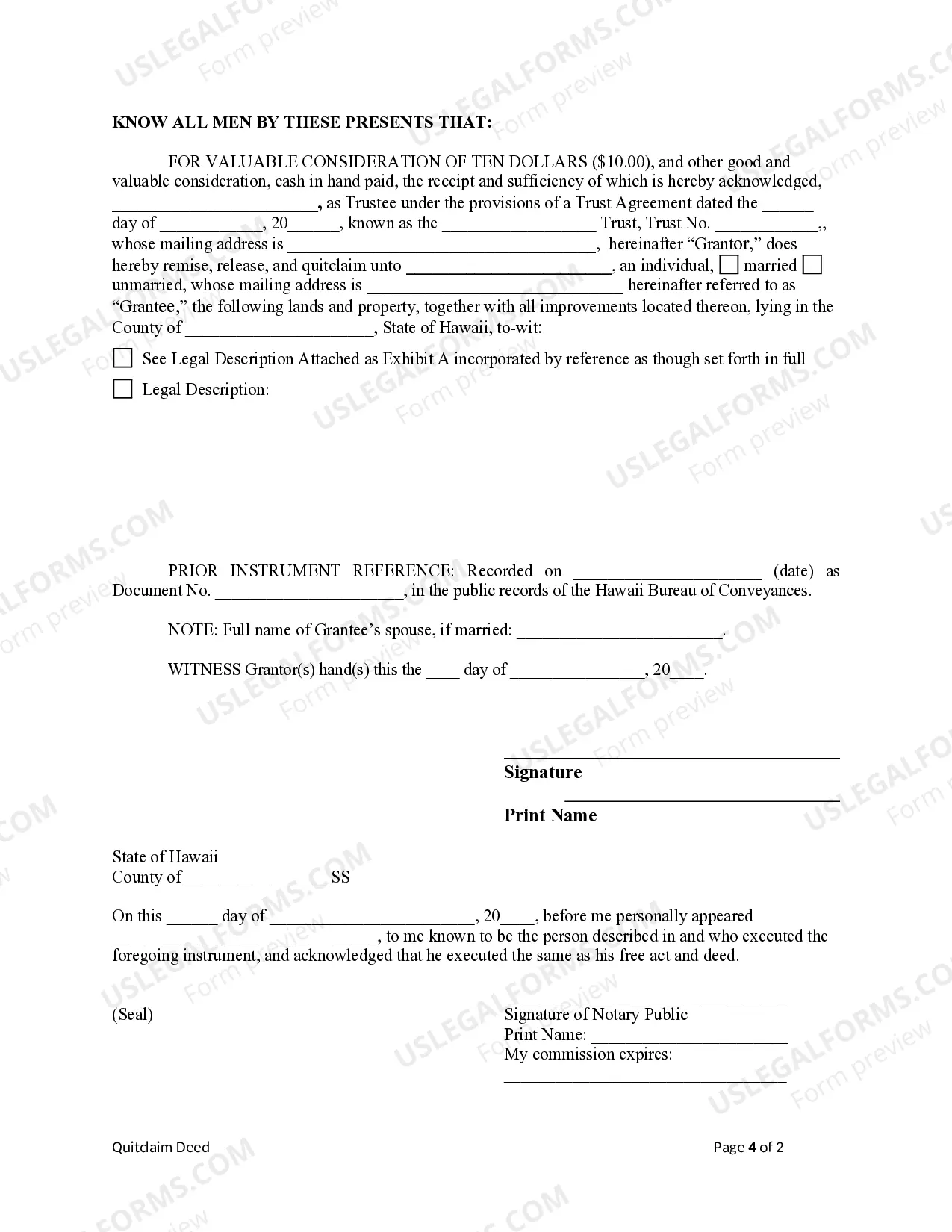
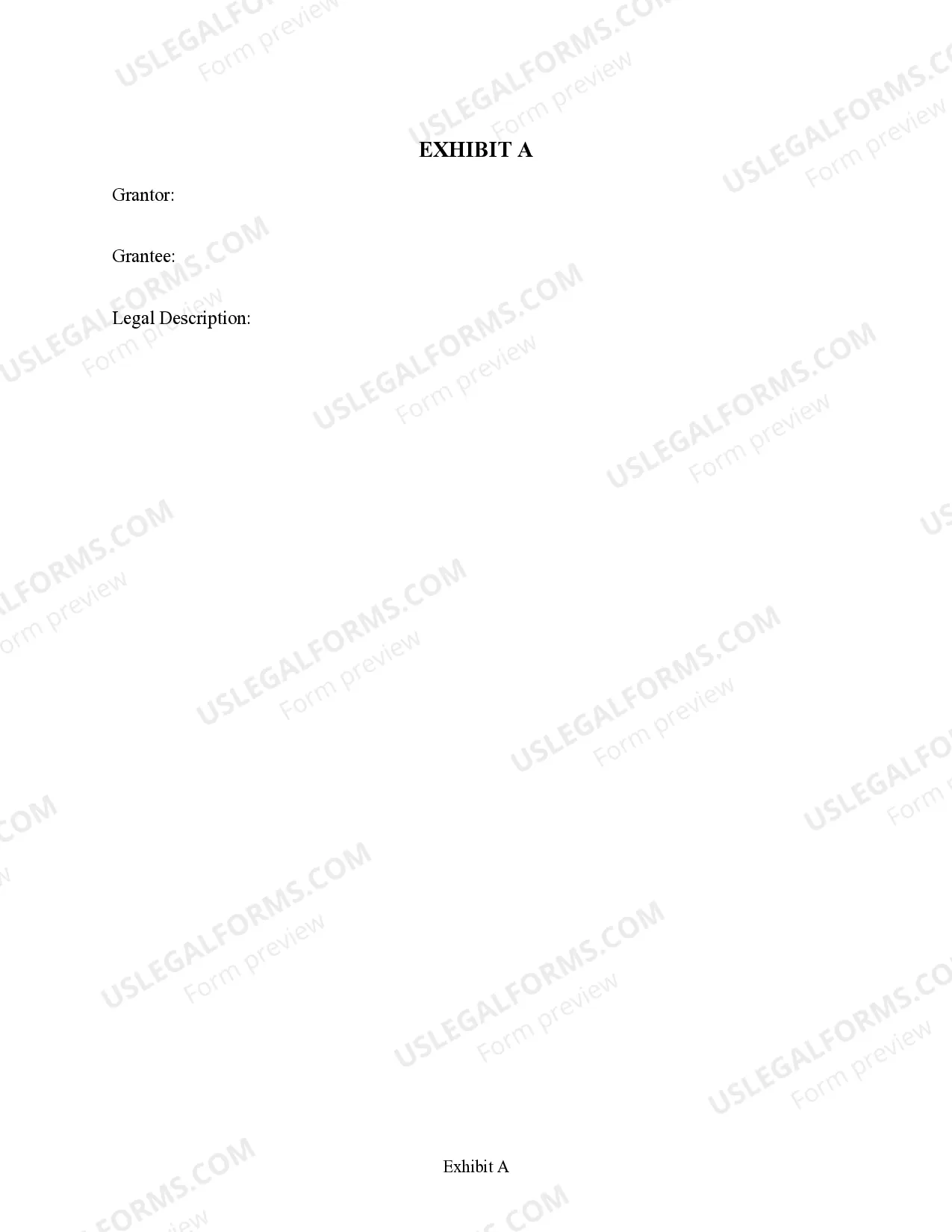
- Legal description of the property being transferred.
- Parcel ID or Tax Map Key for the property.
- Date of execution and recording reference of the prior instrument.
- Signature line for Grantor and space for notarization.






Common use cases
Use this Quitclaim Deed when a trust wishes to transfer property directly to an individual. Common scenarios include:
- Dividing property among beneficiaries of the trust.
- Transferring trust property to an heir.
- Facilitating a property sale where the trust is involved.
Who can use this document
This form is suitable for:
- Trustees wishing to transfer property from a trust to an individual.
- Beneficiaries of a trust who are receiving property as part of the trust's distribution.
- Individuals involved in the sale or division of trust property.
Instructions for completing this form
- Identify the Grantor (the trust) and the Grantee (the individual) clearly.
- Provide the legal description of the property and include the Parcel ID.
- Fill in the date of the prior instrument and the recording number if applicable.
- Ensure all signatures are complete, including that of the Trustee.
- Obtain notarization if required, following local laws.
Does this document require notarization?
To make this form legally binding, it must be notarized. Our online notarization service, powered by Notarize, lets you verify and sign documents remotely through an encrypted video session.
Get your form ready online
Our built-in tools help you complete, sign, share, and store your documents in one place.
Make edits, fill in missing information, and update formatting in US Legal Forms—just like you would in MS Word.
Download a copy, print it, send it by email, or mail it via USPS—whatever works best for your next step.
Sign and collect signatures with our SignNow integration. Send to multiple recipients, set reminders, and more. Go Premium to unlock E-Sign.
If this form requires notarization, complete it online through a secure video call—no need to meet a notary in person or wait for an appointment.
We protect your documents and personal data by following strict security and privacy standards.

Make edits, fill in missing information, and update formatting in US Legal Forms—just like you would in MS Word.

Download a copy, print it, send it by email, or mail it via USPS—whatever works best for your next step.

Sign and collect signatures with our SignNow integration. Send to multiple recipients, set reminders, and more. Go Premium to unlock E-Sign.

If this form requires notarization, complete it online through a secure video call—no need to meet a notary in person or wait for an appointment.

We protect your documents and personal data by following strict security and privacy standards.
Common mistakes
- Failing to provide a full legal description of the property.
- Not obtaining a signature from all required parties.
- Neglecting to date the document appropriately.
- Overlooking the need for notarization in specific jurisdictions.
Why use this form online
- Convenient access to legal forms anytime and anywhere.
- Editable fields allow for easy entry of necessary information.
- Immediate downloads after purchase ensure quick completion of necessary legal documents.
- Confidence in the reliability of forms drafted by licensed attorneys.
Looking for another form?
Form popularity
FAQ
To complete a Hawaii Quitclaim Deed - Trust to Individual, start by gathering necessary documents, including the trust agreement and the property title. Next, you will need to fill out the quitclaim deed form accurately, ensuring that the names of both the trust and the individual are clearly noted. Afterward, sign the deed in front of a notary, and then submit it to the appropriate county office for recording. This process guarantees a smooth transition of property ownership to the trust, benefiting everyone involved.
Yes, you can complete a quit claim deed yourself in Hawaii, as long as you understand the process and follow state requirements. A Hawaii Quitclaim Deed - Trust to Individual is relatively simple to fill out, but you should ensure all information is accurate to avoid future complications. It’s advisable to consult resources like uslegalforms to access templates and guidelines that help you create a legally binding document.
The easiest way to transfer ownership of a house in Hawaii is through a Hawaii Quitclaim Deed - Trust to Individual. This method requires minimal paperwork and is straightforward for situations such as family transfers or quick sales. Ensure that both parties understand their rights and responsibilities before completing the deed. For convenience and clarity, consider using the resources available through uslegalforms.
Transferring a title in Hawaii requires you to complete the proper documentation, such as a Hawaii Quitclaim Deed - Trust to Individual. Once filled out, you must submit this deed to the state’s Bureau of Conveyances for recording. This step is crucial as it officially updates the public records to reflect the new ownership. By using uslegalforms, you gain access to resources that simplify this transfer process.
To transfer property ownership in Hawaii, you can use a Hawaii Quitclaim Deed - Trust to Individual. This legal document allows the current owner to convey their interest in the property to another party without making any guarantees about the title’s validity. You will need to complete the deed form and file it with the Bureau of Conveyances to make the transfer official. Using uslegalforms can guide you through the process and provide the necessary forms to ensure a smooth transaction.
A quitclaim deed in Hawaii allows a property owner to transfer their interest in a property to another person without any guarantee of a clear title. This deed serves to release any claims the owner has on the property, but it doesn't ensure ownership or protection from future claims. If you need a simple and direct method for property transfer, the Hawaii Quitclaim Deed - Trust to Individual is a reliable choice.
To transfer ownership of a property in Hawaii, you typically execute a deed — either a quitclaim deed or a warranty deed. You must complete the deed with the necessary information, then have it signed and notarized. The next step involves recording the deed with the Bureau of Conveyances to make the transfer official. Utilizing the Hawaii Quitclaim Deed - Trust to Individual can simplify this process considerably.
The strongest form of deed is generally considered to be a warranty deed. Unlike a quitclaim deed, a warranty deed guarantees that the seller holds clear title to the property and is obliged to defend the title against any claims. While the Hawaii Quitclaim Deed - Trust to Individual offers quick property transfers, it does not provide the same level of protection.
Yes, a quitclaim deed can transfer property from a trust to an individual. This type of deed does not guarantee that the property title is clear, but it is a straightforward method for transferring ownership. If you wish to keep the transfer process simple and efficient, consider the Hawaii Quitclaim Deed - Trust to Individual for this purpose.
Choosing between a quitclaim deed and a trust depends on your specific needs. A quitclaim deed allows you to transfer interest in a property quickly and simply. In contrast, a trust provides better estate planning options. The Hawaii Quitclaim Deed - Trust to Individual is effective for straightforward property transfers, while a trust is advantageous for long-term asset management.