Georgia Living Trust for Individual Who is Single, Divorced or Widow (or Widower) with No Children
What is this form?
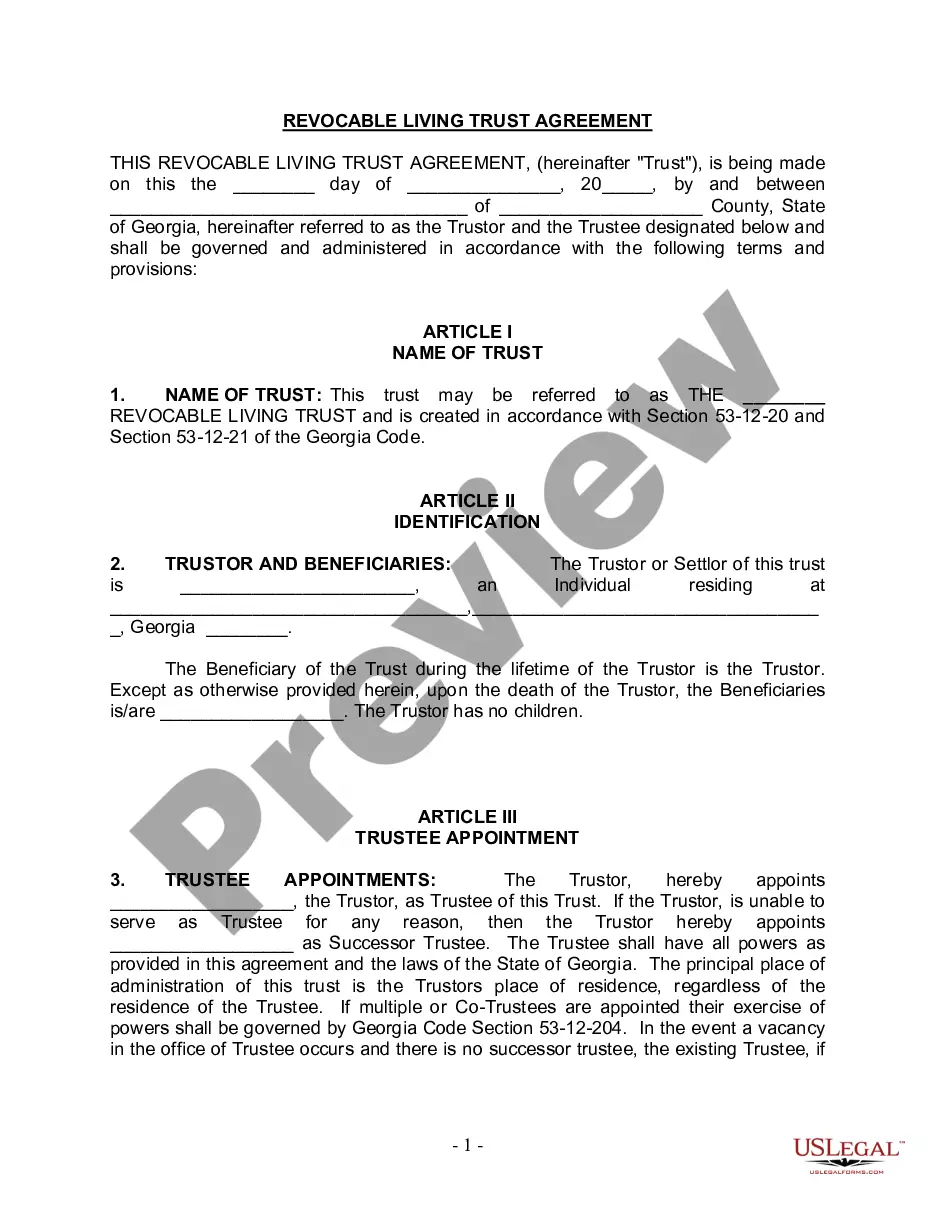
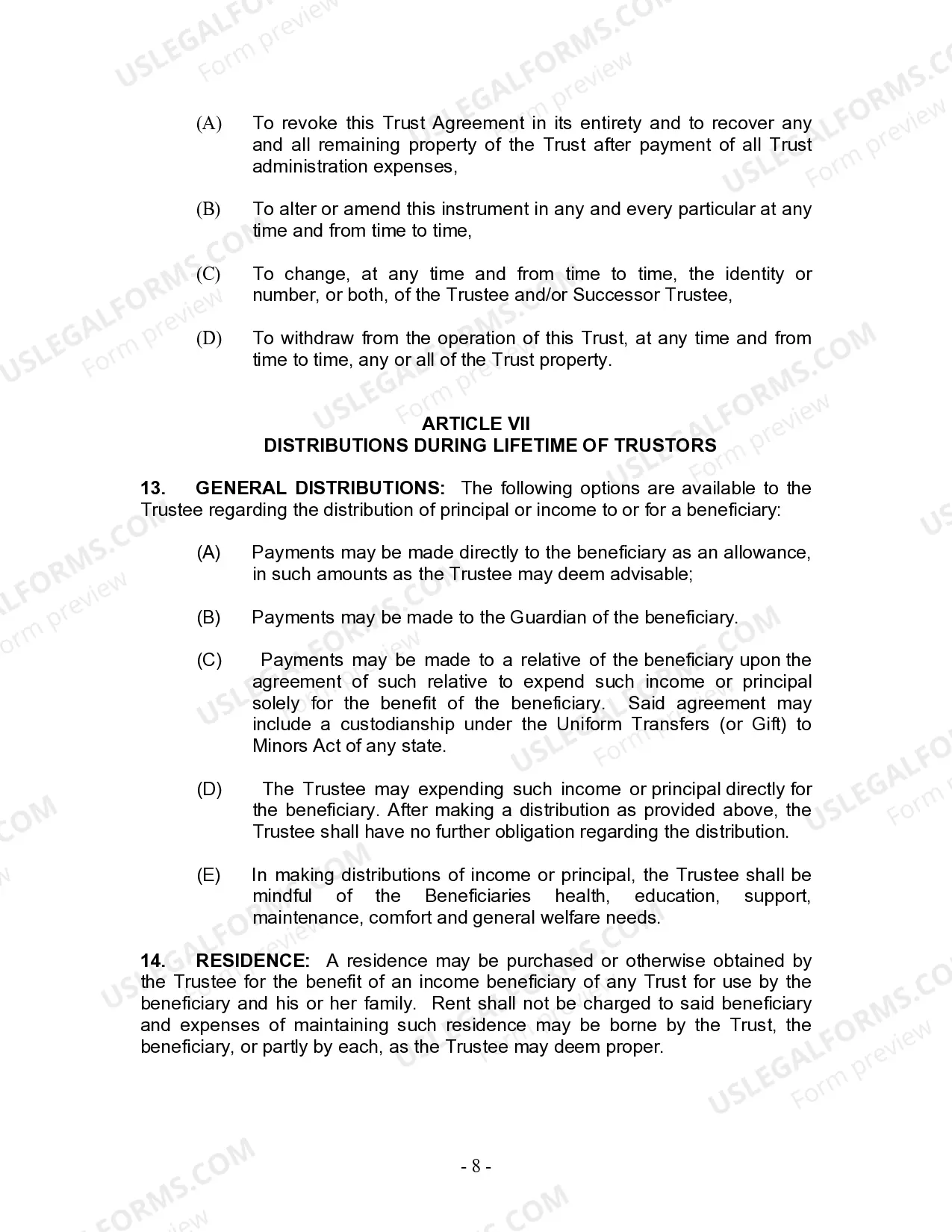
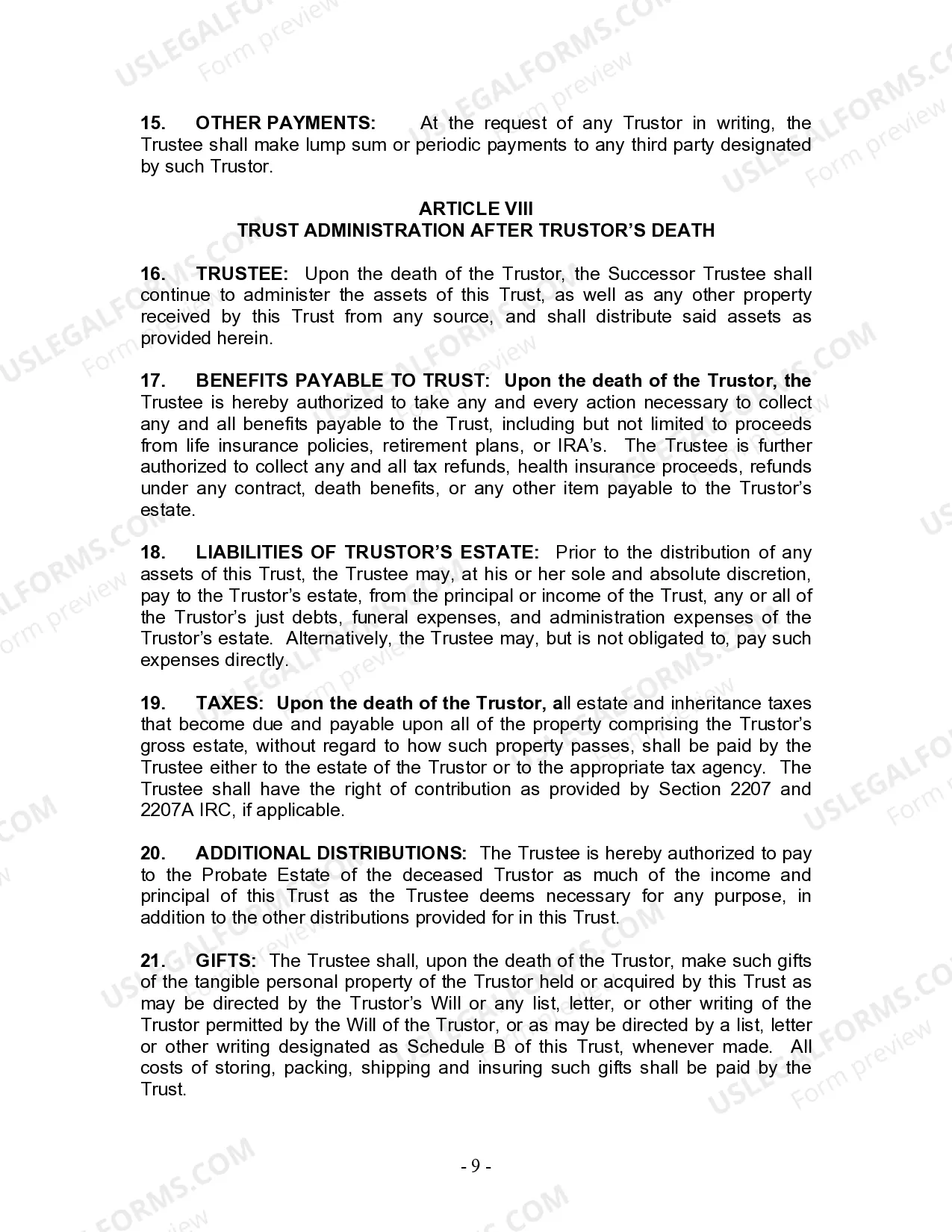
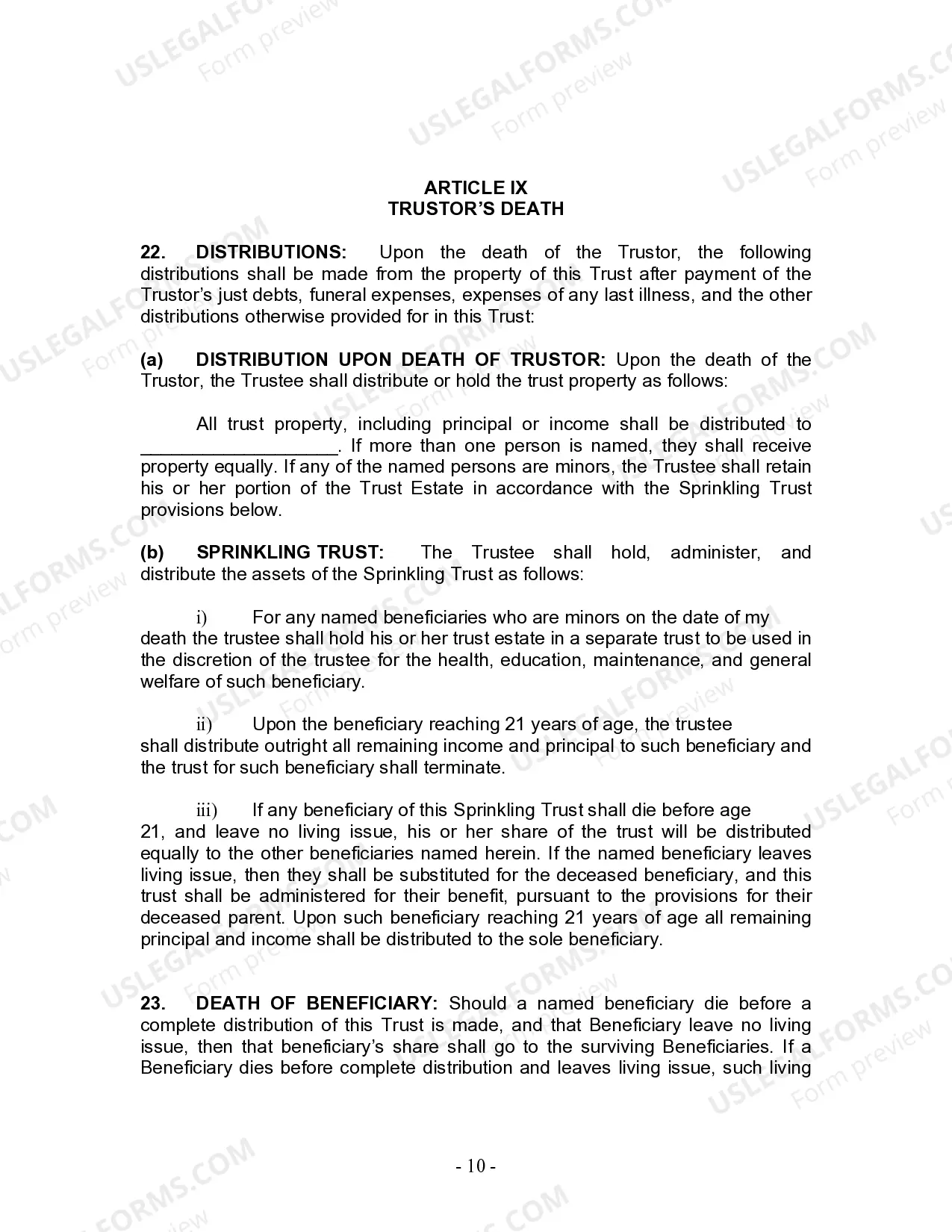
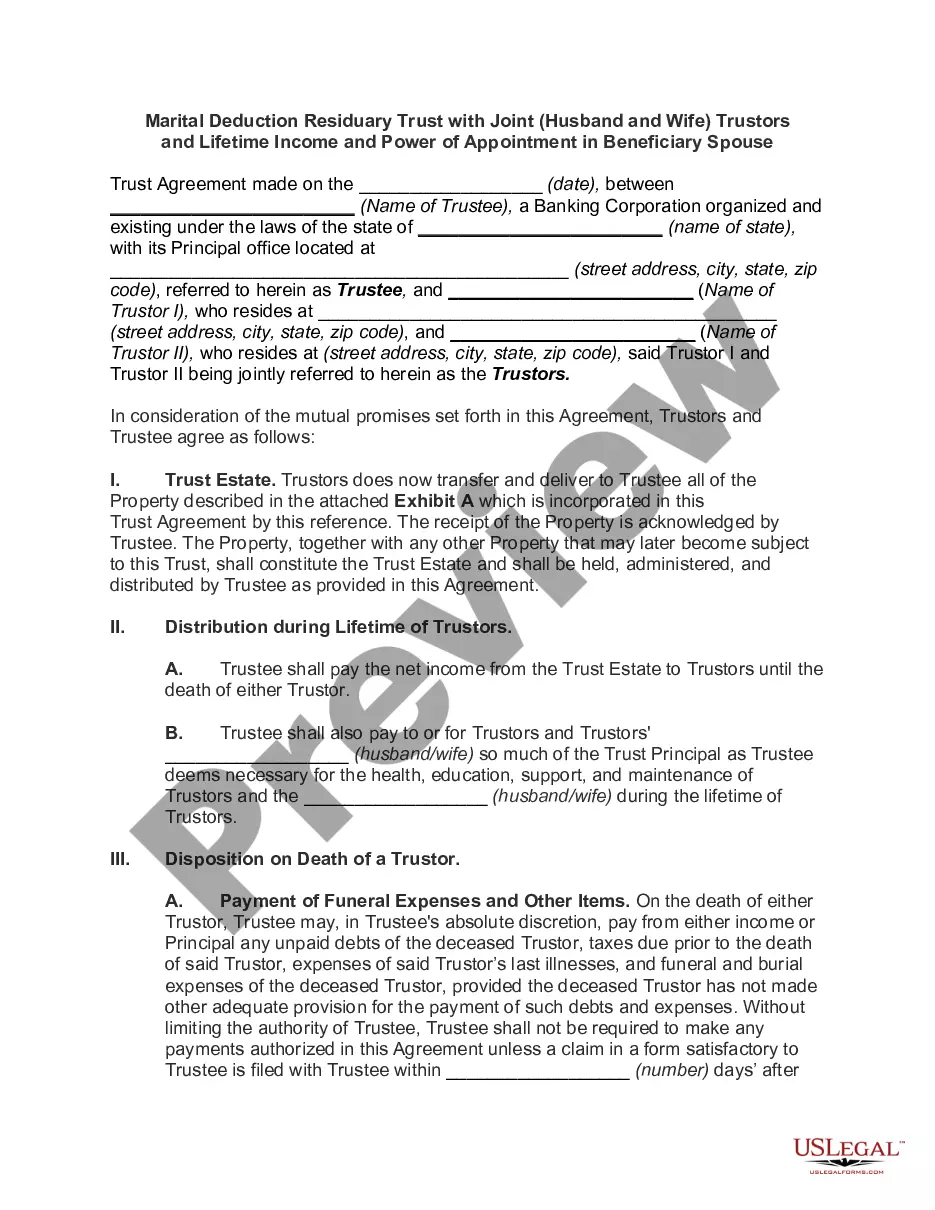
This Living Trust for Individual Who is Single, Divorced or Widow (or Widower) with No Children is a legal document that allows an individual to manage their assets during their lifetime and specify how those assets should be distributed upon their death. Unlike a will, a living trust avoids the probate process, allowing for a quicker and more private transfer of assets. This trust is specifically designed for individuals who do not have children and are either single, divorced, or widowed, making it distinct from other living trusts that may involve families or children.
Form components explained
- Identification of the Trustor, Trustee, and Beneficiary.
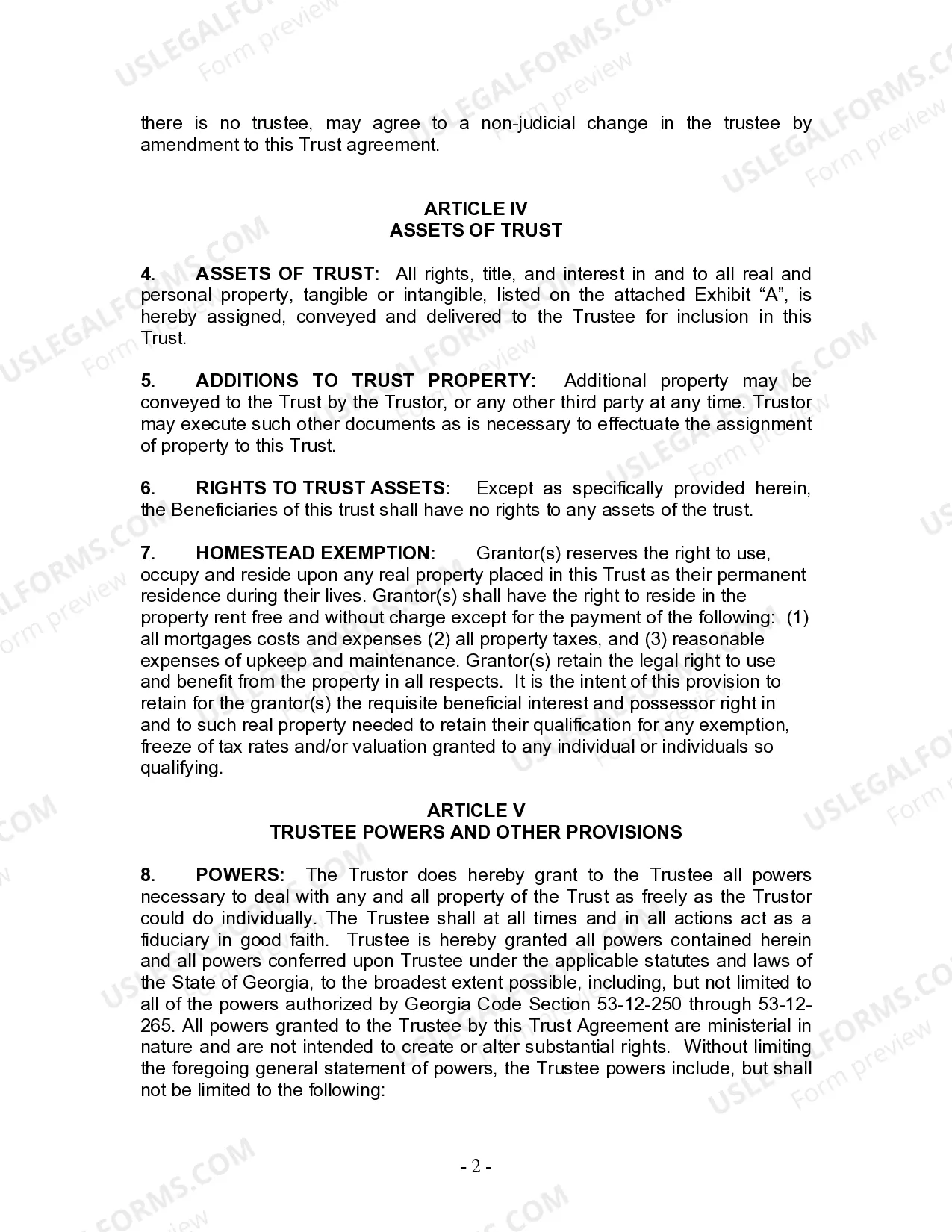
- Listing of the assets included in the trust.
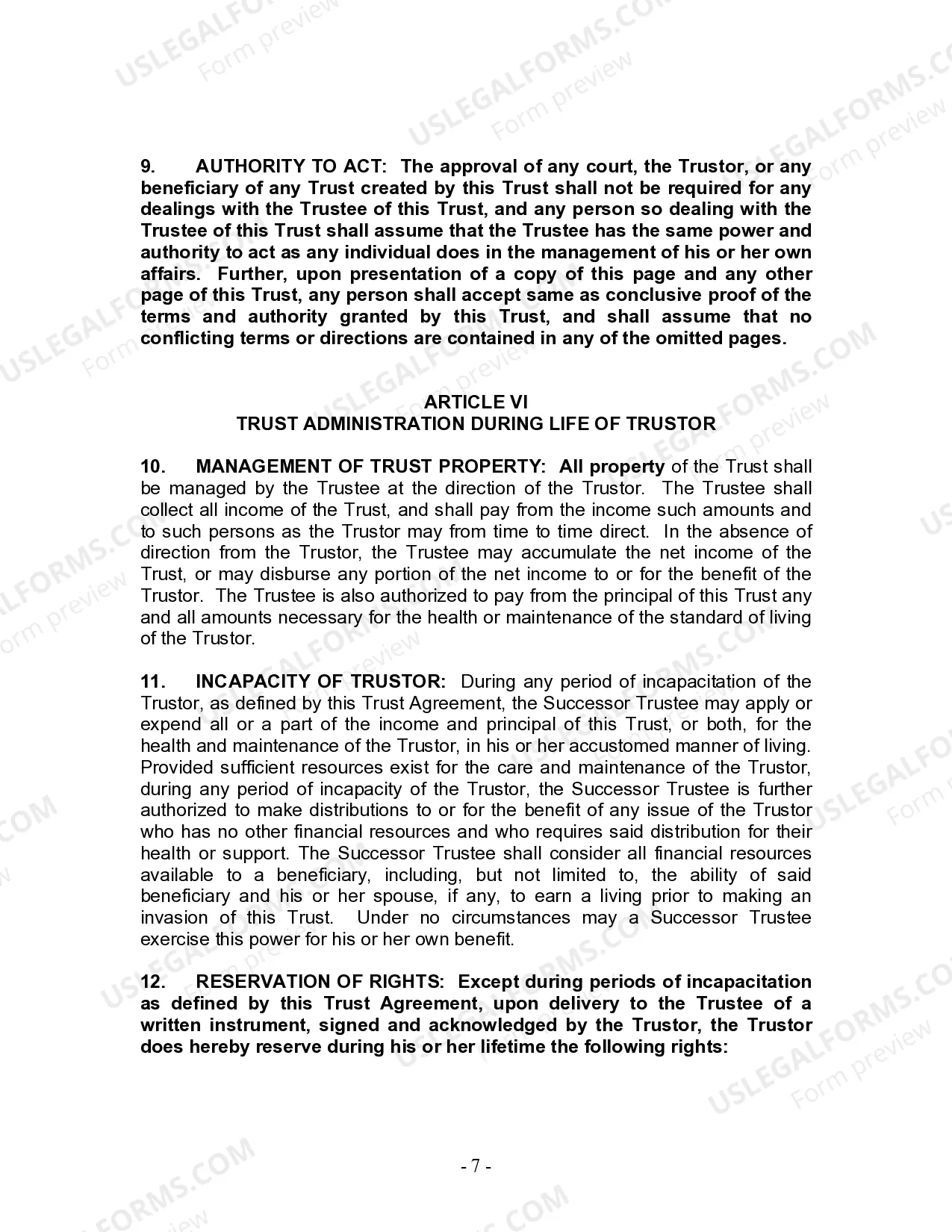
- Provisions for the management of trust assets during the Trustor's lifetime.
- Instructions for the distribution of assets after the Trustor's death.
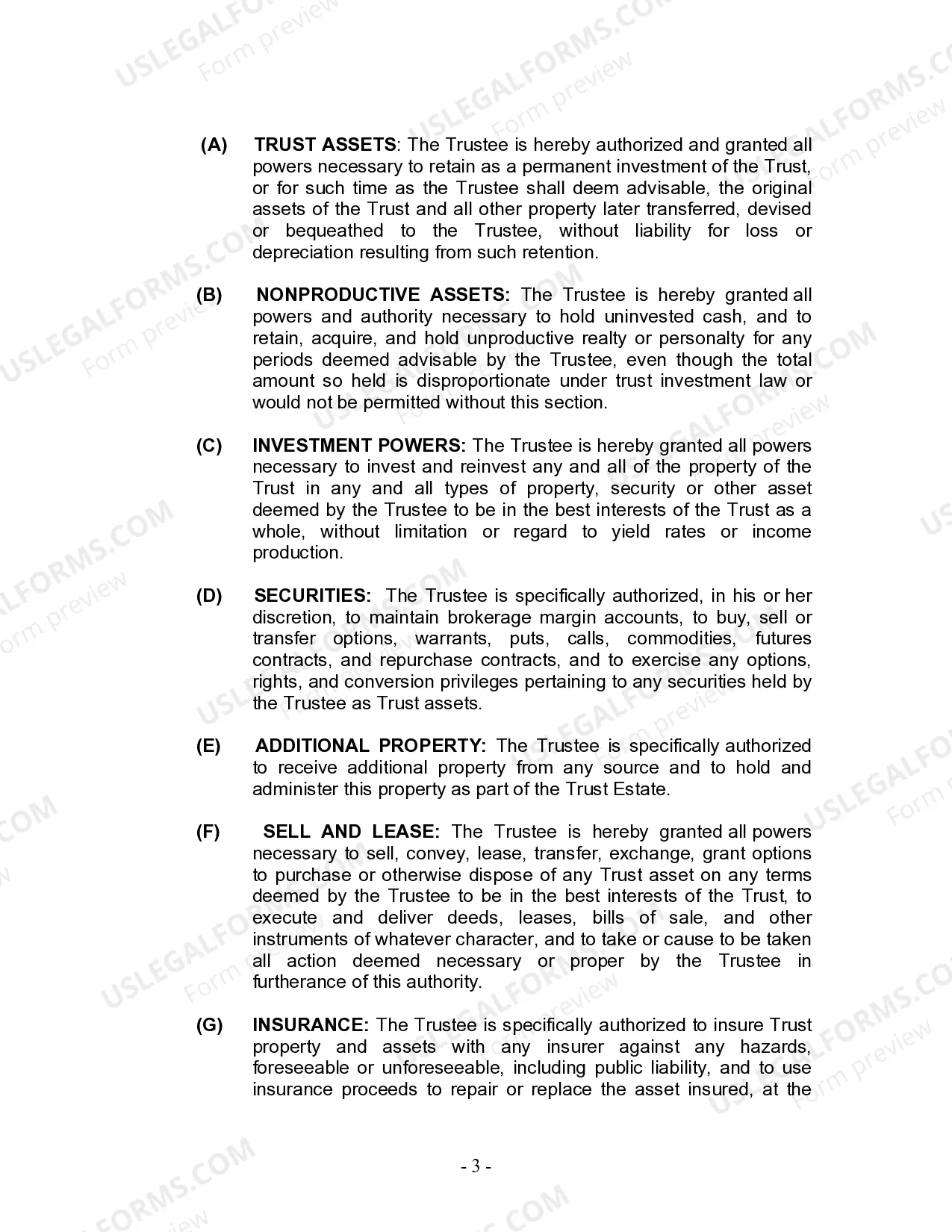
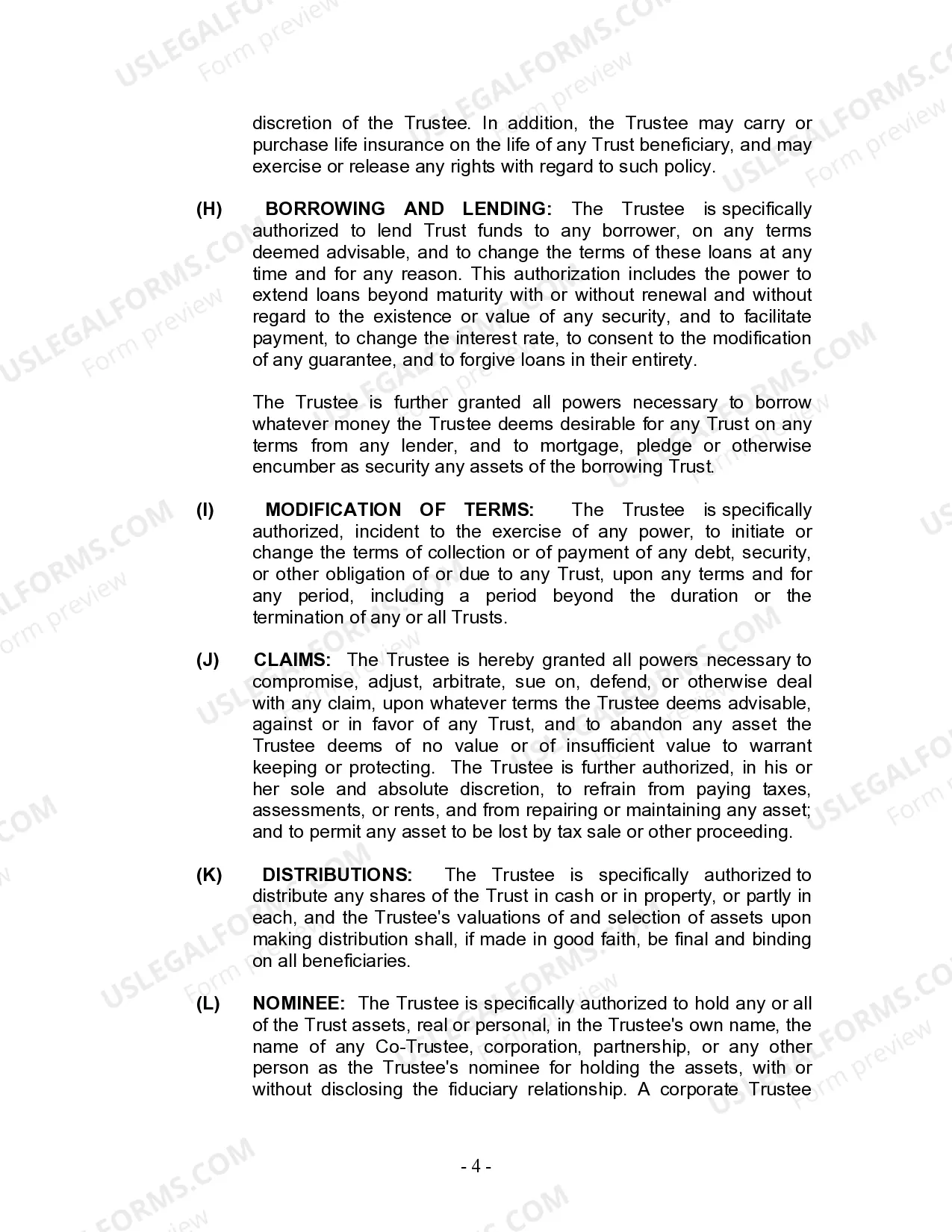
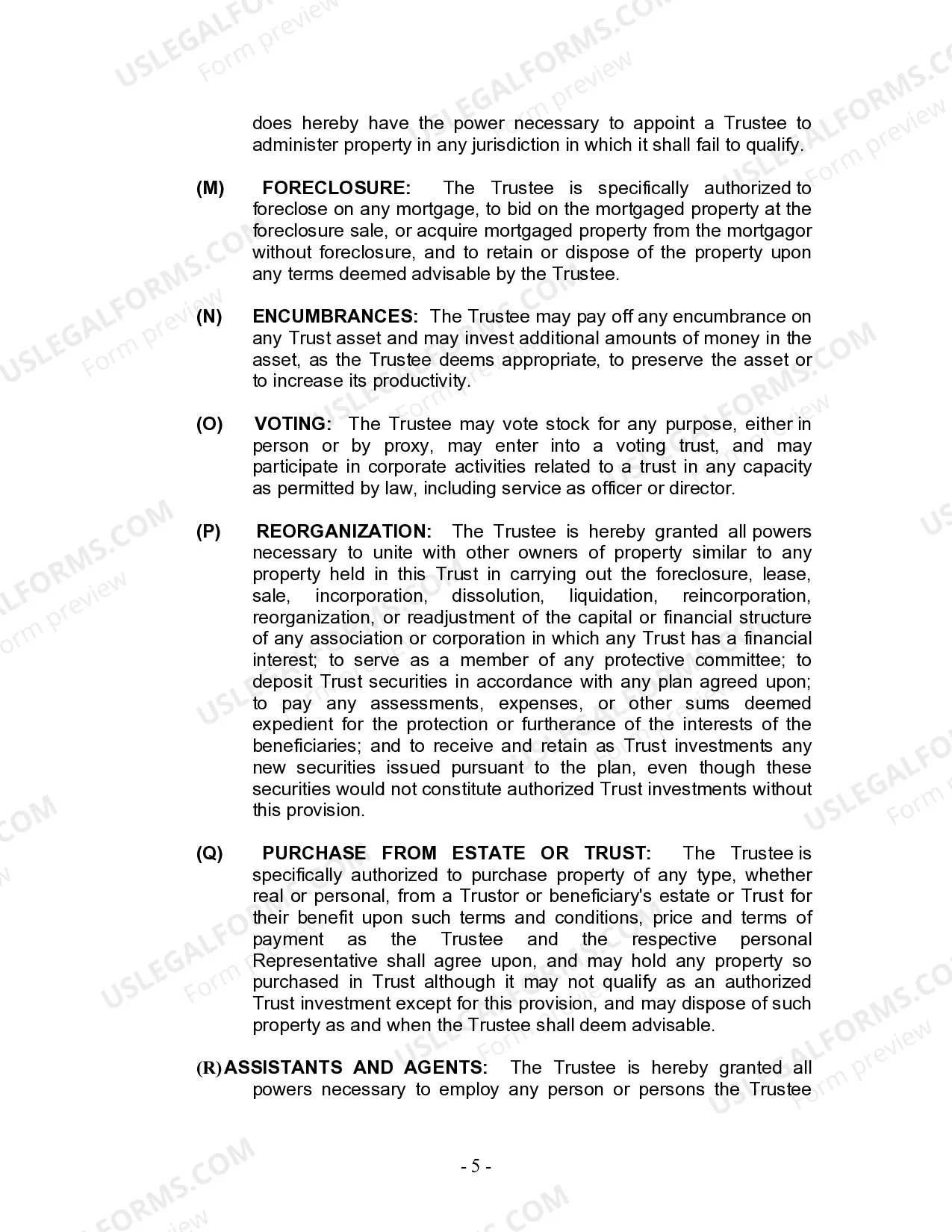
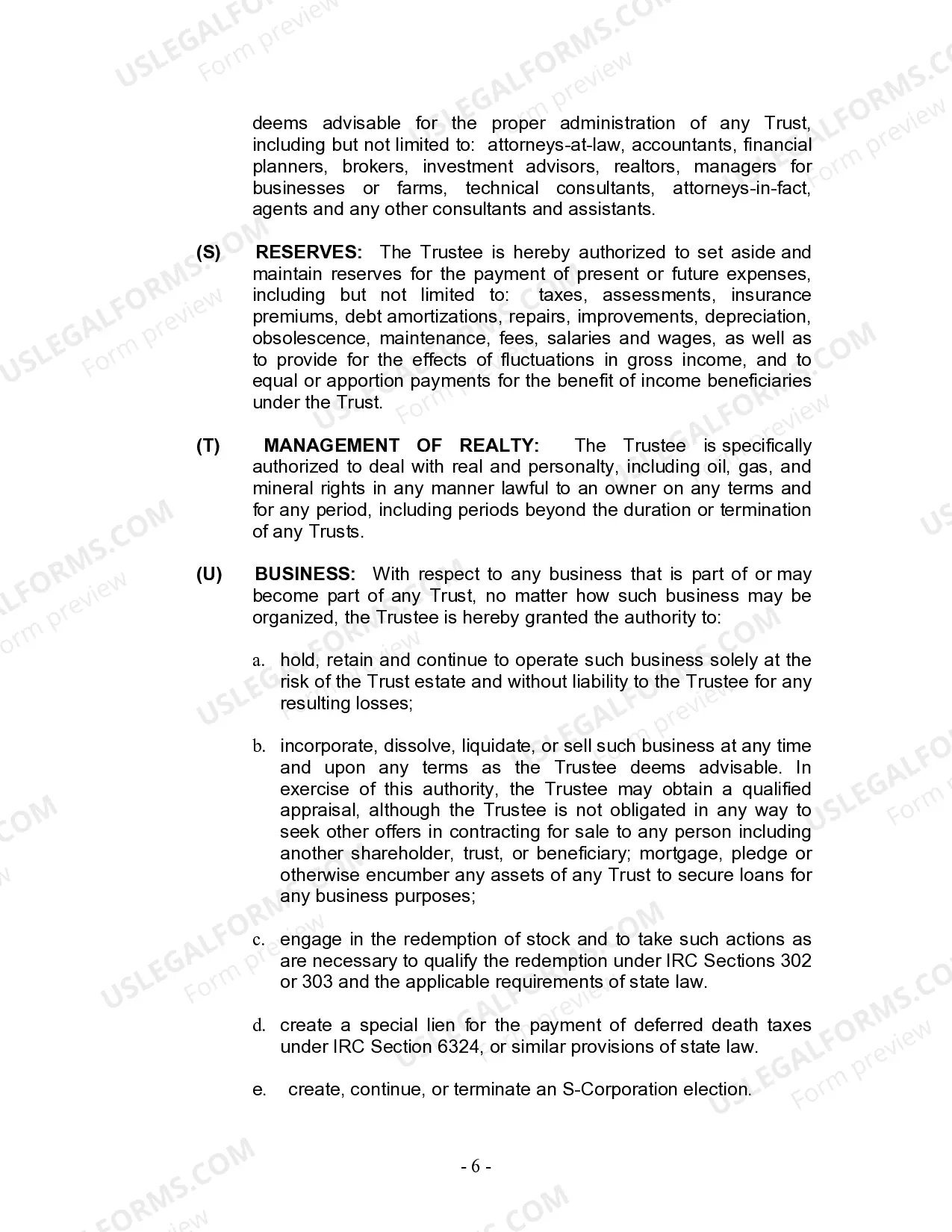
- Power and authority granted to the Trustee for managing trust assets.



When to use this document
This form should be used by individuals who wish to manage their assets through a living trust, particularly those who are single, divorced, or widowed without children. You may find this necessary if you want to avoid probate, ensure a smoother transition of your estate to your chosen beneficiaries, or maintain control over asset management during your lifetime.
Intended users of this form
- Individuals who are single, divorced, or widowed.
- People without children who want to designate beneficiaries for their assets.
- Individuals seeking to simplify estate planning and avoid probate.
How to prepare this document
- Identify yourself as the Trustor, providing your personal information and county of residence.
- Designate the Trustee, who can be the Trustor or another individual/entity.
- List the assets you wish to include in the trust, as detailed in Exhibit A.
- Specify how trust property should be managed during your lifetime and after your death.
- Sign and date the document to formalize the trust agreement.
Is notarization required?
In most cases, this form does not require notarization. However, some jurisdictions or signing circumstances might. US Legal Forms offers online notarization powered by Notarize, accessible 24/7 for a quick, remote process.
Get your form ready online
Our built-in tools help you complete, sign, share, and store your documents in one place.
Make edits, fill in missing information, and update formatting in US Legal Forms—just like you would in MS Word.
Download a copy, print it, send it by email, or mail it via USPS—whatever works best for your next step.
Sign and collect signatures with our SignNow integration. Send to multiple recipients, set reminders, and more. Go Premium to unlock E-Sign.
If this form requires notarization, complete it online through a secure video call—no need to meet a notary in person or wait for an appointment.
We protect your documents and personal data by following strict security and privacy standards.

Make edits, fill in missing information, and update formatting in US Legal Forms—just like you would in MS Word.

Download a copy, print it, send it by email, or mail it via USPS—whatever works best for your next step.

Sign and collect signatures with our SignNow integration. Send to multiple recipients, set reminders, and more. Go Premium to unlock E-Sign.

If this form requires notarization, complete it online through a secure video call—no need to meet a notary in person or wait for an appointment.

We protect your documents and personal data by following strict security and privacy standards.
Mistakes to watch out for
- Failing to list all intended assets in the trust documentation.
- Not fully understanding the powers and responsibilities of the Trustee.
- Neglecting to update the trust when significant life changes occur.
Advantages of online completion
- Convenient access to legal resources anytime and anywhere.
- Editability allows for easy customization of the trust to suit your specific needs.
- Reliability in ensuring that the form meets state-specific legal requirements.
Looking for another form?
Form popularity
FAQ
To file a Georgia living trust for an individual who is single, divorced, or a widow (or widower) with no children, you begin by drafting a trust document that outlines your wishes. Make sure to include details about the assets you want to transfer into the trust. Once the document is complete, you must sign it in front of a notary public. Finally, transfer your assets into the trust by re-titling them in the name of the trust, ensuring everything is done correctly and efficiently.
Yes, childless couples should consider establishing a trust to manage their assets effectively. A trust allows you to determine how your property will be allocated, providing clarity and control over your estate. Furthermore, it offers privacy, as trusts do not go through public probate. Utilizing a Georgia Living Trust for Individual Who is Single, Divorced or Widow (or Widower) with No Children can ensure that your intentions are honored.
Creating a trust can be beneficial for anyone, including single individuals. A trust helps manage and protect your assets, making your wishes clear regarding distribution upon your passing. Additionally, it can streamline the estate process, avoiding the complications that may arise without one. A tailored Georgia Living Trust for Individual Who is Single, Divorced or Widow (or Widower) with No Children meets unique needs and enhances peace of mind.
If you find yourself single and without children, selecting a beneficiary can feel daunting. You have several options, which may include close friends, siblings, or favorite charities. A Georgia Living Trust for Individual Who is Single, Divorced or Widow (or Widower) with No Children can help you specify how your assets will be distributed, ensuring that your wishes are maintained. Understanding your options can make this choice clearer.
In Georgia, a spouse does have specific rights to inherit property, but it does not mean they automatically receive everything. If there are no children, a spouse will typically inherit the entire estate. However, if there are children from a previous relationship, the situation may change. It is wise to consult legal resources or platforms like uslegalforms to understand how a Georgia Living Trust for Individual Who is Single, Divorced or Widow (or Widower) with No Children can clarify your intentions.
In the context of a Georgia Living Trust for Individual Who is Single, Divorced or Widow (or Widower) with No Children, a living trust continues to function seamlessly after the passing of one spouse. The trust typically names a successor trustee who will manage the assets per your instructions. This arrangement helps avoid complications from probate, ensuring your assets pass smoothly to the designated beneficiaries. If you are single, you can still create a trust that protects your assets and serves your intent.
Though the focus here is on individuals without children, it's essential to highlight a common mistake parents make: not revisiting their trust regularly. When individuals establish a Georgia Living Trust for Individual Who is Single, Divorced or Widow (or Widower) with No Children, they often overlook changes in their personal circumstances or laws. Keeping your trust updated ensures it remains aligned with your current needs and goals. Consider using resources like US Legal Forms to stay informed and make necessary adjustments.
Yes, a single person with no children should consider a Georgia Living Trust for Individual Who is Single, Divorced or Widow (or Widower) with No Children. This type of trust allows you to manage your assets during your lifetime and dictate how they are distributed after your passing. It streamlines the estate process and can help avoid costly probate fees. Creating a trust can provide peace of mind, ensuring your wishes are honored.
Yes, you can write your own trust in Georgia. However, creating a Georgia Living Trust for Individual Who is Single, Divorced or Widow (or Widower) with No Children requires careful attention to detail to ensure that it meets legal requirements. Missteps can lead to unintended consequences, such as invalidating the trust. Using platforms like uslegalforms can simplify the process, providing templates and guidance to help ensure your trust is legally sound.