Georgia Electrical Contract for Contractor
What this document covers
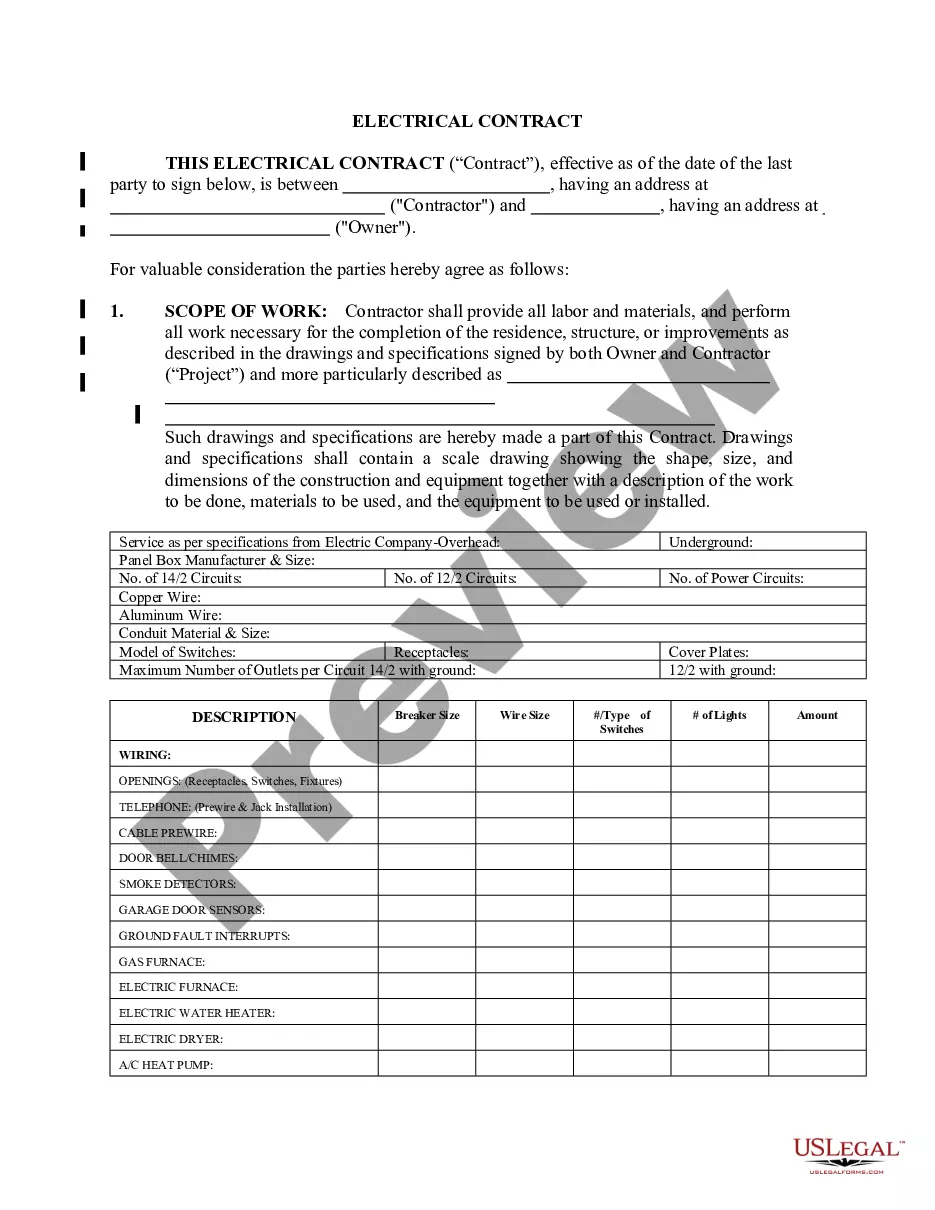
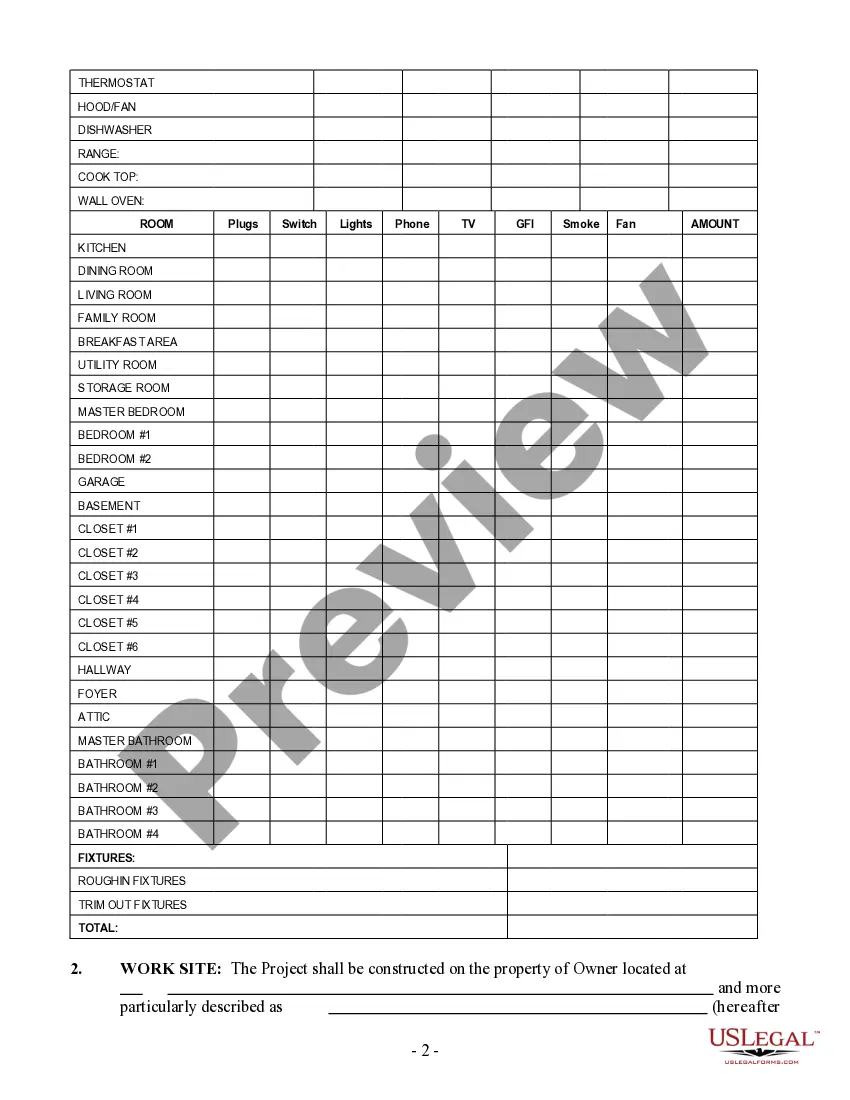
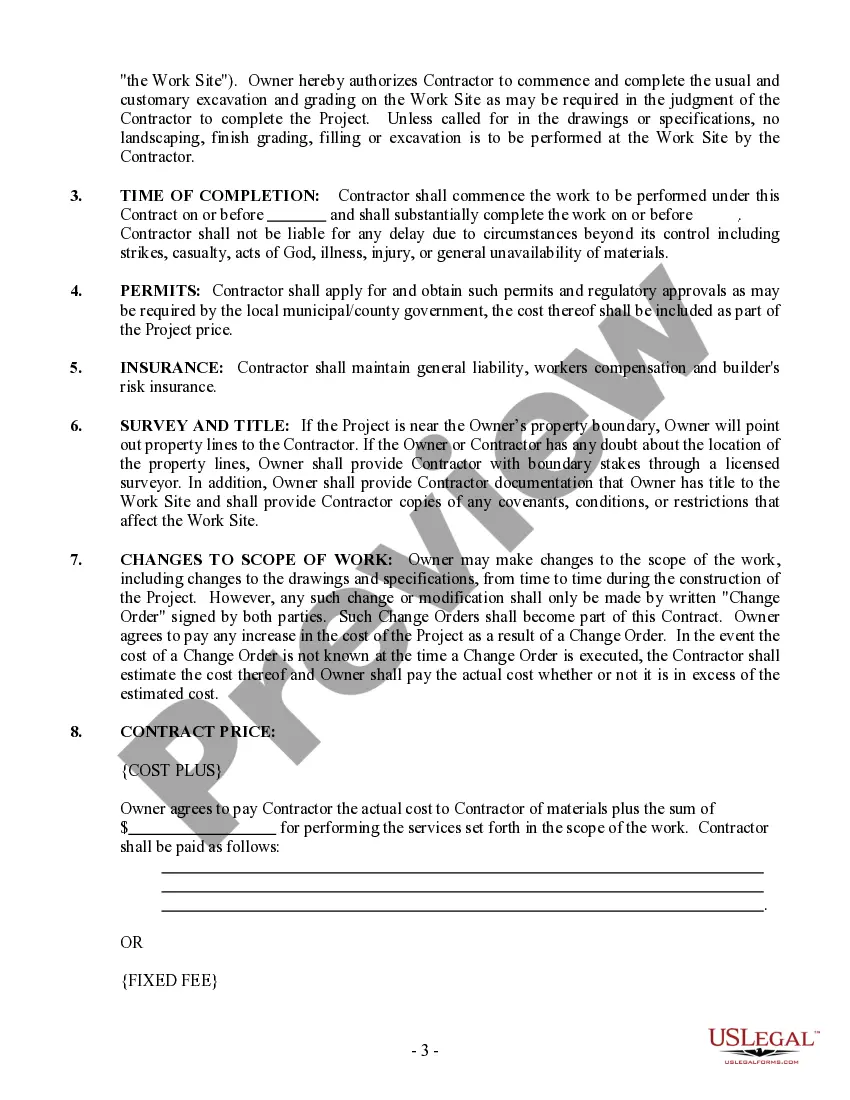
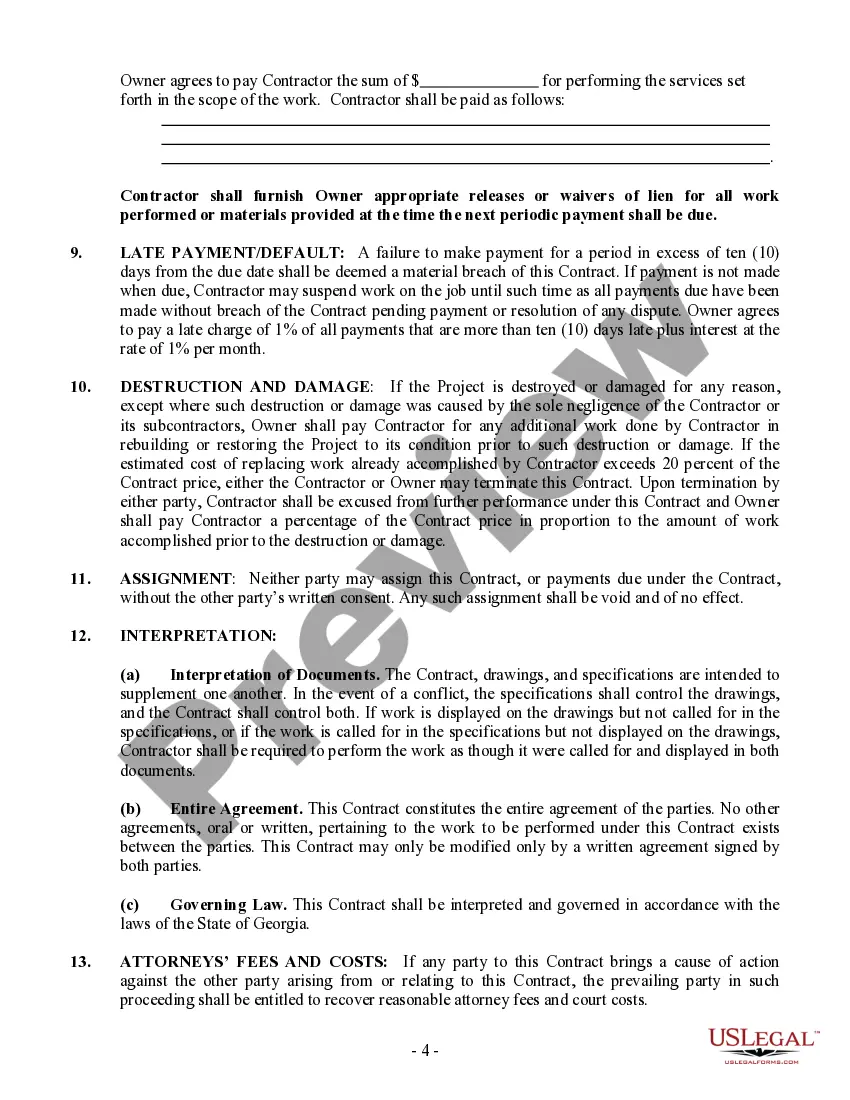
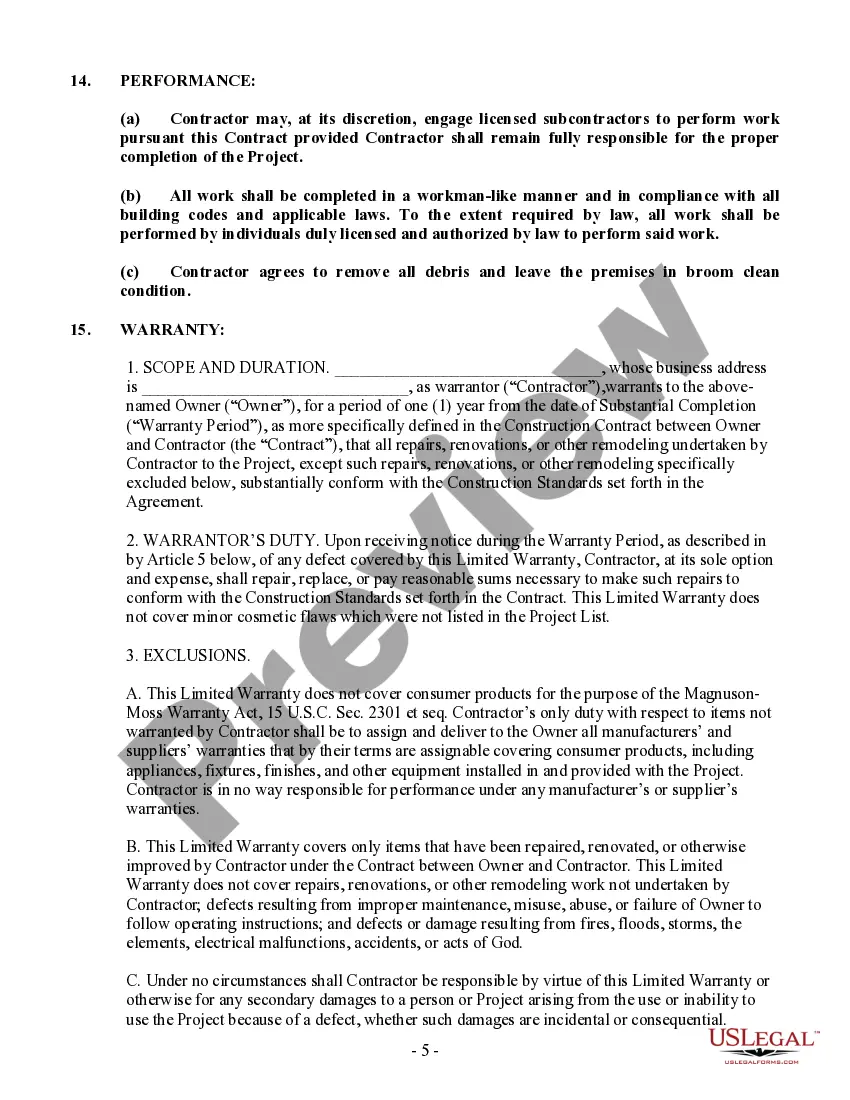
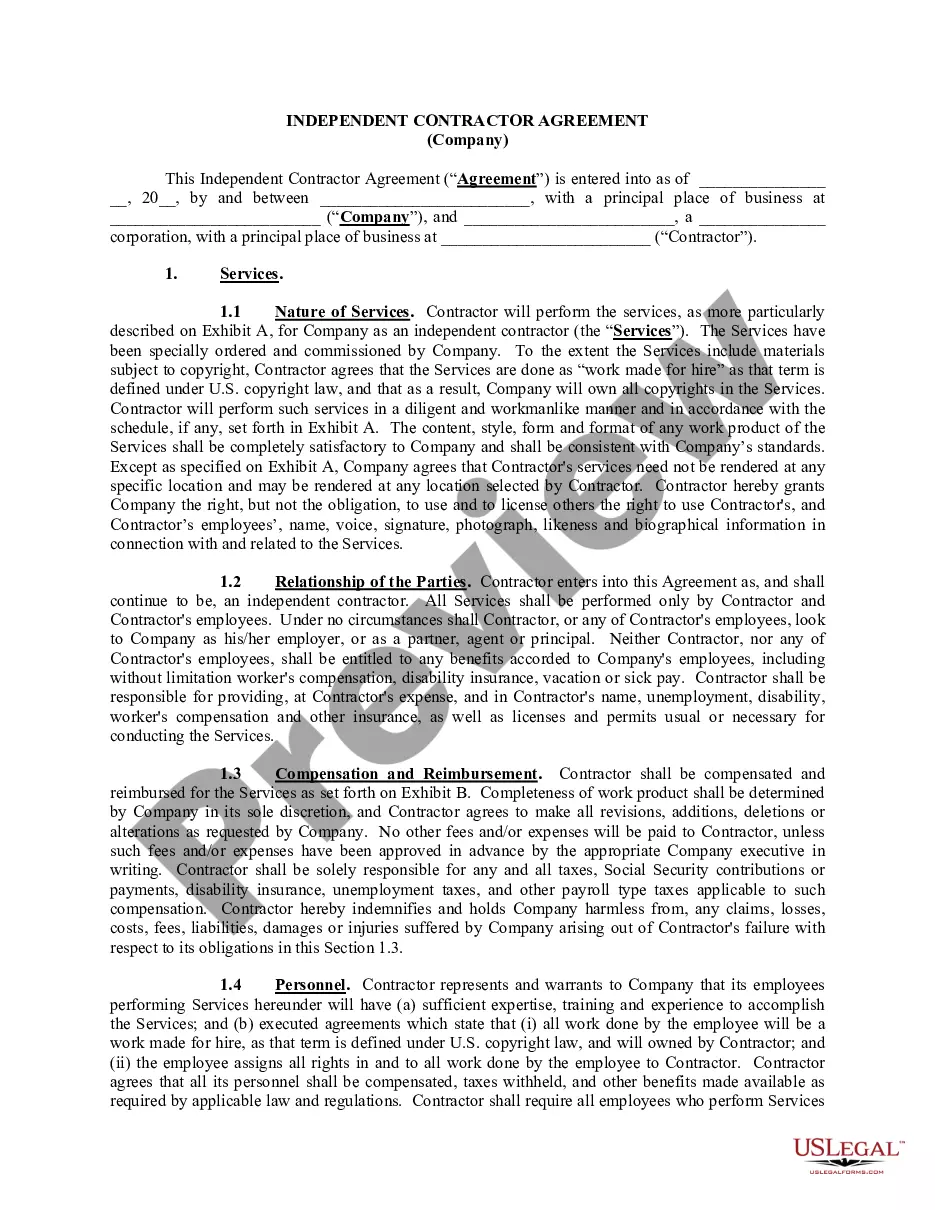
The Electrical Contract for Contractor is a legal document used to establish a formal agreement between electrical contractors and property owners. This contract outlines the payment arrangement, which can be either a cost-plus or fixed fee, and details the responsibilities of both parties regarding permits, insurance, change orders, and warranties. It ensures compliance with the laws of the State of Georgia, differentiating it from other contracts by its specific legal requirements and detailed coverage of common issues in electrical work.
Key parts of this document
- PURPOSE: Establishes the terms of the agreement between the contractor and the owner.
- PAYMENT TERMS: Specifies whether a cost-plus or fixed fee payment method will be utilized.
- PERMITS: Outlines the contractor's responsibility for obtaining necessary permits and approvals.
- INSURANCE REQUIREMENTS: Details the types of insurance the contractor must maintain.
- SCOPE OF WORK: Includes provisions for changes to the scope and requirements for written change orders.
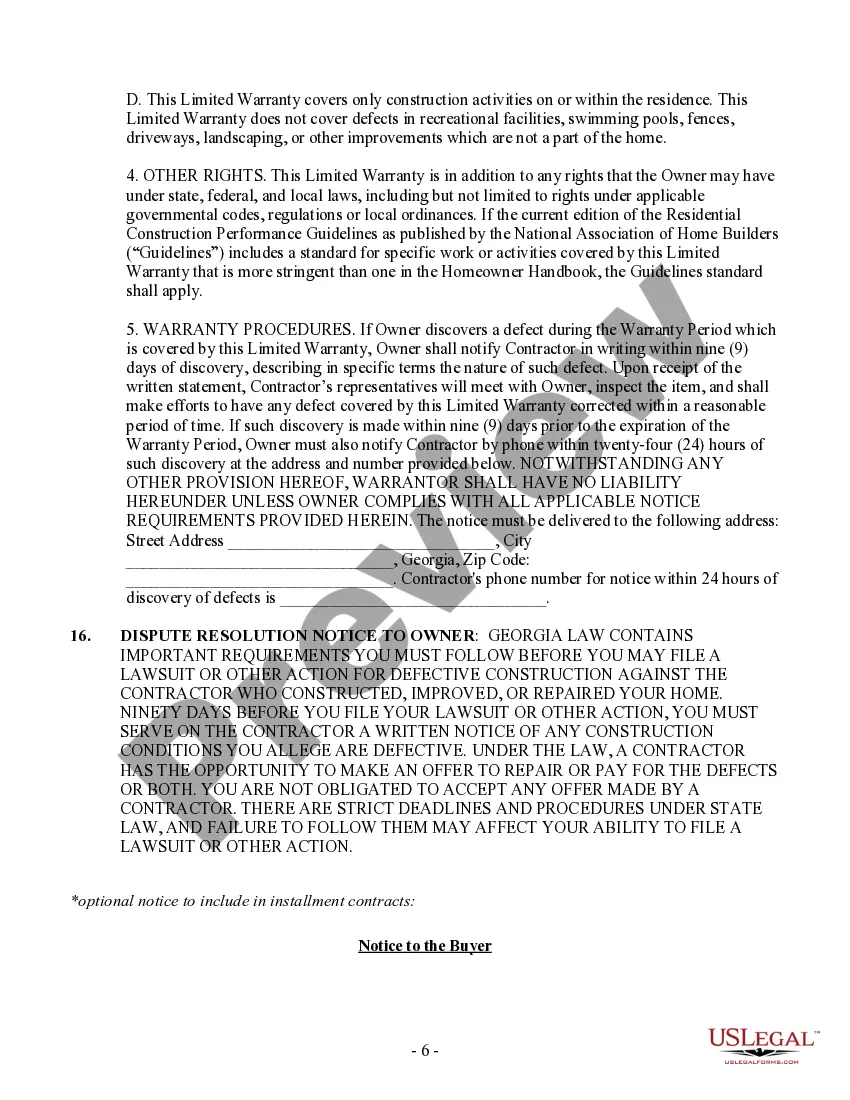
- WARRANTY: Provides information on the warranty terms for completed work and repairs.

When to use this form
This form is essential when an electrical contractor is hired to perform work on a property, ensuring that both the contractor and property owner clearly understand their rights and obligations. Use this contract to document the agreement, address potential changes during the project, and outline the necessary insurance and warranty provisions, ensuring smooth project execution and legal compliance.
Intended users of this form
- Electrical contractors seeking to formalize agreements with property owners.
- Property owners who are hiring an electrical contractor for specific projects.
- Individuals or businesses in Georgia requiring a legally compliant contract for electrical services.
How to complete this form
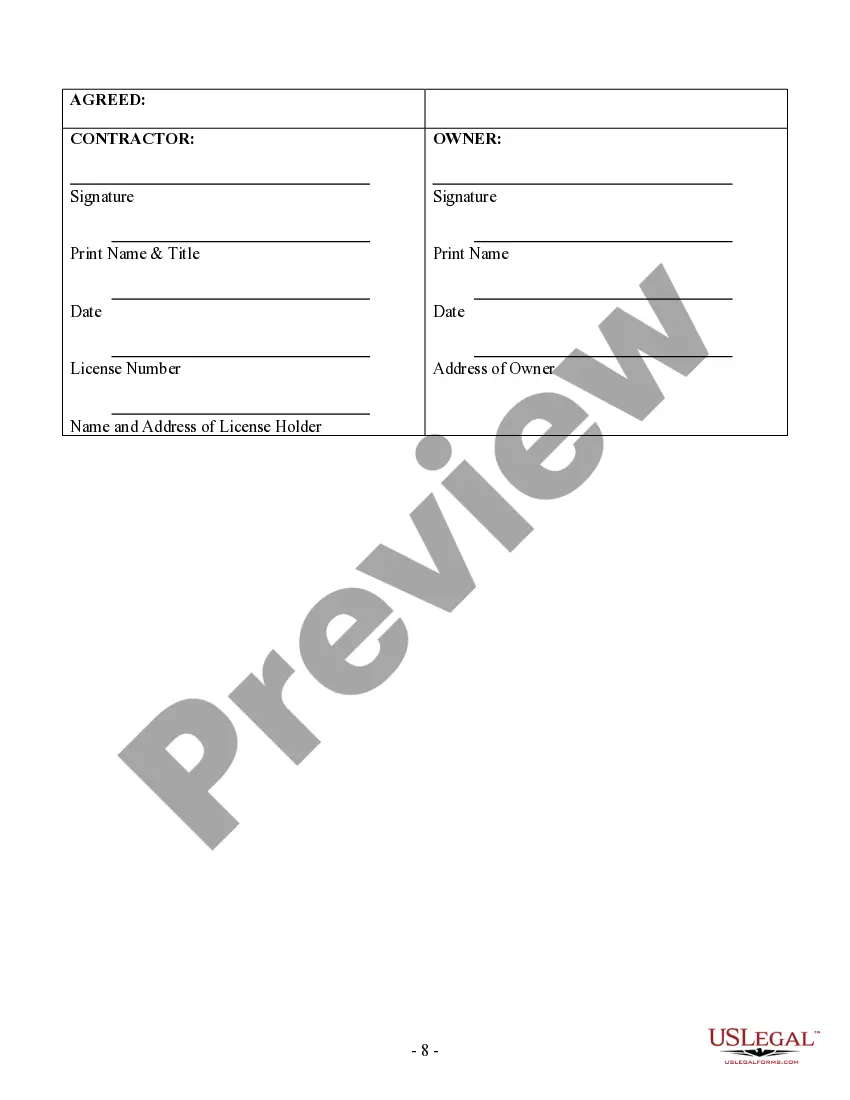
- Identify the parties involved: Enter the names and contact details of the contractor and owner.
- Specify the payment arrangement: Clearly indicate whether the agreement is cost-plus or fixed fee.
- Detail the scope of work: Describe the electrical work to be performed, including any specific requirements.
- Obtain necessary permits: Ensure that the contractor will apply for and secure all needed permits for the project.
- Review warranty conditions: Understand the warranty on completed work and any exclusions stated in the form.
Notarization guidance
This form does not typically require notarization unless specified by local law. It's advisable to check local regulations to ensure compliance.
Get your form ready online
Our built-in tools help you complete, sign, share, and store your documents in one place.
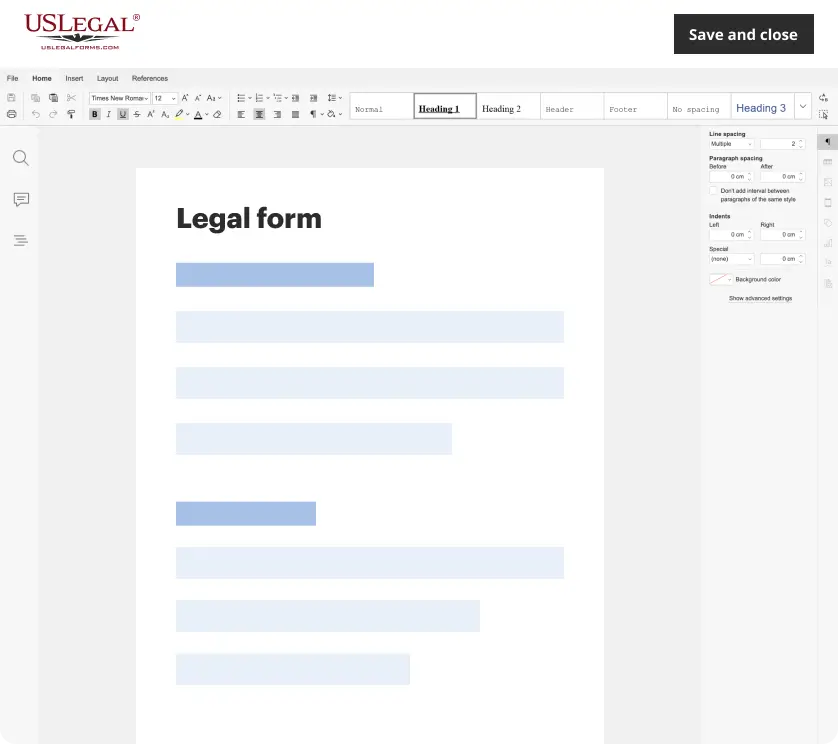
Make edits, fill in missing information, and update formatting in US Legal Forms—just like you would in MS Word.
Download a copy, print it, send it by email, or mail it via USPS—whatever works best for your next step.
Sign and collect signatures with our SignNow integration. Send to multiple recipients, set reminders, and more. Go Premium to unlock E-Sign.
If this form requires notarization, complete it online through a secure video call—no need to meet a notary in person or wait for an appointment.
We protect your documents and personal data by following strict security and privacy standards.
Make edits, fill in missing information, and update formatting in US Legal Forms—just like you would in MS Word.
Download a copy, print it, send it by email, or mail it via USPS—whatever works best for your next step.
Sign and collect signatures with our SignNow integration. Send to multiple recipients, set reminders, and more. Go Premium to unlock E-Sign.

If this form requires notarization, complete it online through a secure video call—no need to meet a notary in person or wait for an appointment.

We protect your documents and personal data by following strict security and privacy standards.
Mistakes to watch out for
- Failing to specify the payment terms clearly, which can lead to disputes.
- Not obtaining necessary permits before work begins.
- Neglecting to document changes to the scope of work properly through written change orders.
- Overlooking the insurance requirements that need to be maintained by the contractor.
- Misunderstanding the warranty provisions and exclusions outlined in the contract.
Advantages of online completion
- Convenient access to legal documents that can be downloaded and customized.
- Editable fields allow tailored agreements that suit specific project needs.
- Reliable templates drafted by licensed attorneys ensuring legal compliance.
Legal use & context
- The contract provides a legal framework that protects both the contractor and the property owner.
- Non-compliance with its terms may lead to legal disputes or claims.
- This form supports enforceability by clearly outlining obligations and responsibilities.
Quick recap
- The Electrical Contract for Contractor is essential for detailing terms of electrical services.
- Both parties must understand their rights and responsibilities under the contract.
- The form is tailored specifically to comply with Georgia laws, ensuring legal validity.
Looking for another form?
Form popularity
FAQ
To obtain your electrical contractor's license in Georgia, you must complete several steps, including education requirements, relevant experience, and passing an examination. It's vital to familiarize yourself with the state’s regulations surrounding electrical work. Securing a Georgia Electrical Contract for Contractor also sets the stage for your professional undertakings as you comply with industry standards.
Yes, independent contractors in Georgia typically need a business license to operate legally. This license allows you to conduct business and ensures compliance with local regulations. Having a Georgia Electrical Contract for Contractor also helps in establishing professionalism and credibility in your work.
Writing an electrical contract involves key components like the scope of work, payment terms, deadlines, and legal provisions. It's important to be clear and precise to avoid misunderstandings. Utilizing a Georgia Electrical Contract for Contractor template can streamline this process, helping you draft a comprehensive contract that meets all legal requirements.
Becoming an independent contractor in Georgia involves several steps. First, you must register your business with the state. Additionally, it’s crucial to have a Georgia Electrical Contract for Contractor in place, which outlines the scope of work and payment terms, ensuring a clear understanding between you and your clients.
Yes, obtaining a license is essential to work as a contractor in Georgia. The state requires specific licenses based on the type of contracting work you intend to perform, such as electrical work. Ensuring you have the proper Georgia Electrical Contract for Contractor not only maintains legal compliance but also builds trust with clients and stakeholders.
Without a contractor's license, you can typically perform basic repairs and maintenance as a homeowner, like painting or unclogging a drain. However, for substantial projects requiring a Georgia Electrical Contract for Contractor, you'll need a licensed professional. Consider engaging a skilled contractor to tackle any work beyond your expertise, ensuring safety and quality.
Yes, it is illegal to hire unlicensed contractors for certain types of work, particularly for significant construction, electrical, or plumbing jobs in Georgia. Relying on a licensed professional ensures compliance with safety regulations and standards outlined in a Georgia Electrical Contract for Contractor. Always verify a contractor's licensing status before hiring to protect yourself and your investment.
In Georgia, it is illegal to perform specific construction work without a proper license, especially for jobs exceeding the threshold set by the state. For any significant electrical work, a Georgia Electrical Contract for Contractor is essential. However, there are exceptions for minor repairs done by homeowners, so understanding the laws will keep your projects compliant.
In Georgia, you can perform certain tasks as a homeowner without a contractor license, typically up to $2,500 worth of work. This amount includes minor repairs and renovations but excludes any extensive electrical projects that require a Georgia Electrical Contract for Contractor. Always check local rules, as regulations can vary by city or county.
In Georgia, an unlicensed handyman can perform minor repair and maintenance tasks, such as fixing plumbing leaks or painting. However, they cannot legally undertake electrical work that requires a Georgia Electrical Contract for Contractor. Be cautious when hiring unlicensed individuals, as they may not have the qualifications to ensure your project meets local safety standards.