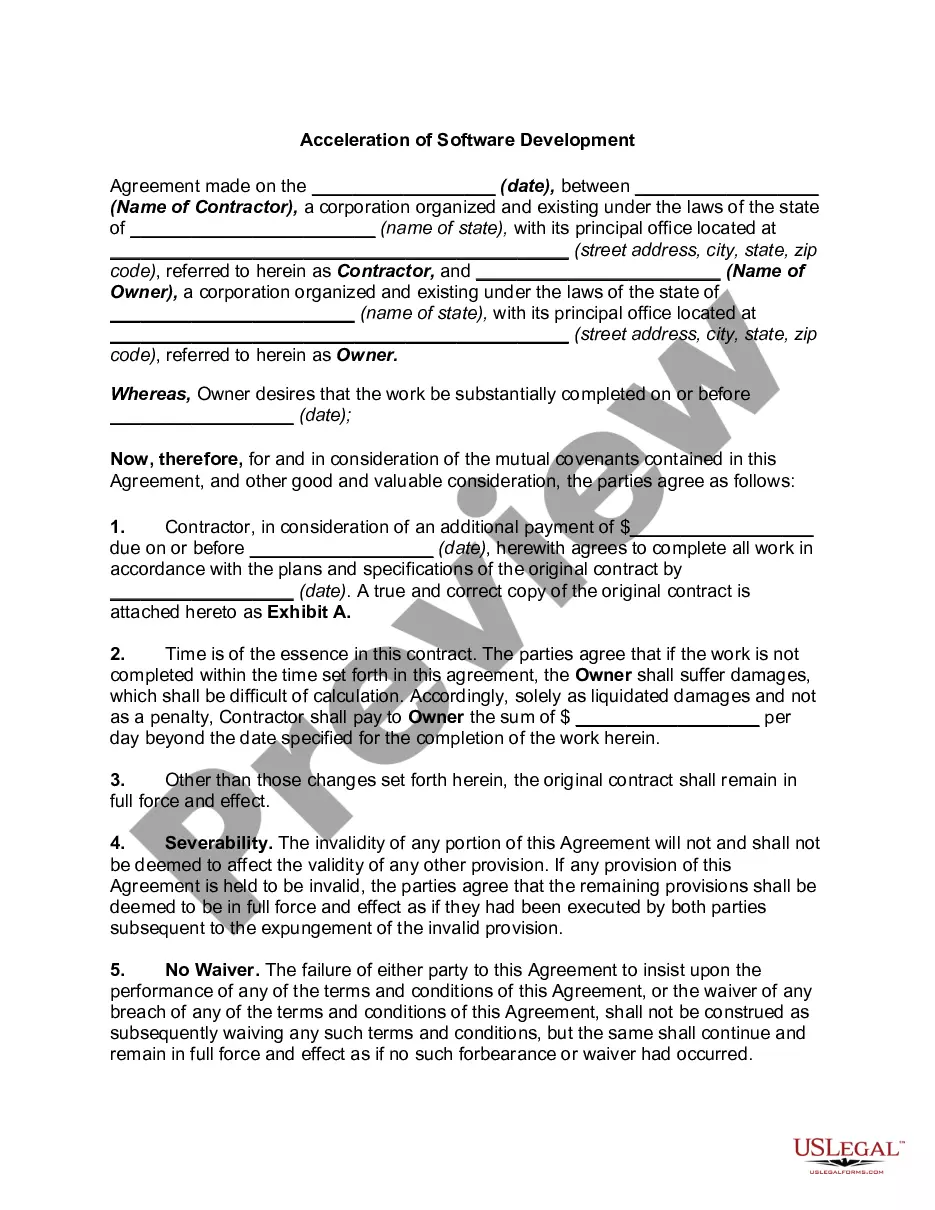
Florida Last Will for a Widow or Widower with no Children
Understanding this form
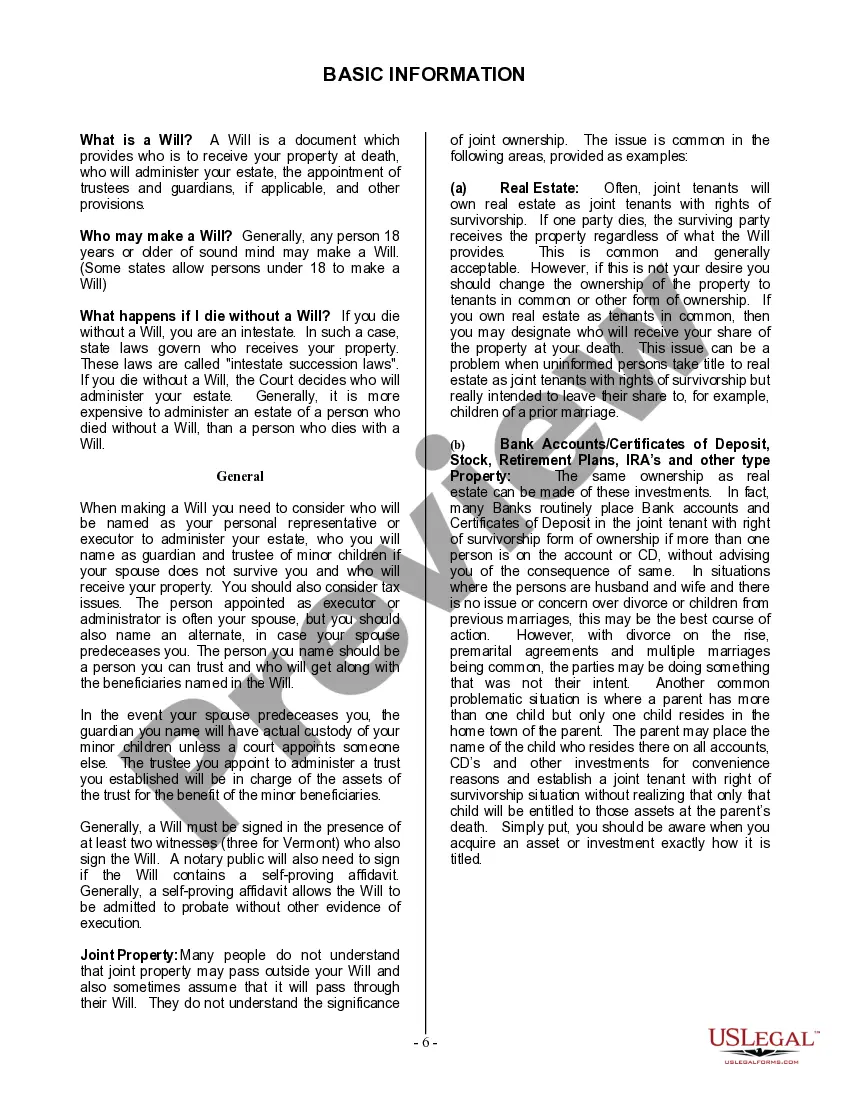
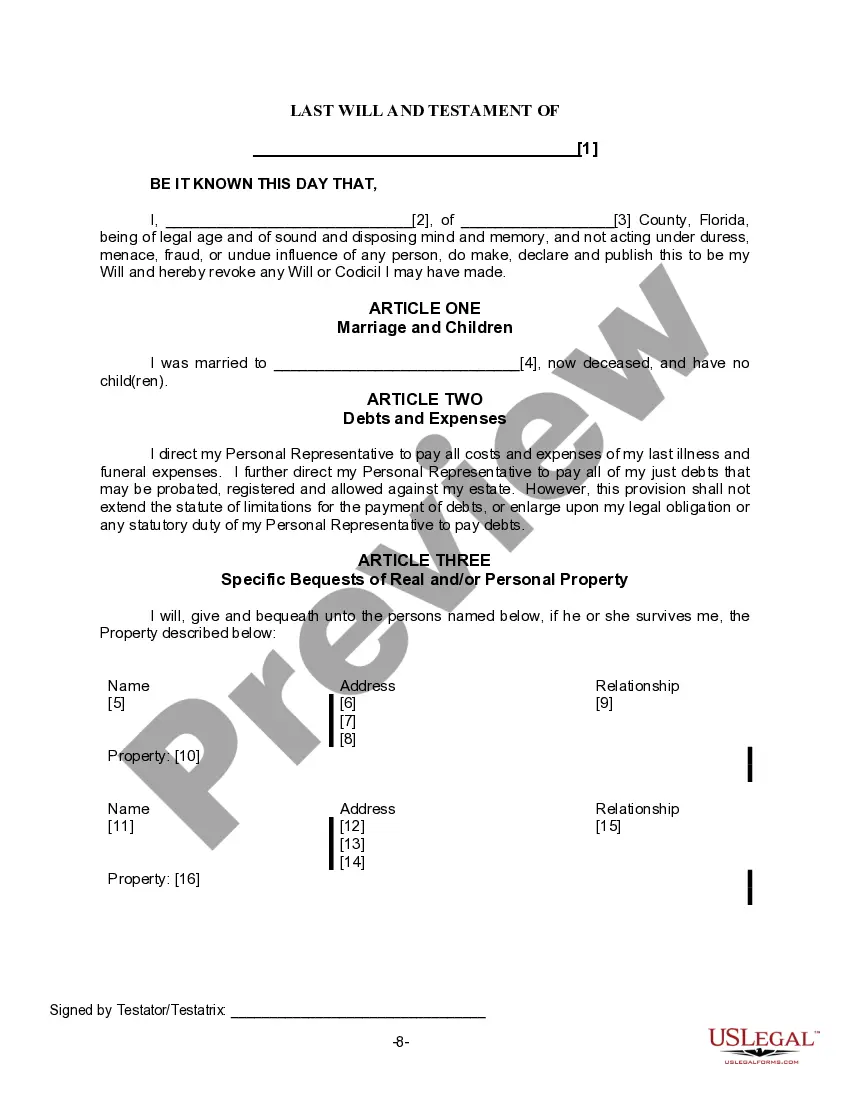
The Last Will for a Widow or Widower with No Children is a legal document that allows individuals who have lost a spouse and do not have children to specify how their assets and property should be distributed after their passing. Unlike a standard will, this form considers the unique circumstances of a widow or widower, providing clear directions for asset allocation, the appointment of a personal representative or executor, and other necessary provisions to ensure an individual's wishes are upheld after death.
Key components of this form
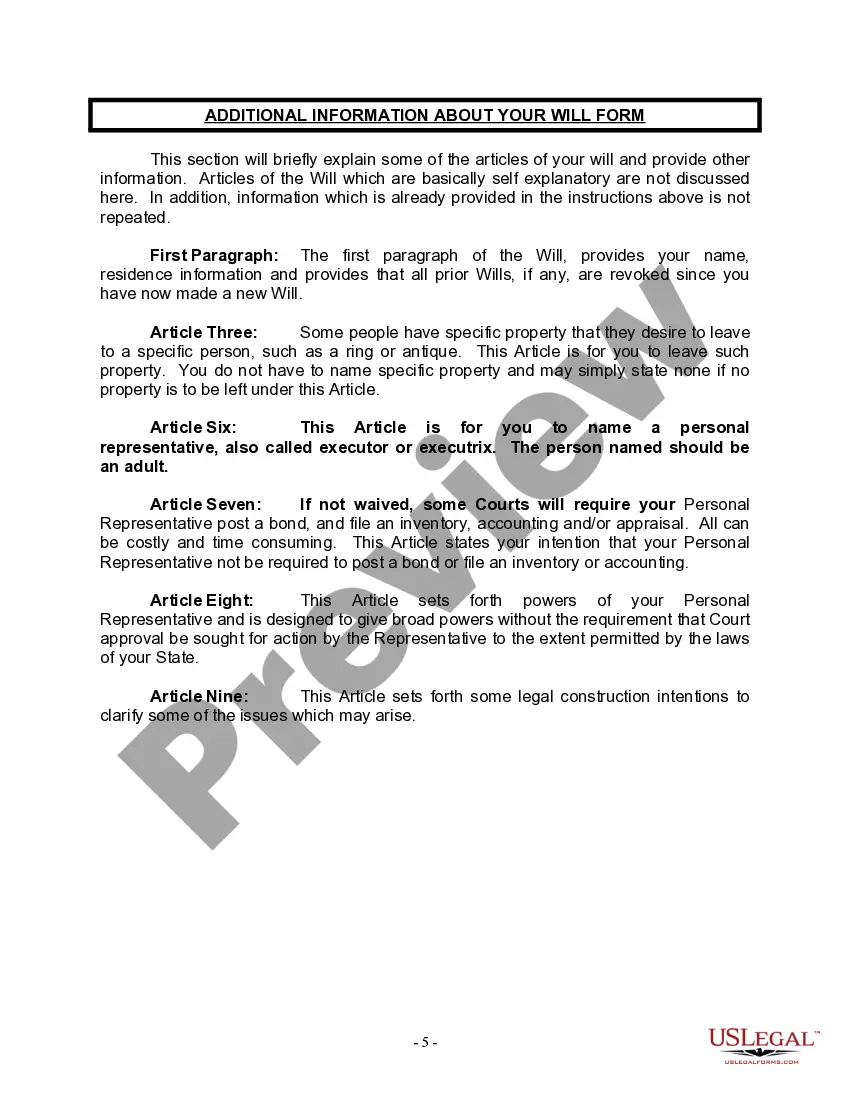
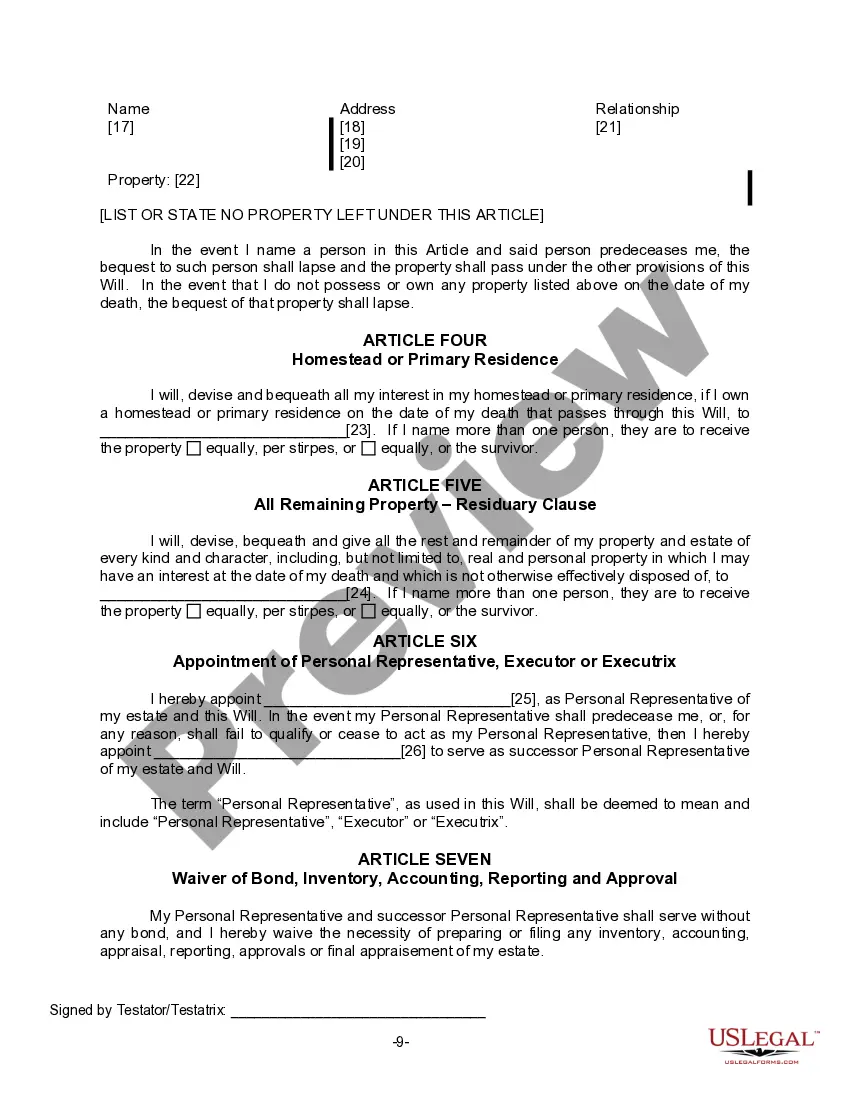
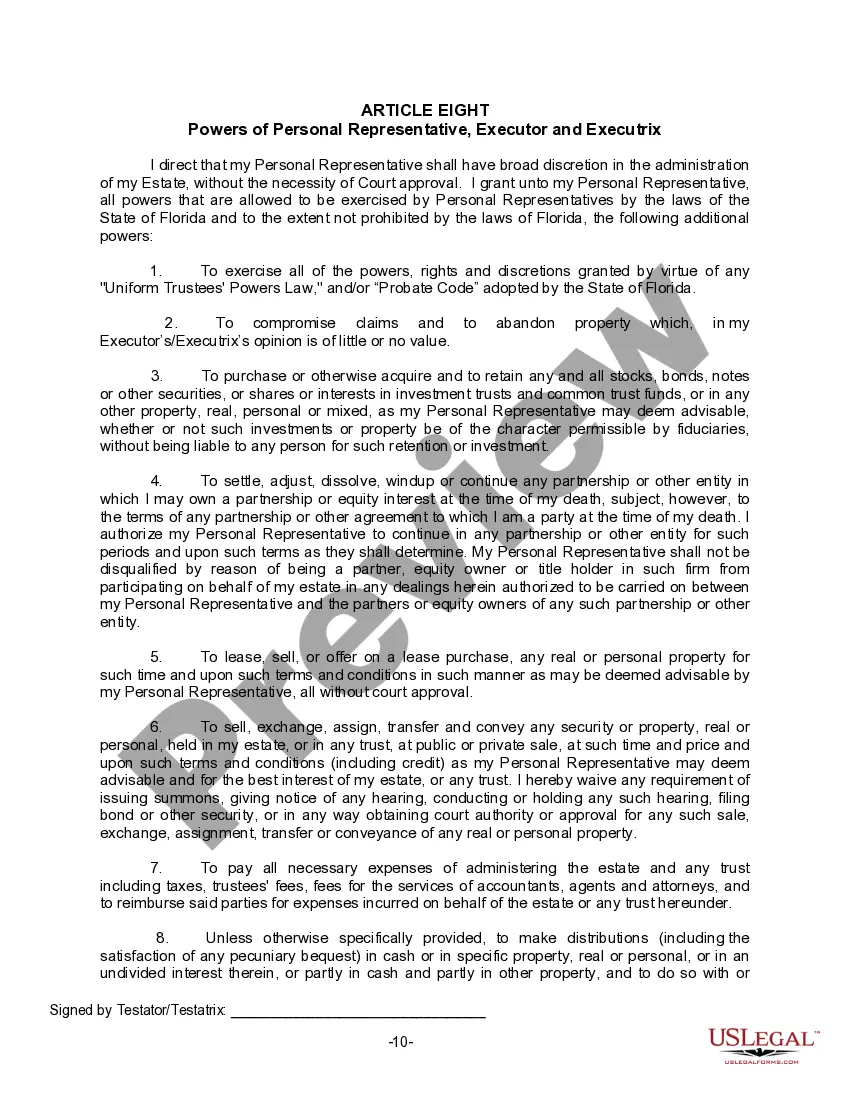
- Personal representative appointment: Designates an executor to manage the estate.
- Specific bequests: Allows the user to leave particular items to individuals.
- Homestead allocation: Specifies who will receive the primary residence.
- Residuary clause: Defines who receives all remaining property not specified elsewhere.
- Signature requirements: Ensures the will is signed in front of two witnesses for validity.
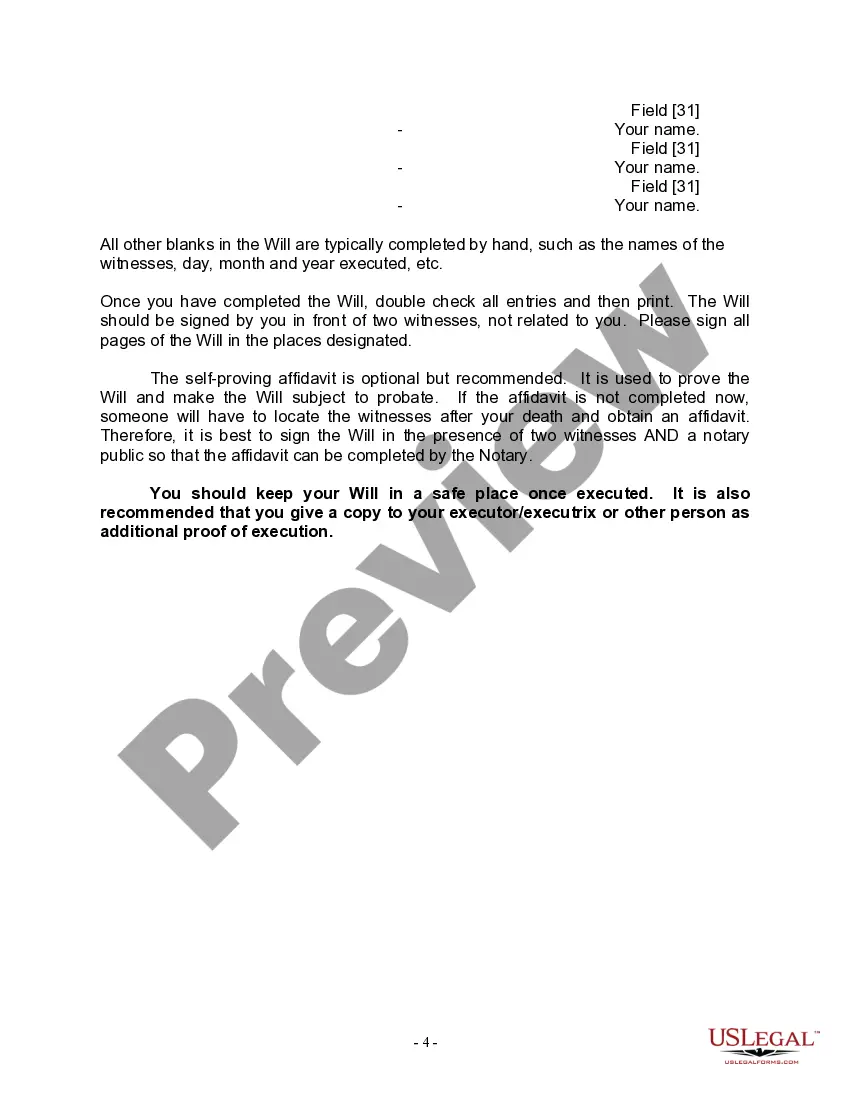
- Self-proving affidavit: Optional section to streamline the probate process.

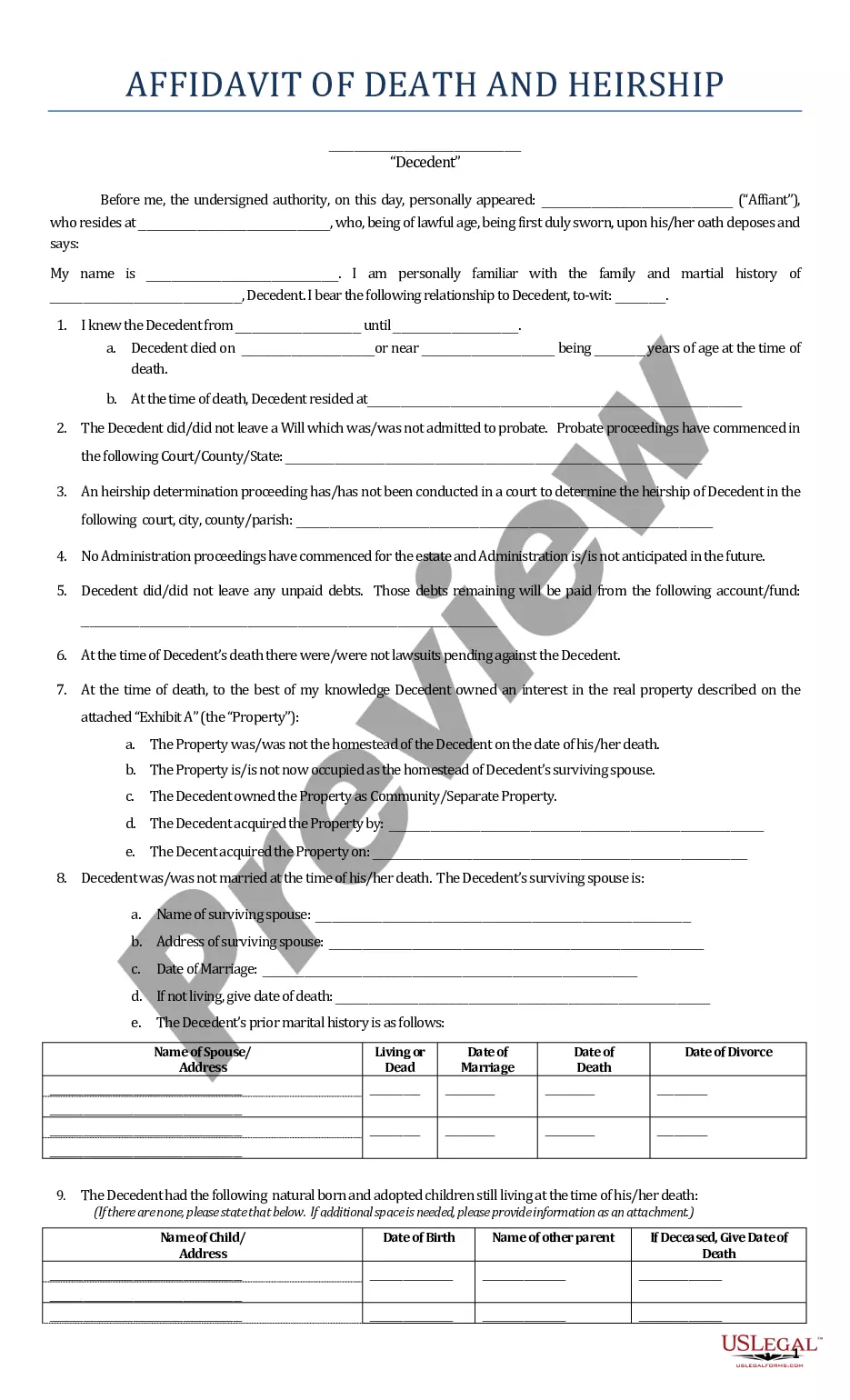
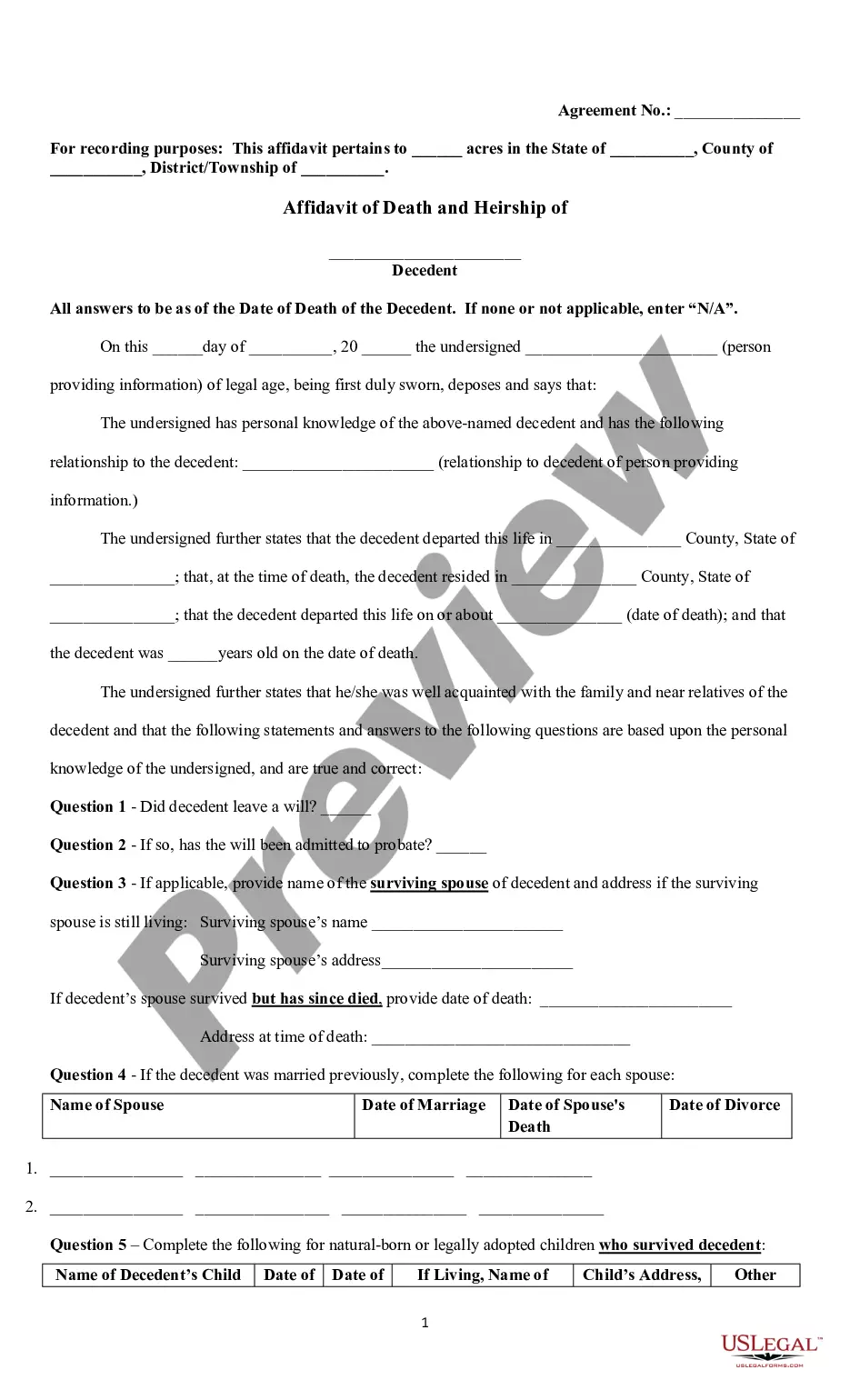


When to use this form
This form is essential when a widow or widower wants to establish a clear plan for their estate after their death. It is particularly relevant for individuals who wish to ensure their property is distributed according to their wishes without leaving it to chance or allowing state intestacy laws to dictate the outcome. This will is recommended for anyone who has lost a spouse and has no children to inherit their estate.
Intended users of this form
- Widows or widowers who have recently lost their spouse.
- Individuals with no dependent children.
- Those looking to define specific distributions of their assets.
- Users desiring to appoint an executor to handle estate matters.
- Persons who want to streamline the probate process with a self-proving affidavit.
Instructions for completing this form
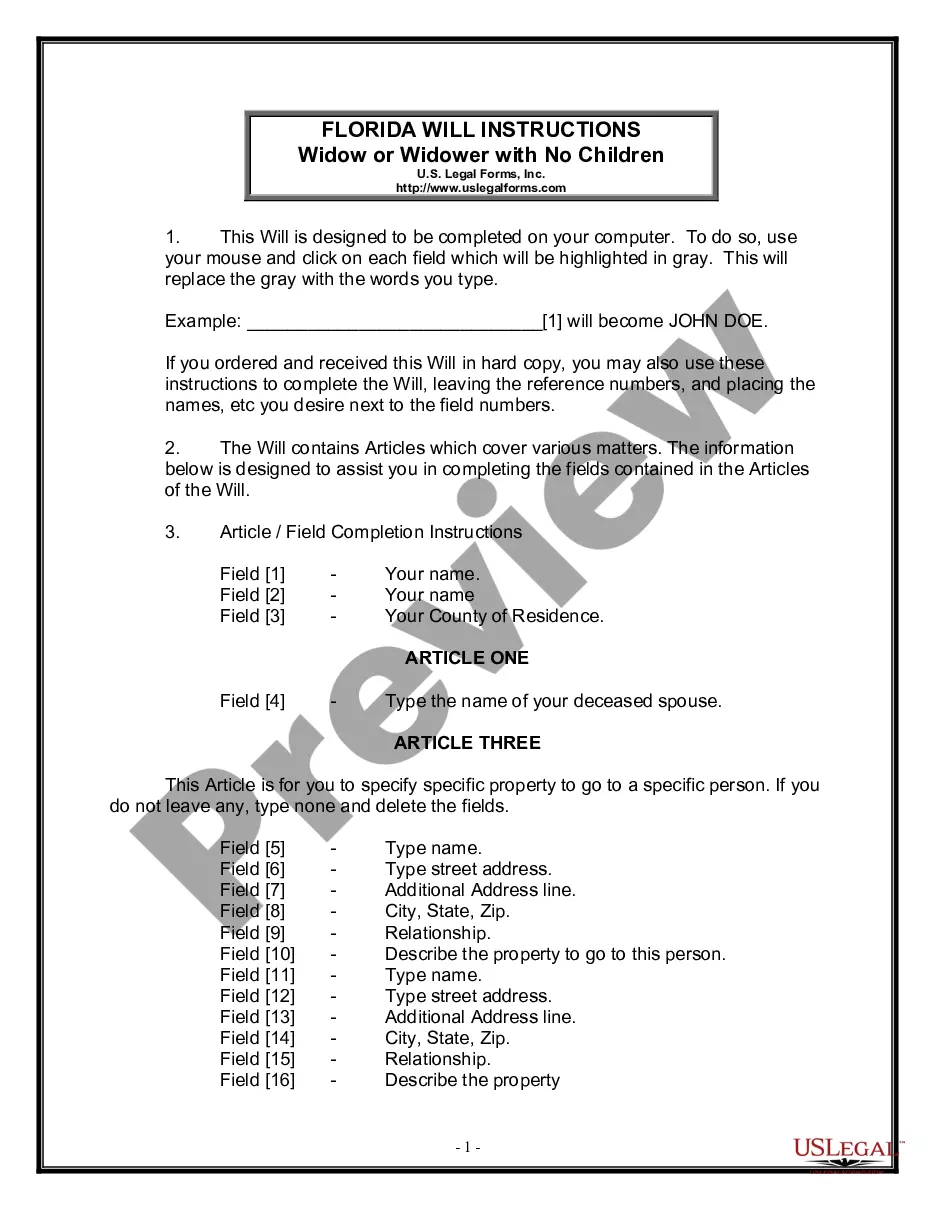
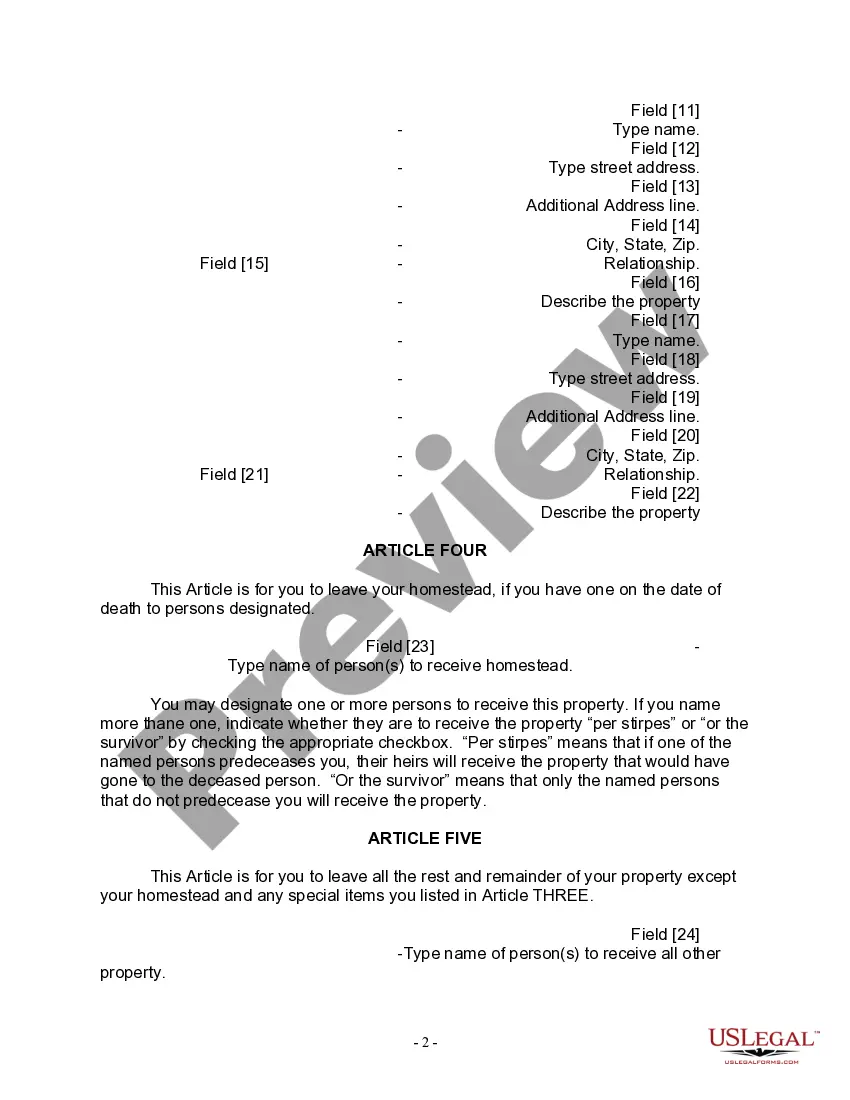
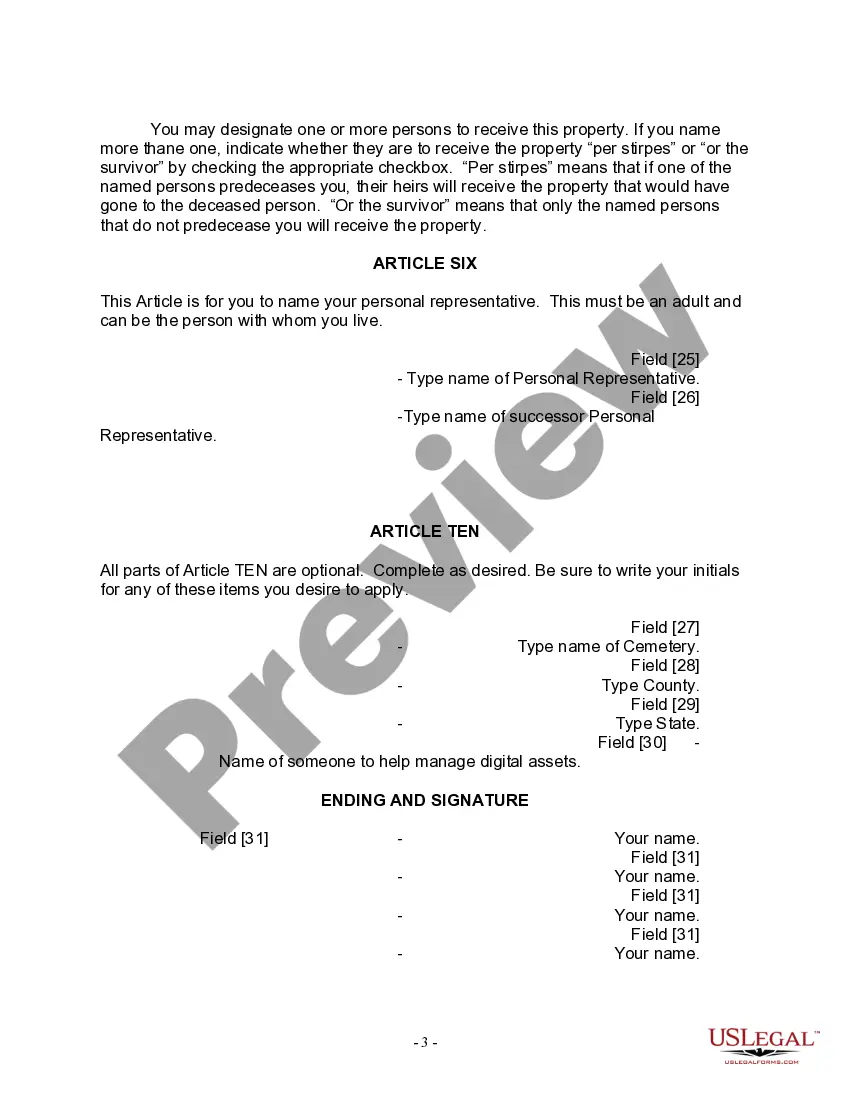
- Identify yourself: Enter your full name, county of residence, and your deceased spouse's name.
- Detail property distribution: Specify any particular items you wish to leave to specific individuals and, if applicable, your homestead details.
- Appoint a personal representative: Select a trusted adult to act as your estate's executor.
- Sign the will: Ensure you sign in the presence of two disinterested witnesses.
- Consider notarization: Complete the self-proving affidavit if you wish to simplify the probate process.
Is notarization required?
This form needs to be notarized to ensure legal validity. US Legal Forms provides secure online notarization powered by Notarize, allowing you to complete the process through a verified video call, available anytime.
Get your form ready online
Our built-in tools help you complete, sign, share, and store your documents in one place.
Make edits, fill in missing information, and update formatting in US Legal Forms—just like you would in MS Word.
Download a copy, print it, send it by email, or mail it via USPS—whatever works best for your next step.
Sign and collect signatures with our SignNow integration. Send to multiple recipients, set reminders, and more. Go Premium to unlock E-Sign.
If this form requires notarization, complete it online through a secure video call—no need to meet a notary in person or wait for an appointment.
We protect your documents and personal data by following strict security and privacy standards.

Make edits, fill in missing information, and update formatting in US Legal Forms—just like you would in MS Word.

Download a copy, print it, send it by email, or mail it via USPS—whatever works best for your next step.

Sign and collect signatures with our SignNow integration. Send to multiple recipients, set reminders, and more. Go Premium to unlock E-Sign.

If this form requires notarization, complete it online through a secure video call—no need to meet a notary in person or wait for an appointment.

We protect your documents and personal data by following strict security and privacy standards.
Mistakes to watch out for
- Failing to sign in front of two required witnesses.
- Omitting specific distributions or bequests which may lead to unintended consequences.
- Not updating the will after major life events.
- Assuming all property automatically passes to the surviving spouse without formal designation.
Benefits of completing this form online
- Convenience: Complete the form from the comfort of your home.
- Editability: Easily update information as needed before finalizing.
- Legal reliability: The forms are drafted by licensed attorneys to ensure legal compliance.
Legal use & context
- This will directs how your estate should be managed and distributed after your death.
- It provides legal clarity and ensures your wishes are executed as desired.
- Failure to have a will can result in state laws dictating asset distribution, which may not align with your preferences.
Key takeaways
- A Last Will for a Widow or Widower is essential for directing asset distribution.
- It is important to specify your personal representative and bequests.
- Signature requirements include witnessing and potential notarization to ensure validity.
Looking for another form?

Form popularity
FAQ
In Florida, when a person dies without a will, the state’s intestacy laws determine inheritance. If the deceased is a widow or widower with no children, their estate typically goes to their surviving parents or siblings. If there are no parents or siblings, the estate may be divided among other relatives, such as nieces, nephews, or grandparents. To secure your wishes and ensure a smooth process, consider creating a Florida Last Will for a Widow or Widower with no Children.
In Florida, when a husband dies, his wife is typically entitled to the entirety of the estate if there are no children. This entitlement falls under the Florida Last Will for a Widow or Widower with no Children statutes. Engaging with legal services can ensure that a widow fully understands her rights and benefits following her husband's passing, allowing for peace of mind during a challenging time.
Yes, when a husband dies, his widow may be eligible to receive Social Security survivor benefits. The amount depends on the deceased's work record and the widow's age at the time of claiming benefits. Understanding how the Florida Last Will for a Widow or Widower with no Children can impact eventual benefits is vital for making informed decisions.
While it is not legally required to hire a lawyer to file a will in Florida, doing so can be immensely beneficial. A legal professional can navigate the complexities involved in creating a Florida Last Will for a Widow or Widower with no Children, ensuring that all terms are clear and legally enforceable. This can save you time and potential issues in the probate process.
Widows in Florida may access several benefits, such as Social Security survivor benefits and possible entitlement to pension plans. Additionally, widows can receive guidance on managing the Florida Last Will for a Widow or Widower with no Children to ensure their financial stability after loss. Consulting with a legal expert can help maximize these benefits for long-term security.
In Florida, a widow's entitlements include a share of the deceased spouse's estate. Specifically, under the laws governing the Florida Last Will for a Widow or Widower with no Children, the widow typically inherits the entire estate if there are no children or surviving parents. It is crucial for widows to understand these rights, as having a well-drafted will can simplify the process.
Yes, you can write your own will in Florida, provided you meet the necessary legal requirements. A handwritten will must be signed correctly and be clear in its intentions. To ensure that your Florida Last Will for a Widow or Widower with no Children meets all legal standards, you may want to utilize online resources like UsLegalForms for guidance.
In Florida, a surviving spouse typically inherits the entire estate if there are no children or other relatives. This rule ensures that the widow or widower is protected in the absence of direct descendants. It’s wise to outline your specific wishes in your Florida Last Will for a Widow or Widower with no Children, as this can provide clarity beyond what the law stipulates.
You can write a will in Florida without a lawyer by using a template or online service. Such services can guide you through the essential elements, ensuring your wishes are clearly stated. Consider using platforms like UsLegalForms to create your Florida Last Will for a Widow or Widower with no Children, which simplifies the process.
In Florida, the order of inheritance starts with the surviving spouse, followed by children and their descendants, parents, siblings, and then more distant relatives. If you are a widow or widower with no children, your spouse has the top priority for inheritance. Understanding this order can help you structure your Florida Last Will for a Widow or Widower with no Children effectively.