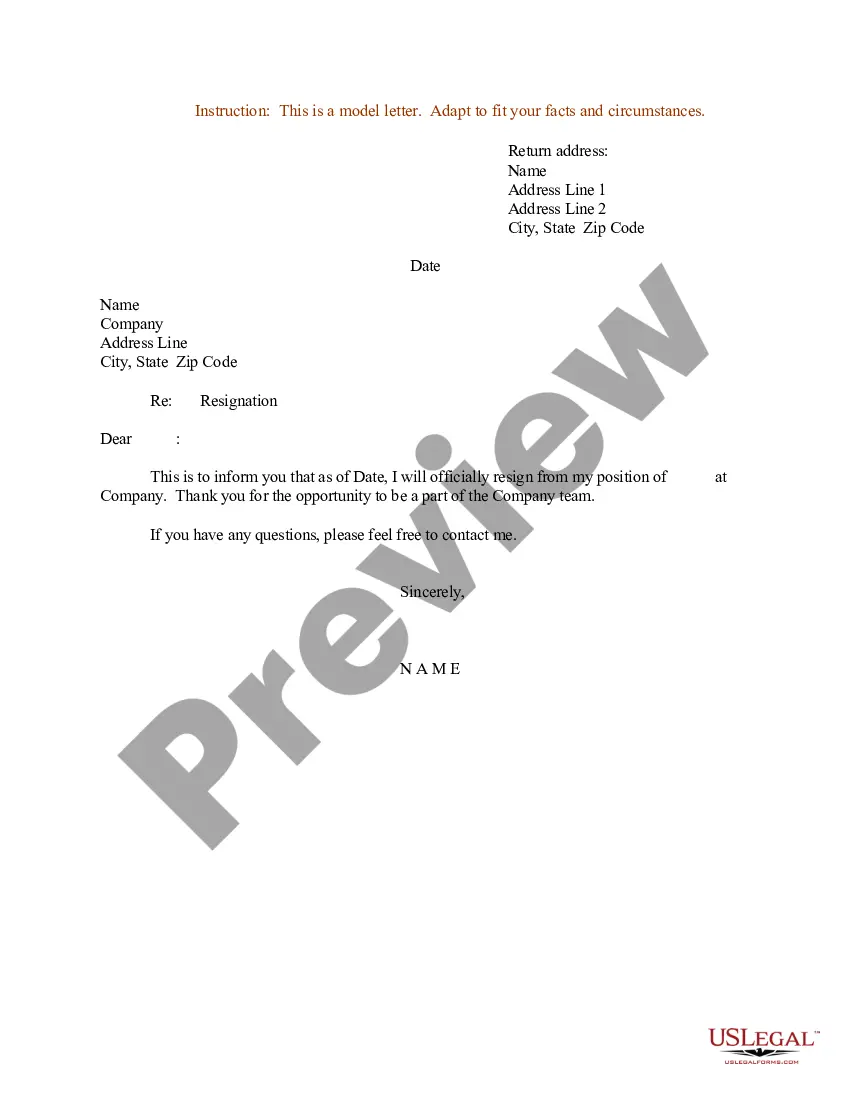
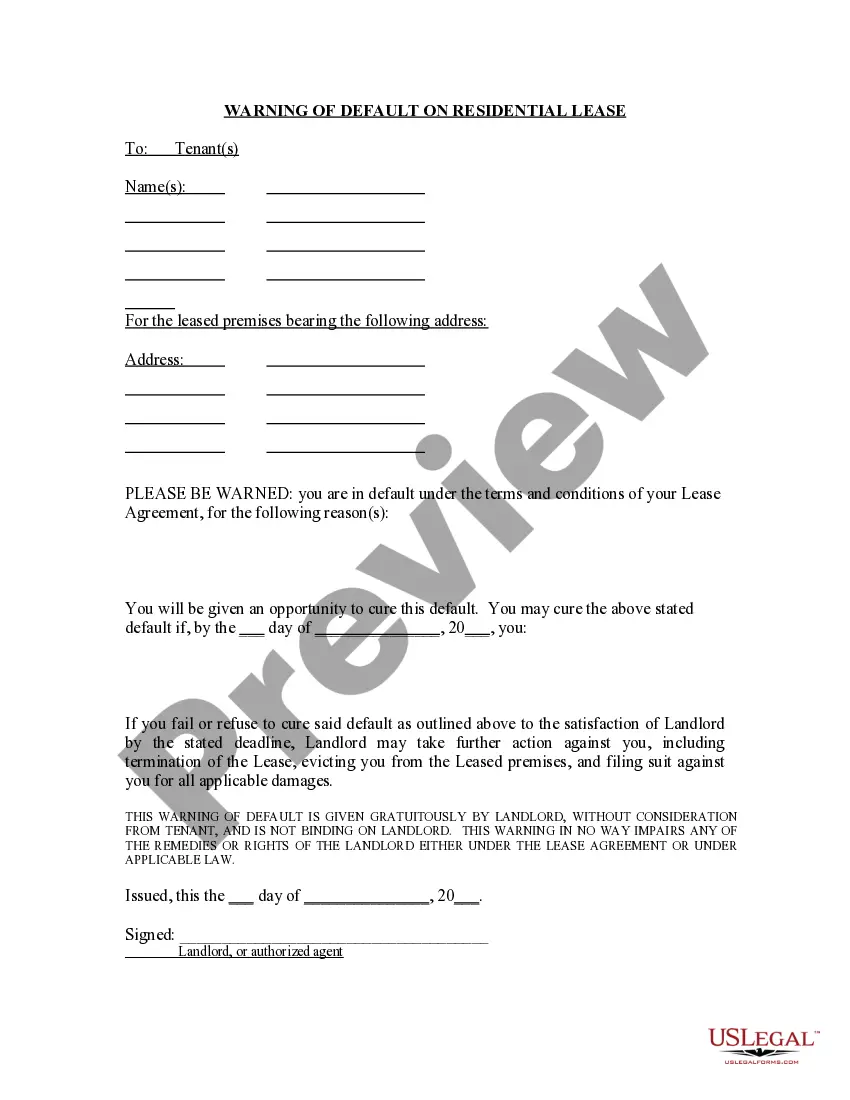
Florida Warning of Default on Residential Lease
Overview of this form
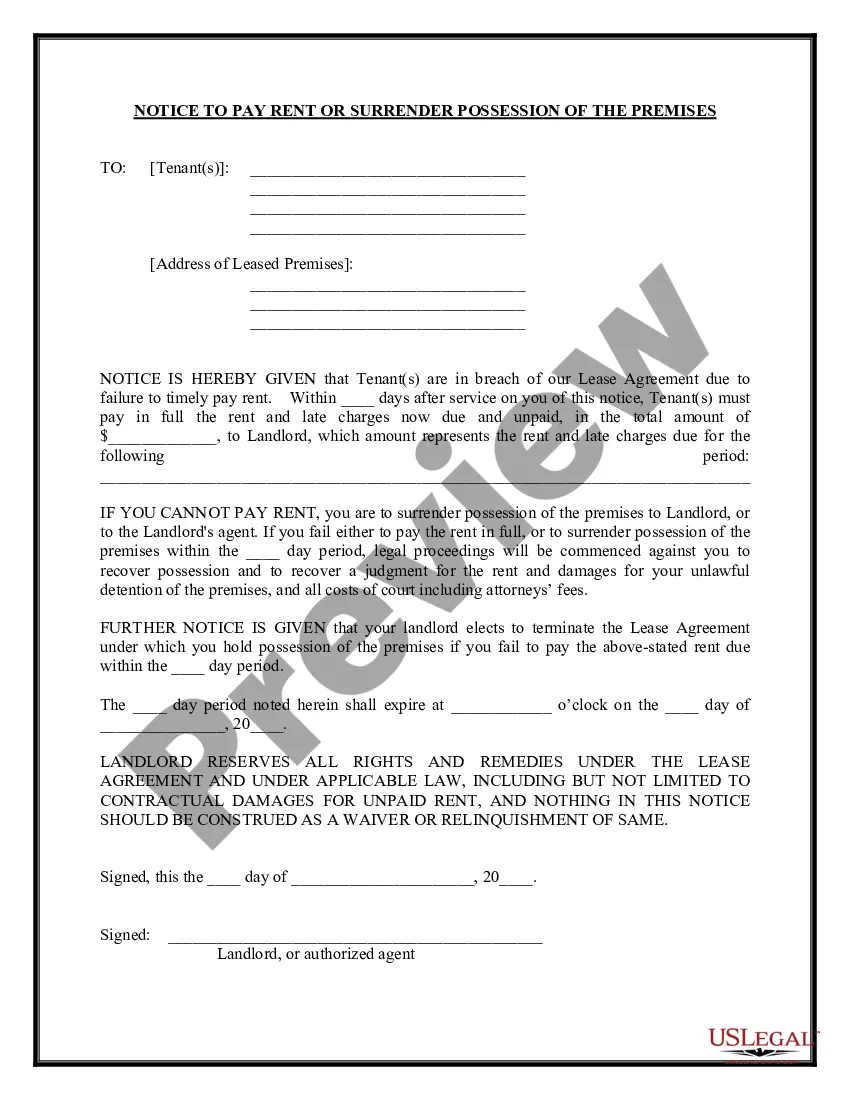
The Warning of Default on Residential Lease is a document used by landlords to notify tenants about potential lease violations. This warning letter alerts the tenant that certain actions or omissions may lead to a default under the lease agreement. Unlike eviction notices or formal default notices, this form serves as a preliminary communication intended to resolve issues before escalating further. It helps maintain a clear line of communication between landlords and tenants regarding compliance with lease terms.
Key parts of this document
- Date of issuance to establish when the warning is given.
- Landlord's signature or that of an authorized agent to indicate who is issuing the warning.
- Clear statement that the warning is given gratuitously and is not binding on the landlord.
- Assertion that the warning does not affect the landlord's rights under the lease or applicable law.


When to use this document
This form should be used when a landlord has identified specific concerns regarding a tenant's actions that may violate the lease terms, such as late rent payments, property damage, or unauthorized alterations to the rental space. By issuing this warning, landlords provide tenants with an opportunity to correct the issues before facing potential consequences such as eviction or legal action.
Who this form is for
- Residential landlords seeking to address minor lease violations.
- Property managers responsible for managing rental properties on behalf of landlords.
- Landlords who want to maintain a formal record of communications with tenants regarding lease compliance.
How to prepare this document
- Determine the appropriate dates: Fill in the date of issuance at the top of the form.
- Enter the tenant's name and address if required: Clearly specify whom the warning is directed to, ensuring the tenant is properly identified.
- Sign the document: The landlord or an authorized agent must sign the form to validate it.
- Keep a copy: Make sure to retain a copy of the issued warning for your records.
- Deliver the warning: Ensure the tenant receives the warning through a method that provides proof of delivery.
Notarization requirements for this form
This form does not typically require notarization unless specified by local law. Always check local regulations to ensure compliance.
Get your form ready online
Our built-in tools help you complete, sign, share, and store your documents in one place.
Make edits, fill in missing information, and update formatting in US Legal Forms—just like you would in MS Word.
Download a copy, print it, send it by email, or mail it via USPS—whatever works best for your next step.
Sign and collect signatures with our SignNow integration. Send to multiple recipients, set reminders, and more. Go Premium to unlock E-Sign.
If this form requires notarization, complete it online through a secure video call—no need to meet a notary in person or wait for an appointment.
We protect your documents and personal data by following strict security and privacy standards.
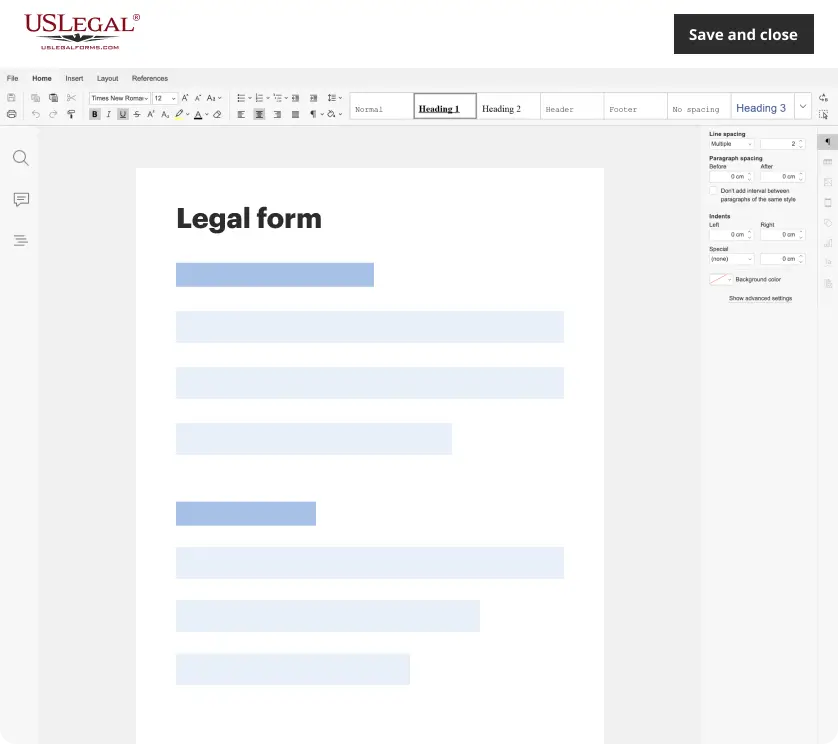
Make edits, fill in missing information, and update formatting in US Legal Forms—just like you would in MS Word.
Download a copy, print it, send it by email, or mail it via USPS—whatever works best for your next step.
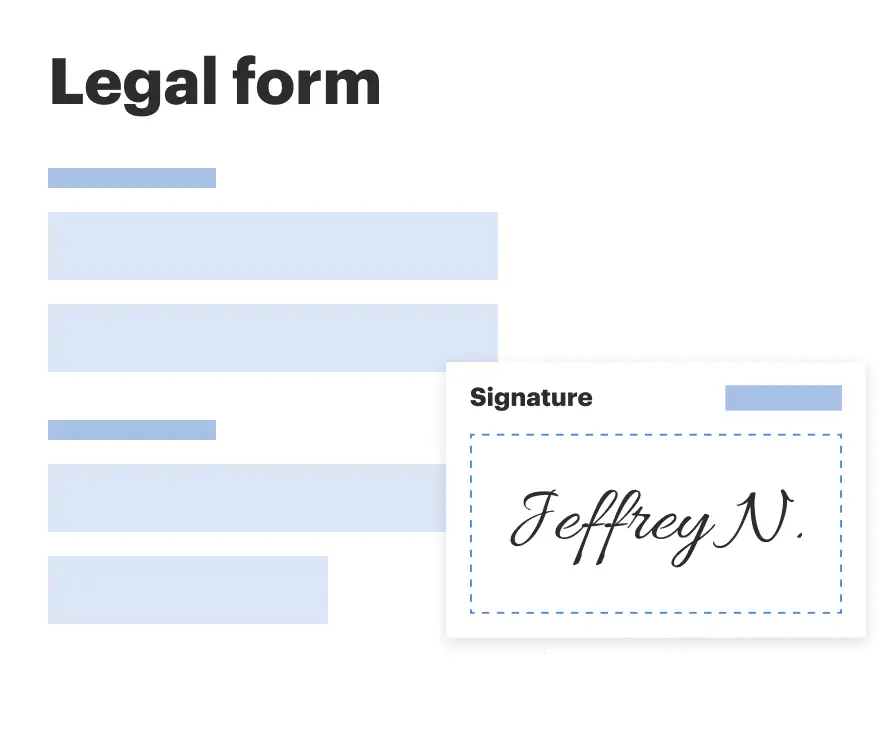
Sign and collect signatures with our SignNow integration. Send to multiple recipients, set reminders, and more. Go Premium to unlock E-Sign.
If this form requires notarization, complete it online through a secure video call—no need to meet a notary in person or wait for an appointment.
We protect your documents and personal data by following strict security and privacy standards.
Common mistakes to avoid
- Failing to specify the exact lease violations and the required actions to remedy them.
- Not signing the warning document, which can undermine its validity.
- Ignoring local laws regarding notice periods that may affect the timing of delivery.
Benefits of using this form online
- Convenience of immediate access to a professionally drafted legal form.
- Editable templates that allow landlords to customize content based on specific situations.
- Reliable and compliant with current legal standards, reducing the risk of errors.
Quick recap
- The Warning of Default is a formal notification for lease compliance issues.
- It helps landlords document their communication with tenants.
- This form is not binding on the landlord and highlights available remedies.
- It can be adapted for use in multiple states.
Looking for another form?
Form popularity
FAQ
In Florida, a landlord must generally provide at least 12 hours' notice before entering a tenant's property. This may be done for necessary repairs, inspections, or showings. Providing such notice protects tenant privacy while ensuring that necessary property management tasks can take place. Awareness of the Florida Warning of Default on Residential Lease can also clarify tenants' rights regarding property access.
Typically, Florida does not mandate landlords to give 60 days' notice at the end of a lease; 30 days is often sufficient. However, specific lease agreements might dictate longer notice periods. It's essential to review your lease to determine the exact requirements. Familiarity with the Florida Warning of Default on Residential Lease can help both landlords and tenants comply effectively.
The notice period a landlord must provide in Florida varies depending on the lease agreement. For month-to-month leases, a minimum of 30 days' notice is often required. However, for fixed-term leases, landlords may not need to provide notice unless they choose not to renew. Understanding the nuances of the Florida Warning of Default on Residential Lease is vital to avoid misunderstandings.
In Florida, landlords must give tenants at least 30 days' written notice if they require the tenant to vacate the property. This notice applies to month-to-month leases. It allows tenants sufficient time to arrange for relocation and secure new housing. If tenants are aware of the Florida Warning of Default on Residential Lease, they can take proactive measures to avoid unwanted surprises.
Recently, Florida has enacted laws to enhance protections for renters, emphasizing transparency and tenant rights. These changes aim to streamline communication between landlords and tenants. The focus on the Florida Warning of Default on Residential Lease is essential, as it addresses situations where tenants may face eviction due to non-compliance with lease agreements. Staying informed about new laws can significantly benefit renters.
In Florida, when a landlord decides not to renew a lease, they must provide the tenant with written notice. This notice should typically be given at least 15 days before the end of the lease period. This timeframe is crucial for tenants to prepare for moving or finding a new residence. Knowing the Florida Warning of Default on Residential Lease can help ensure a smooth transition.
In Florida, a residential tenant has several essential rights that protect their living situation. Firstly, tenants have the right to a habitable dwelling, meaning the property must meet basic health and safety standards. Additionally, tenants cannot be evicted without proper notice, and they are protected from retaliatory actions by landlords. In the context of lease agreements, understanding the implications of a Florida Warning of Default on Residential Lease is crucial, as it outlines the obligations and potential consequences for both tenants and landlords.
To report a landlord violation in Florida, contact your local county housing authority or the Department of Business and Professional Regulation. These organizations handle complaints regarding unsafe living conditions, harassment, or unfair eviction. Being familiar with the Florida Warning of Default on Residential Lease will prepare you to address issues promptly. Using services like US Legal Forms can assist in filing your complaint correctly and efficiently.
In Florida, landlords are overseen by the Department of Business and Professional Regulation, which enforces rental laws and regulations. Additionally, local housing authorities and tenant associations play significant roles in addressing landlord-tenant issues. Knowledge of the Florida Warning of Default on Residential Lease is vital for both landlords and tenants to ensure compliance with state laws. Engaging with these agencies can help resolve disputes effectively.
A landlord in Florida can terminate a lease for non-payment of rent, lease violations, or if the tenant engages in illegal activities on the property. It is essential for landlords to provide a written notice outlining the reasons for termination, following the requirements set by Florida law. Recognizing the Florida Warning of Default on Residential Lease can aid tenants in understanding their obligations and potential consequences of lease termination. Always seek legal advice if uncertain about your rights.