Florida Amendment to Lease or Rental Agreement
What is this form?
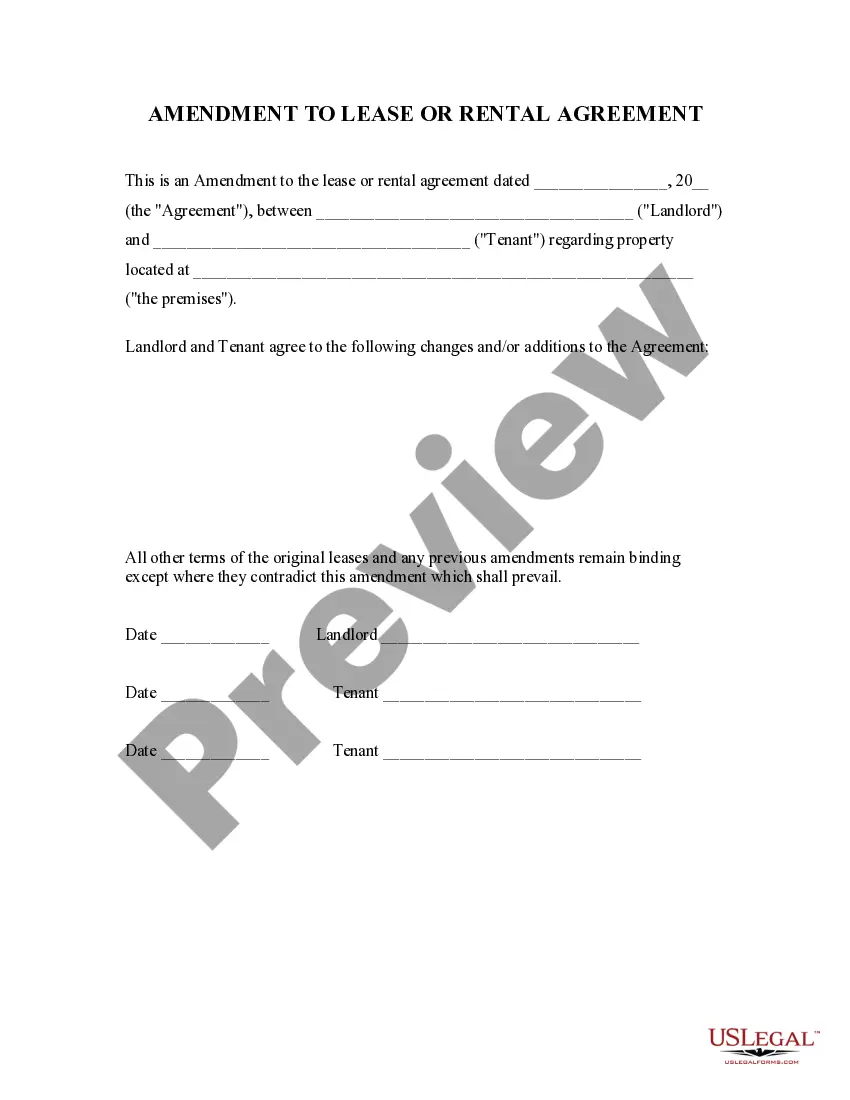
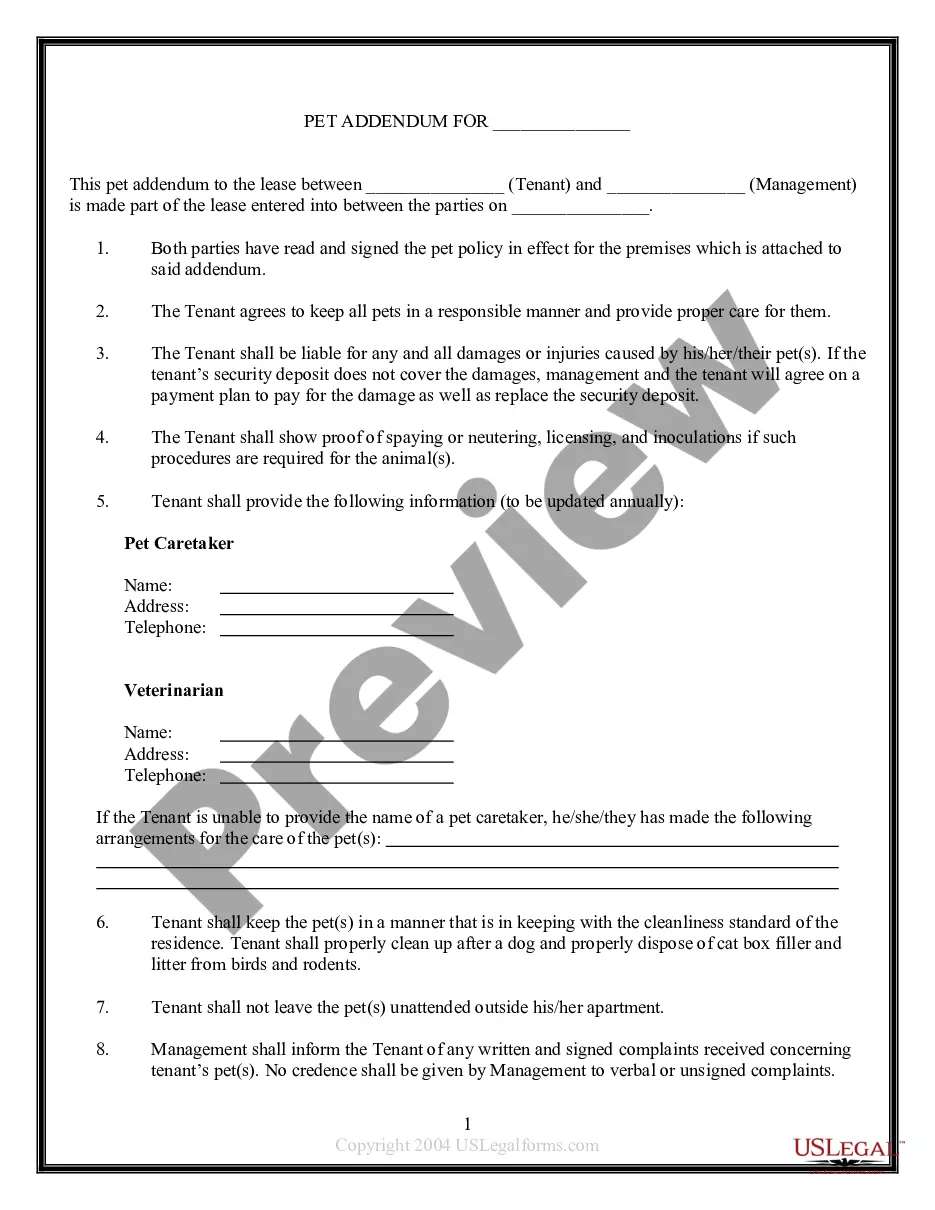
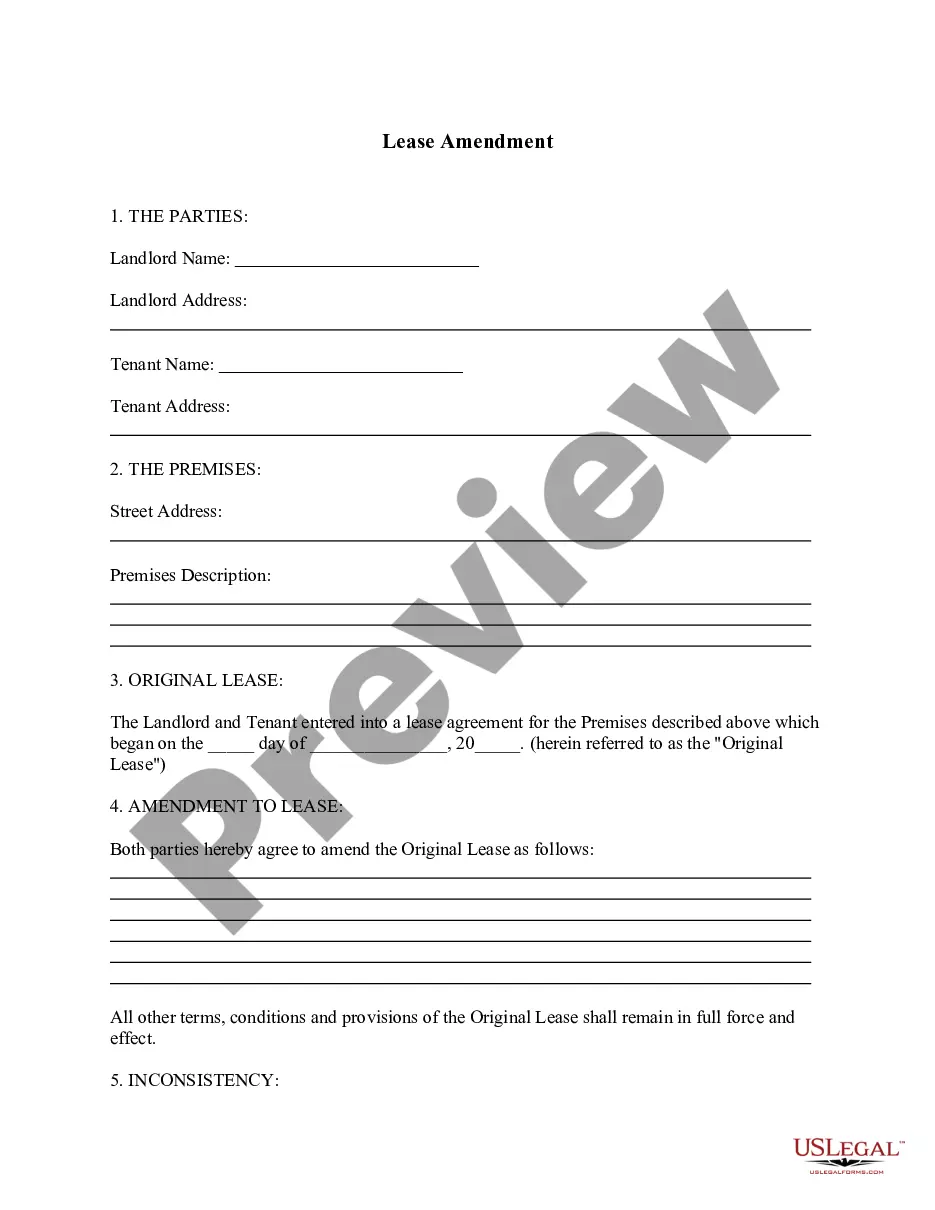
The Amendment to Lease or Rental Agreement is a legal document used to officially record changes to the terms of an existing rental agreement. This form provides a clear written record of any modifications agreed upon by both the landlord and tenant, which is essential for avoiding future disputes. Unlike verbal agreements, this document ensures that both parties are on the same page regarding the new terms.
What’s included in this form
- Date of the original lease or rental agreement.
- Name of the landlord and tenant involved in the agreement.
- Details about the property location.
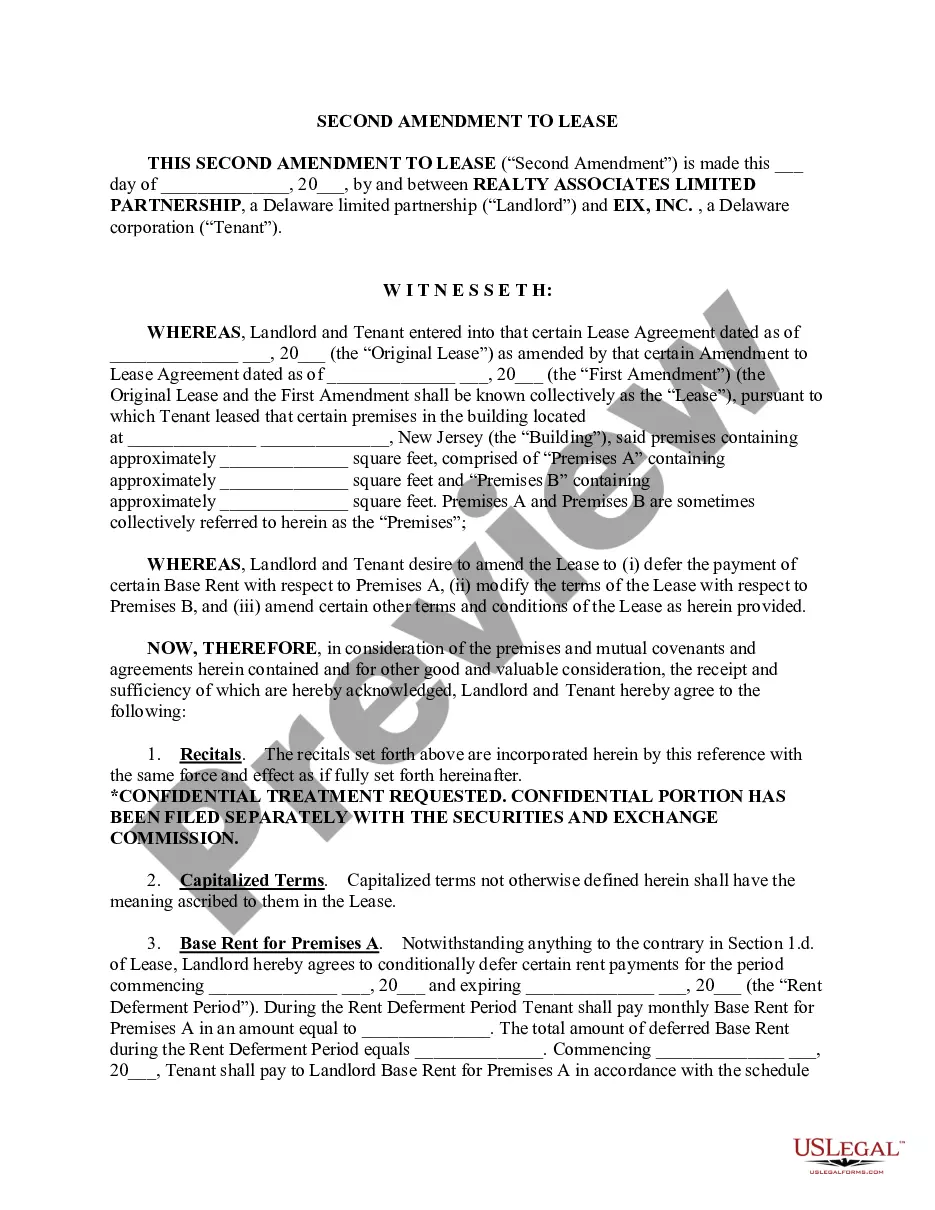
- Specific changes to the lease or rental terms being amended.
- Signatures of both parties to validate the amendment.
Situations where this form applies
This form is necessary when both a landlord and a tenant agree to modify any terms in their existing lease or rental agreement. Common scenarios include adjusting rent amounts, changing the duration of the lease, or updating responsibilities regarding maintenance and repairs. By documenting these changes, both parties can safeguard their rights and obligations under the modified agreement.
Who needs this form
- Landlords who want to formally change terms of a rental agreement.
- Tenants who need to acknowledge and agree to modifications in their lease.
- Parties involved in rental agreements seeking legal clarity on amendments.
How to complete this form
- Identify the original lease or rental agreement date at the top of the form.
- Clearly state the names of the landlord and tenant involved.
- Specify the location of the property in question.
- List the precise changes being made to the rental agreement.
- Both parties should sign and date the document to confirm their agreement.
Notarization requirements for this form
This form usually doesn’t need to be notarized. However, local laws or specific transactions may require it. Our online notarization service, powered by Notarize, lets you complete it remotely through a secure video session, available 24/7.
Get your form ready online
Our built-in tools help you complete, sign, share, and store your documents in one place.
Make edits, fill in missing information, and update formatting in US Legal Forms—just like you would in MS Word.
Download a copy, print it, send it by email, or mail it via USPS—whatever works best for your next step.
Sign and collect signatures with our SignNow integration. Send to multiple recipients, set reminders, and more. Go Premium to unlock E-Sign.
If this form requires notarization, complete it online through a secure video call—no need to meet a notary in person or wait for an appointment.
We protect your documents and personal data by following strict security and privacy standards.

Make edits, fill in missing information, and update formatting in US Legal Forms—just like you would in MS Word.

Download a copy, print it, send it by email, or mail it via USPS—whatever works best for your next step.

Sign and collect signatures with our SignNow integration. Send to multiple recipients, set reminders, and more. Go Premium to unlock E-Sign.

If this form requires notarization, complete it online through a secure video call—no need to meet a notary in person or wait for an appointment.

We protect your documents and personal data by following strict security and privacy standards.
Typical mistakes to avoid
- Failing to include the original agreement date can lead to confusion.
- Using vague language that does not clearly specify the changes.
- Not obtaining the signatures of both parties, making the amendment unenforceable.
Benefits of completing this form online
- Convenience of downloading and completing the form from any location.
- Editability allows for easy modification of terms before finalizing.
- Reliable access to attorney-drafted content to ensure legal accuracy.
Key takeaways
- The Amendment to Lease or Rental Agreement is crucial for documenting changes to a rental agreement.
- Both landlord and tenant should clearly understand and agree to the changes.
- Signing the document ensures its enforceability and clarity in any future disputes.
Looking for another form?
Form popularity
FAQ
A lease addendum adds additional terms or conditions to the original lease without altering the existing provisions, while a lease amendment changes the actual terms of the lease. Both documents serve distinct purposes in a Florida lease context. Using a Florida Amendment to Lease or Rental Agreement ensures that any changes are correctly documented and recognized by both parties.
Modifying a lease in Florida typically involves creating an official document that outlines the desired changes. A Florida Amendment to Lease or Rental Agreement is an effective tool for this, as it provides a clear format for changes. Both you and your landlord must agree to and sign this amendment for it to be valid.
The timeframe for backing out of a lease varies, but generally, once signed, you commit to that agreement. If you wish to back out, consulting your lease for any applicable clauses is vital. Utilizing a Florida Amendment to Lease or Rental Agreement allows you to address this issue legally and may offer you a viable way out if both parties agree.
Yes, renegotiating a lease after signing is possible. This process usually involves discussions with your landlord to address terms that may no longer work for you. Utilizing a Florida Amendment to Lease or Rental Agreement can formalize any new agreements reached, ensuring that all parties have their expectations met.
Breaking a lease can be challenging, especially if you just signed it. In Florida, the first step involves reviewing your lease for a termination clause or discussing options with your landlord. A Florida Amendment to Lease or Rental Agreement can be used to adjust the terms or clarify exit strategies, ensuring both you and the landlord are on the same page.
You can indeed change a lease agreement after it has been signed, but this requires both you and your landlord to agree on the modifications. A Florida Amendment to Lease or Rental Agreement is a formal way to document any changes. It’s important to communicate openly and ensure all changes are documented to avoid disputes.
Yes, you can change your lease after signing, but it requires mutual agreement between you and your landlord. In Florida, a Florida Amendment to Lease or Rental Agreement can help outline any changes effectively. Make sure both parties sign the amendment to ensure legality and clarity in your agreement.
New rules for landlords in Florida focus on enhancing tenant rights and encouraging fair housing practices. This includes stricter guidelines on evictions, maintenance obligations, and transparency around lease terms. Staying informed about these regulations will benefit both landlords and tenants, ensuring that the Florida Amendment to Lease or Rental Agreement is respected and upheld.
In Florida, landlords cannot engage in retaliatory actions against tenants for exercising their rights, such as withholding repairs or increasing rent unfairly. Additionally, they cannot lock out tenants or remove their property without following legal procedures. Being aware of these restrictions can guide tenants to utilize the Florida Amendment to Lease or Rental Agreement effectively for resolution.
Yes, a landlord in Florida can change the terms of a lease, but they typically need to provide proper notice and obtain agreement from the tenant. Any significant changes, such as a rent increase or alterations to responsibilities, should be documented as amendments to ensure mutual understanding. Referring to the Florida Amendment to Lease or Rental Agreement fosters a smoother transition during these modifications.