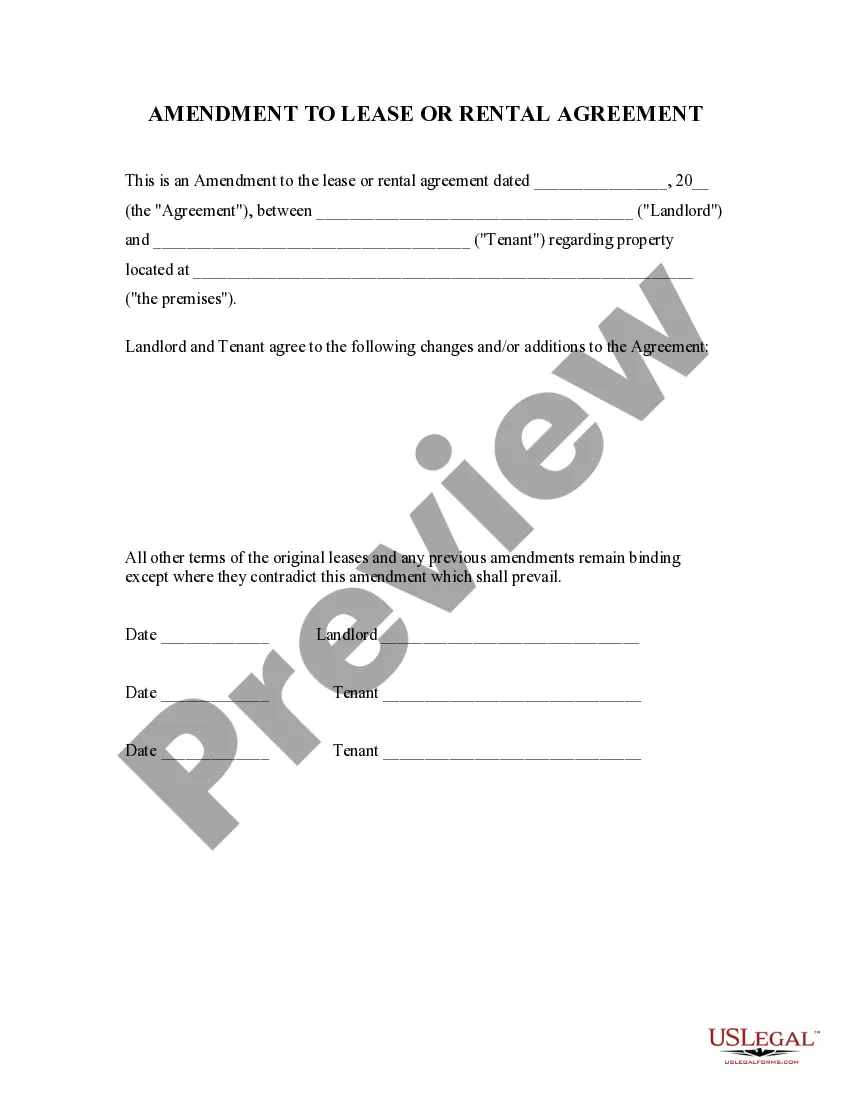
Delaware Amendment to Lease or Rental Agreement
What is this form?
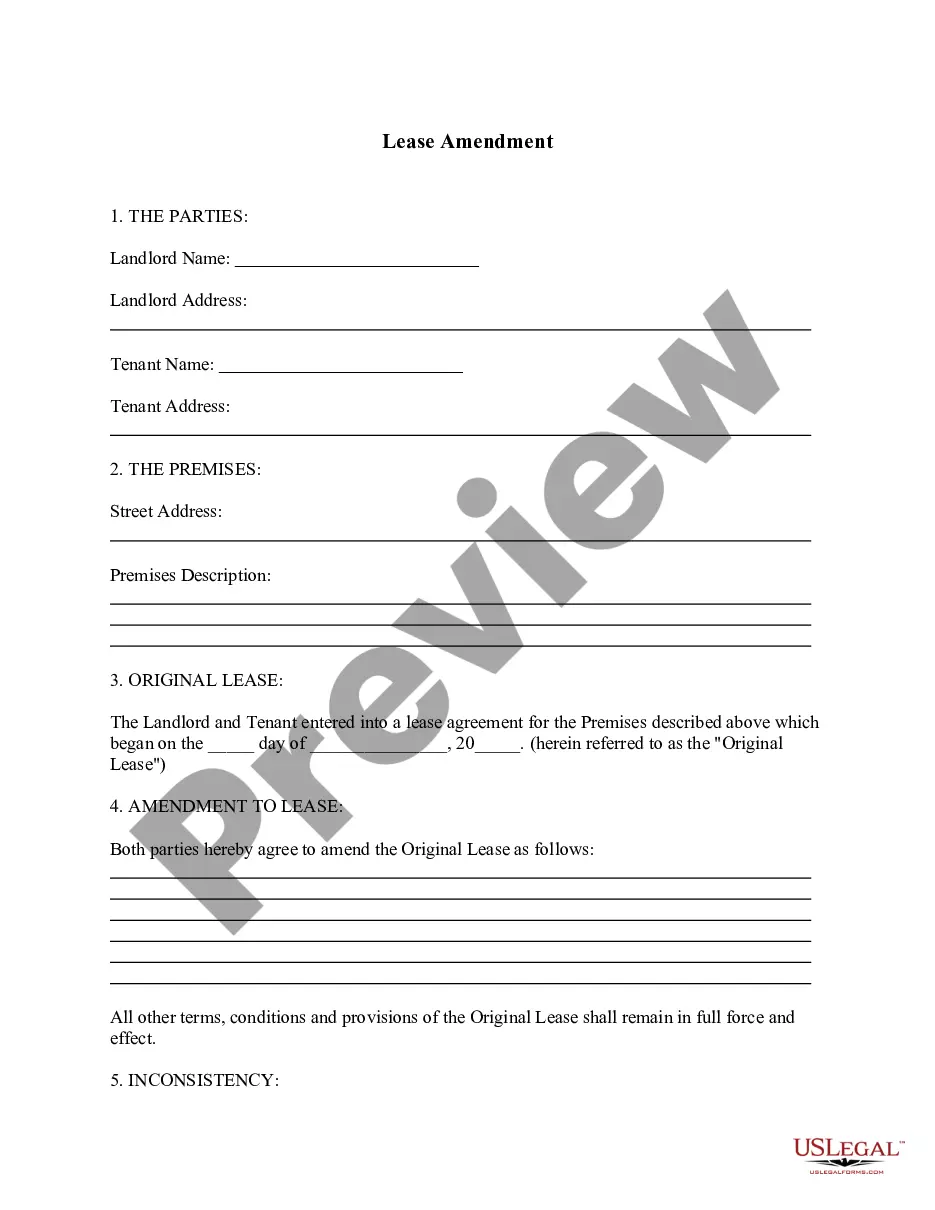
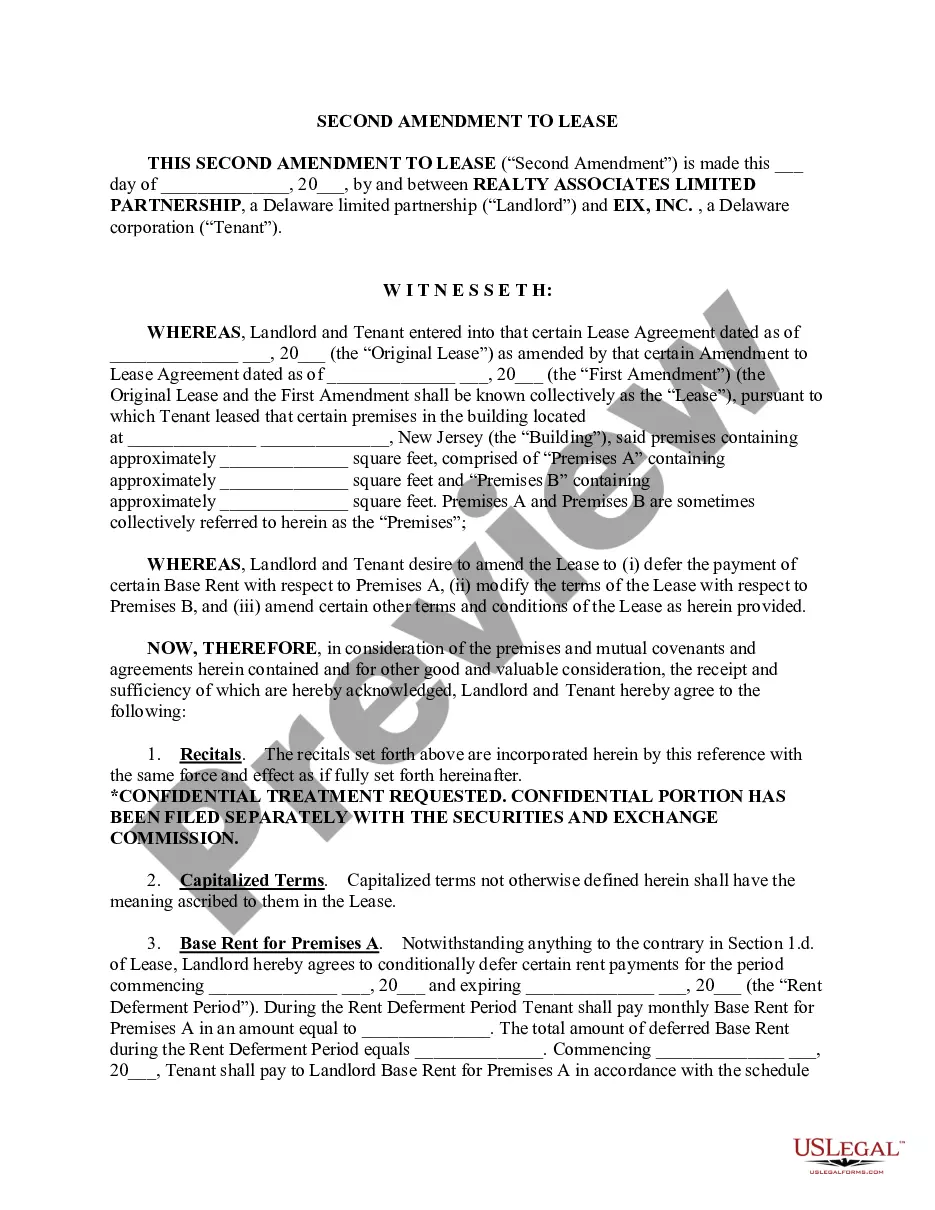
The Amendment to Lease or Rental Agreement is a legal document used to officially record changes to the terms of an existing rental agreement between a landlord and tenant. This form is essential when modifications to the lease need to be documented in writing, as verbal agreements may not hold legal weight during disputes. Unlike lease termination forms, this amendment focuses on changes rather than ending the lease entirely.
Key parts of this document
- Original lease date: The date of the original rental agreement.
- Names of the parties: Identification of both the landlord and tenant involved.
- Description of premises: Details about the rental property subject to the amendment.
- Amendment details: Specific changes to the terms of the lease being agreed upon.
- Signatures: Signatures of both the landlord and tenant to validate the amendment.
When to use this form
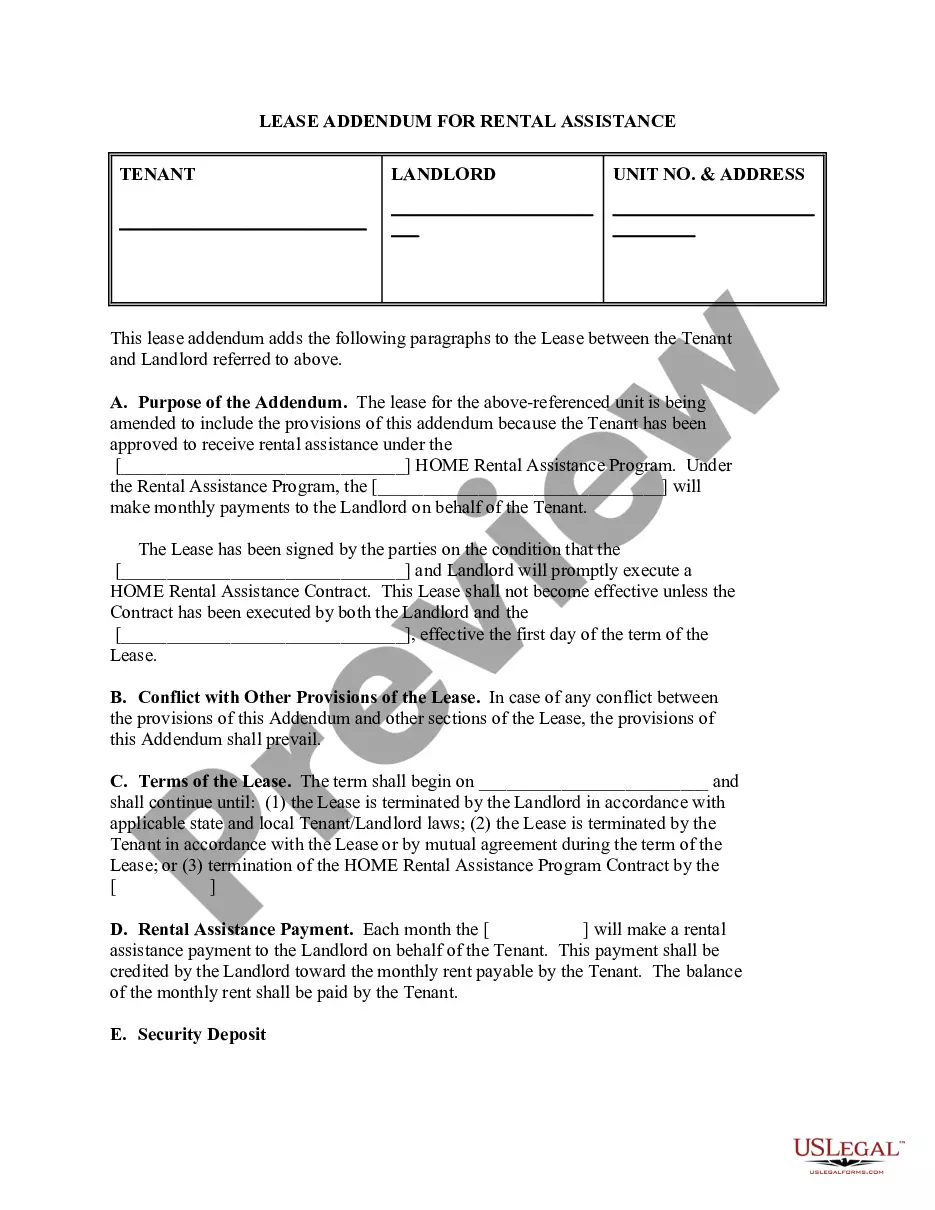
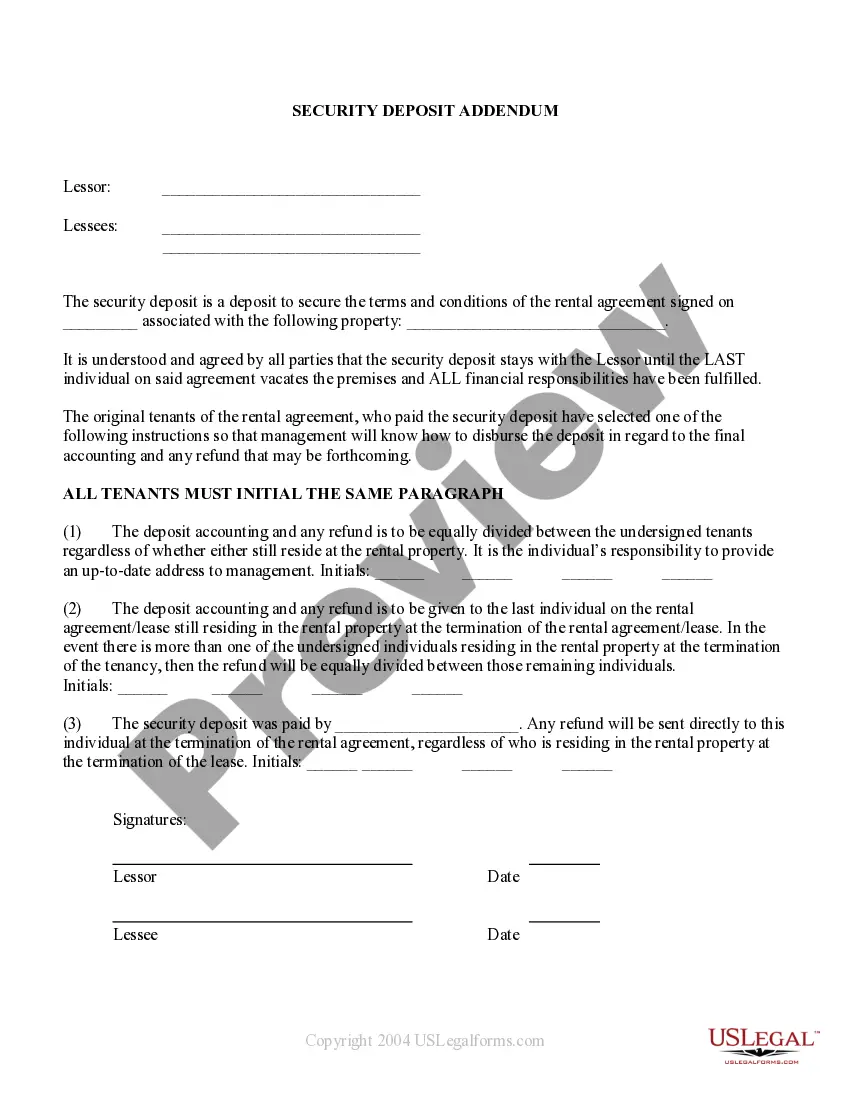
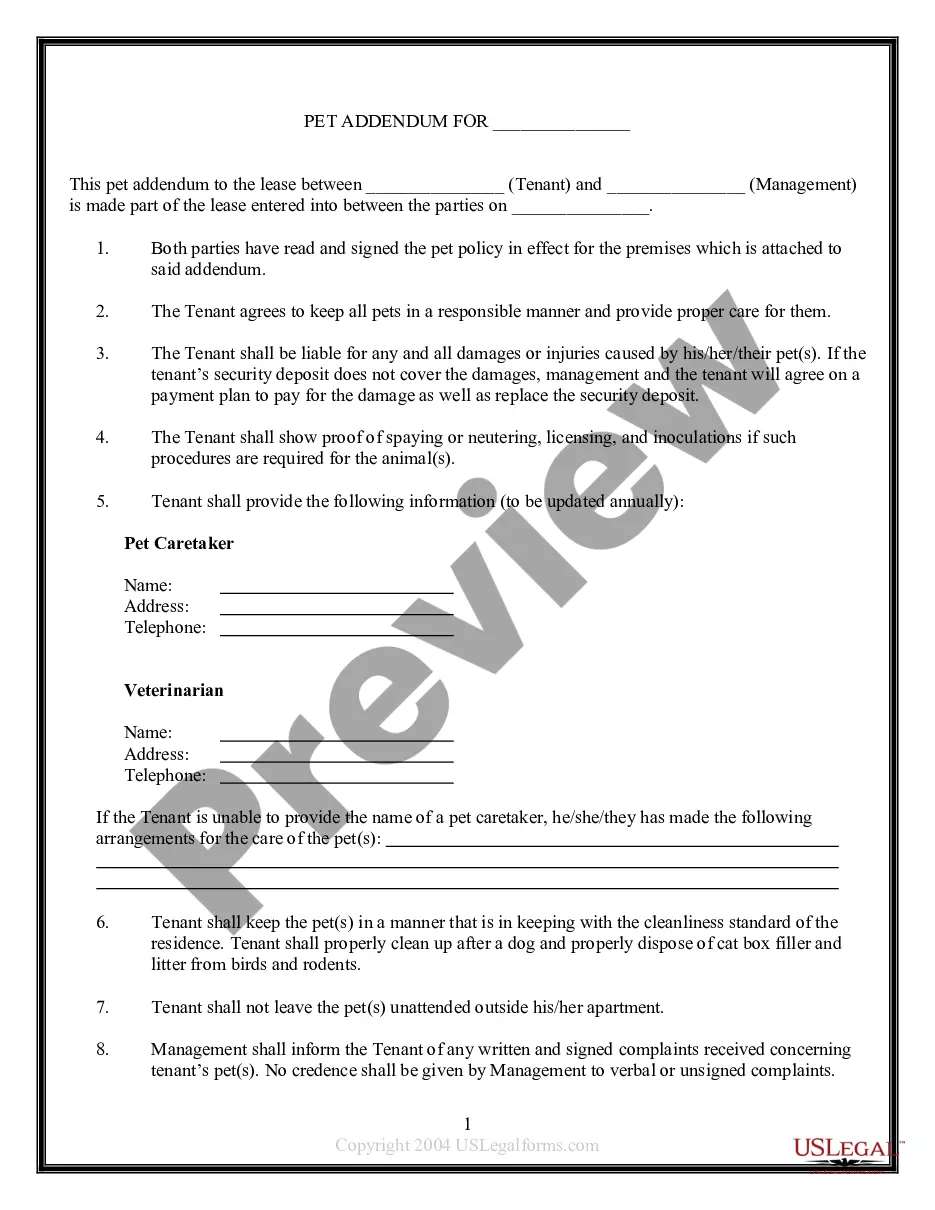
This form should be used whenever any agreed-upon changes to the lease terms need to be officially documented. Common scenarios include extending the lease period, altering rental payment terms, allowing subletting, or changing pet policies. Using this amendment ensures that both parties have a clear understanding of the updated terms and protects against future disputes.
Who needs this form
This form is intended for:
- Landlords seeking to make changes to an existing lease.
- Tenants who have reached an agreement with their landlord on lease modifications.
- Individuals involved in rental agreements who want to formalize changes to their existing contract.
Completing this form step by step
- Identify the parties: Fill in the names of the landlord and tenant involved in the original lease.
- Specify the property: Clearly describe the rental property being amended.
- Enter the original lease date: Provide the date of the original lease agreement.
- Detail the amendment: Clearly outline the specific changes being made to the lease terms.
- Sign and date: Both parties should sign and date the amendment to validate the changes.
Notarization requirements for this form
This form does not typically require notarization to be legally valid. However, some jurisdictions or document types may still require it. US Legal Forms provides secure online notarization powered by Notarize, available 24/7 for added convenience.
Get your form ready online
Our built-in tools help you complete, sign, share, and store your documents in one place.
Make edits, fill in missing information, and update formatting in US Legal Forms—just like you would in MS Word.
Download a copy, print it, send it by email, or mail it via USPS—whatever works best for your next step.
Sign and collect signatures with our SignNow integration. Send to multiple recipients, set reminders, and more. Go Premium to unlock E-Sign.
If this form requires notarization, complete it online through a secure video call—no need to meet a notary in person or wait for an appointment.
We protect your documents and personal data by following strict security and privacy standards.

Make edits, fill in missing information, and update formatting in US Legal Forms—just like you would in MS Word.

Download a copy, print it, send it by email, or mail it via USPS—whatever works best for your next step.

Sign and collect signatures with our SignNow integration. Send to multiple recipients, set reminders, and more. Go Premium to unlock E-Sign.

If this form requires notarization, complete it online through a secure video call—no need to meet a notary in person or wait for an appointment.

We protect your documents and personal data by following strict security and privacy standards.
Mistakes to watch out for
- Failing to specify all changes clearly, leading to ambiguity.
- Not having both parties sign the document, which may cause enforceability issues.
- Using verbal agreements without documenting them, risking disputes later on.
Advantages of online completion
- Convenience: Access and complete the form at your own pace, anytime and anywhere.
- Editability: Make necessary changes easily to ensure all terms are accurately reflected.
- Reliability: Forms are drafted by licensed attorneys, ensuring compliance with legal standards.
Looking for another form?

Form popularity
FAQ
Section 5314 of the Delaware Residential Landlord Tenant Code pertains to a landlord's obligation to maintain rental properties in a habitable condition. It establishes the minimum standards for property upkeep and safety. This section is vital when negotiating lease terms, as a Delaware Amendment to Lease or Rental Agreement may further detail responsibilities regarding maintenance and tenant rights.
Renters' rights in Delaware include the right to a safe living environment, the right to privacy, and protection against unfair eviction practices. Tenants also have the right to challenge unlawful eviction and request necessary repairs. Familiarizing yourself with these rights is crucial, especially when considering a Delaware Amendment to Lease or Rental Agreement that outlines these protections explicitly.
Section 5514 of the Delaware landlord/tenant code addresses retaliatory eviction. This section protects tenants from eviction when they exercise their rights, such as reporting a housing issue or joining a tenant's union. Understanding this section can be helpful in your lease negotiations and informs you about the importance of incorporating a Delaware Amendment to Lease or Rental Agreement.
Yes, a tenant can propose changes to the lease agreement, but such changes must be agreed upon by both the tenant and the landlord. If the landlord accepts your proposed modifications, it is advisable to document these changes formally in a Delaware Amendment to Lease or Rental Agreement for legal protection. This ensures clarity and avoids future disputes regarding the agreed-upon terms.
In Delaware, a landlord has 20 days to return a security deposit after you move out. This period allows the landlord to assess any damages or unpaid rent that may justify withholding part of the deposit. A Delaware Amendment to Lease or Rental Agreement may also specify conditions regarding the security deposit, ensuring you have a clear understanding of your rights.
In Delaware, a landlord can raise your rent based on the terms outlined in your lease agreement. If your lease does not specify limits on rent increases, the landlord can raise your rent at the end of the lease term, provided they give you proper notice. If your rental agreement includes a Delaware Amendment to Lease or Rental Agreement, it may detail specific conditions for rent increases, offering you clarity and protection.
In Delaware, landlords must generally provide tenants with 60 days' notice if they wish to terminate a lease for a month-to-month rental agreement. For fixed-term leases, the landlord must wait until the lease term ends. To ensure all parties are on the same page, a Delaware Amendment to Lease or Rental Agreement can specify notice periods and other important terms.
To legally break a lease in Delaware, you must provide proper notice and comply with any conditions outlined in your lease agreement. Conditions can include paying rent through the notice period or finding a replacement tenant. Utilizing a Delaware Amendment to Lease or Rental Agreement can help you negotiate the terms of your lease termination with your landlord.
In Delaware, there is typically no specific timeframe to back out after signing a lease; the lease becomes binding upon signature. However, if you need to terminate the agreement, you may need to provide written notice or negotiate with your landlord. A Delaware Amendment to Lease or Rental Agreement could serve as a solution to modify your responsibilities in such cases.
In Delaware, tenants may have the right to withhold rent if the landlord fails to make necessary repairs that affect the habitability of the property. However, it is crucial to follow the legal process, which often requires providing the landlord with written notice of the issue. When facing such situations, a Delaware Amendment to Lease or Rental Agreement can be beneficial to clarify responsibilities for repairs.