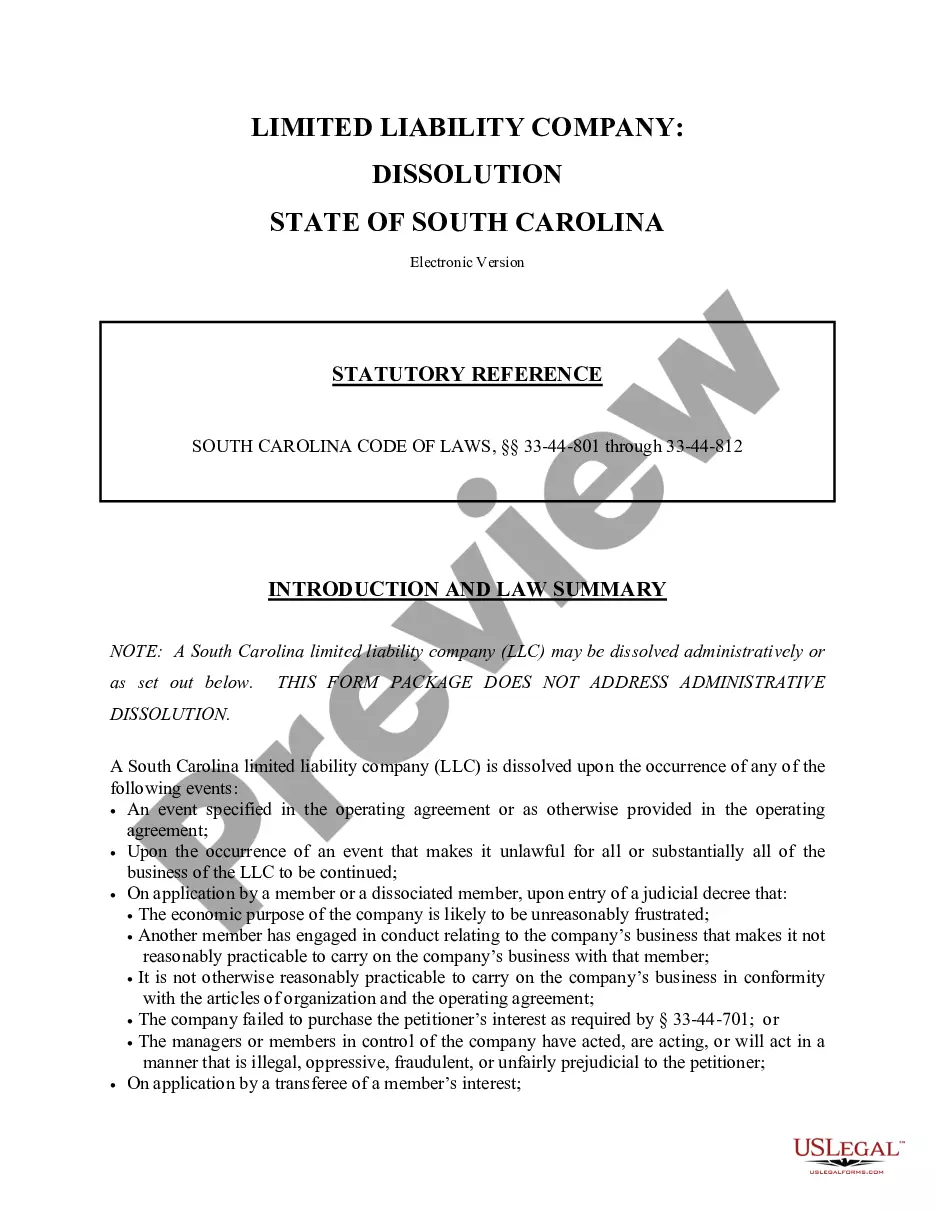
Delaware Letter from Tenant to Landlord about Insufficient Notice of Change in Rental Agreement for other than rent increase
Understanding this form
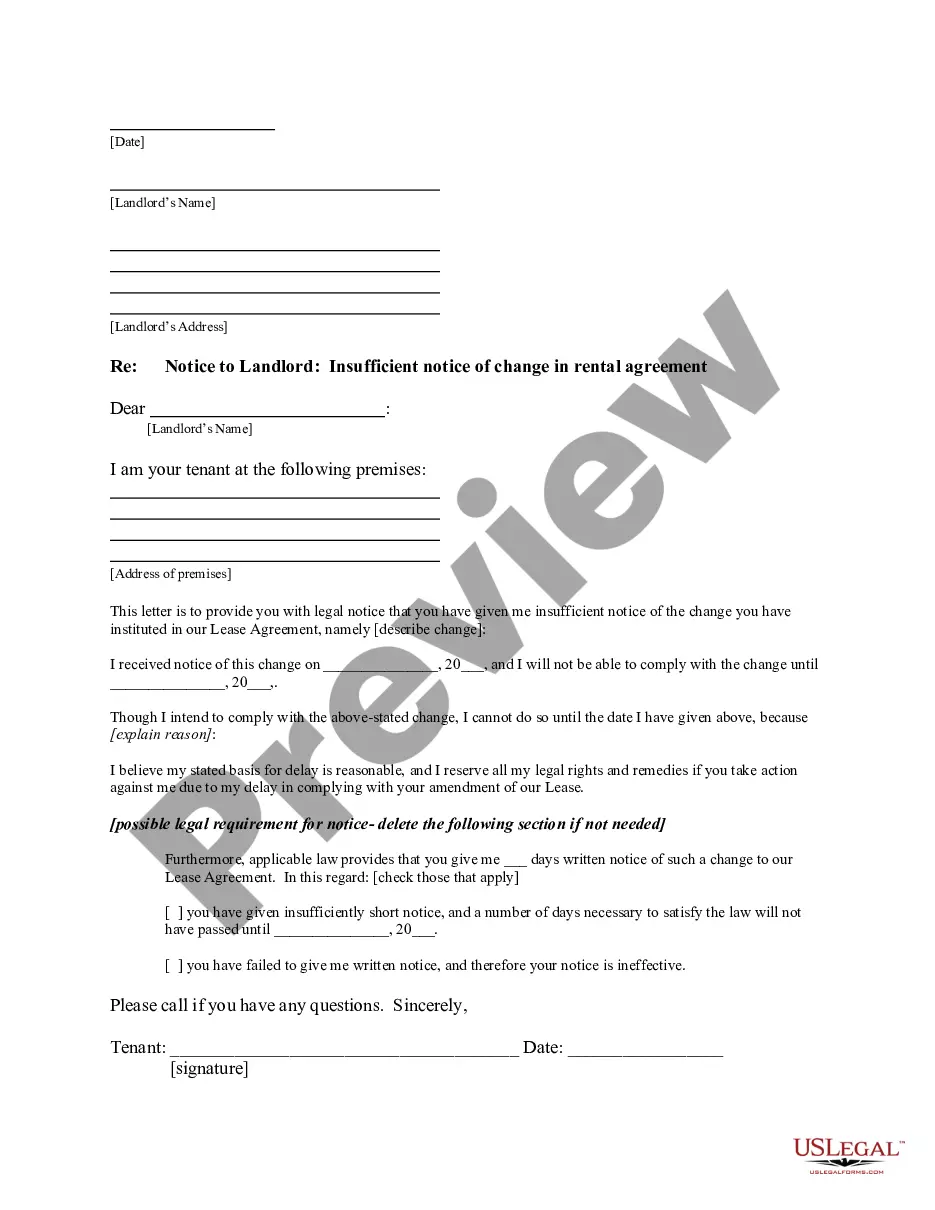
This Letter from Tenant to Landlord about Insufficient Notice of Change in Rental Agreement is a formal notice that informs the landlord of an insufficient notice regarding changes to the lease agreement, other than a rent increase. This letter serves to clarify the legal obligations of the landlord and allow the tenant to specify their compliance timeline. Unlike other rental agreement forms, this letter focuses specifically on notice insufficiency rather than general updates to the lease terms.
What’s included in this form
- Notification of insufficient notice regarding changes to the rental agreement.
- Statement of the required notice period as per applicable law.
- Party details, including tenant and landlord information.
- Specific date by which the landlord must provide legal notice.
- Signature line for the tenant to validate the letter.
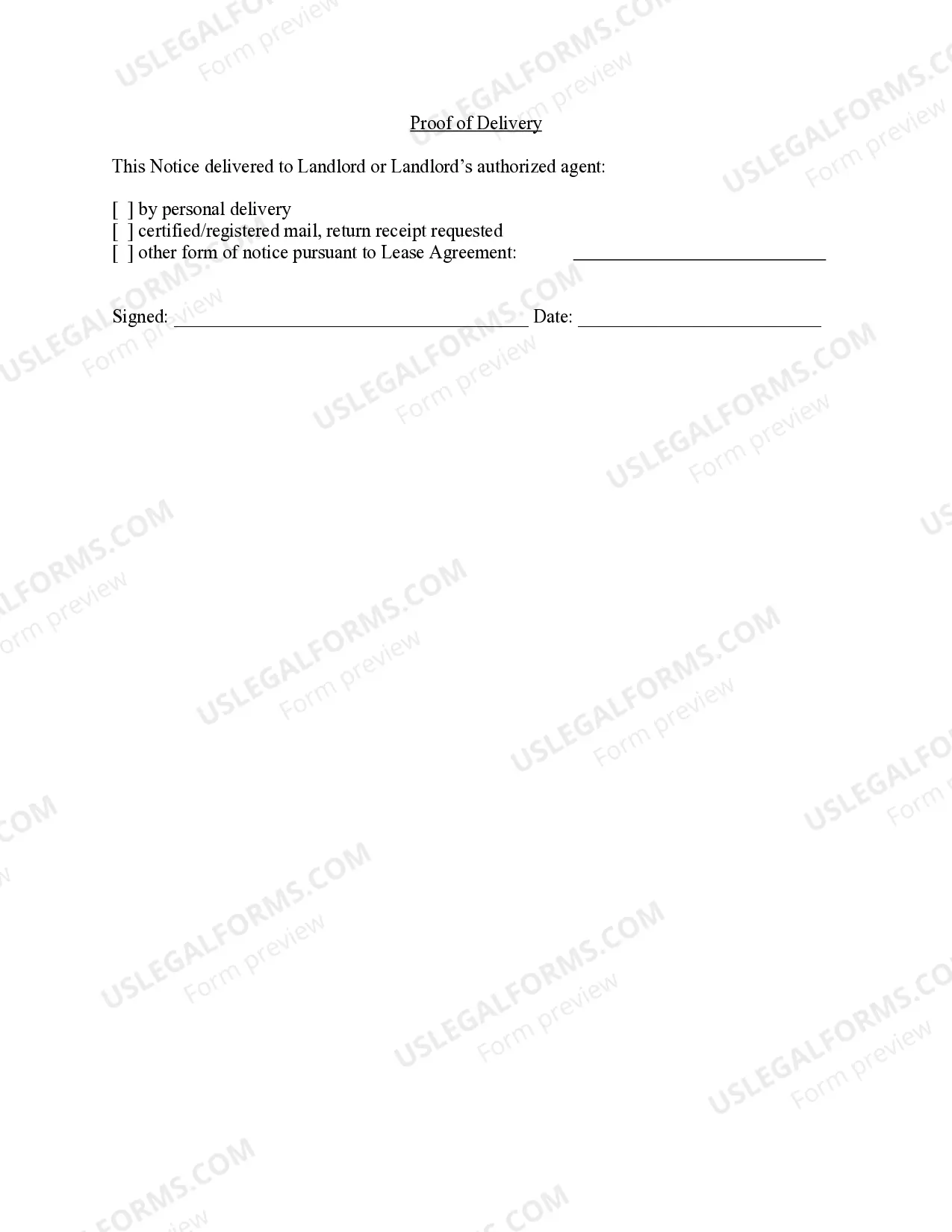
- Proof of delivery method, with options for personal delivery or certified mail.

When to use this form
You should use this form when your landlord communicates changes to your rental agreement without providing the legally required notice period. This form helps you assert your rights as a tenant and establishes a clear timeline for compliance. It's particularly relevant in situations where you need to address unwarranted changes to the lease terms that you did not agree upon.
Intended users of this form
- Tenants who receive notice of changes to their rental agreement.
- Individuals wanting to ensure their rights are protected under the lease terms.
- Those needing to specify a timeline for compliance regarding lease changes.
- Renters seeking clarity on insufficient notice from their landlords.
Completing this form step by step
- Identify the parties involved by entering the tenant's and landlord's names and addresses.
- Specify the date by which the landlord is required to give notice of change.
- Indicate whether the landlord's notice was insufficiently short or if no written notice was provided.
- Sign and date the letter to validate your notice.
- Select your method of proof of delivery, either personal delivery or certified mail.
Does this form need to be notarized?
This form usually doesn’t need to be notarized. However, local laws or specific transactions may require it. Our online notarization service, powered by Notarize, lets you complete it remotely through a secure video session, available 24/7.
Get your form ready online
Our built-in tools help you complete, sign, share, and store your documents in one place.
Make edits, fill in missing information, and update formatting in US Legal Forms—just like you would in MS Word.
Download a copy, print it, send it by email, or mail it via USPS—whatever works best for your next step.
Sign and collect signatures with our SignNow integration. Send to multiple recipients, set reminders, and more. Go Premium to unlock E-Sign.
If this form requires notarization, complete it online through a secure video call—no need to meet a notary in person or wait for an appointment.
We protect your documents and personal data by following strict security and privacy standards.

Make edits, fill in missing information, and update formatting in US Legal Forms—just like you would in MS Word.

Download a copy, print it, send it by email, or mail it via USPS—whatever works best for your next step.

Sign and collect signatures with our SignNow integration. Send to multiple recipients, set reminders, and more. Go Premium to unlock E-Sign.

If this form requires notarization, complete it online through a secure video call—no need to meet a notary in person or wait for an appointment.

We protect your documents and personal data by following strict security and privacy standards.
Avoid these common issues
- Failing to provide complete contact information for both parties.
- Not specifying a clear deadline for compliance.
- Incorrectly assessing whether the notice provided was sufficient.
- Forgetting to sign and date the letter.
Benefits of using this form online
- Convenient access to professionally drafted forms.
- Edit and customize your letter easily to fit your needs.
- Immediate download of the form upon completion.
- Assurance that the form meets legal standards drafted by licensed attorneys.
Legal use & context
- This letter serves as a formal legal notice to the landlord.
- Timely notice is crucial to potentially enforce tenant rights in lease modifications.
- Compliance with state regulations on rental agreements is essential for legal validity.
Quick recap
- This letter protects tenant rights regarding insufficient notice of lease changes.
- Customize the form as needed to meet specific state legal requirements.
- Complete the form accurately to avoid common mistakes and ensure effectiveness.
Looking for another form?
Form popularity
FAQ
To write an effective letter to your landlord regarding a rent increase, begin by clearly stating the purpose of your letter. It's essential to mention any insufficient notice of changes in your rental agreement as outlined in the Delaware Letter from Tenant to Landlord about Insufficient Notice of Change in Rental Agreement for other than rent increase. Be polite and concise, expressing your concerns about the notice period and any relevant lease terms. Remember to include your contact information and a request for a timely response to ensure effective communication.
Delaware Code 5502 outlines the obligations of landlords and tenants concerning rental agreements. This code specifies the legal requirements for notifications related to changes in rental terms, ensuring that tenants receive sufficient notice. If a tenant encounters issues regarding insufficient notice, they can utilize a Delaware Letter from Tenant to Landlord about Insufficient Notice of Change in Rental Agreement for other than rent increase to formally address their concerns. Being informed about Code 5502 empowers tenants to advocate for their rights effectively.
In Delaware, a landlord cannot evict a tenant without proper notice and legal proceedings. They also cannot retaliate against a tenant for exercising their rights, such as filing a complaint about maintenance issues. Furthermore, a landlord must adhere to the terms outlined in a Delaware Letter from Tenant to Landlord about Insufficient Notice of Change in Rental Agreement for other than rent increase, ensuring that any changes to rental agreements are communicated fairly and legally. Understanding these limitations can help tenants protect their rights and maintain a healthy rental relationship.
Section 23 of the Landlord and Tenant Act in Delaware focuses on the requirement for landlords to provide adequate notice before changing rental terms, including alterations other than a rent increase. This section safeguards tenants by ensuring they have ample time to understand and respond to changes. If you receive an insufficient notice regarding changes in your rental agreement, you can utilize a Delaware Letter from Tenant to Landlord about Insufficient Notice of Change in Rental Agreement for other than rent increase. This letter acts as an effective communication tool to assert your rights under this section of the law.
There is no established maximum rent increase applicable statewide in Delaware, making your lease agreement crucial in understanding potential increases. However, if your landlord's increase deviates from the agreed terms, you should communicate your concerns promptly. Sending a Delaware Letter from Tenant to Landlord about Insufficient Notice of Change in Rental Agreement for other than rent increase illustrates your position and requests clarification or justification from your landlord. This proactive approach can help you maintain a fair and transparent rental relationship.
In Delaware, there are no specific laws that limit how much a landlord can increase your rent, unless you are living in a rent-controlled area. Typically, landlords must provide a written notice for any rent increase, which must align with the terms of your rental agreement. If you receive a notice that seems insufficient, you may consider sending a Delaware Letter from Tenant to Landlord about Insufficient Notice of Change in Rental Agreement for other than rent increase. This letter helps address any concerns you have regarding the notice and ensures your rights are protected.
Tenant code 5502 in Delaware addresses the requirements for lease agreements, including provisions that must be clearly outlined. This code emphasizes tenants' rights to understand the terms they are agreeing to. If your landlord makes any alterations without proper notice, ensuring your communication with a Delaware Letter from Tenant to Landlord about Insufficient Notice of Change in Rental Agreement for other than rent increase is essential.
Section 5106 of the Delaware landlord-tenant code pertains to the obligations of landlords to keep rental properties in good condition. It establishes standards of habitability and tenant safety. If your landlord does not uphold these standards, you might want to consider a Delaware Letter from Tenant to Landlord about Insufficient Notice of Change in Rental Agreement for other than rent increase to formally articulate your concerns.
In Delaware, there is no state limit on how much a landlord can increase rent, but they must provide proper notice before doing so. Landlords must follow the terms outlined in the lease agreement and the Delaware landlord/tenant code. If you think the increase lacks proper notice, drafting a Delaware Letter from Tenant to Landlord about Insufficient Notice of Change in Rental Agreement for other than rent increase can help clarify your position.
Section 5514 of the Delaware landlord/tenant code outlines the formal procedures landlords must follow when increasing rent. It mandates that landlords provide specific written notice to their tenants before any increase takes effect. If you find the notice insufficient, you can formally address this issue through a Delaware Letter from Tenant to Landlord about Insufficient Notice of Change in Rental Agreement for other than rent increase.