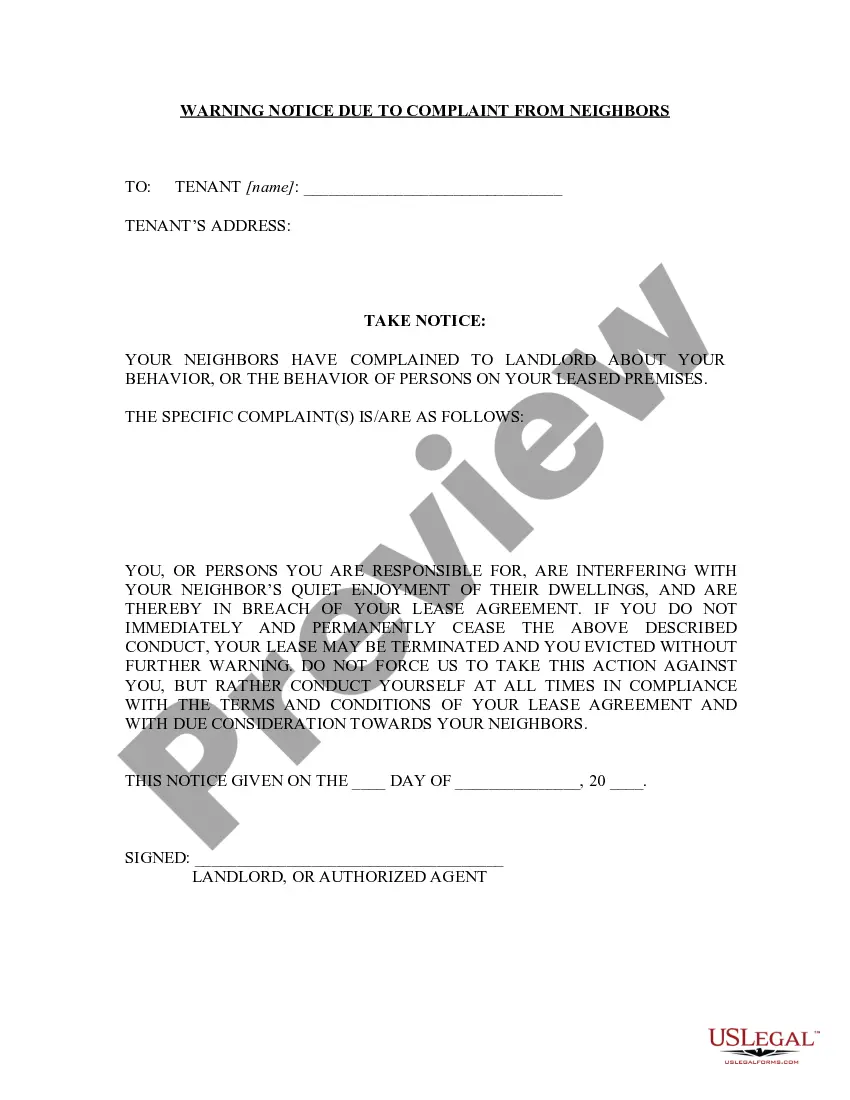
Delaware Letter from Tenant to Landlord containing Request for permission to sublease
What this document covers
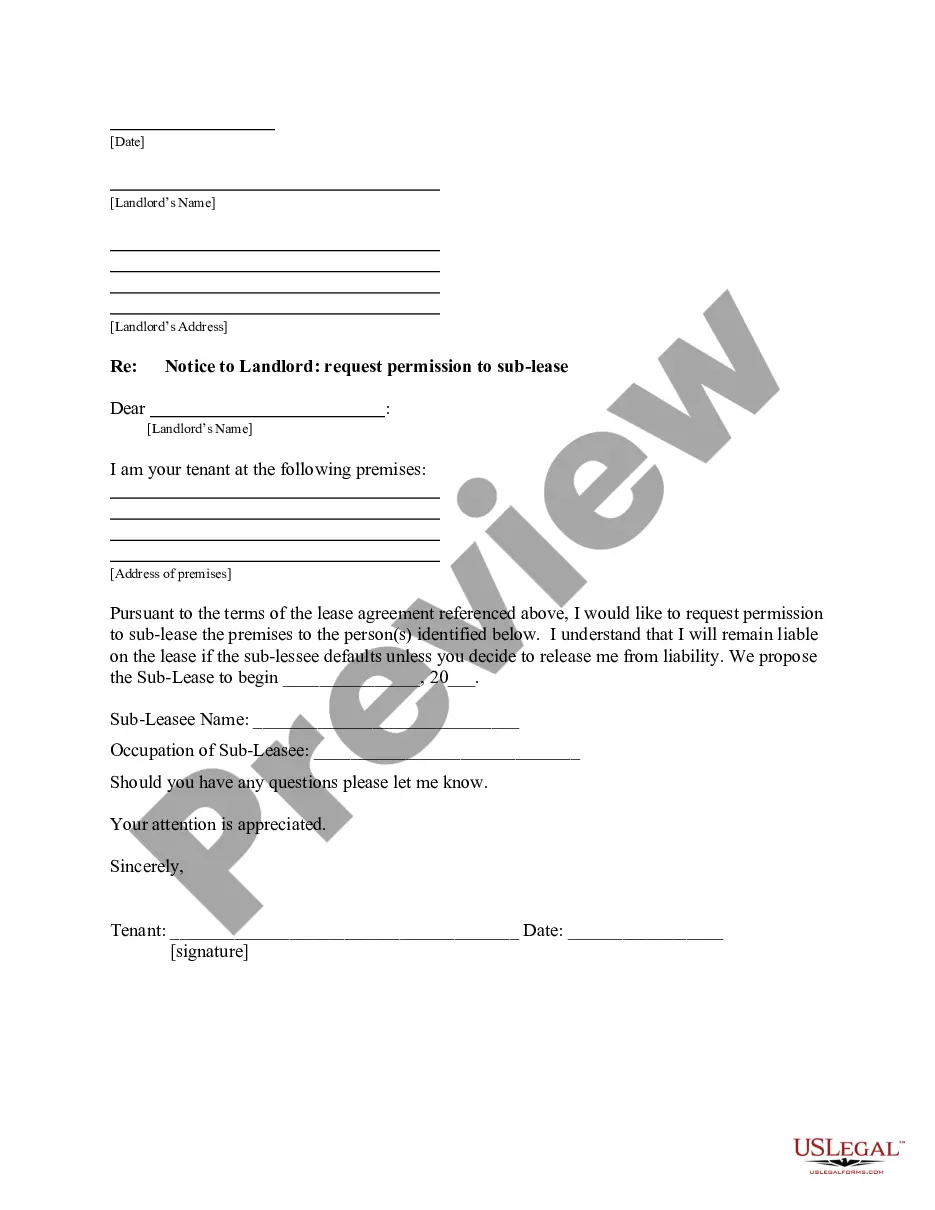
This letter from a tenant to their landlord is used to request permission to sublease the rental property. It highlights the responsibilities of the tenant, including remaining liable for the lease if the subtenant defaults. This form is essential for legal compliance and ensures clear communication between tenants and landlords regarding subletting arrangements.
Form components explained
- Sub-leasee name: the name of the person the tenant wishes to sublease to.
- Occupation of the sub-leasee: a brief description of the sub-leasee's employment.
- Tenant's signature and date: required for the letter to be valid and acknowledged.
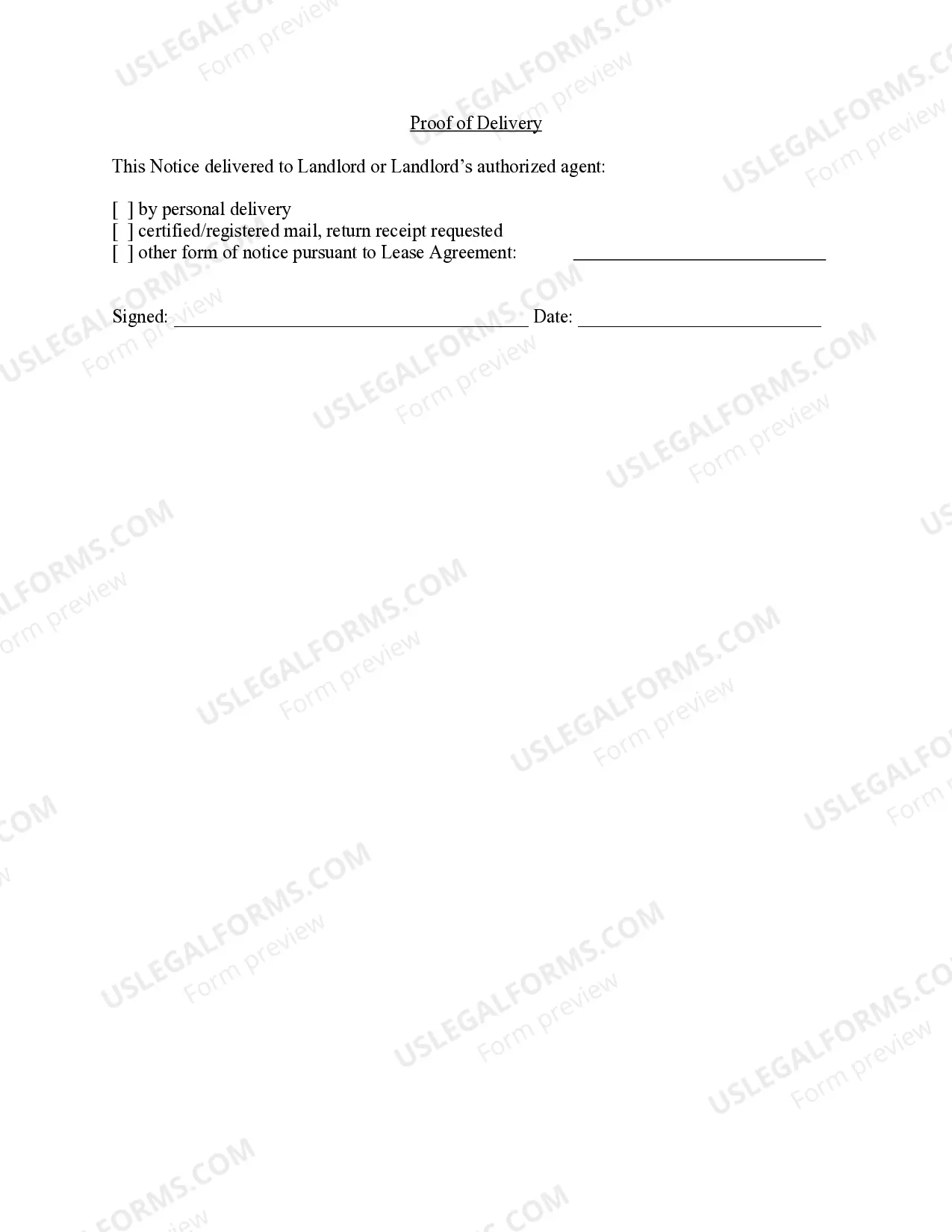
- Proof of delivery options: documenting how the notice was delivered to the landlord.
When this form is needed
This form should be used when a tenant wants to sublease their rental property to another person and needs to obtain consent from the landlord. It is particularly important in situations where the tenant finds it necessary to share the rental unit, either for financial reasons or temporary arrangements. Using this letter helps avoid potential legal issues or misunderstandings regarding the tenant's obligations and the landlord's rights.
Who this form is for
- Current tenants looking to sublease their rental property.
- Individuals who have signed a lease and must adhere to landlord requirements for subleasing.
- Tenants who want to ensure they maintain their legal obligations while subletting.
How to prepare this document
- Fill in the sub-leasee's name and occupation in the designated sections.
- Provide your signature and include the date to acknowledge the request.
- Select a method of delivery for the notice to the landlord and follow through with it.
Is notarization required?
This form does not typically require notarization unless specified by local law. Be sure to check any local regulations that may apply to your situation regarding subleasing.
Get your form ready online
Our built-in tools help you complete, sign, share, and store your documents in one place.
Make edits, fill in missing information, and update formatting in US Legal Forms—just like you would in MS Word.
Download a copy, print it, send it by email, or mail it via USPS—whatever works best for your next step.
Sign and collect signatures with our SignNow integration. Send to multiple recipients, set reminders, and more. Go Premium to unlock E-Sign.
If this form requires notarization, complete it online through a secure video call—no need to meet a notary in person or wait for an appointment.
We protect your documents and personal data by following strict security and privacy standards.

Make edits, fill in missing information, and update formatting in US Legal Forms—just like you would in MS Word.

Download a copy, print it, send it by email, or mail it via USPS—whatever works best for your next step.

Sign and collect signatures with our SignNow integration. Send to multiple recipients, set reminders, and more. Go Premium to unlock E-Sign.

If this form requires notarization, complete it online through a secure video call—no need to meet a notary in person or wait for an appointment.

We protect your documents and personal data by following strict security and privacy standards.
Typical mistakes to avoid
- Failing to obtain landlord consent before subleasing.
- Not including all required information about the sub-leasee.
- Neglecting to keep a copy of the letter and proof of its delivery.
Benefits of completing this form online
- Convenient access allows you to fill out the form at any time.
- Easy editing ensures you can customize the letter to your specific situation.
- Reliable templates drafted by licensed attorneys provide peace of mind.
Legal use & context
- This letter serves as documentation of your request for permission to sublease.
- In many jurisdictions, written consent from the landlord is legally required for subleasing.
- Failure to follow the proper procedures may lead to eviction or loss of the security deposit.
Looking for another form?

Form popularity
FAQ
A consent to sublease is a formal agreement where a landlord allows a tenant to lease their rented property to another individual. This document is essential for protecting the rights of all parties involved. Typically, it lays out the terms and conditions that govern the subleasing arrangement. When drafting a Delaware Letter from Tenant to Landlord containing Request for permission to sublease, including a request for consent ensures everyone is on the same page.
An example sentence for sublease might be: 'The tenant submitted a Delaware Letter from Tenant to Landlord containing Request for permission to sublease the apartment to a friend.' This example illustrates how tenants communicate their intent to sublet. Clarity in this request furthers understanding between tenants and landlords. Using a template for the letter can streamline this process.
Consent in contract law refers to the agreement between parties to enter into a legal obligation. For instance, if a landlord agrees to allow a tenant to sublease, this mutual agreement constitutes consent. Both parties should fully understand their rights and obligations. Thus, a well-prepared Delaware Letter from Tenant to Landlord containing Request for permission to sublease can help formalize this consent.
A sublease clause in a lease agreement outlines the terms under which a tenant can sublet their rented property to another party. For example, it may state that the tenant must obtain written consent from the landlord before entering a sublease. The clause often includes terms regarding the duration of the sublease and any conditions necessary for approval. Therefore, when preparing a Delaware Letter from Tenant to Landlord containing Request for permission to sublease, it's crucial to refer to this clause.
Landlords may have concerns about subleasing due to potential liability and the disruption of tenant agreements. They worry that a new tenant may not adhere to the same rules or standards as the original tenant, which could lead to damage or lease violations. Utilizing a Delaware Letter from Tenant to Landlord containing Request for permission to sublease can alleviate these concerns by outlining clear terms and conditions for subleasing. This approach not only promotes trust but also establishes a formal agreement that protects everyone's interests.
Delaware has a mixed reputation regarding tenant rights, but it does provide various protections for renters. Tenants in Delaware should be aware of their rights and ensure they comply with local regulations. When dealing with specific scenarios, such as subleasing, tenants often opt to use a Delaware Letter from Tenant to Landlord containing Request for permission to sublease to clarify their intentions and secure approval. This letter helps foster communication between tenants and landlords, ensuring both parties understand their rights and responsibilities.
To ask about subletting, approach your landlord with a polite and clear request. Explain your reasons and highlight how a subtenant could benefit both parties. Crafting a Delaware Letter from Tenant to Landlord containing a request for permission to sublease can help formalize your request and demonstrate your respect for the lease agreement.
Subletting is legal in Delaware, provided you follow the guidelines set forth in your lease and the state landlord/tenant laws. It typically requires your landlord's approval, which can be sought through a formal letter. A Delaware Letter from Tenant to Landlord containing a request for permission to sublease serves as a crucial step in ensuring you’re compliant.
To write a sublet letter, start with a professional greeting and clearly state your intention to sublease. Include relevant details such as the reason for subleasing, the proposed subtenant's information, and a request for permission. Using a template for a Delaware Letter from Tenant to Landlord containing a request for permission to sublease can streamline this process.
A landlord may be reluctant to allow subleasing due to concerns about losing control over their property. They may fear that a subtenant might not adhere to the lease terms or could damage the unit. Providing a Delaware Letter from Tenant to Landlord containing a request for permission to sublease can reassure your landlord of your commitment to maintaining their property.