Delaware Letter from Tenant to Landlord containing Notice of wrongful deductions from security deposit and demand for return
What this document covers
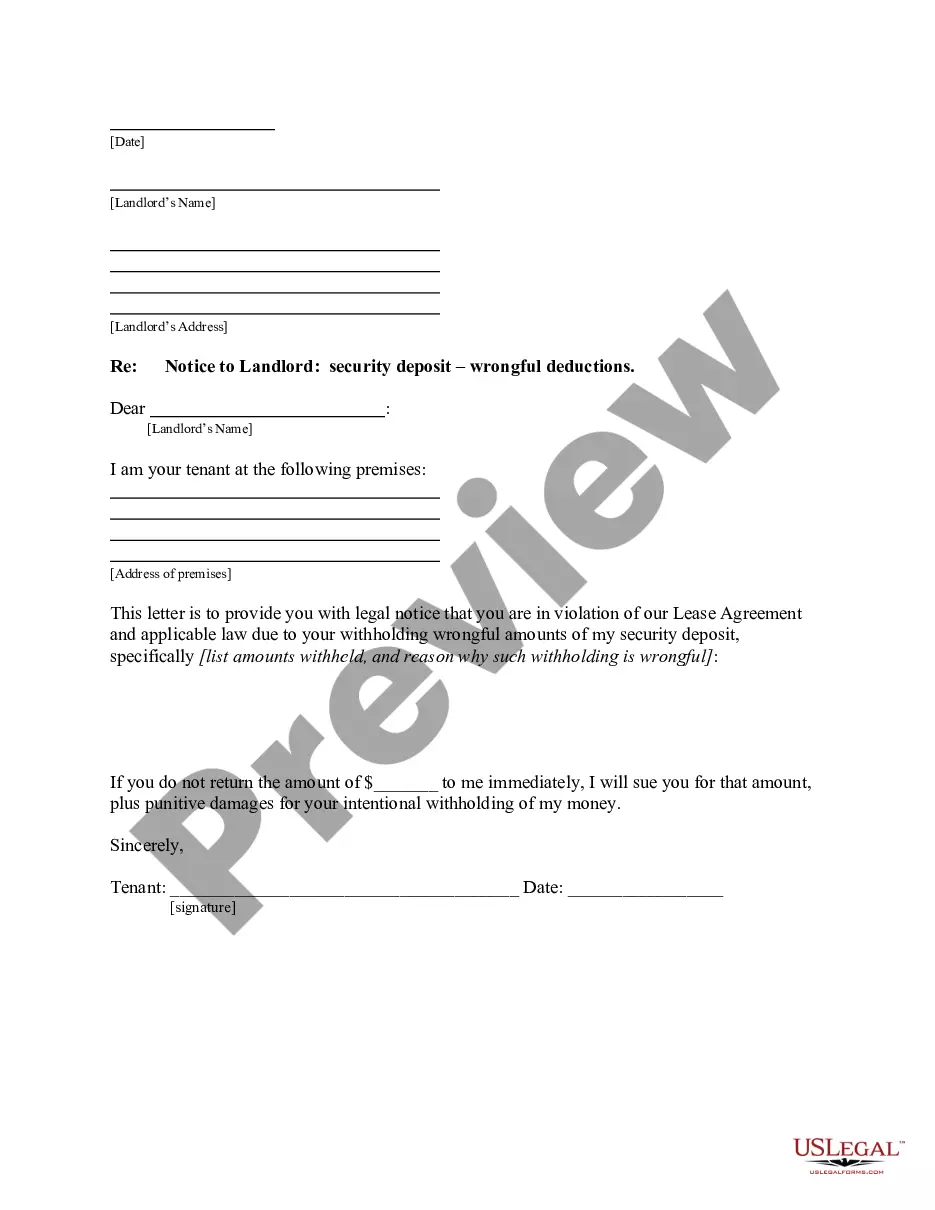
This form is a formal communication from a tenant to a landlord regarding wrongful deductions from a security deposit and demands for its return. Designed specifically for renters, this letter establishes a tenant's claims by outlining the disputed deductions, ensuring that the landlord is aware of the issue while asserting the tenant's rights. This Letter from Tenant to Landlord is distinct from other forms, as it specifically addresses the return of security deposits, which is a common area of conflict in landlord-tenant relationships.
Form components explained
- Tenant's Information: Includes the tenant's name and contact details.
- Landlord's Information: Details regarding the landlord or their authorized agent.
- Details of Security Deposit: Specifics on the amount of the security deposit and the exact deductions claimed to be wrongful.
- Demand for Return: A clear demand for the return of the specified amounts.
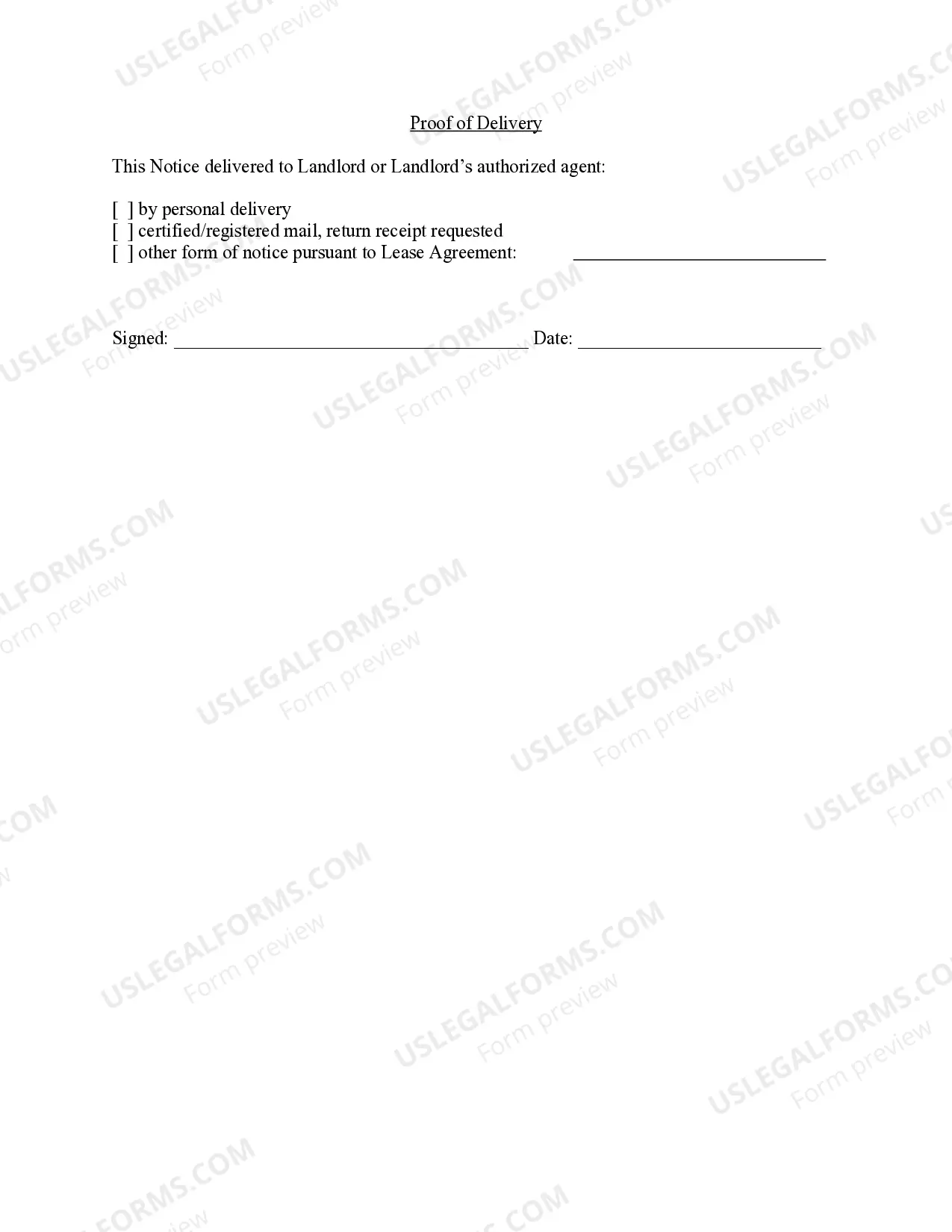
- Proof of Delivery: Options for how the notice was delivered to the landlord.



When to use this form
This form should be used when a tenant receives notice or has reason to believe that wrongful deductions have been made from their security deposit. It is important to formally notify the landlord in writing to maintain a record of the dispute and demand the return of those funds. This action can help prevent further legal issues and facilitate a resolution.
Who should use this form
This form is intended for:
- Tenants who have rented residential properties.
- Individuals who believe there have been unjust deductions from their security deposit.
- Renters seeking to assert their rights in landlord-tenant disputes.
Completing this form step by step
To complete this form, follow these steps:
- Identify the parties: Enter the names and contact information of both the tenant and the landlord.
- Specify the property: Include the address of the rented property.
- State the deductions: Clearly list the wrongful deductions made from the security deposit.
- Make your demand: Write a direct demand for the return of the disputed funds.
- Sign and date the letter: Ensure you include your signature and the date of completion.
- Deliver the notice: Choose a method for delivering the notice to the landlord or their agent, as indicated in the proof of delivery section.
Is notarization required?
This form does not typically require notarization unless specified by local law. It is advisable to check your stateâs regulations regarding landlord-tenant communication to ensure compliance.
Get your form ready online
Our built-in tools help you complete, sign, share, and store your documents in one place.
Make edits, fill in missing information, and update formatting in US Legal Forms—just like you would in MS Word.
Download a copy, print it, send it by email, or mail it via USPS—whatever works best for your next step.
Sign and collect signatures with our SignNow integration. Send to multiple recipients, set reminders, and more. Go Premium to unlock E-Sign.
If this form requires notarization, complete it online through a secure video call—no need to meet a notary in person or wait for an appointment.
We protect your documents and personal data by following strict security and privacy standards.

Make edits, fill in missing information, and update formatting in US Legal Forms—just like you would in MS Word.

Download a copy, print it, send it by email, or mail it via USPS—whatever works best for your next step.

Sign and collect signatures with our SignNow integration. Send to multiple recipients, set reminders, and more. Go Premium to unlock E-Sign.

If this form requires notarization, complete it online through a secure video call—no need to meet a notary in person or wait for an appointment.

We protect your documents and personal data by following strict security and privacy standards.
Avoid these common issues
- Failing to provide complete contact information for both parties.
- Not specifying the exact amount of wrongful deductions.
- Delivering the notice without proper proof to track delivery.
- Neglecting to sign and date the letter.
Advantages of online completion
- Convenient access to a legally compliant template that is easy to fill out.
- Editable before downloading, allowing for personalization based on your specific situation.
- Drafted by licensed attorneys to ensure it meets state laws and regulations.
Looking for another form?
Form popularity
FAQ
To write a demand letter to your landlord, start by clearly stating your purpose. Use the format of a Delaware Letter from Tenant to Landlord containing Notice of wrongful deductions from security deposit and demand for return. Begin with your contact information, followed by the landlord's details, then state the reason for your letter. Be specific about the wrongful deductions and include a deadline for the return of your security deposit to ensure clarity and prompt action.
To write an effective demand letter for the return of your security deposit, start by clearly stating the reason for your request. Reference the Delaware Letter from Tenant to Landlord containing Notice of wrongful deductions from security deposit and demand for return. Include detailed information about the deductions you believe are wrongful, along with any relevant dates and communications. By providing a clear, factual basis for your claim, you increase the chances of a swift resolution.
To write a demand letter to a landlord for a security deposit, start by clearly stating your name, the property address, and the date. Include specifics about the amount of the deposit and mention any wrongful deductions, which should be outlined in your Delaware Letter from Tenant to Landlord containing Notice of wrongful deductions from security deposit and demand for return. Specify the resolution you seek and establish a deadline for the landlord's response.
Yes, you can write a demand letter without a lawyer. Many landlords and tenants successfully draft their own letters to resolve disputes. For situations involving wrongful deductions from a security deposit, a well-crafted Delaware Letter from Tenant to Landlord containing Notice of wrongful deductions from security deposit and demand for return can effectively communicate your needs.
When writing a security deposit return letter to your tenant, begin by acknowledging the end of the lease and reference the original security deposit amount. Clearly state any deductions being made and provide a justification for each, ensuring compliance with Delaware law. This way, you maintain transparency and build trust with your tenant.
A strong demand letter contains clear, concise language, specific details, and a logical structure. In the case of issues regarding your security deposit, ensure your Delaware Letter from Tenant to Landlord containing Notice of wrongful deductions from security deposit and demand for return is well-organized. Include particular examples of the problem and state what you expect the landlord to do, along with a reasonable timeline for action.
In a demand letter, avoid using aggressive language or making threats, as this can escalate the situation unnecessarily. Instead, focus on the facts, especially regarding issues like wrongful deductions from your security deposit. Remember, your aim is to reach a resolution, so a respectful tone will help maintain open communication.
To write a demand letter to a landlord, begin by clearly stating your concerns, including specific details about any issues you're facing. Incorporate the details necessary for a Delaware Letter from Tenant to Landlord containing Notice of wrongful deductions from security deposit and demand for return. Be courteous but firm, and make sure to include a deadline for response to ensure your request is taken seriously.
A rent demand letter typically outlines the amount of rent owed and sets a deadline for payment. In the context of a Delaware Letter from Tenant to Landlord containing Notice of wrongful deductions from security deposit and demand for return, it would also address issues concerning any improper deductions from a tenant's security deposit. Such a letter serves as a formal communication to prompt the landlord to take action.
Tenants in Delaware have several rights, including the right to a habitable living space, protection from unjust eviction, and the return of security deposits. Familiarizing yourself with these rights is essential for maintaining a good rental experience. Should disputes occur, consider drafting a Delaware Letter from Tenant to Landlord containing Notice of wrongful deductions from security deposit and demand for return to protect your interests.