Delaware Letter from Landlord to Tenant as Notice to Tenant of Tenant's Disturbance of Neighbors' Peaceful Enjoyment to Remedy or Lease Terminates
Understanding this form
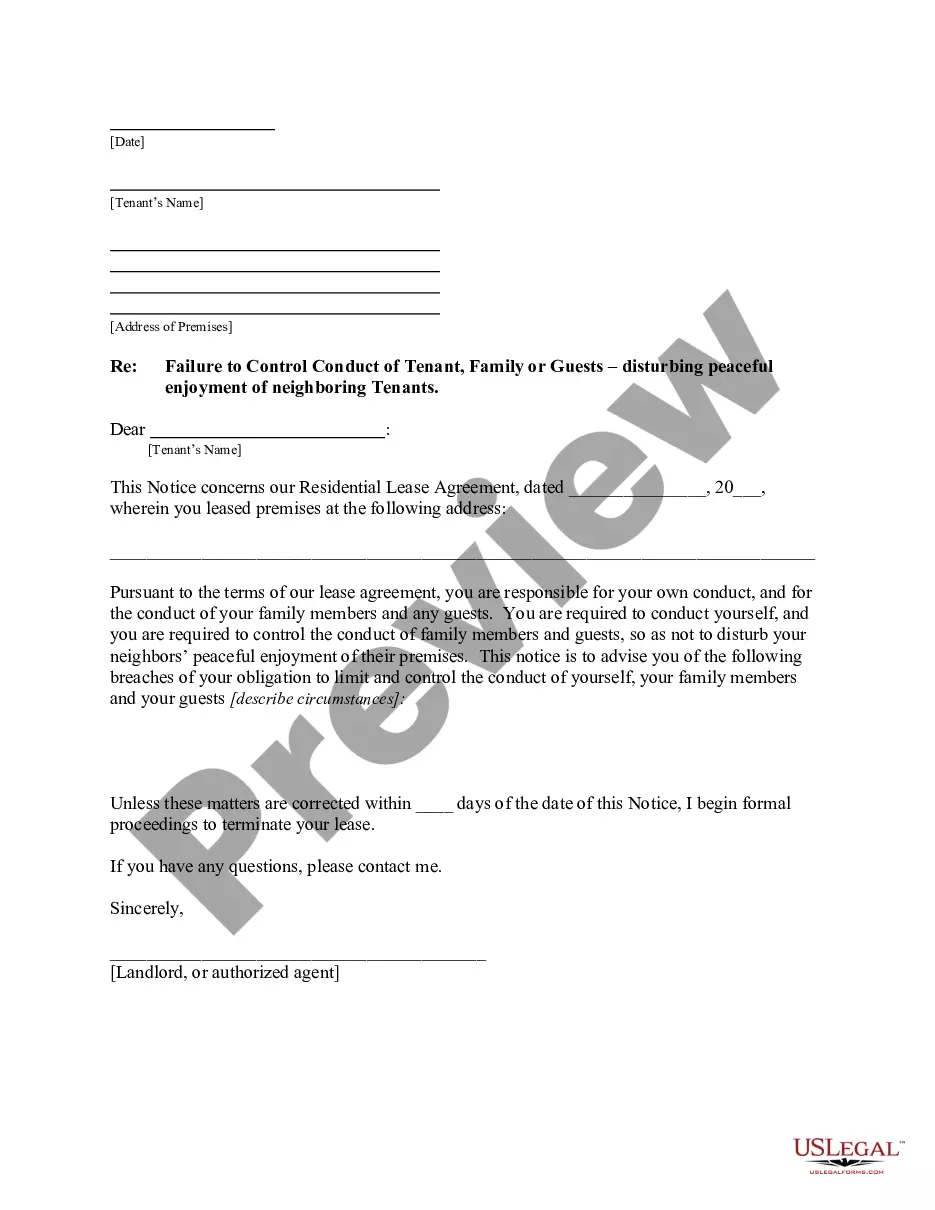
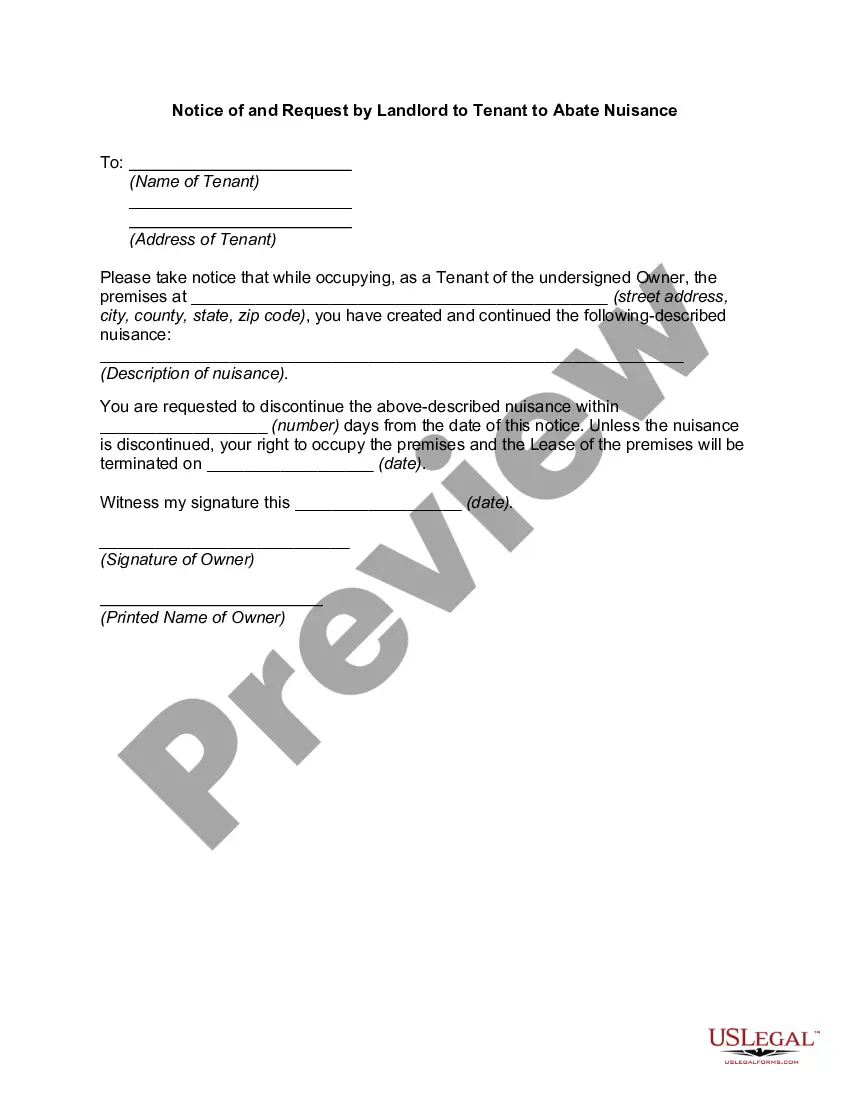
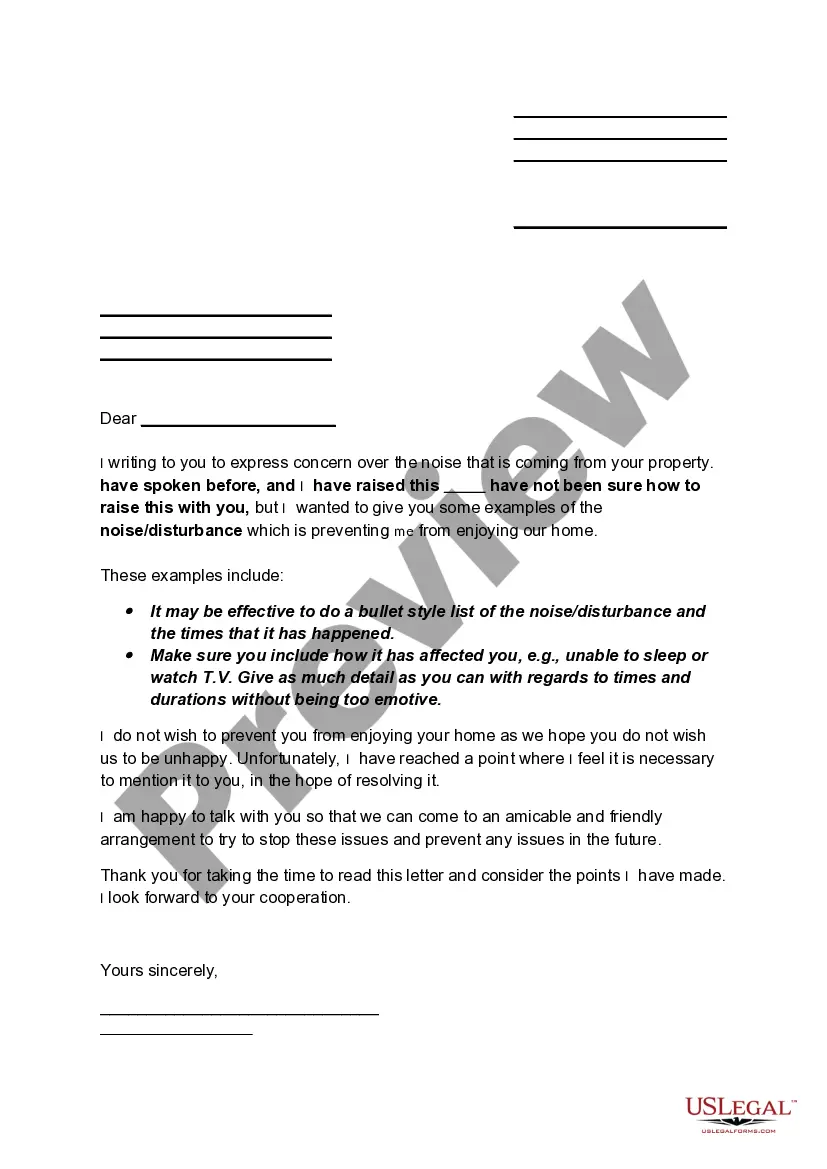
This form is a notice from a landlord to a tenant regarding disturbances caused by the tenant that interfere with the peaceful enjoyment of the neighbors. The Letter from Landlord to Tenant as Notice to Tenant of Tenant's Disturbance of Neighbors' Peaceful Enjoyment to Remedy or Lease Terminates serves to formally communicate the violations of the lease agreement and the expectation for the tenant to rectify the situation or face potential lease termination. This form helps clarify the tenant's obligations under the terms of quiet enjoyment and distinguishes itself from other tenant notices by focusing specifically on disturbances affecting neighbors.
Key components of this form
- Identification of the landlord and tenant involved.
- Description of the specific disturbances affecting neighbors.
- Statement of the tenantâs obligations related to quiet enjoyment.
- A notice of the consequences if the disturbances are not resolved.
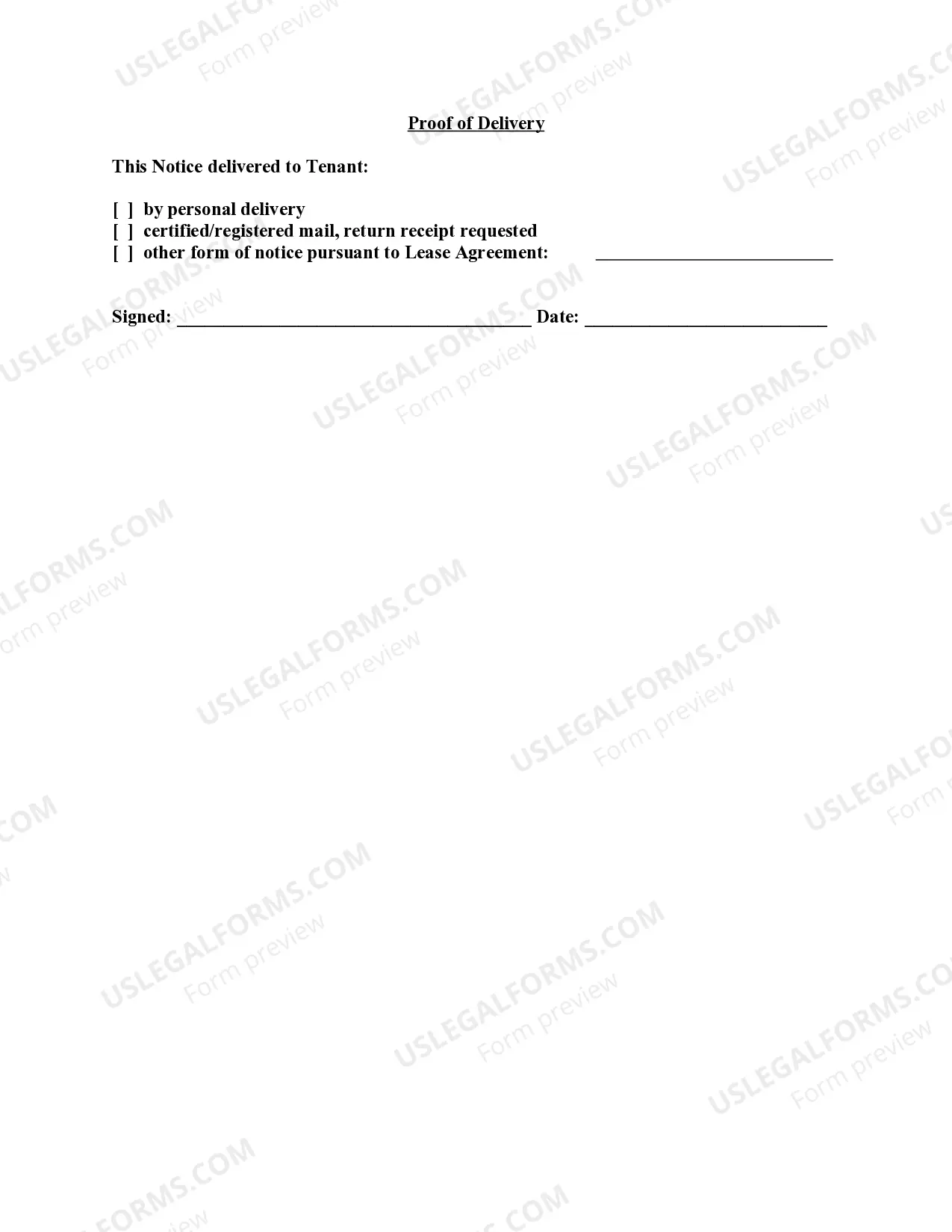
- Proof of delivery option for the notice.


When to use this form
This form should be used when a landlord identifies that a tenant, their family, or guests are causing disturbances that disrupt the peaceful enjoyment of neighboring properties. Common scenarios may include excessive noise, disruptive behavior, or other activities that infringe on the rights of other tenants or homeowners. It is important to document the issue formally to enable effective communication and potential follow-up actions.
Who can use this document
- Landlords seeking to address tenant disturbances.
- Property management companies managing rental properties.
- Real estate professionals acting on behalf of landlords.
- Tenants who wish to understand their rights in relation to neighbor disturbances.
Completing this form step by step
- Identify the landlord and tenant by including their full names and addresses.
- Document the specific disturbances being reported, citing dates and behaviors if applicable.
- Indicate the obligations of the tenant under the lease agreement regarding quiet enjoyment.
- Specify what remedial actions the tenant must take to address the issues.
- Sign and date the notice and select the method of delivery.
Is notarization required?
This form does not typically require notarization unless specified by local law. Always check state regulations to ensure compliance with any additional requirements.
Get your form ready online
Our built-in tools help you complete, sign, share, and store your documents in one place.
Make edits, fill in missing information, and update formatting in US Legal Forms—just like you would in MS Word.
Download a copy, print it, send it by email, or mail it via USPS—whatever works best for your next step.
Sign and collect signatures with our SignNow integration. Send to multiple recipients, set reminders, and more. Go Premium to unlock E-Sign.
If this form requires notarization, complete it online through a secure video call—no need to meet a notary in person or wait for an appointment.
We protect your documents and personal data by following strict security and privacy standards.

Make edits, fill in missing information, and update formatting in US Legal Forms—just like you would in MS Word.

Download a copy, print it, send it by email, or mail it via USPS—whatever works best for your next step.

Sign and collect signatures with our SignNow integration. Send to multiple recipients, set reminders, and more. Go Premium to unlock E-Sign.

If this form requires notarization, complete it online through a secure video call—no need to meet a notary in person or wait for an appointment.

We protect your documents and personal data by following strict security and privacy standards.
Common mistakes
- Failing to provide specific details about the disturbances.
- Not keeping a copy of the notice for personal records.
- Overlooking the required method of delivery for documentation.
- Using vague language that may lead to misinterpretation.
Why use this form online
- Convenience of downloading and completing the form at your own pace.
- Editability allows for easy customization to fit specific situations.
- Access to professionally drafted content ensuring legal reliability.
- Streamlined process for legal documentation without the need for an attorney visit.
Legal use & context
- This notice is a crucial part of the landlord-tenant relationship, ensuring proper communication about lease obligations.
- Failure to deliver this notice may weaken the landlordâs position in potential eviction proceedings.
- Landlords must understand the limitations of using this form based on local jurisdiction.
What to keep in mind
- This form notifies tenants about disturbances that affect their neighbors' quiet enjoyment.
- Using this notice is a proactive step before pursuing lease termination.
- Proper completion and delivery of this form are vital for enforceability.
Looking for another form?

Form popularity
FAQ
Failure by the landlord to return the full security deposit to the tenant within 20 days from the effective date of forfeiture shall entitle the tenant to double the amount of the security deposit.
An eviction notice must state a reason why you are being evicted, otherwise it is invalid.For tenants who lived in the property for more than 12 months, the landlord must provide at least 60 days prior notice to vacate, under California Civil Code 1946.
If you think your landlord is violating the Fair Housing Act, you can get that landlord in trouble by filing a complaint at HUD.gov. Your remedy for breach of quiet enjoyment is to terminate the lease and move or sue in small claims court.
Unconditional quit notices are used to order the tenant to leave the premises without the chance to remedy the situation. This is used for a serious breach of the lease agreement or chronic late rent payment.
Review Your Lease Before You Sign. Research Local Laws. Keep Records. Pay Your Rent. Maintain Respectful Communication. Seek an Agreeable Solution. Request Repairs in Writing. What Do You Think?
Injury at Rental Property: You could have a case for a lawsuit against your landlord if you are injured at the rental property due to a landlord's neglect. Filing an Illegal Eviction: You can countersue your landlord if you feel your landlord is trying to evict you illegally.
The Delaware Termination Letter Form is a required notice which must be issued to terminate a lease agreement. This is mandatory whenever ending a month-to-month lease. While a month to month affords flexibility it will require that when either landlord or tenant give at least sixty days' notice.
Every tenant has a right to enjoy peaceful possession of the property without any disturbance or encumbrance from anyone including the owner. At no point of time under your tenancy can your landlord ask you to evict or leave the premises without assigning a valid reason.
Your landlord discriminates against you. Your landlord takes your security deposit illegally. Your rental unit is inhabitable. The property owner interferes with your right to quiet enjoyment. Your landlord fails to make the necessary repairs.