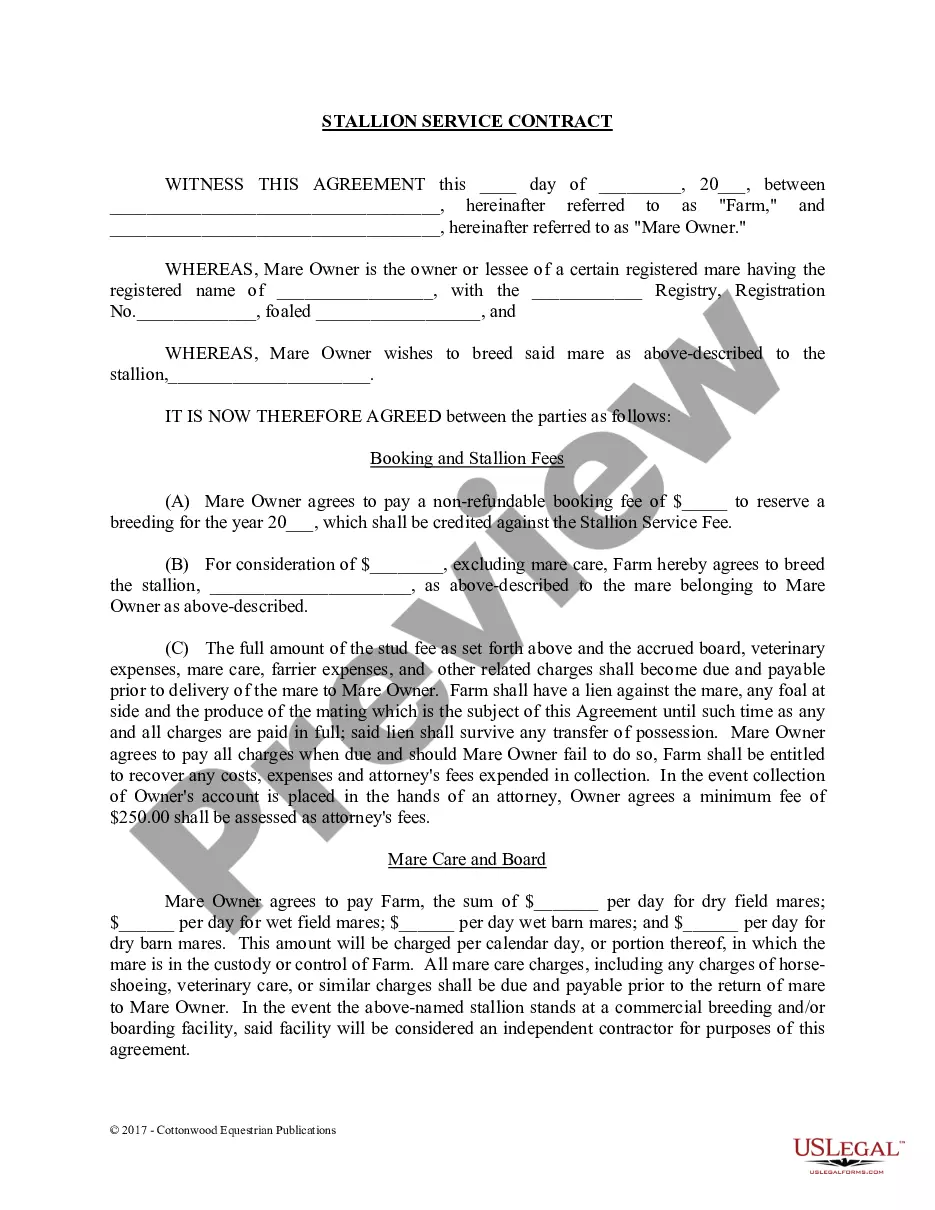
Delaware Letter from Landlord to Tenant where Tenant Complaint was caused by the deliberate or negligent act of Tenant or Tenant's guest
What is this form?
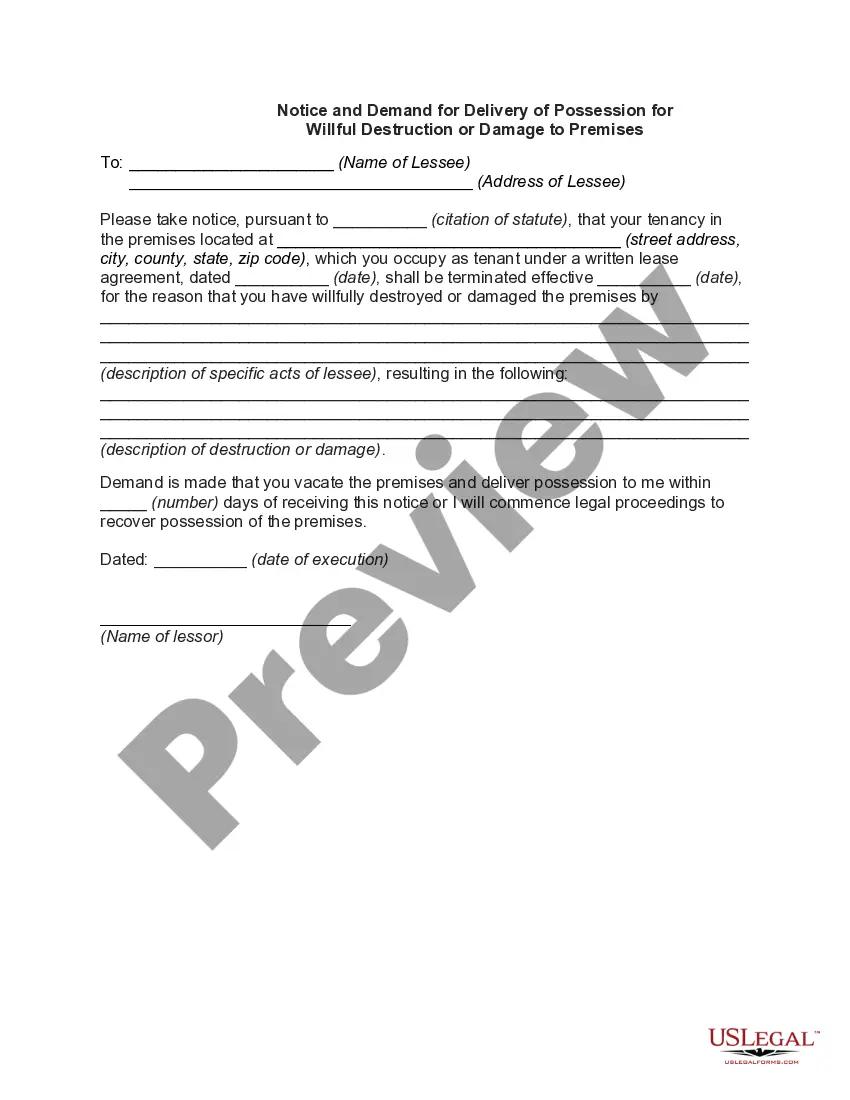
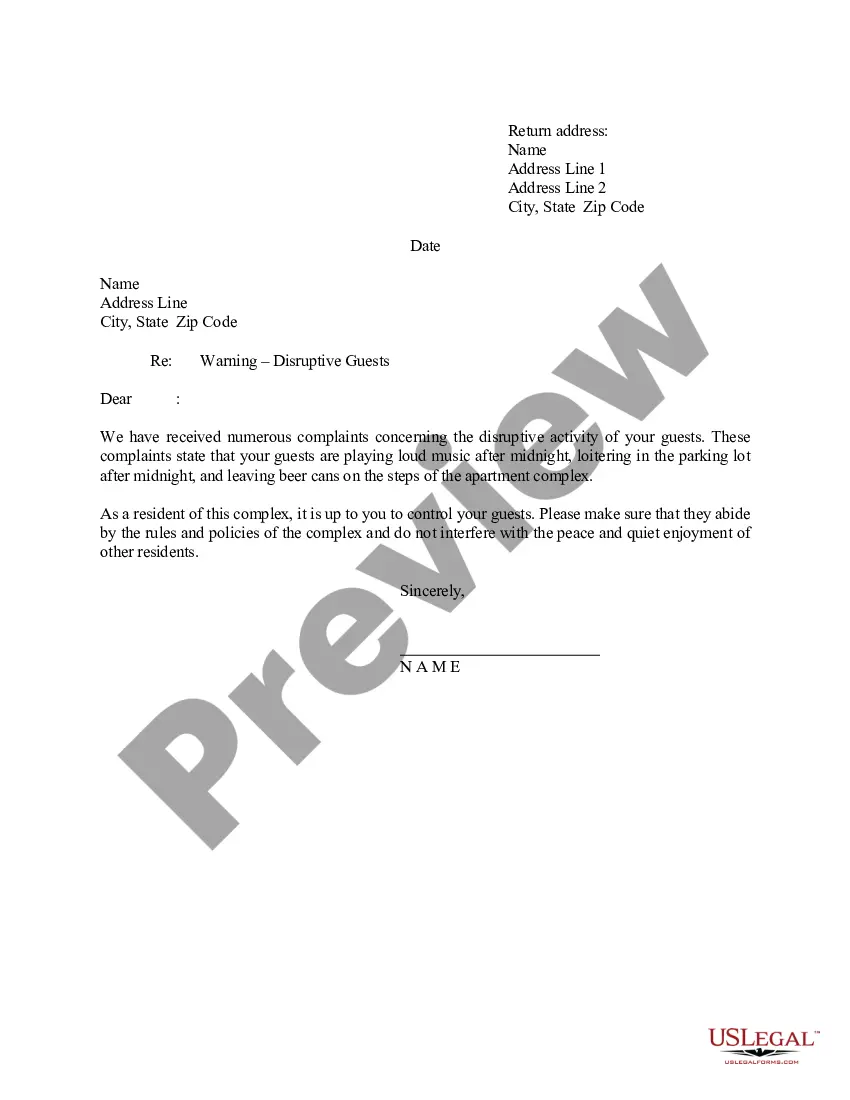
This form is a letter from a landlord to a tenant in response to a complaint about property damage. It specifically addresses situations where the damage is determined to be the result of negligent or intentional actions by the tenant or their guests. This letter serves as a formal notification that the landlord will not cover repair costs due to these actions, differentiating it from other landlord-tenant communication forms which may address general maintenance or repair issues without attributing fault.
What’s included in this form
- Identification of the landlord and tenant involved.
- Details of the tenant's complaint regarding repairs.
- Determination of the cause of damage as negligent or intentional actions by the tenant or guests.
- Statement clarifying the landlord's position on repair cost responsibility.
- Contact information for further communication.


Common use cases
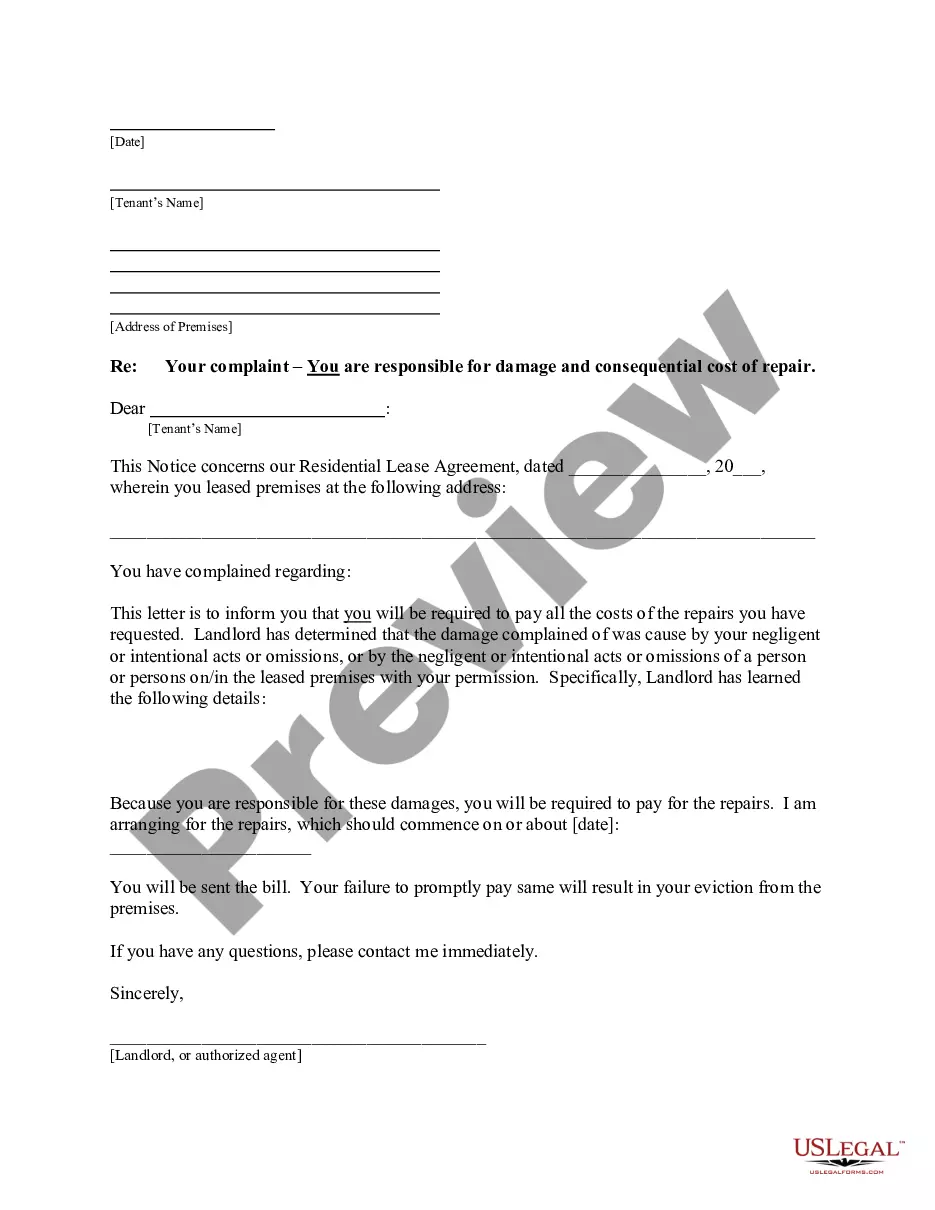
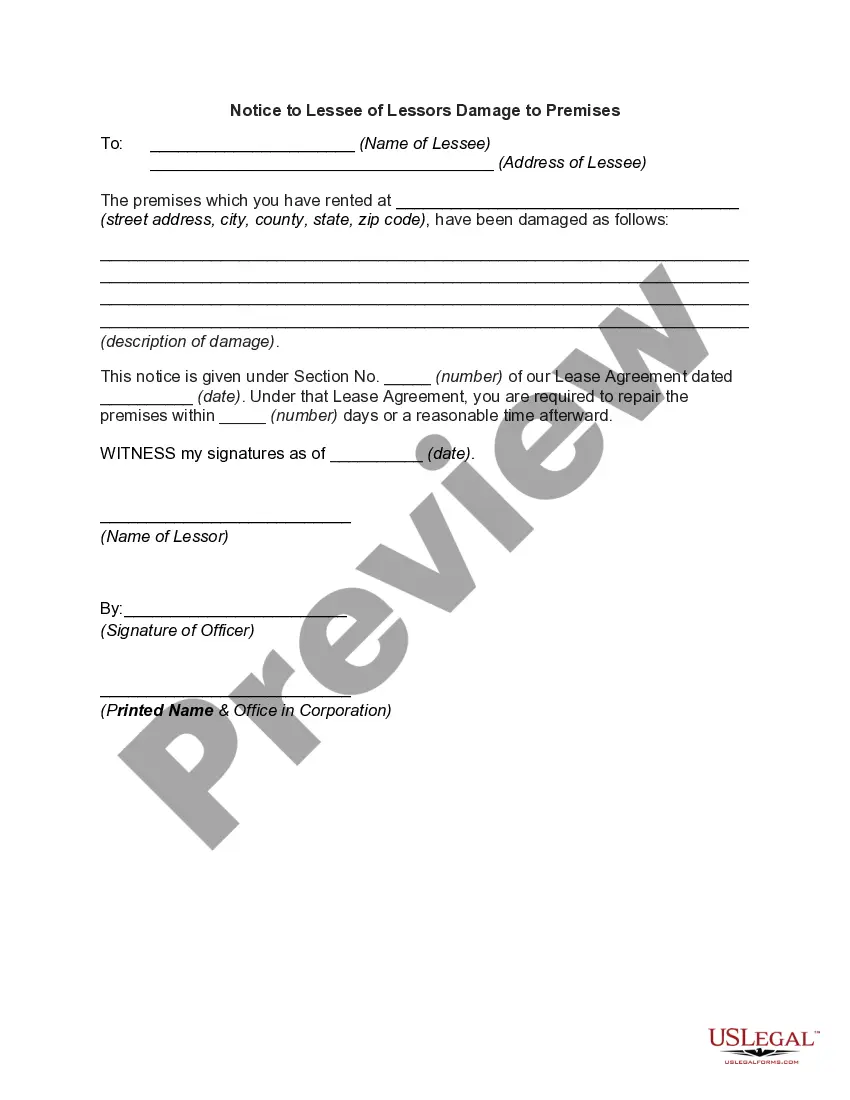
This form should be used when a tenant has submitted a complaint for repairs, but the landlord determines that the damages were caused by the tenant's own negligence or intentional wrongdoing, or by someone allowed on the premises by the tenant. It is an essential communication to clarify the landlord's stance and protect them from future liability related to the repairs in question.
Intended users of this form
- Landlords who need to respond to tenant complaints regarding property damages.
- Property management companies representing landlords.
- Landlords seeking to clarify responsibilities for repairs and maintenance.
Instructions for completing this form
- Identify the parties involved, including full names and addresses of both the landlord and tenant.
- Specify the nature of the tenant's complaint and the requested repairs.
- Cite the evidence or reasoning for determining the tenant's responsibility for the damage.
- Include any additional instructions or comments for the tenant.
- Sign the letter and provide contact information for follow-up.
Notarization requirements for this form
Notarization is generally not required for this form. However, certain states or situations might demand it. You can complete notarization online through US Legal Forms, powered by Notarize, using a verified video call available anytime.
Get your form ready online
Our built-in tools help you complete, sign, share, and store your documents in one place.
Make edits, fill in missing information, and update formatting in US Legal Forms—just like you would in MS Word.
Download a copy, print it, send it by email, or mail it via USPS—whatever works best for your next step.
Sign and collect signatures with our SignNow integration. Send to multiple recipients, set reminders, and more. Go Premium to unlock E-Sign.
If this form requires notarization, complete it online through a secure video call—no need to meet a notary in person or wait for an appointment.
We protect your documents and personal data by following strict security and privacy standards.

Make edits, fill in missing information, and update formatting in US Legal Forms—just like you would in MS Word.

Download a copy, print it, send it by email, or mail it via USPS—whatever works best for your next step.

Sign and collect signatures with our SignNow integration. Send to multiple recipients, set reminders, and more. Go Premium to unlock E-Sign.

If this form requires notarization, complete it online through a secure video call—no need to meet a notary in person or wait for an appointment.

We protect your documents and personal data by following strict security and privacy standards.
Common mistakes to avoid
- Failing to include complete contact information for the landlord.
- Using vague language that does not clearly outline tenant responsibilities.
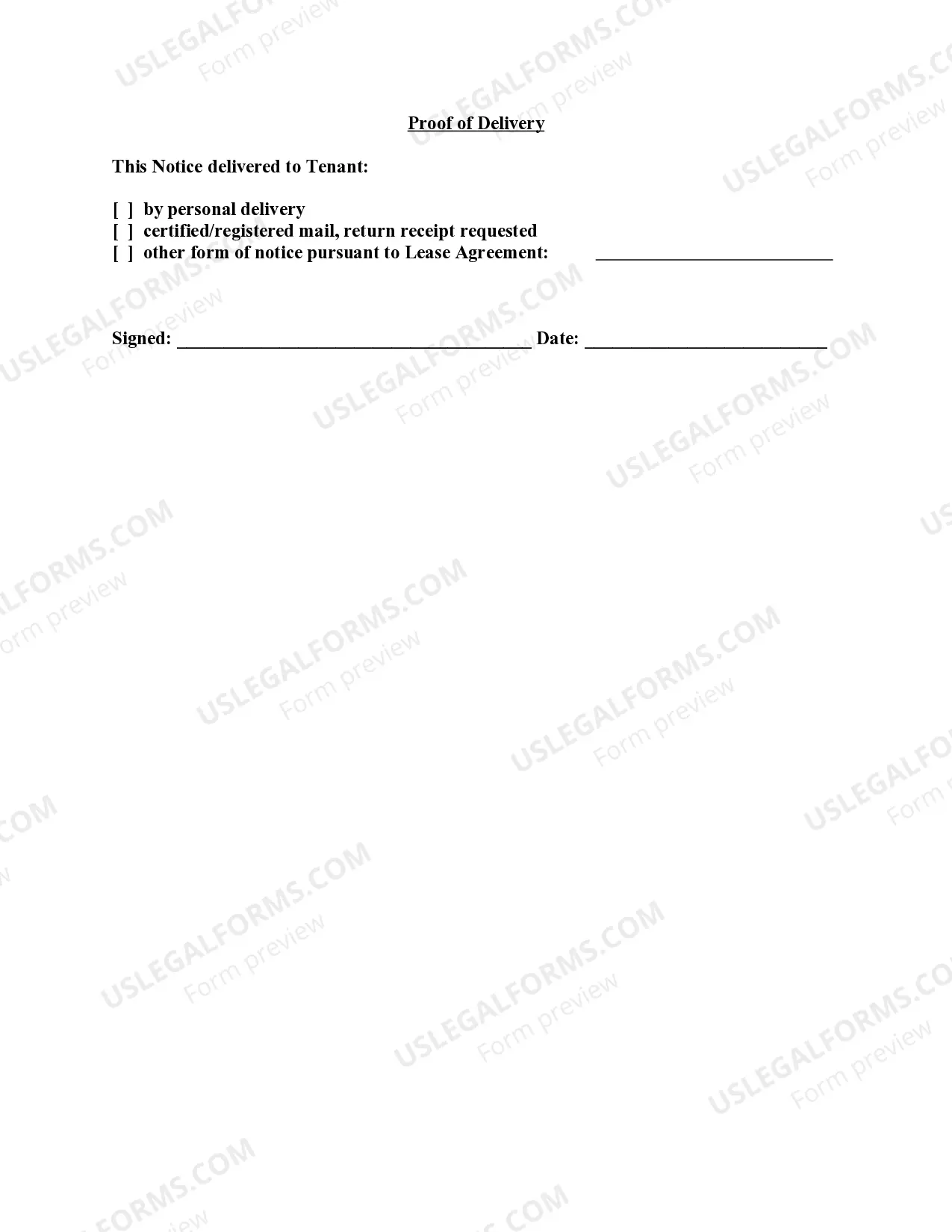
- Neglecting to deliver the notice through a reliable method that provides proof.
- Not providing adequate time for the tenant to respond before taking further actions.
Benefits of completing this form online
- Instant access to a legally vetted document tailored for landlord-tenant situations.
- Editability allows customization to fit specific circumstances.
- Easy download and storage options for record-keeping.
- Supports effective communication and documentation between parties.
Legal use & context
- The letter serves as an official record of communication about property damage.
- It helps establish the landlord's stance regarding repair responsibilities.
- Understanding the legal context is essential for both landlords and tenants.
Main things to remember
- This letter clarifies rental responsibilities related to damage caused by a tenant.
- It is important for landlords to document communication regarding repair liability.
- Adhere to local laws to ensure compliance and enforceability.
Looking for another form?
Form popularity
FAQ
In most cases when a rental property is damaged, you have the right to keep all or part of the security deposit to offset the repair costs. But again, security deposits are heavily regulated by the landlord-tenant laws in your location.
Landlord Rights When Tenant Destroys PropertyIf the tenant is evicted or already abandoned the property the landlord can deduct money from the security deposit. If the damages exceed the funds in the security deposit the landlord can sue the tenant in small claims court.
Consumer Protection Unit of the Attorney General's Office. The Consumer Protection Unit of the Attorney General's Office has the power to enforce the provisions of the Residential Landlord Tenant Code. Suspected violations of the Code should be reported to the Unit by calling 577-3250 or 1-800-220-5424.
The landlord had a duty to reasonably maintain the property; The landlord knew or should have known of the dangerous condition; The landlord breached their duty by failing to repair/fix the dangerous condition;
When damages or issues affect a rental unit's liveability, it is the landlord's responsibility to fix these damages at no cost to the tenant. Landlords are also responsible for repairing (and sometimes replacing) damaged items or appliances that are in the lease agreement.
Damage to the Property: A landlord can sue a tenant if the tenant has caused damage to the property.To Recover Lost Rent From an Illegal Move Out: If the tenant moved out before their lease was actually up, you can take them to court to recover the rent they owed for the remaining time on their lease.
If your tenant damages your rental property, your landlord insurance may cover that damage, depending on your policy and the type and extent of the damage. There are three types of tenant damage: accidental, intentional and normal wear and tear. Accidental damage Sometimes covered by landlord insurance.
If you're seeking damages for emotional distress caused by a landlord's discrimination, or punitive damages for especially blatant and intentional discrimination, a lawsuit may well be your best bet. Understand what's involved in suing your landlord. You may file a lawsuit in either federal or state court.