District of Columbia Last Will and Testament with All Property to Trust called a Pour Over Will
Understanding this form
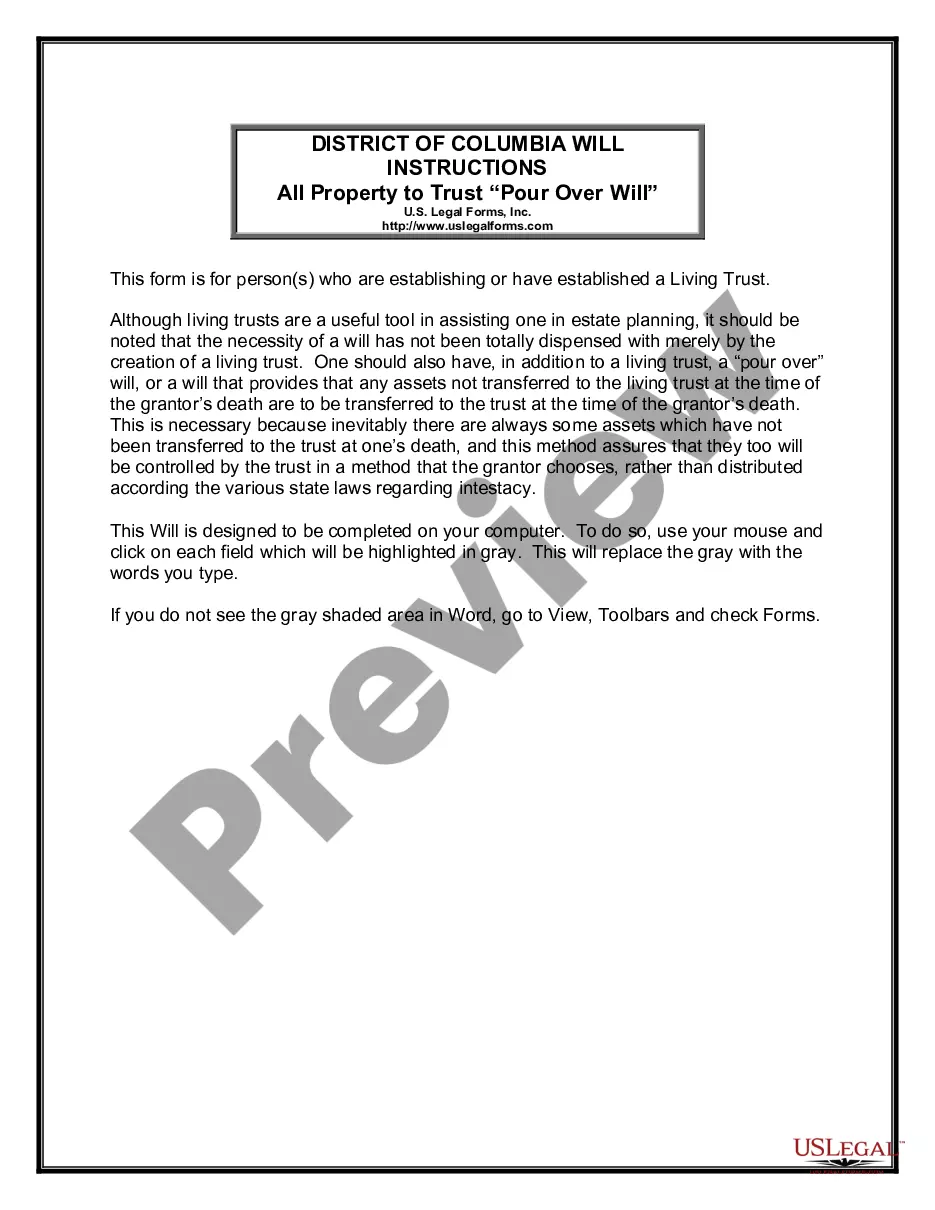
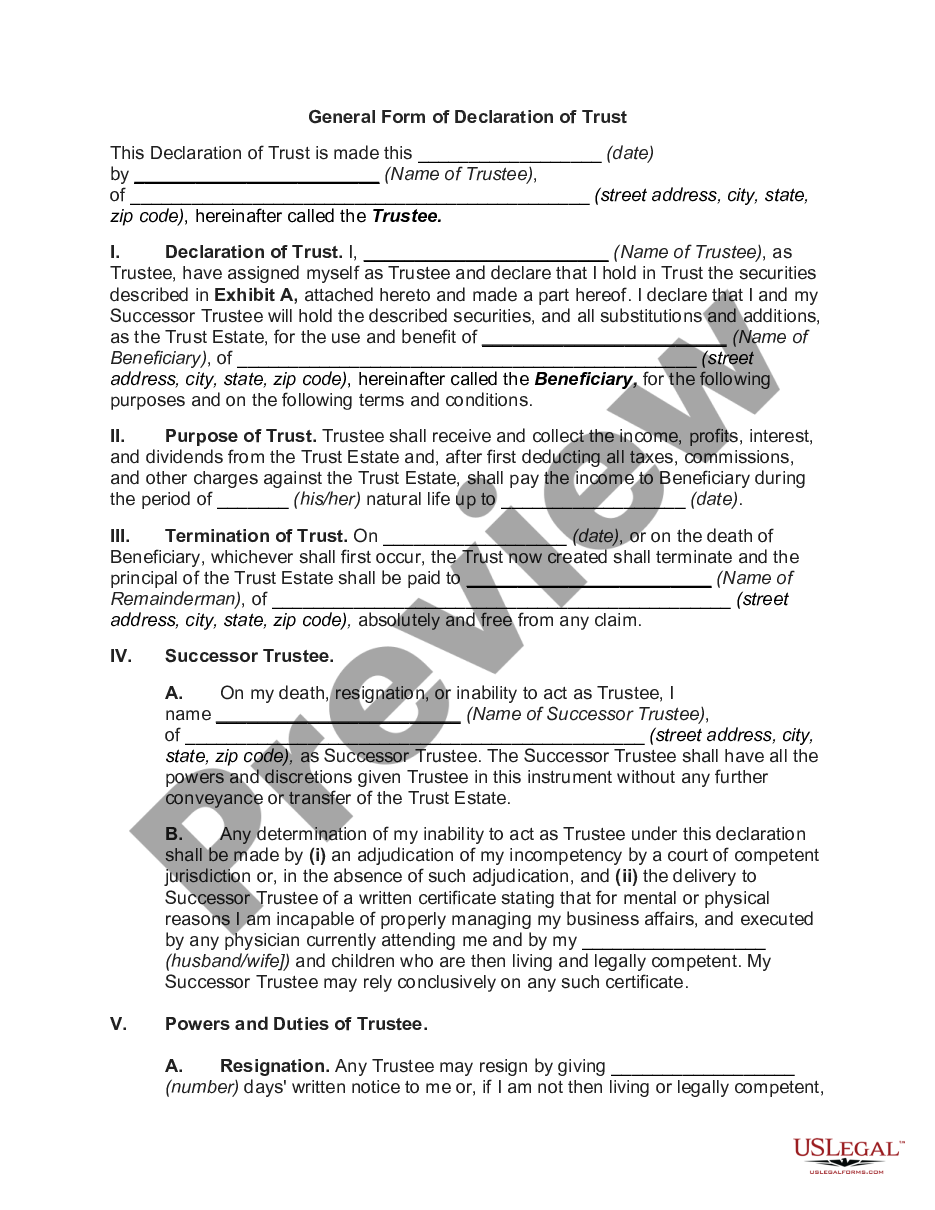
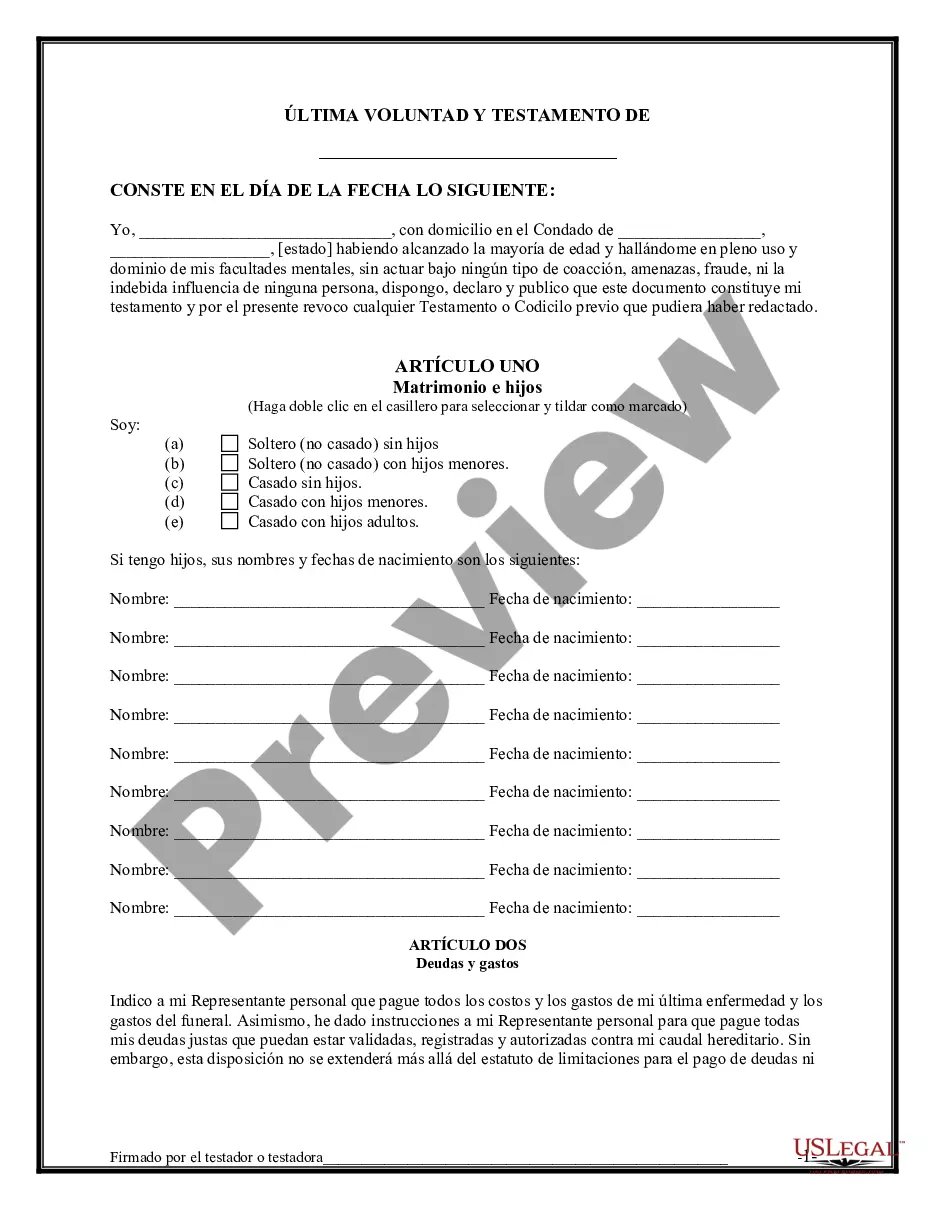
This Last Will and Testament, also known as a Pour Over Will, is a legal document that ensures all property not previously transferred to a living trust is directed to that trust upon the testator's death. Unlike traditional wills, a Pour Over Will allows individuals to establish a living trust during their lifetime, which simplifies the estate distribution process and ensures assets are managed according to the testator's wishes rather than state intestacy laws.
Form components explained
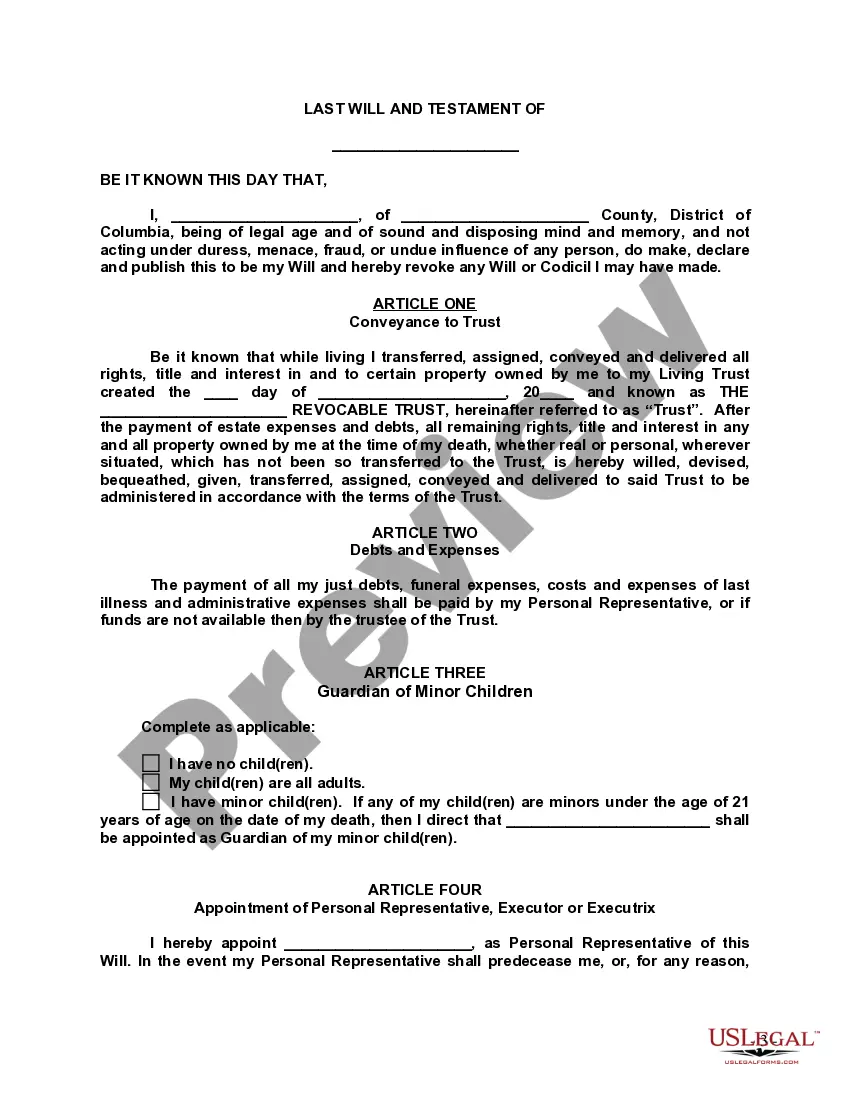
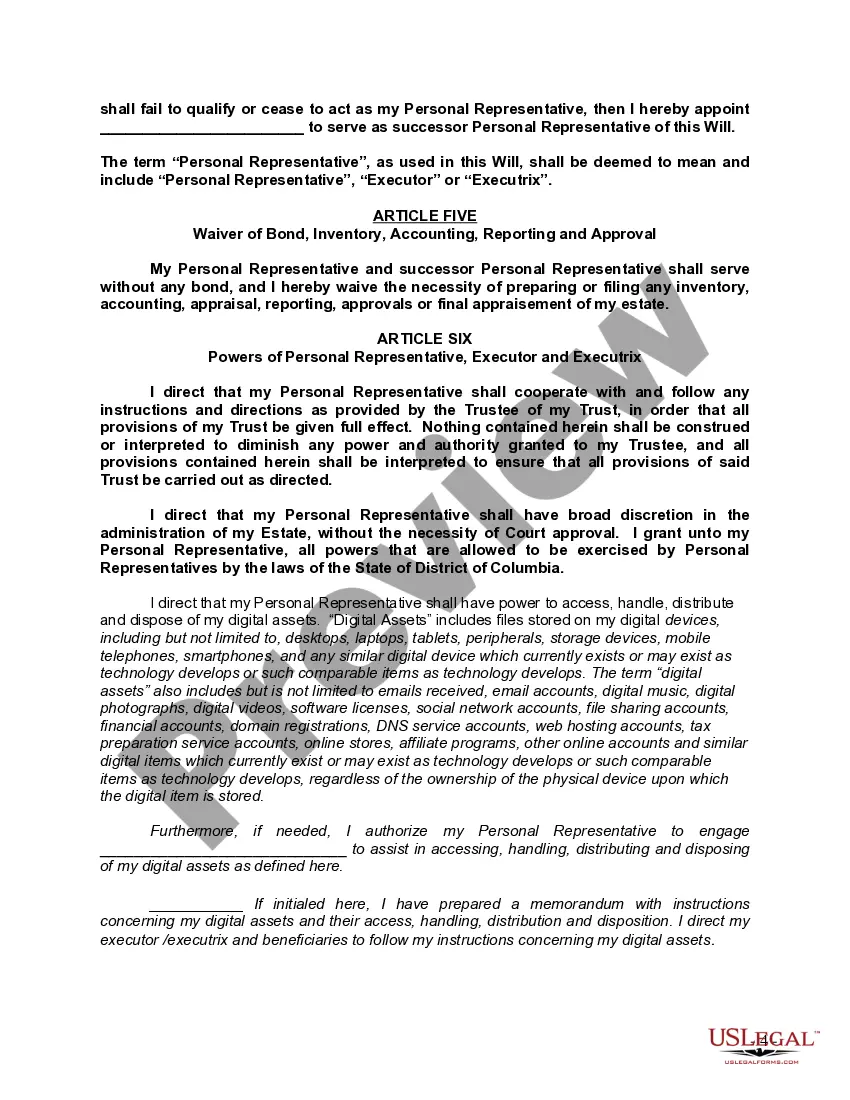
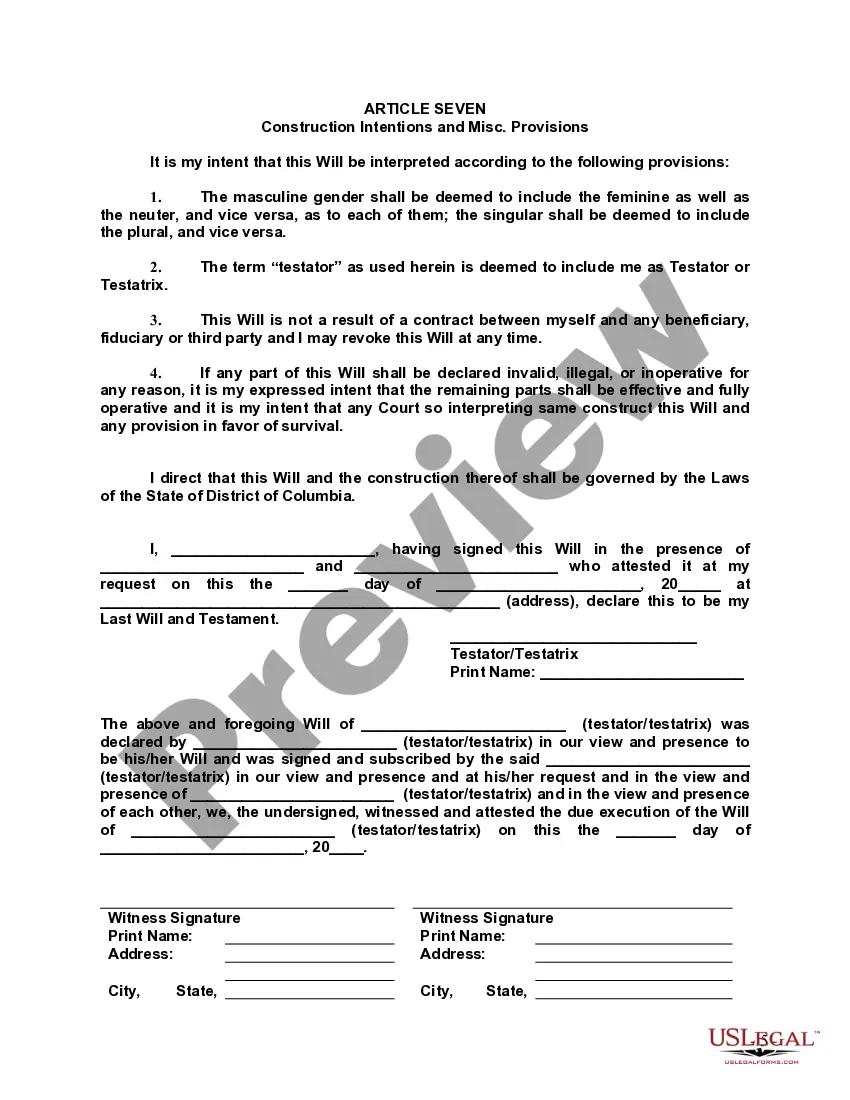
- Declaration of intent to create a will, revoking any previous wills.
- Conveyance clause directing untransferred property to the living trust.
- Section for appointing a personal representative for estate management.
- Provisions for debts and expenses related to the estate.
- Appointment of guardians for minor children, if applicable.






Common use cases
This form is ideal for individuals who have set up or are setting up a living trust, ensuring that any assets not previously included in the trust are still managed in accordance with their wishes at the time of their death. It is particularly useful for those who want a clear directive for the distribution of their remaining assets and to avoid probate complications.
Intended users of this form
- Individuals establishing a new living trust.
- Those who have existing assets not yet included in their trust.
- Anyone seeking to specify how their remaining assets should be handled after death.
- People with minor children needing guardianship provisions.
Completing this form step by step
- Start by entering your full name and residence information at the beginning of the form.
- Fill in the name of your living trust as it appears in the trust document.
- List any specific directives related to property distribution, including any remaining debts and funeral expenses.
- Identify who you want to appoint as your personal representative and any successor representatives.
- If applicable, specify a guardian for your minor children in cases where you have dependents.
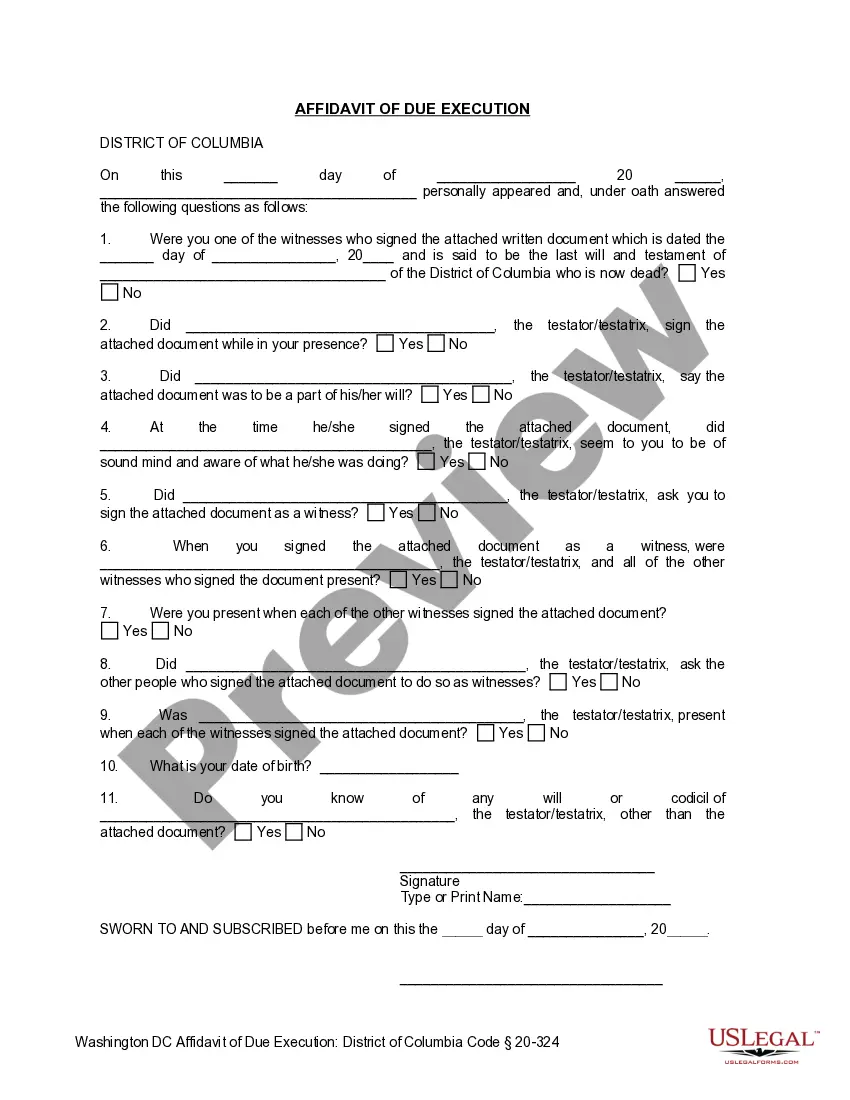
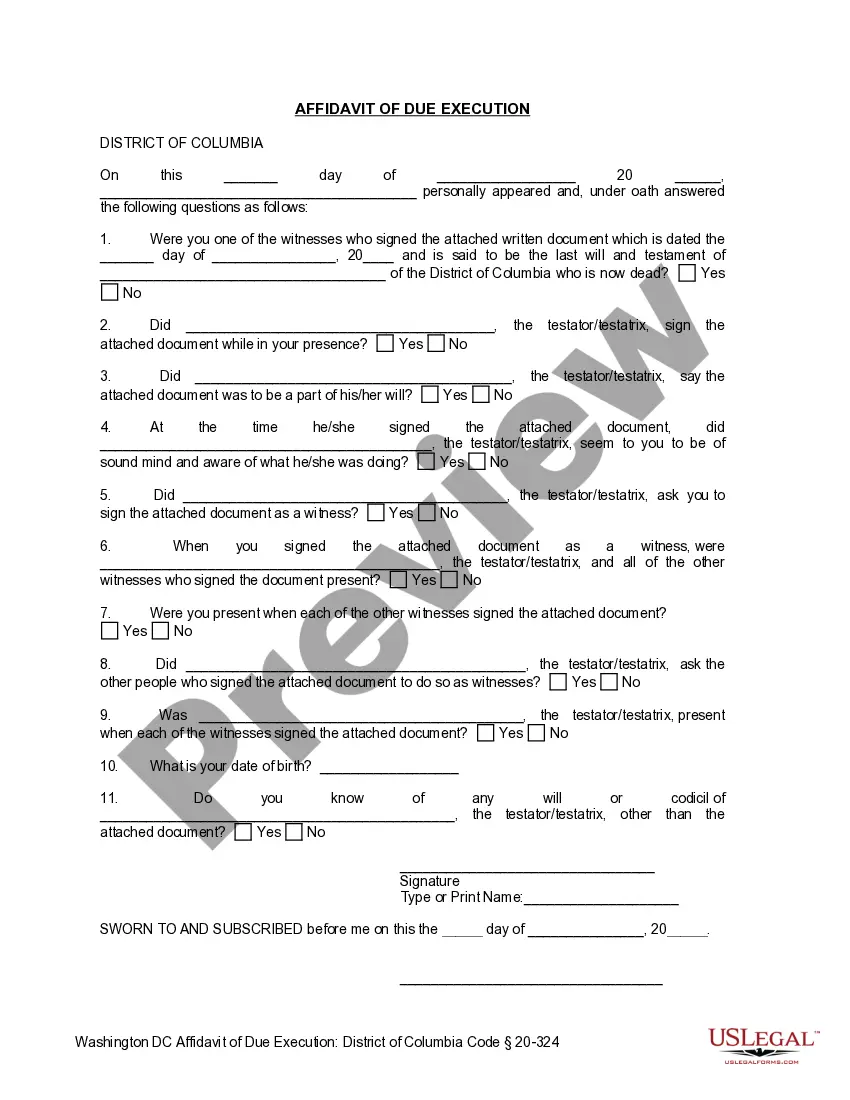
Does this document require notarization?
This form must be notarized to be legally valid. US Legal Forms provides secure online notarization powered by Notarize, allowing you to complete the process through a verified video call.
Get your form ready online
Our built-in tools help you complete, sign, share, and store your documents in one place.
Make edits, fill in missing information, and update formatting in US Legal Forms—just like you would in MS Word.
Download a copy, print it, send it by email, or mail it via USPS—whatever works best for your next step.
Sign and collect signatures with our SignNow integration. Send to multiple recipients, set reminders, and more. Go Premium to unlock E-Sign.
If this form requires notarization, complete it online through a secure video call—no need to meet a notary in person or wait for an appointment.
We protect your documents and personal data by following strict security and privacy standards.
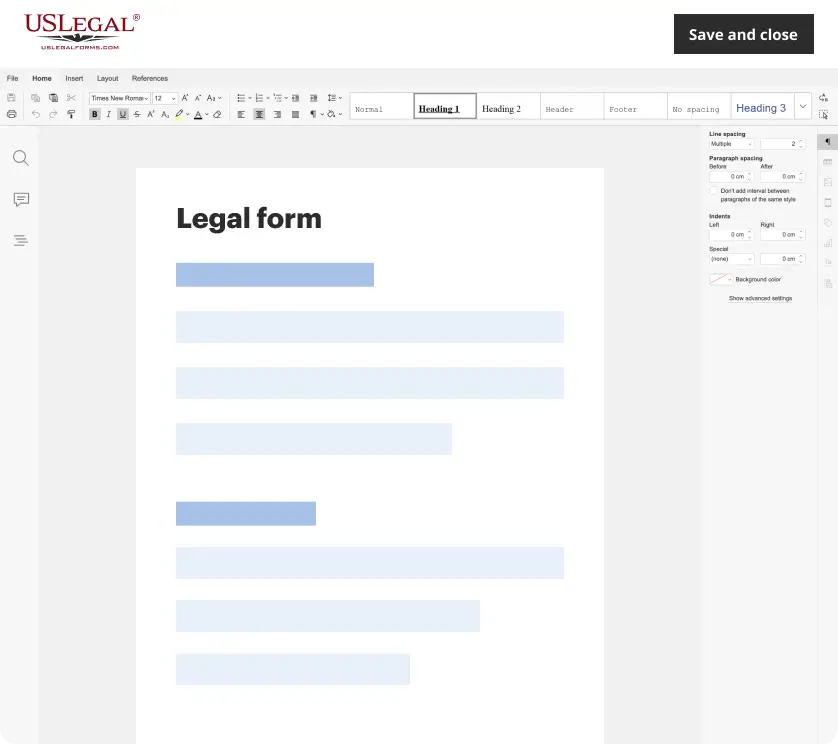
Make edits, fill in missing information, and update formatting in US Legal Forms—just like you would in MS Word.
Download a copy, print it, send it by email, or mail it via USPS—whatever works best for your next step.
Sign and collect signatures with our SignNow integration. Send to multiple recipients, set reminders, and more. Go Premium to unlock E-Sign.

If this form requires notarization, complete it online through a secure video call—no need to meet a notary in person or wait for an appointment.

We protect your documents and personal data by following strict security and privacy standards.
Common mistakes
- Failing to clearly name the living trust in the document.
- Not appointing a reliable personal representative.
- Omitting critical assets that need to be transferred to the trust.
- Neglecting to update the will after major life events, such as marriage or the birth of children.
Advantages of online completion
- Convenient access to customizable legal templates that you can complete at your own pace.
- Editable fields allow you to make changes as your circumstances evolve.
- Increased reliability from resources drafted and vetted by licensed attorneys.
Key takeaways
- A Pour Over Will directs all assets to a living trust upon death, simplifying the estate process.
- It is crucial for individuals setting up or having an existing living trust.
- Completing this form helps avoid intestacy issues and ensures your wishes are honored.
Legal terms and meanings
- Testator: A person who has made a will.
- Living Trust: A trust that is created during a person's lifetime where assets can be managed during their lifetime and distributed according to their wishes after death.
- Pour Over Will: A will that ensures any assets not transferred into a living trust during a person's lifetime are poured over into that trust at their death.
Looking for another form?
Form popularity
FAQ
The three common types of trust include revocable trusts, irrevocable trusts, and testamentary trusts. Revocable trusts can be changed during your lifetime, while irrevocable trusts cannot. Testamentary trusts, formed through your District of Columbia Last Will and Testament with All Property to Trust called a Pour Over Will, activate after your death and facilitate the distribution of your assets according to your wishes.
Yes, you can create a trust within a will, known as a testamentary trust. This trust comes into effect upon your death, allowing for the management and distribution of your assets as you intended. By incorporating it into your District of Columbia Last Will and Testament with All Property to Trust called a Pour Over Will, you can ensure your wishes are honored.
A trust created in a will is called a testamentary trust. This trust allows you to specify how assets should be managed and distributed after your death. Utilizing a District of Columbia Last Will and Testament with All Property to Trust called a Pour Over Will can enable you to establish this trust effectively within your estate plan.
Another name for a will trust is a testamentary trust. This type of trust is established through your will and becomes active upon your death. With a District of Columbia Last Will and Testament with All Property to Trust called a Pour Over Will, you have the option to create a testamentary trust for better asset management after your passing.
In the District of Columbia, you do not have to register a will during your lifetime. After your death, however, the will must be filed with the probate court to initiate the estate administration process. Ensuring that your District of Columbia Last Will and Testament with All Property to Trust called a Pour Over Will is properly filed is crucial for it to be honored.
The trust created in a will is typically referred to as a testamentary trust. This kind of trust comes into effect after the testator's death. By including a testamentary trust in your District of Columbia Last Will and Testament with All Property to Trust called a Pour Over Will, you can manage how your assets are distributed to beneficiaries.
over will funnels your assets into a trust upon your death. It ensures all property not previously transferred to the trust automatically goes into it. This process simplifies estate management and aligns your assets with your estate plan, making your District of Columbia Last Will and Testament with All Property to Trust called a Pour Over Will an effective tool for orderly asset distribution.
Choosing a trust over a will is often about managing your estate efficiently. A trust can help you avoid probate, thereby streamlining the distribution process and reducing associated costs. When you create a District of Columbia Last Will and Testament with All Property to Trust called a Pour Over Will, you might find that combining it with a trust provides comprehensive estate management that meets your specific needs.
While both a will and a trust serve vital roles in estate planning, a trust generally offers more flexibility and control. A District of Columbia Last Will and Testament with All Property to Trust called a Pour Over Will primarily directs asset distribution upon death, whereas a trust can manage resources during your lifetime and beyond. Ultimately, the choice between them depends on your estate planning goals and preferences.
To effectively put a trust into a will, you typically use a Pour Over Will. This type of will directs that any remaining assets go into your established trust after your death. By naming the trust directly in your District of Columbia Last Will and Testament with All Property to Trust called a Pour Over Will, you ensure that all your property will be managed according to the terms you set forth in the trust.