District of Columbia Marital Legal Separation and Property Settlement Agreement for persons with No Children, No Joint Property or Debts where Divorce Action Filed
What is this form?
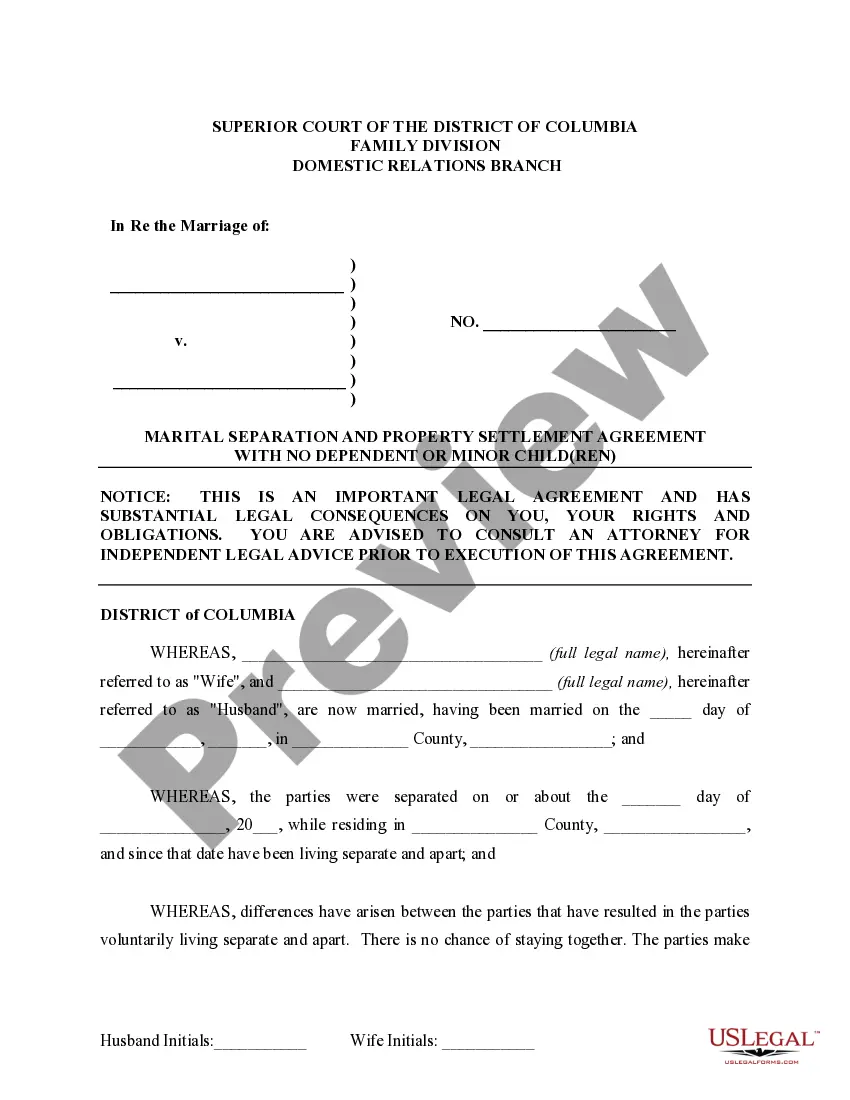
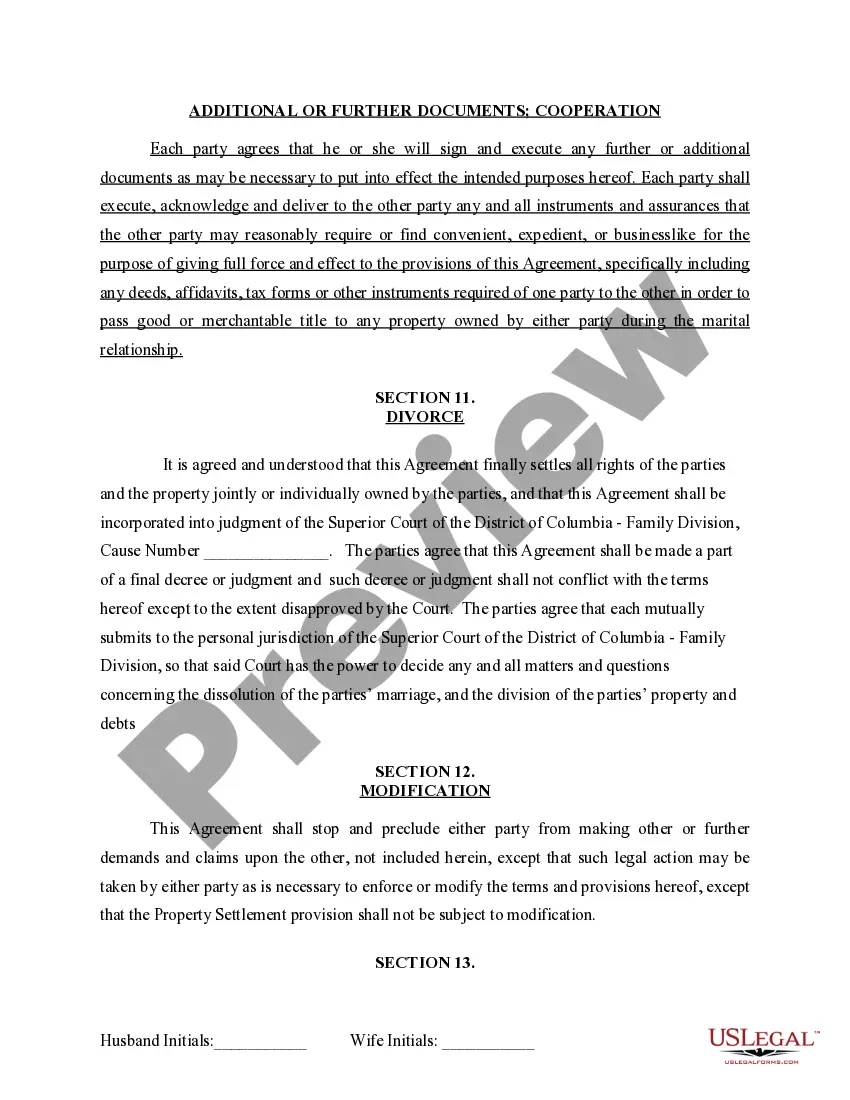
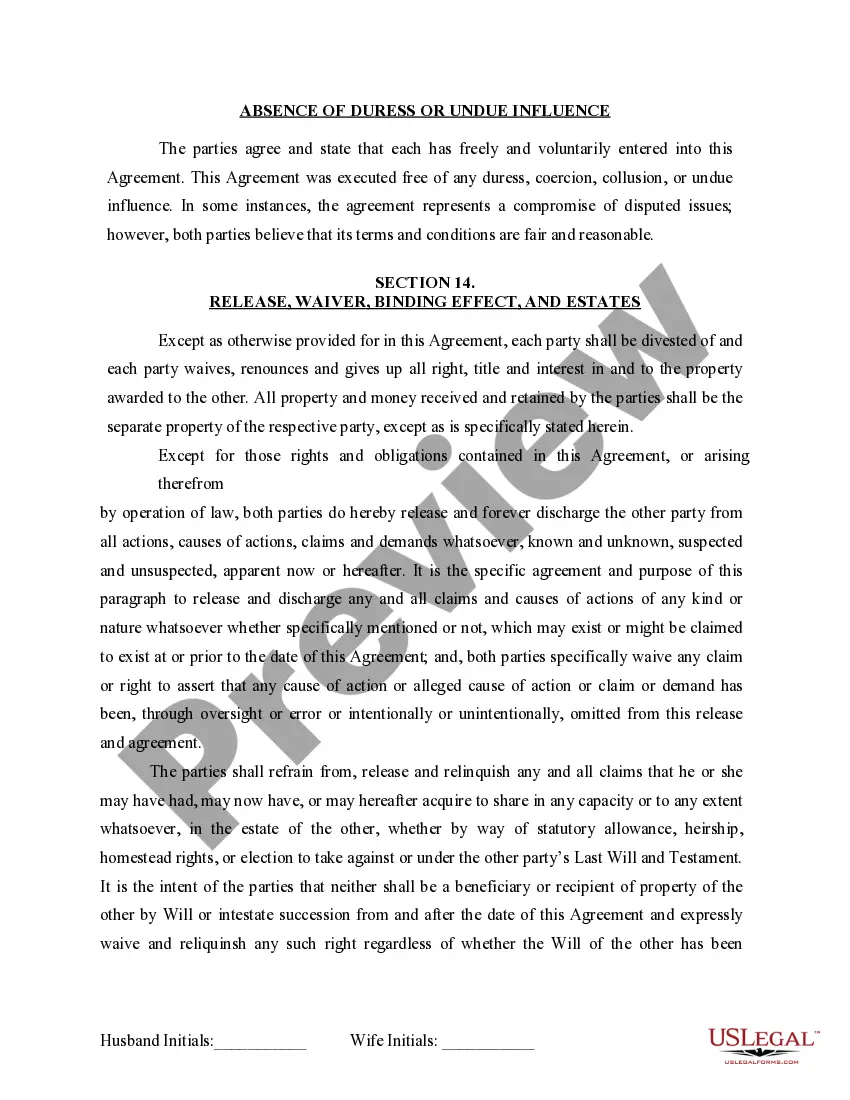
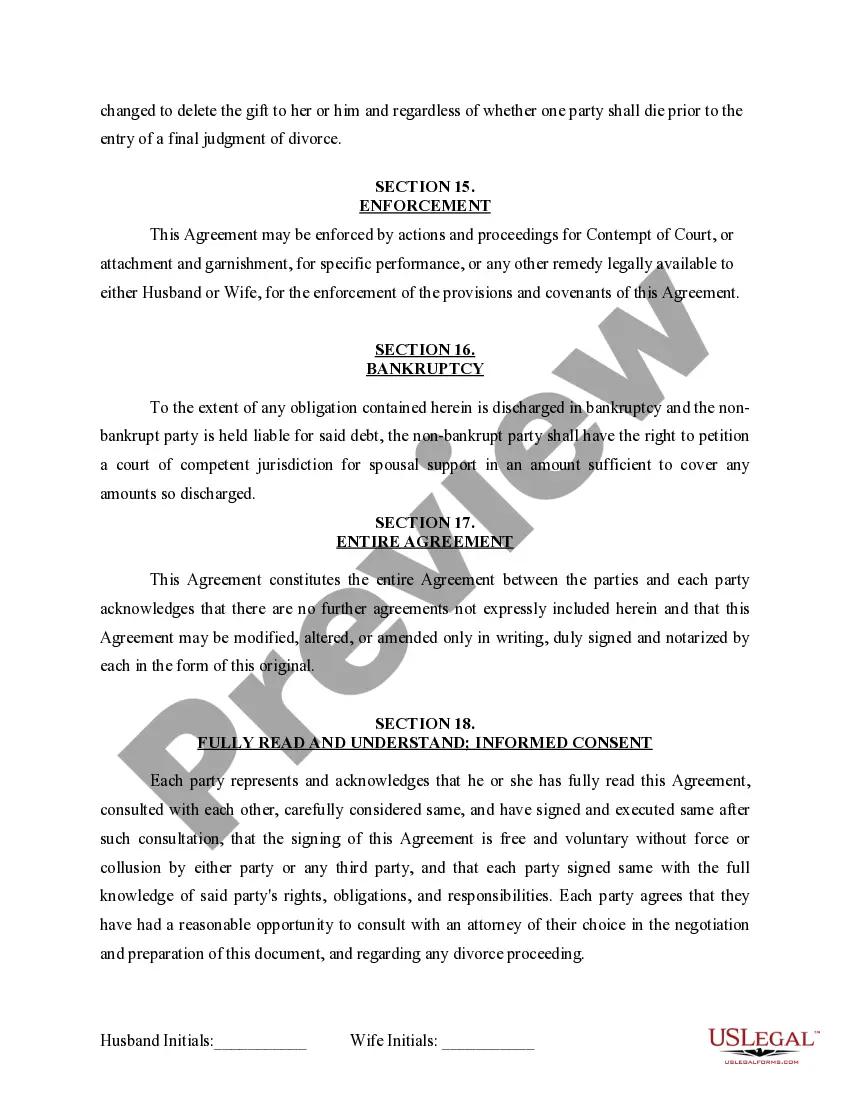
This Marital Legal Separation and Property Settlement Agreement is designed for married couples without children, joint property, or debts who are preparing for a divorce. This form allows the parties to clearly delineate their rights and responsibilities regarding asset division and liabilities, ensuring a legally binding understanding as they move through the divorce process.
What’s included in this form
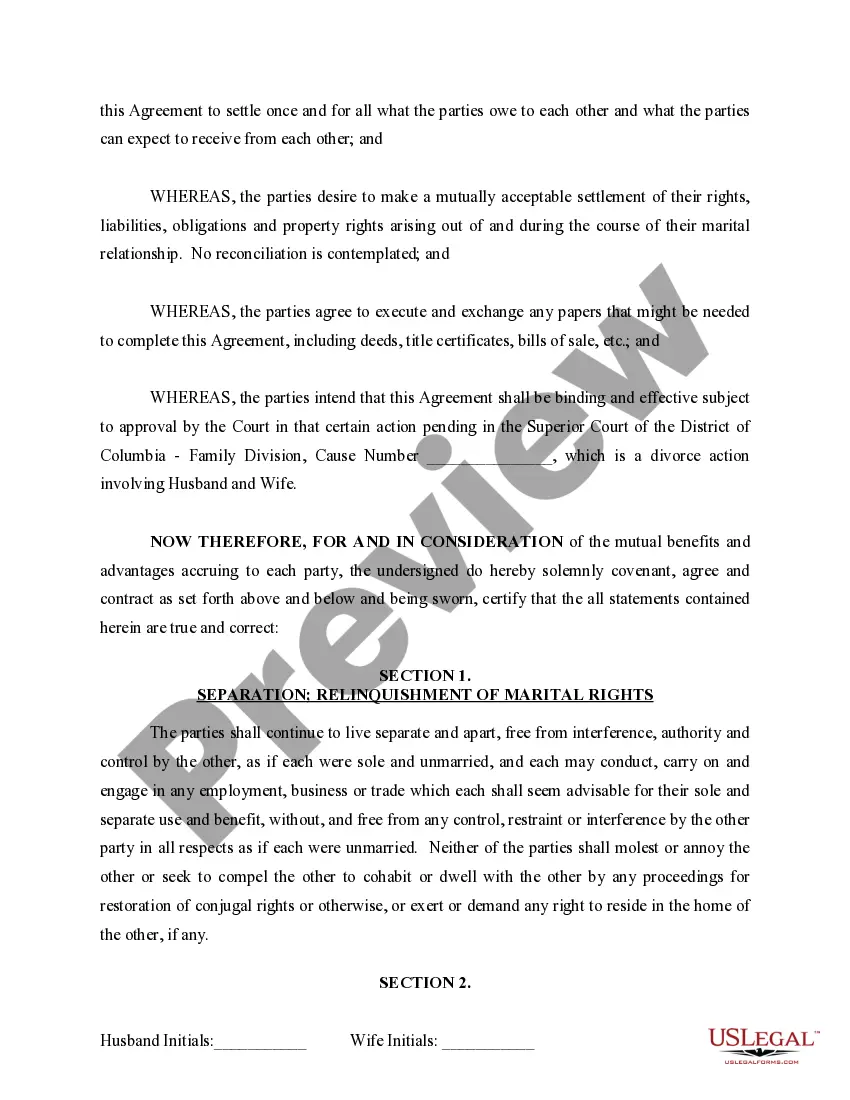
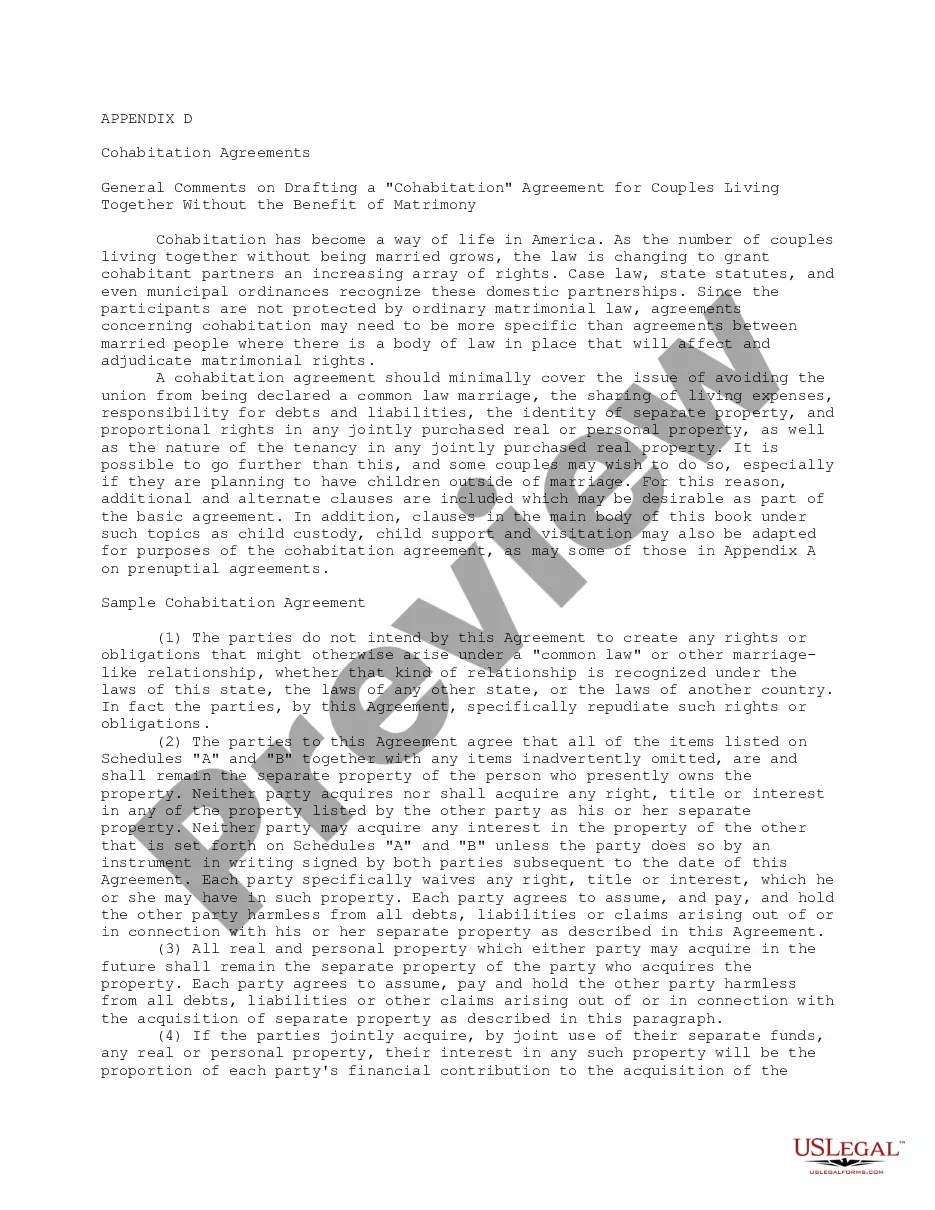
- Separation relinquishment clause, allowing both parties to live independently.
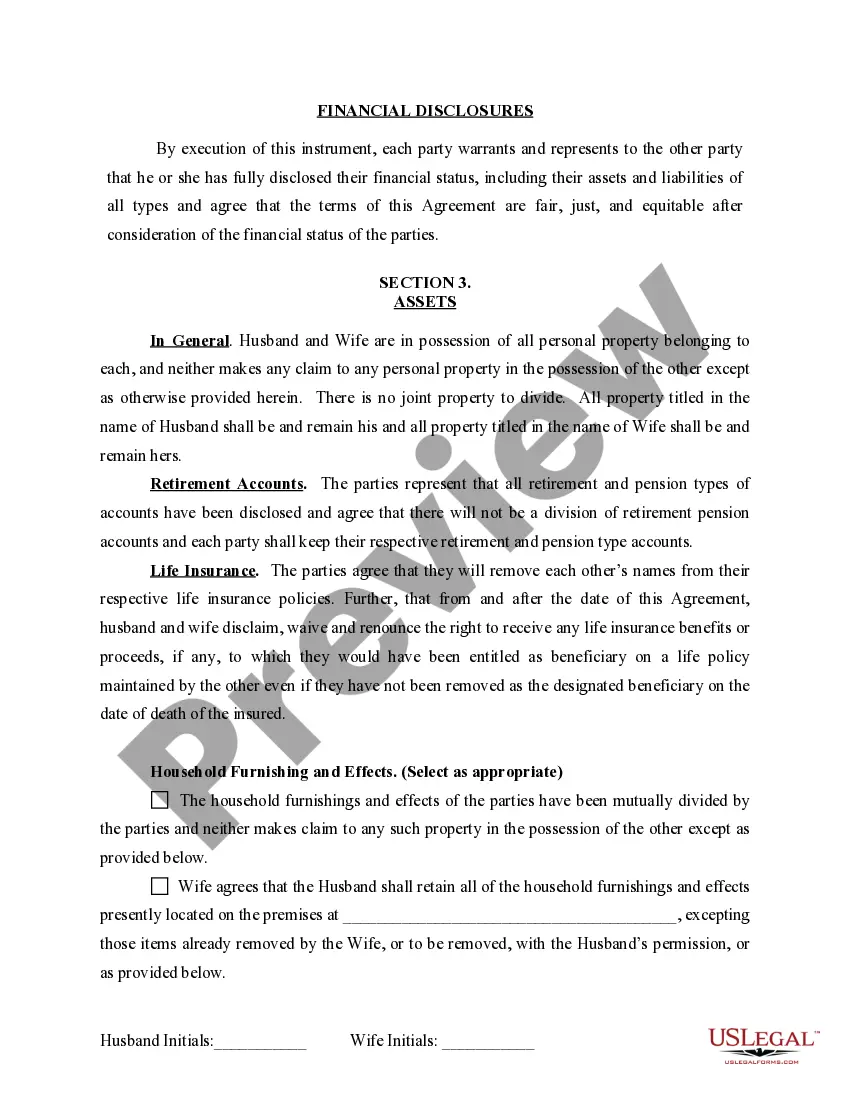
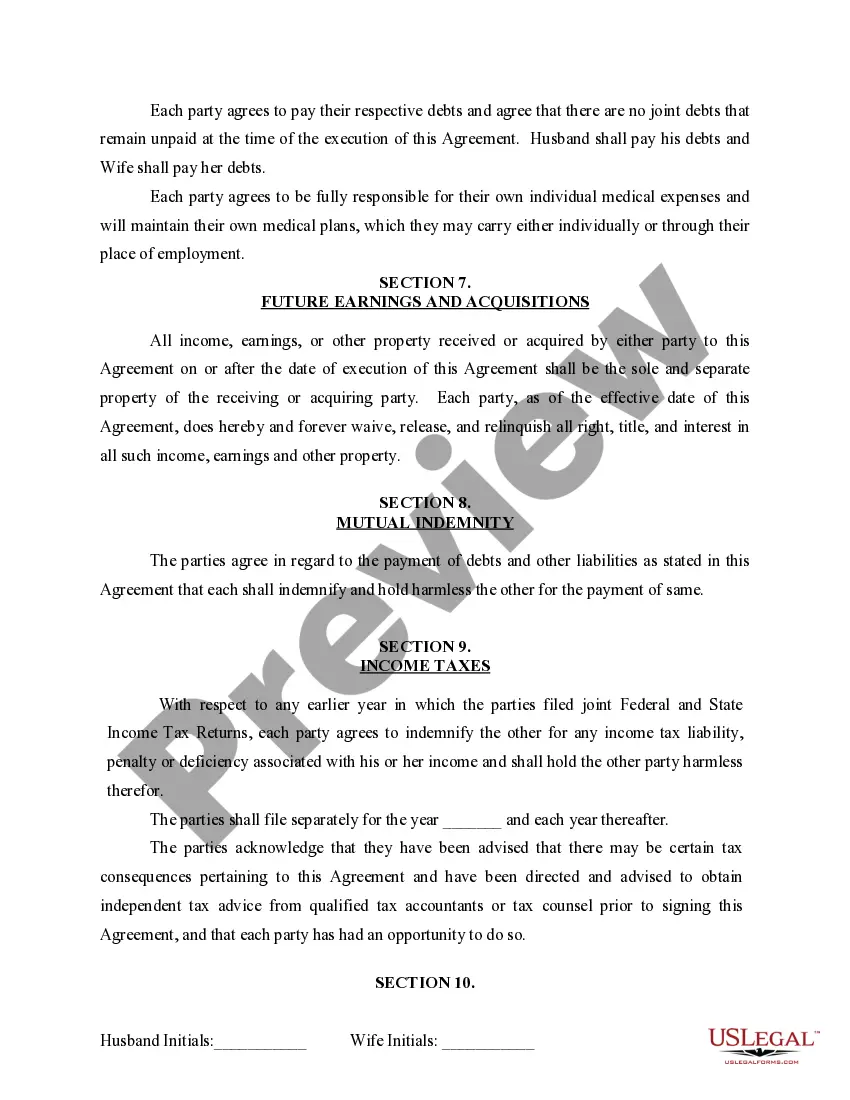
- Financial disclosures to ensure transparency regarding assets and debts.
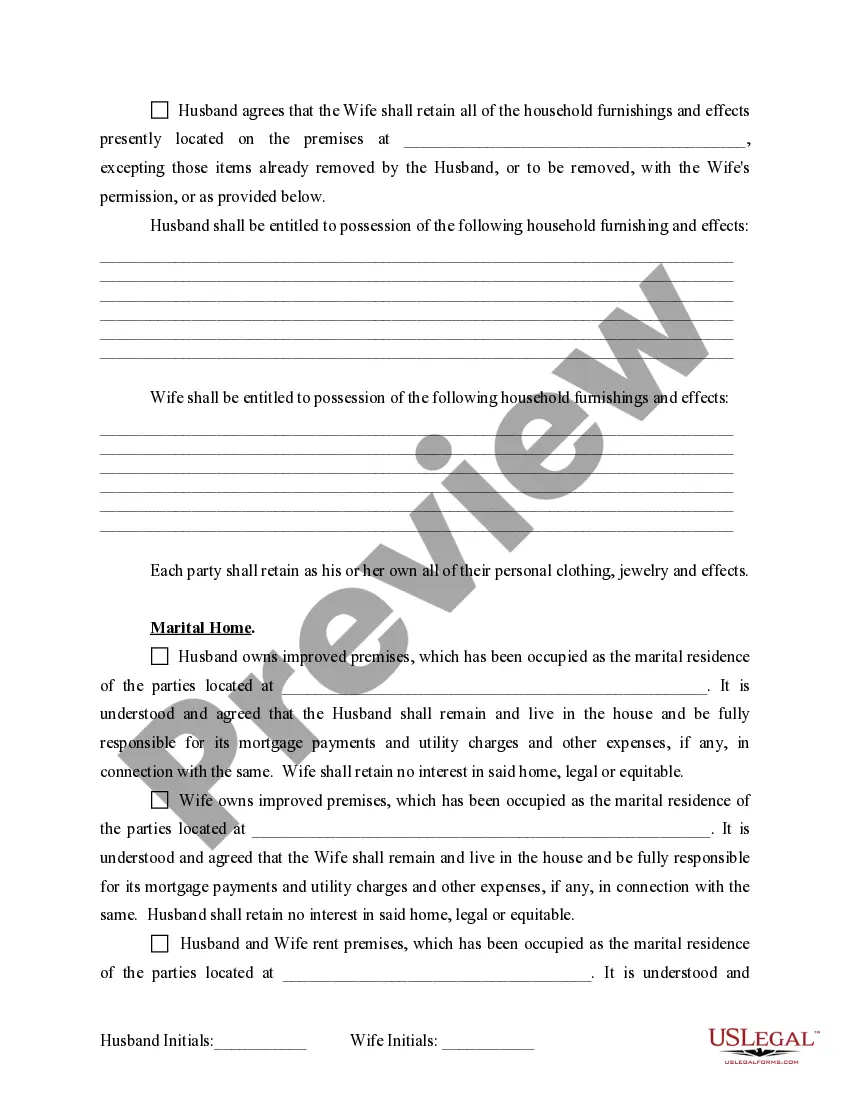
- Asset division detailing ownership of personal property, including household furnishings.
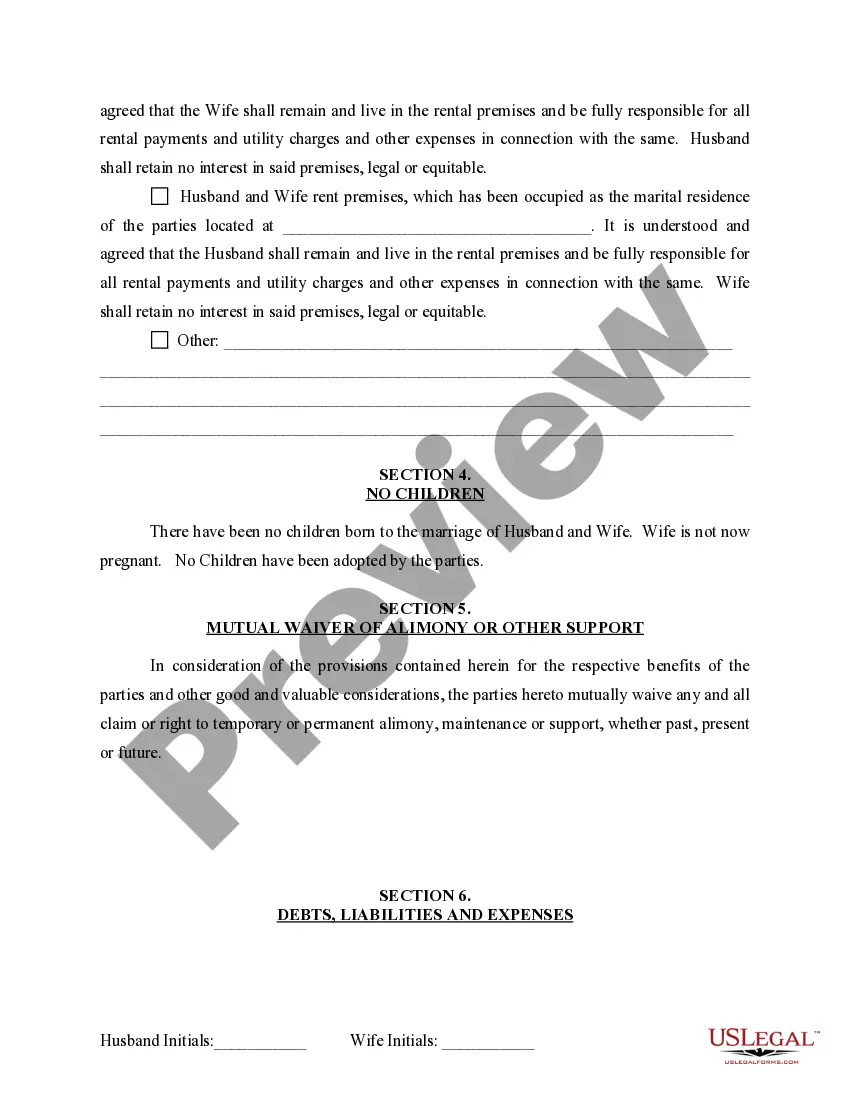
- No obligation for child support due to the absence of children.
- Mutual waiver of alimony or spousal support claims.


When this form is needed
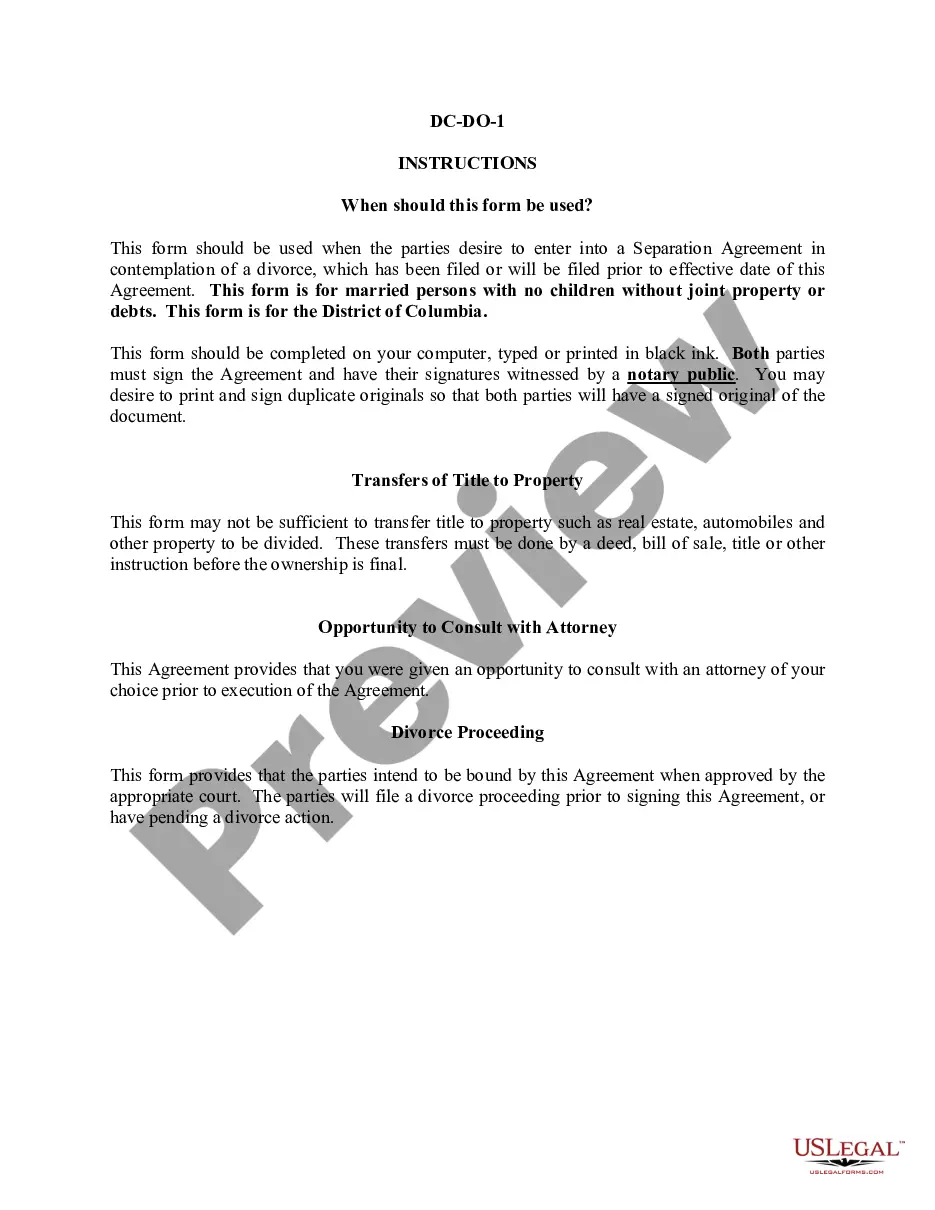
This form should be utilized when both parties are seeking an amicable separation in contemplation of a divorce. It is particularly applicable in situations where there are no minor children, joint assets, or debts, and both parties have agreed on how to settle their financial responsibilities as part of the divorce process.
Who this form is for
- Married couples residing in the District of Columbia.
- Couples with no dependent or minor children.
- Couples without joint property or debts.
- Individuals looking to formalize the terms of their separation prior to divorce.
Completing this form step by step
- Identify the parties involved by filling in their full legal names.
- Specify the date of marriage and the date of separation.
- Complete the asset division section, clearly stating ownership of personal property.
- Ensure both parties sign the agreement in the presence of a notary public.
- Make copies of the signed agreement for both parties to retain.
Notarization guidance
Notarization is required for this form to take effect. Our online notarization service, powered by Notarize, lets you verify and sign documents remotely through an encrypted video session, available 24/7.
Get your form ready online
Our built-in tools help you complete, sign, share, and store your documents in one place.
Make edits, fill in missing information, and update formatting in US Legal Forms—just like you would in MS Word.
Download a copy, print it, send it by email, or mail it via USPS—whatever works best for your next step.
Sign and collect signatures with our SignNow integration. Send to multiple recipients, set reminders, and more. Go Premium to unlock E-Sign.
If this form requires notarization, complete it online through a secure video call—no need to meet a notary in person or wait for an appointment.
We protect your documents and personal data by following strict security and privacy standards.

Make edits, fill in missing information, and update formatting in US Legal Forms—just like you would in MS Word.

Download a copy, print it, send it by email, or mail it via USPS—whatever works best for your next step.

Sign and collect signatures with our SignNow integration. Send to multiple recipients, set reminders, and more. Go Premium to unlock E-Sign.

If this form requires notarization, complete it online through a secure video call—no need to meet a notary in person or wait for an appointment.

We protect your documents and personal data by following strict security and privacy standards.
Avoid these common issues
- Failing to complete the financial disclosure section thoroughly.
- Not having the agreement notarized, which can lead to its unenforceability.
- Overlooking specific provisions regarding the division of property and liabilities.
- Not understanding the implications of waiving alimony or support rights.
Why use this form online
- Convenience of downloading and completing the form at home.
- Editability ensures that all relevant information can be easily updated.
- Reliability of documents drafted by licensed attorneys ensures a legally sound agreement.
Looking for another form?
Form popularity
FAQ
The best way to negotiate a divorce settlement is to approach discussions with an open mind and a focus on finding common ground. Effective negotiation involves listening to your spouse’s concerns and being willing to compromise on certain terms. Utilize resources from USLegalForms, as they offer helpful tools to craft your District of Columbia Marital Legal Separation and Property Settlement Agreement for persons with No Children, No Joint Property or Debts where Divorce Action Filed successfully.
To write a settlement offer, begin by being clear about what you want and why, then present your terms in a straightforward manner. State your rationale behind each term to help your spouse understand your perspective and encourage constructive dialogue. It's beneficial to utilize a structured approach, especially when creating a District of Columbia Marital Legal Separation and Property Settlement Agreement for persons with No Children, No Joint Property or Debts where Divorce Action Filed.
A reasonable divorce settlement reflects an equitable division of assets and liabilities between both parties. It is essential to consider the circumstances of the marriage and the contributions of each spouse. In the context of a District of Columbia Marital Legal Separation and Property Settlement Agreement for persons with No Children, No Joint Property or Debts where Divorce Action Filed, a fair settlement should minimize conflict and promote cooperation.
Filling out a separation agreement involves providing specific information about your financial situation and any agreements you have reached with your spouse. Start by gathering relevant documents, such as bank statements and property titles, and clearly listing the terms you agree upon. Using platforms like USLegalForms can simplify the process of creating a District of Columbia Marital Legal Separation and Property Settlement Agreement for persons with No Children, No Joint Property or Debts where Divorce Action Filed.
The most common divorce settlements often include a division of assets accumulated during the marriage, as well as any debts incurred. In cases without children or joint property, the agreement may focus primarily on financial settlements. Each situation is unique, and in the context of the District of Columbia Marital Legal Separation and Property Settlement Agreement for persons with No Children, No Joint Property or Debts where Divorce Action Filed, the goal is to reach an equitable resolution.
Writing a settlement offer for divorce requires clarity and precision. Begin by outlining your proposed terms, including asset division and any financial considerations. It is essential to be reasonable and respectful in your approach, as a well-crafted offer can lead to smoother negotiations in your District of Columbia Marital Legal Separation and Property Settlement Agreement for persons with No Children, No Joint Property or Debts where Divorce Action Filed.
No, a property settlement agreement and a divorce decree are not the same. A property settlement agreement is a private contract between parties that outlines how assets and liabilities will be divided when filing for divorce. In contrast, a divorce decree is a court order that finalizes the divorce and may include the terms of the property settlement agreement. Understanding these distinctions is crucial in the District of Columbia Marital Legal Separation and Property Settlement Agreement for persons with No Children, No Joint Property or Debts where Divorce Action Filed.
The new divorce law in the District of Columbia simplifies the process of divorce and includes provisions that support more amicable separations. It allows for easier access to legal separations and property settlements. Couples filing under the District of Columbia Marital Legal Separation and Property Settlement Agreement for persons with No Children, No Joint Property or Debts where Divorce Action Filed will find these changes beneficial for expediting their separation process.
When an ex-spouse violates a marital settlement agreement, it can lead to legal consequences. The aggrieved party may seek enforcement through the court, which could result in penalties for the offending party. In the context of the District of Columbia Marital Legal Separation and Property Settlement Agreement for persons with No Children, No Joint Property or Debts where Divorce Action Filed, having a clear agreement can help mitigate such disputes.
A settlement typically refers to the resolution reached between parties, while an agreement is the document that outlines the terms of that settlement. In a District of Columbia Marital Legal Separation and Property Settlement Agreement for persons with No Children, No Joint Property or Debts where Divorce Action Filed, the agreement formalizes the settlement terms, ensuring both parties understand their responsibilities and rights during the separation process.