District of Columbia Final Notice of Default for Past Due Payments in connection with Contract for Deed
About this form
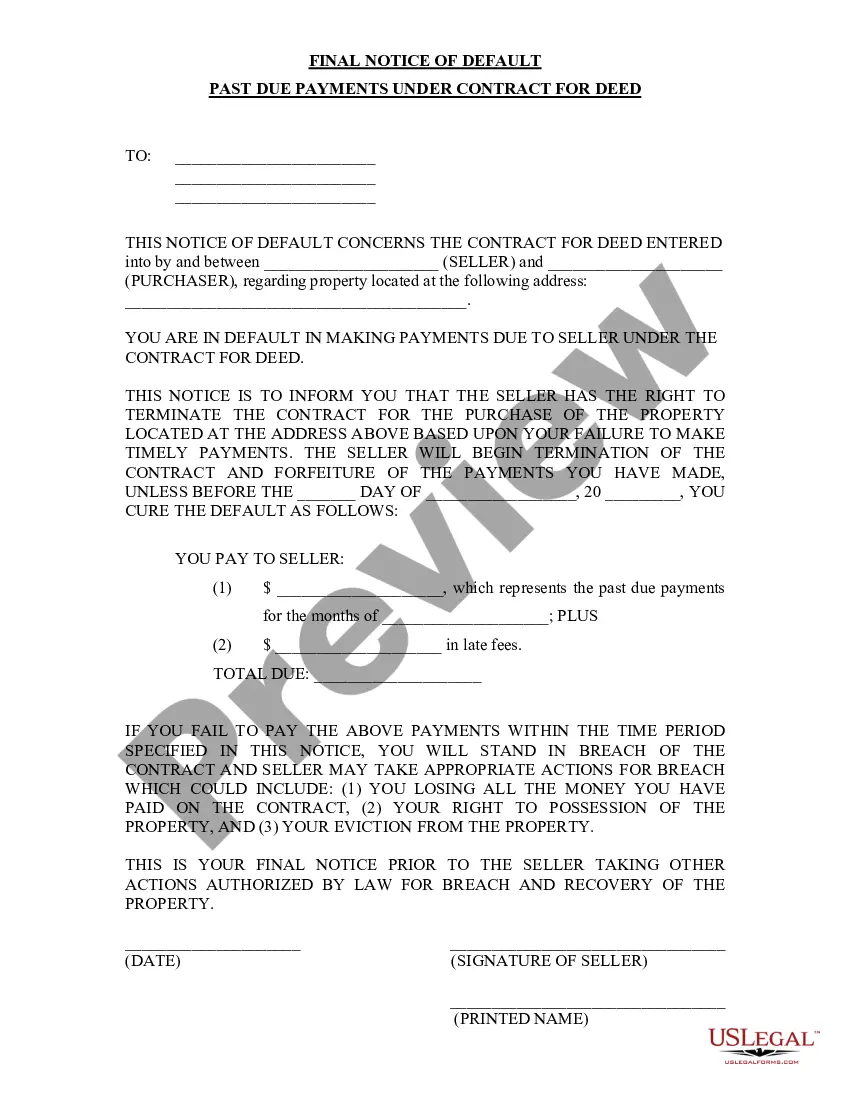
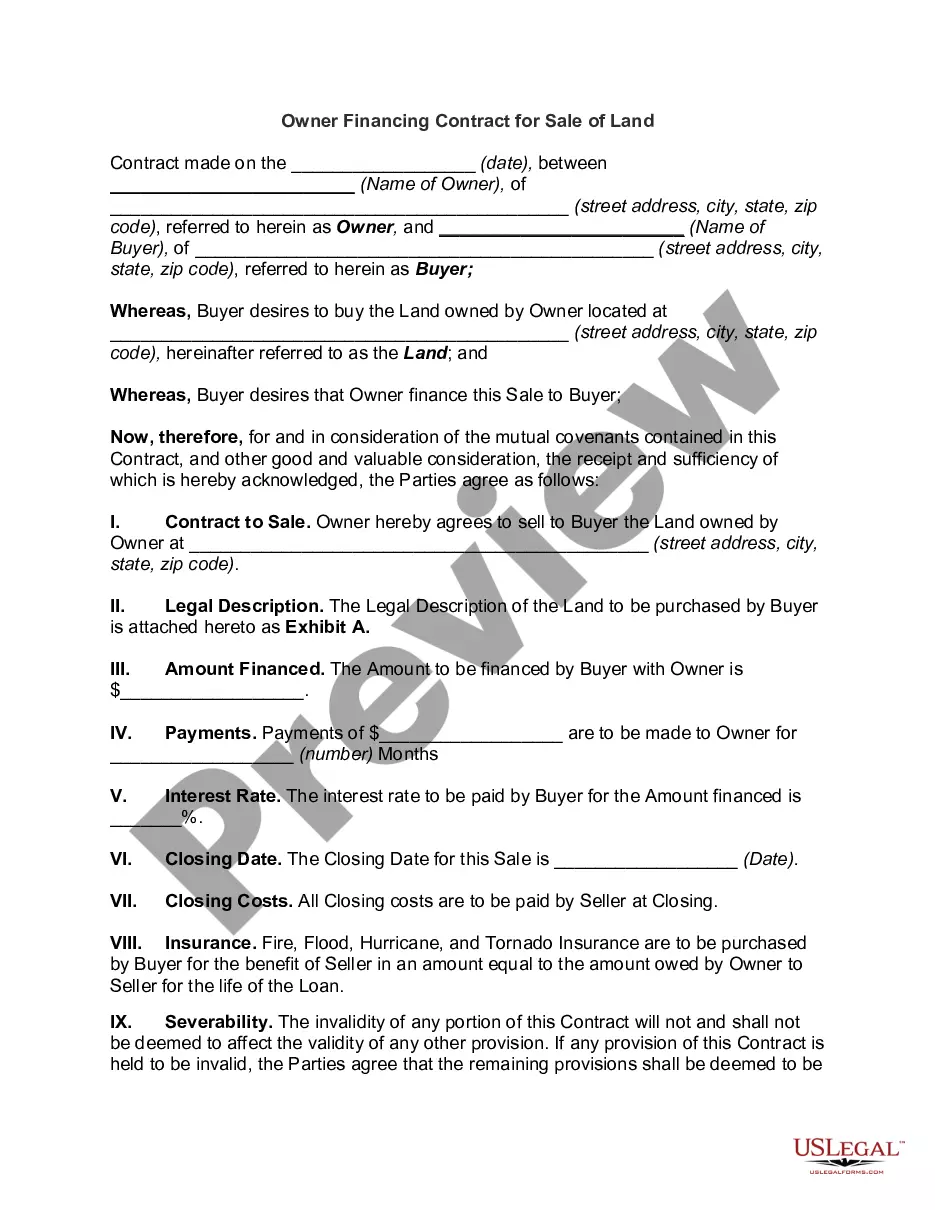
The Final Notice of Default for Past Due Payments in connection with Contract for Deed is a formal notification from the seller to the purchaser, indicating that the purchaser has failed to make payments as required by their contract. This document serves as a final warning, informing the purchaser that if they do not remedy their default by a specified date, the seller has the right to terminate the agreement and reclaim the property. Unlike other notices, this form is specifically tied to contracts for deed and emphasizes the urgency of rectifying payment issues.
Main sections of this form
- Identification of the parties involved (Seller and Purchaser).
- Address of the property under the contract for deed.
- Statement of default, detailing the missed payments.
- Deadline for curing the default and the total payment due.
- Consequences of failing to make the payments by the deadline.
- Signature section for the seller, including date and printed name.
Situations where this form applies
This form is used when a purchaser has fallen behind on payments related to a contract for deed. It is appropriate to issue this notice when the seller wants to formally notify the purchaser of their default and the impending consequences if payment is not received in a timely manner. It is crucial in cases where the seller intends to take further legal actions to recover the property.
Who can use this document
This form is intended for:
- Sellers of property involved in a contract for deed.
- Purchasers who have missed one or more payments under such agreements.
- Legal professionals managing contracts for real estate transactions.
Instructions for completing this form
- Identify and fill in the names of both the seller and purchaser.
- Specify the address of the property involved in the contract.
- Detail the past due amounts, including any late fees owed.
- Set a deadline for the purchaser to cure the default.
- Include the seller's signature and the date of signing.
Does this document require notarization?
To make this form legally binding, it must be notarized. Our online notarization service, powered by Notarize, lets you verify and sign documents remotely through an encrypted video session.
Get your form ready online
Our built-in tools help you complete, sign, share, and store your documents in one place.
Make edits, fill in missing information, and update formatting in US Legal Forms—just like you would in MS Word.
Download a copy, print it, send it by email, or mail it via USPS—whatever works best for your next step.
Sign and collect signatures with our SignNow integration. Send to multiple recipients, set reminders, and more. Go Premium to unlock E-Sign.
If this form requires notarization, complete it online through a secure video call—no need to meet a notary in person or wait for an appointment.
We protect your documents and personal data by following strict security and privacy standards.

Make edits, fill in missing information, and update formatting in US Legal Forms—just like you would in MS Word.

Download a copy, print it, send it by email, or mail it via USPS—whatever works best for your next step.

Sign and collect signatures with our SignNow integration. Send to multiple recipients, set reminders, and more. Go Premium to unlock E-Sign.

If this form requires notarization, complete it online through a secure video call—no need to meet a notary in person or wait for an appointment.

We protect your documents and personal data by following strict security and privacy standards.
Common mistakes to avoid
- Failing to accurately specify the total amount due.
- Not providing a clear deadline for payment.
- Missing signatures, which can render the notice ineffective.
- Using incorrect names or addresses of parties involved.
Why use this form online
- Convenient access to legal forms at any time.
- Edit and customize the form easily to suit your specific needs.
- Ensure compliance with legal standards set by licensed attorneys.
Main things to remember
- The Final Notice of Default is an important legal document that communicates serious consequences for missed payments.
- Timely completion and delivery of this form can help protect the seller's legal rights.
- Understanding state-specific requirements is crucial for effective use of this form.
Looking for another form?
Form popularity
FAQ
A request for notice of default allows interested parties, such as investors or other creditors, to be notified when a borrower defaults on payments. In the context of the District of Columbia Final Notice of Default for Past Due Payments under a Contract for Deed, this request can provide important information regarding the status of an asset. Understanding this process can be beneficial for anyone interested in maintaining awareness of property health. If you're considering making such a request, obtaining professional assistance can streamline the process.
A default notice is a serious matter as it indicates a breach of your payment agreement within your Contract for Deed. The District of Columbia Final Notice of Default for Past Due Payments serves as a critical warning, signaling that failure to act could lead to severe outcomes such as foreclosure or legal disputes. It's essential to take this notice seriously and seek expert advice to explore your options for resolution. Addressing this quickly can help you avoid escalation and protect your home.
A written notice of default is a formal document that informs you of your overdue payments under your Contract for Deed. This notification, specifically a District of Columbia Final Notice of Default for Past Due Payments, outlines the steps necessary to rectify the situation. It typically includes information about the amount owed, deadlines for payments, and potential consequences if the default is not resolved. Understanding this document can help you make informed decisions moving forward.
Receiving a District of Columbia Final Notice of Default for Past Due Payments in connection with Contract for Deed marks a significant step in the collection process. This notice signals that you have fallen behind on your payments, and it serves as a formal warning. It is crucial to respond promptly, as ignoring this notice can lead to further legal actions, including potential foreclosure. Seek guidance to understand your options, which may include negotiating with your lender.
The 777 rule refers to a guideline that prohibits debt collectors from contacting individuals in certain circumstances. Specifically, if you inform a collector that you are represented by an attorney, they must cease communications with you directly. Understanding your rights under this rule is vital when managing issues related to the District of Columbia Final Notice of Default for Past Due Payments in connection with Contract for Deed.
The statute of limitations on debt collection in Washington D.C. is three years, similar to many states. This limitation applies to lawsuits aimed at recovering unpaid debts, including those related to the District of Columbia Final Notice of Default for Past Due Payments in connection with Contract for Deed. It’s important to be aware of this timeline to protect your rights.
Washington D.C. operates primarily as a tax lien jurisdiction rather than a tax deed state. This means that when property taxes are owed, a lien is placed on the property rather than immediate auctioning off of the deed. Knowing how this works can help you understand the implications if you receive a District of Columbia Final Notice of Default for Past Due Payments in connection with Contract for Deed.
In Washington D.C., the statute of limitations for debt collection is generally three years. This means creditors have three years to initiate legal action to recover debts before the right to sue expires. Understanding this timeframe is essential when dealing with past dues related to the District of Columbia Final Notice of Default for Past Due Payments in connection with Contract for Deed.
To file a notice of default, you typically need to prepare the document and have it properly documented. Then, you must submit it to the appropriate local office, such as the Recorder of Deeds in Washington D.C. Utilizing platforms like USLegalForms can simplify this process, providing templates and guidance for filing a District of Columbia Final Notice of Default for Past Due Payments in connection with Contract for Deed.
A recorded notice of default is a formal document that indicates a borrower has failed to meet their payment obligations. Specifically, in the context of the District of Columbia Final Notice of Default for Past Due Payments in connection with Contract for Deed, this document serves to inform all interested parties that the property may be at risk of foreclosure if the debt remains unpaid. Understanding this process is crucial for both borrowers and lenders to navigate potential risks and remedies.