Connecticut Power of Attorney for Care and Custody of Child or Children
What is this form?
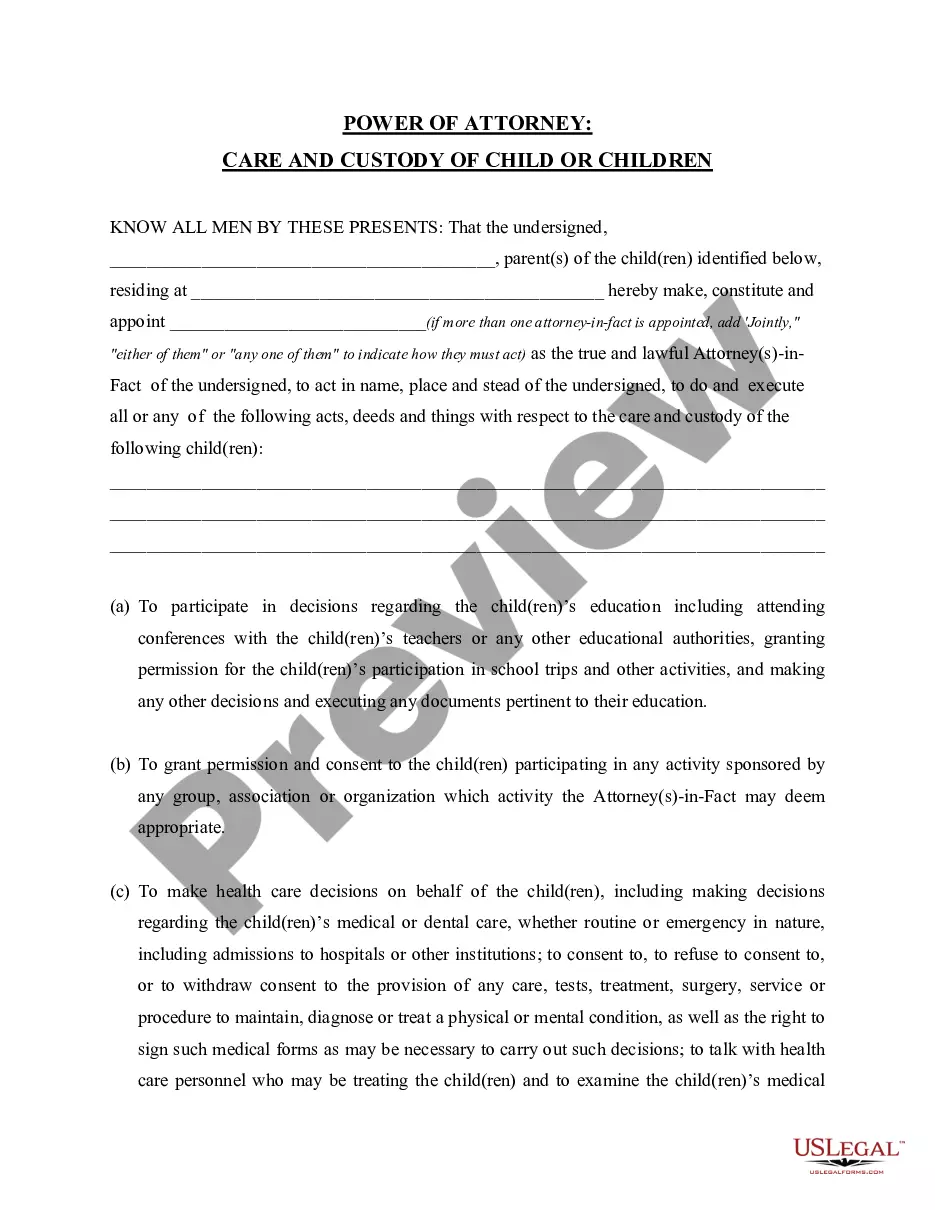
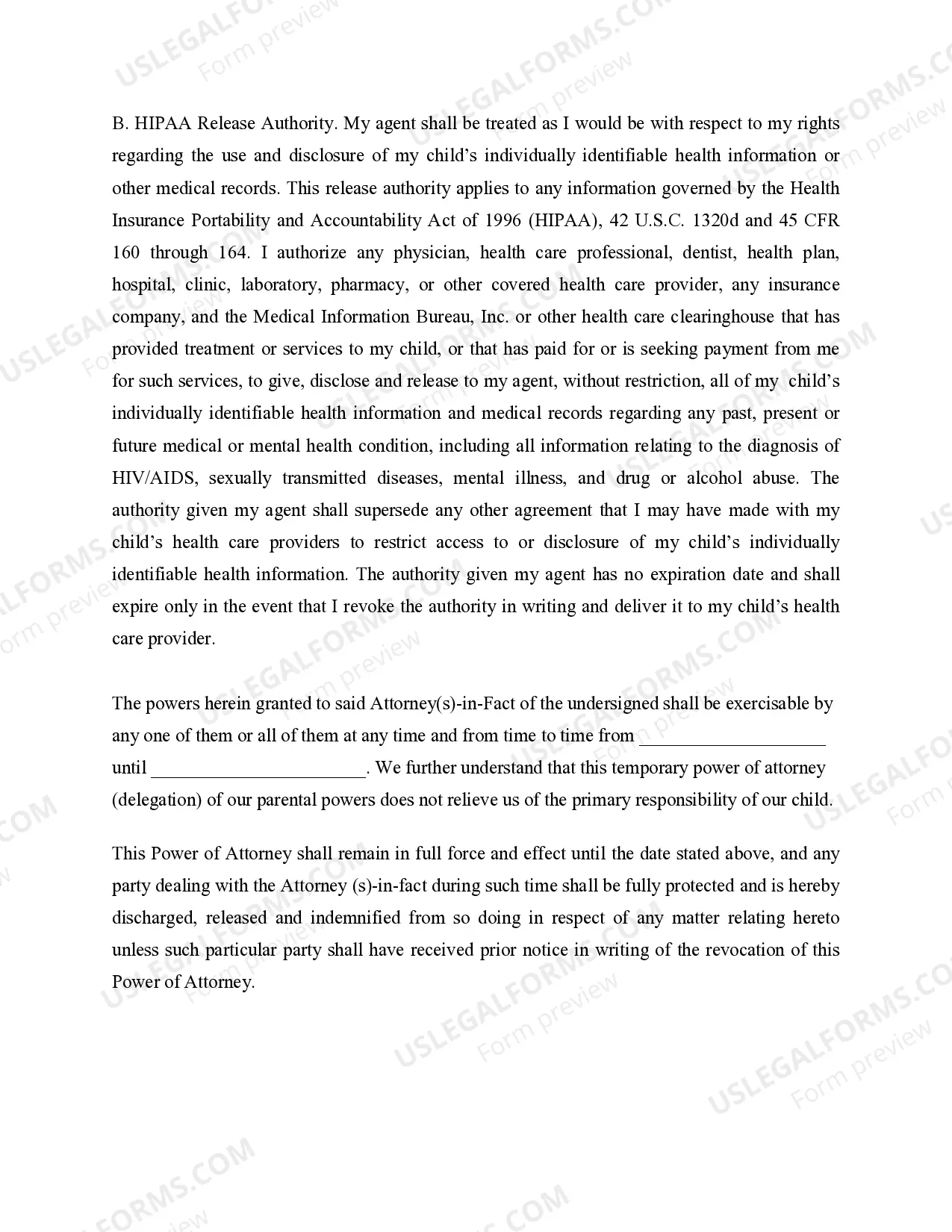
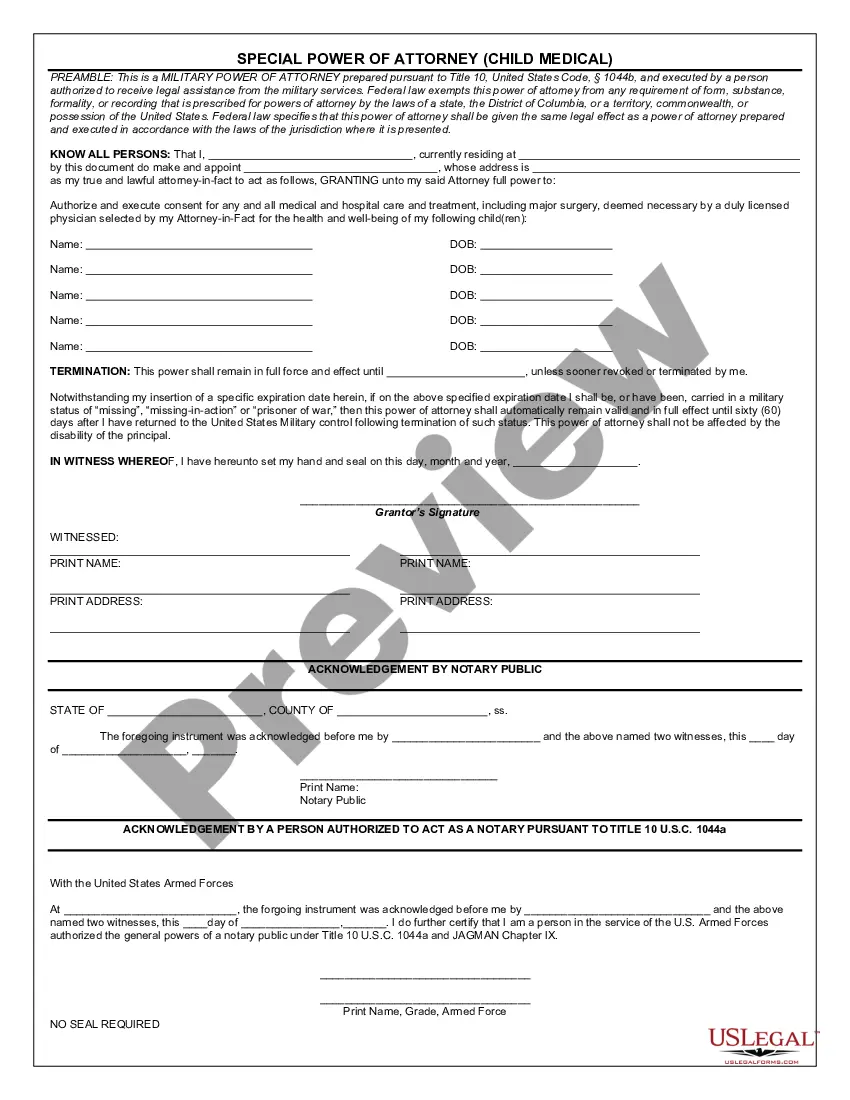
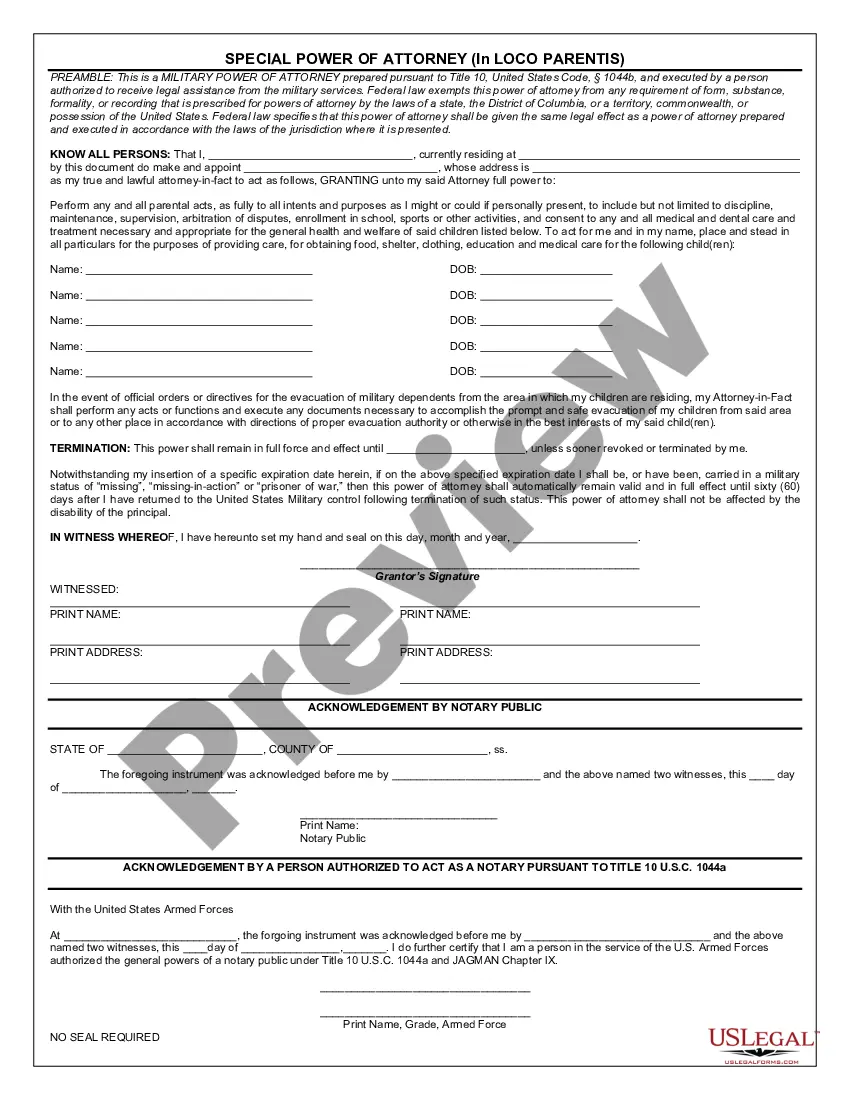
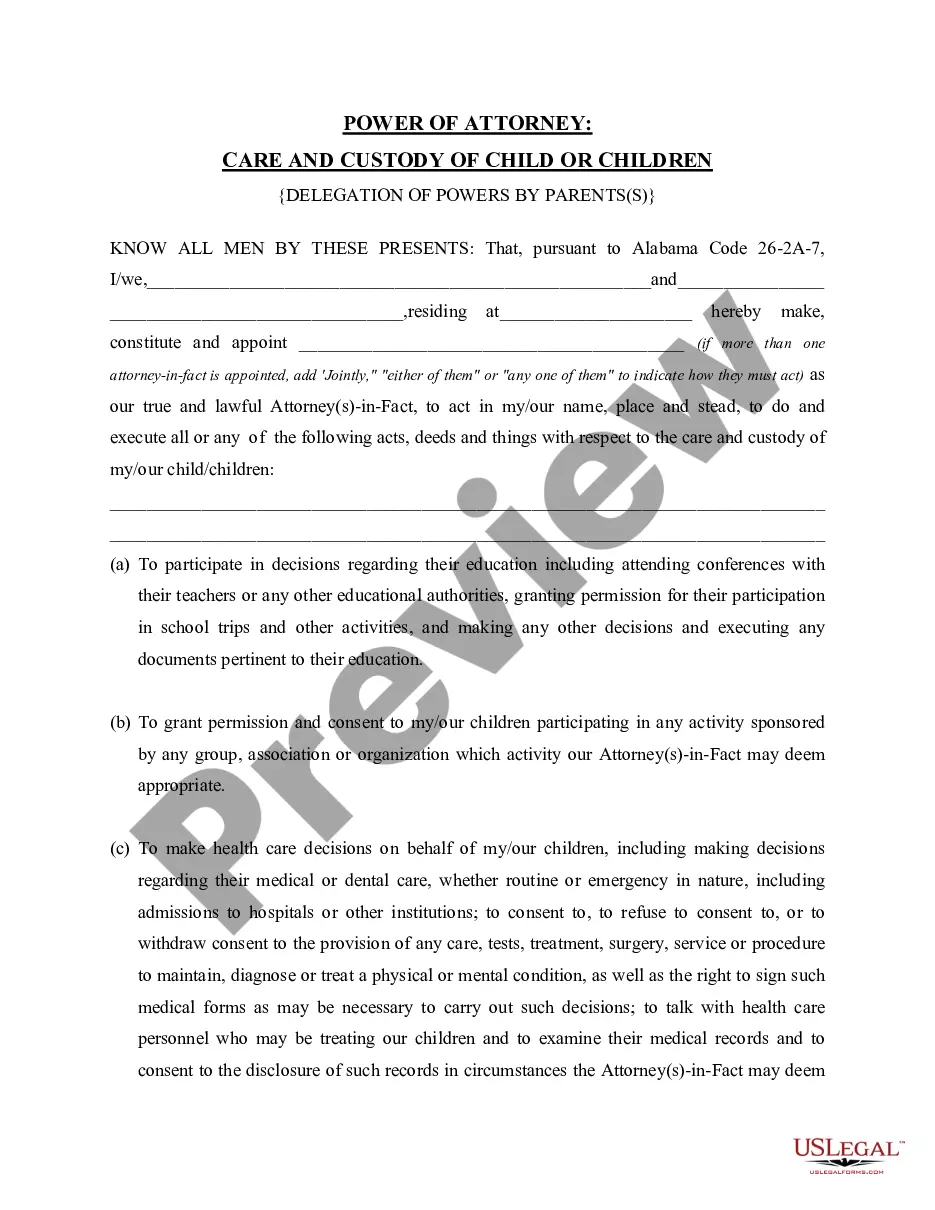
The Power of Attorney for Care and Custody of Child or Children is a legal document that allows a parent to appoint an attorney-in-fact to make decisions regarding the care and custody of their child or children, including health and education matters. Unlike other powers of attorney, this form specifically focuses on parental rights and responsibilities for a minor child. It ensures that the appointed individual can act in the parent's stead, granting them access to the child's medical records and educational information while maintaining the parent's responsibilities.
Main sections of this form
- Appointment of attorney-in-fact: Designates a trusted individual to make decisions on behalf of the parent regarding the child or children.
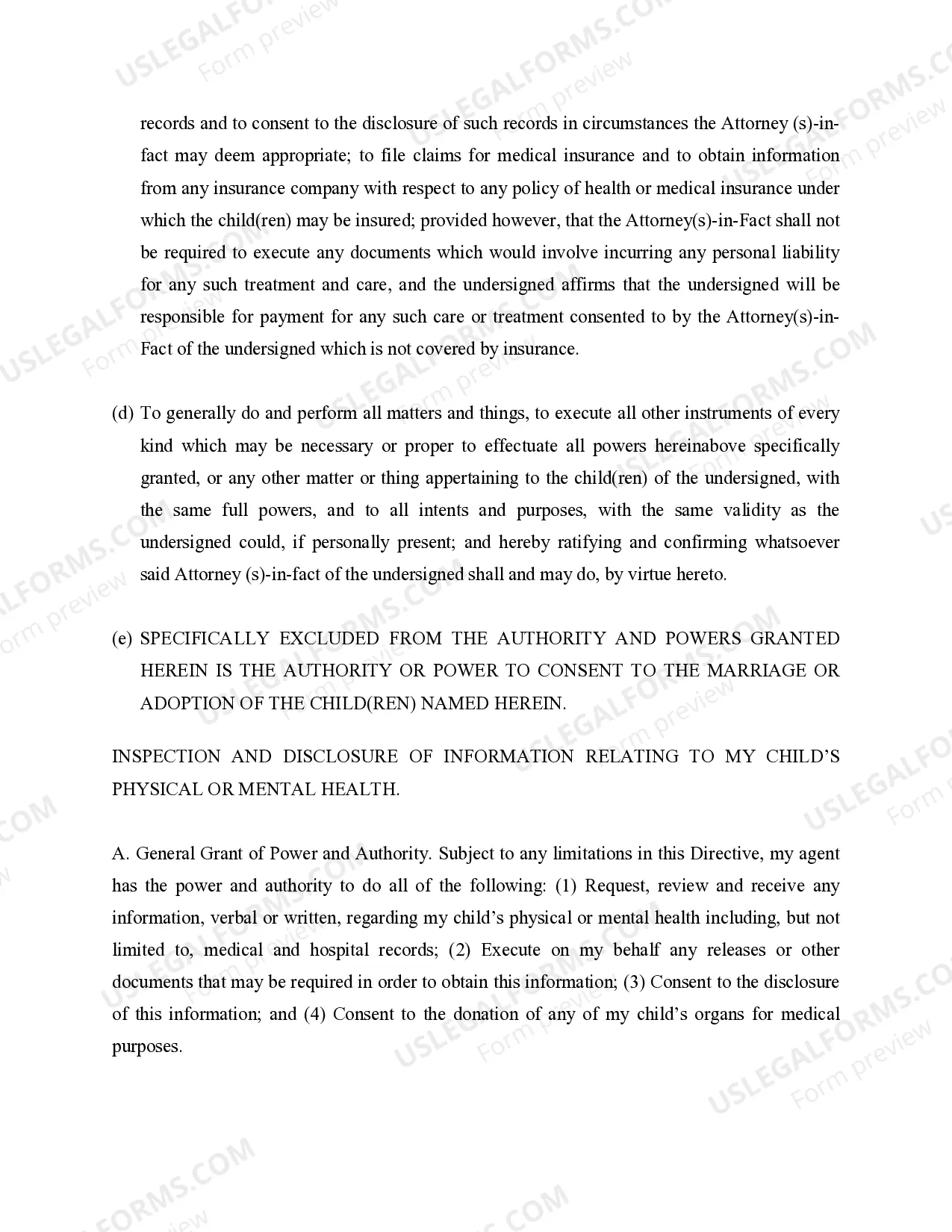
- Health care decisions: Grants authority to make decisions about medical or dental care, including emergency situations.
- Educational matters: Allows the attorney-in-fact to participate in the childâs education, including attending meetings with educators and providing consent for school activities.
- Exclusions: Clearly states that the attorney-in-fact cannot consent to the marriage or adoption of the child.
- Notarization requirement: Requires the signature of the parent to be notarized for the document to be legally valid.

When to use this document
This form is essential when a parent needs to grant another individual the authority to care for their child or children temporarily. Situations that may necessitate the use of this power of attorney include occasions where a parent is unable to be physically present due to work, travel, medical emergencies, or other commitments. This can ensure the child's needs continue to be met without disruption.
Who this form is for
This form is intended for:
- Parents who need to delegate authority for the care of their child or children.
- Guardians or family members who are stepping in to care for a minor temporarily.
- Parents planning to be away for an extended period and want to ensure that their childâs health and educational needs are met.
How to complete this form
To complete this form, follow these steps:
- Identify yourself as the parent and provide your address.
- Fill in the name of the appointed attorney-in-fact who will act on your behalf.
- List the child or children for whom this power of attorney is being granted.
- Specify the duration of the power of attorney, including start and end dates.
- Sign the form in the presence of a notary public to fulfill the notarization requirement.
Notarization requirements for this form
Yes, this form must be notarized to be legally valid. Notarization confirms the authenticity of the signatures and helps protect against fraud. US Legal Forms offers integrated online notarization services, allowing you to complete this process securely via video call, at any time of day, without needing to travel.
Get your form ready online
Our built-in tools help you complete, sign, share, and store your documents in one place.
Make edits, fill in missing information, and update formatting in US Legal Forms—just like you would in MS Word.
Download a copy, print it, send it by email, or mail it via USPS—whatever works best for your next step.
Sign and collect signatures with our SignNow integration. Send to multiple recipients, set reminders, and more. Go Premium to unlock E-Sign.
If this form requires notarization, complete it online through a secure video call—no need to meet a notary in person or wait for an appointment.
We protect your documents and personal data by following strict security and privacy standards.

Make edits, fill in missing information, and update formatting in US Legal Forms—just like you would in MS Word.

Download a copy, print it, send it by email, or mail it via USPS—whatever works best for your next step.

Sign and collect signatures with our SignNow integration. Send to multiple recipients, set reminders, and more. Go Premium to unlock E-Sign.

If this form requires notarization, complete it online through a secure video call—no need to meet a notary in person or wait for an appointment.

We protect your documents and personal data by following strict security and privacy standards.
Typical mistakes to avoid
- Failing to properly identify the attorney-in-fact or fail to limit their powers as needed.
- Not including specific start and end dates, which can lead to confusion over the validity period.
- Neglecting to have the form notarized, making it legally unenforceable.
- Overlooking the need to include all relevant children if multiple are involved.
Advantages of online completion
- Convenience of an easily downloadable and fillable format.
- Ability to edit and customize the form to fit personal situations.
- Reliability of having a document reviewed by licensed attorneys ensuring compliance with applicable laws.
Quick recap
- The Power of Attorney for Care and Custody of Child or Children allows you to designate a trusted individual for your childâs care.
- It encompasses health care and educational decisions, ensuring that essential needs are met in your absence.
- This form requires notarization for legal validity.
- Properly completing this document can prevent potential confusion or legal issues while you are unable to care for your child directly.
Looking for another form?
Form popularity
FAQ
The downsides of guardianship include the potential loss of parental authority, emotional challenges, and financial burdens due to legal fees. Furthermore, the ongoing court supervision can complicate routines and create friction between parents and guardians. If you are concerned about fully relinquishing your rights, exploring a Connecticut Power of Attorney for Care and Custody of Child or Children can offer a more flexible solution.
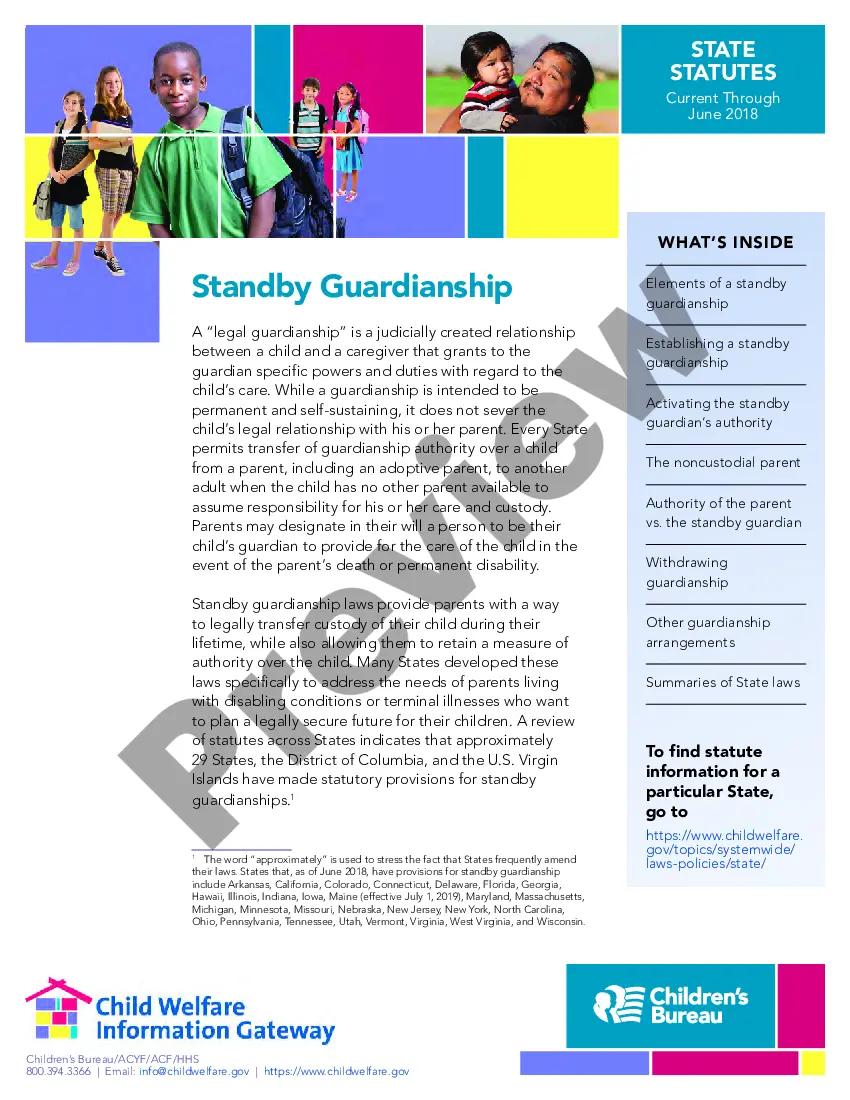
In Connecticut, custody refers to the legal rights of a parent or guardian to make decisions about a child's upbringing while guardianship appoints a person to care for the child, often in more critical circumstances. Custody can typically exist alongside parental rights, while guardianship may limit those rights. Understanding these distinctions ensures you choose the right legal path for your children's welfare. If you want to simplify decision-making without forgoing your rights, consider a Connecticut Power of Attorney for Care and Custody of Child or Children.
Guardianship generally holds more authority compared to a power of attorney, as it grants the guardian legal responsibility for the child's well-being. A power of attorney allows limited decision-making powers delegated by the parent but does not transfer custody. Therefore, if you want to maintain control while allowing someone else to assist with daily decisions, a Connecticut Power of Attorney for Care and Custody of Child or Children is an effective option.
Guardianship in Connecticut involves a legal process where a court appoints an individual to make decisions for a child due to the parents' inability to do so. This arrangement typically arises from situations involving parental incapacity or unfit conditions. The guardian will have the legal authority to handle daily care, healthcare, and education decisions for the child, potentially sidelining parental rights. To provide care while maintaining parental authority, you might consider utilizing a Connecticut Power of Attorney for Care and Custody of Child or Children.
In Connecticut, guardianship can limit parental rights, especially regarding decision-making and custody. The guardian assumes responsibility for the child's welfare, potentially conflicting with a parent's rights. However, courts primarily focus on the best interests of the child, so each case can vary significantly. To maintain parental authority while ensuring the child's care, consider exploring a Connecticut Power of Attorney for Care and Custody of Child or Children.
The highest form of power of attorney is the durable power of attorney, which remains effective even if the principal becomes incapacitated. This document allows the appointed individual to act in a client's best interest, covering various decisions, including healthcare and child care. When dealing with child custody, a durable Connecticut Power of Attorney for Care and Custody of Child or Children can provide essential guidance during critical situations.
In general, a guardian's authority can override a power of attorney in certain situations involving the welfare of the child. If a court appoints a guardian, that individual gains significant legal rights that may conflict with the authority granted in a power of attorney. It's crucial to consider the scope of both arrangements carefully. To navigate these complexities, you may want to consult resources like USLegalForms to accurately draft your Connecticut Power of Attorney for Care and Custody of Child or Children.
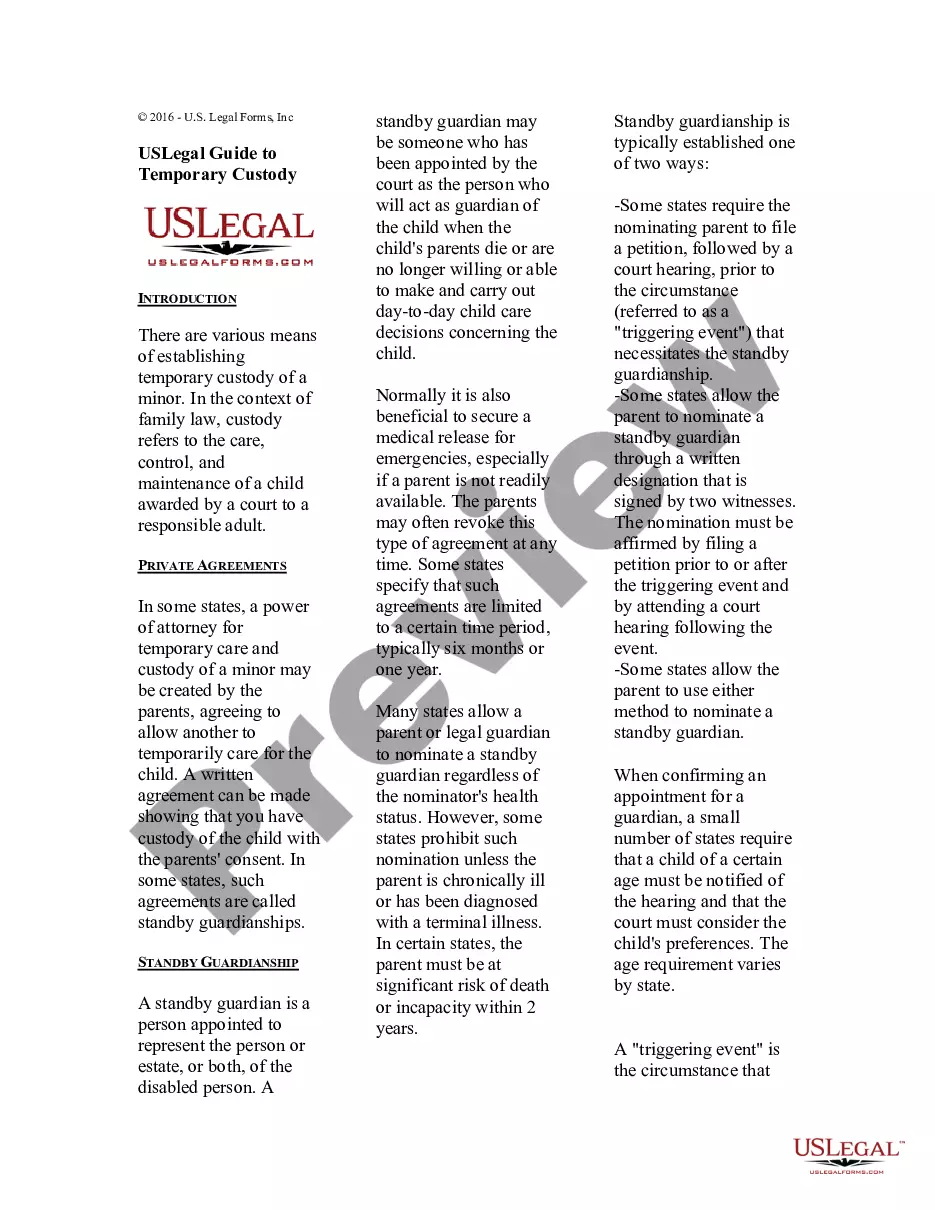
Yes, a power of attorney can cover aspects of child custody, allowing the designated individual to make important decisions regarding the child's welfare. However, it is essential to note that a power of attorney does not replace the legal custody of a parent. Instead, it offers a temporary solution for specific situations, ensuring the continuity of care. A well-drafted Connecticut Power of Attorney for Care and Custody of Child or Children can help clarify responsibilities.
Guardianship can strip parents of their rights, create emotional distress, and impose unnecessary legal obligations. It often requires court supervision, which can complicate matters and increase costs. This legal arrangement can also limit the parent's ability to make decisions, which may not always align with the child's best interests. To retain more control while ensuring proper child care, consider a Connecticut Power of Attorney for Care and Custody of Child or Children.
Choosing between guardianship and power of attorney depends on your specific needs. A power of attorney allows a parent to retain some control while delegating authority to another for specific tasks. Guardianship, on the other hand, legally transfers custody and decision-making rights. Therefore, if you seek to manage care without relinquishing parental rights, a Connecticut Power of Attorney for Care and Custody of Child or Children might be more suitable.