Connecticut Guaranty Attachment to Lease for Guarantor or Cosigner
Overview of this form
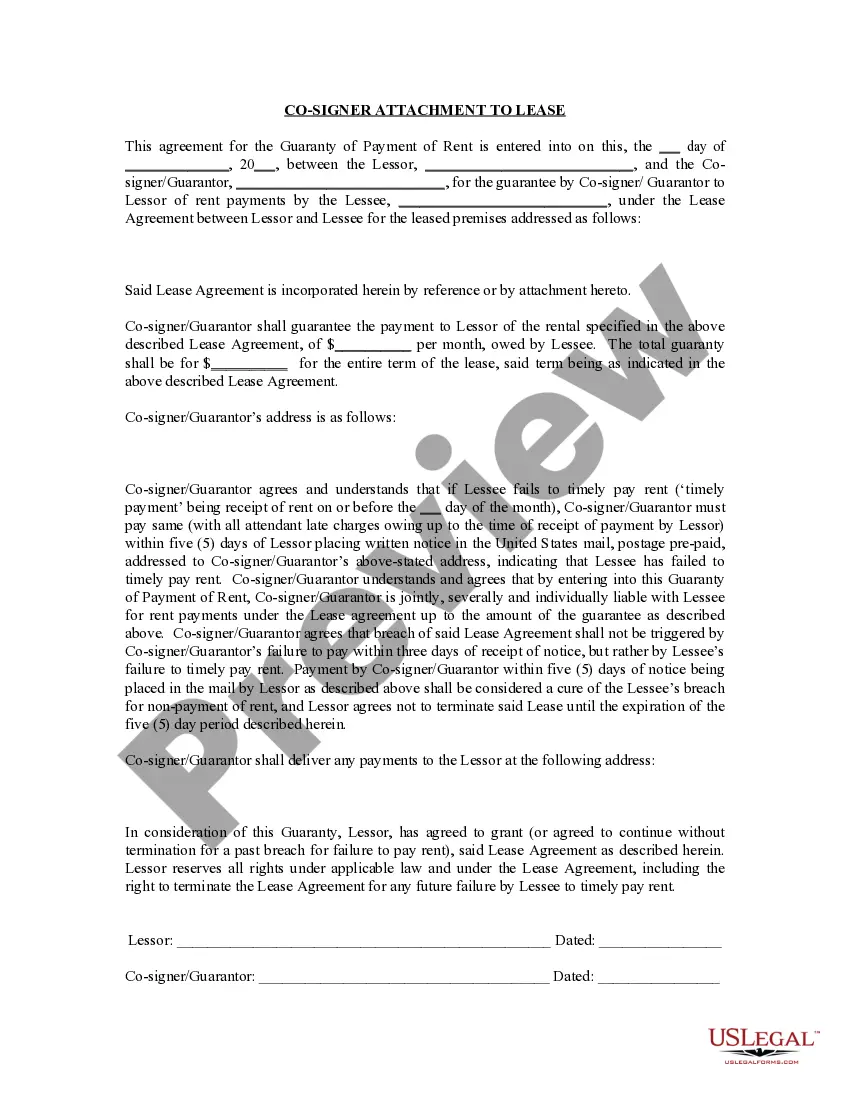
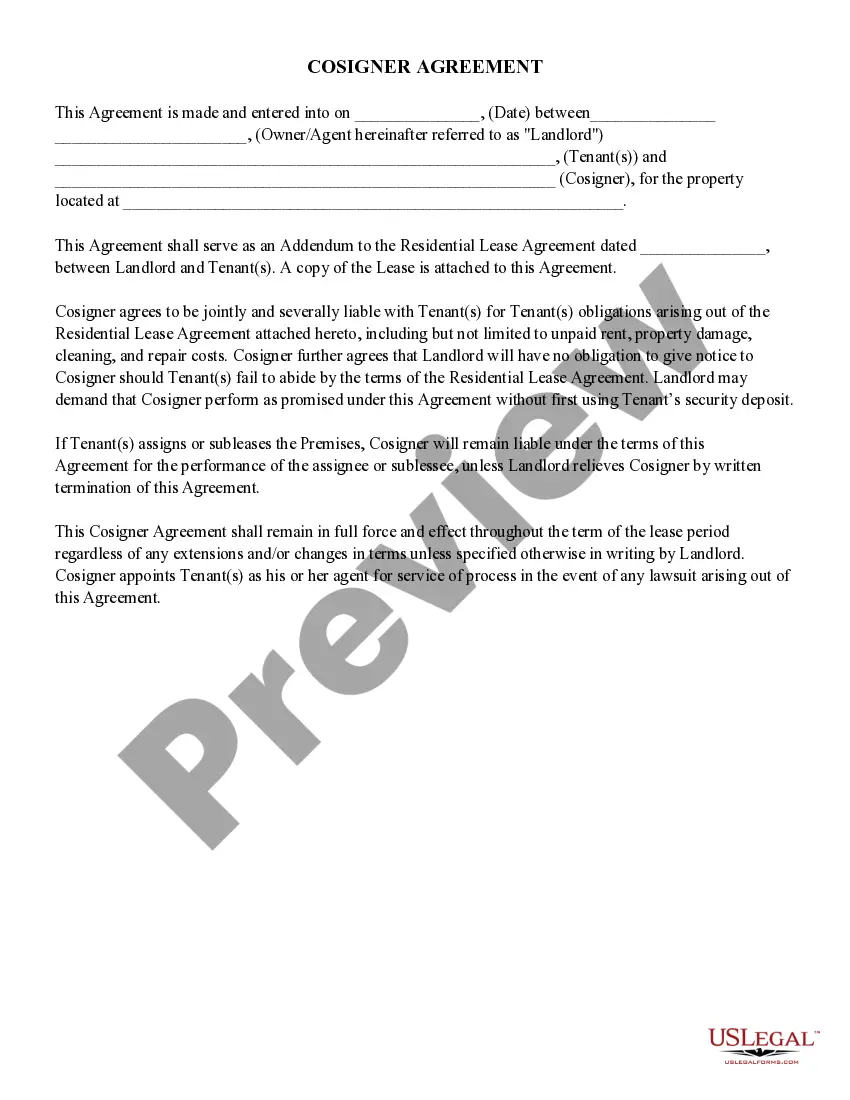
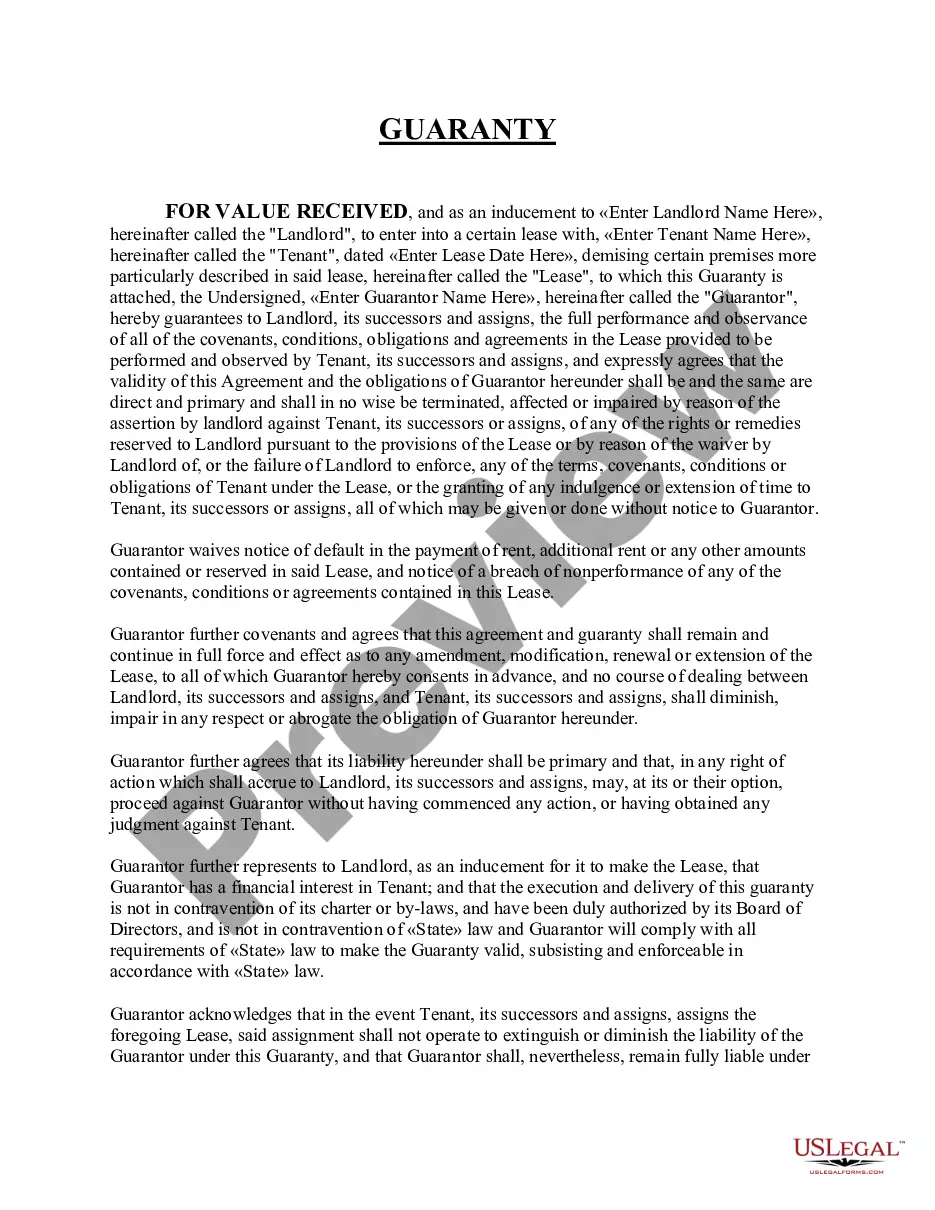
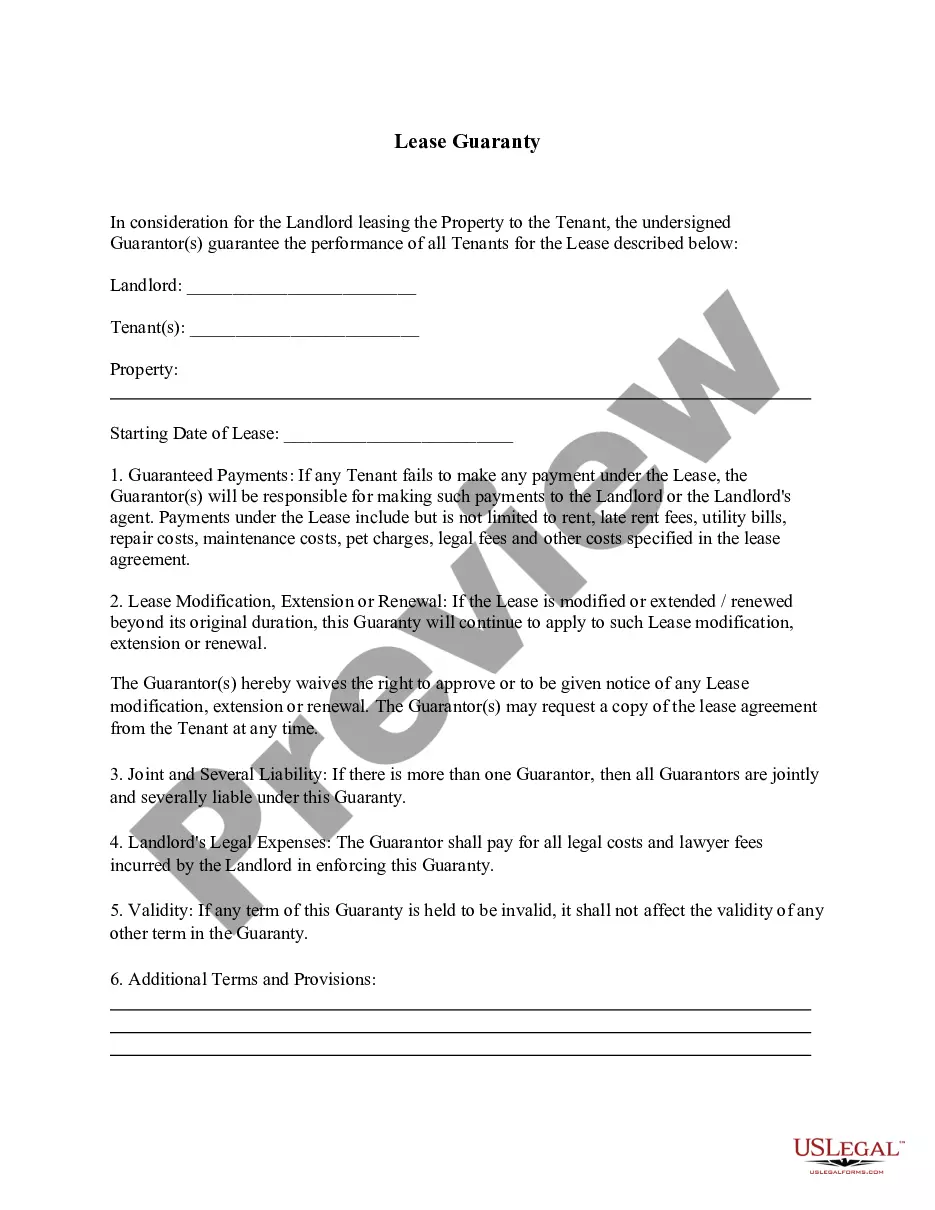
The Guaranty Attachment to Lease for Guarantor or Cosigner is a legal document where a third party agrees to co-sign a lease. This guarantor commits to ensuring rent payment, meaning they will cover any unpaid rent if the tenant defaults. The purpose of this form is to protect landlords by reducing the financial risk associated with leasing property, particularly when the primary tenant may not have a strong credit history or income verification. Unlike a typical lease agreement, this form adds an additional layer of security for the landlord.
Key parts of this document
- Co-signer/Guarantor's address
- Lessor's information
- Date of the agreement
- Co-signer/Guarantor's signature and date
Common use cases
This form is typically used when a prospective tenant does not meet the financial qualifications for renting a property on their own. Situations may include tenants with insufficient credit or income levels, first-time renters, or students. The guarantor must be someone who is willing and able to take on the financial responsibility of the lease if necessary.
Who needs this form
- Landlords seeking additional security when renting out property
- Tenants needing a guarantor to qualify for a lease
- Co-signers or guarantors willing to assume financial liability for the tenant
How to complete this form
- Identify the parties: include the lessor's name and the co-signer/guarantor's details.
- Specify the property: clearly state the address of the rental property involved.
- Fill in the dates: enter the date when the agreement is being signed.
- Ensure signatures: both the lessor and the co-signer/guarantor must sign and date the form.
Is notarization required?
This form does not typically require notarization unless specified by local law. It is advisable to check state-specific regulations to ensure compliance.
Get your form ready online
Our built-in tools help you complete, sign, share, and store your documents in one place.
Make edits, fill in missing information, and update formatting in US Legal Forms—just like you would in MS Word.
Download a copy, print it, send it by email, or mail it via USPS—whatever works best for your next step.
Sign and collect signatures with our SignNow integration. Send to multiple recipients, set reminders, and more. Go Premium to unlock E-Sign.
If this form requires notarization, complete it online through a secure video call—no need to meet a notary in person or wait for an appointment.
We protect your documents and personal data by following strict security and privacy standards.

Make edits, fill in missing information, and update formatting in US Legal Forms—just like you would in MS Word.

Download a copy, print it, send it by email, or mail it via USPS—whatever works best for your next step.

Sign and collect signatures with our SignNow integration. Send to multiple recipients, set reminders, and more. Go Premium to unlock E-Sign.

If this form requires notarization, complete it online through a secure video call—no need to meet a notary in person or wait for an appointment.

We protect your documents and personal data by following strict security and privacy standards.
Mistakes to watch out for
- Failing to include complete addresses for all parties involved.
- Not dating the document correctly, which can lead to disputes.
- Neglecting to ensure that the guarantor is someone financially stable.
- Forgetting to provide signatures, which invalidates the agreement.
Benefits of completing this form online
- Convenient: quickly access and download the form at any time.
- Editability: personalize the form to meet your needs without hassle.
- Reliability: prepared by licensed attorneys, ensuring legal soundness.
Legal use & context
- A guaranty attachment provides legal protection for landlords by ensuring a secondary party is financially responsible for tenant obligations.
- It is important to ensure that the terms are clear and that all parties thoroughly understand their responsibilities.
Key takeaways
- The Guaranty Attachment to Lease creates a legally binding agreement between tenants, landlords, and guarantors.
- This document safeguards landlords' interests by ensuring that rent will be paid regardless of the tenant's situation.
- Properly completing the form is critical to its enforceability in legal situations.
Looking for another form?
Form popularity
FAQ
A guarantor or co-signer is not universally required for all tenants; it largely depends on the specific requirements of the landlord. If a tenant has a strong financial profile, they may not need either. However, it’s wise to check the lease agreement and understand the implications of the Connecticut Guaranty Attachment to Lease for Guarantor or Cosigner before proceeding.
Yes, a landlord can require a rent guarantor, especially if they feel it mitigates risk. This protocol often protects landlords from potential financial loss, particularly when renting to tenants with limited income or credit issues. If you encounter this situation, understanding the Connecticut Guaranty Attachment to Lease for Guarantor or Cosigner can assist in streamlining the process.
Not every tenant requires a cosigner, but landlords may require one in some cases, especially if the tenant lacks a strong credit history. Having a cosigner can enhance a tenant's chances of approval and provide additional assurance for the landlord. Evaluating your financial situation and discussing it with your landlord can help determine if a cosigner is necessary.
Typically, not everyone listed on the lease needs a guarantor. Some tenants may have strong enough credit or stable income to qualify without one. However, it's important to check the lease terms and the Connecticut Guaranty Attachment to Lease for Guarantor or Cosigner, as specific requirements can vary by landlord.
Not all lease agreements require a guarantor, but landlords may insist on one for certain tenants, such as college students or those with limited credit history. A guarantor provides added security for landlords, which can be beneficial in competitive rental markets. Understanding the specific requirements of your lease and the Connecticut Guaranty Attachment to Lease for Guarantor or Cosigner can clarify your obligations.
A guarantor possesses several rights on a lease, including the ability to enforce their terms and seek repayment if necessary. They can expect fair treatment under the Connecticut Guaranty Attachment to Lease for Guarantor or Cosigner and have the right to be informed about the lease's status. Should disputes arise, they can pursue legal action as stipulated in the lease agreement. Understanding these rights is crucial for anyone considering the role of a guarantor.
To secure a cosigner for a lease, you should first discuss your need for one with potential candidates, such as family members or close friends. Make sure to explain the significance of the Connecticut Guaranty Attachment to Lease for Guarantor or Cosigner in protecting their interests as well. Once they agree, have them complete any required paperwork. Platforms like uslegalforms can provide templates to simplify this process.
To add a guarantor to your lease application, you need to provide their details and sign the Connecticut Guaranty Attachment to Lease for Guarantor or Cosigner. Typically, you must submit this information alongside your lease application to the landlord or property manager. Make sure that your guarantor is aware of their responsibilities, as they will be liable for the terms of the lease. Use resources like uslegalforms to access the proper templates you need for a smooth application process.
Yes, a guarantor can help secure an apartment for a tenant. When a landlord requires a Connecticut Guaranty Attachment to Lease for Guarantor or Cosigner, it serves as a promise that the guarantor will take responsibility for the lease if the tenant defaults. This relationship offers reassurance to landlords, making them more likely to approve the application. You can find the necessary documentation easily through platforms like uslegalforms to streamline the process.
The main difference between a cosigner and a guarantor is the level of responsibility each one assumes. A cosigner shares equal financial responsibility with the tenant, while a guarantor agrees to cover missed payments if the tenant defaults. Using a Connecticut Guaranty Attachment to Lease for Guarantor or Cosigner can clarify these roles. Understanding these differences helps you choose the right option for your rental situation.