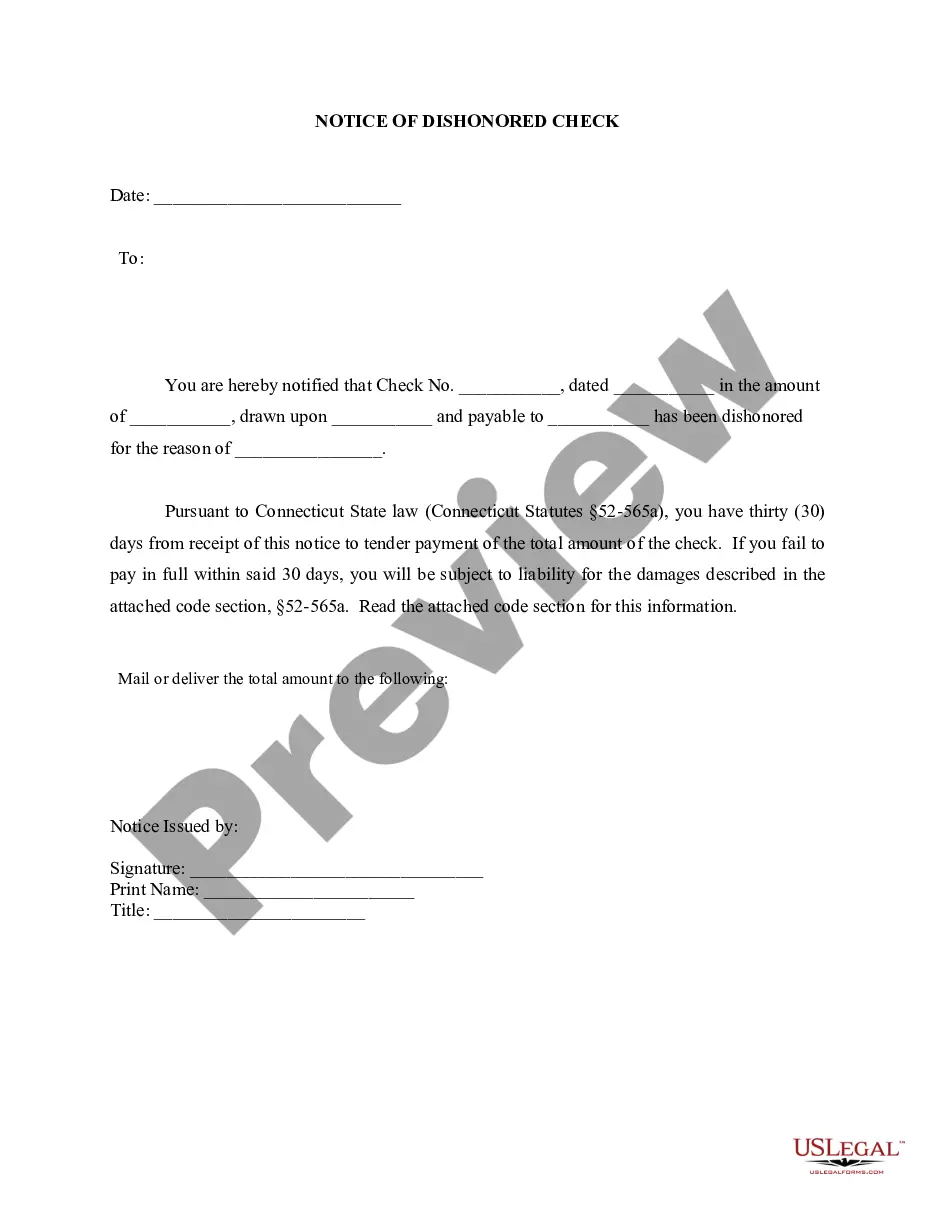
Connecticut Notice of Dishonored Check - Civil - Keywords: bad check, bounced check
Understanding this form
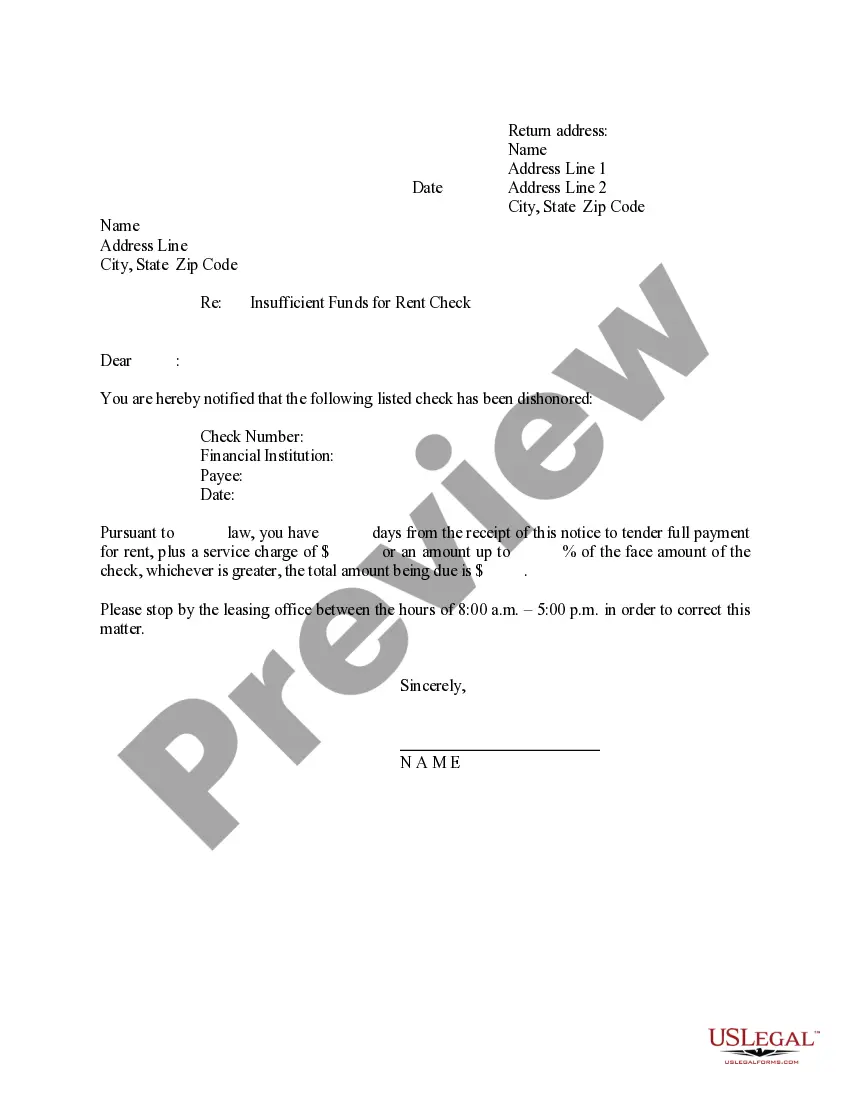
This is a Notice of Dishonored Check - Civil. A "dishonored check," also known as a "bounced check" or "bad check," is a check that a bank refuses to pay due to either a non-existent account or insufficient funds. This form is used to notify the debtor that their check has been dishonored, helping the payee potentially recover damages as allowed by state law.
Key parts of this document
- Signature and printed name of the sender.
- Details about the dishonored check, including amount and date.
- Bank details where the check was drawn.
- Address for the debtor to send payment.
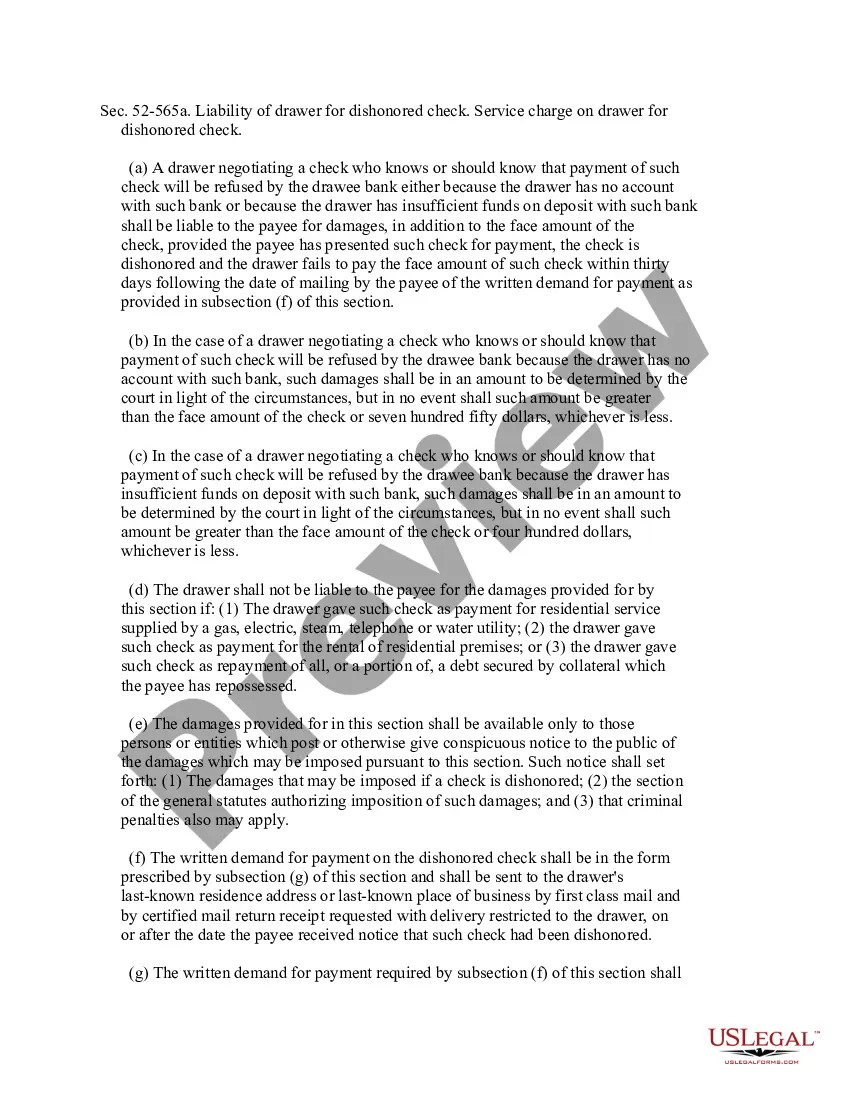
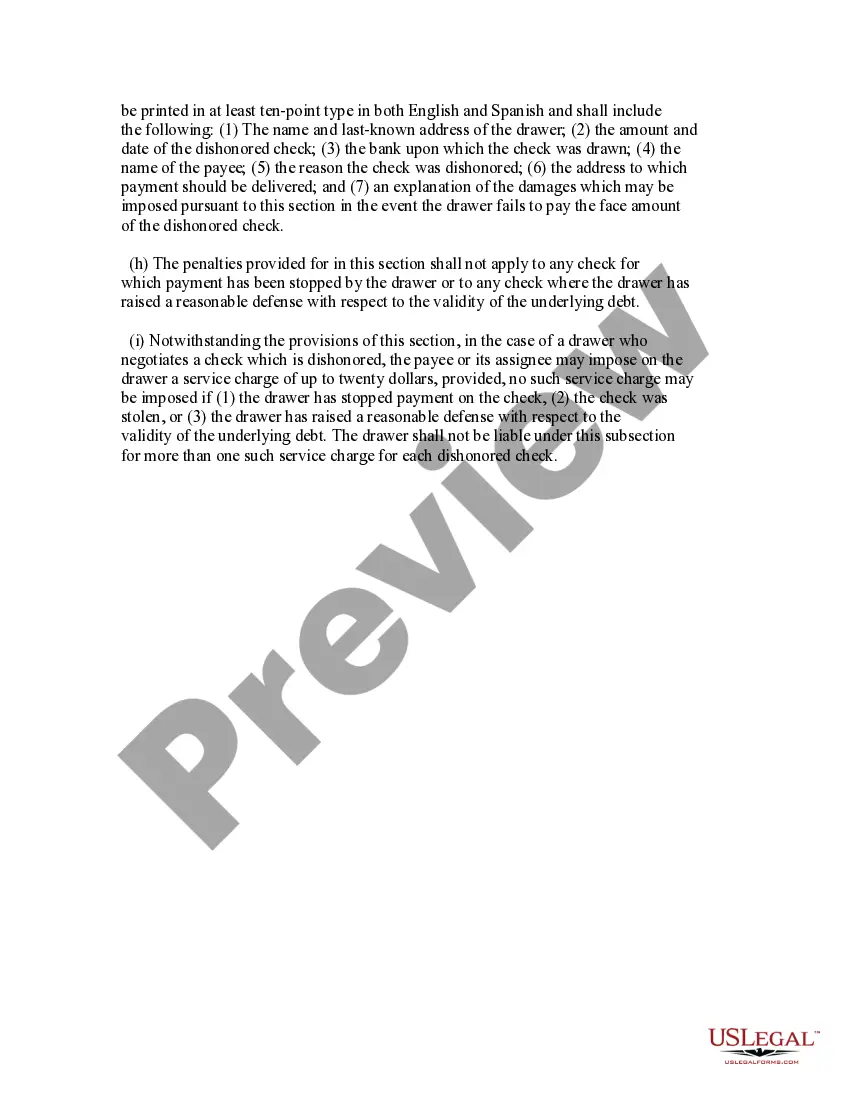
- Explanation of potential damages if the check is not paid.

Situations where this form applies
This form should be used when you receive a bad check that has been returned unpaid from the bank. Whenever a business or an individual attempts to collect on a dishonored check, notifying the issuer is typically a necessary step before pursuing further legal action.
Who should use this form
- Business owners who have received a dishonored check from a customer.
- Individuals who have been paid with a bounced check and need to recover the owed amount.
- Anyone seeking to formally notify a debtor about payment issues related to a bad check.
Completing this form step by step
- Enter your signature and printed name at the appropriate sections.
- Provide the details of the dishonored check, including its amount and the date it was issued.
- Specify the bank that the check was drawn on.
- Include the name and last-known address of the drawer (check issuer).
- Provide clear instructions on where payment should be sent.
- Add an explanation regarding potential damages if the check is not paid within the required timeframe.
Is notarization required?
This form does not typically require notarization unless specified by local law. Ensure compliance with your jurisdictionâs requirements when serving the notice.
Get your form ready online
Our built-in tools help you complete, sign, share, and store your documents in one place.
Make edits, fill in missing information, and update formatting in US Legal Forms—just like you would in MS Word.
Download a copy, print it, send it by email, or mail it via USPS—whatever works best for your next step.
Sign and collect signatures with our SignNow integration. Send to multiple recipients, set reminders, and more. Go Premium to unlock E-Sign.
If this form requires notarization, complete it online through a secure video call—no need to meet a notary in person or wait for an appointment.
We protect your documents and personal data by following strict security and privacy standards.

Make edits, fill in missing information, and update formatting in US Legal Forms—just like you would in MS Word.

Download a copy, print it, send it by email, or mail it via USPS—whatever works best for your next step.

Sign and collect signatures with our SignNow integration. Send to multiple recipients, set reminders, and more. Go Premium to unlock E-Sign.

If this form requires notarization, complete it online through a secure video call—no need to meet a notary in person or wait for an appointment.

We protect your documents and personal data by following strict security and privacy standards.
Common mistakes to avoid
- Failing to prominently display notice of potential damages to the debtor.
- Not sending the notice of dishonored check through certified mail as required.
- Omitting key information about the check, such as the bank details or amount.
Benefits of using this form online
- Easy access to a legally validated template drafted by licensed attorneys.
- Quickly download and customize the form to meet your specific situation.
- Convenience of handling legal matters from home without the need for formal legal consultations.
Legal use & context
- This form serves as a formal notice that is often a prerequisite to pursue legal remedies for a dishonored check.
- Understanding the legal implications of dishonored checks helps in effective enforcement of payment collection.
Key takeaways
- Use this form to formally notify someone about a dishonored check.
- Ensure accurate details to avoid delays in collections.
- Check state-specific laws for additional requirements related to dishonored checks.
Glossary of terms
- Dishonored Check: A check that cannot be cashed due to insufficient funds or a nonexistent account.
- Payee: The individual or entity to whom the check is written.
- Drawer: The individual or entity who writes the check.
Looking for another form?
Form popularity
FAQ
Reporting a bounced check typically involves contacting your bank and the check issuer. You may also want to file a complaint with your local authorities, as this falls under a Connecticut Notice of Dishonored Check. Gather all related documentation, including the bounced check and any communication with the issuer, to support your case. Platforms like US Legal Forms can guide you through the reporting process efficiently.
If a cheque bounces due to insufficient balance, the recipient may experience delays in payment and possible financial repercussions. Such an event is recorded as a Connecticut Notice of Dishonored Check, which could lead to legal action against the issuer. It is essential for both parties to communicate to resolve the issue amicably. Seeking help from professionals can streamline the resolution process.
Statute 53a-128 in Connecticut addresses the criminal implications of issuing bad checks. This law states that writing a bounced check with knowledge of insufficient funds can lead to penalties. Individuals who fall under this statute may face fines or even imprisonment. Understanding this law is vital if you deal with dishonored checks.
When a check is returned due to insufficient funds, it is considered a Connecticut Notice of Dishonored Check. This situation indicates that the account has no available balance to cover the payment. The payee may face financial issues, and there could be potential legal consequences. You may want to consult a legal expert for guidance on resolving any disputes related to a bad check.
A check is dishonored due to insufficient funds when the account linked to it has a lower balance than the check amount. This results in the bank marking the check as a bounced check. In Connecticut, receiving a Connecticut Notice of Dishonored Check can help you navigate the legal aspects of this situation effectively.
A check that cannot be cashed due to insufficient funds is known as a bounced check. This occurs when the checking account balance falls below the amount needed to cover the check. If you've issued a bounced check, it may lead to a Connecticut Notice of Dishonored Check, which could have legal implications.
Yes, typically, if a check bounces, the bank or financial institution notifies the individual or business that issued the check. This notification may arrive in the form of a direct communication or through an official notice regarding the bounced check. If you receive a Connecticut Notice of Dishonored Check, it's important to respond appropriately to avoid legal complications.
There are several reasons a bank may dishonor a check. Common factors include insufficient funds in the account, a closed account, a post-dated check, a signature that does not match the bank's records, and a check that exceeds the amount limit for a specific account. This situation can lead to a Connecticut Notice of Dishonored Check, often referred to in cases involving bad checks and bounced checks.
Another name for a dishonored check is a bad check. This term covers checks that are returned due to insufficient funds or because the issuer has closed the account. Knowing these alternatives aids in understanding legal documents and financial communications. If you find yourself dealing with such a situation, using resources like uslegalforms can provide valuable assistance.
It is called a bounced check because it cannot be processed and effectively 'bounces' back to the sender. This term visually represents the check's journey, from being presented to the bank to its return due to insufficient funds. Recognizing this term helps individuals understand the serious nature of bad checks in financial transactions. Being informed can help prevent situations that lead to a Notice of Dishonored Check in Connecticut.