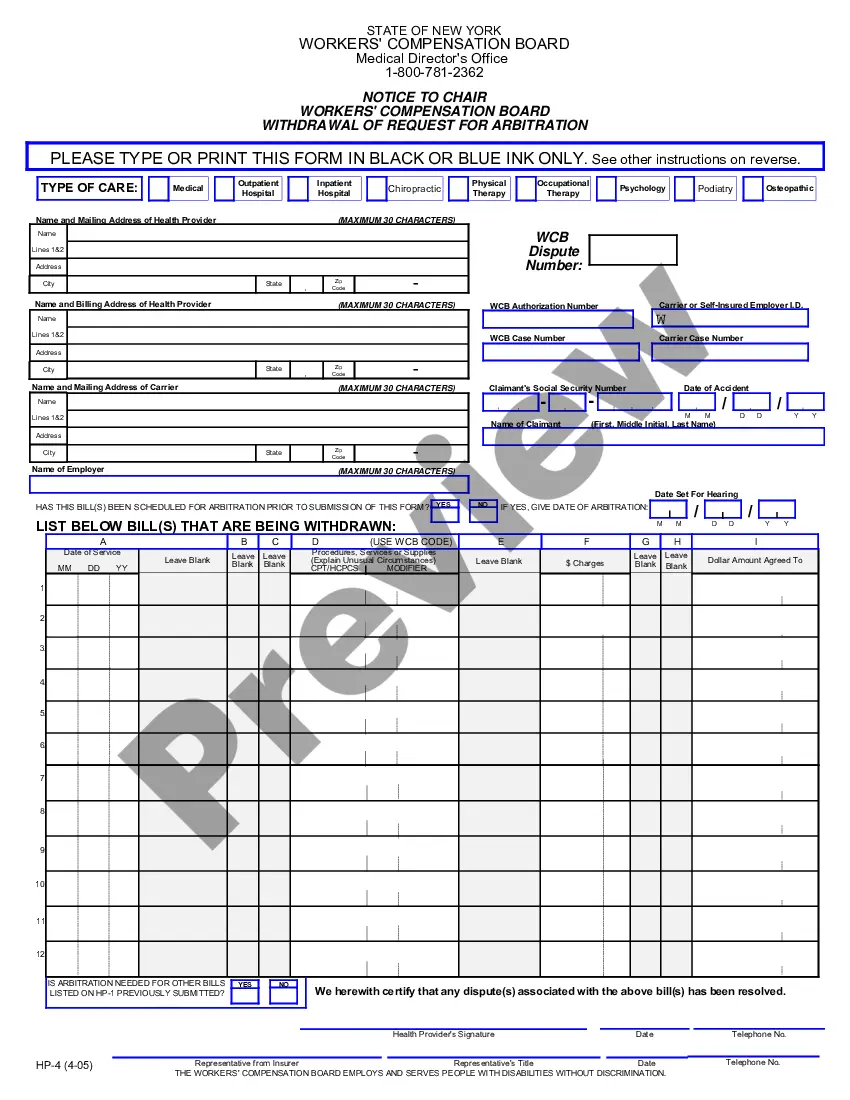
Connecticut Letter from Landlord to Tenant where Tenant Complaint was caused by the deliberate or negligent act of Tenant or Tenant's guest
What is this form?
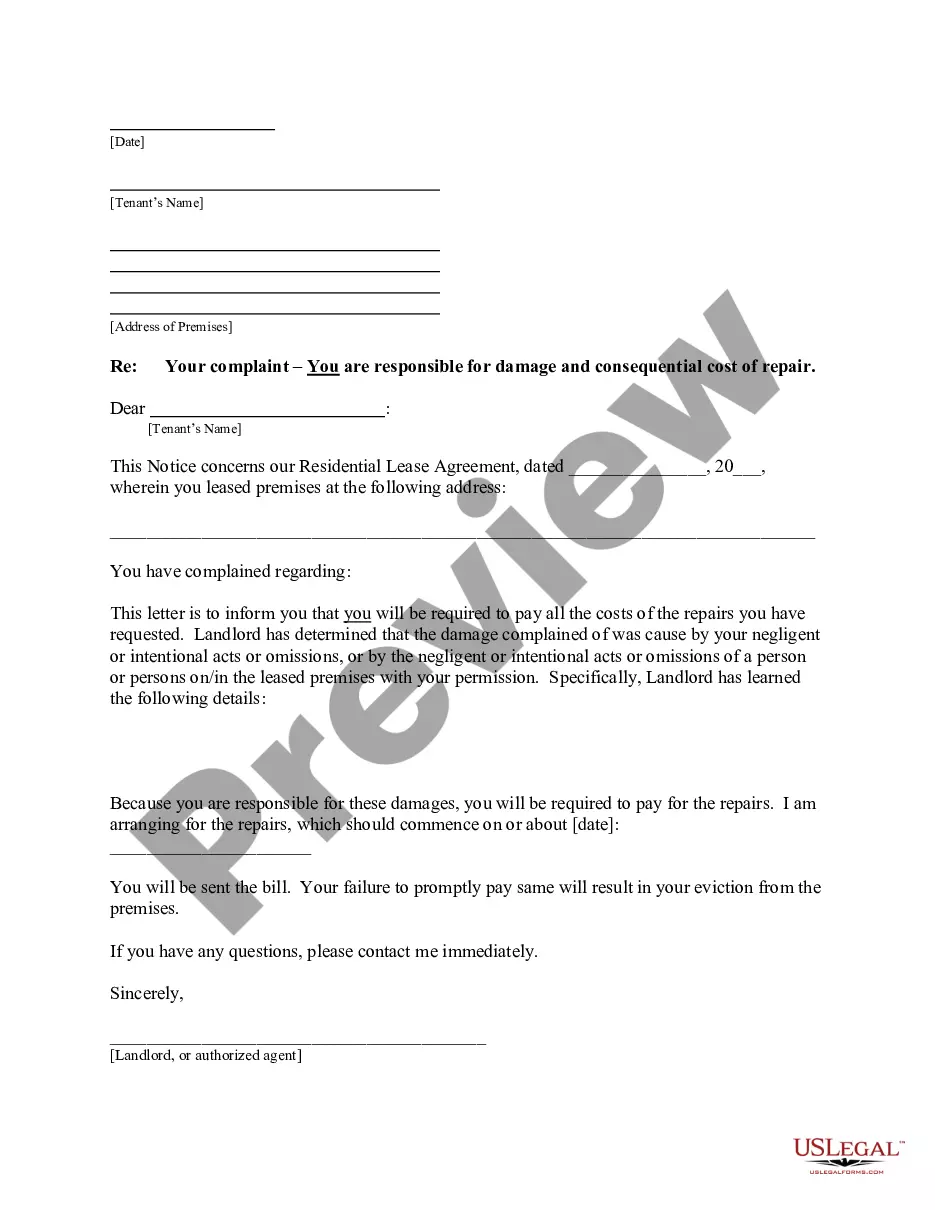
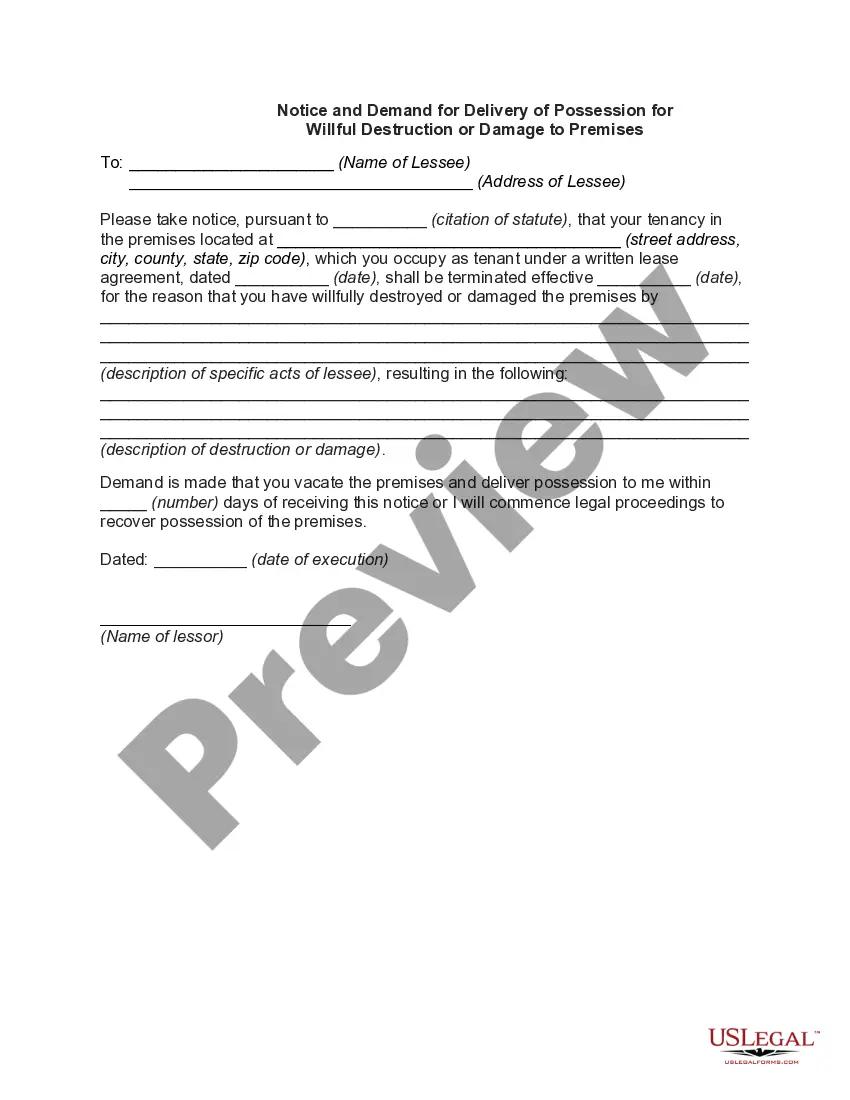
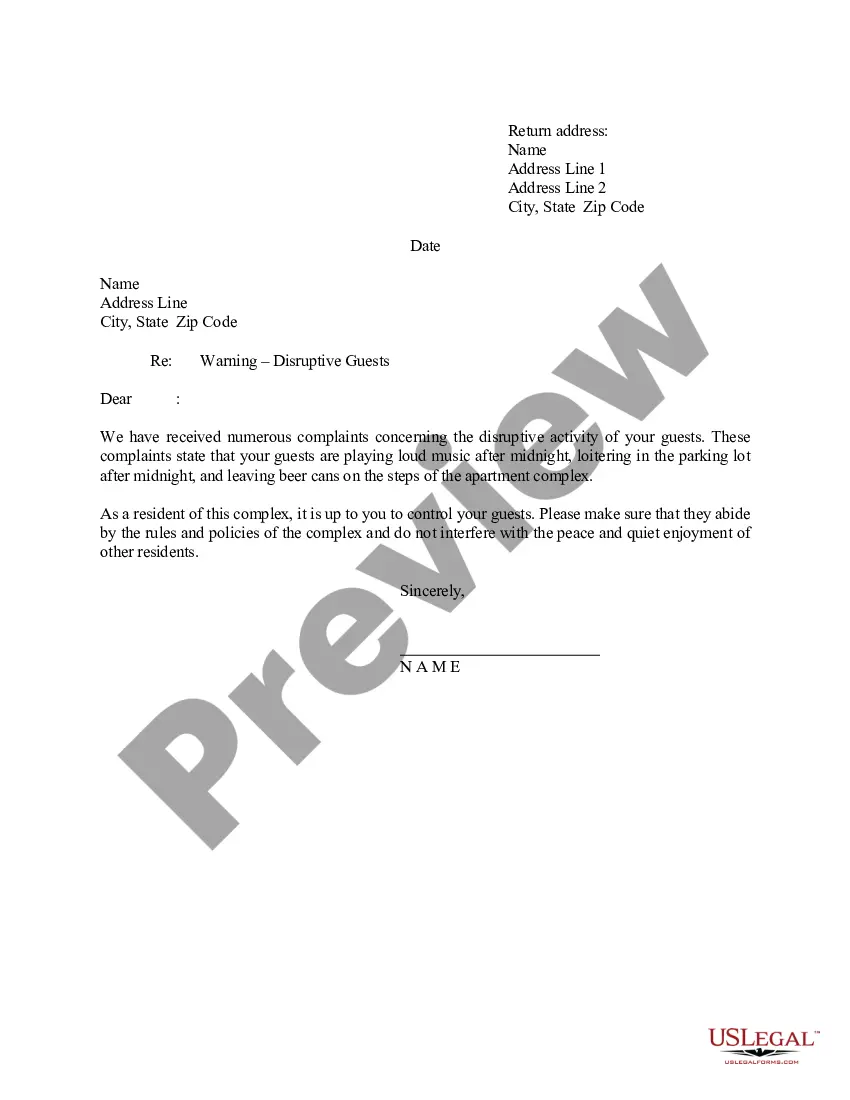
This letter from landlord to tenant addresses the situation where a tenant's request for repairs is not the landlord's responsibility. Specifically, this form is used when the landlord determines that damages were caused by the tenant's intentional or negligent actions, or by guests permitted by the tenant. Unlike other repair request forms, this letter emphasizes the responsibility of the tenant regarding the damage, clarifying the landlord's position and potential financial implications.
Key parts of this document
- Identification of landlord and tenant, including full names and addresses.
- Description of the specific complaint made by the tenant regarding repairs.
- Statement of the landlord's determination regarding the cause of the damage.
- Sections for landlord's contact information and signature.
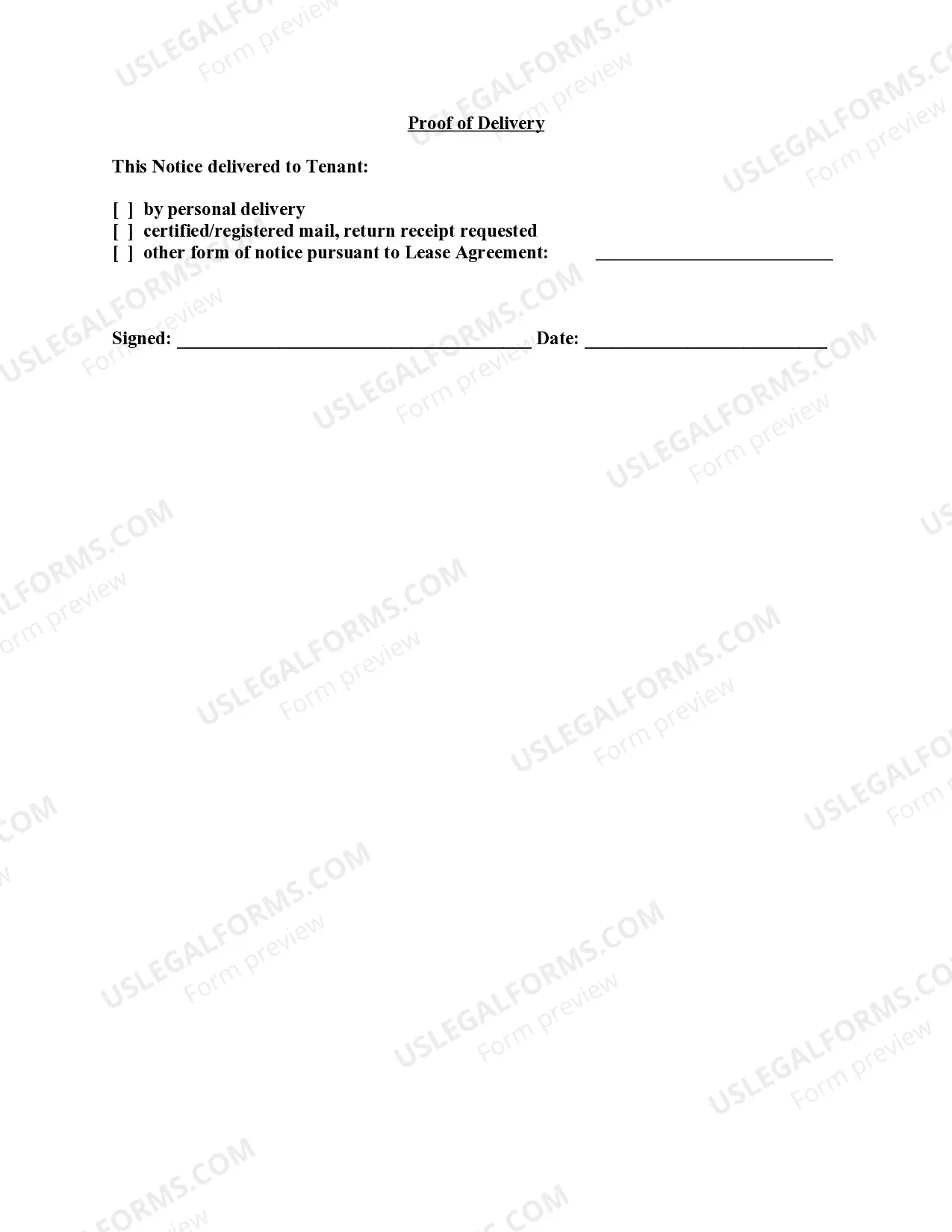
- Delivery proof, noting the method of sending the letter (e.g., personal delivery, certified mail).


Situations where this form applies
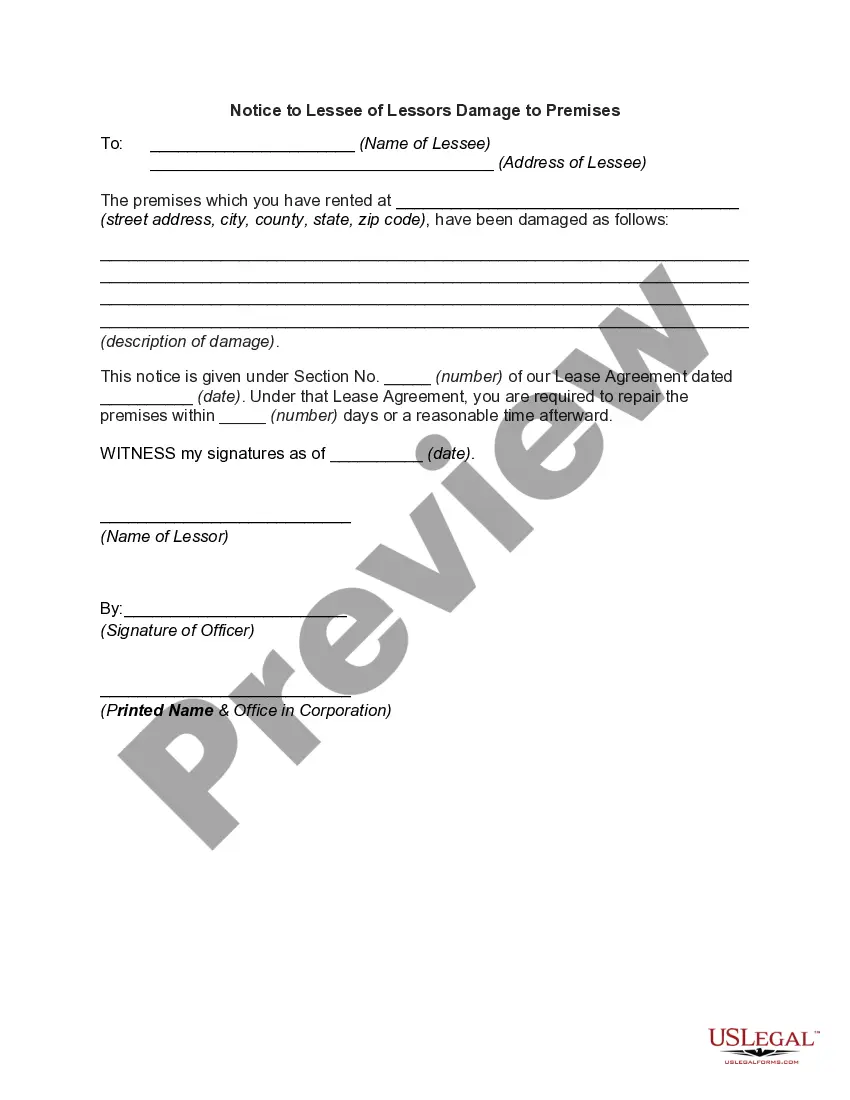
This form is necessary when a tenant requests repairs, but the landlord believes that the damage was caused by the tenant or their guests. Situations may include accidental damage by a guest at a party or careless actions by the tenant. Using this letter helps formally communicate the landlord's position and outlines the tenant's potential liability for repair costs.
Intended users of this form
- Landlords seeking to formally decline a repair request due to tenant-caused damage.
- Property managers who oversee rental properties and handle tenant communication.
- Real estate professionals needing to address liability issues related to tenants.
How to prepare this document
- Identify the parties involved by entering the landlord's and tenant's names and addresses.
- Clearly describe the tenant's complaint about repairs.
- State the landlord's reasons for refusing to cover the repair costs.
- Include the date of the letter and the method of delivery.
- Have the landlord or authorized agent sign the letter.
Notarization requirements for this form
This form does not typically require notarization unless specified by local law. It's recommended to check your state's requirements to ensure compliance.
Get your form ready online
Our built-in tools help you complete, sign, share, and store your documents in one place.
Make edits, fill in missing information, and update formatting in US Legal Forms—just like you would in MS Word.
Download a copy, print it, send it by email, or mail it via USPS—whatever works best for your next step.
Sign and collect signatures with our SignNow integration. Send to multiple recipients, set reminders, and more. Go Premium to unlock E-Sign.
If this form requires notarization, complete it online through a secure video call—no need to meet a notary in person or wait for an appointment.
We protect your documents and personal data by following strict security and privacy standards.

Make edits, fill in missing information, and update formatting in US Legal Forms—just like you would in MS Word.

Download a copy, print it, send it by email, or mail it via USPS—whatever works best for your next step.

Sign and collect signatures with our SignNow integration. Send to multiple recipients, set reminders, and more. Go Premium to unlock E-Sign.

If this form requires notarization, complete it online through a secure video call—no need to meet a notary in person or wait for an appointment.

We protect your documents and personal data by following strict security and privacy standards.
Common mistakes to avoid
- Failing to provide sufficient details about the damage in question.
- Not clearly stating the reasons for denying the repair request.
- Omitting the method of delivery, which is important for legal records.
Advantages of online completion
- Convenience of accessing and downloading the form anytime, anywhere.
- Editability allows for quick adjustments based on specific situations.
- Reliability of using a professionally drafted template created by licensed attorneys.
Legal use & context
- This letter serves as official notification regarding tenant accountability for damages.
- It helps establish a documented trail in case of future disputes.
- The form is enforceable as long as it meets state legal standards.
Quick recap
- This letter is essential for addressing repair requests linked to tenant actions.
- Clarifies the landlord's position on responsibilities and liabilities.
- Can prevent future misunderstandings or legal conflicts.
Looking for another form?
Form popularity
FAQ
If your landlord breaches the warranty of habitability or the warranty of quiet enjoyment, you may be able to sue her to recover monetary damages.In some states, such as California and Arizona, you may be able to seek emotional distress damages if the landlord's actions were particularly egregious.
If you're seeking damages for emotional distress caused by a landlord's discrimination, or punitive damages for especially blatant and intentional discrimination, a lawsuit may well be your best bet. Understand what's involved in suing your landlord. You may file a lawsuit in either federal or state court.
Know your state's landlord/tenant laws. Read and respond to the court summons. Try to work out a settlement. Consider legal counsel. Show up for court. Look sharp and provide evidence.
The landlord had a duty to reasonably maintain the property; The landlord knew or should have known of the dangerous condition; The landlord breached their duty by failing to repair/fix the dangerous condition;
Uninhabitable conditions can include dangerous ones, such as holes in the floor, unsafe or exposed wiring, or non-working air conditioning in dangerously hot summer months. Gross infestations of roaches, fleas or other pests are also uninhabitable conditions.
You can file a lawsuit for negligence against the manager of a real estate property in the same way you can sue the owner of any type of business. Generally speaking, with certain exceptions, filing a lawsuit for negligence against a property manager is a straightforward process.
If you're seeking damages for emotional distress caused by a landlord's discrimination, or punitive damages for especially blatant and intentional discrimination, a lawsuit may well be your best bet. Understand what's involved in suing your landlord. You may file a lawsuit in either federal or state court.
It is a reasonable expectation for rental tenants to expect their landlord and/or agents to fulfil their duty of care. As the tenant, if you sustain serious injuries as a result of the landlord's negligence, you may have a public liability injury claim.
Start a written record. The problems with my landlord started almost immediately after I moved in. Check your lease agreement. If your landlord agreed to something in your lease, he has to follow it. Send written requests. Decide if you have a case. Seek legal assistance. File a civil lawsuit. Fight discrimination.