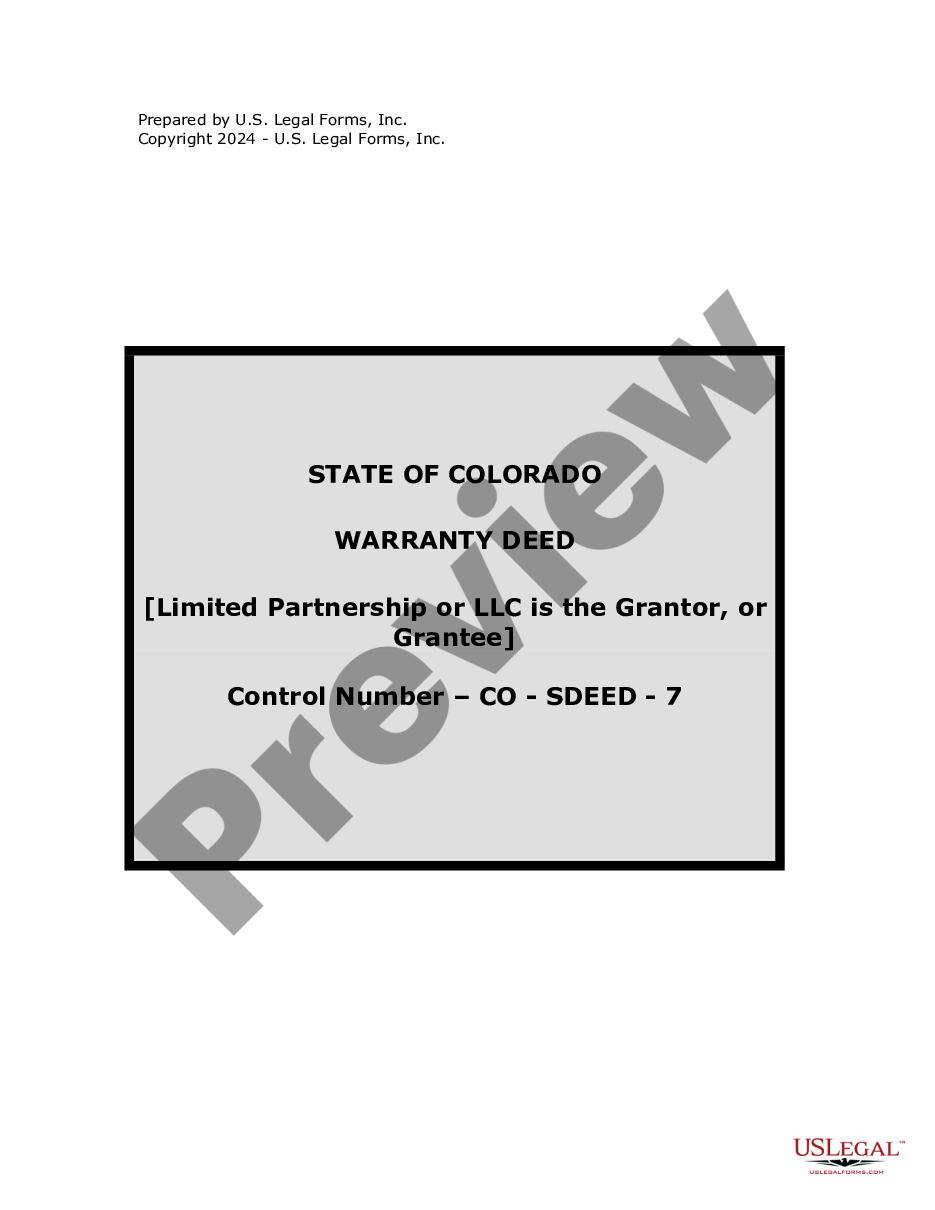
Colorado Warranty Deed from Limited Partnership or LLC is the Grantor, or Grantee
About this form
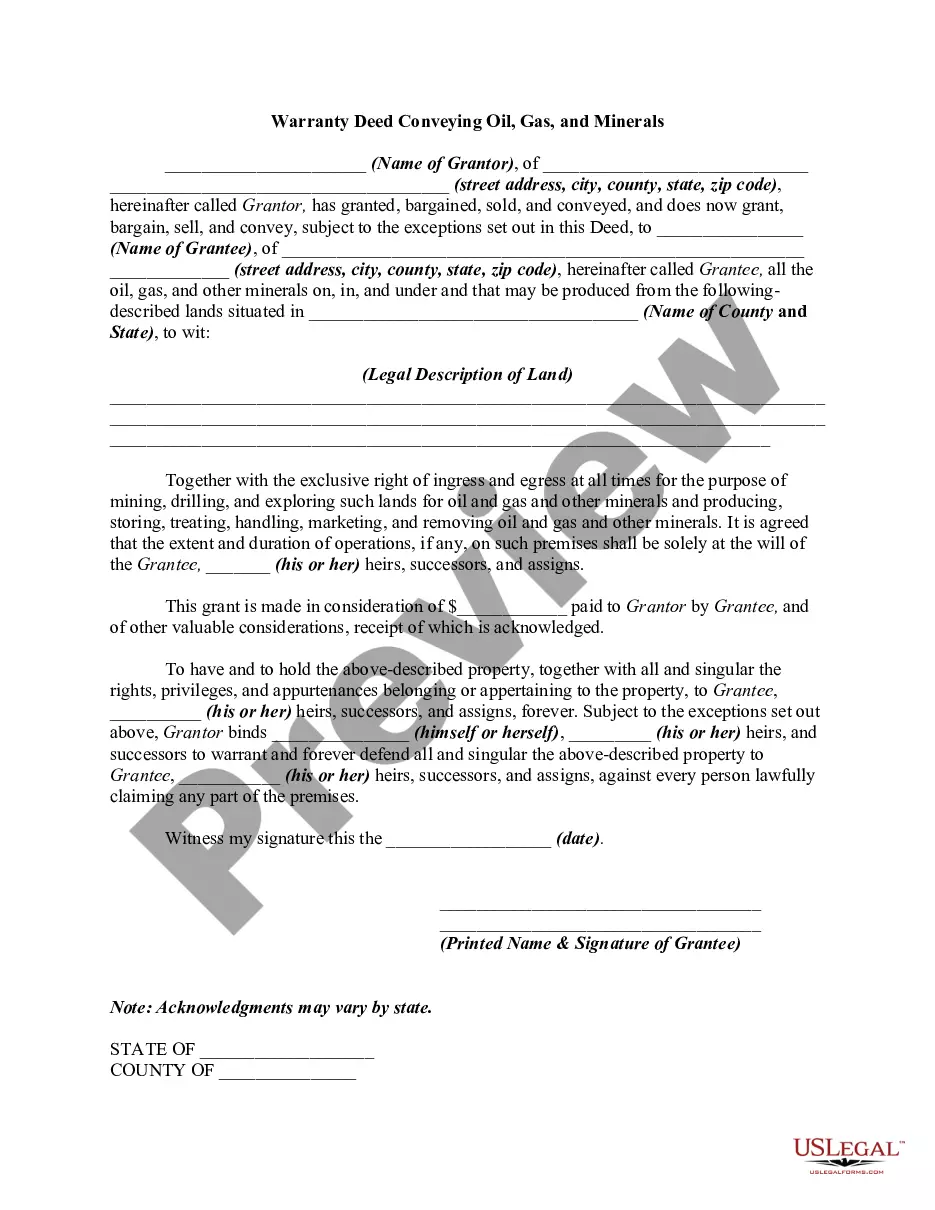
The Warranty Deed from Limited Partnership or LLC is the Grantor or Grantee is a legal document that facilitates the transfer of real estate ownership. This form specifically allows a limited partnership or a limited liability company (LLC) to act as either the seller (grantor) or the buyer (grantee) in a real estate transaction. Unlike other deeds, this warranty deed provides a guarantee that the grantor holds clear title to the property and has the legal authority to transfer it.
Form components explained
- Identification of Grantor and Grantee: Names and legal entities involved in the transaction.
- Property Description: Detailed information about the property being transferred.
- Consideration: The amount paid for the property, establishing the transaction's basis.
- Warranties: Assurance by the grantor about their ownership and ability to convey the property.
- Signatures and Acknowledgments: Required documentation and certification by a notary public or witnesses.






When to use this form
This form is typically used when a limited partnership or LLC is transferring ownership of real estate to another party or to itself. It is applicable in situations such as a sale of property, a gift of property, or the restructuring of asset ownership within a business entity. If you are involved in any real estate transactions involving these types of entities, this warranty deed is crucial for ensuring a clear title transfer.
Who needs this form
- Limited partnerships engaged in real estate transactions.
- Limited liability companies (LLCs) that are buying or selling property.
- Real estate attorneys assisting their clients with property transfers.
- Individuals acting on behalf of a limited partnership or LLC in property dealings.
Steps to complete this form
- Identify the parties involved: Enter the names of the grantor (seller) and grantee (buyer).
- Specify the property: Write a detailed legal description of the property being transferred.
- Enter the consideration: Fill in the amount being paid for the property.
- Review warranty clauses: Ensure the grantor's obligations and warranties are accurately represented.
- Sign and notarize: Have all parties sign the form, and obtain necessary acknowledgments from a notary public.
Is notarization required?
To make this form legally binding, it must be notarized. Our online notarization service, powered by Notarize, lets you verify and sign documents remotely through an encrypted video session.
Get your form ready online
Our built-in tools help you complete, sign, share, and store your documents in one place.
Make edits, fill in missing information, and update formatting in US Legal Forms—just like you would in MS Word.
Download a copy, print it, send it by email, or mail it via USPS—whatever works best for your next step.
Sign and collect signatures with our SignNow integration. Send to multiple recipients, set reminders, and more. Go Premium to unlock E-Sign.
If this form requires notarization, complete it online through a secure video call—no need to meet a notary in person or wait for an appointment.
We protect your documents and personal data by following strict security and privacy standards.

Make edits, fill in missing information, and update formatting in US Legal Forms—just like you would in MS Word.

Download a copy, print it, send it by email, or mail it via USPS—whatever works best for your next step.

Sign and collect signatures with our SignNow integration. Send to multiple recipients, set reminders, and more. Go Premium to unlock E-Sign.

If this form requires notarization, complete it online through a secure video call—no need to meet a notary in person or wait for an appointment.

We protect your documents and personal data by following strict security and privacy standards.
Typical mistakes to avoid
- Failing to provide a complete property description, which can lead to confusion about the property being transferred.
- Not including the correct names of the entities involved, which can invalidate the document.
- Neglecting to obtain a notary's signature when required, making the deed unrecordable.
Why complete this form online
- Convenient access: Download and fill out the form anytime and anywhere.
- Editability: Easily make necessary adjustments before finalizing the document.
- Reliability: Forms are drafted by licensed attorneys to ensure legal compliance.
Looking for another form?
Form popularity
FAQ
To fill out a warranty deed form, begin by accurately providing the names and addresses of both the grantor and grantee. Include a clear property description, ensuring it meets the legal requirements for real estate transactions. If the Colorado Warranty Deed from Limited Partnership or LLC is involved, make sure to include the entity name and its registration details. Using a reliable platform like US Legal Forms can streamline this process, offering guidance and templates that ensure you comply with all state requirements.
The grantee on a warranty deed is the person or entity receiving the title to the property. This can include individuals, partnerships, corporations, or LLCs. When the Colorado Warranty Deed from Limited Partnership or LLC is the Grantor or Grantee, it means that these entities are legally handling the property transfer. Understanding the role of the grantee is essential for anyone engaged in real estate transactions.
The grantor signs the deed to transfer the title to the grantee. The grantor is the individual or entity parting with the property, such as a Limited Partnership or LLC in the case of a Colorado Warranty Deed. The grantee does not need to sign the warranty deed, but their acknowledgment of the deed is often encouraged for clarity. Proper signatures are crucial for the deed to be valid and enforceable in any property transaction.
Anyone involved in the transfer of property can fill out a warranty deed. Typically, this includes the grantor, who is the person transferring the property, and the grantee, who is receiving it. In cases where a Colorado Warranty Deed from Limited Partnership or LLC is the Grantor or Grantee, the authorized representatives of these entities must complete the deed. It's important to ensure all information is accurate to avoid any legal issues in the future.
In the context of a Colorado Warranty Deed from Limited Partnership or LLC, the grantor is the individual or entity that transfers ownership of the property. Typically, this can include partnerships or limited liability companies that wish to convey their interest in the property to a grantee. It’s important for the grantor to provide clear and accurate details on the deed to prevent any potential legal issues in the future. By understanding your role as the grantor in the process, you can ensure that your intentions for the property transfer are officially recognized.
The title on a warranty deed will include the names of the grantor and grantee. In cases where a Colorado Warranty Deed from Limited Partnership or LLC is involved, it is essential that the deed accurately reflects the entities involved. This ensures that ownership rights are properly maintained and safeguarded. At uslegalforms, we provide templates and assistance to ensure your warranty deed is accurate and legally binding.
On a warranty deed, the grantor is typically the person or business entity transferring property rights, like a Limited Partnership or LLC. The grantee is the individual or entity receiving those rights. For a Colorado Warranty Deed from Limited Partnership or LLC as the Grantor or Grantee, it is crucial to clearly identify both parties. Utilizing uslegalforms can guide you through the proper documentation to solidify these roles.
The grantor is the party that transfers ownership of a property, while the grantee is the party that receives it. In the context of a Colorado Warranty Deed from Limited Partnership or LLC, understanding this distinction is essential. The grantor must provide clear title and assure the grantee of their right to the property. Using uslegalforms can help streamline this process and ensure all legal requirements are met.
The grantor is the party transferring the property ownership, while the grantee is the recipient of that ownership. In a situation involving a Colorado Warranty Deed from Limited Partnership or LLC, the entity acting as the grantor or grantee must be clearly identified in the deed. This clarity is essential for legal purposes and property rights, and using services like USLegalForms can help you specify these roles accurately.
No, a warranty deed and a limited warranty deed are not the same. A warranty deed provides full assurance that the grantor holds clear title to the property, while a limited warranty deed only guarantees the title against issues that may arise during the time the grantor owned the property. Understanding these differences is crucial, especially when dealing with a Colorado Warranty Deed from Limited Partnership or LLC as the Grantor or Grantee.