Colorado Notice of Lease for Recording
Understanding this form
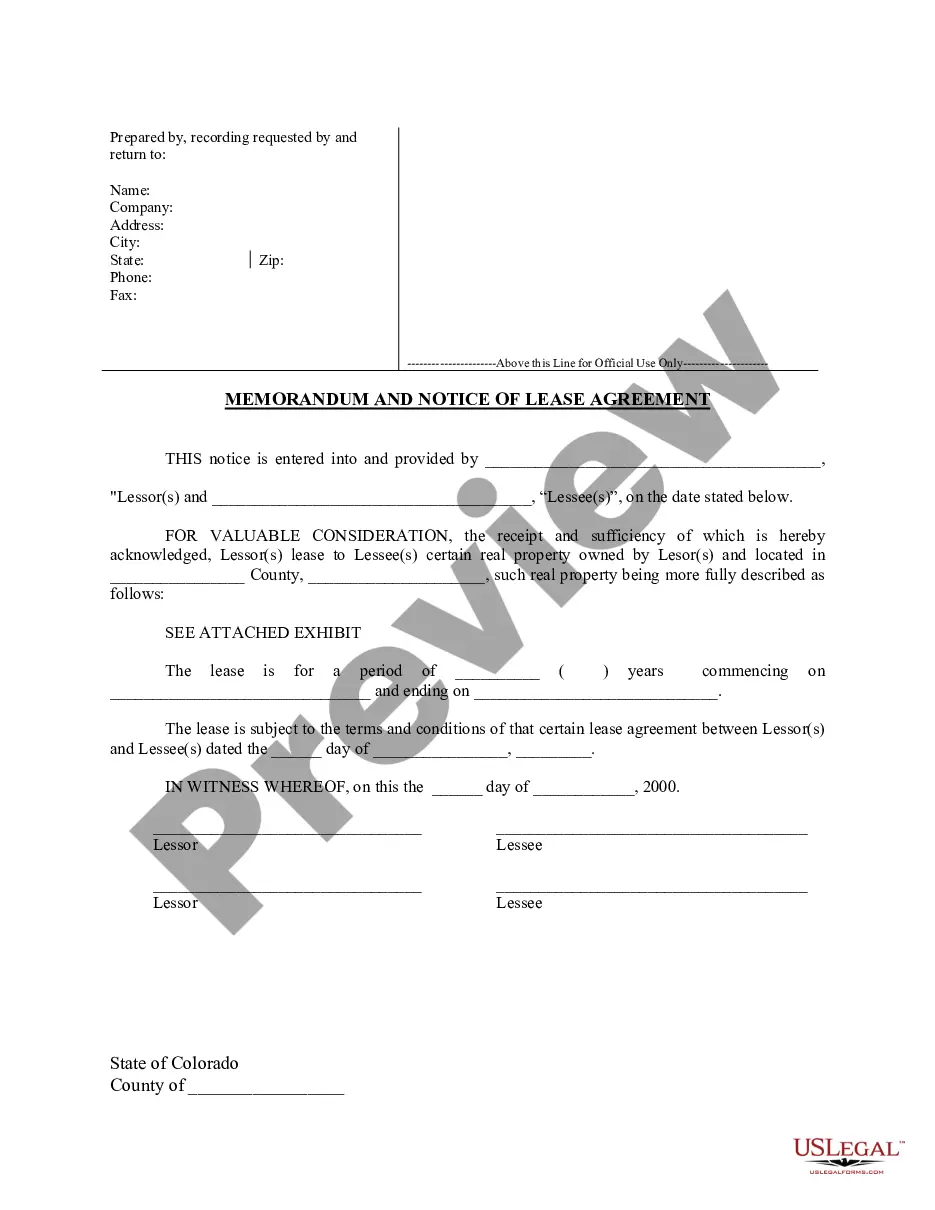
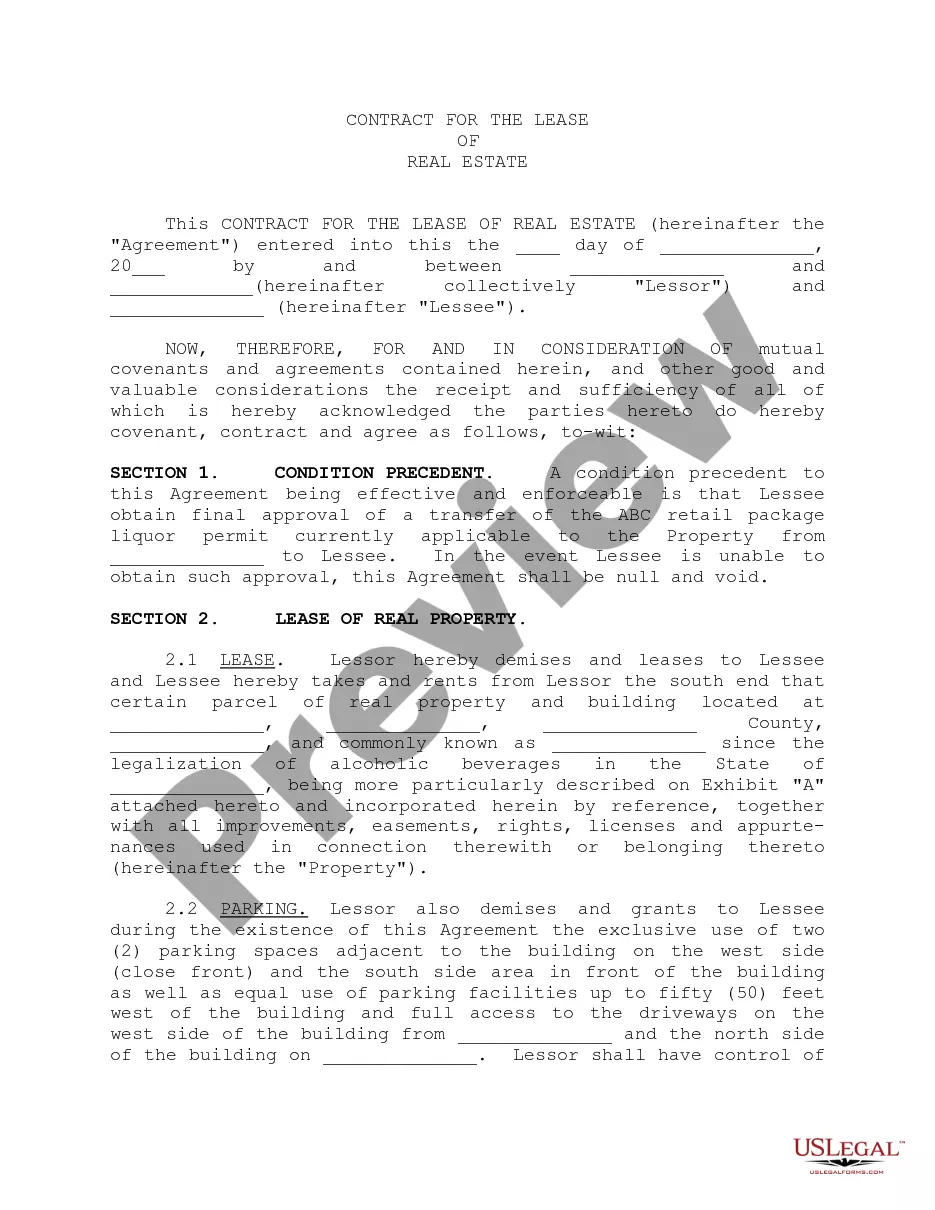
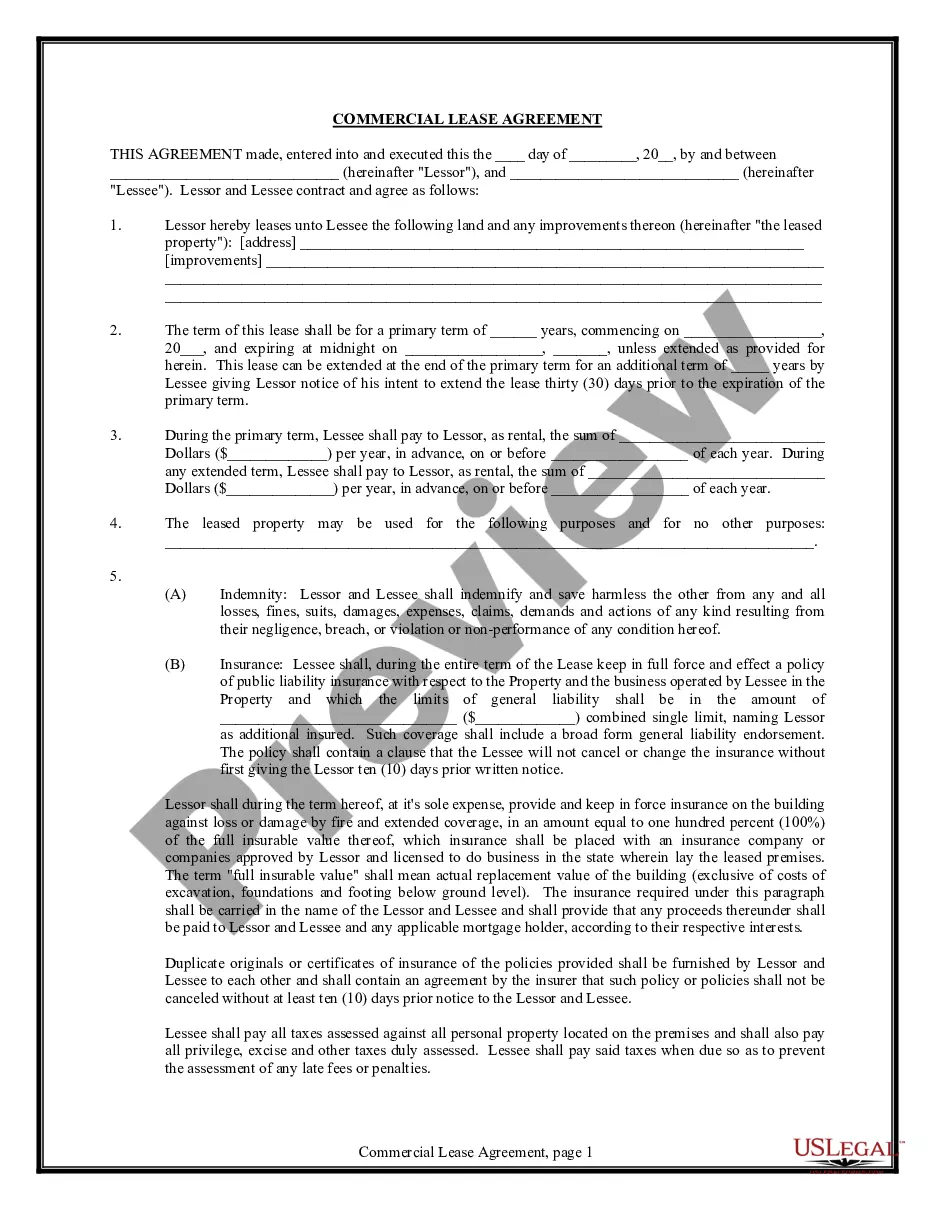
The Notice of Lease for Recording is a legal document intended to notify the public that a lease exists for a specific parcel of real estate. This form is recorded in official records, making it different from simply keeping a lease agreement between the parties involved. By documenting the lease, it provides protections related to property rights, including potential lien priority and verification of the lease's existence in the property records.
Key parts of this document
- Prepared by and return information: Includes details about who prepared the notice and where it should be returned.
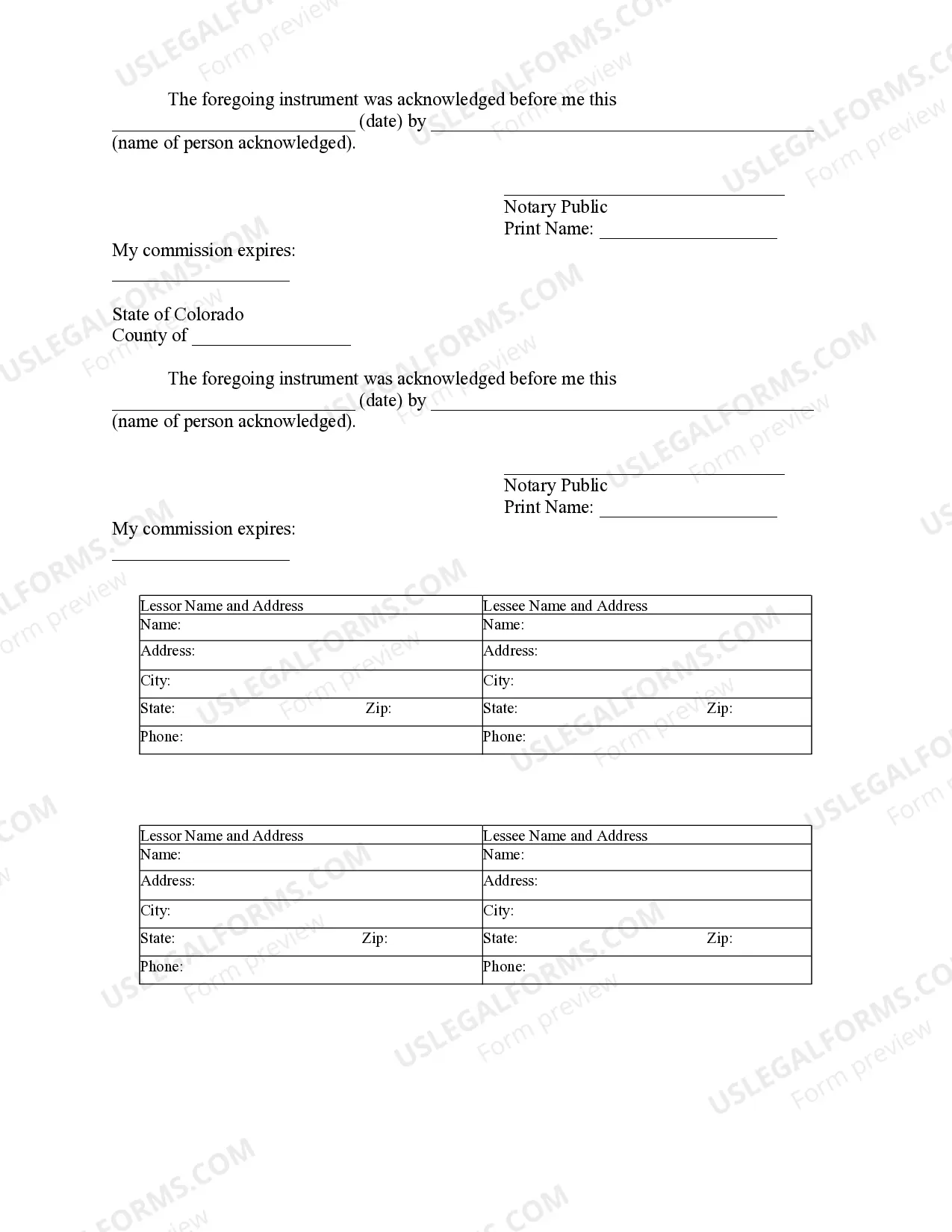
- Identification of lessor and lessee: Names and addresses of both parties involved in the lease.
- Property description: A detailed description of the leased property.
- Lease term: Duration of the lease, including start and end dates.
- References to the lease agreement: Acknowledgment of the specific lease agreement details related to the notice.
- Notary acknowledgment: Space for a notary public to certify the document.

Common use cases
This form should be used when entering into a lease agreement for real property and when there is a need to formalize the lease's existence in public records. It is particularly useful in situations where the entire lease document may not need to be recorded but where public notice is required to protect the rights of the lessor and lessee.
Who can use this document
- Property owners acting as lessors who wish to record a lease.
- Tenants who are entering into a lease agreement as lessees.
- Real estate professionals assisting clients with lease agreements.
- Anyone needing to establish a public record of a lease agreement.
How to prepare this document
- Identify the parties: Enter the names of the lessor(s) and lessee(s) involved in the lease.
- Specify the property: Provide a detailed description of the real property being leased.
- Enter the lease term: Fill in the duration of the lease, noting the start and end dates.
- Reference the lease agreement: Include the date of the lease agreement for clarity and legal reference.
- Sign and notarize: Ensure all parties sign the document and have it notarized as required.
Notarization guidance
This form must be notarized to be legally valid. US Legal Forms provides secure online notarization powered by Notarize, allowing you to complete the process through a verified video call.
Get your form ready online
Our built-in tools help you complete, sign, share, and store your documents in one place.
Make edits, fill in missing information, and update formatting in US Legal Forms—just like you would in MS Word.
Download a copy, print it, send it by email, or mail it via USPS—whatever works best for your next step.
Sign and collect signatures with our SignNow integration. Send to multiple recipients, set reminders, and more. Go Premium to unlock E-Sign.
If this form requires notarization, complete it online through a secure video call—no need to meet a notary in person or wait for an appointment.
We protect your documents and personal data by following strict security and privacy standards.

Make edits, fill in missing information, and update formatting in US Legal Forms—just like you would in MS Word.

Download a copy, print it, send it by email, or mail it via USPS—whatever works best for your next step.

Sign and collect signatures with our SignNow integration. Send to multiple recipients, set reminders, and more. Go Premium to unlock E-Sign.

If this form requires notarization, complete it online through a secure video call—no need to meet a notary in person or wait for an appointment.

We protect your documents and personal data by following strict security and privacy standards.
Typical mistakes to avoid
- Failing to accurately describe the property, which may lead to disputes.
- Not ensuring that all parties sign the notice, which could invalidate the document.
- Omitting the lease start and end dates, making it unclear when the lease is effective.
- Not obtaining notarization when required, which may affect the document's validity.
Advantages of online completion
- Convenience of downloading and printing the form from anywhere.
- Editability, allowing users to fill in the necessary fields easily.
- Guidance through the process with clear instructions provided.
- Access to attorney-drafted templates that ensure legal compliance.
Looking for another form?



Form popularity
FAQ
The Colorado Notice of Lease for Recording is a legal document used to notify the public that a lease exists on a parcel of real estate, and it is recorded in official records. It helps verify the lease’s existence and can affect property rights, including possible lien priority. Use this form when entering a real property lease and you want the lease recorded for public notice.
The Colorado Notice of Lease for Recording is designed to record a notice of the lease, not an assignment. An assignment would use a different document and may require separate recording. This form focuses on publicly documenting the lease’s existence and related basic details, rather than transferring rights between parties.
Recording is not automatic for every lease. The Colorado Notice of Lease for Recording is designed to provide public notice of the lease’s existence and to document its presence in property records when recorded. Use it if you want formal public notice or to support potential rights in the property records.
The form requires prepared-by and return information, identification of the lessor and lessee, a property description, the lease term with start and end dates, references to the lease agreement, and a notary acknowledgment. Including these elements helps ensure the notice accurately reflects the lease and can be properly recorded.
Yes. The form includes a notary acknowledgment section for a licensed notary to certify the document, which helps verify its authenticity and supports proper recording in official records. Notarization is part of the formal process and can be important for enforceability of the notice.
This form is specifically designed to be recorded in official property records to establish public notice of the lease and potential lien priority. It includes prepared-by/return information, party identification, property description, lease term, lease-reference details, and a notary acknowledgment, which a standard non-recorded notice typically does not require.