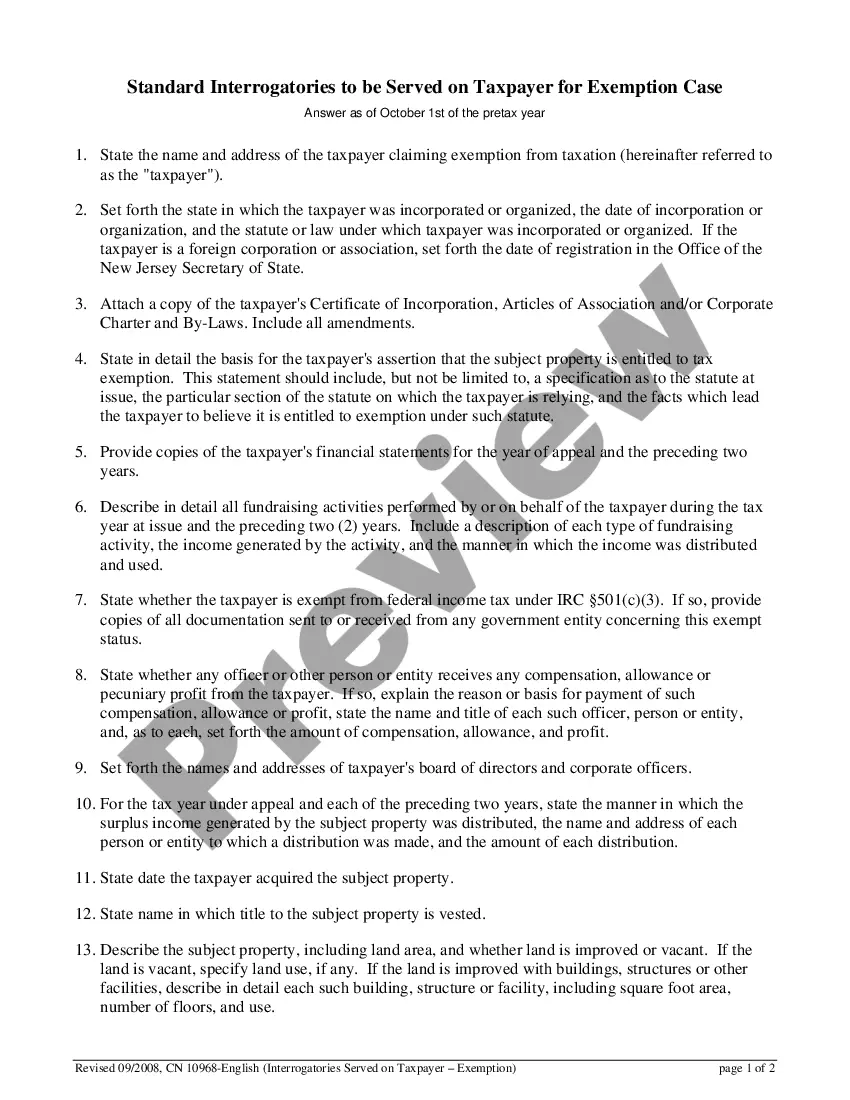
Colorado Perpetual Easement for the Use and Maintenance of a Recreational Trail
Understanding this form
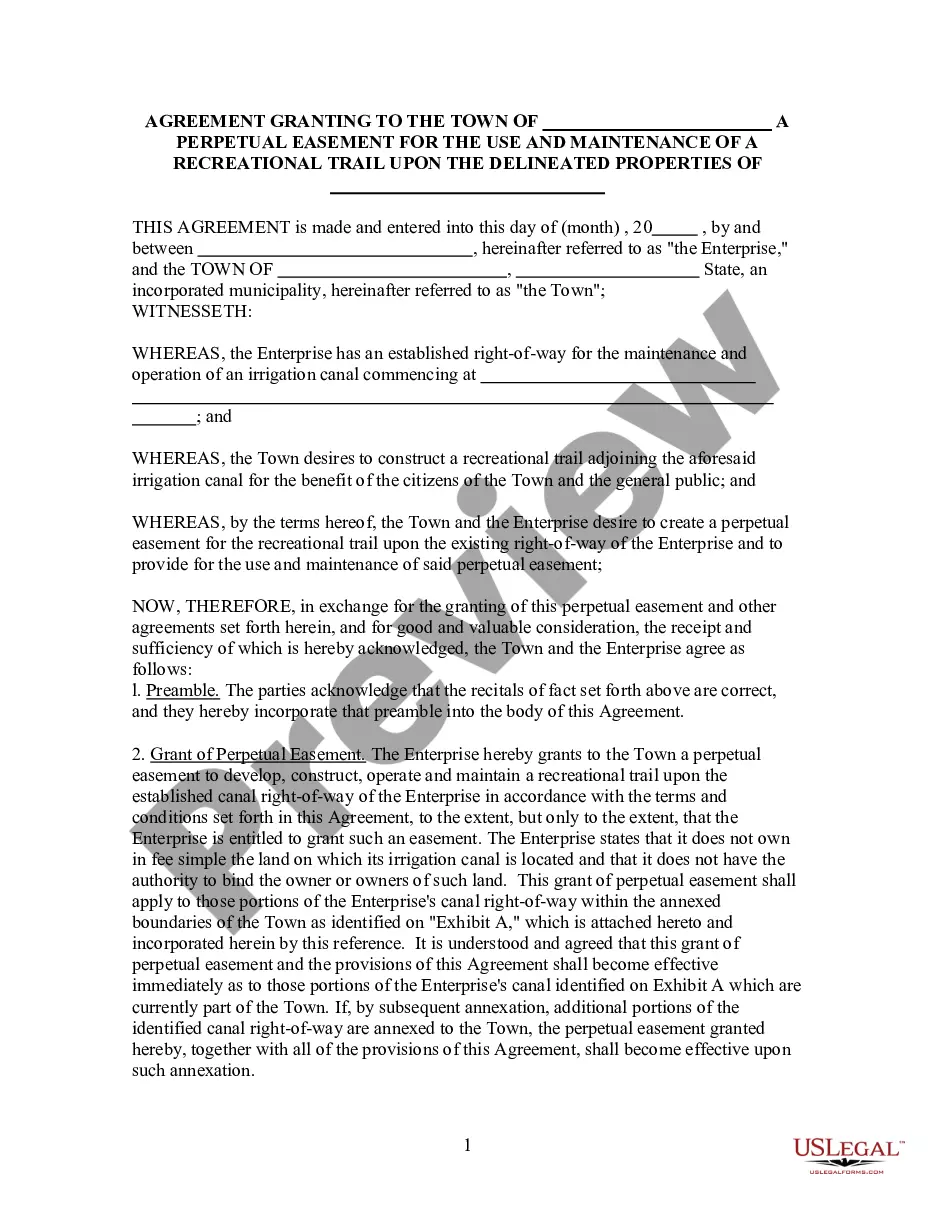
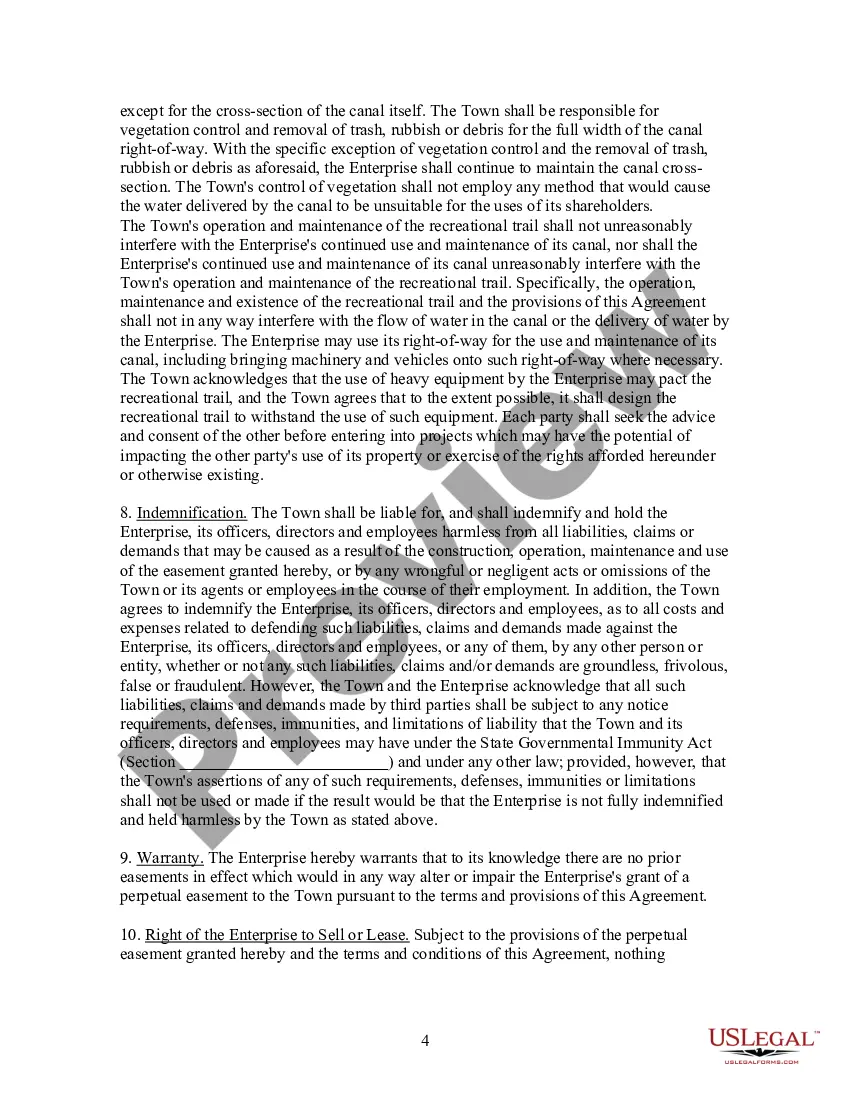
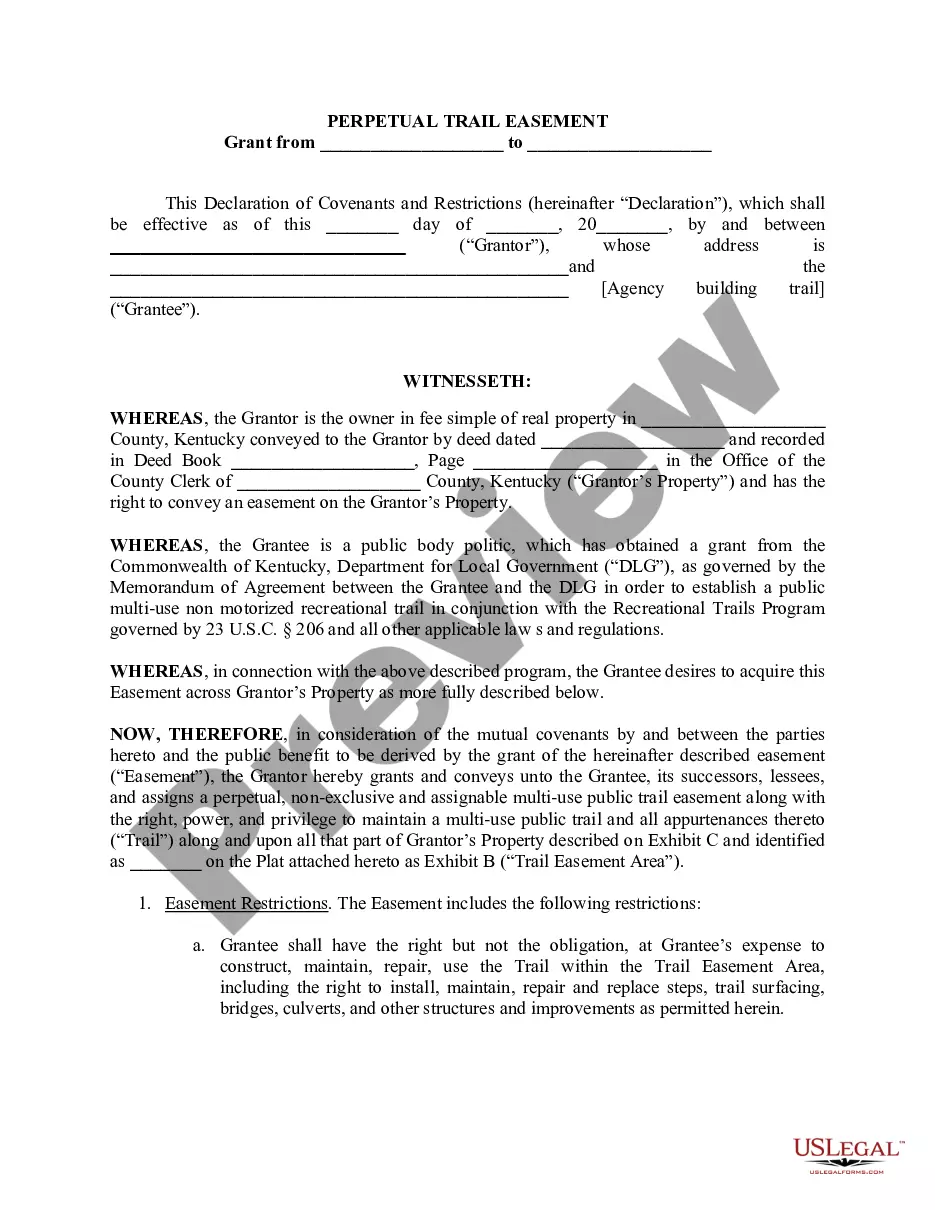
The Perpetual Easement for the Use and Maintenance of a Recreational Trail is a legal document that allows one party (the Town) to establish and maintain a recreational trail on another party's property (the Enterprise's canal right-of-way). This easement grants the Town the right to develop and operate this trail, facilitating public access for recreational activities while maintaining the integrity of the canal and its operations. Unlike other easements that may pertain to utilities or access rights, this specific easement is tailored for recreational use and maintenance.
Key parts of this document
- Preamble: Establishes the purpose and background of the easement.
- Grant of Perpetual Easement: Details the rights granted to the Town for the recreational trail.
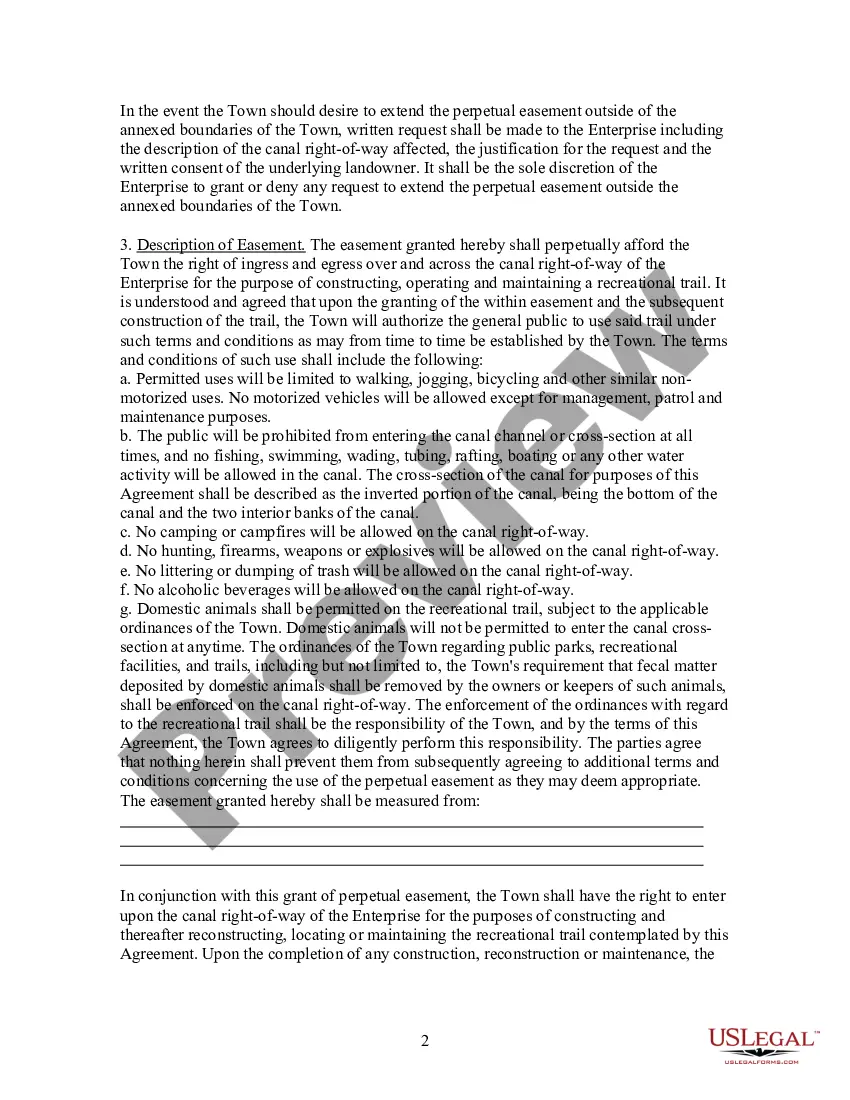
- Description of Easement: Outlines the permitted uses of the trail and restrictions to ensure safety.
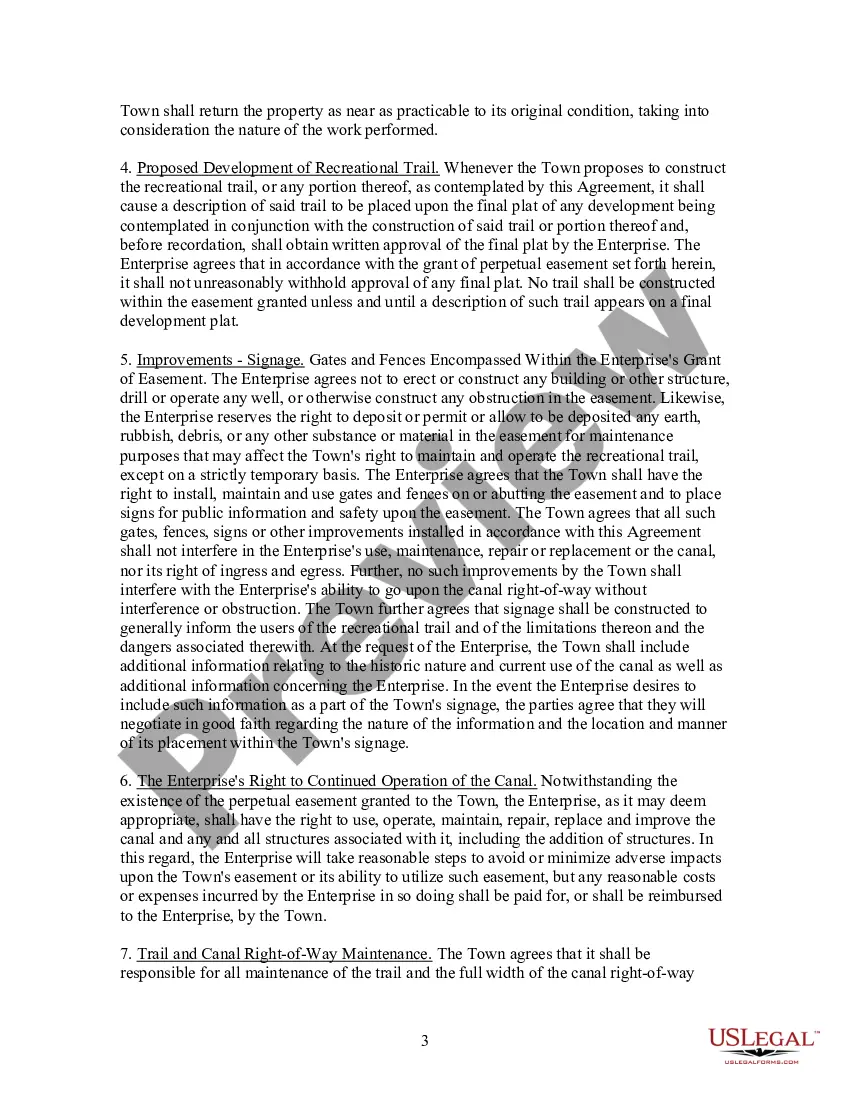
- Maintenance Responsibilities: Specifies responsibilities for maintaining the trail and canal right-of-way.
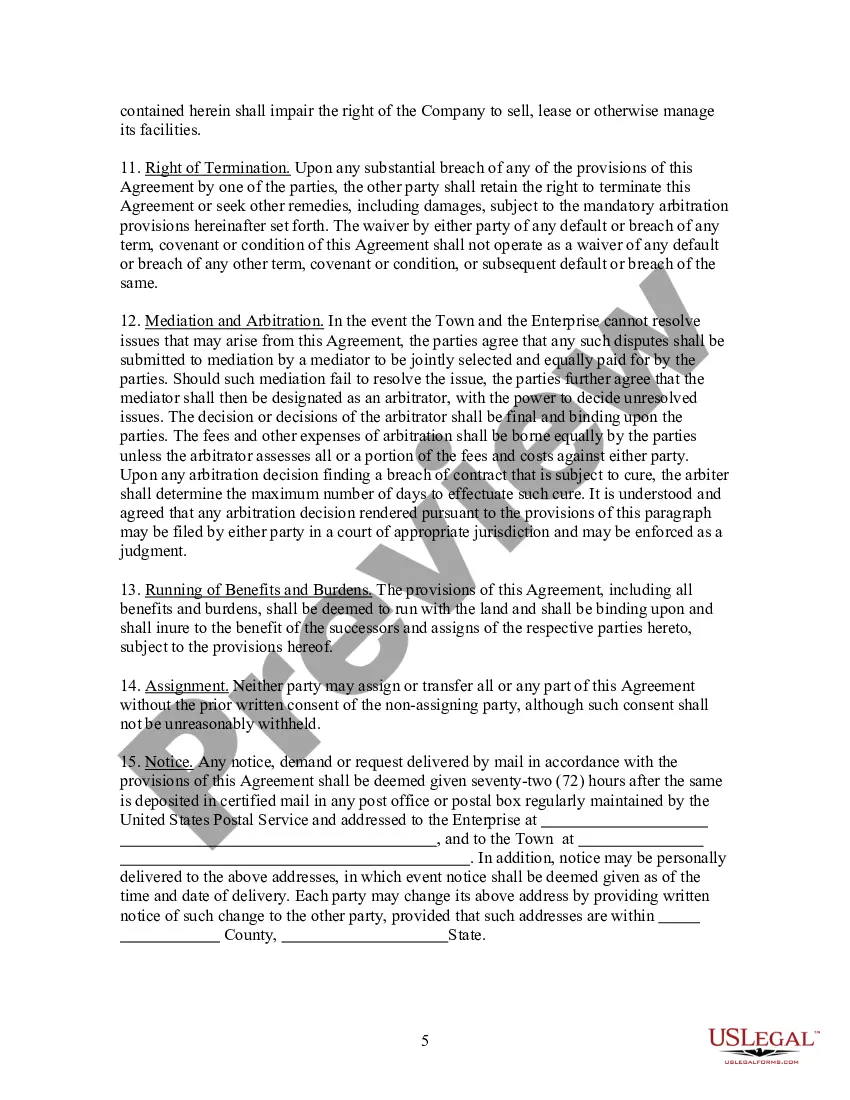
- Indemnification Clause: Addresses liability and obligations between the Town and the Enterprise.
- Dispute Resolution: Defines the process for resolving issues that may arise under the agreement.

Situations where this form applies
This form should be used when a municipality or local government seeks to create a permanent recreational trail that utilizes an existing right-of-way, specifically for public enjoyment. Scenarios include developing walking or biking trails along canals or other non-motorized paths where access has previously been limited. It is particularly useful when aiming to promote community recreation while ensuring that the rights of the underlying landowners are respected and preserved.
Who needs this form
This form is intended for the following groups:
- Local government agencies or municipalities wishing to establish a public recreational trail.
- Landowners or entities (like an irrigation enterprise) granting use of their property for recreational purposes.
- Legal representatives involved in drafting or negotiating easement agreements for public use.
Completing this form step by step
- Identify the parties involved: Specify the Town and the Enterprise granting the easement.
- Describe the property affected: Clearly outline the canal right-of-way and annexed boundaries of the Town.
- Specify the intended use: Describe permitted activities such as walking, jogging, and bicycling on the trail.
- Detail maintenance responsibilities: Clarify who is responsible for upkeep of the trail and canal.
- Include signatures: Ensure authorized representatives from both parties sign and date the document.
Notarization requirements for this form
This form needs to be notarized to ensure legal validity. US Legal Forms provides secure online notarization powered by Notarize, allowing you to complete the process through a verified video call, available anytime.
Get your form ready online
Our built-in tools help you complete, sign, share, and store your documents in one place.
Make edits, fill in missing information, and update formatting in US Legal Forms—just like you would in MS Word.
Download a copy, print it, send it by email, or mail it via USPS—whatever works best for your next step.
Sign and collect signatures with our SignNow integration. Send to multiple recipients, set reminders, and more. Go Premium to unlock E-Sign.
If this form requires notarization, complete it online through a secure video call—no need to meet a notary in person or wait for an appointment.
We protect your documents and personal data by following strict security and privacy standards.

Make edits, fill in missing information, and update formatting in US Legal Forms—just like you would in MS Word.

Download a copy, print it, send it by email, or mail it via USPS—whatever works best for your next step.

Sign and collect signatures with our SignNow integration. Send to multiple recipients, set reminders, and more. Go Premium to unlock E-Sign.

If this form requires notarization, complete it online through a secure video call—no need to meet a notary in person or wait for an appointment.

We protect your documents and personal data by following strict security and privacy standards.
Mistakes to watch out for
- Failing to clearly define the boundaries of the easement.
- Not specifying permitted uses and restrictions adequately.
- Neglecting to include maintenance responsibilities and dispute resolution procedures.
- Allowing unauthorized representatives to sign the agreement.
Advantages of online completion
- Convenient downloading and printing from anywhere, saving time.
- Editability ensures specific details can be tailored to unique situations.
- Access to forms drafted by licensed attorneys increases reliability and legal validity.
Looking for another form?




Form popularity
FAQ
To establish a prescriptive easement in Colorado, the use of the property must be open, notorious, and continuous for at least 18 years. Additionally, the user must demonstrate that the use is without permission from the landowner. In the context of a Colorado Perpetual Easement for the Use and Maintenance of a Recreational Trail, this means users need to consistently maintain the trail in a visible and recognized manner. If you're unsure about the legalities, uslegalforms can provide valuable resources to help navigate the requirements.
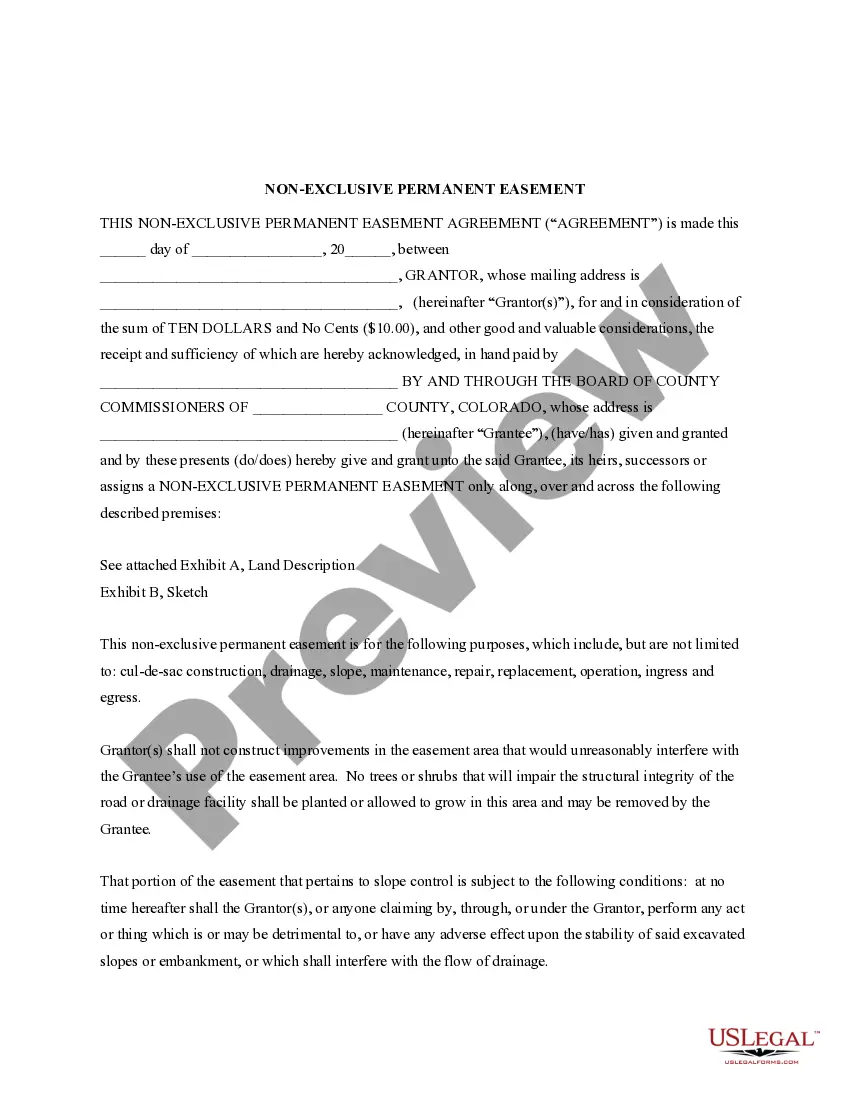
The rule against perpetuities typically does not apply to easements, including a Colorado Perpetual Easement for the Use and Maintenance of a Recreational Trail. This rule primarily affects future interests in property, making it less relevant for perpetual easements. If you need formal guidance on setting up an easement, platforms like UsLegalForms provide valuable resources to navigate these legal waters.
A perpetual right of way easement allows individuals rights to cross a property for access purposes forever. This is closely related to a Colorado Perpetual Easement for the Use and Maintenance of a Recreational Trail, as it grants the same indefinite access for recreational use. Understanding these distinctions can help property owners and easement holders manage their rights effectively.
A permanent easement grants the right to use another person's property indefinitely, similar to a Colorado Perpetual Easement for the Use and Maintenance of a Recreational Trail. This means that the easement holder can enjoy the benefits of the easement without it being subject to termination. Knowing the specifics of a permanent easement can help you secure your recreational trail rights effectively.
Yes, an easement can indeed be established in perpetuity. A Colorado Perpetual Easement for the Use and Maintenance of a Recreational Trail allows the easement holder to maintain rights indefinitely. This ensures continued access and use of the trail for recreational purposes without worrying about expiration. It's important to draft these agreements carefully to ensure that they meet all legal requirements.
Yes, easements can expire under specific conditions; however, Colorado Perpetual Easements for the Use and Maintenance of a Recreational Trail are designed to last indefinitely. Expiration could occur if the easement is not used for a certain period, it is explicitly stated in the agreement, or if the mutual agreement of the involved parties ends it. Understanding the duration and terms of an easement is vital for ensuring that your rights to the trail remain intact. Consulting legal expertise can help clarify these aspects.
While easements provide valuable rights, they also come with certain drawbacks. With a Colorado Perpetual Easement for the Use and Maintenance of a Recreational Trail, property owners might face restrictions on how they use their land. Furthermore, if not clearly defined, easements can lead to disputes or misunderstandings over boundaries and usage. To navigate these potential issues effectively, utilizing resources like UsLegalForms can help ensure that all terms are transparent and legally sound.
A perpetual easement provides continuous rights to use another person's property without a specific expiration. When discussing Colorado Perpetual Easements for the Use and Maintenance of a Recreational Trail, it means that the right to access and maintain the trail is granted indefinitely. This arrangement greatly benefits property owners and the community by preserving important recreational spaces. It emphasizes the long-term benefits of establishing clear easement terms.
In real estate, perpetual refers to a property interest that continues indefinitely without an end date. This concept is particularly relevant for Colorado Perpetual Easements for the Use and Maintenance of a Recreational Trail, where the easement provides ongoing rights to use the land for recreation. Property owners grant these easements to ensure the sustained enjoyment and utility of trails for future generations. Thus, understanding perpetual interests is essential for long-term planning in real estate.
The rule against perpetuities restricts the length of time that interests in property, such as easements, can last. This rule ensures that Colorado Perpetual Easements for the Use and Maintenance of a Recreational Trail do not create indefinite entitlements that might burden future property owners. Essentially, it requires that any interest must vest, if at all, within a specified time. Understanding this rule is crucial for anyone involved in land use and property rights.