Colorado Commercial Sublease
About this form
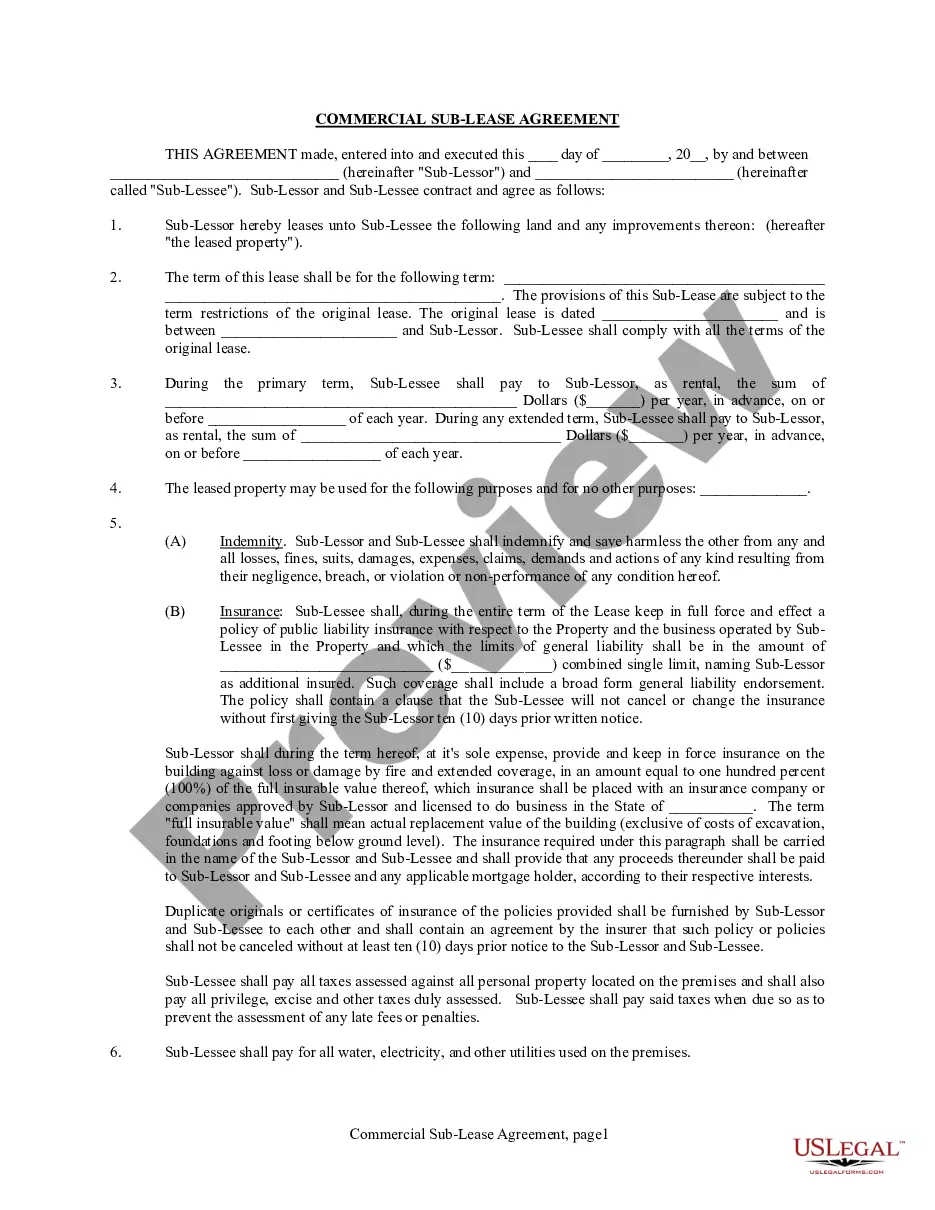
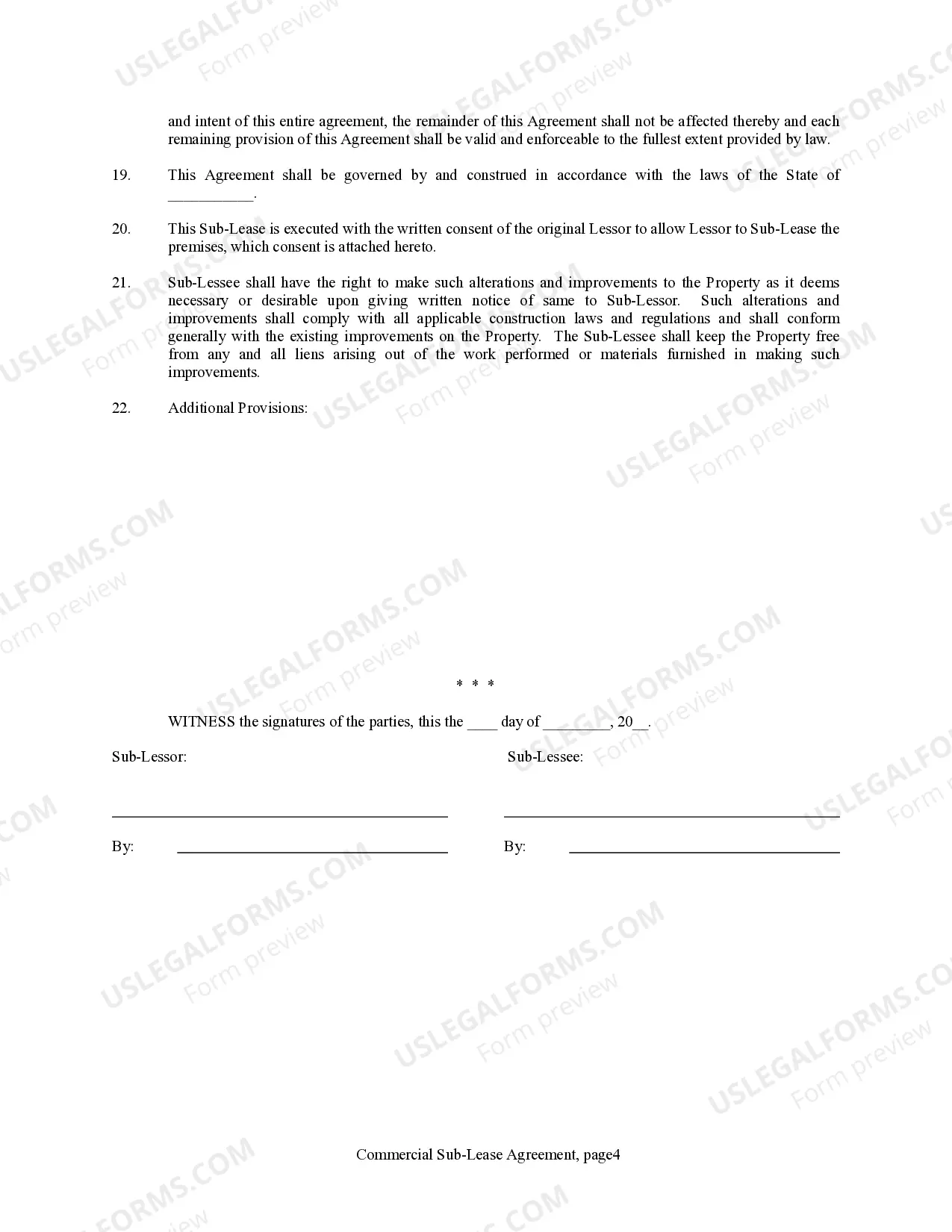
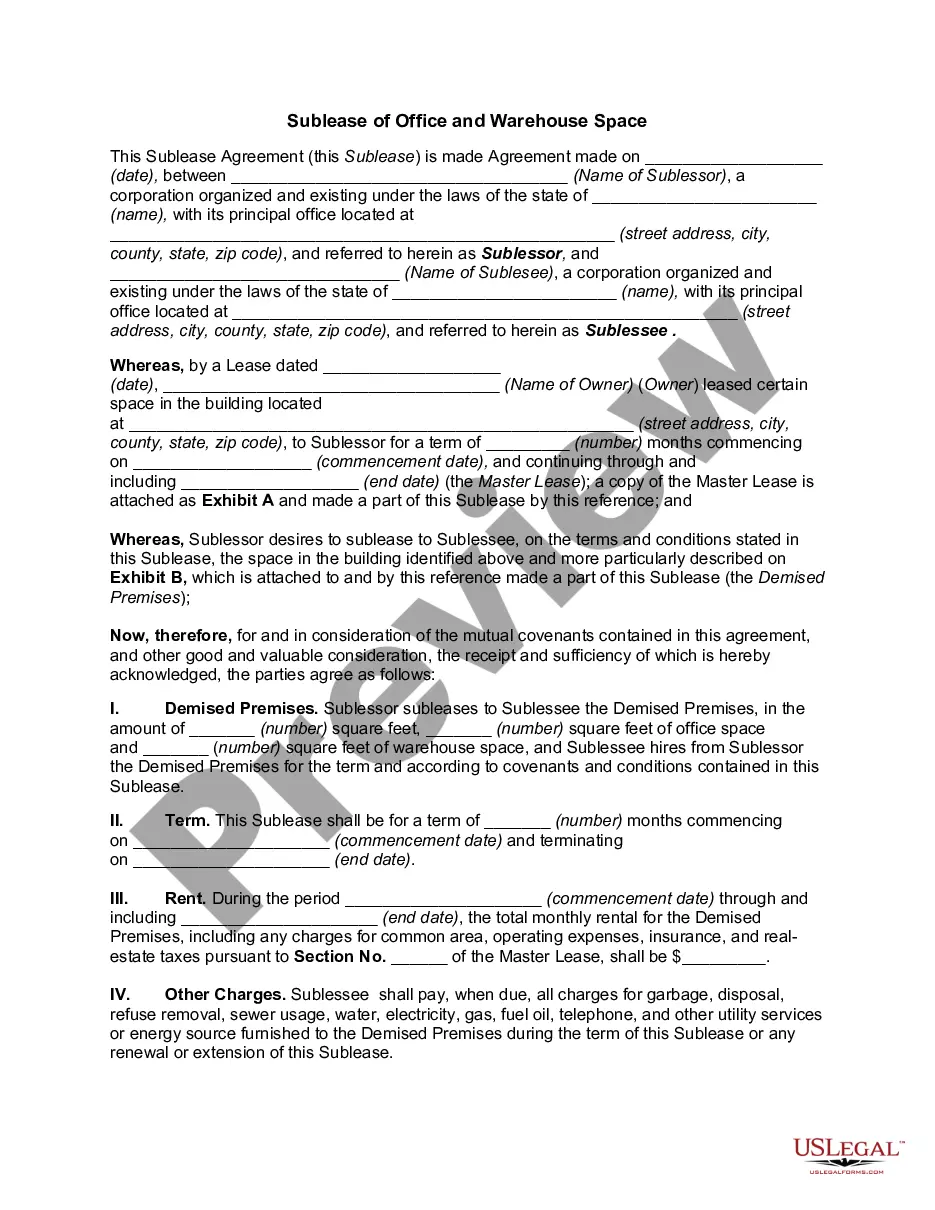
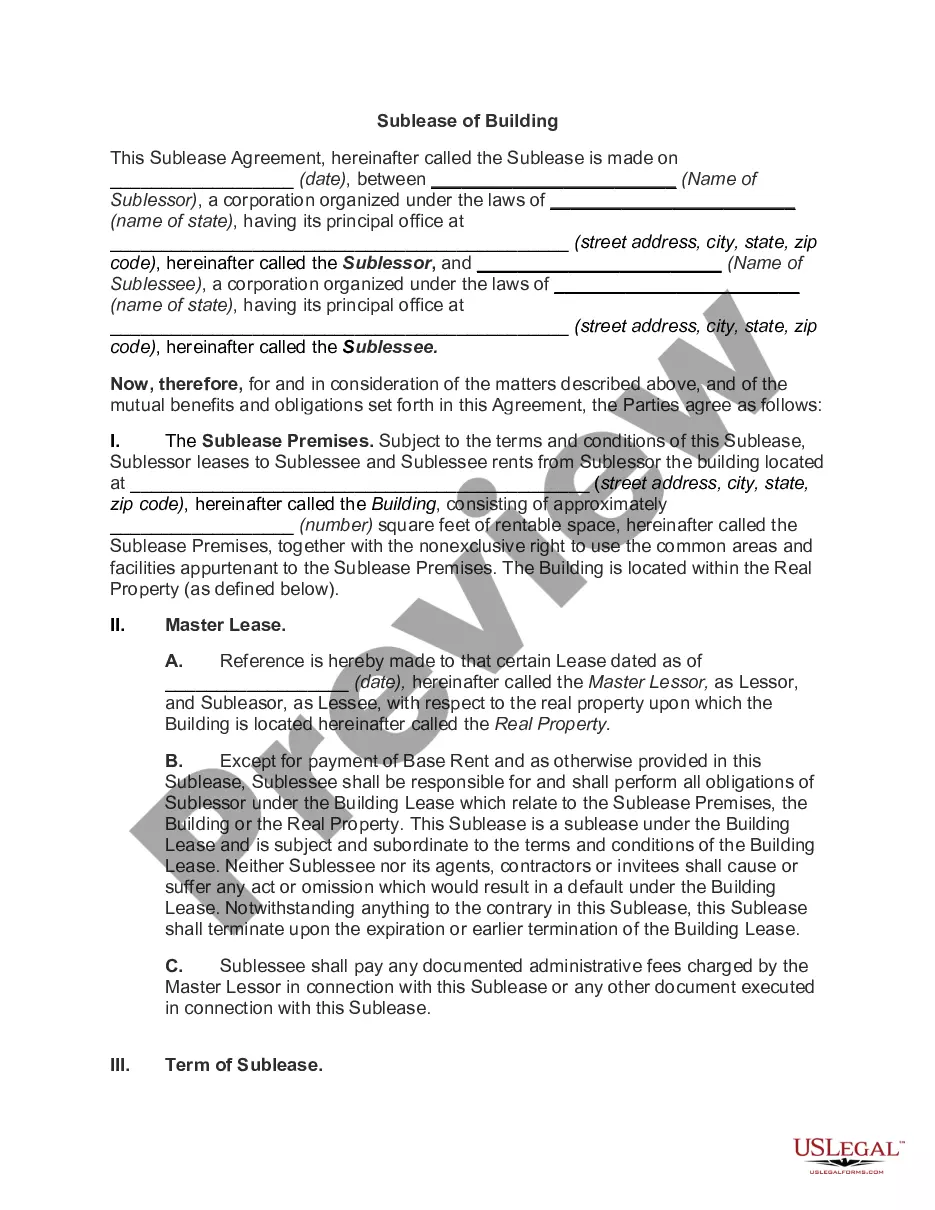
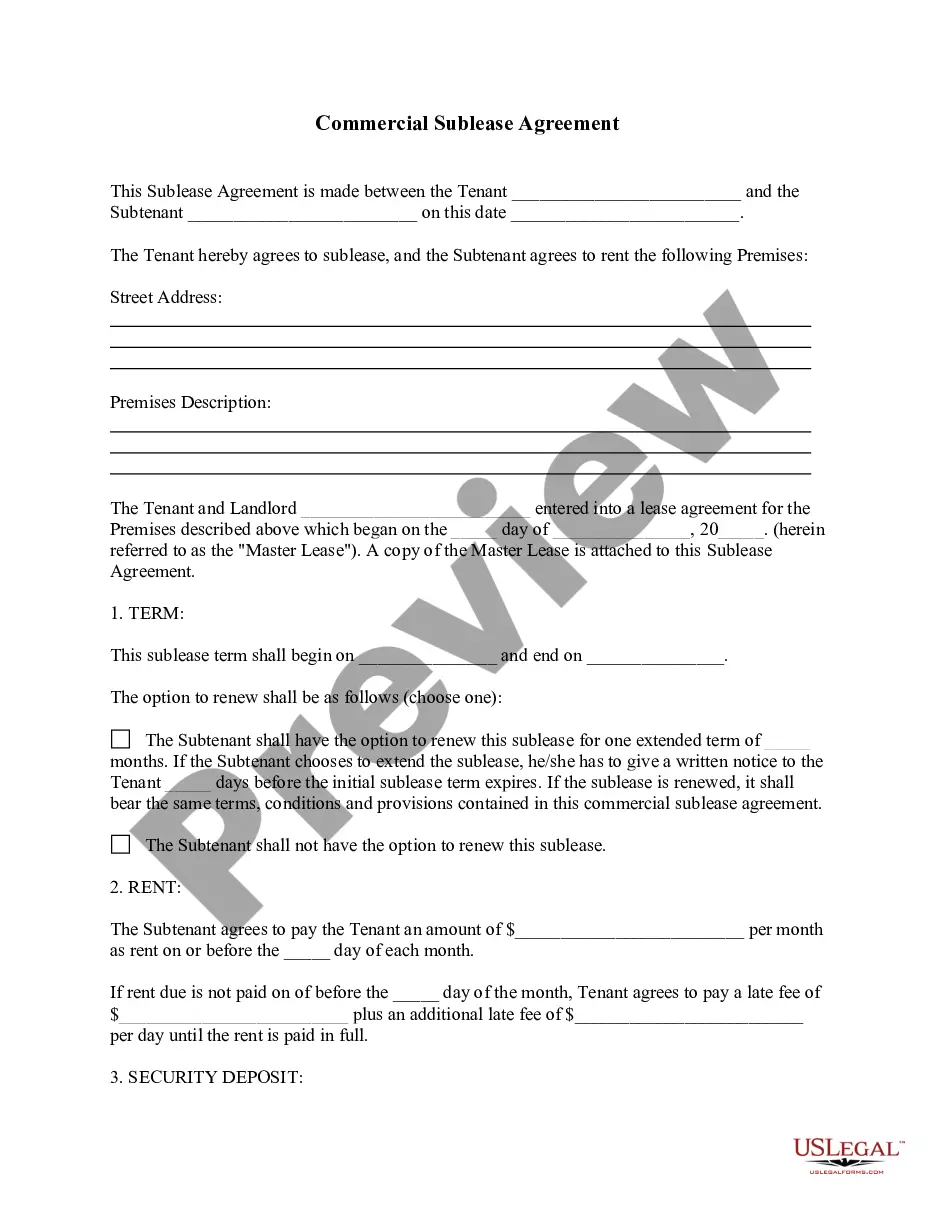
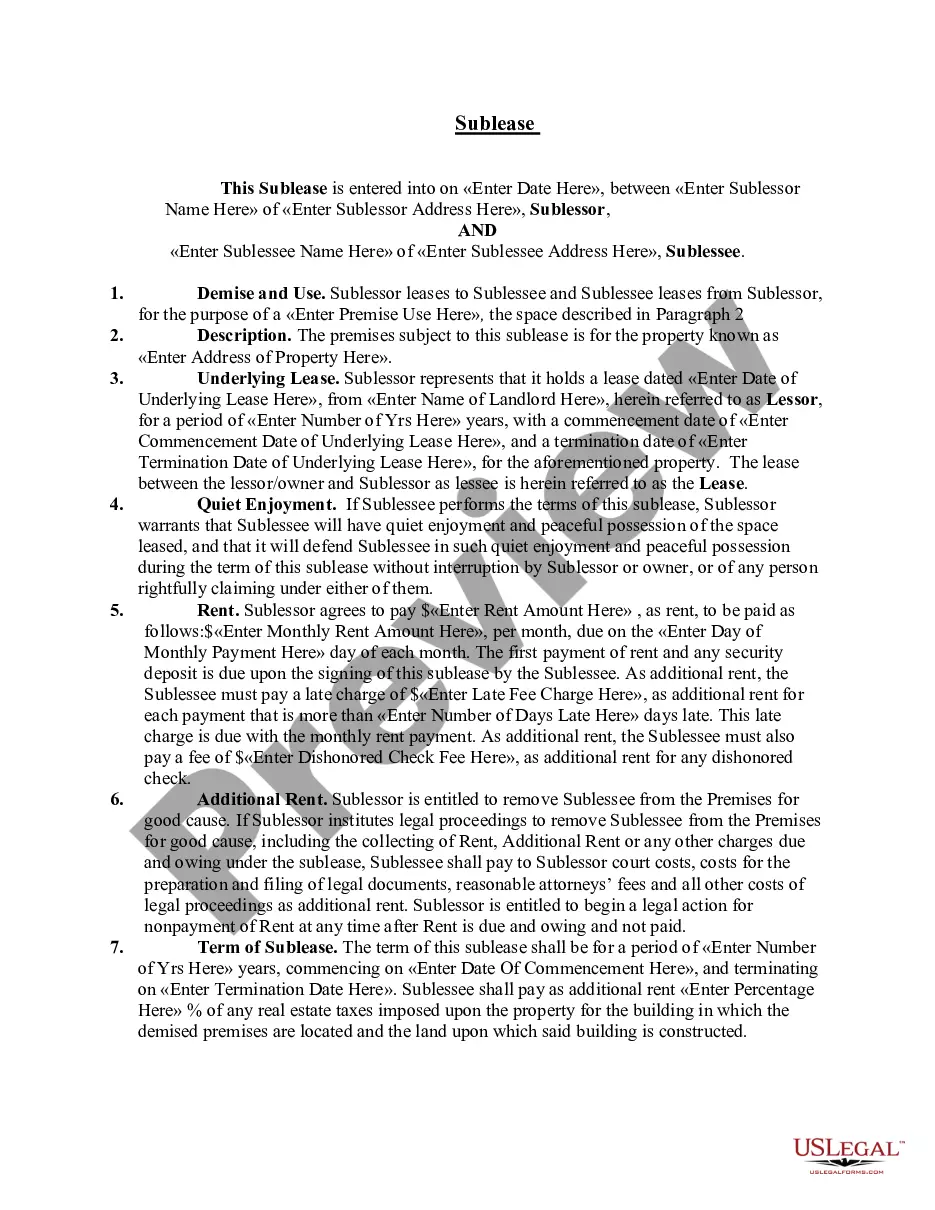
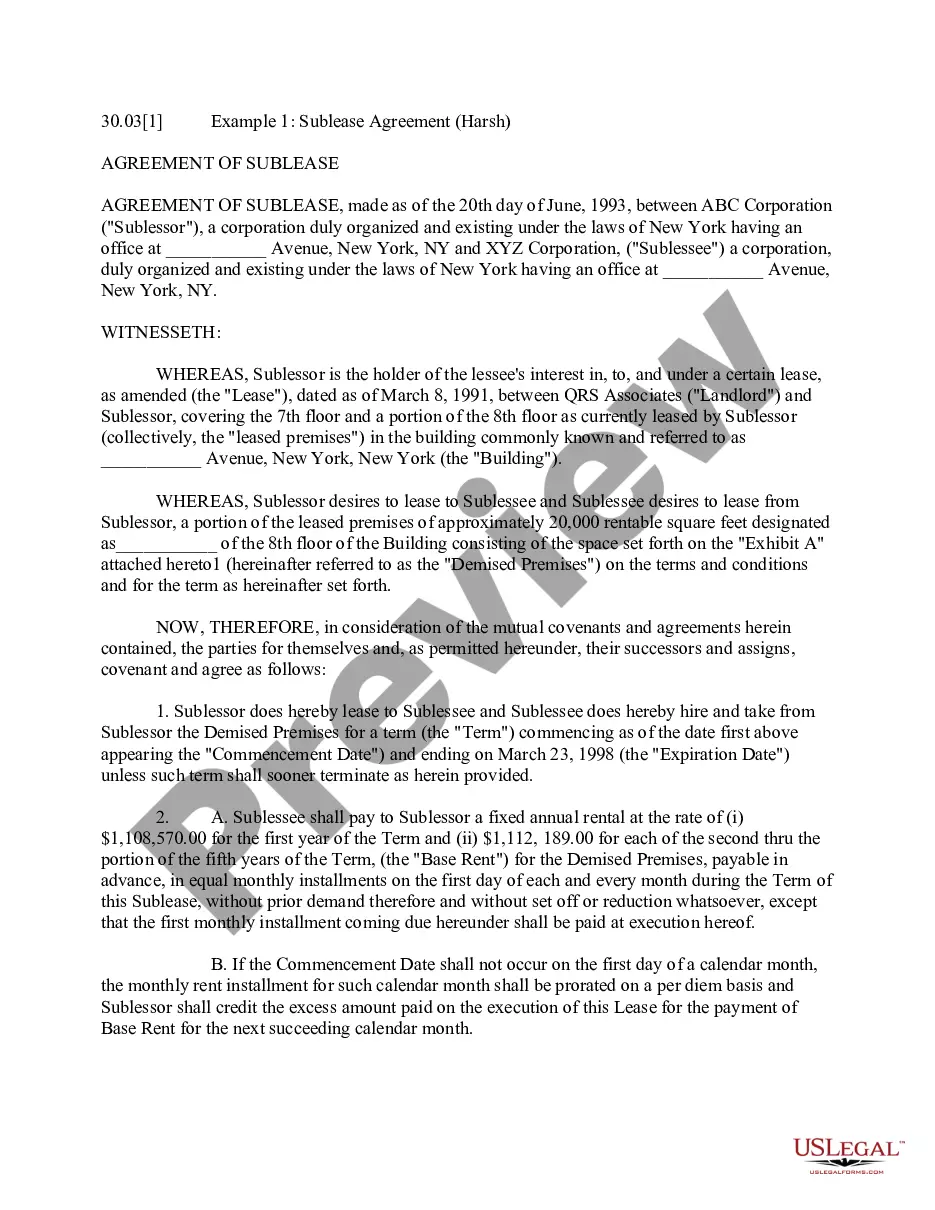
This Commercial Sublease form is a legal agreement where a current tenant (Sub-Lessor) leases out their commercial property to another tenant (Sub-Lessee). It allows the Sub-Lessee to utilize the premises while adhering to the terms of the original lease between the Sub-Lessor and the property owner. This form differs from a standard lease in that it focuses on the relationship between the original tenant and the new tenant rather than direct landlord-tenant agreements.
Main sections of this form
- Identification of the Sub-Lessor and Sub-Lessee
- Description of the leased property and its intended use
- Rental payment terms and schedule
- Indemnity and insurance provisions
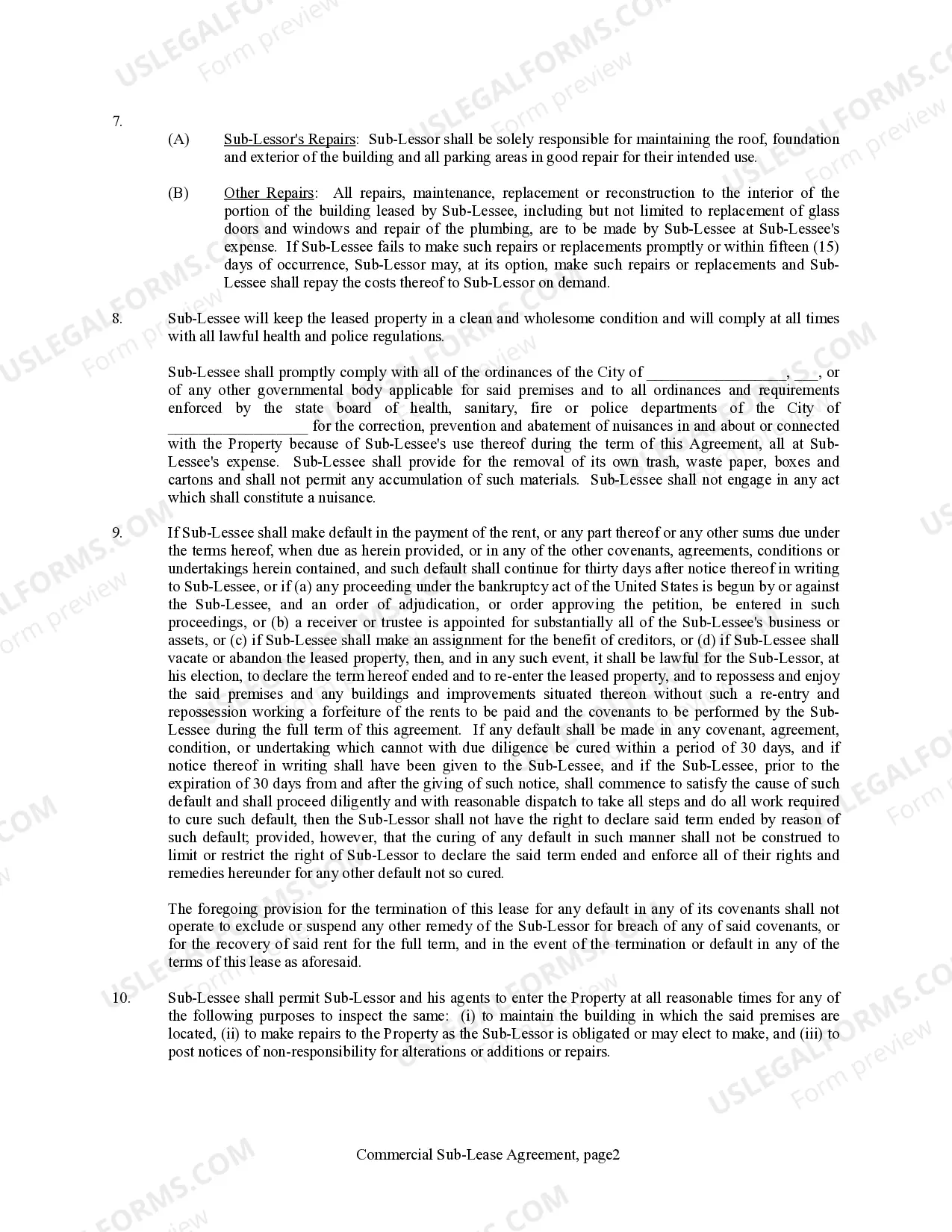
- Responsibilities for repairs and maintenance
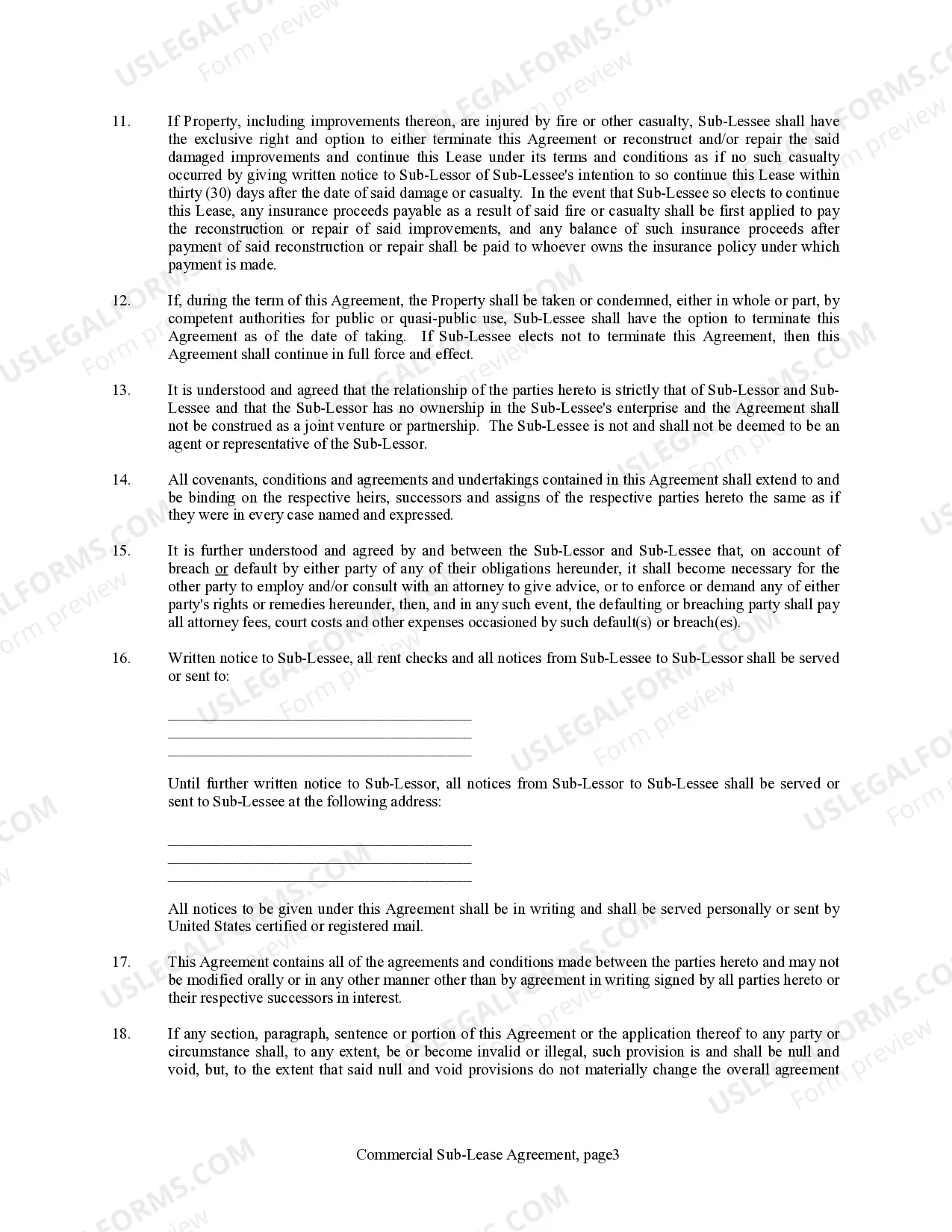
- Terms regarding termination and default
When to use this form
You should use this Commercial Sublease form when you want to sublease your commercial property to another tenant. This situation often arises when a business is downsizing or relocating but still wants to retain their lease obligations with the original landlord. Additionally, this form is useful when the original lease permits subleasing and outlines the specific conditions under which it is allowed.
Who can use this document
This form is intended for:
- Current leaseholders who wish to sublease their commercial space
- Businesses looking to rent additional commercial space through a sublease
- Sub-Lessors who want to maintain compliance with the conditions of their original lease
How to complete this form
- Identify the parties involved by filling in the names of the Sub-Lessor and Sub-Lessee.
- Specify the property by describing the leased property and any improvements on it.
- Enter the start and end dates of the lease term, as well as the rental amounts to be paid.
- Include any intended use for the leased property and the insurance requirements.
- Ensure all parties sign the form to finalize the agreement.
Does this form need to be notarized?
This form does not typically require notarization unless specified by local law. Always check with local regulations to confirm requirements.
Get your form ready online
Our built-in tools help you complete, sign, share, and store your documents in one place.
Make edits, fill in missing information, and update formatting in US Legal Forms—just like you would in MS Word.
Download a copy, print it, send it by email, or mail it via USPS—whatever works best for your next step.
Sign and collect signatures with our SignNow integration. Send to multiple recipients, set reminders, and more. Go Premium to unlock E-Sign.
If this form requires notarization, complete it online through a secure video call—no need to meet a notary in person or wait for an appointment.
We protect your documents and personal data by following strict security and privacy standards.

Make edits, fill in missing information, and update formatting in US Legal Forms—just like you would in MS Word.

Download a copy, print it, send it by email, or mail it via USPS—whatever works best for your next step.

Sign and collect signatures with our SignNow integration. Send to multiple recipients, set reminders, and more. Go Premium to unlock E-Sign.

If this form requires notarization, complete it online through a secure video call—no need to meet a notary in person or wait for an appointment.

We protect your documents and personal data by following strict security and privacy standards.
Mistakes to watch out for
- Failing to obtain written consent from the original landlord to allow subleasing.
- Not clearly specifying the terms of use for the leased property.
- Entering incorrect rental amounts or payment schedules.
Why complete this form online
- Convenience of filling out and downloading the form anytime.
- Editability allows you to customize the form to meet your specific needs.
- Reliability from forms created by licensed attorneys, ensuring legal compliance.
Legal use & context
- This form outlines the responsibilities of both the Sub-Lessor and Sub-Lessee in a subleasing situation.
- It establishes legal rights and obligations in accordance with the original lease.
- It can be enforced in a court of law if either party fails to adhere to its terms.
Main things to remember
- The Commercial Sublease form facilitates the temporary leasing of commercial property.
- Using this form can help clarify the responsibilities of each party in the sublease arrangement.
- Always adhere to the terms of the original lease when entering into a sublease.
Looking for another form?

Form popularity
FAQ
To sublease your business, first review your current lease for any subleasing restrictions. Next, you should communicate with your landlord to obtain their approval, which is often required in a Colorado Commercial Sublease. Once you have the necessary permissions, create a sublease agreement that clearly outlines the terms with the new tenant. For additional resources and templates, uslegalforms can assist you in crafting a solid sublease agreement.
A sublease clause is a specific section in a lease agreement that outlines the terms and conditions under which a tenant can sublease their rented space. In the context of a Colorado Commercial Sublease, this clause typically includes details like the approval process from the landlord, any restrictions on the type of subtenant, and the duration of the sublease. Understanding this clause is essential to ensure compliance with the original lease. If you're unsure how to draft or interpret a sublease clause, consider using uslegalforms for helpful templates and guidance.
Subleasing a commercial property is generally not illegal; however, it is contingent upon the terms of the original lease agreement. Landlords may impose restrictions, so it is vital to carefully review lease terms before proceeding. Understanding the legalities helps ensure a smooth experience with a Colorado Commercial Sublease.
To write a commercial sublease, start by identifying the sublessor and sublessee, clearly describing the leased space and terms. Include rental amounts, payment methods, and obligations for maintenance and utilities. Utilizing templates or services like uslegalforms can simplify the process of drafting an effective Colorado Commercial Sublease.
In Colorado, a sublease involves the original tenant transferring some lease rights to a subtenant, while still maintaining responsibility for the lease. The original tenant must ensure that the sublease adheres to the terms of the primary lease and is often required to inform the landlord. Familiarity with local laws can help navigate the intricacies of a Colorado Commercial Sublease.
The rules regarding subletting can vary widely depending on the lease agreement and local laws. Typically, tenants must obtain landlord approval to sublet and may need to follow specific procedures outlined in their lease. For those considering a Colorado Commercial Sublease, reviewing the lease terms and consulting legal resources is crucial to ensure compliance.
Many landlords are concerned about subleasing because it can complicate lease agreements and make it harder to control who occupies the property. They might worry about the subtenant's reliability or potential damage. Understanding these perspectives can inform negotiations around a Colorado Commercial Sublease and help you address landlord concerns effectively.
Writing a commercial lease involves several key steps including defining the parties, the rental amount, the duration, and any unique terms such as maintenance responsibilities. It is important to be clear and cover aspects such as renewal options and dispute resolution methods. For guidance, many find that using platforms like uslegalforms can streamline the process of creating a Colorado Commercial Sublease.
Commercial subleasing involves a tenant renting out a portion or the entirety of their leased space to another party, known as the subtenant. This practice allows the original tenant to offset rental costs while continuing to fulfill their lease obligations. For anyone exploring options like a Colorado Commercial Sublease, understanding the terms and implications is vital.
The sublet clause in a commercial lease outlines the conditions under which a tenant can sublease the property. Typically, this clause specifies whether subleasing is permitted, any required landlord approval, and any restrictions on the types of subleases allowed. Understanding this clause is essential for anyone considering a Colorado Commercial Sublease.