Colorado Beneficiary Deed - Individual to Two Individuals Without Successor Beneficiaries
About this form
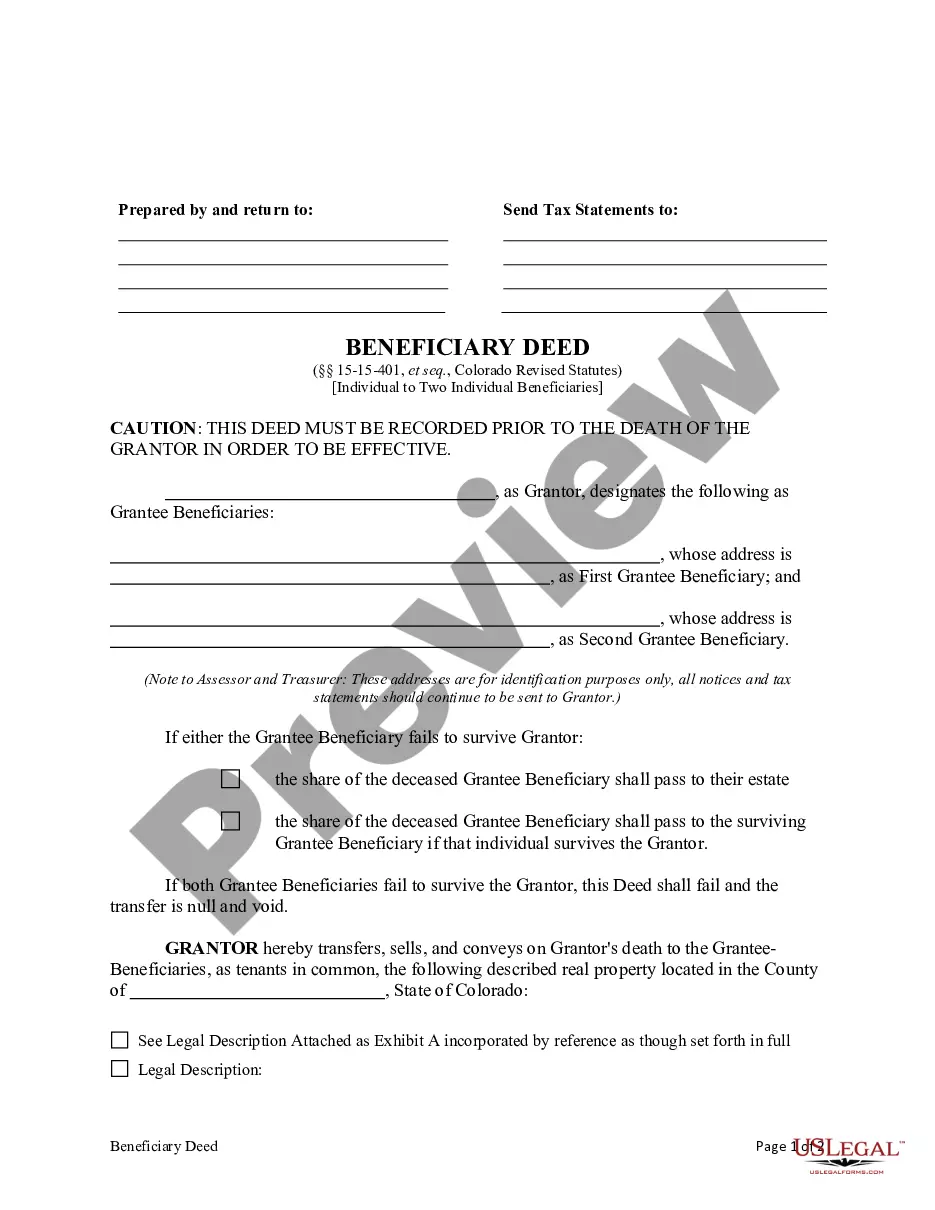
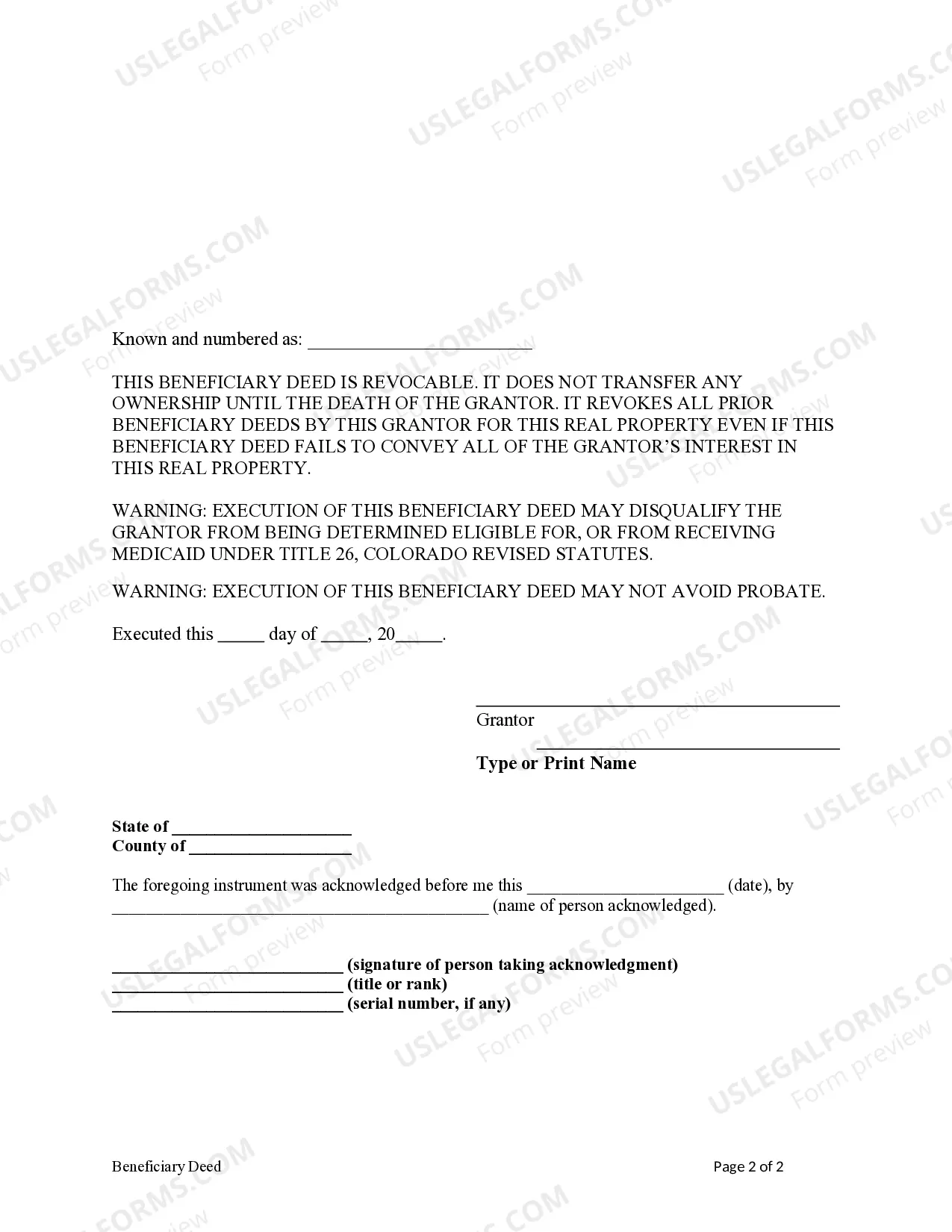
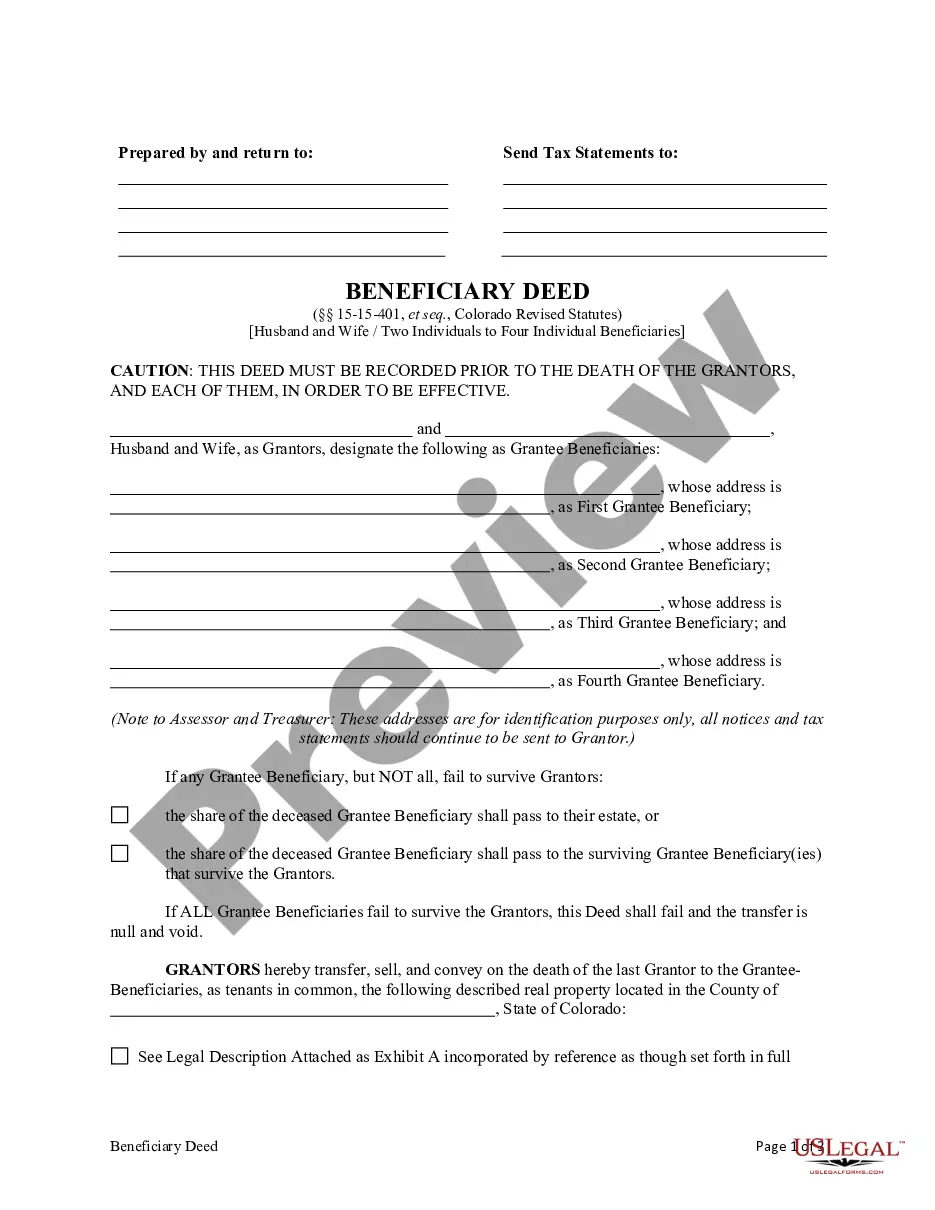
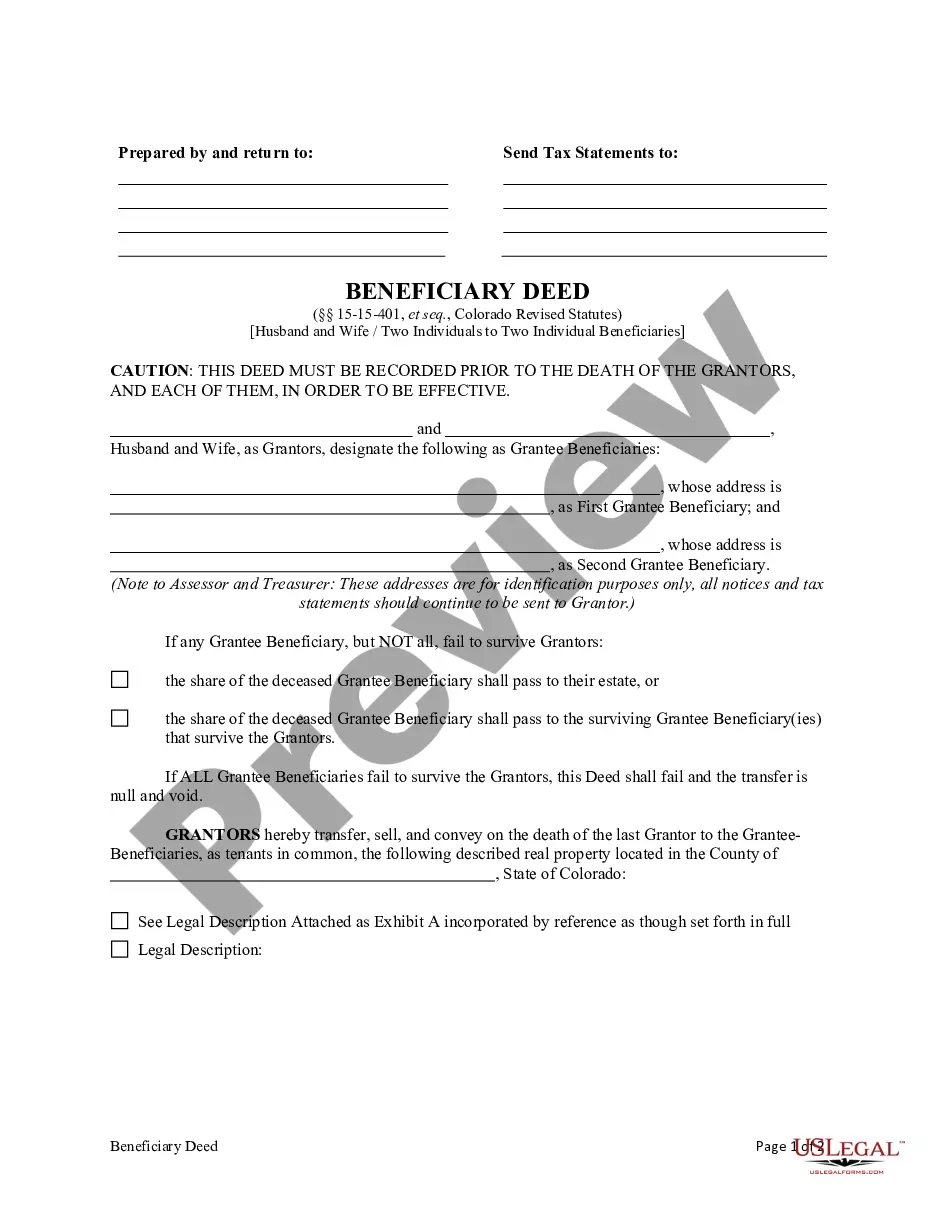
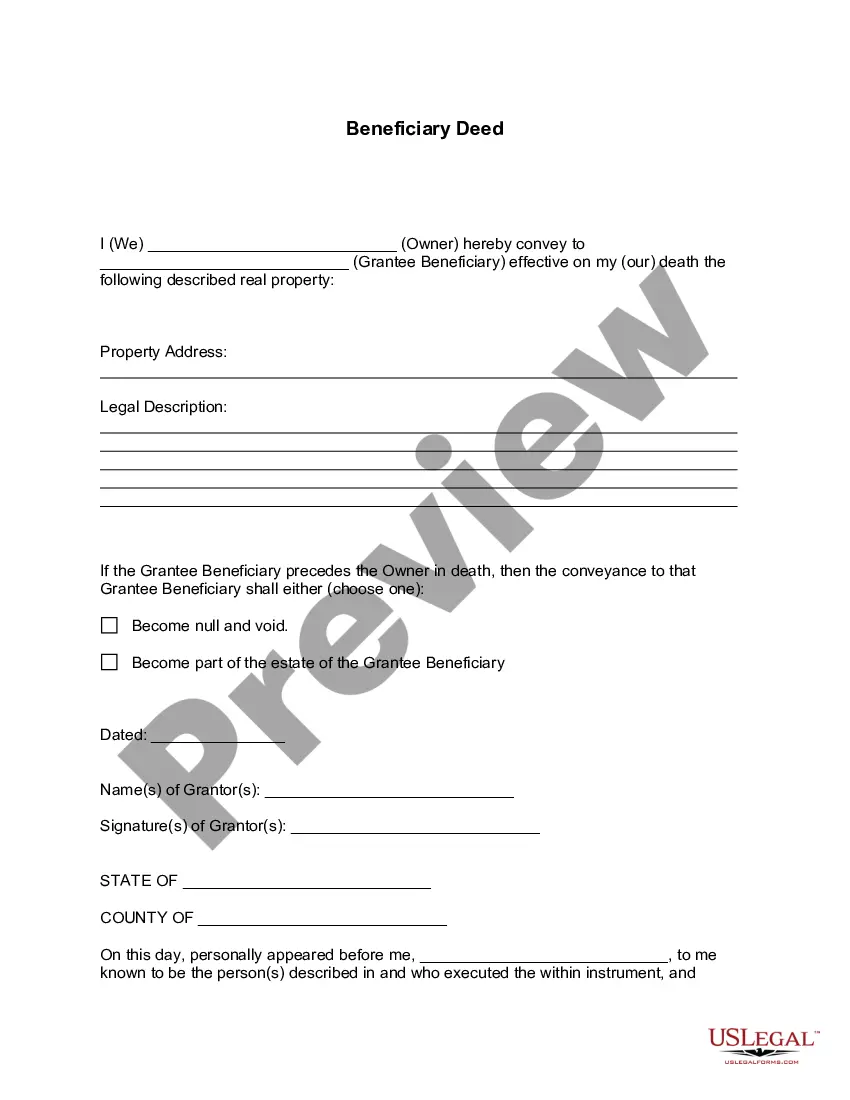
The Beneficiary Deed is a legal document where an individual, known as the Grantor, names two individuals as Grantee Beneficiaries to receive real property upon the Grantor's death. This deed specifically does not designate any Successor Beneficiaries. Unlike traditional wills, a Beneficiary Deed allows for the direct transfer of property, simplifying the process for individuals who are intended to inherit the property without the need for probate. It is essential that this deed is recorded before the Grantor's death to be effective.
Main sections of this form
- Identification of the Grantor and Grantee Beneficiaries.
- Specification of the real property being transferred.
- Conditions under which the transfer is effective.
- Clauses regarding the distribution of property if a Grantee Beneficiary does not survive the Grantor.
- Legal requirements for recording the deed and its validity.

Common use cases
You should use the Beneficiary Deed when you want to ensure that your property is transferred directly to two specified individuals upon your death, without going through probate. This deed is particularly useful for individuals seeking a straightforward method of transferring property, avoiding potential delays and costs associated with traditional estate processes.
Intended users of this form
- Individuals who own real property and wish to designate two beneficiaries.
- Property owners looking to bypass probate for their real estate transfer.
- Those who do not wish to name successor beneficiaries in the deed.
How to complete this form
- Identify the Grantor, the individuals who are the Grantee Beneficiaries, and the real property being conveyed.
- Clearly specify the terms of the deed, especially concerning the survival of the Grantees.
- Fill in the required legal descriptions of the property.
- Have all parties involved sign the deed in accordance with state laws.
- Record the completed deed with the appropriate local government office before the Grantor's death.
Notarization requirements for this form
This form must be notarized to be legally valid. US Legal Forms provides secure online notarization powered by Notarize, allowing you to complete the process through a verified video call.
Mistakes to watch out for
- Failing to record the deed before the Grantor's death.
- Not properly identifying the property to be transferred.
- Neglecting to consider the implications of having no Successor Beneficiaries.
- Missing signature requirements or other formalities dictated by state law.
Benefits of using this form online
- Convenience of accessing and filling out the form from home.
- Editability that simplifies customization to fit your specific property and beneficiary details.
- Reliability of forms drafted by licensed attorneys, ensuring compliance with legal standards.


Form popularity
FAQ
A Colorado Beneficiary Deed - Individual to Two Individuals Without Successor Beneficiaries does take precedence over a will in terms of property transfer. If you designate beneficiaries in your deed, they will receive the property directly, bypassing the probate process. However, it's essential to ensure that your will and the deed do not conflict. Utilizing services like US Legal Forms can help clarify your intentions and ensure all documents work harmoniously.
Filling out a Colorado Beneficiary Deed - Individual to Two Individuals Without Successor Beneficiaries involves several key steps. Start with your information, including your name and address, followed by the property details. Next, enter the names of the beneficiaries and the statement about the transfer upon your death. For detailed guidance, US Legal Forms provides user-friendly instructions and templates that streamline the process.
While it is not mandatory to hire a lawyer for a Colorado Beneficiary Deed - Individual to Two Individuals Without Successor Beneficiaries, consulting one can be beneficial. A legal professional can provide guidance and ensure compliance with state laws. Using platforms like US Legal Forms can also help you create a valid deed without needing extensive legal knowledge. However, if your situation is complex, expert advice is always a good option.
To write a Colorado Beneficiary Deed - Individual to Two Individuals Without Successor Beneficiaries, start by identifying the property and listing the names of the beneficiaries. Clearly state your intentions regarding the transfer of the property upon your death. Ensure the deed meets all state requirements, including signatures and notarization. You can use resources like US Legal Forms to access templates that simplify this process.
To create a valid Colorado Beneficiary Deed - Individual to Two Individuals Without Successor Beneficiaries, you must include specific details. These include the grantor's and beneficiaries' names, a legal description of the property, and your intent for the property to transfer upon death. Additionally, the deed must be signed and recorded at the county clerk's office to ensure its legality.
A beneficiary deed in Colorado allows for two names to be listed as beneficiaries. This is particularly useful for couples or partners who want to ensure their property passes to each other seamlessly. The Colorado Beneficiary Deed - Individual to Two Individuals Without Successor Beneficiaries simplifies the inheritance process, ensuring clarity and ease for the beneficiaries.
On a beneficiary deed, you can typically name up to two individuals. In the context of the Colorado Beneficiary Deed - Individual to Two Individuals Without Successor Beneficiaries, this means you can designate two people to inherit your property. This provision helps streamline the transfer process while allowing for joint ownership among the named beneficiaries.
To transfer a Colorado Beneficiary Deed - Individual to Two Individuals Without Successor Beneficiaries, you need to complete the necessary documentation. Start by preparing the deed that clearly states both beneficiaries' names. After you have signed it, ensure it is recorded with the appropriate county clerk's office to make the transfer effective upon your death.
While a beneficiary deed offers advantages, it does have some downsides. For instance, the property might not be shielded from creditors, and errors in completing the deed can lead to legal disputes. It's essential to consider these potential issues carefully when utilizing a Colorado Beneficiary Deed - Individual to Two Individuals Without Successor Beneficiaries.
In Colorado, you can have multiple names listed on a beneficiary deed. Specifically, the Colorado Beneficiary Deed - Individual to Two Individuals Without Successor Beneficiaries allows you to name two individuals as beneficiaries. This flexibility helps ensure that your property transfers smoothly after your passing, without complications.