Colorado Beneficiary Deed - Husband and Wife / Two Individuals to Four Individual Beneficiaries Without Successor Beneficiaries
About this form
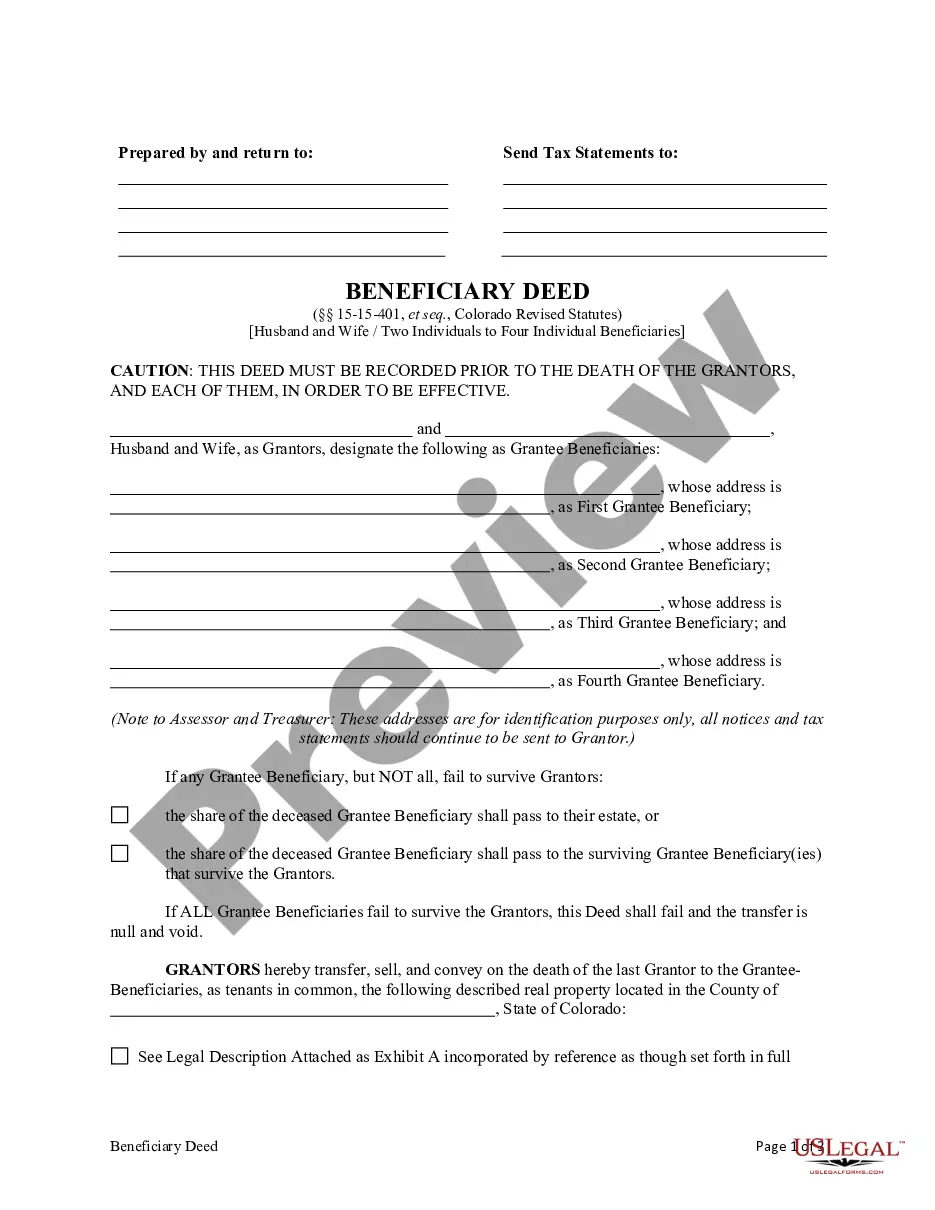
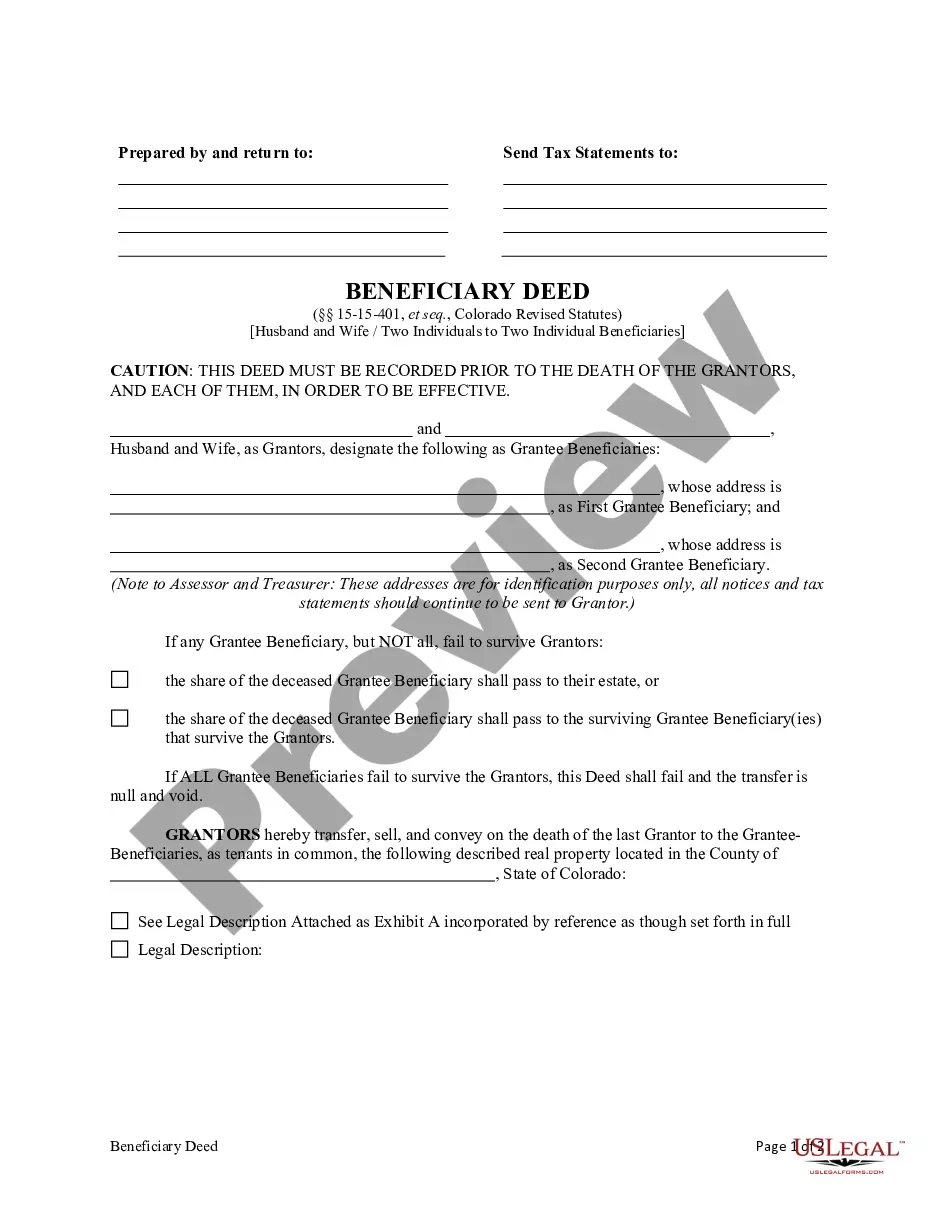
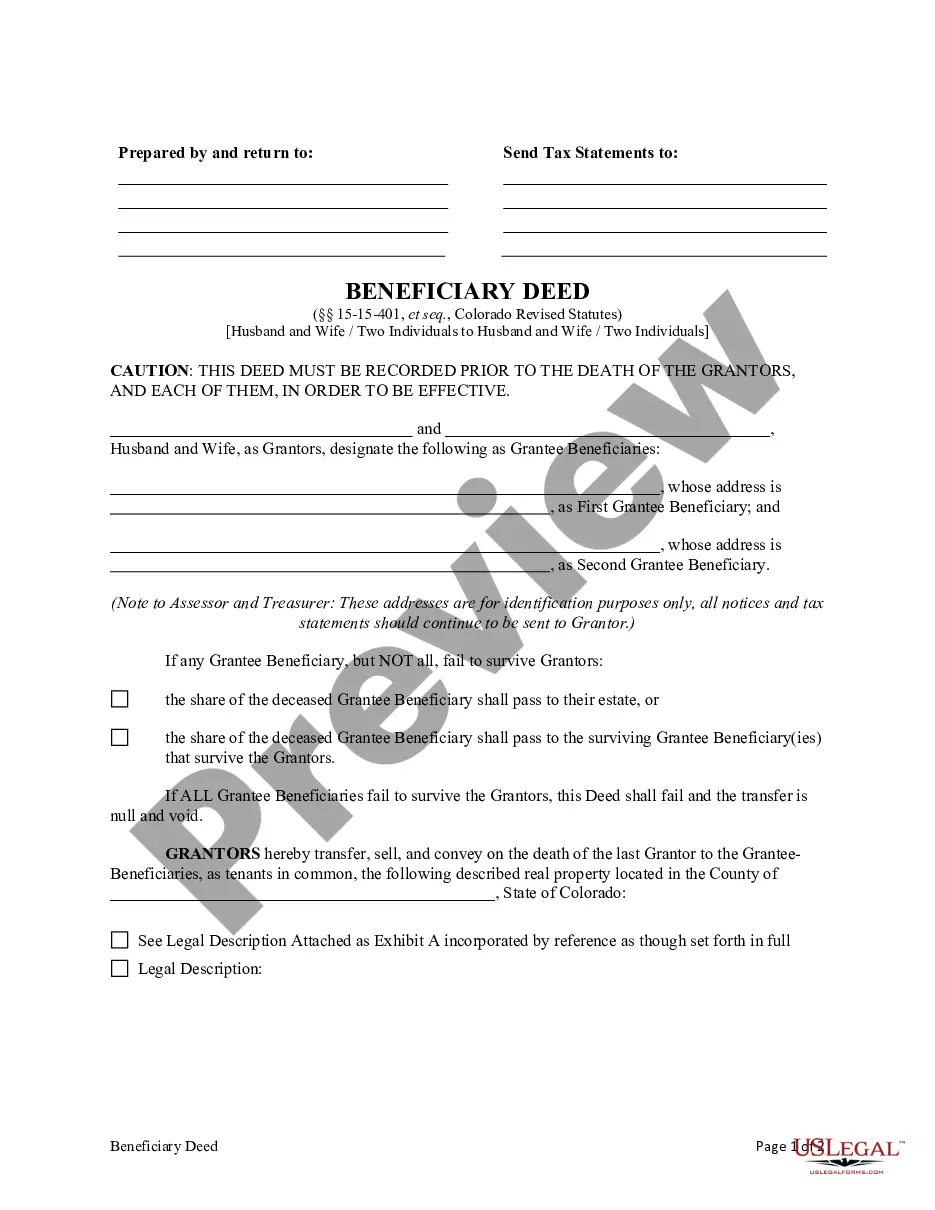
The beneficiary deed is a legal document used to transfer ownership of real estate upon the death of the last grantor. Specifically designed for a husband and wife or two individuals to designate four individual beneficiaries, this deed ensures that property passes directly to the named beneficiaries without going through probate. Unlike traditional deeds, this beneficiary deed does not transfer any ownership interest during the grantors' lifetime and is revocable at any time, giving flexibility to the grantors over their property until their passing.
What’s included in this form
- Identification of grantors (the individuals creating the deed).
- Naming of the beneficiaries (the individuals receiving the property).
- Description of the real property being transferred.
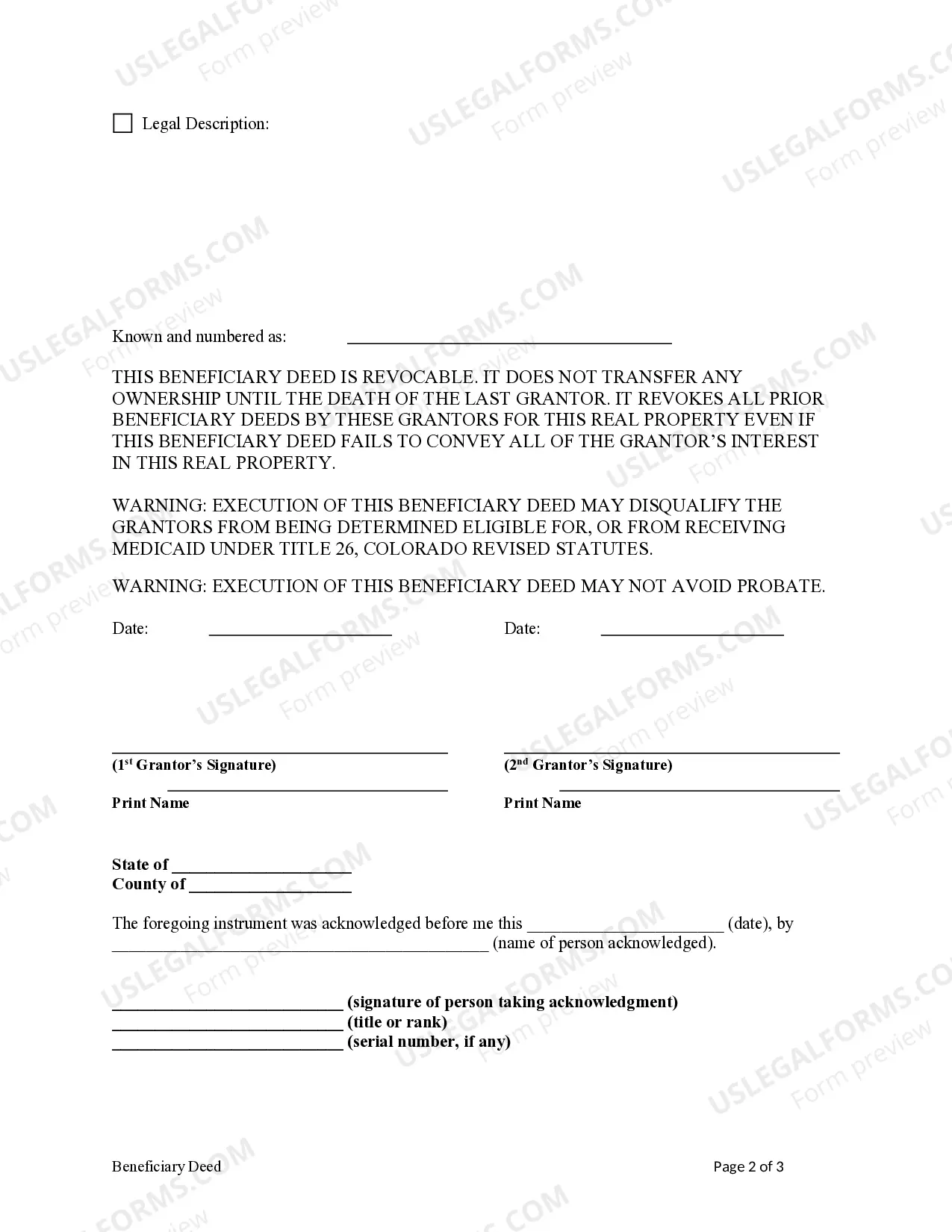
- Revocation clause which nullifies any prior beneficiary deeds for the same property.
- Legal disclaimer regarding Medicaid eligibility upon execution of the deed.


Situations where this form applies
This beneficiary deed should be used when a husband and wife, or two individuals, want to pass their property to four specific beneficiaries upon their death. It is particularly useful when the grantors wish to avoid probate for the property, simplifying the transfer of assets to their heirs. Use this form if you want to maintain control over the property while alive, with the understanding that it will be transferred automatically upon the death of the last grantor.
Who should use this form
- Couples or co-owners looking to designate beneficiaries for their property.
- Individuals who want to avoid the probate process for their real estate.
- Homeowners wishing to keep control of their property while setting up a clear succession plan for heirs.
- Anyone considering the implications of Medicaid eligibility related to property transfer.
Steps to complete this form
- Identify the parties by entering the names of the grantors and beneficiaries.
- Clearly describe the real property being transferred, including its legal description and physical address.
- Include the date of execution and any relevant local court file numbers, if applicable.
- Have all grantors sign the deed in the presence of a notary if required.
- Record the completed and signed deed with the appropriate county recorderâs office.
Does this document require notarization?
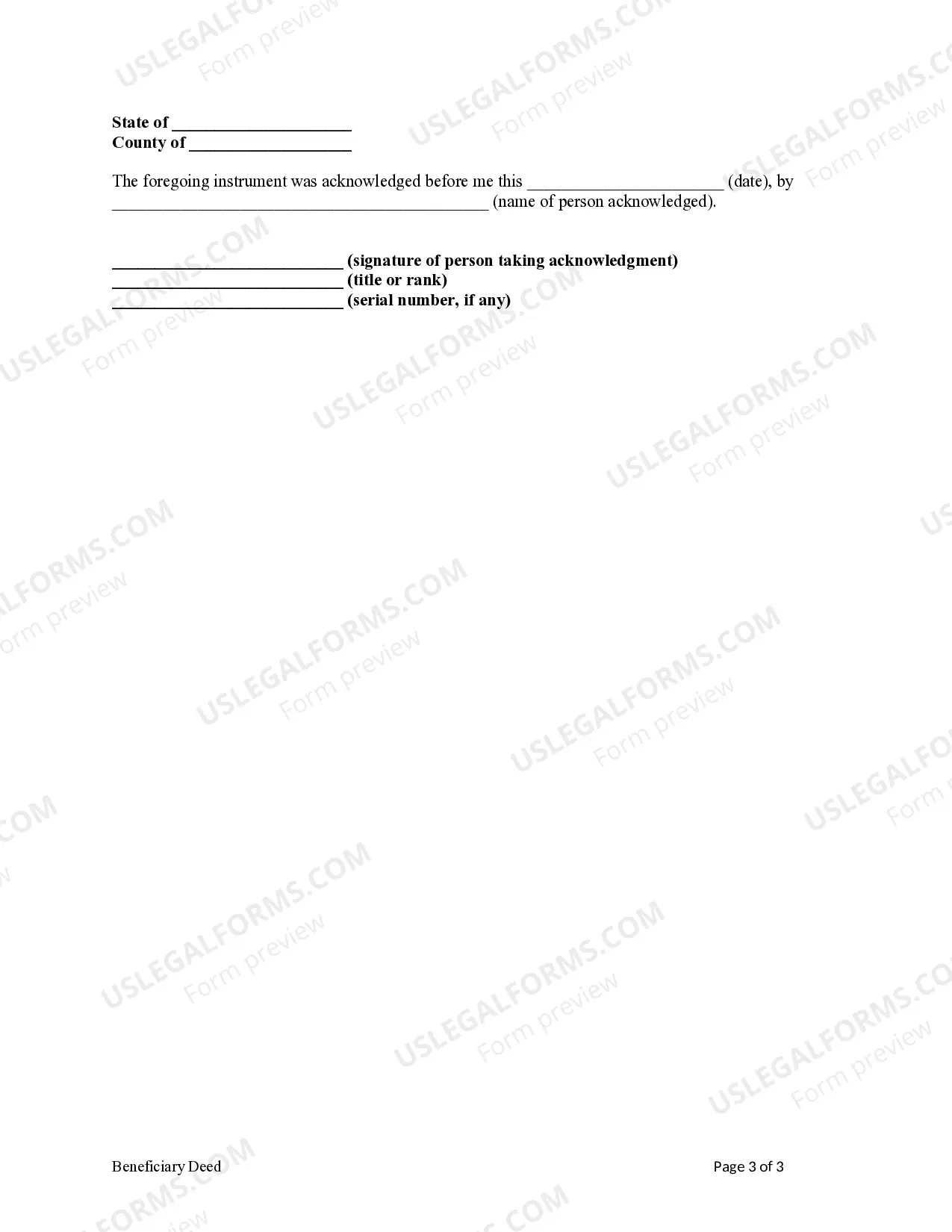
This form must be notarized to be legally valid. All grantors should sign the beneficiary deed in the presence of a notary to confirm their identities and intentions. US Legal Forms provides integrated online notarization options, allowing for secure video calls and quick processing from the comfort of your home.
Get your form ready online
Our built-in tools help you complete, sign, share, and store your documents in one place.
Make edits, fill in missing information, and update formatting in US Legal Forms—just like you would in MS Word.
Download a copy, print it, send it by email, or mail it via USPS—whatever works best for your next step.
Sign and collect signatures with our SignNow integration. Send to multiple recipients, set reminders, and more. Go Premium to unlock E-Sign.
If this form requires notarization, complete it online through a secure video call—no need to meet a notary in person or wait for an appointment.
We protect your documents and personal data by following strict security and privacy standards.

Make edits, fill in missing information, and update formatting in US Legal Forms—just like you would in MS Word.

Download a copy, print it, send it by email, or mail it via USPS—whatever works best for your next step.

Sign and collect signatures with our SignNow integration. Send to multiple recipients, set reminders, and more. Go Premium to unlock E-Sign.

If this form requires notarization, complete it online through a secure video call—no need to meet a notary in person or wait for an appointment.

We protect your documents and personal data by following strict security and privacy standards.
Avoid these common issues
- Failing to record the deed before the death of the last grantor.
- Not accurately describing the property being transferred, which can lead to disputes.
- Neglecting to include all necessary signatures from grantors.
- Overlooking the implications of Medicaid eligibility after executing the deed.
Why complete this form online
- Convenient access to a legal form that can be completed at your own pace.
- Editable options allow users to customize the specifics of their property transfer.
- Access to documents drafted by licensed attorneys, ensuring legal compliance.
- Time-saving; no need to schedule meetings with lawyers for standard forms.
Summary of main points
- The beneficiary deed is a tool for transferring property upon death, ensuring it avoids probate.
- It allows flexibility and control for the grantors while alive.
- Proper execution and recording of the deed are critical for its effectiveness.
- Understand the implications on Medicaid eligibility before executing the form.
Looking for another form?


Form popularity
FAQ
This form creates a revocable transfer-on-death deed for two grantors (a husband and wife or two individuals) to name four beneficiaries who will receive the real property after the death of the last grantor. It avoids probate by transferring ownership outside lifetime ownership and remains revocable during the grantors' lifetimes, allowing changes as circumstances change.
Yes. The Colorado Beneficiary Deed transfers the property automatically to the named beneficiaries upon the death of the last grantor, bypassing probate. It also remains revocable during life via the revocation clause, so you can change beneficiaries or revoke the deed if needed.
This Colorado Beneficiary Deed is designed to designate four individual beneficiaries. If you want only two, you would need a different form or a different configuration. The document's scope explicitly names four beneficiaries, even though two grantors are involved. That makes this version unsuitable for two-beneficiary goals.
Common mistakes with this form include failing to clearly identify the grantors and beneficiaries, not providing a precise description of the real property, neglecting to include the revocation clause, and overlooking how the Medicaid eligibility disclaimer may affect planning after execution.
Downsides include loss of lifetime ownership control, since the deed only takes effect after the last grantor dies. Changes require revoking or redoing the deed, and Medicaid eligibility considerations may arise. The property description must be accurate to avoid unintended transfers or disputes.
This form is tailored for two grantors (husband and wife or two individuals) to name four individual beneficiaries and includes both a revocation clause and a Medicaid eligibility disclaimer. Those features distinguish it from other beneficiary deeds that may name fewer beneficiaries or use different grantor configurations.