Colorado Beneficiary or Transfer on Death Deed from Two Individuals / Husband and Wife to Two Individuals / Husband and Wife.
About this form
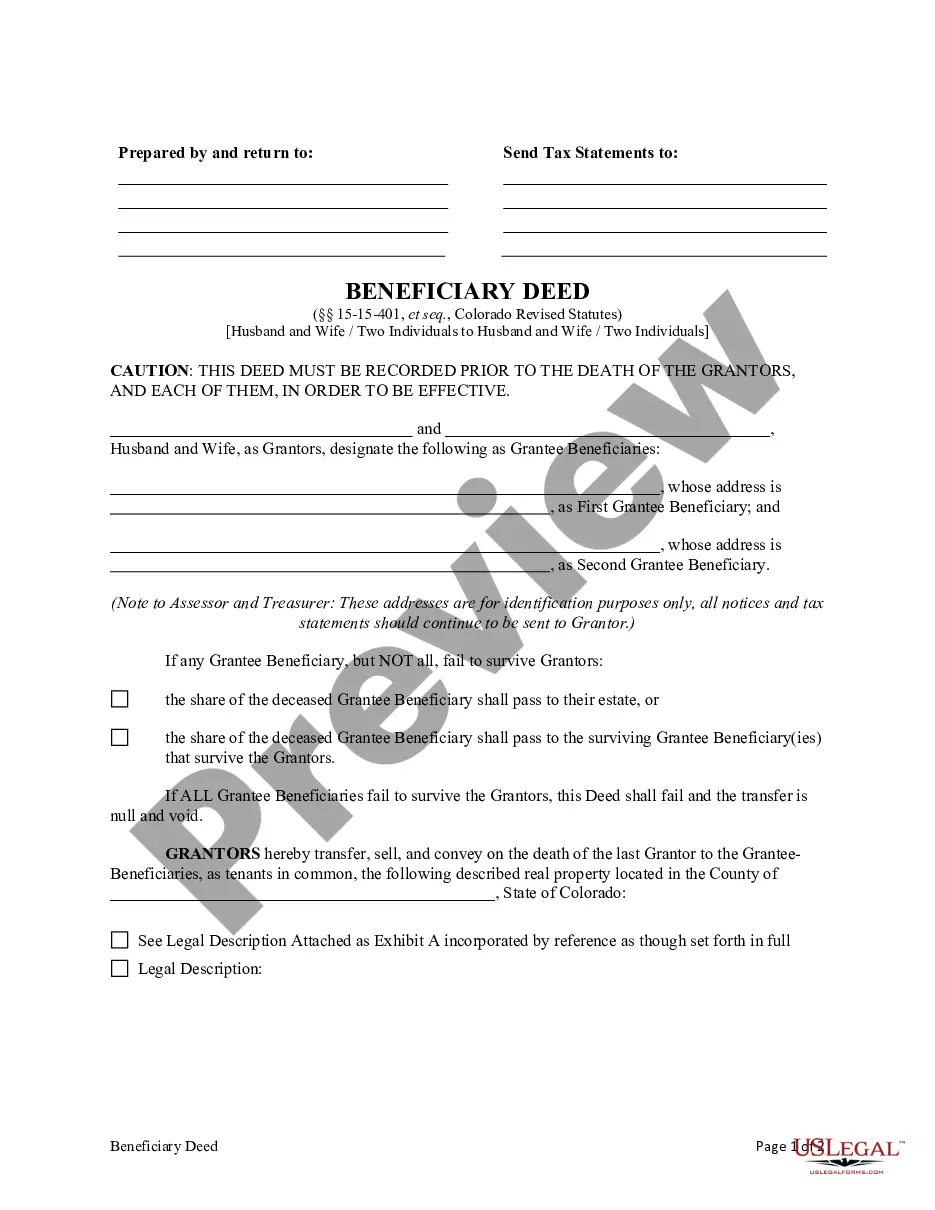
The Beneficiary or Transfer on Death Deed from Two Individuals or Husband and Wife is a legal document that allows owners to pass their real estate directly to beneficiaries upon their death, without going through probate. This form is specifically designed for situations where two individuals, such as a husband and wife, want to transfer their property to another couple or individuals. Unlike traditional deeds, this deed becomes effective only upon the death of the last surviving grantor and must be recorded prior to that event to be valid.
Form components explained
- Identification of the grantors (the current property owners).
- Identification of the grantees (the intended beneficiaries).
- Clear description of the property being transferred.
- Specific instructions regarding what happens to the property shares if a beneficiary dies before the grantors.
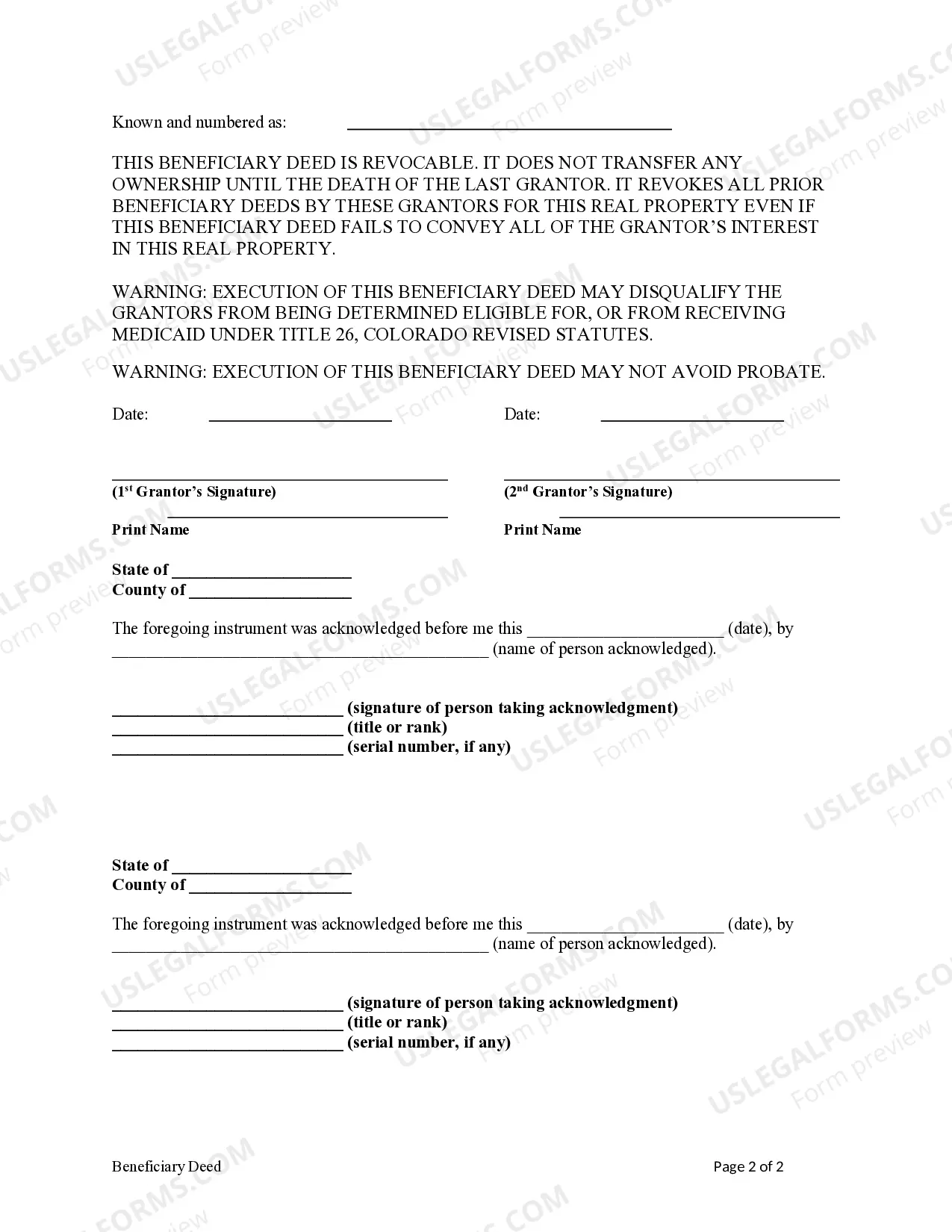
- Compliance notice about potential eligibility for Medicaid and implications regarding probate.





Common use cases
This form should be used when two individuals or a married couple wish to designate beneficiaries for their property to bypass probate upon their death. Situations include preparing for estate planning, ensuring a smooth property transfer to heirs, or simplifying asset management after oneâs passing.
Who needs this form
- Couples (married or otherwise) who own property together.
- Individuals looking to designate specific beneficiaries for their property.
- Those interested in estate planning strategies to avoid probate.
- Property owners who want to ensure their wishes are honored after their death.
Steps to complete this form
- Identify the parties: Enter the names of the grantors and grantees.
- Specify the property: Provide a complete legal description of the property being transferred.
- Outline beneficiary shares: Clarify what happens to shares if a beneficiary predeceases the grantors.
- Sign and date the deed: Ensure all grantors sign the document in the presence of a notary if required.
- Record the deed: Submit the completed deed to the appropriate local government office before the death of any grantor.
Notarization requirements for this form
This form typically requires notarization to be legally valid. It is important to ensure the signatures of the grantors are witnessed by a notary, following all local legal requirements for execution.
Get your form ready online
Our built-in tools help you complete, sign, share, and store your documents in one place.
Make edits, fill in missing information, and update formatting in US Legal Forms—just like you would in MS Word.
Download a copy, print it, send it by email, or mail it via USPS—whatever works best for your next step.
Sign and collect signatures with our SignNow integration. Send to multiple recipients, set reminders, and more. Go Premium to unlock E-Sign.
If this form requires notarization, complete it online through a secure video call—no need to meet a notary in person or wait for an appointment.
We protect your documents and personal data by following strict security and privacy standards.

Make edits, fill in missing information, and update formatting in US Legal Forms—just like you would in MS Word.

Download a copy, print it, send it by email, or mail it via USPS—whatever works best for your next step.

Sign and collect signatures with our SignNow integration. Send to multiple recipients, set reminders, and more. Go Premium to unlock E-Sign.

If this form requires notarization, complete it online through a secure video call—no need to meet a notary in person or wait for an appointment.

We protect your documents and personal data by following strict security and privacy standards.
Avoid these common issues
- Failing to record the deed before the death of a grantor.
- Not providing a clear and complete property description.
- Omitting to specify what happens to shares in case of a beneficiary's death.
- Leaving out signatures or dates from the grantors.
Benefits of completing this form online
- Convenient access to forms that reflect current legal standards.
- Editability allows users to customize the form easily.
- Reliable templates drafted by licensed attorneys ensure compliance with the law.
Legal use & context
- The deed must be properly executed and recorded to be legally binding.
- It is essential to understand that transfer on death provisions can have limitations and may not exempt estate assets from probate entirely.
Main things to remember
Ensure that the deed is recorded before the death of either grantor for validity.
Clearly identify all parties and the specific property in the deed.
Consider potential implications related to Medicaid eligibility and probate.
Looking for another form?
Form popularity
FAQ
It is a real estate deed that lets two owners designate beneficiaries to receive the property directly after the death of the last surviving grantor, bypassing probate. It requires recording before death and identifies the grantors, the grantees, and the property. The deed also includes instructions about what happens if a beneficiary dies before the grantors and notes Medicaid and probate considerations.
Yes. This form is designed for two grantors (two individuals or a husband and wife) to designate two or more beneficiaries. It requires identifying the grantors, grantees, and the property, plus instructions about what happens if a beneficiary dies before the grantors. It must be recorded before the grantors' deaths to be valid.
Yes. This form is designed for Colorado to pass real estate directly to beneficiaries after death, avoiding probate. It becomes effective only after the last surviving grantor dies and must be recorded prior to that event to be valid. The form also notes potential Medicaid considerations and probate implications for proper use.
Transfer on death deeds exist in several states, with rules that vary by jurisdiction. This Colorado form models that approach for two grantors and two beneficiaries, designed to bypass probate and take effect after the last surviving grantor dies when recorded. Always verify current state requirements before use.
Both options avoid probate in different ways. This form provides a direct transfer on death mechanism for two grantors and two beneficiaries, while a revocable trust is a separate estate planning tool that uses a trust to manage assets. The best choice depends on goals; consult a licensed attorney for guidance.
This form differs from a standard TOD deed by serving two grantors (two individuals or a married couple) and two beneficiaries, instead of a single owner and possibly a single beneficiary. It also specifies what happens if a beneficiary dies before the grantors and requires recording before death to be valid.